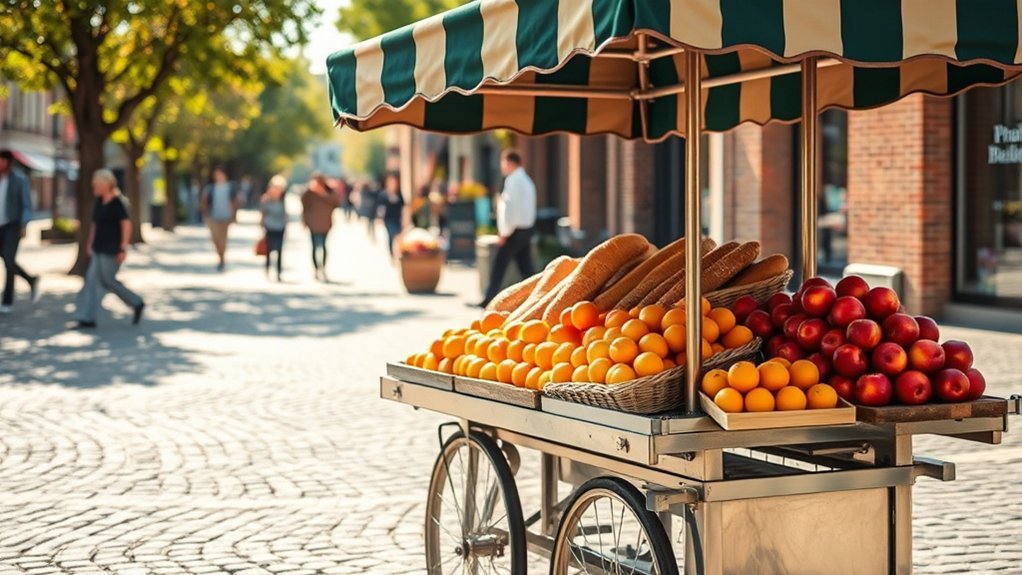
An appealing outdoor vendor cart needs more than bright colors. The best carts combine visible branding with a practical service layout, secure storage, easy mobility, durable materials, and weather protection suited to the operating location. Vendors should also plan around what they sell, how the cart will be transported, customer flow, utilities, local rules, and safe operation before choosing or building a cart.
Quick Answer
An appealing outdoor vendor cart combines clear branding with a fast, practical service layout. Use visible signage, organized storage, lockable wheels, durable cleanable surfaces, and suitable weather protection. If you sell food or use cooking equipment, also plan around local permits, sanitation, fire-safety, utility, and accessibility requirements before you build or buy.
Key Takeaways
- Use simple, high-contrast branding that customers can recognize from a distance.
- Design storage and work surfaces around the products, menu, equipment, and order volume you actually expect.
- Choose wheels, brakes, handles, and a loaded weight that suit the surfaces and transport method you will use.
- Treat a canopy as sun and light-weather protection, not as permission to operate during dangerous wind or thunderstorms.
- Food, propane, electrical, accessibility, zoning, and event requirements should be checked before the cart is purchased or constructed.
Design Elements That Grab Attention
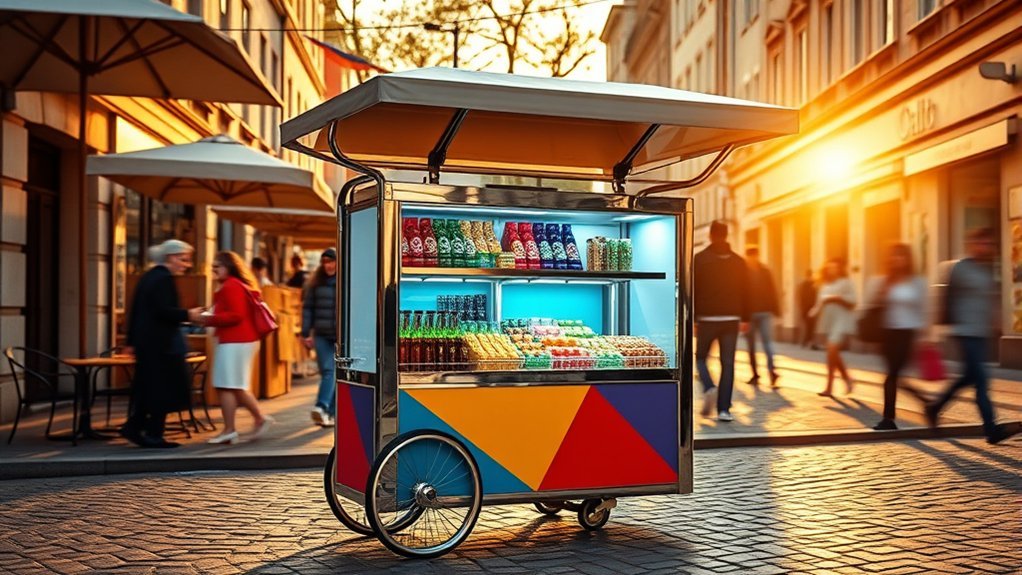
To attract customers, an outdoor vendor cart should be easy to identify in a busy setting. Vibrant color schemes can improve visibility, but the goal is not simply to use as many colors as possible. A limited palette with strong contrast between the background, logo, menu, and pricing usually makes the cart easier to recognize and read.
Distinctive branding is equally important. Use the same logo, colors, typefaces, and visual style on the front panel, canopy, menu, packaging, and staff materials where practical. Consistency helps separate the cart from surrounding booths without making the display look cluttered.
Distinctive branding works best when the logo, colors, menu, and cart panels look like parts of the same business rather than separate decorations.
Integrated LED lighting can improve visibility during evening events and can make menus and work areas easier to see. Outdoor-rated fixtures and wiring should be used where exposure to moisture is possible, and electrical installations should comply with venue and local requirements.
Digital menu boards can also be useful when prices, stock, or menu items change frequently. A printed board may be simpler for a small fixed menu, while a digital display makes more sense when rapid updates justify the extra power, weather protection, and equipment.
How to Choose Functional Features for Your Vendor Cart
Choosing functional features has a direct effect on operational efficiency. Start with what the cart must hold during a normal service period rather than selecting shelves and drawers only by appearance.
A cart should have enough storage capacity for products, packaging, utensils, cleaning supplies, payment equipment, and other permitted essentials without blocking the work surface. Frequently used items should be within easy reach, while heavier items should generally be stored low enough to help keep the cart stable.
A functional layout should also reduce unnecessary movement. If one person takes orders while another prepares or hands over products, give those tasks separate spaces when the cart size allows. Keep payment equipment away from wet prep areas, and avoid placing customer pickup where it blocks the ordering point.
Mobility features such as smooth-rolling wheels, reliable brakes, and a comfortable push handle make transport and positioning easier. Wheel diameter and tread should match the expected surface. Small hard casters may work well on smooth indoor flooring but can struggle on grass, gravel, joints, or uneven pavement.
A durable canopy can provide shade, help define the selling space, and improve visibility from a distance. It should be properly secured and used within its manufacturer’s weather limits.
Finally, integrate branding into the functional design rather than covering every available surface. Keep the logo visible, prices legible, and the serving area uncluttered so customers can quickly understand what the cart sells and where to order.
Pro Tip: Load the cart with the same products, water, batteries, equipment, packaging, and supplies you expect to carry at an event. Then push, stop, turn, and set it up before relying on it commercially. A cart that feels easy to move when empty can behave very differently when fully loaded.
Plan the Cart Around Products, Utilities, and Local Rules
An attractive cart can still fail operationally if its layout does not match what is being sold. Before ordering or building one, list every product and piece of equipment that must be used during service. Include refrigeration or hot holding where applicable, point-of-sale equipment, lighting, water, waste storage, packaging, and spare inventory.
| Planning Item | What to Check |
| Products or menu | Required storage, preparation space, display area, temperature control, and serving workflow |
| Cart capacity | Loaded weight, shelf capacity, low storage for heavy items, and secure compartments |
| Mobility | Wheel size, brakes, handles, terrain, ramps, thresholds, vehicle loading, and storage dimensions |
| Utilities | Electrical load, batteries, lighting, water, wastewater, refrigeration, and approved fuel source where applicable |
| Customer service | Readable menu, payment position, ordering point, pickup point, queue space, and accessibility |
| Weather | Shade, rain protection, drainage, wind limits, equipment protection, and shutdown procedure |
| Compliance | Venue rules, vending permission, zoning, health requirements, fire requirements, and local licenses |
Food Vending Requires Extra Planning
If the cart sells or prepares food, check requirements with the relevant local health authority before construction or purchase. The 2026 FDA Food Code is a model used by food-safety regulators, but individual jurisdictions decide what rules they adopt and enforce. Requirements can differ according to the menu, food handling, water system, equipment, location, and type of mobile operation.
Food-contact and preparation areas should use materials and equipment appropriate for the intended operation and local requirements. Handwashing, potable water, wastewater, refrigeration, hot holding, utensil washing, food protection, and commissary arrangements may also apply depending on the operation.
Note: Licenses and permits are location-specific. The U.S. Small Business Administration advises businesses to check state, county, and city requirements because licenses, permits, zoning, and fees vary by business activity and location.
Consider Fire, Electrical, and Accessibility Requirements
Carts using propane, open flames, fryers, grills, generators, or other heat-producing equipment require more planning than a simple merchandise cart. Follow equipment instructions and applicable venue, fire-department, and code requirements. The National Fire Protection Association’s mobile food safety guidance covers issues including permits, fuel systems, cooking equipment, clearance, and fire protection.
Customer access should also be considered during the design stage. Where applicable, the 2010 ADA Standards for Accessible Design include requirements for accessible sales and service counters and their approach spaces. Venue and local requirements should be checked because the exact obligations can depend on the setting and installation.
Tips for Making Your Cart Portable and Easy to Set Up
Maximizing portability and ease of setup helps vendors adapt to markets, festivals, pop-ups, and other temporary locations. Start with a frame material that provides enough strength for the expected load without making the cart unnecessarily heavy. Aluminum and other corrosion-resistant materials can be useful when they are appropriate for the design and service environment.
Collapsible or foldable components, such as removable shelves, side wings, signs, or canopy supports, can reduce storage and transport space. Any folding mechanism should lock securely during use so that a shelf or work surface cannot collapse when loaded.
Wheels should roll smoothly on the expected terrain and include reliable locking mechanisms where needed. Rubber or resilient-tread wheels can make movement easier on many surfaces, but wheel diameter and load rating are more important than material alone.
Integrated handles or push bars can make maneuvering more controlled. Position handles so the operator can push without striking the cart with their feet or placing excessive strain on the wrists and back.
Canopies, menu boards, storage components, and removable accessories should have a consistent setup sequence. Color-coded fasteners, captive hardware, labeled storage bags, or a simple setup checklist can reduce forgotten parts and speed up repeated assembly.
Before event day, practice assembling and disassembling the cart while it is loaded with realistic supplies. Confirm that every component fits in the transport vehicle and that one person is not expected to lift anything beyond what can be handled safely.
How to Weatherproof Your Outdoor Vendor Cart?
Weather resistance helps extend the usable life of an outdoor vendor cart, but no cart should be treated as completely weatherproof. Choose materials suited to repeated outdoor exposure and maintain them according to the manufacturer’s instructions.
Stainless steel, aluminum, properly coated steel, and suitable outdoor-rated finishes can help resist corrosion and moisture damage. Scratches or chipped coatings should be repaired before corrosion spreads. Wood components may need a compatible exterior sealer, while exposed fasteners and hinges should also be selected for the environment.
Seal appropriate joints and openings where water intrusion could damage storage compartments or electrical components. Do not seal areas that are intentionally designed for ventilation, drainage, combustion air, or equipment cooling.
A durable water-resistant or waterproof canopy can provide useful protection from sun and light rain. Secure it according to the manufacturer and event organizer’s instructions, and never assume that added weights or anchors make a canopy safe in every wind condition.
Protective coatings should be inspected regularly for cracking, peeling, fading, or corrosion. Clean the cart after wet or dirty events and allow enclosed compartments, fabrics, and removable panels to dry before long-term storage.
Keep the cart out of standing water when practical and make sure permitted drainage paths do not direct dirty water toward customers, neighboring vendors, electrical equipment, or storm drains. Elevating a component can help in some designs, but elevation alone does not guarantee proper drainage.
Warning: A canopy is not safe shelter during severe weather. Strong winds can destabilize canopies, signs, and carts. If thunder or lightning is present, stop outdoor operations and move to an appropriate enclosed building or other recognized safe shelter. OSHA advises remaining sheltered for at least 30 minutes after the last sound of thunder.
Branding Strategies to Stand Out at Outdoor Events
Standing out at outdoor events requires branding that customers can understand quickly. The cart should answer three questions at a glance: who you are, what you sell, and what the main options cost.
- Use a limited palette of contrasting colors that remains readable in bright daylight as well as evening lighting.
- Keep logos, typefaces, and taglines consistent across the canopy, front panel, menu, packaging, and social profiles.
- Use printed menus for simple fixed offerings and digital menu boards when frequent updates justify the added equipment and power requirements.
- Keep the cart’s front and ordering area free from excess signs that compete with the main menu.
- Use local event pages, community groups, flyers, email, or creator collaborations when they match the audience and marketing budget.
- Consider a simple loyalty program when repeat purchases are common, but keep redemption rules easy for staff and customers to understand.
Branding should never interfere with function. A large decorative panel that blocks ventilation, a banner that catches strong wind, or a display that reduces working space can create more problems than it solves.
Test Your Cart Before Event Day
A short full-load test can reveal problems that drawings and product photos will not show. Assemble the complete cart, load normal inventory, connect permitted equipment, and rehearse a sample order from start to finish.
Check whether staff can reach frequently used supplies without crossing paths, whether customers can see the menu before reaching the counter, and whether order pickup creates a bottleneck. Test brakes on the actual type of surface where possible and confirm that drawers, doors, displays, and canopy parts stay secure during movement.
After the test, create a simple opening and closing routine. Typical items include inspecting wheels and locks, checking fasteners, charging payment devices and batteries, testing lights, cleaning work surfaces, replenishing supplies, securing waste, and packing detachable components for transport.
Frequently Asked Questions
Can You Give Me Some Examples of Carts?
Common examples include compact push carts for packaged snacks or merchandise, beverage carts, farmers-market display carts, mobile food carts, concession carts, trailer-based units, and modular pop-up carts. The right format depends on the products, storage requirement, operating surface, transportation method, utilities, and local rules.
What Are Some Creative Ideas for Food Carts?
Creative concepts include fresh fruit bowls, specialty drinks, gourmet popcorn, ice cream, baked goods, regional snacks, breakfast items, or a tightly focused menu built around one signature product. Choose the concept before designing the cart so refrigeration, heating, storage, preparation, handwashing, and serving requirements can be planned correctly.
What Is the Definition of a Vending Cart?
A vending cart is generally a movable unit used to display, prepare, or sell products or food. It may be manually pushed, towed, or designed as part of a larger mobile unit. Legal definitions differ by jurisdiction, particularly for food operations, so the applicable local definition should be checked before construction or operation.
What Is the Best Shopping Cart for a Farmer’s Market?
For a farmers market, look for a cart with adequate rated capacity, stable shelves or bins, wheels suited to the market surface, dependable brakes, weather-resistant materials, secure storage, and a canopy or display system that does not obstruct customer access. Measure the stall and transport vehicle before buying so the cart fits both.
Do Outdoor Vendor Carts Need Permits?
They may. Requirements depend on the location, products, event, and equipment. Food carts can require health-department approval, while propane, generators, electrical equipment, signage, sidewalk vending, or specific sites can trigger additional rules. Check the venue and appropriate city, county, and state agencies before operating.
How Do You Keep an Outdoor Vendor Cart Safe in Bad Weather?
Use weather-resistant materials, protect equipment from moisture, secure permitted canopy components, lock the cart’s wheels, monitor forecasts, and follow the canopy manufacturer’s wind limits. Stop operations when conditions become unsafe. During thunderstorms, move staff to appropriate enclosed shelter rather than remaining under the cart canopy.
Conclusion
An effective outdoor vendor cart balances appearance with practical operation. Clear branding can attract attention, but storage, workflow, mobility, stability, weather protection, customer access, and easy setup determine whether the cart works well throughout an event. Food, electrical, or fuel-powered operations also require additional regulatory and safety planning. Designing around those needs from the beginning produces a cart that is easier to operate, maintain, transport, and recognize.
Sources
- U.S. Food and Drug Administration — 2026 Food Code — model food-safety provisions and current mobile food establishment guidance.
- U.S. Small Business Administration — Licenses and Permits — explains that licensing, zoning, and permit requirements vary by activity and location.
- U.S. Department of Justice — 2010 ADA Standards for Accessible Design — accessibility requirements for applicable sales and service counters.
- National Fire Protection Association — Food Truck Safety — fuel, cooking, clearance, inspection, and fire-safety considerations for mobile food operations.
- Occupational Safety and Health Administration — Lightning Safety — severe-weather and lightning precautions for outdoor workers.
