
The Toyota RAV4 does not have one curb weight that applies to every vehicle. Its weight changes with the model year, trim, drivetrain, powertrain, and installed equipment. Older gasoline RAV4 models often weigh in the mid-3,000-pound range, while newer hybrid and plug-in hybrid configurations require their own year-specific specifications.
Quick Answer
Toyota RAV4 curb weight varies by model year and configuration. As one historical example, 2020 gasoline trims ranged from about 3,370 pounds for the LE FWD to 3,655 pounds for the TRD Off-Road. Current 2026 models use hybrid or plug-in hybrid powertrains, so you should check the specification for your exact grade and drivetrain.
Key Takeaways
- A RAV4’s curb weight depends on its model year, grade, powertrain, drivetrain, and equipment.
- The familiar 3,370-to-3,655-pound range describes selected 2020 gasoline trims, not every RAV4.
- Toyota moved the U.S. RAV4 to a hybrid and plug-in hybrid lineup for the 2026 model year.
- AWD equipment usually adds weight, but tires, suspension tuning, power output, and weight distribution also affect performance.
- Curb weight does not determine towing capacity by itself. Always use the rating for your exact configuration.
What Toyota RAV4 Curb Weight Means

Curb weight is the manufacturer’s stated weight of a road-ready vehicle with its standard equipment and required operating fluids. It does not include passengers, personal cargo, or a trailer.
You should not confuse curb weight with the maximum amount the vehicle can safely carry. The following terms describe different limits:
| Term | What It Means | What It Includes |
|---|---|---|
| Curb weight | The vehicle’s road-ready weight before you add people or cargo | Standard equipment and required fluids |
| Payload | The weight the vehicle can carry | Passengers, cargo, accessories, and trailer tongue weight |
| GVWR | The maximum permitted weight of the loaded vehicle | Vehicle, occupants, cargo, accessories, and tongue weight |
| GCWR | The maximum permitted combined weight | Loaded vehicle and loaded trailer |
| Towing capacity | The maximum trailer weight allowed for a qualifying configuration | Trailer and everything carried in or on it |
A RAV4 curb-weight number is useful only when it identifies the model year, grade, powertrain, and drivetrain.
Toyota RAV4 Curb Weight by Trim and Model Year
The model year must come first when you compare RAV4 weights. Toyota has changed the available engines, hybrid systems, drivetrains, trim names, wheels, body equipment, and safety technology across generations.
Archived 2020 Gasoline RAV4 Weight Examples
The numbers used in the original version of this article correspond to selected fifth-generation gasoline configurations. Toyota’s official 2020 RAV4 archive identifies the applicable model-year lineup, including the TRD Off-Road grade.
| 2020 Gasoline Configuration | Referenced Curb Weight |
|---|---|
| LE FWD | 3,370 pounds |
| LE AWD | 3,490 pounds |
| Adventure AWD | 3,615 pounds |
| TRD Off-Road AWD | 3,655 pounds |
Note: These are historical 2020 gasoline-trim examples. Do not apply this table to a different model year, a hybrid, a plug-in hybrid, or a vehicle with another equipment package.
2026 RAV4 Model-Year Update
Toyota redesigned the RAV4 for 2026 and moved the U.S. lineup to hybrid and plug-in hybrid powertrains. A conventional gas-only RAV4 is no longer part of the 2026 U.S. lineup.
The 2026 grades include LE, XLE Premium, Limited, Woodland, SE, XSE, and GR SPORT. Hybrid models offer FWD or electronic on-demand AWD depending on the grade, while plug-in hybrid models use AWD.
Toyota lists 226 net combined horsepower for 2026 hybrid FWD models and 236 horsepower for hybrid AWD models. Plug-in hybrid versions produce 324 net combined horsepower. These specifications replace the older 219-horsepower figure often associated with the previous RAV4 Hybrid generation.
Because the equipment and powertrains have changed, use Toyota’s 2026 RAV4 model page and product specifications when checking a current vehicle. For a vehicle you already own, match the model year and VIN through Toyota’s manuals and vehicle information tools.
Hybrid Versus Gas RAV4 Weight
A hybrid powertrain includes components that a gasoline-only model does not have, including a traction battery, electric motors, power electronics, and related cooling hardware. However, you should not assume that every hybrid weighs a fixed 200 or 300 pounds more.
Trim equipment can change the comparison. Larger wheels, panoramic glass, power seats, skid plates, towing hardware, and AWD components may add weight independently of the powertrain.
For a fair comparison, match all four details:
- The same model year
- The same or most similar grade
- The same FWD or AWD layout
- A comparable equipment package
The 2026 lineup also makes a current gas-versus-hybrid comparison impossible within that model year because Toyota no longer offers a conventional gas-only U.S. RAV4.
How All-Wheel Drive Affects RAV4 Curb Weight
AWD versions generally weigh more than comparable FWD versions because they require additional drive components. The exact hardware depends on the generation and powertrain.
A conventional mechanical AWD system may add a driveshaft, rear differential, axles, mounting hardware, and related components. An electronic on-demand hybrid AWD system uses a rear electric motor and its supporting hardware instead of a conventional mechanical connection to the rear wheels.
The added equipment can influence curb weight and efficiency, but the main reason to select AWD is traction management. Toyota states that its 2026 electronic AWD system can send drive force to the rear wheels when front-wheel slip is detected and can adjust torque distribution based on driving conditions.
AWD does not create unlimited grip. Tire condition, tire type, road surface, speed, and driver input remain critical.
How Curb Weight Affects RAV4 Performance
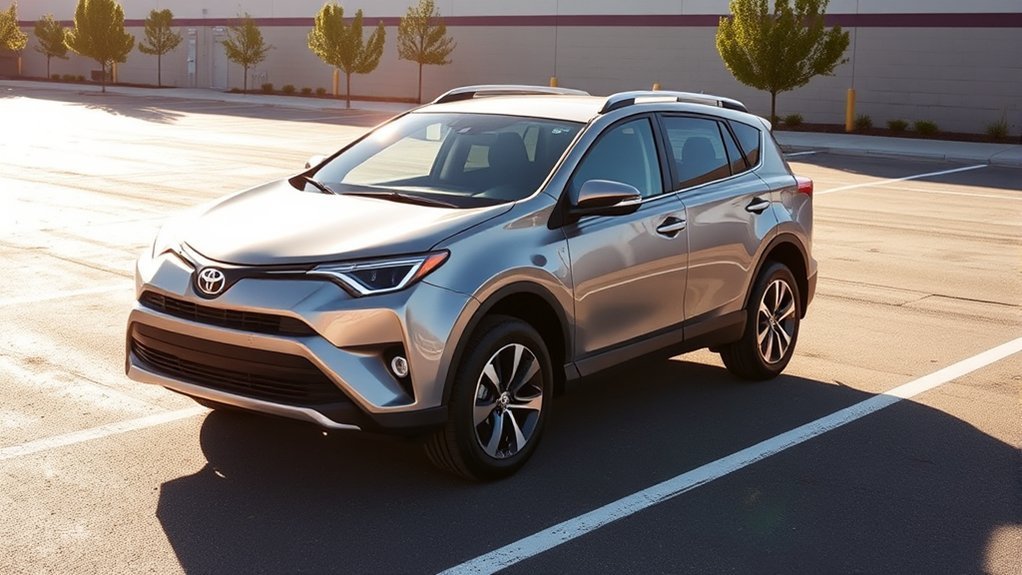
Curb weight affects acceleration, braking, efficiency, and handling, but it does not work alone. Power output, gearing, tires, aerodynamics, suspension tuning, and weight distribution can be equally important.
Acceleration and Power-to-Weight
A lighter vehicle usually requires less energy to accelerate. However, comparing weight alone can produce the wrong conclusion. A heavier RAV4 with a stronger electric-assisted powertrain may accelerate more quickly than a lighter version with less power.
Power-to-weight ratio provides more context than curb weight by itself. Electric motors can also deliver immediate torque, helping a hybrid or plug-in hybrid respond quickly despite carrying additional powertrain equipment.
Fuel Economy
Moving more mass requires energy, especially during repeated acceleration. That can affect fuel consumption. Regenerative braking, electric assistance, engine efficiency, aerodynamics, tires, temperature, and driving style can offset or increase that effect.
Use FuelEconomy.gov to compare official ratings for the exact model year and drivetrain rather than estimating fuel economy from vehicle weight.
Handling and Stability
Extra mass does not automatically create better handling or safety. A lower center of gravity may reduce body movement, while well-tuned suspension and suitable tires can improve control. Poor tire grip or excessive speed can overwhelm those advantages.
Toyota notes that the 2026 platform uses added rigidity and revised suspension components. Certain models also place the drive battery low in the chassis, which can influence weight distribution and the center of gravity.
Curb Weight, Payload, and Towing
Curb weight and towing capacity describe different things. A heavier RAV4 does not automatically tow more, and a lighter one does not automatically tow less. Toyota assigns towing limits after considering the powertrain, cooling, braking, chassis, drivetrain, hitch equipment, and other engineering limits.
For example, Toyota lists a 1,750-pound towing capacity for the 2026 RAV4 LE AWD. It lists up to 3,500 pounds for qualifying configurations such as the XLE Premium AWD, Woodland, and SE AWD. That difference shows why a single towing number cannot represent the entire lineup.
Warning: Never select a trailer rating from another trim or model year. Confirm the limits in the owner’s manual and certification information for your exact vehicle. Include passengers, cargo, accessories, hitch equipment, and trailer tongue weight when calculating the load.
Payload is also affected by what you add to the vehicle. Passengers, luggage, roof cargo, aftermarket steps, skid plates, recovery equipment, and trailer tongue weight all consume part of the available payload.
A simplified relationship is:
Available carrying capacity = permitted loaded vehicle weight minus the vehicle’s current weight.
The door-jamb loading label is more useful than a generic website figure because it reflects the vehicle’s certified configuration. A public scale can provide the actual loaded weight when you need a precise towing or travel calculation.
Hybrid Technology’s Effect on Curb Weight
Hybrid technology changes both the amount and placement of weight. The traction battery, electric motors, inverters, cables, and cooling equipment add components, but manufacturers can reduce or reposition other parts during the vehicle’s design.
Battery Placement
Battery location matters as much as the battery’s mass. Placing a battery low in the chassis can lower the center of gravity and distribute mass differently from a gasoline-only vehicle. The result may feel more settled in some driving situations, although suspension tuning and tire choice still shape the final behavior.
Performance Trade-Offs
A hybrid may carry more powertrain hardware, but its electric motors also add output and low-speed response. The redesigned 2026 RAV4 illustrates this balance with 226 horsepower in hybrid FWD form and 236 horsepower in hybrid AWD form.
The plug-in hybrid system produces 324 horsepower and carries a larger battery system. Its performance cannot be judged from curb weight alone because power, battery placement, tires, suspension, and drivetrain programming all contribute to the driving experience.
RAV4 Curb Weight Versus Competitors

The RAV4 competes with compact SUVs such as the Honda CR-V, Subaru Forester, Ford Escape, Hyundai Tucson, Kia Sportage, and Mazda CX-5. However, a useful weight comparison must control for more than the model name.
Before comparing two vehicles, confirm the following:
- Model year: Redesigns can change the platform, dimensions, powertrain, and equipment.
- Powertrain: Gasoline, hybrid, and plug-in hybrid versions are not directly interchangeable.
- Drivetrain: Compare FWD with FWD or AWD with AWD.
- Trim level: Premium seats, glass roofs, larger wheels, and off-road hardware can add weight.
- Measurement: Confirm that both figures are curb weights rather than shipping weights, test weights, or GVWR figures.
A difference of several dozen pounds rarely decides which compact SUV is best. Passenger space, payload, fuel economy, braking performance, towing rating, comfort, reliability, and total ownership needs usually matter more.
How to Find Your Exact RAV4 Curb Weight
Use a model-specific source when you need the weight of a particular RAV4:
- Identify the model year. Do not rely on a table for a different generation.
- Confirm the grade and powertrain. Check whether the vehicle is gasoline, hybrid, or plug-in hybrid.
- Confirm FWD or AWD. Drivetrain equipment can change the specification.
- Review Toyota’s product information. Use the official specification sheet or the matching owner’s manual.
- Check the vehicle labels. The certification and tire-loading labels provide vehicle-specific limits.
- Use a public scale when necessary. A scale measures the vehicle’s actual weight with its current accessories, cargo, fuel, and occupants.
Pro Tip: Use the Toyota VIN and model-year information when searching Toyota’s manuals and warranty resources. This prevents you from applying a specification from the wrong generation or drivetrain.
Frequently Asked Questions
How much does a Toyota RAV4 weigh?
The exact weight depends on the model year, grade, powertrain, drivetrain, and equipment. As a historical reference, selected 2020 gasoline trims ranged from about 3,370 pounds for the LE FWD to 3,655 pounds for the TRD Off-Road. Check the official specification for a newer hybrid or plug-in hybrid model.
What is the maximum towing capacity of a Toyota RAV4?
The maximum depends on the year and configuration. Toyota lists up to 3,500 pounds for qualifying 2026 configurations, including the XLE Premium AWD, Woodland, and SE AWD. The 2026 LE AWD is rated at 1,750 pounds, so you must use the rating for your exact vehicle.
Do RAV4 hybrid models weigh more than gas models?
They often carry additional hybrid components, but no fixed weight difference applies to every trim. Compare the same model year, grade, drivetrain, and equipment package. The 2026 U.S. lineup does not offer a conventional gas-only RAV4 for a same-year comparison.
Does AWD increase Toyota RAV4 curb weight?
AWD usually adds weight because it requires rear-drive components or an electric rear motor and related hardware. The amount varies by generation and powertrain, so compare official FWD and AWD specifications for the same grade.
How does curb weight affect fuel efficiency?
More mass generally requires more energy during acceleration. However, engine efficiency, electric assistance, regenerative braking, aerodynamics, tires, temperature, and driving habits also affect fuel use. Compare official ratings instead of estimating mileage from weight alone.
Are there weight differences between RAV4 model years?
Yes. Platform changes, powertrains, batteries, safety equipment, wheels, trim features, and drivetrain options can change curb weight. A figure from a 2020 RAV4 should not be applied to a redesigned 2026 model.
What materials are used in the Toyota RAV4’s construction?
The RAV4 uses a unibody structure with automotive steels and model-specific reinforcements. Toyota also describes added frame rigidity, revised suspension components, and structural adhesives in the redesigned 2026 platform. Exact material grades and proportions can differ by generation.
Does curb weight affect insurance costs?
Curb weight may be one characteristic associated with a vehicle, but it does not predict the premium by itself. Insurers may also consider repair costs, claims history, theft risk, safety equipment, trim, location, driver information, annual mileage, and selected coverage.
Where can I find the exact weight of my RAV4?
Start with Toyota’s specification sheet and owner’s manual for the matching model year, grade, and drivetrain. Review the vehicle’s certification and loading labels for its limits. Use a certified public scale when you need the actual loaded weight.
Sources
- Toyota USA Newsroom: 2026 Toyota RAV4 — current model information and official product-specification access
- Toyota USA Newsroom: The Next Adventure Begins, 2026 RAV4 Arrives This Winter — current powertrains, grades, AWD details, output, and towing ratings
- Toyota USA Newsroom: 2020 Toyota RAV4 — archived fifth-generation lineup and TRD Off-Road context
- Toyota Manuals and Warranties — model-year owner information and vehicle-specific guidance
- FuelEconomy.gov — official model-year fuel-economy comparisons
Conclusion
The Toyota RAV4’s curb weight cannot be reduced to one number. A useful specification must identify the model year, grade, powertrain, drivetrain, and equipment. The often-quoted 3,370-to-3,655-pound range describes selected 2020 gasoline trims, while the redesigned 2026 lineup uses hybrid and plug-in hybrid powertrains.
Curb weight can influence acceleration and efficiency, but power output, tires, suspension, battery placement, and drivetrain design also shape performance. For towing or payload calculations, use the owner information and loading limits for your exact RAV4 rather than relying on a general online range.
