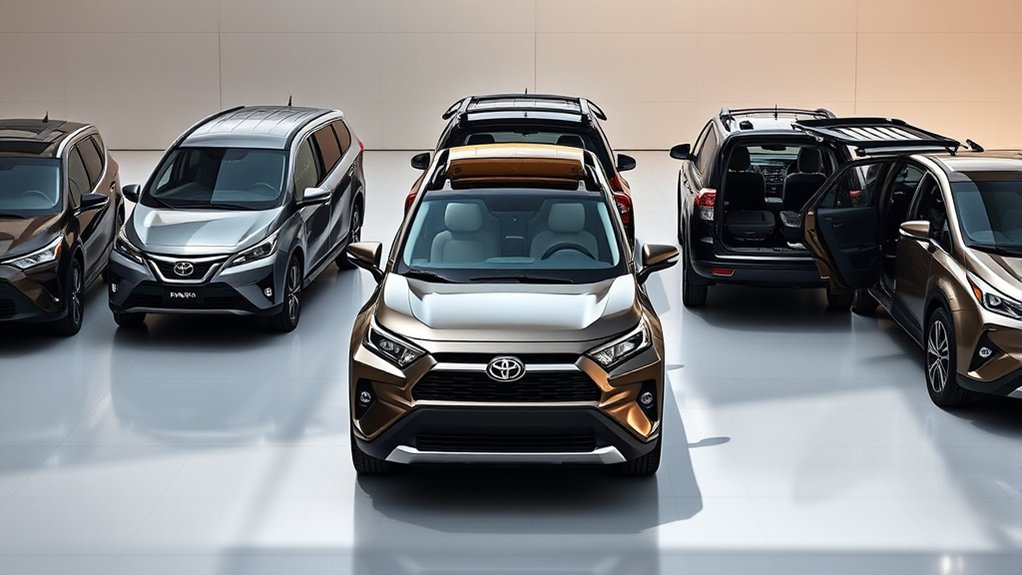
The current Toyota RAV4 is a two-row compact SUV designed for five occupants, not a seven-seat vehicle. A factory third row was available on certain older third-generation RAV4 configurations, but availability depended on the model year and market. Buyers who regularly need seven or eight seats should compare Toyota’s larger three-row models.
Quick Answer
No current U.S.-market Toyota RAV4, including the 2026 hybrid and plug-in hybrid, offers seven seats. The RAV4 is a two-row, five-passenger SUV. Some third-generation long-wheelbase RAV4s offered a small factory third row, so used buyers must verify the exact model, market, and equipment.
Key Takeaways
- The 2026 Toyota RAV4 has two rows and seats five; Toyota does not offer a current seven-seat RAV4.
- Some third-generation RAV4s were built with an optional factory third row, but availability varied by country and configuration.
- Toyota has not officially announced a “Grand RAV4” as of July 14, 2026.
- For three rows, compare the Highlander, Grand Highlander, or Sequoia instead of modifying a five-seat RAV4.
Does the Toyota RAV4 Have Seven Seats?
No current Toyota RAV4 has seven seats. The 2026 Toyota RAV4 is a two-row, five-passenger compact SUV, regardless of whether you choose a hybrid or plug-in-hybrid powertrain.
Toyota’s official 2026 materials list Core, Rugged, and Sport versions across multiple HEV and PHEV grades. They do not list a third-row package or a model called the Grand RAV4.
Note: Seating capacity can vary by country, model year, and equipment. When shopping for an older RAV4, verify the exact vehicle rather than relying only on a listing title or a generic model description.
Toyota RAV4 Seating Capacity by Generation
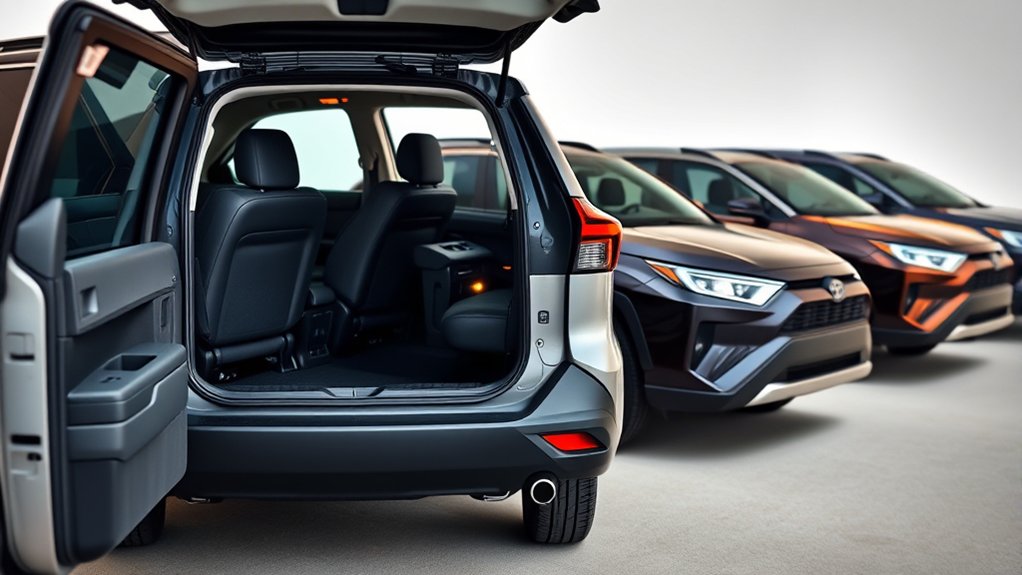
The RAV4 has usually been a five-passenger vehicle, but its history is more varied than that simple description suggests. According to Toyota’s RAV4 model history, the original May 1994 two-door model had four seats. Toyota introduced a longer four-door five-seater in March 1995.
The third generation is the main exception to the RAV4’s two-row history. Toyota produced short- and long-wheelbase versions in some markets, and the longer body could accommodate an optional third row.
| Generation | Approximate Years | Typical Capacity | Factory Third Row? |
|---|---|---|---|
| First | 1994–2000 globally | Four in the original two-door; five in the four-door introduced in 1995 | No |
| Second | 2001–2005 | Five | No |
| Third | 2006–2012 U.S. model years | Five standard; up to seven on certain configurations | Available on some long-wheelbase versions and in selected markets |
| Fourth | 2013–2018 | Five | No |
| Fifth | 2019–2025 | Five | No |
| Sixth | 2026–present | Five | No |
This history means that a used listing described as a “seven-seat RAV4” is possible, but it should not be assumed to apply to every third-generation vehicle. The seat, belts, trim panels, and mounting hardware should all be original factory equipment.
What Changed for the 2026 Toyota RAV4?
The 2026 RAV4 is the model’s redesigned sixth generation, not an upcoming concept. Toyota announced it on May 20, 2025, and the vehicle is now represented on Toyota’s current U.S. model site.
The most important changes include:
- Electrified powertrains: The U.S. lineup uses hybrid electric or plug-in-hybrid electric power.
- Multiple design groups: Toyota divides the lineup into Core, Rugged, and Sport styles.
- Updated technology: The model introduces Toyota’s newer multimedia platform and Toyota Safety Sense 4.0.
- Two-row seating: None of the announced grades adds a third row.
- Usable cargo space: Toyota lists up to 37.8 cubic feet of cargo capacity for the current RAV4.
A hybrid powertrain changes how the RAV4 is powered, not how many seating rows it has.
Terms such as “hybrid seating options” can therefore be misleading. The RAV4 Hybrid and RAV4 Plug-in Hybrid retain the same basic two-row passenger layout.
Why Are More Families Choosing SUVs?
SUVs can be practical family vehicles because they combine an enclosed cargo area, folding rear seats, a higher seating position, and a wide range of sizes. However, not every family needs a third row.
A compact two-row SUV such as the RAV4 may be the better fit when:
- No more than five people normally travel together.
- Easy parking and a manageable exterior size matter more than maximum passenger capacity.
- The cargo area will be used more often than a third row.
- Fuel economy and everyday commuting are higher priorities than carrying seven or eight people.
A three-row SUV becomes more useful when the household regularly carries more than five occupants, needs separate seating space for older children, or frequently transports relatives and friends.
The trade-off is that a third row can reduce cargo space while it is in use. Buyers should compare passenger room and luggage room in the exact seating configuration they expect to use, rather than relying only on a vehicle’s maximum cargo figure.
RAV4 vs. Toyota Models With Three Rows
Toyota currently offers several larger SUVs for shoppers who need more than five seats. Seating capacity depends on whether a vehicle has a second-row bench or captain’s chairs, so the maximum should always be described as “up to” seven or eight.
| Toyota Model | Rows | Maximum Seating | Best Fit |
|---|---|---|---|
| Toyota RAV4 | Two | Five | Compact size, commuting, cargo flexibility, and families that do not need a third row |
| Toyota Highlander | Three | Up to eight | Families needing three rows in a midsize SUV |
| Toyota Grand Highlander | Three | Up to eight | More third-row and cargo space than a compact SUV |
| Toyota Sequoia | Three | Up to eight with a bench or seven with captain’s chairs | Full-size space, stronger towing capability, and larger-family use |
The Grand Highlander illustrates the cargo trade-off clearly. Toyota lists 20.6 cubic feet with all three rows upright, 57.9 cubic feet with the third row folded, and 97.5 cubic feet with both rear rows folded. The right choice therefore depends on whether you need passenger seats and cargo room at the same time.
How the RAV4 Works as a Family Vehicle
Although it lacks a third row, the RAV4 can still suit a household of up to five people. Its main family-oriented strengths are its manageable size, enclosed cargo area, folding rear seatbacks, and current driver-assistance technology.
- Two-row simplicity: Families that never need more than five seats avoid carrying an unused third row.
- Cargo flexibility: The rear seats can be folded when larger items need to be transported.
- Everyday maneuverability: A compact SUV is generally easier to park and place in a garage than a larger three-row model.
- Current safety technology: The redesigned 2026 model introduces Toyota Safety Sense 4.0, although drivers must still remain attentive and use proper restraints.
Pro Tip: Bring the child seats, stroller, sports equipment, and luggage you use most often to a test drive. A vehicle that appears spacious in a showroom may feel very different once every seat and cargo item is in place.
Warning: Never use the RAV4’s cargo area as passenger seating or install an improvised third row. Every occupant should use a factory-designed seating position and properly fitted seat belt. Follow NHTSA seat-belt guidance, and use an age- and size-appropriate child restraint where required.
Buying a Used RAV4 With a Third Row
If you specifically want a seven-seat RAV4, concentrate your search on third-generation vehicles. Even then, do not assume that every RAV4 from that period includes the optional seats.
Before buying, check the following:
- Confirm the VIN and original specification: Ask a Toyota dealer or obtain the original build information for the vehicle.
- Inspect the complete seating system: A factory third row should include integrated mounting points, seat belts, head restraints, latches, and matching interior trim.
- Read the owner’s manual: Confirm the approved seating positions, folding procedure, passenger limits, and child-restraint instructions.
- Test access: Make sure passengers can enter and leave the third row without damaged seat mechanisms or blocked pathways.
- Check usable space: Older compact-SUV third rows are generally best for smaller or occasional passengers and may leave little cargo room when raised.
- Review recalls and condition: Check the VIN for open safety recalls and have the vehicle inspected before purchase.
A genuine factory-equipped example may serve a buyer who only occasionally needs two extra seats. For routine seven-person travel, a purpose-built current three-row Toyota will usually provide easier access and more usable passenger and cargo space.
Frequently Asked Questions
Does any current Toyota RAV4 seat seven people?
No. The current 2026 Toyota RAV4 is a two-row vehicle with seating for five. Toyota does not list a factory third-row option for any current RAV4 grade.
Which Toyota RAV4 years offered a third row?
A factory third row was available on certain third-generation long-wheelbase RAV4 configurations. In the United States, that generation covers the 2006–2012 model years. Availability varied, so verify the equipment on the individual vehicle.
Do the 2026 RAV4 Hybrid and Plug-in Hybrid have different seating capacities?
No. Hybrid and plug-in-hybrid describe the powertrain, not a seating package. Current RAV4 HEV and PHEV models retain a two-row, five-passenger layout.
Has Toyota announced a seven-seat Grand RAV4?
No. As of July 14, 2026, Toyota has not officially announced a model called the Grand RAV4. The official sixth-generation RAV4 lineup does not include a third-row version.
What will a Grand RAV4 cost, and when will it be released?
There is no official price or release date because Toyota has not announced a Grand RAV4. Any price range or launch schedule published without a Toyota announcement is speculation.
How does RAV4 cargo space compare with a three-row Toyota?
Toyota lists up to 37.8 cubic feet for the current RAV4. A Grand Highlander offers much more maximum cargo space, but only 20.6 cubic feet remains behind its raised third row. Compare cargo measurements in the seating configuration you will actually use.
Can an aftermarket third row be added to a five-seat RAV4?
An improvised or non-approved cargo-area seat should not be used. Passenger protection depends on factory-engineered seat structures, anchor points, head restraints, and seat belts. Choose a factory three-row vehicle if more than five seating positions are required.
Conclusion
The current Toyota RAV4 does not offer seven seats. It remains a practical two-row choice for households of up to five people, while certain third-generation used models may have a factory third row. Because older availability varies, verify the exact vehicle’s original equipment before buying.
Families that regularly carry more than five occupants should compare the Highlander, Grand Highlander, and Sequoia. These models were engineered as three-row vehicles and provide a more appropriate combination of passenger restraints, access, and cargo flexibility than an aftermarket conversion.
Sources
- 2026 Toyota RAV4 — Toyota — current model lineup, cargo capacity, grades, and specifications.
- Toyota Debuts the All-New 2026 RAV4 — Toyota USA Newsroom — sixth-generation launch, powertrains, grades, technology, and official announcement date.
- Toyota RAV4 History — Toyota UK — original four-seat launch, five-seat four-door introduction, and third-generation long-wheelbase history.
- 2026 Toyota Highlander — Toyota — three-row layout and seating for up to eight.
- 2026 Toyota Grand Highlander — Toyota — seating capacity and cargo measurements with different rows folded.
- 2026 Toyota Sequoia — Toyota — seven- and eight-passenger seating configurations and third-row system.
