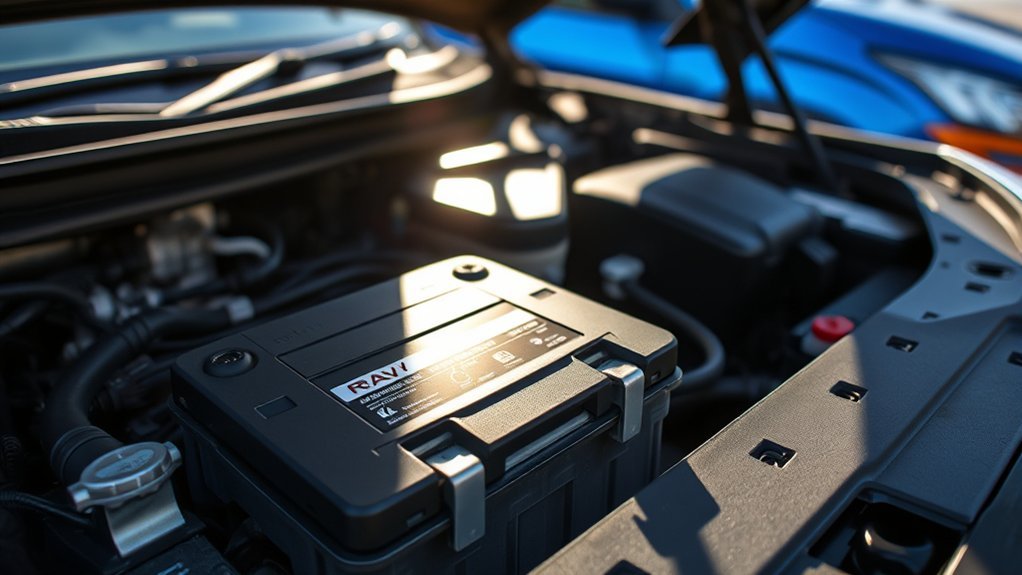
Your Toyota RAV4’s 12-volt battery will often provide about three to five years of service, but age alone cannot predict failure. Climate, trip length, storage, electrical loads, charging-system health, and battery fitment all matter. This guide covers the low-voltage battery used to power accessories and vehicle computers, not the high-voltage traction battery in hybrid and plug-in hybrid models.
Quick Answer
A Toyota RAV4 12V battery commonly lasts around three to five years. Hot weather, repeated short trips, long periods of inactivity, corrosion, and deep discharge can shorten that time. Begin annual testing once the battery is about three years old, and replace it when testing shows weak capacity or reliable starting becomes uncertain.
Key Takeaways
- Three to five years is a planning range, not a guaranteed replacement interval.
- A resting-voltage reading estimates charge level but does not prove that the battery can deliver enough current under load.
- Gasoline RAV4s and hybrid or plug-in hybrid RAV4s use the 12V battery differently, so charging-system checks are not identical.
- Battery size, terminal layout, chemistry, capacity, and hold-down fit must match your exact model year and powertrain.
- Recycle the old battery through a retailer or approved collection program. Never place a lead-acid battery in household trash.
Understanding the Lifespan of Toyota RAV4 Batteries
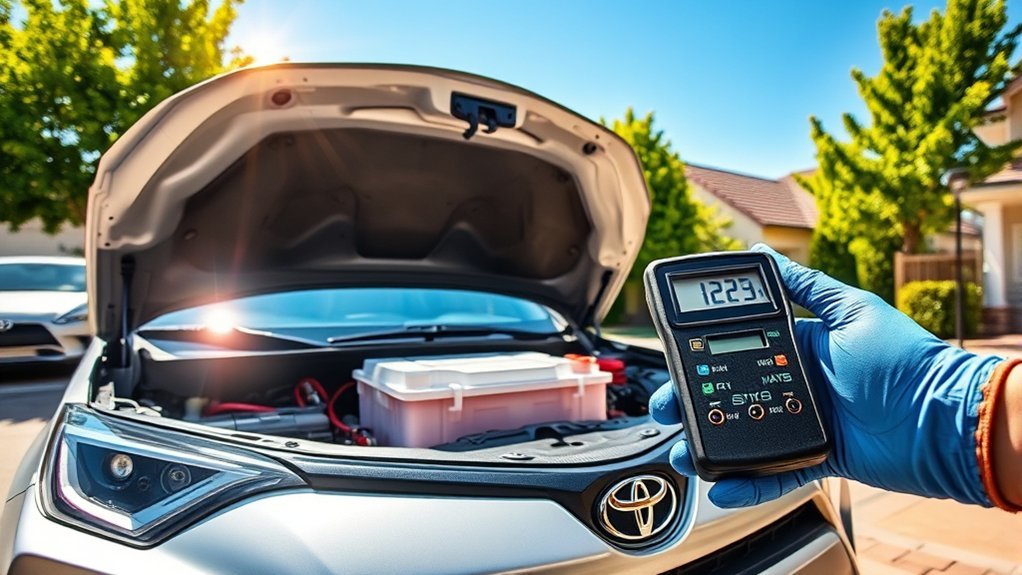
Most drivers should treat three to five years as a useful inspection and replacement-planning window. It is not a Toyota-specific promise, and a battery may fail sooner or remain serviceable longer. Battery manufacturer guidance also emphasizes that vehicle use, temperature, discharge history, and charging practices prevent a single lifespan from applying to every vehicle.
Battery age tells you when to test more often. A proper battery test tells you whether replacement is actually due.
A battery that reaches six, seven, or even eight years is possible, but that is an unusually long service life rather than a dependable expectation. Repeated deep discharge can permanently reduce capacity, while a healthy charging system and regular driving may help the battery remain charged.
12V Battery vs. Hybrid Traction Battery
Every RAV4 needs low-voltage power for computers, locks, lighting, and control systems. In a gasoline RAV4, the 12V battery also supplies the starter motor. In a hybrid or plug-in hybrid RAV4, the 12V auxiliary battery powers the control systems that allow the vehicle to enter READY mode; the high-voltage system then starts the gasoline engine when needed.
Hybrid models therefore do not use a conventional alternator in the same way as a gasoline model. Their 12V battery is charged through a DC-to-DC converter when the vehicle is in READY mode. This difference does not guarantee a longer 12V battery life, because low use, accessory loads, storage, and parasitic draw can still discharge it.
Note: Toyota battery locations, jump points, charging instructions, and replacement specifications vary by model year and powertrain. Use the Toyota owner’s manual for your exact RAV4.
Tips for Extending the Life of Your RAV4 Battery
You cannot stop normal battery aging, but you can reduce avoidable strain. Focus on keeping the battery charged, the terminals clean, and the charging system healthy.
- Limit repeated short trips: A brief drive may not replace all the energy used during startup, especially in cold weather or with heavy accessory use.
- Drive or charge the vehicle during storage: If the RAV4 will sit for weeks, use a smart maintainer approved for the battery chemistry and follow Toyota’s connection instructions.
- Reduce key-off loads: Unplug accessories, switch off lights, and investigate unexplained overnight discharge.
- Protect the battery from heat: Shade or covered parking can reduce under-hood heat exposure when practical.
- Keep connections secure: Loose clamps and corrosion increase resistance and can imitate a weak battery.
- Test before extreme seasons: A battery near the end of its life may reveal weakness during the first cold snap or prolonged heat.
Pro Tip: Record the installation month and year on the battery or in your maintenance log. Once it reaches about three years, ask for a battery and charging-system test during routine service.
How to Recognize Signs of a Failing 12V Battery?
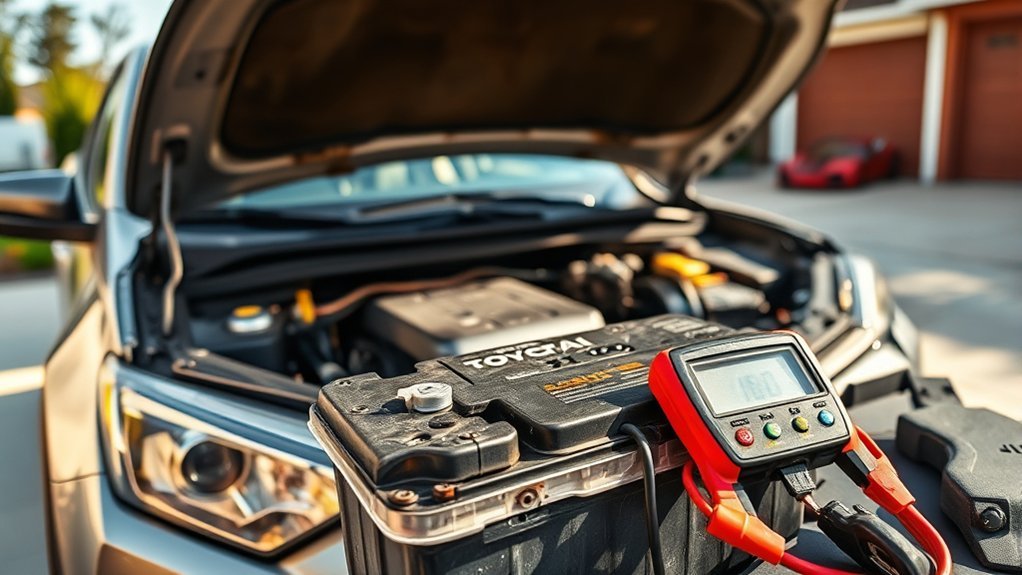
A weak battery can resemble a charging-system, cable, starter, or parasitic-drain problem. Look for patterns rather than relying on one symptom.
| Sign | What It May Mean | Next Step |
|---|---|---|
| Slow engine crank | Low charge, weak battery, poor cable connection, or starter issue on gasoline models | Inspect connections and perform a battery and starting-system test |
| RAV4 will not enter READY mode | Weak 12V auxiliary battery or another hybrid-system fault | Check 12V voltage and diagnostic codes; do not assume the traction battery failed |
| Dim or flickering lights | Low system voltage, loose connection, or charging problem | Test the battery and charging system |
| Repeated electronic warnings | Low voltage may disrupt control modules, but warning lights can also indicate unrelated faults | Scan for diagnostic trouble codes before replacing parts |
| Corroded or loose terminals | High resistance at the connection | Clean and tighten correctly, then retest |
| Swollen, cracked, leaking, or hot case | Physical damage, overheating, freezing, or internal failure | Stop handling or charging it and seek professional service |
A battery warning light does not automatically mean the battery itself is bad. On a gasoline RAV4, it often points to a charging-system problem. On a hybrid, warning messages may involve the DC-to-DC converter or another system. Diagnose the cause before installing a new battery.
Factors That Affect the Longevity of Your RAV4 Battery
Battery service life depends on how often it remains undercharged, how much heat it experiences, and whether the vehicle has an electrical or charging fault.
- Climate: Heat accelerates chemical aging. Cold reduces available output and can expose a battery that was already weak.
- Trip pattern: Frequent short trips and long idle periods can leave the battery below full charge.
- Electrical loads: Dash cameras, trackers, chargers, lights, and modules that remain active after shutdown can create excess draw.
- Charging-system condition: Undercharging leaves the battery depleted, while overcharging can damage it.
- Deep discharge: Leaving lights on or storing the RAV4 until the battery is flat can permanently reduce capacity.
- Battery fitment: The wrong case size, terminal position, chemistry, or hold-down arrangement can create reliability and safety problems.
- Vibration and connection quality: A loose hold-down or cable connection can damage the battery and interrupt power.
Steps to Take When Your RAV4 Battery Fails

Start with a visual inspection and a basic voltage check, then confirm the result with a battery load or conductance test. Do not replace the battery until you have considered loose connections, a charging fault, or an excessive key-off draw.
Warning: A lead-acid battery contains corrosive acid and can release flammable gas. Keep flames, sparks, jewelry, and smoking materials away. Wear eye protection and gloves. Do not charge, jump-start, or handle a battery that is frozen, leaking, cracked, swollen, or unusually hot.
Check Battery Connections
Turn the vehicle off, keep the smart key away from the RAV4, and inspect the battery area. Look for loose clamps, damaged cables, corrosion, a missing terminal cover, or a battery that can move in its tray.
Light surface corrosion can be cleaned only after the system is made safe according to the owner’s manual. Avoid allowing cleaning solution or debris to enter the battery. If the cable ends are damaged, the hold-down is incorrect, or the positive terminal can contact metal, have the vehicle serviced.
Test Battery Voltage
With the vehicle fully off and after surface charge has settled, place a digital multimeter across the 12V battery terminals or approved jump points. A fully charged conventional lead-acid battery often rests near 12.6 volts, but temperature, chemistry, recent charging, and vehicle loads affect the reading.
A reading below about 12.4 volts suggests the battery is not fully charged. A reading near or below 12.0 volts indicates a heavy discharge. These values do not prove the battery is defective. Charge it correctly, allow it to rest, and perform a load or conductance test to measure its ability to deliver current.
For a gasoline RAV4, charging voltage is checked with the engine running. For a hybrid or plug-in hybrid, check system voltage with the vehicle in READY mode because a DC-to-DC converter charges the 12V system. Charging voltage varies with temperature, load, battery state, and control strategy, so compare results with the specification for your model instead of relying on one universal range.
Consider Professional Assistance
Ask a qualified technician to perform a battery, charging-system, and parasitic-draw test when the battery repeatedly goes flat, warning lights remain on, the vehicle will not enter READY mode, or voltage readings are inconsistent. A proper diagnosis helps separate battery failure from a starter, cable, alternator, converter, module, or wiring problem.
Professional help is also appropriate when the battery is difficult to access, the vehicle requires initialization after power loss, or the replacement procedure involves vent tubes, battery monitoring, or special retainers.
Choose the Correct Replacement Battery
RAV4 battery requirements vary by model year, engine, hybrid system, equipment, and market. Do not assume every RAV4 uses a 600-CCA flooded lead-acid battery. Match the original specifications for case dimensions, terminal orientation, hold-down design, venting, chemistry, capacity, and cold-cranking performance.
Use the battery label, Toyota parts information, or your model-specific owner’s manual. After installation, confirm that the battery cannot move and that the positive terminal and cable cannot contact the hold-down or nearby metal.
Owners should also use the NHTSA VIN recall lookup to check for open safety recalls and follow any Toyota remedy instructions before or after battery replacement.
Why You Should Keep an Eye on Your Battery
Battery performance often declines gradually until a temperature change, extended parking period, or high electrical demand causes a no-start condition. Regular checks reduce surprise failures and may reveal charging or connection problems before they damage the replacement battery.
Monitor Battery Health Regularly
Check the battery date, case, hold-down, cables, and terminals during routine maintenance. Once the battery reaches about three years of age, annual testing is sensible. Test sooner if starting slows, the vehicle has needed a jump, or it sits for long periods.
A professional conductance or load test is more useful than voltage alone because it measures whether the battery can supply power under demand. Keep the test result so you can compare capacity over time.
Prevent Unexpected Failures
Act on repeat discharge instead of repeatedly jump-starting the vehicle. A healthy battery should not go flat overnight under normal conditions. If it does, check for lights, plug-in accessories, aftermarket equipment, modules that fail to sleep, or a charging-system fault.
Before seasonal travel, verify the battery’s condition and keep model-appropriate jump-start instructions available. A portable jump pack can be useful, but it must be connected only to the points and in the sequence specified by Toyota.
Battery Storage and Parasitic Drain
A parked RAV4 still uses a small amount of power for security, keyless entry, memory, and control modules. Aftermarket dash cameras, trackers, remote starters, and chargers can increase that draw. Long storage can therefore discharge a healthy battery.
If the vehicle will sit for an extended period, follow Toyota’s storage guidance. A compatible smart maintainer is usually safer than occasional brief idling, but the charger must match the battery chemistry and be connected in a ventilated area according to its instructions. Do not disconnect the battery casually because some vehicle settings and systems may require reinitialization.
Related Guides
Frequently Asked Questions
Can I jump-start my Toyota RAV4 battery?
Yes, but use the procedure and approved connection points in the owner’s manual for your model year and powertrain. Gasoline, hybrid, and plug-in hybrid instructions can differ. Never jump a frozen, leaking, swollen, or damaged battery, and keep sparks away from the battery.
How do I dispose of my old battery properly?
Return a lead-acid vehicle battery to a battery retailer or an approved household hazardous-waste program. The U.S. Environmental Protection Agency says automotive lead-acid batteries should not go in household trash or municipal recycling bins.
What type of 12V battery does a RAV4 require?
The correct battery depends on the model year, engine or hybrid system, trim, and market. Match the required dimensions, terminal position, chemistry, venting, capacity, cold-cranking rating, and hold-down design. Use Toyota parts information or the owner’s manual rather than a universal 600-CCA recommendation.
Can extreme cold weather affect battery performance?
Yes. Cold slows the battery’s chemical reactions and reduces available output, while a gasoline engine needs more starting power. Heat is also harmful because it accelerates battery aging. Test an older battery before severe weather rather than waiting for a no-start event.
Is it safe to charge my RAV4 battery at home?
It can be safe when you use a quality charger that matches the battery chemistry and follow both the charger instructions and Toyota’s manual. Charge in a ventilated area away from sparks. Stop if the battery becomes hot, leaks, swells, smells unusual, or appears damaged.
Does a low voltage reading mean the battery must be replaced?
Not by itself. Low resting voltage may mean the battery is discharged rather than worn out. Charge it correctly, let it rest, and perform a load or conductance test. If it cannot hold charge or repeatedly fails under load, replacement is likely appropriate.
Conclusion
A Toyota RAV4 12V battery often lasts around three to five years, but testing and symptoms matter more than age alone. Protect it from deep discharge, keep its connections secure, and investigate repeat power loss. When replacement is needed, use the exact battery specification and installation method for your model year and powertrain.
Do not confuse the 12V battery with the high-voltage hybrid traction battery. Follow Toyota’s manual for testing, charging, jump-starting, and replacement, and recycle the old battery through an approved program.
Sources
- Toyota Manuals and Warranties — model-specific operating, jump-starting, charging, and battery guidance.
- National Highway Traffic Safety Administration Recall Lookup — VIN-based safety recall checks.
- U.S. EPA: Used Household Batteries — lead-acid battery hazards, handling, and recycling guidance.
- OPTIMA Batteries: How Long Do Car Batteries Last? — manufacturer guidance on why battery life varies with use, temperature, and maintenance.