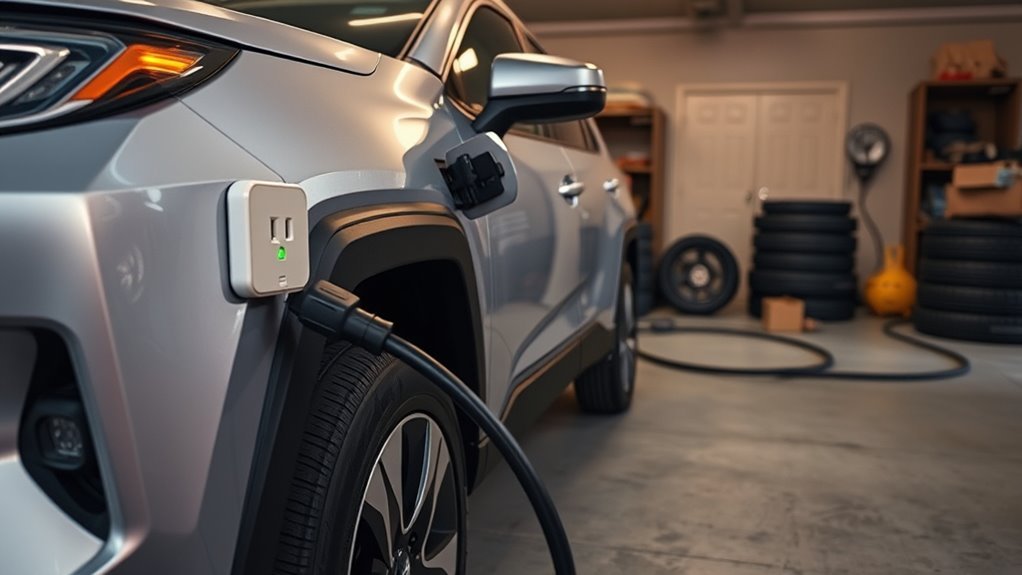
The 2026 Toyota RAV4 Plug-In Hybrid charging time depends on your country, electrical supply, and charging equipment. A 100-volt outlet can charge a compatible Japanese-market vehicle, but Toyota does not publish a confirmed 12–18-hour full-charge estimate for this setup. Understanding the difference between 100V, 120V, and higher-voltage charging helps you plan home charging without relying on misleading figures.
Quick Answer
Toyota does not specify a full-charge time for the 2026 RAV4 Plug-In Hybrid on 100V. Japanese-market 100V charging is limited to 6A, making it considerably slower than 200V charging. Toyota recommends 200V, with published charging times of approximately 4.5–7.5 hours. U.S. vehicles use 120V or 240V home charging.
Key Takeaways
- There is no verified Toyota estimate supporting a 12–18-hour full charge on 100V for the 2026 RAV4 Plug-In Hybrid.
- Japanese-market 100V charging is limited to 6A, or approximately 0.6 kW of input power.
- In Japan, Toyota quotes approximately 7.5 hours at 200V/16A or 4.5 hours at 200V/30A.
- U.S. models include a dual-voltage charging cable designed for compatible 120V and 240V supplies.
- DC fast charging is available on the U.S. XSE and Woodland plug-in hybrid grades, but not the SE or GR SPORT.
How Long Does a 2026 RAV4 Plug-In Take to Charge?
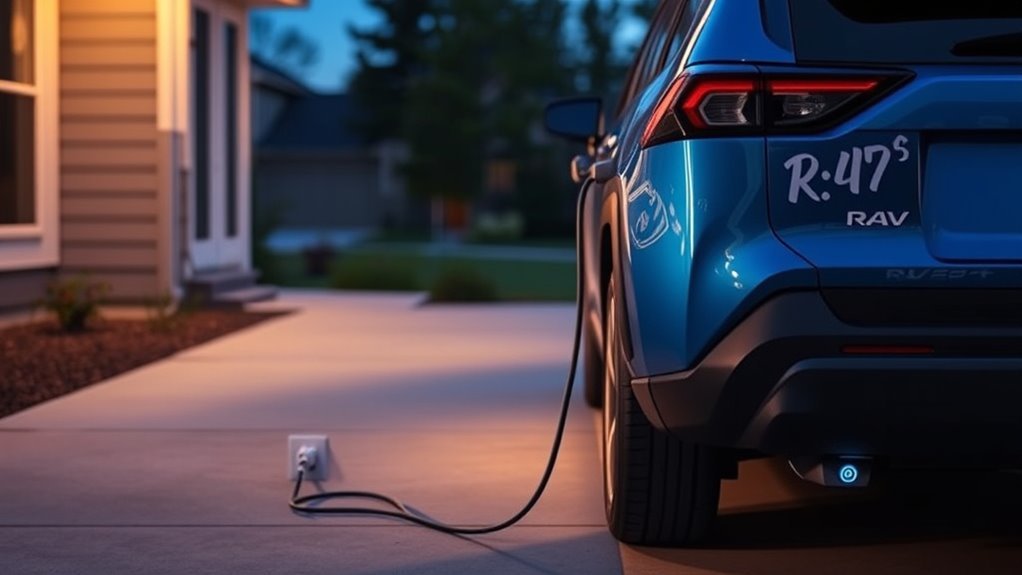
The charging time for a 2026 RAV4 Plug-In Hybrid depends on the voltage, available current, and vehicle specification. Toyota publishes different charging figures for Japan, the United States, and Canada.
For Japanese-market vehicles, Toyota confirms that 100V charging is supported, but does not recommend it because a full charge takes a very long time.
The Japanese charging system limits 100V input to 6A. That provides approximately 600 watts, or 0.6 kW, before charging losses.
By comparison, a 200V supply at 16A provides approximately 3.2 kW. A suitable 200V/30A charging station provides approximately 6 kW.
This difference explains why a standard low-voltage outlet cannot match a dedicated home charging station.
For U.S. owners, the relevant household voltage is normally 120V rather than 100V. The charging equipment and published specifications should match the vehicle’s market.
What Changes RAV4 Plug-In Charge Time?
The main factors are electrical power, battery charge level, onboard charging capacity, and temperature. The same RAV4 can take considerably longer to recharge when connected to a lower-powered supply.
Charging time also depends on whether the quoted figure measures a nearly depleted battery to full or only a partial charging session.
Charging Level Differences
Level 1 charging uses a lower-voltage household supply. Level 2 uses higher-voltage AC power and can deliver substantially more energy.
The onboard charger converts incoming AC electricity into the DC electricity stored by the vehicle’s battery.
A charging station’s advertised power does not guarantee that the vehicle will accept that amount. Actual charging power is limited by the vehicle, equipment, and electrical supply.
According to Toyota USA’s 2026 RAV4 specifications, the plug-in hybrid grades have different charging hardware:
- SE: 7-kW onboard AC charger and J1772 charging port.
- GR SPORT: 7-kW onboard AC charger and J1772 charging port.
- XSE: 11-kW onboard AC charger, CCS1 port, and DC fast-charging capability.
- Woodland: 11-kW onboard AC charger, CCS1 port, and DC fast-charging capability.
These specifications apply to U.S.-market vehicles. Charging hardware and available packages can differ in other countries.
Battery Size and Temperature
A larger battery generally takes longer to charge when the available electrical power stays the same. However, the amount of energy needed also depends on how much charge remains when you connect the vehicle.
Battery temperature matters because the vehicle manages charging to protect its battery and electrical components.
Toyota’s published Japanese charging estimates use a battery temperature of approximately 25°C. Actual results can differ when conditions are colder or hotter.
Several factors can extend a charging session:
- A low starting state of charge.
- Cold weather that requires battery heating.
- High battery temperature after demanding driving.
- Reduced charging current or limited station output.
- Electrical accessories consuming power while charging.
- Voltage drops or interruptions in the electrical supply.
Charging also slows as the battery approaches full capacity. A short partial recharge is therefore not directly comparable with a full charging session.
What Level 1 Home Charging Is Like
Level 1 charging is convenient because it can use an appropriate household electrical outlet. However, it is much slower than a dedicated higher-voltage charging setup.
The correct voltage and charging cable depend on the market where your RAV4 was sold.
Charging a Japanese-Market RAV4 on 100V
The 2026 Japanese-market RAV4 PHEV supports 100V charging at a maximum of 6A.
Its 100V input is limited to approximately 0.6 kW, so replenishing a deeply depleted battery takes a substantial amount of time.
Toyota does not provide a confirmed 2026 full-charge time for this specific setup in its published charging-time table.
According to the 2026 Japanese RAV4 charging manual, the maximum current cannot be increased beyond 6A while using 100V.
Drivers should use a compatible charging cable and correctly rated electrical equipment. Do not assume that a cable or adapter designed for another market is suitable.
For regular charging, Toyota recommends a 200V supply.
Charging a U.S. RAV4 on 120V
U.S.-market 2026 RAV4 Plug-In Hybrid models include a dual-voltage charging cable for compatible 120V and 240V home charging.
A normal 120V connection is useful when you cannot install Level 2 equipment. However, a full recharge can extend well beyond a typical overnight parking period.
The exact duration depends on the vehicle’s charging settings, available current, and starting battery percentage.
It is important not to confuse this model with its predecessor.
In its 2025 RAV4 Plug-In Hybrid specifications, Toyota quoted approximately 12 hours for charging on a standard 120V outlet under ideal conditions.
That estimate applies to the earlier model and should not automatically be used for the redesigned 2026 RAV4.
The practical benefit of Level 1 is that you can recover some electric driving range while the vehicle is parked. Whether it provides enough energy overnight depends on how far you drive each day.
When a Level 2 Charger Makes Sense
A Level 2 charger makes sense when you regularly use the RAV4’s electric range and need predictable charging between trips.
Higher-voltage charging delivers more power and reduces the time needed to replenish the battery.
For Japanese-market vehicles, Toyota’s official charging-time table gives these estimates:
- 200V at 16A: approximately 7 hours 30 minutes.
- 200V at 30A: approximately 4 hours 30 minutes.
Both figures describe charging from the point where EV mode switches to hybrid operation until the battery is fully charged, under Toyota’s stated test conditions.
The faster 6-kW setup requires compatible charging equipment. Toyota’s standard Japanese-market charging cable does not provide the full 6-kW charging capability.
In North America, Level 2 charging normally uses a 240V supply.
Toyota Canada publishes approximately 3.5 hours for a 10%–100% recharge using a compatible 7-kW setup. Its higher-powered XSE Technology package can complete the same charging window in approximately 2.5 hours under ideal conditions.
Level 2 charging is particularly useful when your daily driving uses most of the available electric range.
It provides several practical benefits:
- Less downtime between trips.
- More predictable charging before work or travel.
- Greater flexibility when several household members share the vehicle.
- Better use of available electric driving range during the day.
You do not necessarily need a wall-mounted charging station if your vehicle includes a compatible dual-voltage cable and your home has an appropriate 240V outlet.
However, the electrical installation must support the equipment’s required continuous load.
Can Public Stations Charge It Faster?
Yes. Compatible public Level 2 stations can charge a RAV4 Plug-In Hybrid faster than a standard household outlet.
Some 2026 models also support DC fast charging, which bypasses the onboard AC charger and supplies DC electricity to the battery.
However, not every RAV4 Plug-In Hybrid has DC fast-charging hardware.
The following table separates charging figures by market and model configuration. The charging percentages matter because a 10%–80% estimate is not the same as a full charge.
| Station Type | Voltage | Typical Time |
|---|---|---|
| Japan Level 1 | 100V / 6A | No published full-charge estimate; Toyota does not recommend this method |
| Japan AC Charging | 200V / 16A | Approximately 7.5 hours to full |
| Japan AC Charging | 200V / 30A | Approximately 4.5 hours to full |
| U.S. Level 1 | 120V | Depends on current and starting charge; no confirmed 2026 full-charge figure in Toyota USA’s cited announcement |
| U.S. Level 2: SE / GR SPORT | 240V | Approximately 4 hours, 10%–80% |
| U.S. DC Fast Charging: XSE / Woodland | Compatible CCS1 DC station | Approximately 30 minutes, 10%–80% |
| Canada Level 1 | 120V | Approximately 50 hours, 10%–100% |
| Canada Level 2 | 240V | Approximately 2.5–3.5 hours, 10%–100%, depending on equipment |
| Canada DC Fast Charging | Compatible DC station | Approximately 35 minutes, 10%–80%, on the XSE Technology package |
The Canadian figures come from Toyota Canada’s 2026 charging specifications. They are included for comparison and should not be treated as universal figures for every market.
For U.S. vehicles, check the charging port before selecting a public station. The SE and GR SPORT use J1772 for AC charging, while the XSE and Woodland have CCS1 ports that support compatible DC equipment.
A higher-powered public station will not automatically reduce charging time beyond the vehicle’s own limits.
Also, Toyota’s approximately 30-minute DC estimate refers to charging from 10% to 80%, not from empty to full.
How to Charge Your RAV4 Plug-In More Efficiently
The most practical charging setup is one that safely replenishes the energy you use between trips. For drivers with long commutes or frequent daily travel, Level 2 charging can make electric driving more convenient.
Follow these steps to improve charging reliability and avoid unnecessary delays.
- Confirm your vehicle specification. Identify its model year, country of sale, charging port, and supported voltage.
- Check the outlet. Make sure it is grounded, properly rated, and suitable for sustained vehicle charging.
- Use compatible equipment. Choose the supplied charging cable or equipment approved for the vehicle and electrical supply.
- Inspect the cable. Check the connector, plug, and cable for visible wear or damage before charging.
- Check the charging schedule. Confirm that delayed charging settings will not prevent charging when you need it.
- Match the power supply to your driving. Use Level 2 when Level 1 cannot restore enough range during your normal parking time.
- Monitor charging progress. Check the vehicle’s charging display and estimated completion time.
Warning: Do not use damaged outlets, improvised adapters, or unsuitable extension cords for vehicle charging. EV charging draws electrical current for long periods. An inadequate connection can overheat and create a fire risk.
The U.S. Department of Energy’s home charging guidance recommends suitable dedicated electrical circuits and qualified electricians for Level 2 installations.
An electrician can confirm whether your electrical panel, wiring, circuit protection, and outlet support the equipment you intend to use.
If charging repeatedly stops, inspect the vehicle’s charging messages and equipment status. A tripped breaker, poor electrical connection, or excessive battery temperature can interrupt charging.
If the problem continues, stop using the affected equipment and have the electrical system or vehicle inspected by a qualified professional.
Frequently Asked Questions
How Long to Charge a PHEV on a 120V Outlet?
A plug-in hybrid can take several hours or longer to charge on a 120V outlet. The exact time depends on battery capacity, charging current, and starting charge level. Toyota quoted approximately 12 hours for the previous-generation U.S. RAV4 Plug-In Hybrid, but that figure should not automatically be applied to the redesigned 2026 vehicle.
How Long Does It Take to Fully Charge a RAV4 Plug-In?
The 2026 RAV4 Plug-In Hybrid’s full-charge time varies by market and equipment. Toyota Japan quotes approximately 4.5–7.5 hours on compatible 200V charging setups. Toyota Canada quotes approximately 2.5–3.5 hours on suitable 240V Level 2 equipment. These estimates use specific starting charge levels and test conditions.
Can I Plug My Toyota RAV4 PHEV Into a Household Socket?
Yes, provided the outlet and charging equipment meet the vehicle’s requirements. U.S. models support compatible 120V home charging. Japanese-market vehicles support 100V charging, although Toyota recommends 200V for regular use. Never use an incompatible plug, improvised adapter, or damaged electrical connection.
Can I Leave My RAV4 Prime Plugged In All the Time?
You can generally leave the vehicle connected after charging completes when using approved equipment and a suitable electrical supply. The vehicle manages battery charging and stops normal charging at its configured limit. Follow the owner’s manual for extended parking, battery care, and charging in extreme temperatures.
Does Every 2026 RAV4 Plug-In Hybrid Support DC Fast Charging?
No. In the United States, the 2026 XSE and Woodland plug-in hybrid grades support compatible CCS1 DC fast charging. The SE and GR SPORT use J1772 ports for Level 1 and Level 2 charging. Toyota estimates approximately 30 minutes for a 10%–80% DC charging session under ideal conditions.
Conclusion
The 2026 RAV4 Plug-In Hybrid can use household charging, but a 100V outlet is a particularly slow option. Toyota does not publish a verified 12–18-hour full-charge estimate for this setup and recommends 200V charging for Japanese-market vehicles.
For U.S. owners, a compatible 120V connection provides basic home charging, while 240V Level 2 equipment offers faster replenishment. Choose the charging method that matches your vehicle, electrical installation, and daily driving needs.
Sources
- Toyota Japan: 100V Charging FAQ: Confirms 100V compatibility and explains why Toyota does not recommend it for regular charging.
- Toyota Japan: 2026 RAV4 PHEV Charging Manual: Supports the 100V charging-current limit and charging-equipment guidance.
- Toyota USA: 2026 RAV4 Specifications: Confirms U.S. charging hardware, trim differences, dual-voltage cable, and DC fast-charging estimates.
- Toyota USA: 2025 RAV4 Plug-In Hybrid: Supports the earlier model’s approximately 12-hour charging estimate.
- Toyota Japan: RAV4 Charging-Time Specifications: Provides the 200V charging times and their test conditions.
- Toyota Canada: 2026 RAV4 Plug-In Hybrid: Provides Canadian Level 1, Level 2, and DC charging estimates.
- U.S. Department of Energy: Charging Electric Vehicles at Home: Explains home charging equipment, dedicated circuits, and electrical installation considerations.
