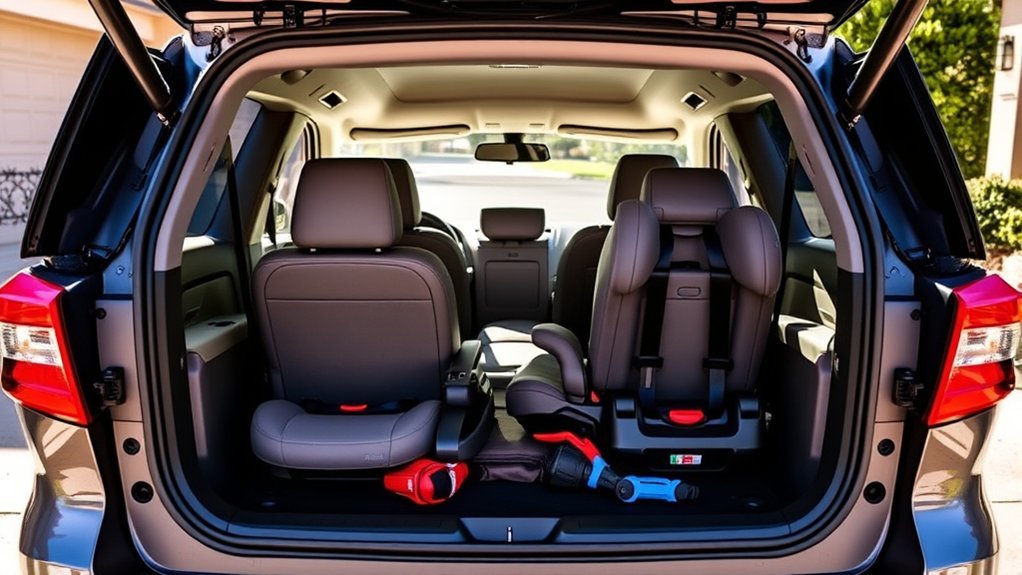
The Toyota RAV4 is a two-row compact SUV with seating for up to five people. Two adults usually fit comfortably in the rear, while three adults can sit across for shorter trips but may find the seat tight. Passenger and cargo measurements vary by model year and powertrain, so check the specifications for the exact RAV4 you own or plan to buy.
Quick Answer
A Toyota RAV4 seats five people in two rows, with two front seats and a three-person rear bench. It works well for four adults or a family with children. Five adults can ride legally when every person has a seat belt, but the three passengers sharing the rear bench may feel crowded on longer drives.
Key Takeaways
- The Toyota RAV4 has two rows, five seating positions, and no third row.
- The 2026 RAV4 provides 41.0 inches of front legroom and 37.8 inches of rear legroom.
- Two rear adults generally have comfortable space, but three adults must share the bench width.
- The two outboard rear positions provide complete lower-anchor child-seat locations; always confirm center-seat installation rules in the owner’s manual.
- The 2026 RAV4 offers up to 37.8 cubic feet behind the rear seats and up to 70.4 cubic feet with the second row folded, although Plug-in Hybrid figures can differ.
How Many Passengers Can Fit in the Toyota RAV4?
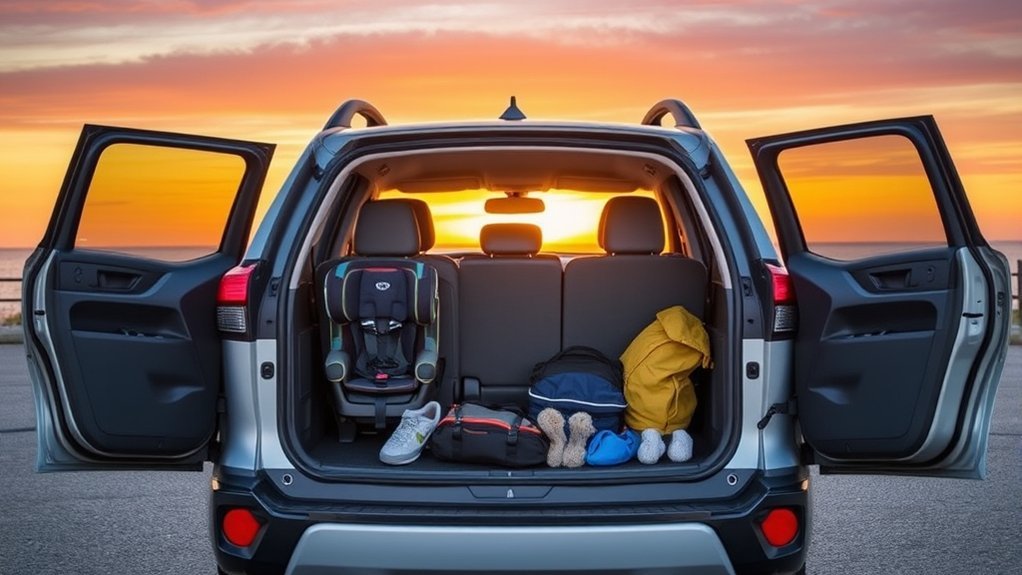
The Toyota RAV4 accommodates up to five passengers in a two-row layout. The front row has two individual seats, while the second row is a three-person bench. The RAV4 does not offer a third row, so shoppers needing six or more seats should consider a larger vehicle.
Five people can ride when each person occupies a designated seating position and uses the corresponding seat belt. However, legal seating capacity and real-world comfort are not the same. The cabin works especially well for four adults, two adults with children, or two adults with two rear passengers.
Three adults can use the rear bench, but shoulder and hip space become more important than legroom. The middle passenger must share space with both outboard passengers and may also sit over a firmer, slightly raised section of the cushion.
The RAV4 has five seat belts, but its most comfortable adult arrangement is usually two people in front and two people in the rear.
Current Toyota RAV4 Seating Dimensions
The following figures apply to the U.S.-market 2026 Toyota RAV4. Measurements can vary by model year, trim, roof equipment, and powertrain.
| Measurement or Feature | 2026 RAV4 | What It Means |
|---|---|---|
| Seating capacity | 5 passengers | Two front seats and a three-person rear bench |
| Front legroom | 41.0 inches | Generous adjustment range for most drivers and front passengers |
| Rear legroom | 37.8 inches | Usable adult space, although some rivals provide more |
| Rear shoulder room | 56.4 inches | Comfortable for two adults; closer contact with three |
| Rear hip room | 49.6 inches | Bench width may be the limiting factor for three adults or three child restraints |
| Cargo space behind rear seats | Up to 37.8 cubic feet | All five seating positions remain available |
| Maximum cargo space | Up to 70.4 cubic feet | Measured with the second row folded |
| Rear seat design | 60/40 split-folding | Lets you trade one or more rear seating positions for cargo length |
Note: Many online RAV4 guides list 37.6 cubic feet behind the rear seats and 69.8 cubic feet with them folded. Those measurements generally describe the 2019–2025 generation. Toyota lists higher maximum figures for the redesigned 2026 RAV4. Plug-in Hybrid cargo capacity may also differ because of battery packaging.
Understanding Toyota RAV4 Seating Arrangements
The RAV4’s five seating positions remain the same across the main trim range, but upholstery, adjustment, heating, ventilation, and comfort features vary. The 2026 LE uses fabric-trimmed seats, while higher grades may add SofTex-trimmed upholstery, power adjustment, heated front seats, or ventilation.
The rear seat uses a 60/40 split-folding design. Folding the narrower section generally preserves two rear seating positions while making room for a long item. Folding the wider section preserves one rear position and creates a larger cargo area.
When both portions are upright, all five seating positions remain available. When both are folded, rear passengers cannot occupy those positions, but the RAV4 provides its greatest cargo volume.
Car Seat Compatibility in the Toyota RAV4
The RAV4 can work well for families, but child-restraint fit depends on the seat model, installation direction, front-seat position, and model year. The rear outboard positions provide complete lower-anchor locations, while tether anchors support forward-facing installations. Check the 2026 RAV4 owner’s manual for the exact anchor locations and permitted seating positions.
The center rear position may require a seat-belt installation rather than the use of lower anchors. Never borrow lower anchors from the two outboard positions unless the RAV4 manual and the child-restraint manufacturer both expressly allow that configuration.
According to NHTSA child-seat guidance, a car seat may be secured with either its approved lower anchors or the vehicle seat belt. A forward-facing restraint should also use its top tether when the vehicle and child-seat instructions permit it.
Lower anchors have weight limits. NHTSA advises checking the child seat’s label and instructions. When no different manufacturer limit applies, the allowable child weight for lower-anchor use can be calculated by subtracting the child seat’s weight from 65 pounds. After that limit is reached, install the restraint with the vehicle seat belt and continue using the top tether when permitted.
Warning: Never assume that three car seats will fit safely because the RAV4 has three rear seating positions. Every restraint must sit flat, remain independently tight, and avoid pressing against or displacing the neighboring restraint. Follow both manuals and have the installation checked by a certified Child Passenger Safety Technician when you are unsure.
Pro Tip: Bring the exact child seats to a test drive. Install them before buying, then confirm that the front seats remain usable, the doors close without contact, and each harness or buckle can be reached independently.
Balancing Cargo and Passenger Space
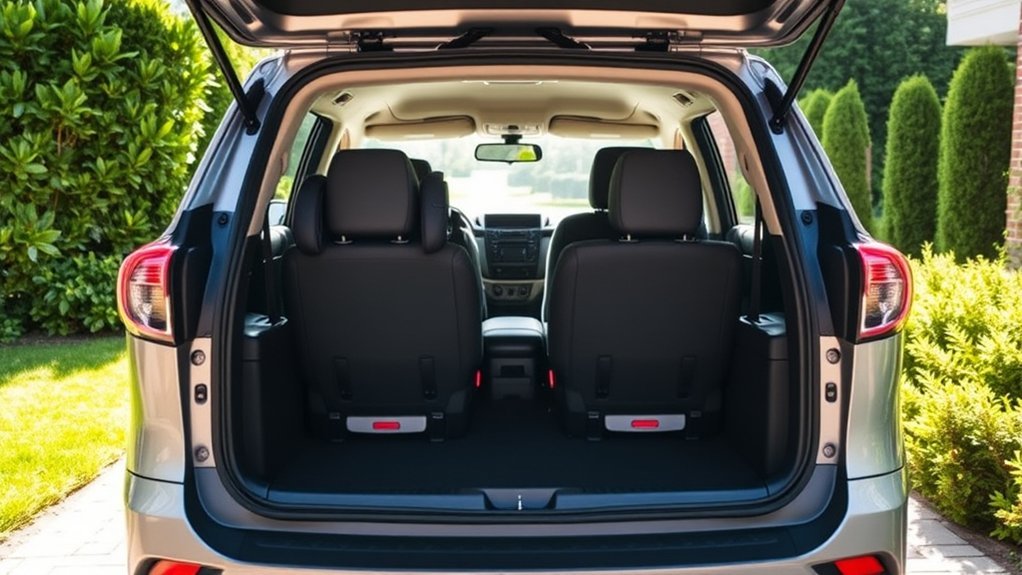
The RAV4 balances passenger seating and cargo flexibility through its split rear seat. The 2026 RAV4 provides up to 37.8 cubic feet of cargo space behind the second row, allowing all five seating positions to remain available.
Folding both rear sections expands maximum cargo volume to 70.4 cubic feet. This arrangement works for larger luggage, boxed furniture, outdoor gear, or other bulky items, but it removes all rear seating positions.
Cargo Space With Five Passengers
Keep the entire rear bench upright when carrying five people. Place heavy bags low and close to the rear seatbacks. Avoid stacking items high enough to block rear visibility, and secure objects that could move during sudden braking.
Cargo Space With Three or Four Passengers
Fold one part of the 60/40 seat when you need extra cargo length. Folding the narrower section can leave room for two rear passengers. Folding the wider section can leave one rear seating position available.
The exact split orientation may vary by market or model configuration, so check which section folds before planning where a child restraint or adult passenger will sit.
Maximum Cargo Configuration
Fold the complete second row when only the driver and front passenger need seats. The flatter load area provides the greatest cargo capacity, although the cargo floor may not be perfectly level in every trim.
Before loading long or heavy objects, confirm that the liftgate closes fully and that the item cannot slide forward into the front-seat area.
Advantages of the Toyota RAV4’s Interior Dimensions
The RAV4’s main advantage is not class-leading space in every measurement. Its strength is the combination of five usable seats, a practical rear bench, a large cargo area, and a body size that remains manageable in parking lots and urban traffic.
Spacious Passenger Comfort
The front row’s 41.0 inches of legroom provides a useful adjustment range for most drivers. Rear passengers receive 37.8 inches of legroom, which is suitable for many adults but less generous than some competing compact SUVs.
Seat comfort also depends on more than published measurements. Cushion height, seatback angle, front-seat position, roof equipment, and a passenger’s body proportions can all affect the experience.
| 2026 Compact SUV | Published Rear Legroom | Difference From RAV4 |
|---|---|---|
| Toyota RAV4 | 37.8 inches | Baseline |
| Honda CR-V | 41.0 inches | 3.2 inches more |
| Subaru Forester | 39.4 inches | 1.6 inches more |
These measurements show that the RAV4 does not lead the segment for rear legroom. However, dimensions alone cannot tell you which seat feels best, so taller passengers should sit in the rear during a test drive.
Versatile Cargo Solutions
The RAV4 provides enough cargo space for common family needs without requiring the rear seats to be folded. Its wide rear opening, split-folding seat, and available power liftgate can simplify grocery runs, luggage loading, and outdoor trips.
The redesigned 2026 rear seatback folds flatter than before, according to Toyota’s 2026 RAV4 announcement. The available hands-free power liftgate also uses a wider detection area on equipped grades.
What Are Back Seat Comfort Limitations in the Toyota RAV4?
The RAV4’s second row is practical, but buyers should consider bench width, center-seat comfort, front-seat position, and child-restraint fit rather than focusing on legroom alone.
Limited Space for Three Adults
Two rear adults generally have reasonable personal space. Adding a third adult creates a tighter arrangement because all three passengers must share the available shoulder and hip room.
The center position is usually the least comfortable for a long trip. Its passenger may have less cushion width and must sit between the two outboard occupants. Three smaller adults may fit acceptably, while three broad-shouldered adults are more likely to feel crowded.
Rear Door Access and Car Seat Loading
Rear-seat access depends on how far the door can open in the available parking space, the height of the child restraint, and the position of the front seat. A rear-facing infant seat with a large carrier may require more clearance than a booster or forward-facing seat.
Rather than relying on a general door-opening claim, test the intended restraint in the vehicle. Confirm that you can place the child in the seat without hitting the roof, door frame, front seat, or neighboring restraint.
Strategies for Toyota RAV4 Cargo Space With Passengers
Use the following strategies to carry passengers and luggage without creating unnecessary clutter or compromising safety:
- Choose the seat split before loading: Decide whether you need one, two, or all three rear seating positions.
- Keep heavy items low: Position dense cargo near the rear seatbacks rather than close to the liftgate.
- Use containers that fit the floor: Rectangular bins and soft bags waste less space than oversized hard luggage.
- Protect seat-belt access: Do not let bags cover rear buckles or prevent a belt from retracting properly.
- Secure loose objects: Use the vehicle’s approved cargo tie-down points where appropriate.
- Maintain rear visibility: Keep cargo below the window line whenever possible.
- Check child-seat clearance: Cargo must not press against a child restraint or interfere with its support leg, tether, belt path, or adjustment mechanism.
Warning: The RAV4 does not have a universal 1,500-pound passenger limit. Read the Tire and Loading Information label on the driver-side door jamb. The combined weight of the driver, passengers, cargo, installed accessories, and any applicable trailer tongue weight must not exceed the value shown for your specific vehicle.
Related Guides
Frequently Asked Questions
Does the Toyota RAV4 have a third row?
No. The Toyota RAV4 has two rows and five designated seating positions. Drivers who regularly need six, seven, or eight seats should consider a three-row SUV or minivan.
What safety features does the RAV4 offer for child passengers?
The RAV4 includes rear seat belts, lower child-restraint anchors, top tether anchors, airbags, and rear-door child-protector locks. The 2026 model also includes Toyota Safety Sense 4.0. Driver-assistance features do not replace a correctly installed child restraint, seat-belt use, or attentive driving.
Can three car seats fit across the RAV4’s rear bench?
Some combinations of narrow child restraints may fit, but three-across compatibility is not guaranteed. Each restraint must be approved for its seating position and independently installed according to both manuals. Test the exact three seats before relying on the arrangement.
Can the RAV4 accommodate taller passengers comfortably?
The front row provides 41.0 inches of legroom and should accommodate many taller adults. The rear offers 37.8 inches, so comfort depends on the front-seat position, passenger proportions, and trip length. Taller buyers should test both rows in person.
Are different seat materials available in the RAV4?
Yes. Available materials depend on model year and trim. The 2026 LE uses fabric-trimmed seats, while higher trims can include SofTex-trimmed upholstery. Heated, ventilated, power-adjustable, and sport-style front seats are available on selected grades.
How does the RAV4’s rear legroom compare with competitors?
The 2026 RAV4 provides 37.8 inches of rear legroom. That is less than the 2026 Honda CR-V’s 41.0 inches and the 2026 Subaru Forester’s 39.4 inches. Seat shape and driving position also affect comfort, so published measurements should support, rather than replace, an in-person comparison.
What is the maximum weight limit for the RAV4’s passengers?
Toyota does not provide one universal passenger-only limit for every RAV4. Check the Tire and Loading Information label on the driver-side door jamb. The combined weight of all occupants and cargo must remain at or below the value printed on that vehicle-specific label.
Conclusion
The Toyota RAV4 seats five people, but it is most comfortable with four adults or a family using the second row for children. The 2026 model provides 41.0 inches of front legroom, 37.8 inches of rear legroom, and up to 37.8 cubic feet of cargo room with every seat available.
Its 60/40 split rear bench makes it easy to exchange passenger positions for additional cargo space. Before choosing the RAV4 for three adults or three child restraints across the rear, complete an in-person fit test. Also verify specifications, child-seat instructions, and the occupant-and-cargo limit for the exact model year and trim.
Sources
- Toyota 2026 RAV4 Specifications — current U.S. model features, dimensions, capacities, and trim information.
- Toyota 2026 RAV4 Brochure — seating, cargo, safety, and equipment information.
- Toyota USA Newsroom: 2026 RAV4 — sixth-generation changes, rear-seat design, powertrains, and Toyota Safety Sense 4.0.
- NHTSA Vehicle and Car Seat Parts Explained — lower anchors, tether anchors, installation methods, and anchor weight limits.
- Honda 2026 CR-V Specifications — competitor rear-legroom comparison.
- Subaru 2026 Forester Specifications — competitor seating and rear-legroom comparison.
