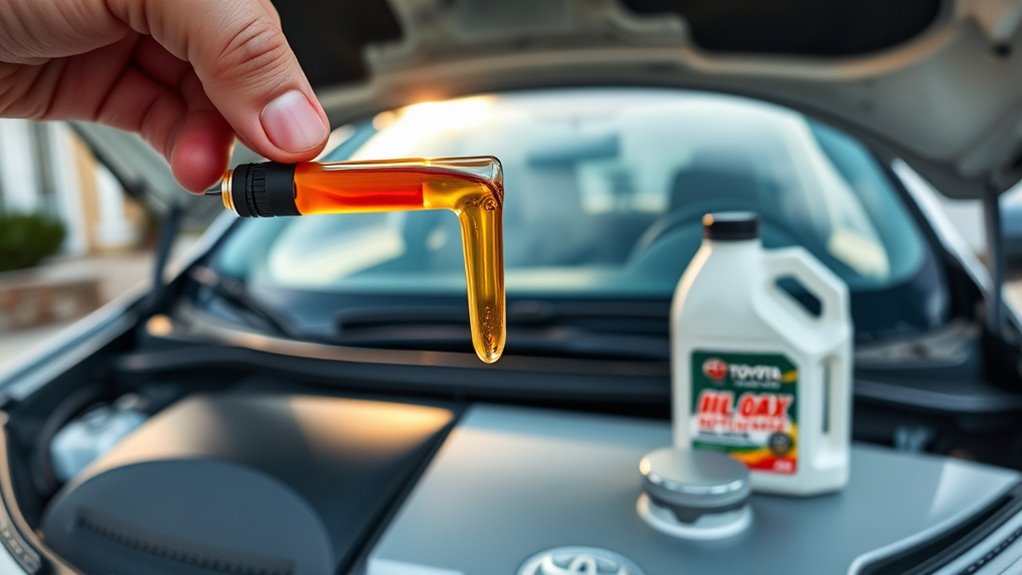
For a 2013 RAV4, if the oil level is between the first mark and full, add about 0.5 quart at a time. Use 0W-20 if available, and only use 5W-30 or 5W-20 as a temporary substitute. Check the dipstick on level ground with the engine cooled, then recheck after each addition. Avoid overfilling, since excess oil can cause damage. More detail helps confirm the correct topping-off range.
Key Takeaways
- For a 2013 RAV4, add about 1 quart of 0W-20 engine oil when the dipstick is between the first mark and full.
- If the oil level is near the minimum mark, add only 0.5 quarts at a time to avoid overfilling.
- Check the dipstick on a cooled engine parked on level ground for the most accurate reading.
- Recheck the oil level after each small addition and wait a few minutes for the oil to settle.
- If the level goes above the maximum mark, remove excess oil immediately to prevent engine damage.
How Much Oil to Add to a 2013 RAV4
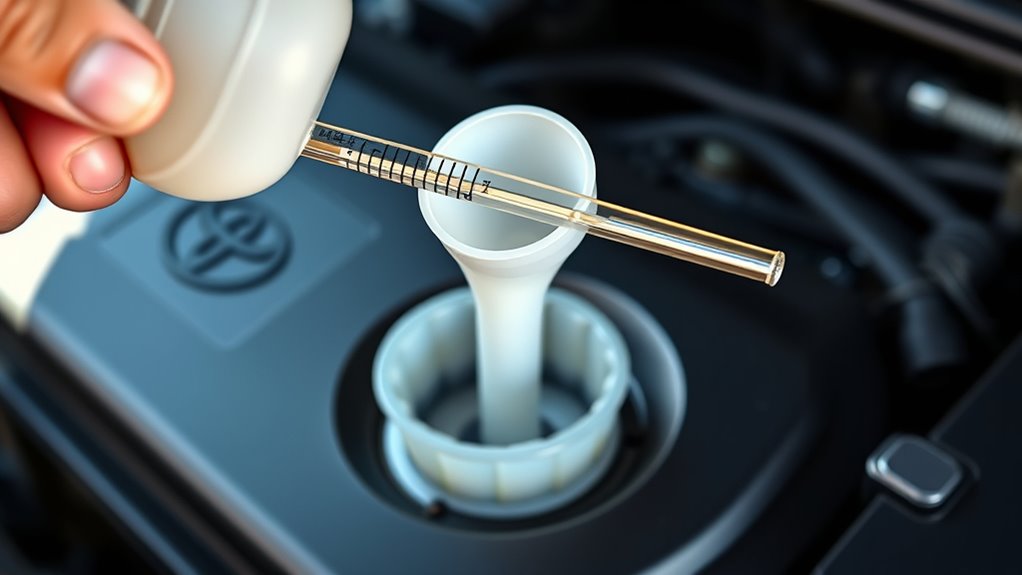
When the oil level on a 2013 RAV4 falls between the minimum and maximum marks on the dipstick, adding about one quart of 0W-20 engine oil is typically sufficient to bring it to the proper level. This specification supports engine efficiency and reliability.
If 0W-20 is not available, 5W-30 or 5W-20 can serve as temporary substitutes, but the owner should return to 0W-20 as soon as possible. Oil should be added gradually to preserve control over the final level. Make sure the amount remains below the upper mark, because overfilling can harm the engine.
Even when the oil is near full, drivers may still need to monitor levels regularly to keep the system within range. Consistent maintenance reduces the chance of the oil light activating and limits exposure to avoidable repair costs.
A disciplined approach to lubrication preserves mechanical freedom and extends service life.
Check the Dipstick First
Before adding oil, the dipstick should be checked on a cooled engine with the vehicle parked on level ground for an accurate reading. This process separates guesswork from control.
The yellow-handled dipstick is located, then withdrawn carefully to avoid contact with hot components. It is wiped clean with a cloth, which is basic dipstick maintenance and prevents residue from distorting the next reading.
After reinsertion to full depth, it is removed again and the oil film is inspected against the minimum and maximum markers. Engine temperature can alter apparent level, so verification must occur only after cooldown.
Oil viscosity may also affect how the film clings to the metal, making a clean second reading essential. If the level sits below the minimum mark, the engine is underfilled and requires correction.
Precision here preserves mechanical health and supports informed, independent maintenance decisions.
Add Oil in Small Batches
Small measured additions are the safest approach once the dipstick shows the oil level near the minimum mark. In this range, the technician should add about 0.5 quarts at a time, preserving control and reducing the risk of overfill. This method supports disciplined oil maintenance tips and respects engine performance factors that depend on the lubricant staying within specification.
- Add only a small batch, then pause.
- Use the recommended oil viscosity types, such as 0W-20.
- Allow the oil to settle for a few minutes.
- Keep checking the dipstick after each addition.
Gradual filling creates precise adjustment and keeps the level between the markers, where the 2013 RAV4 can operate with greater efficiency and durability.
Overfilling can impair freedom of movement inside the engine, while the correct oil type sustains clean circulation and stable protection.
Recheck the Level After Topping Off
After the initial top-off, the oil level should be verified again with the dipstick to confirm it sits between the minimum and maximum markers. A brief oil settling time is necessary before measurement, because the added fluid must distribute through the engine.
The check should be performed on level ground, with the engine off, and the dipstick fully seated before removal. If the reading still falls below the minimum mark, small additions may be made and the level rechecked after each increment.
The check should be done on level ground, engine off, with the dipstick fully seated before removal.
This disciplined method supports engine efficiency tips by avoiding guesswork and preserving lubrication integrity. It also reflects sound oil maintenance practices, since precise monitoring reduces wear, protects performance, and limits unnecessary service costs.
The objective is not excess, but controlled correction to the specified range. Repeated verification keeps the 2013 RAV4 operating within its intended oil capacity and helps sustain reliable, liberated motoring.
Fix an Overfilled Oil Level
An overfilled oil level is indicated when the dipstick reading exceeds the maximum marker and should be corrected promptly to reduce engine risk.
Excess oil can be removed with an oil extractor or by draining a small amount through the drain plug into a suitable container.
After adjustment, the dipstick should be checked again to confirm the level is within the approved range.
Spot Overfill Symptoms
Excess oil in a 2013 RAV4 can present as unusual engine noise, visible oil leaks, smoke from the exhaust, or an illuminated oil pressure light. These signs indicate overfill, where oil aeration can reduce lubrication and raise engine damage risk. A detached inspection should focus on symptom pattern, not speculation.
- Listen for excessive valve train noise or harsher-than-normal operation.
- Check for leaks around seals and the engine bay.
- Observe exhaust smoke, which may show oil forced into combustion.
- Note any oil pressure warning, because a high level can distort system readings.
Prompt correction preserves reliability and freedom from avoidable repair costs.
Routine maintenance tips include rechecking the dipstick after every top-up and confirming the level remains within specification.
Remove Excess Oil
When the dipstick shows oil above the maximum marker, the overfilled level should be corrected immediately to reduce the risk of engine damage.
Excess oil can be removed with a suction pump or turkey baster inserted into the dipstick tube, allowing controlled oil extraction without opening the engine. The operator should withdraw small amounts at a time and monitor the dipstick frequently so the level moves back toward the marked limits.
Precision matters; too much removal can create a low-oil condition, while too little leaves the overfill unresolved.
After the level is restored, the removed oil must be contained and disposed of as hazardous waste according to local regulations.
This measured correction preserves mechanical integrity and keeps the lubrication system within safe operating range.
Recheck Dipstick Level
A final dipstick check should confirm that the oil level now sits between the minimum and maximum marks after any overfill correction. This dipstick maintenance step protects engine performance and verifies that excess oil has been removed properly.
If the reading remains above the maximum marker, further adjustment is required before operation.
- Withdraw the dipstick fully and wipe it clean.
- Reinsert it completely, then remove it for an accurate reading.
- Confirm the oil film falls within the marked range.
- If uncertainty remains, consult the owner manual or a professional mechanic.
Regular monitoring preserves mechanical freedom from pressure spikes, leaks, and avoidable wear.
Correct oil level control is essential, precise, and nonnegotiable for reliable operation.
Use 5W-30 or 5W-20 Temporarily
If 0W-20 is unavailable, the 2013 RAV4 can be topped off temporarily with 5W-30 or 5W-20. These temporary oil options preserve lubrication until the specified oil is obtained.
The driver should add oil in small increments and recheck the dipstick after each addition; this controls level rise and prevents overfilling.
Add oil in small increments and recheck the dipstick each time to prevent overfilling.
Oil viscosity effects differ slightly: 5W-30 offers marginally stronger film strength in higher temperatures, while 5W-20 may reduce internal drag and support fuel efficiency in cooler conditions.
Either grade can sustain engine operation in an emergency, provided it meets the manufacturer’s specifications.
These engine protection tips are limited measures, not a substitute for the correct 0W-20 fill. Once conditions allow, the temporary oil should be replaced with the recommended grade to restore the intended balance of wear control, economy, and performance.
A disciplined approach protects mechanical freedom through measured, informed maintenance, not guesswork.
Watch for Low Oil Warnings
After any temporary top-off with 5W-30 or 5W-20, the driver should monitor the 2013 RAV4 for low oil warnings and dashboard oil light alerts. These warning indicators confirm whether oil pressure remains within safe range and whether engine performance is protected.
Oil maintenance tips emphasize that oil should be checked at least monthly, and before long trips, so depletion is detected early and freedom from avoidable repair costs is preserved.
- Inspect the dipstick when the level sits between minimum and maximum markers.
- Add oil gradually, then recheck to avoid overfill.
- If the oil light activates, stop driving immediately.
- Confirm the level before resuming any trip.
Low oil can damage bearings, cam surfaces, and other critical parts. Prompt response prevents escalation and keeps the powertrain operating cleanly.
Regular monitoring reduces risk, supports reliable operation, and allows the owner to act decisively rather than face sudden mechanical failure.
Frequently Asked Questions
How Much Oil to Put in a 2013 RAV4?
A 2013 RAV4 typically takes about 4.6 quarts with filter. If topping off between dipstick marks, add oil slowly, near one quart. Preferred oil types are 0W-20; maintenance tips include frequent dipstick checks.
How Much Oil to Put in When Topping Up?
A 2013 RAV4 topping up usually requires about one quart, added in half-quart increments. This supports oil capacity, protects engine health, and follows maintenance tips: recheck the dipstick, and avoid overfilling.
How Long Can a Toyota RAV4 Go Between Oil Changes?
A Toyota RAV4 can typically go 5,000–7,500 miles between oil changes; synthetic oil may extend that to 10,000. Oil change frequency should follow maintenance tips in the owner’s manual to preserve engine performance.
How Do I Reset My RAV4 After an Oil Change?
Resetting a RAV4 after an oil change is almost absurdly simple: ignition ON, press the accelerator three times within five seconds, then cycle off and on. This clears oil change indicators, maintenance reminders, and respects engine oil types.
Conclusion
In the 2013 RAV4, the dipstick is like a lighthouse marking safe water: oil should be brought up slowly, in small pours, until the level rests near the upper mark, never beyond it. Overfilling clouds the engine’s path as surely as too little oil leaves gears adrift. The lesson is exacting: measure, add, and recheck with care. In mechanical matters, balance preserves motion, while haste turns maintenance into avoidable damage.

