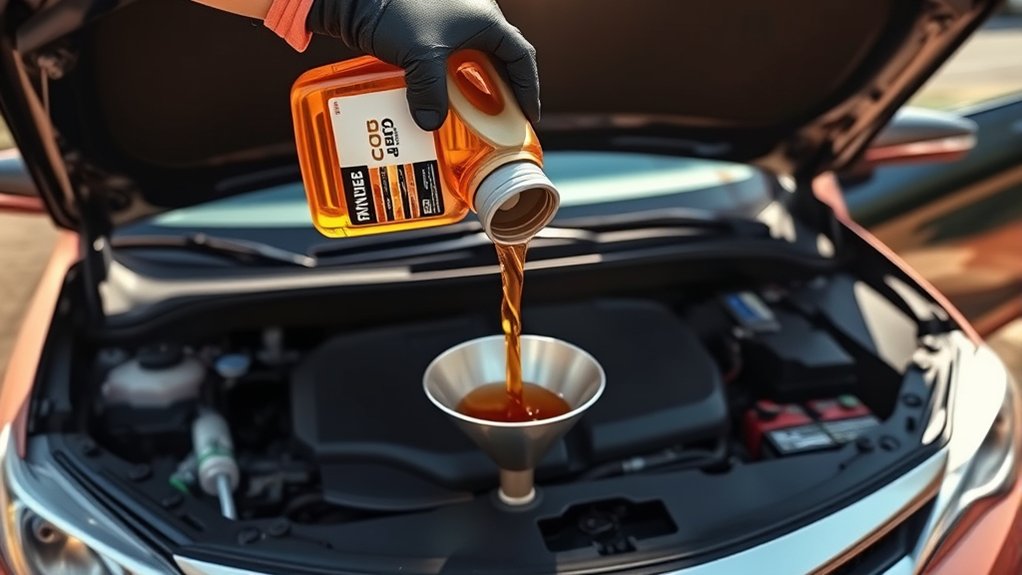
Adding oil to your Toyota Camry is simple, but you need to check the level first and use the right oil for your engine. Park on level ground, let the engine sit for a few minutes after driving, read the dipstick, then add oil slowly through the oil fill opening only if the level is low.
Quick Answer
To add oil to a Toyota Camry, park on level ground, turn the engine off, check the dipstick, and confirm the oil is below the full mark. Remove the oil fill cap, add the correct oil in small amounts with a funnel, wait a few minutes, then recheck the dipstick before driving.
Key Takeaways
- Always check the dipstick before adding oil, because overfilling can cause problems.
- For a 2019 Toyota Camry, many 2.5L gas and hybrid models use SAE 0W-16, while the 3.5L V6 commonly uses SAE 0W-20. Verify the oil cap or owner’s manual before adding oil.
- Add oil slowly, about 1/4 quart at a time, then wait and recheck the dipstick.
- Do not drive if the oil-pressure warning light stays on after you add oil.
At a Glance
| Time Required | 5 to 10 minutes |
| Difficulty | Easy beginner maintenance |
| Tools Needed | Correct engine oil, clean funnel, paper towel or rag, gloves |
| Cost | Usually the cost of one quart of oil if you are only topping off |
Why Regular Oil Checks Matter for Your Toyota Camry
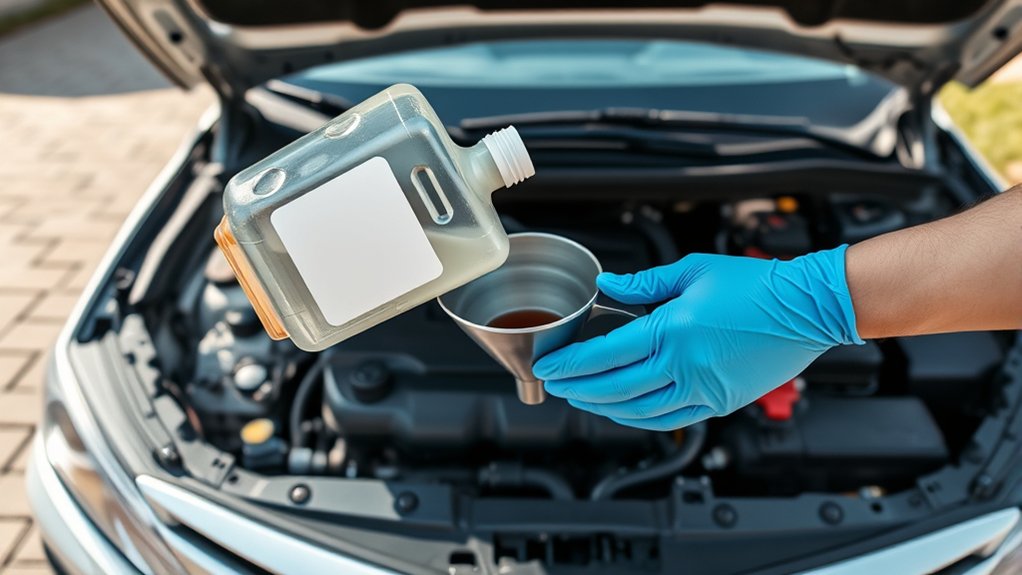
Regular oil checks help your Toyota Camry stay lubricated and protected. Engine oil reduces friction, carries heat away from moving parts, and helps keep internal components clean.
Low oil can increase wear and heat. Very low oil can also trigger an oil-pressure warning light, which needs immediate attention. A quick dipstick check helps you spot a low level before it becomes a serious engine problem.
A monthly dipstick check is one of the easiest ways to catch low oil, leaks, or oil consumption before they turn into expensive repairs.
You also need the correct oil type. A 2019 Camry may use different oil depending on the engine. Check the oil fill cap and your Toyota owner’s manual before buying oil.
Choose the Right Oil for a Toyota Camry
Do not rely on a generic oil recommendation. Your Camry’s model year and engine matter. The safest source is the oil fill cap, followed by the owner’s manual or a Toyota dealer.
| 2019 Camry Engine | Common Oil Viscosity | What to Check |
|---|---|---|
| 2.5L gas four-cylinder | SAE 0W-16 | Confirm on the oil cap or owner’s manual. |
| 2.5L hybrid four-cylinder | SAE 0W-16 | Confirm on the oil cap or owner’s manual. |
| 3.5L V6 | SAE 0W-20 | Confirm on the oil cap or owner’s manual. |
Choose oil that matches the viscosity Toyota lists for your engine and carries the correct current oil certification, such as API SP or the applicable ILSAC rating. You can review oil category information through the American Petroleum Institute.
Note: SAE 0W-6 is not the correct blanket recommendation for a 2019 Toyota Camry. If your oil cap, owner’s manual, or Toyota dealer gives a different specification for your exact engine or market, follow that source.
Steps to Safely Check Your Oil Level
Check the oil level before you add anything. This prevents overfilling and helps you see whether the engine is only a little low or needs service.
- Park on level ground.
- Turn the engine off.
- Wait a few minutes so oil can drain back into the oil pan.
- Open the hood and secure it.
- Find the dipstick and the oil fill cap.
Locate the Dipstick
The dipstick is usually a long, thin metal rod with a bright handle. On many Camry models, it sits near the front or side of the engine, close enough to reach without removing parts.
Pull the dipstick out slowly and wipe it clean with a paper towel or lint-free rag. Reinsert it fully, then pull it out again for the real reading.
Assess Oil Level
Look at the low and full marks on the dipstick. On many Toyota dipsticks, the safe range sits between two dots or marks. The oil should be between those marks, not above the full mark.
If the level sits near the lower mark, you can top it off. If the dipstick is dry, the oil-pressure light is on, or you see a leak under the car, do not treat it as a routine top-off. Add only enough oil to reach a safe level, then inspect for leaks or get professional help.
Warning: Avoid touching hot engine parts. If the engine is very hot, wait before working under the hood. Do not remove the oil fill cap while the engine is running.
How to Check and Respond to Low Oil Levels
If you suspect low oil, start with the dipstick. Do not add a full quart automatically unless the reading shows the engine is clearly very low.
| Dipstick Reading | What to Do |
|---|---|
| Between low and full | No oil is needed. Recheck next month or before a long trip. |
| Near or just below the low mark | Add about 1/4 quart, wait a few minutes, then recheck. |
| Very low or no oil on dipstick | Add small amounts until oil appears in the safe range, then check for leaks or get service. |
| Above the full mark | Do not add oil. Have excess oil drained if the level is clearly overfilled. |
If the oil-pressure warning light stays on after the oil level is corrected, turn the engine off and get the car inspected. Low oil pressure can damage an engine quickly.
How to Properly Add Oil to Your Engine
Once you confirm the oil is low, add oil through the oil fill cap on top of the engine. Use a clean funnel to prevent spills.
- Confirm the correct oil viscosity for your Camry engine.
- Remove the oil fill cap and set it in a clean place.
- Place a funnel into the oil fill opening.
- Pour in a small amount, usually about 1/4 quart at a time.
- Wait two to three minutes so the oil can settle.
- Recheck the dipstick.
- Repeat only until the oil sits within the safe range.
- Reinstall the oil cap tightly and wipe up any spills.
Pro Tip: Keep a clean quart of the correct oil in your trunk before a long road trip, especially if your Camry has higher mileage or has used oil between services before.
Start the engine only after the oil cap is back on and no tools or rags are left in the engine bay. Let the engine run briefly, shut it off, wait a few minutes, and recheck the dipstick if you want to confirm the final level.
Best Practices for Ensuring Oil Quality
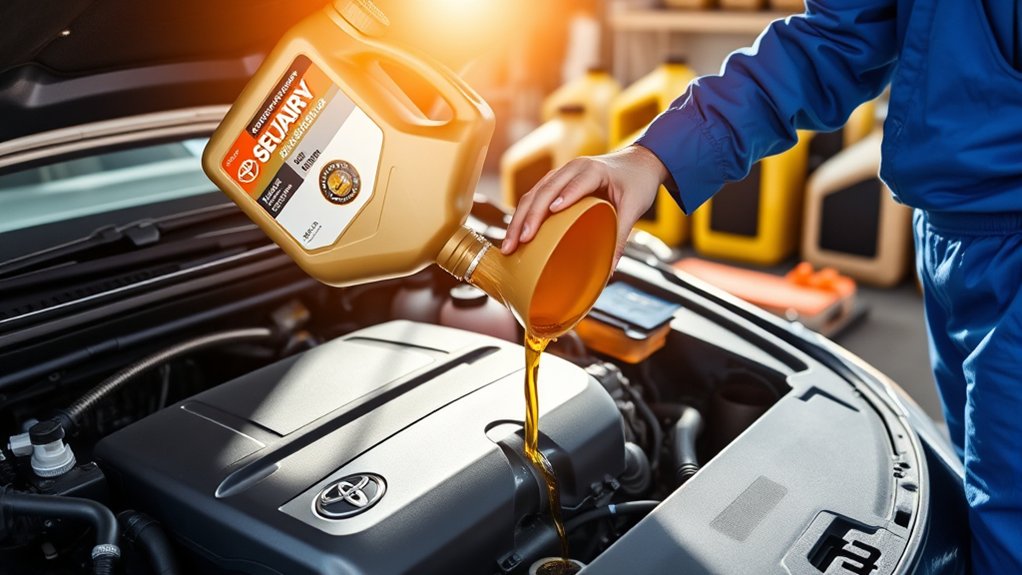
Oil level matters, but oil quality matters too. Old, dirty, or contaminated oil cannot protect the engine as well as fresh oil that meets Toyota’s specifications.
Choose High-Quality Oil
Use oil from a reputable brand that matches the viscosity listed for your Camry. The bottle should show the correct API or ILSAC certification for modern gasoline engines.
You do not need the most expensive oil on the shelf, but you should avoid unlabeled or unknown oil that does not show certification marks. The right specification matters more than the brand name alone.
Check Oil Regularly
Check your oil at least once a month and before long trips. This habit helps you spot slow leaks, oil burning, or a sudden drop in level.
Clean oil often looks amber or light brown. Oil naturally darkens with use, so color alone does not always mean it needs to be changed. Gritty oil, a burnt smell, milky oil, or metal flakes are stronger warning signs.
Monitor Oil Change Intervals
Follow the maintenance guide for your exact model year, engine, and driving conditions. Many Toyota maintenance schedules allow longer intervals under normal service with the correct synthetic oil, but severe driving can shorten the interval.
Severe driving can include repeated short trips, heavy traffic, dusty roads, extended idling, extreme heat, or frequent high-load driving. If your driving fits those conditions, check your maintenance guide or ask a Toyota service department which interval applies.
When to Change Your Oil?
Topping off oil is not the same as changing oil. Adding oil raises the level, but it does not remove old oil, fuel dilution, sludge, or contaminants from the engine.
Change the oil at the interval listed in your Toyota maintenance guide. You should also consider service sooner if the oil smells burnt, feels gritty, looks milky, or if the car has been driven under severe conditions.
If your Camry needs frequent top-offs between oil changes, write down how much oil you add and how often. That pattern can help a mechanic diagnose leaks, worn seals, PCV issues, or oil consumption.
What If You Add Too Much Oil?
If the dipstick reads slightly above full after a small top-off, recheck on level ground after the engine sits for several minutes. A bad angle or a rushed reading can make the level look higher than it is.
If the level is clearly above the full mark, do not keep driving as if nothing happened. Too much oil can foam, smoke, leak past seals, or affect engine performance. Have the extra oil drained until the level returns to the safe range.
Warning: If the oil-pressure light comes on while driving, pull over safely, turn off the engine, and check the oil level. Do not keep driving with an active oil-pressure warning.
When to Seek Professional Help for Oil Changes?
Get professional help if you cannot confirm the right oil type, cannot find the dipstick or oil cap, or feel unsure about working under the hood.
You should also schedule service if the oil level drops again soon after you top it off. A Camry that keeps losing oil may have a leak or oil-consumption issue that needs diagnosis.
Seek help right away if you notice a burning smell, blue exhaust smoke, puddles under the car, engine knocking, or an oil-pressure warning light. These signs are more serious than a normal top-off.
Used Oil and Rag Disposal
If you only top off oil, you may not have used oil to recycle. Still, oily rags, empty bottles, and spilled oil should be handled carefully.
If you drain oil during a service, collect it in a clean, sealed container and take it to a recycling center, repair shop, or parts store that accepts used motor oil. The U.S. EPA identifies used engine oil as a used-oil category, so avoid dumping it on the ground, into drains, or into household trash where local rules prohibit it.
Related Guides
Frequently Asked Questions
How do you put oil in a Toyota Camry?
Park on level ground, turn the engine off, check the dipstick, and confirm the oil is low. Remove the oil fill cap, insert a clean funnel, add the correct oil in small amounts, wait a few minutes, and recheck the dipstick before driving.
Can I just add oil to my engine?
Yes, you can add oil if the dipstick shows the level is low. Use the correct oil and add it slowly. If the oil drops again soon, or if a warning light stays on, get the Camry inspected instead of only topping it off again.
How do you safely add oil to a car?
Use level ground, turn the engine off, avoid hot parts, and check the dipstick first. Add oil through the oil fill opening with a funnel. Add about 1/4 quart at a time, wait, and recheck so you do not overfill the engine.
Where do you insert engine oil?
Add engine oil through the oil fill opening on top of the engine. It is covered by the oil fill cap, which may show an oil-can symbol or the recommended oil viscosity. Do not add oil through the dipstick tube.
What oil does a 2019 Toyota Camry take?
Many 2019 Camry 2.5L gas and hybrid models use SAE 0W-16, while the 3.5L V6 commonly uses SAE 0W-20. Always verify the oil cap, owner’s manual, or Toyota service information for your exact engine before adding oil.
How much oil should I add if the dipstick is low?
Start with a small amount, about 1/4 quart, unless the dipstick is very low or dry. Wait a few minutes, recheck the dipstick, and repeat only until the oil level sits within the safe range.
Conclusion
Maintaining your Toyota Camry’s engine oil starts with a simple dipstick check. Park on level ground, use the oil type listed for your engine, add oil slowly, and recheck the level before you drive.
If the oil level keeps dropping, the oil-pressure warning light stays on, or you see leaks or smoke, do not rely on repeated top-offs. Have the car inspected so you can protect the engine and avoid more expensive repairs.
Sources
- Toyota Owner’s Manuals and Warranty Resources — owner’s manual and maintenance-guide lookup for exact oil type and service intervals.
- Toyota USA Newsroom: All-New 2018 Toyota Camry Launch — Camry generation and powertrain context.
- American Petroleum Institute: Oil Categories — engine oil category and certification reference.
- U.S. EPA: What Is Used Oil? — used engine oil handling and disposal context.

