
If you’re considering an umbrella stroller, it helps to know what it is built for before you buy or use one every day. Umbrella strollers are lightweight, compact strollers made for quick errands, travel, public transportation, and crowded spaces. They work best for babies and toddlers who can sit upright on their own, but they are not a full replacement for every stroller type. Before choosing one, compare the weight limit, recline, harness, canopy, handle height, storage, and safety features.
Quick Answer
An umbrella stroller is a slim, foldable, lightweight stroller made for convenience and travel. Most are best for children who can sit upright unassisted, usually around 6 months and older. They are easy to carry and store, but they usually offer less padding, storage, and newborn support than full-size strollers.
Key Takeaways
- Umbrella strollers are best for short trips, travel, errands, and families who need a compact stroller.
- Most models are not safe for newborns unless the manufacturer clearly approves infant use.
- Always check the stroller’s exact age, weight, height, and recline limits before use.
- A five-point harness, working brakes, stable frame, and safe fold lock matter more than style.
- Choose a full-size stroller or travel system if you need car seat compatibility, deep recline, or larger storage.
Understanding the Basics of Umbrella Strollers

When you’re looking for a lightweight and portable option for your growing child, an umbrella stroller can be a practical choice. This stroller type gets its name from the way many models fold into a long, narrow shape that is easier to carry than a full-size stroller. Parents often use them for shopping trips, airport travel, daycare drop-offs, public transportation, and quick walks where a bulky stroller feels like too much.
Most umbrella strollers are made for children who can sit upright unassisted, typically around six months old or older. Many models support weights between 40 and 50 pounds, but the exact limit depends on the brand and model. You should always follow the manufacturer’s manual because age, weight, height, recline, and harness rules can vary.
You’ll find several design variations. Some models are very simple, with fabric seats, small wheels, a basic canopy, and little storage. Others add padded seats, adjustable recline, larger sunshades, cup holders, shoulder straps, or better suspension. These extras can make daily use easier, but they can also add weight and cost.
Umbrella strollers are not usually suitable for newborns or small infants because many do not recline far enough or support the head and neck properly. If you need a stroller from birth, look for a full-size stroller, bassinet stroller, or travel system that clearly states it is safe for newborn use.
Warning: Do not place a newborn in an umbrella stroller unless the manufacturer specifically says the model is approved for newborns or infant car seat use. A baby without strong head and neck control needs proper recline and support.
Key Features of Umbrella Strollers
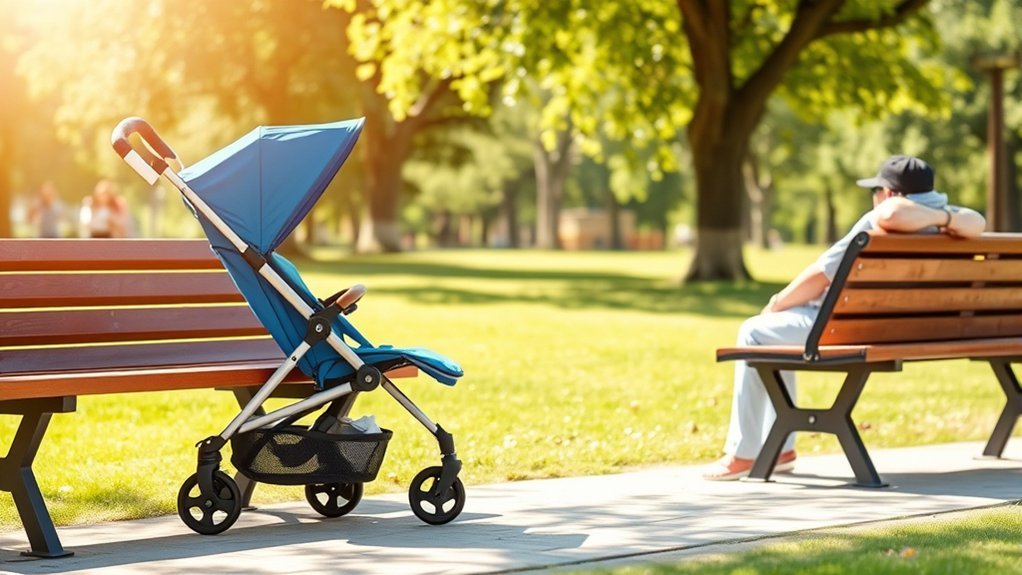
Umbrella strollers include essential features that make them useful for parents on the go. Their lightweight design is one of the biggest advantages. Many models weigh around 10 to 18 pounds, which makes them easier to lift into a car trunk, carry up stairs, or handle while traveling.
The folding mechanism is another major feature. A good umbrella stroller should fold smoothly, lock securely when folded, and stay locked open during use. Some models use a foot lever, while others offer one-hand folding. If you travel often, check whether the folded size fits your car, closet, or airline travel needs.
Most umbrella strollers offer a simple seat with limited recline compared with full-size strollers. Some recline enough for naps, while others stay mostly upright. A deeper recline can help toddlers rest, but it does not automatically make the stroller safe for young infants. Always check the manual before using any recline setting for a younger baby.
Storage is usually limited. Many umbrella strollers include a small basket under the seat, often meant for light items only. That basket may hold a jacket, small toy, wipes, or a compact diaper kit, but it may not fit a large diaper bag. Avoid hanging heavy bags from the handles because that can cause the stroller to tip backward.
A basic canopy is common, but coverage varies widely. Some canopies only shade part of the child’s face, while larger canopies offer better sun protection. Peekaboo windows, adjustable leg rests, cup holders, and carry straps are helpful extras, but they should not replace core safety features like a stable frame, working brakes, and a secure harness.
Ideal Age and Weight Considerations
When choosing an umbrella stroller, you need to consider your child’s age, weight, height, and development. Most models are suitable for children around six months old and older, but that rule is not enough by itself. A child should also have strong head and neck control and be able to sit upright without support.
Weight limits are also important. Many umbrella strollers support up to 40 or 50 pounds, while some heavier-duty models may support more. Still, the number printed on the stroller is not a suggestion. Exceeding the limit can affect steering, braking, frame stability, and overall safety.
Developmental Milestones Assessment
Before using an umbrella stroller, evaluate your child’s developmental milestones. A child is usually ready when they can sit upright unassisted, hold their head steady, and stay properly positioned in the harness. This often happens around six months, but every baby develops at a different pace. Some children may be ready earlier, while others need more time.
Neck and head control are especially important because many umbrella strollers have a more upright seat and less side support than full-size strollers. If your baby slumps forward, slides sideways, or cannot stay centered in the seat, wait longer or choose a stroller with better support.
Also check the stroller fit as your child grows. A child who is under the weight limit may still be too tall for a certain stroller. Their head should not sit above the seatback in a way that reduces support, and their feet should not drag near the wheels.
Manufacturer Weight Guidelines
To protect your child’s safety and comfort, follow the weight guidelines set by the stroller manufacturer. Most umbrella strollers are designed for children aged 6 months and older, with a weight capacity commonly ranging from 40 to 50 pounds. Some models list a separate basket weight limit, and that limit matters too.
Children often reach these stroller weight limits between toddlerhood and the preschool years, depending on growth. Check the label, manual, or brand website for the exact model you own. If the stroller feels harder to steer, tips easily, or the frame flexes under weight, stop using it and reassess the fit.
| Age Range | Average Weight | Weight Capacity |
|---|---|---|
| 6-12 months | 15-25 pounds | Up to 50 pounds |
| 1-2 years | 25-35 pounds | Up to 50 pounds |
| 3-4 years | 30-40 pounds | Up to 40 pounds |
| 5 years | 40-50 pounds | Up to 40 pounds |
Note: The table gives general guidance only. Your stroller’s manual is the final source for age, weight, height, basket, and recline limits.
Benefits of Using an Umbrella Stroller

While you’re out and about with your little one, using an umbrella stroller can make short trips easier. These lightweight strollers are simple to fold, carry, and store, which helps when you have limited trunk space or need to move through tight areas.
Umbrella strollers are especially helpful for families who already own a larger stroller but want something lighter for quick outings. They also work well as backup strollers for grandparents, babysitters, travel days, or older toddlers who walk part of the time but still need a seat when they get tired.
Here are some key benefits to take into account:
- Affordability options that fit various budgets
- Lightweight design for effortless carrying
- Easy maneuverability in crowded areas
- Adjustable recline positions for your child’s comfort
- Basic canopy for sun protection during outings
Another benefit is storage convenience at home. A folded umbrella stroller can often fit in a closet, entryway, car trunk, or small apartment corner. That makes it useful for families who do not want a large stroller taking up daily living space.
Pro Tip: Before buying, test the stroller with one hand on the handles and your child seated safely inside. A stroller that feels light in the store may still be uncomfortable if the handles are too low or the wheels feel stiff.
Safety Tips for Umbrella Stroller Use

When using an umbrella stroller, secure your child with a five-point harness every time. A harness helps prevent falls, climbing, sliding, and sudden movement when the stroller turns or stops. Even for a short trip, buckle the harness before you start moving.
Regularly check the stroller for safety. Make sure the frame locks open, brakes work, wheels spin properly, and fabric or straps are not torn. These simple checks help reduce preventable accidents.
Proper Harness Usage
Ensuring your child’s safety in an umbrella stroller starts with proper harness use. Always use the five-point harness if the stroller has one. It should secure the shoulders, waist, and crotch area so your child stays centered in the seat.
Make harness adjustment a priority. The straps should fit snugly without digging into your child’s skin. Loose straps can allow a child to slide down or lean out, while straps that are too tight can cause discomfort.
- Stay vigilant about pinch points to avoid finger injuries.
- Avoid hanging heavy items on the handlebars to maintain stability.
- Regularly inspect the harness for wear or damage.
- Teach your child to stay seated while in motion.
- Always prioritize safety compliance during use.
Also engage the stroller’s brakes whenever you stop, especially on slopes, sidewalks, parking lots, or public transportation platforms. Never leave a child unattended in a stroller, even when the brakes are locked.
Avoid Overloading Stroller
To keep your child safe in an umbrella stroller, avoid overloading it beyond its specified weight limit. Overloading can lead to tipping, poor steering, brake strain, and frame stress. Always make sure the combined weight of the child and any additional items stays within the stroller’s stated limits.
| Item | Weight Limit (lbs) | Overloading Consequences |
|---|---|---|
| Child | 40-55 | Tipping, instability |
| Additional Items | 5-15 | Increased risk of accidents |
| Total Combined Weight | 40-55 | Potential for stroller failure |
Also avoid hanging purses, shopping bags, backpacks, or diaper bags on the handles. Handlebar weight can shift the stroller’s balance and make it tip backward, especially when your child climbs out or leans forward.
Regular Safety Checks
Regular safety checks are essential for maintaining the integrity of your umbrella stroller and protecting your child’s safety. A quick inspection before each outing can help you catch problems early.
- Always buckle your child in with a five-point harness to prevent falls.
- Engage the stroller’s brakes when stationary, especially on slopes.
- Inspect the frame and harness for wear or damage regularly.
- Be cautious of pinch points when folding and unfolding to avoid injuries.
- Avoid overloading handlebars to prevent tipping.
Clean the wheels and frame when dirt, sand, or debris builds up. If the stroller has removable fabric, follow the care instructions instead of guessing. Also check recall notices if you buy a used stroller or receive one from a friend or family member.
Comparing Umbrella Strollers to Other Types
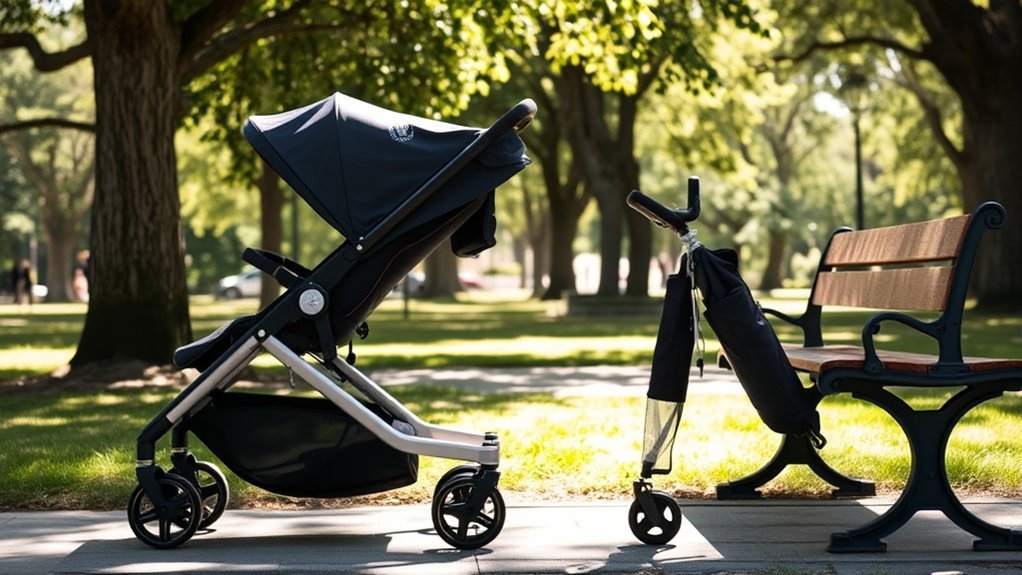
While considering the best stroller for your needs, compare umbrella strollers with other stroller types. Umbrella strollers are usually lighter and easier to fold than full-size strollers. This portability is one of the biggest umbrella stroller benefits, especially for parents who travel, use public transportation, or need a second stroller for quick outings.
However, umbrella strollers have limits. They usually offer less storage, smaller wheels, lighter frames, and fewer comfort features than full-size models. Many do not accept infant car seats, and many do not recline enough for newborns.
Full-size strollers are better for daily long walks, newborn use, large storage needs, and smoother rides over uneven sidewalks. Travel systems are better if you want to move an infant car seat from the car to the stroller. Jogging strollers are better for running or rougher paths, though they are larger and heavier.
| Stroller Type | Best For | Main Trade-Off |
|---|---|---|
| Umbrella Stroller | Travel, errands, compact storage | Less storage and support |
| Full-Size Stroller | Daily use, comfort, newborn-friendly options | Heavier and bulkier |
| Travel System | Car seat compatibility and infant use | Can be heavy and expensive |
| Jogging Stroller | Running, long walks, uneven paths | Larger folded size |
Price-wise, umbrella strollers are often more budget-friendly than full-size strollers and travel systems. Still, pricing changes by retailer, model, color, and availability. Instead of choosing by price alone, focus on safety, fit, comfort, and how you plan to use the stroller most often.
How to Choose the Right Umbrella Stroller
The right umbrella stroller depends on your child’s age, your height, your travel habits, and the places you use it most. A stroller that works well for airport travel may not feel best for long neighborhood walks. Before buying, compare the practical details that affect everyday use.
Start with safety and fit. Check the age, weight, and height limits. Look for a secure harness, working brakes, a stable frame, and a locking fold. Make sure your child sits comfortably without slumping, sliding, or leaning out.
Next, test the handling. Push the stroller on a smooth surface and around corners if possible. Tall parents should check handle height carefully because many umbrella strollers have fixed handles. If the handles are too low, you may kick the rear wheels or bend your back while walking.
Also compare comfort features. A reclining seat, padded straps, adjustable footrest, and larger canopy can make outings easier. For travel, look for a carry strap, compact fold, and manageable weight. For errands, a stronger basket and easy brake system may matter more.
- Choose a lighter model if you carry the stroller often.
- Choose a deeper recline if your toddler naps during outings.
- Choose a larger canopy if you walk in sunny areas.
- Choose taller handles if you or another caregiver is tall.
- Choose better wheels if you walk on uneven sidewalks.
Recommended Umbrella Strollers on the Market

When it comes to selecting the right umbrella stroller, several well-known models stand out. You’ll want to weigh performance, comfort, fold size, and budget options. Availability, features, and pricing can change, so always check the current product listing and manufacturer details before you buy.
- Summer 3Dlite Convenience Stroller: A popular lightweight option that weighs about 13 pounds and includes a large storage basket for its class.
- Uppababy G-Luxe: Supports up to 55 pounds in many versions and offers a larger canopy, lightweight frame, and a more premium feel.
- Safety 1st Strollerette Compact: A compact option with parent-friendly features such as a peekaboo window for quick checks.
- Chicco Liteway Stroller: Known for easy maneuverability, quick folding, and a design that fits urban living.
- Joovy Groove Ultralight: Offers useful features, though user feedback can vary, which makes review checking important.
The best choice is not always the most expensive one. A simple stroller can work well if it fits your child, folds easily, and feels stable. A premium model may be worth it if you use it daily, travel often, or want better recline and canopy coverage.
Common Mistakes to Avoid
Many stroller problems happen because parents assume all umbrella strollers work the same way. They do not. Different models have different recline angles, weight limits, fold locks, brake systems, handle heights, and storage ratings.
Avoid these common mistakes:
- Using an umbrella stroller for a baby who cannot sit upright unassisted.
- Ignoring the manufacturer’s weight, height, and basket limits.
- Hanging heavy bags from the handles.
- Forgetting to lock the brakes when stopped.
- Leaving a child unattended in the stroller.
- Buying a used stroller without checking for recalls or missing parts.
- Assuming a stroller accepts a car seat without checking compatibility.
If you buy secondhand, inspect the stroller carefully. Check the frame, wheels, brakes, harness, buckles, canopy, fold lock, and labels. Do not use a stroller with missing restraints, damaged locking parts, cracked wheels, or an unstable frame.
Related Guides
Frequently Asked Questions
Can umbrella strollers be used for infants under six months?
In most cases, no. You should not use a standard umbrella stroller for infants under six months because many models lack the recline, head support, and body support young babies need. Only use one for a younger infant if the manufacturer clearly states that the model is approved for that age and setup.
Are umbrella strollers suitable for tall parents?
Some umbrella strollers work well for tall parents, but not all do. Many models have fixed handles, which can feel too low. Tall parents should check handle height, stride clearance, and wheel placement before buying. Adjustable or higher handles can make longer walks more comfortable.
How much do umbrella strollers typically weigh?
Many umbrella strollers weigh around 10 to 18 pounds, though exact weights vary by model. Simpler models are usually lighter, while strollers with larger canopies, better recline, bigger wheels, or extra padding may weigh more.
Do umbrella strollers come with a warranty?
Yes, many umbrella strollers include a manufacturer warranty, but coverage varies by brand and model. Check the warranty length, what parts are covered, and whether you need proof of purchase. Proper stroller care can also help prevent avoidable wear.
Can I attach a car seat to an umbrella stroller?
Usually, no. Most umbrella strollers do not accept infant car seats because they are built for lightweight convenience, not travel-system use. Only attach a car seat if the stroller manufacturer clearly lists compatible car seats and provides the correct adapter or built-in attachment system.
Are umbrella strollers good for travel?
Yes, umbrella strollers are often good for travel because they are lightweight, compact, and easy to fold. They work well in airports, hotels, public transportation, and crowded tourist areas. For air travel, check the airline’s stroller rules before your trip.
What is the biggest downside of an umbrella stroller?
The biggest downside is limited comfort and storage compared with full-size strollers. Many umbrella strollers have smaller wheels, less padding, smaller baskets, and limited recline. They are convenient, but they may not be the best choice for newborns, rough paths, or all-day outings.
Sources
- U.S. Consumer Product Safety Commission — stroller and carriage safety guidance.
- CPSC Recalls — recall checking for used or older strollers.
- HealthyChildren.org from the American Academy of Pediatrics — stroller safety tips for parents.
Conclusion
To summarize, an umbrella stroller is a practical choice for parents who want convenience, portability, and easy storage. It works best for quick outings, travel, errands, and older babies or toddlers who can sit upright unassisted.
Still, safety should guide your decision. Choose a model that fits your child’s age, weight, height, and development. Use the harness every time, avoid overloading the stroller, lock the brakes when stopped, and check the frame and straps regularly.
If you need newborn support, car seat compatibility, large storage, or a smoother ride for long walks, a full-size stroller or travel system may be a better fit. But if you need a simple stroller that folds fast and travels easily, a good umbrella stroller can make everyday parenting much easier.
