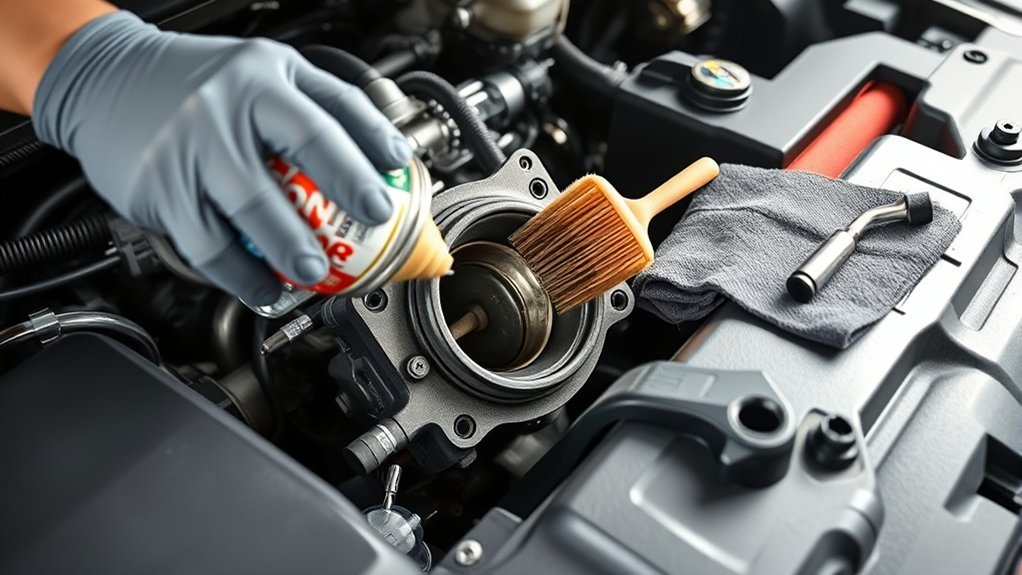
Knowing how to clean the throttle body on a Toyota Tacoma can help when carbon or oily deposits are interfering with smooth airflow, but the safest method depends on the truck’s model year and engine. For most DIY cleaning, you can leave the throttle body installed, remove the intake duct, protect the MAF sensor, and gently wipe deposits away without flooding the electronic throttle assembly.
Quick Answer
For most gasoline Tacomas, clean a dirty throttle body with the engine off by removing the intake duct, protecting the MAF sensor, and wiping the throttle plate and bore with a lint-free cloth dampened with throttle-body cleaner. Do not flood the electronic throttle body. Reassemble it, then follow the year- and engine-specific Toyota idle-learning procedure if needed.
Key Takeaways
- Use dedicated throttle-body cleaner and keep it away from the MAF sensing element and electrical connectors.
- For Toyota electronic throttle bodies, a cleaner-dampened lint-free cloth is safer than flooding the assembly with solvent.
- Do not aggressively scrub or remove factory coating from the throttle plate or bore.
- There is no universal Tacoma throttle-body bolt torque; specifications vary by engine and model year.
- If rough idle, a warning light, or abnormal throttle operation remains after cleaning, diagnose the fault rather than repeatedly cleaning the throttle body.
At a Glance
| Time Required | About 30–60 minutes for basic in-place cleaning; longer if the throttle body must be removed. |
| Difficulty | Easy to moderate for in-place cleaning; moderate if removal, coolant hoses, or electronic diagnosis is involved. |
| Tools Needed | Basic metric sockets, screwdriver or nut driver, lint-free cloths, throttle-body cleaner, gloves, eye protection, and a light. A torque wrench is needed only if parts with specified torque are removed. |
| Cost | Low for an in-place cleaning: mainly cleaner and cloths. Removing the throttle body may also require a new gasket and, on some engines, replacement coolant. |
Tacoma Throttle-Body Compatibility and Safety
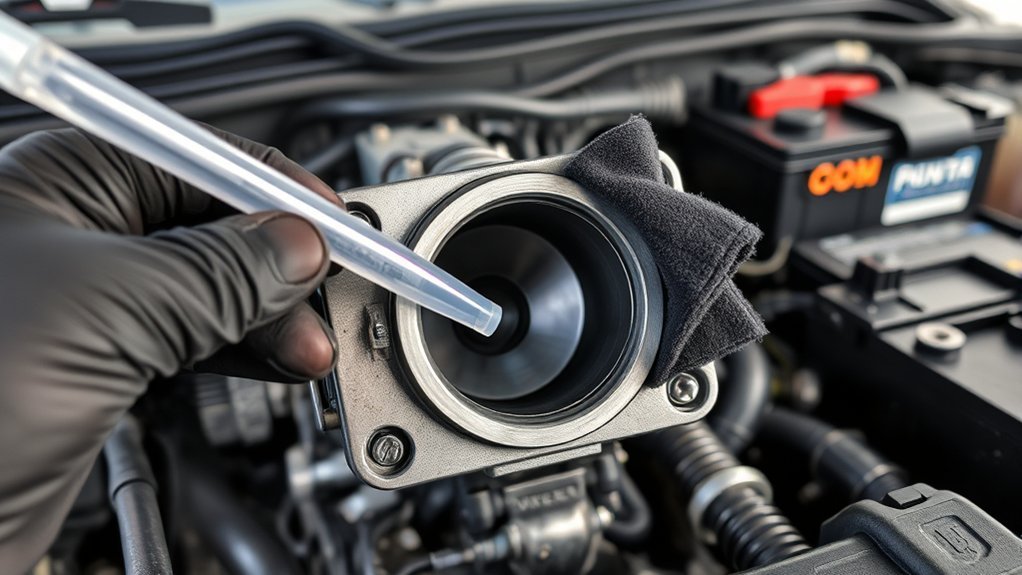
The Tacoma has used several different engines and throttle-control systems since its 1995 introduction, so there is no single removal, torque, or relearn procedure that is correct for every truck. Second-generation Tacomas commonly used the 2.7L 2TR-FE four-cylinder or 4.0L 1GR-FE V6, while the 2016 third generation added a 3.5L V6. Beginning with the 2024 redesign, Tacoma moved to turbocharged 2.4L i-FORCE powertrains, including available i-FORCE MAX hybrid versions.
If you have a 2024–2026 Tacoma, especially an i-FORCE MAX hybrid, use the exact procedure for your VIN and engine before removing or disconnecting throttle-related components. Toyota publishes current vehicle-specific repair information through its Technical Information System (TIS). Do not touch orange high-voltage wiring or hybrid-system components during ordinary intake maintenance.
Warning: Throttle-body cleaner is highly flammable. Work with the engine off in a well-ventilated area, keep the cleaner away from flames, sparks, hot exhaust parts, electrical connectors, painted surfaces, and the MAF sensing element, and wear eye protection and solvent-resistant gloves. Read the cleaner label before use.
Tools & Parts for Tacoma Throttle-Body Cleaning
Gather your supplies before opening the intake. A typical in-place cleaning needs metric sockets, a screwdriver or nut driver for the intake clamp, clean lint-free shop cloths, dedicated throttle-body cleaner, gloves, eye protection, and a flashlight. A soft nylon brush or clean toothbrush can be useful for stubborn deposits, but use it gently and only where you will not disturb a factory coating.
A replacement throttle-body gasket is necessary only if your procedure requires removing the throttle body or the existing gasket is damaged and disturbed. Do not unbolt an otherwise serviceable throttle body solely because you bought a new gasket. Removal can add coolant-line work, new torque requirements, and initialization steps that are unnecessary for routine in-place cleaning.
Use a cleaner specifically labeled for throttle bodies. For example, CRC Throttle Body & Air-Intake Cleaner is formulated for deposits such as carbon, varnish, and gum in gasoline-engine throttle bodies. Do not substitute MAF cleaner, brake cleaner, carburetor cleaner, WD-40, or another general-purpose solvent unless the product manufacturer and Toyota procedure explicitly approve that use.
Prep: Battery, Workspace, and Safety Checks
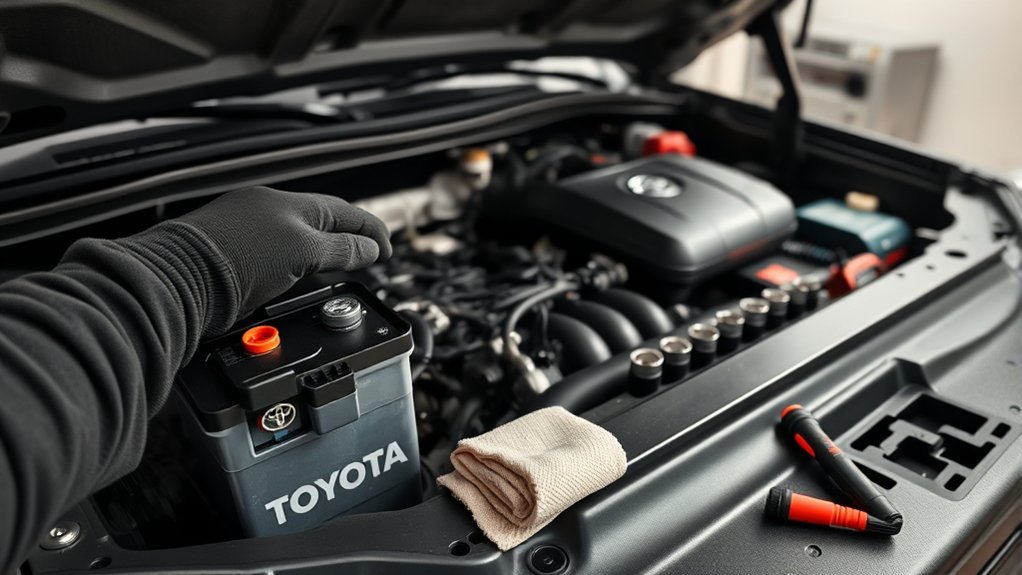
Park on a level surface, set the parking brake, switch the ignition fully off, remove the key or keep the smart key away from the vehicle, and allow hot engine components to cool. Clear loose tools and debris from the engine bay so nothing can fall into the intake.
| Task | Purpose |
|---|---|
| Switch ignition off | Prevents commanded throttle movement while you work |
| Clear the workspace | Reduces dropped-tool and contamination risk |
| Wear gloves and eye protection | Protects skin and eyes from solvent |
| Inspect hoses and wiring | Finds cracks, loose clamps, or damaged connectors before reassembly |
Battery disconnection is not a universal requirement for every Tacoma in-place cleaning procedure. If your Toyota repair information tells you to disconnect the negative terminal, or you are unplugging/removing the motorized throttle body, follow that procedure. Be aware that disconnecting the battery can erase learned values and may require system initialization afterward.
Protect the MAF Sensor and Keep Debris Out
The mass air flow sensor is upstream of the throttle body on many Tacoma intake systems and must be protected from throttle-body solvent. If the intake duct or MAF housing must be moved, release the connector by its locking tab instead of pulling on the wires. Keep cleaner away from the MAF sensing element.
Cover exposed intake openings with a clean, lint-free cloth while you reposition hoses or tools, but remove every cloth before reassembly. Position additional shop cloths below the throttle-body opening to catch loosened residue. If you use a bungee cord to hold an intake tube or hose aside, do not place tension on wiring, vacuum hoses, sensors, or plastic fittings.
Pro Tip: Count the rags you place in or around the intake and count them again before reassembly. A forgotten cloth in an intake tract can create a much bigger problem than the carbon you were trying to remove.
Disassembly: Accessing the Throttle Body Step by Step
Most basic cleanings require access to the throttle opening, not complete removal of the throttle-body assembly. The exact layout varies, but the normal goal is to move the air-cleaner hose or intake duct far enough to expose the throttle plate without disturbing coolant lines or the throttle-body gasket.
Battery and Cover Removal
If your engine has a removable decorative cover, remove it according to its fastener or grommet design and place the hardware in a tray. Do not assume every Tacoma uses two 10 mm cover bolts; designs vary by generation and engine.
If the vehicle-specific procedure requires battery disconnection, loosen the negative-terminal clamp with the correct socket and isolate the cable so it cannot spring back onto the terminal. Never allow a wrench to bridge the positive terminal to body ground.
Air Intake and MAF
Unclip the airbox as required and loosen the intake-hose clamp at the throttle-body neck. Disconnect breather or vacuum hoses only where necessary, noting their location before removal. If the MAF connector must be unplugged, release its lock gently and keep the sensor dry and clean.
Slide the intake duct away from the throttle body without cracking old rubber or plastic. Inspect the duct for splits, loose clamps, or disconnected hoses. An intake leak downstream of the MAF can create rough idle or drivability symptoms that may be mistaken for a dirty throttle body.
Clean the Throttle Body Safely
Toyota electronic throttle-body service information for several engines uses a conservative cleaning method: gently open the throttle plate and wipe deposits from the plate and bore with a cloth dampened with suitable non-residue cleaner rather than flooding the assembly. This reduces the chance of solvent entering the electronic throttle motor through the throttle shaft.
Spray the throttle-body cleaner onto a clean lint-free cloth away from the intake, then wipe the accessible deposits from the throttle plate and bore. Work slowly around the plate edge, where deposits often accumulate. If you need to move an electronic throttle plate by hand, open it gently and never force it against resistance.
Clean Around the Butterfly Plate
Place shop cloths below the throttle opening to catch residue. Gently move the butterfly plate only as far as needed to reach the front, edge, and accessible back side. Wipe softened deposits away with the dampened cloth, then switch to a clean section of cloth instead of rubbing dissolved grime back onto the bore.
Do not saturate the throttle shaft, electrical housing, or connector. Do not spray cleaner through the air filter or across the MAF sensor. General cleaner instructions may permit direct spraying on some gasoline throttle bodies, but Toyota-specific electronic throttle procedures can be more restrictive, so the vehicle repair manual takes priority.
Use a Soft Brush Only When Needed
For a stubborn deposit that does not wipe away, use a soft nylon brush with very light pressure. Avoid wire brushes, abrasive pads, metal picks, or aggressive scraping. Many modern throttle bodies use surface treatments or coatings around the bore and plate, and damaging that surface can create sticking or airflow problems.
After cleaning, wipe away remaining solvent and residue with a fresh lint-free cloth. Allow the area to evaporate dry before reinstalling the intake duct. Do not leave loose fibers, brush bristles, tools, or rags in the intake.
Note: A throttle body does not need cleaning on an arbitrary mileage schedule just because the truck reached a certain odometer reading. Inspect it when symptoms, diagnostic work, or visible deposits justify the service.
Inspect Parts: When to Replace the Gasket or Throttle Body
If you cleaned the throttle body in place and never disturbed its mounting gasket, there is normally no reason to replace that gasket. If the throttle body was removed, inspect the service procedure for your exact engine; Toyota procedures commonly call for a new gasket during reinstallation.
Check the intake duct, hose clamps, electrical connector, breather hoses, vacuum lines, and accessible sealing surfaces. Cracked hoses, damaged connectors, loose clamps, or contamination downstream of the MAF can produce symptoms similar to a dirty throttle body.
- Replace a disturbed gasket when the vehicle-specific service procedure calls for a new one or when the old gasket is torn, hardened, deformed, or otherwise damaged.
- Do not condemn the throttle body simply because it was dirty. Clean it first and verify that the plate moves smoothly as permitted by the repair procedure.
- If the electronic throttle sticks, binds, has actuator-related DTCs, or continues behaving erratically after proper cleaning and diagnosis, have the throttle-control system tested before replacing parts.
Reassembly and Correct Torque Specifications
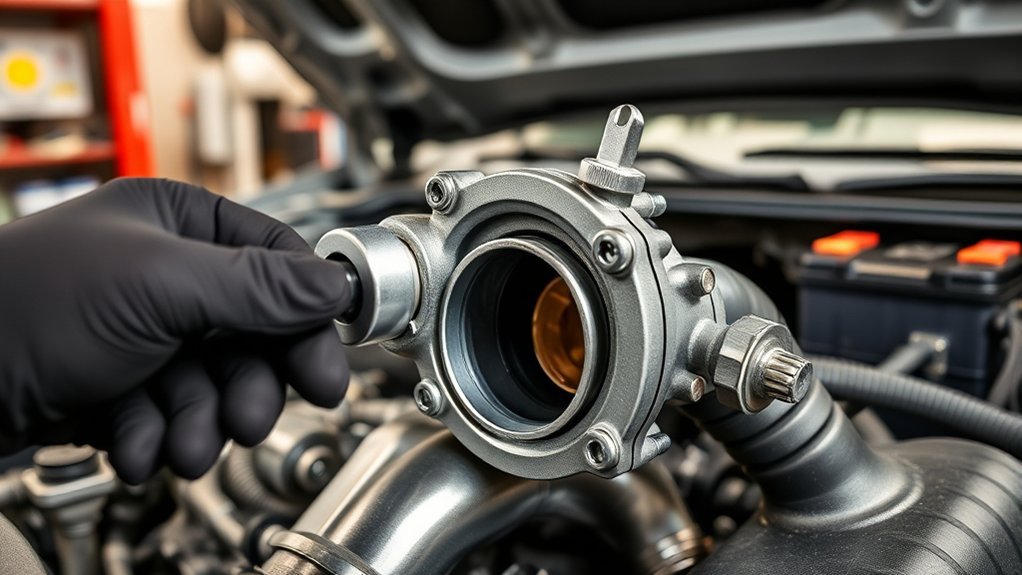
Remove every protective rag from the intake. Reinstall the air duct fully onto the throttle-body neck, return each breather or vacuum hose to its original fitting, reconnect the MAF connector if it was unplugged, and tighten the intake clamp securely without crushing plastic components.
If you performed only an in-place cleaning, there are no throttle-body mounting bolts to torque. If you removed the throttle body, use the exact Toyota specification for the engine and model year instead of automatically tightening every Tacoma to 9 ft-lb.
| Situation | Correct Approach |
|---|---|
| Throttle body left installed | No throttle-body mounting torque step is required |
| Throttle body removed | Install the required gasket and use the exact Toyota repair-manual torque for that engine |
| 1GR-FE example | Some Toyota 1GR-FE procedures specify 11 N·m (9 ft-lb), but this is not a universal Tacoma specification |
| Different engine/year | Verify through Toyota TIS rather than copying the 1GR-FE value |
Hand-start removed bolts before applying a torque wrench so you do not cross-thread the aluminum or plastic mating components. If the throttle body has coolant hoses and you disconnected them, refill and bleed the cooling system according to the engine-specific procedure and check carefully for leaks.
Start-Up and Idle Relearn
Reconnect the negative battery terminal if you disconnected it, then perform any initialization required for your Tacoma. Toyota procedures are not identical across all engines, so there is no single “reset the ECU” shortcut that should be applied blindly to every Tacoma.
Before starting, confirm that the MAF connector, throttle connector, intake hose, vacuum lines, breather hoses, clamps, and battery terminal are secure. Start the engine without immediately racing it. Let it warm normally while watching the idle and instrument cluster.
Some Toyota procedures require a specific inspection-after-repair or idle-learning sequence after throttle-body cleaning. Older procedures may involve battery or EFI/ETCS power reset steps, while newer electronic systems may use Techstream checks. Use the instructions for your engine in Toyota TIS if the idle does not settle normally.
A clean throttle body should be followed by a normal idle, secure intake connections, no warning lights, and predictable throttle response—not by persistent sputtering that you simply assume will disappear.
Throttle-Body Troubleshooting for Tacoma: Idle, Sputter, and Warning Lights
A dirty throttle plate is only one possible cause of rough idle, hesitation, stalling, or abnormal throttle response. Before cleaning repeatedly, inspect the entire intake path and read stored diagnostic trouble codes if the malfunction indicator lamp is on.
| Symptom After Cleaning | What to Check First |
|---|---|
| High or unstable idle | Loose intake clamp, disconnected vacuum/breather hose, intake leak, or required idle initialization |
| Engine will not start normally | MAF connector, throttle connector, battery connection, forgotten rag or obstruction, and DTCs |
| Check-engine light | Read the stored DTC before clearing it; do not assume the code was caused by cleaner residue |
| Throttle plate sticks or binds | Stop forcing it and diagnose the throttle-body assembly |
| Persistent hesitation | Intake leaks, MAF condition, ignition, fuel delivery, electronic throttle faults, and other engine-control causes |
If the engine runs significantly worse after the work, shut it off and recheck what was disturbed. A strong vacuum leak, disconnected sensor, trapped intake obstruction, or improperly installed hose should be corrected before driving. If the electronic throttle has actuator-related DTCs or fails to move normally, professional diagnosis with an appropriate scan tool is safer than additional cleaning.
Frequently Asked Questions
Can I clean my Toyota Tacoma throttle body myself?
Yes. Basic in-place cleaning is manageable for many DIY owners if you can safely remove and reinstall the intake duct. Use dedicated throttle-body cleaner, protect the MAF sensor, avoid flooding the electronic assembly, and follow your Tacoma’s model-specific instructions if battery disconnection or initialization is required.
Can I use WD-40 to clean my throttle body?
Use a cleaner specifically intended for throttle bodies instead. A dedicated product is formulated to dissolve throttle deposits and evaporate appropriately. General-purpose lubricants or solvents can leave unwanted residue or may not be compatible with throttle-body coatings and electronic components.
Should I disconnect the battery when cleaning the throttle body?
Not every in-place cleaning procedure requires battery disconnection. Keep the ignition fully off and follow the repair information for your year and engine. If Toyota specifies battery disconnection, or you are removing electrical throttle components, disconnect it correctly and complete any required initialization afterward.
Do I need to reset the computer after cleaning a Tacoma throttle body?
Not with one universal procedure. Toyota’s post-cleaning initialization varies by engine and model year. Some systems relearn normally after proper reassembly, while certain repair procedures specify battery, fuse, idle-learning, inspection-after-repair, or Techstream steps. Use the procedure for your exact Tacoma if idle remains abnormal.
Should I remove the throttle body to clean it?
Usually not for ordinary deposit removal. Leaving it installed avoids disturbing the gasket, coolant hoses, mounting bolts, and associated torque requirements. Remove it only when access, diagnosis, or the Toyota repair procedure calls for removal.
How do I know whether throttle-body cleaning fixed the problem?
After correct reassembly and any required initialization, the engine should idle normally, respond predictably to the accelerator, and remain free of new warning lights. Persistent roughness, stalling, throttle DTCs, or abnormal noise means further diagnosis is needed.
Conclusion
You can clean many Toyota Tacoma throttle bodies safely without removing the assembly. Work with the engine off, protect the MAF sensor, use dedicated throttle-body cleaner on a lint-free cloth, gently clean the plate and bore, preserve factory coatings, and carefully restore every hose and connector.
The most important correction is to avoid treating every Tacoma as mechanically identical. A 9 ft-lb throttle-body specification or one ECU-reset routine does not apply across every year and engine. If the throttle body must be removed—or if idle, DTCs, or throttle operation remain abnormal—use Toyota’s repair information for your exact vehicle rather than guessing.
Sources
- Toyota Technical Information System (TIS) — factory repair manuals, service information, diagnostic procedures, torque specifications, and initialization information.
- Toyota Owners Manuals & Warranties — official owner-manual information by model year.
- Toyota USA Newsroom: 2016 Tacoma — confirms the third-generation 2.7L and 3.5L engine lineup.
- Toyota USA Newsroom: 2024 Tacoma — confirms the fourth-generation turbocharged 2.4L i-FORCE and i-FORCE MAX powertrains.
- CRC Throttle Body & Air-Intake Cleaner — product applications, cleaner safety information, and general throttle-body cleaning guidance.
