
Cleaning the mass air flow sensor on a Toyota Tacoma is a simple DIY job when you use the right cleaner and handle the sensor carefully. The MAF sensor is delicate, so the goal is to remove dust, oil film, and intake residue without touching the sensing element, scraping it, or using the wrong solvent.
Quick Answer
To clean a Toyota Tacoma MAF sensor, disconnect the negative battery cable first, unplug the MAF connector, remove the sensor screws, and lift the sensor straight out. Spray only MAF-safe cleaner on the sensing element, let it air-dry fully, then reinstall it in the same orientation and test idle and drivability.
Key Takeaways
- Use mass air flow sensor cleaner, not brake cleaner, carb cleaner, throttle-body cleaner, degreaser, or compressed air.
- Disconnect the negative battery cable first before unplugging the MAF if you want extra electrical safety.
- Never touch the hot wire, hot film, resistor, or sensing element inside the MAF housing.
- Let the sensor air-dry completely before reinstalling it or starting the engine.
- If rough idle, hesitation, poor acceleration, or a check-engine light remains, check for intake leaks, wiring damage, dirty air filters, or a failing sensor.
At a Glance
| Time Required | 20 to 40 minutes, including drying time |
| Difficulty | Easy DIY, but the sensor is delicate |
| Tools Needed | MAF sensor cleaner, small screwdriver or socket, needle-nose pliers if needed, nitrile gloves, safety glasses, clean rag, magnetic tray |
| Cost | Usually the cost of one can of MAF cleaner if you already have basic hand tools |
Before You Clean the Tacoma MAF: Safety, Tools, and Checks
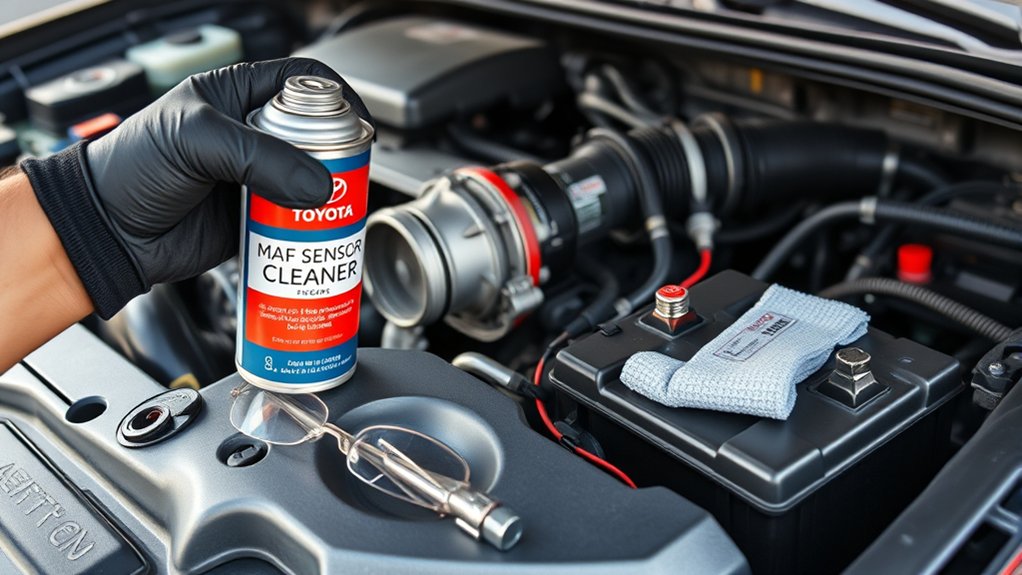
Before you remove anything, park your Tacoma on level ground, shut the engine off, remove the key, and let the intake area cool. Open the hood and find the MAF sensor on the intake tube or air-cleaner outlet between the air filter box and the throttle body. The exact layout can vary by Tacoma year and engine, so check your owner information or repair manual if the connector or fasteners do not match what you see here.
Gather your tools first. You will usually need a small screwdriver or socket for the sensor screws, a magnetic tray for the screws, safety glasses, gloves, a clean rag, and a can of MAF-safe cleaner. CRC lists its Mass Air Flow Sensor Cleaner as plastic safe with a very fast evaporation rate, which is why this type of cleaner is a better choice than harsher solvents.
Warning: MAF cleaner is highly flammable. Work outside or in a well-ventilated area, keep the can away from sparks, flames, cigarettes, and hot surfaces, and wear safety glasses and gloves. Do not start the engine until the sensor is completely dry.
It also helps to do a quick diagnosis before cleaning. A dirty MAF can cause hard starting, stalling, hesitation, poor acceleration, rough idle, a check-engine light, and poor fuel economy. Those symptoms can also come from a cracked intake tube, loose clamp, dirty air filter, vacuum leak, wiring issue, or failing sensor. If you have a scan tool, record any codes before disconnecting the battery or clearing anything.
Step 1: Disconnect Power and Protect the Electronics
For extra safety, disconnect the negative battery cable first. The negative post is usually marked with a minus sign. Loosen the clamp, lift it off the post, and move it aside so it cannot spring back and touch the terminal. If you remove both battery cables, remove the positive cable after the negative cable.
You do not need to remove the battery for this job. The reason for disconnecting power is simple: you reduce the risk of shorting a connector or damaging electronics while your hands and tools are near the intake sensor. Never let a wrench or ratchet touch the positive and negative battery posts at the same time.
Note: Disconnecting the battery may reset the clock, radio presets, idle memory, and emissions readiness monitors. After reinstalling the MAF, your Tacoma may need a short idle period and normal driving to relearn.
Step 2: Remove the MAF Sensor Without Damaging It
Press the release tab on the MAF electrical connector and pull the plug straight off. If the tab is stiff, use needle-nose pliers gently on the connector body, not on the wires. Do not yank the harness, twist the connector, or pry against the sensor housing.
- Mark the orientation: Notice which way the sensor sits in the intake tube before you remove it.
- Remove the screws: Use the correct screwdriver or socket and place the screws in a magnetic tray.
- Lift the sensor straight out: Pull upward with light, even pressure. Do not twist the sensing element against the housing.
- Inspect the sensor: Look for cracked plastic, bent pins, a broken connector latch, or obvious damage. Replace the sensor if the housing or connector is damaged.
Set the MAF on a clean rag with the sensing element facing up. Keep it away from dust, water, shop towels that shed lint, and any metal tools that could hit the element.
Step 3: Clean the MAF Safely: Recommended Cleaner, Drying Time, What to Avoid
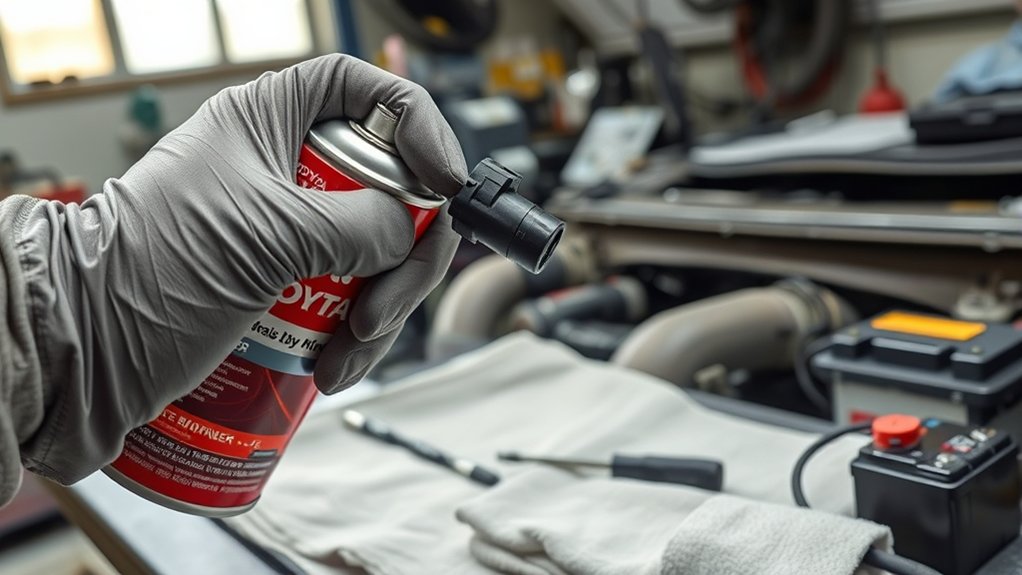
Hold the sensor so the cleaner can flow away from the sensing element. Spray short, controlled bursts onto the hot wire, hot film, thermistor, and surrounding sensor passages. Follow the cleaner label for distance and use enough spray to rinse away residue without soaking nearby plastic parts longer than needed.
| Item | Best Practice |
|---|---|
| Cleaner | Use mass air flow sensor cleaner only. |
| Application | Spray short bursts and let the cleaner rinse the sensing element. |
| Avoid | Do not use brake cleaner, carb cleaner, degreaser, throttle-body cleaner, alcohol, brushes, cotton swabs, or rags on the element. |
| Drying time | Air-dry for at least 10 minutes. Wait longer in humid or cool weather until the sensor is fully dry. |
| Handling | Touch only the plastic housing. Never touch the hot wire, hot film, or small internal resistor. |
Do not speed up drying with a heat gun, hair dryer, or high-pressure compressed air. Heat and pressure can damage the delicate sensing element. Let the cleaner evaporate naturally until the sensor looks dry and no solvent odor remains.
Pro Tip: If your Tacoma uses an oiled aftermarket air filter, check for excess filter oil in the intake tube. Too much oil can contaminate the MAF again after you clean it.
Step 4: Reinstall the MAF and Reconnect the Battery
Once the MAF is fully dry, reinstall it in the same orientation you noted earlier. Start the screws by hand so you do not cross-thread them. Tighten them until snug, but do not overtighten them because the sensor housing and intake tube are plastic.
Reconnect the MAF plug until the latch clicks. If the connector seal is dry, you may use a very small amount of dielectric grease on the rubber seal only. Do not put grease on the pins, inside the sensor opening, or on the sensing element.
If you removed both battery cables, reconnect the positive terminal first, then reconnect the negative terminal. Tighten the clamps securely and make sure the cables cannot move by hand. Keep tools away from both battery posts during this step.
Step 5: Test Idle, Drivability, and Check-Engine Light
Start the Tacoma and let it idle for a few minutes. The idle may fluctuate briefly if the battery was disconnected, but it should smooth out. Listen for rough idle, stumbling, intake leaks, or a hissing sound near the intake tube.
- Check the connector: Make sure the MAF plug is fully seated and the wiring is not pulled tight.
- Check the intake tube: Confirm the air box, clamps, and intake hose are sealed with no cracks after the MAF.
- Watch the idle: A stable idle is a good sign that the sensor is reading correctly.
- Take a short test drive: Check throttle response, acceleration, shifting feel, and fuel-trim symptoms if you have a scan tool.
- Recheck codes: If the check-engine light returns, scan the truck before replacing parts.
If the engine runs worse after cleaning, shut it off and recheck the sensor orientation, connector latch, battery terminals, air box clips, and intake clamps. A loose intake tube after the MAF can let unmetered air enter the engine and cause rough running.
Troubleshooting After Cleaning: When the MAF Is Not the Only Problem
Cleaning can help when the MAF is dirty, but it will not repair a failed circuit, broken wire, cracked intake boot, clogged filter, vacuum leak, or worn sensor. If the same symptoms return, check the rest of the intake system before buying a new MAF.
- Rough idle or stalling: Recheck the MAF connector, air box seal, intake tube clamps, and vacuum lines.
- Poor acceleration: Inspect the air filter, throttle body area, intake leaks, and stored airflow-related codes.
- Black exhaust smoke or rich smell: Scan fuel trims and check for inaccurate airflow readings, leaking injectors, or other rich-condition causes.
- Check-engine light: Record the code before clearing it. Common MAF-related codes may point to range, performance, low input, high input, or circuit faults.
- Repeat contamination: Look for over-oiled filters, poor air-filter sealing, dusty driving conditions, or intake leaks before the sensor.
Replace or professionally diagnose the MAF if the sensor body is damaged, the connector pins are corroded or bent, the code returns right away after cleaning and intake checks, or live scan data still looks unreasonable. For exact model-year procedures, torque values, and part information, use Toyota owner resources or Toyota service information.
Related Guides
Frequently Asked Questions
Can a mass airflow sensor be cleaned?
Yes, a mass airflow sensor can be cleaned if it is dirty but not physically damaged. Use only MAF-safe cleaner, spray the sensing element gently, and let it air-dry fully before reinstalling it. Do not touch the element with your fingers, a brush, a rag, or a cotton swab.
How often should you clean a Toyota Tacoma MAF sensor?
Clean it when symptoms, scan codes, air-filter service, dusty driving, or visible contamination suggest the sensor may be dirty. CRC recommends MAF cleaning when you change the engine air filter or at least once per year, but Toyota-specific service needs can vary by model year, engine, and driving conditions.
Where is the mass air flow sensor on a 2007 Toyota Tacoma?
On many 2007 Tacoma models, the MAF sensor sits on the air intake tube or air-cleaner outlet between the air filter box and the throttle body. Look for a small sensor body held by screws with an electrical connector attached. Confirm the layout with your manual if your engine bay differs.
What are the signs of a dirty MAF sensor?
Common dirty MAF symptoms include hard starting, stalling, rough idle, hesitation, weak acceleration, poor fuel economy, and a check-engine light. These symptoms can also come from intake leaks, wiring faults, dirty filters, or other engine problems, so scan codes and inspect the intake system before replacing parts.
Do you have to disconnect the battery before cleaning the MAF?
Disconnecting the negative battery cable is a smart safety step before unplugging the MAF. It reduces the chance of shorting a connector or causing electrical damage. If you disconnect both terminals, remove the negative cable first and reconnect the positive cable first during reassembly.
How do you clean a Toyota MAP sensor?
A MAP sensor is different from a MAF sensor. If your Toyota has a MAP sensor that needs service, remove it carefully, use electronics-safe cleaner only if the service information allows it, let it air-dry, and reinstall it with the seal seated correctly. Do not confuse MAP cleaning steps with MAF cleaning steps.
Conclusion
Cleaning your Toyota Tacoma MAF sensor can restore smoother idle and better throttle response when the sensor is dirty, but the job rewards patience. Use the right cleaner, disconnect power safely, avoid touching the sensing element, let the sensor dry completely, and reinstall it exactly as it came out.
If symptoms continue after cleaning, do not keep spraying the sensor. Check for intake leaks, dirty air filters, damaged wiring, stored codes, and connector problems. A clean MAF helps only when dirt is the problem; a damaged or failing sensor still needs proper diagnosis or replacement.
Sources
- CRC Industries: Mass Air Flow Sensor Cleaner — product type, plastic-safe specification, fast evaporation, symptoms, and safety guidance.
- AutoZone: How to Disconnect a Car Battery — negative-first battery disconnection and short-circuit risk guidance.
- Toyota Owners: Manuals and Warranties — official Toyota owner resources and service-information direction.
- Schema.org: HowTo — structured data format for step-by-step instructions.
- Schema.org: FAQPage — structured data format for frequently asked questions.
