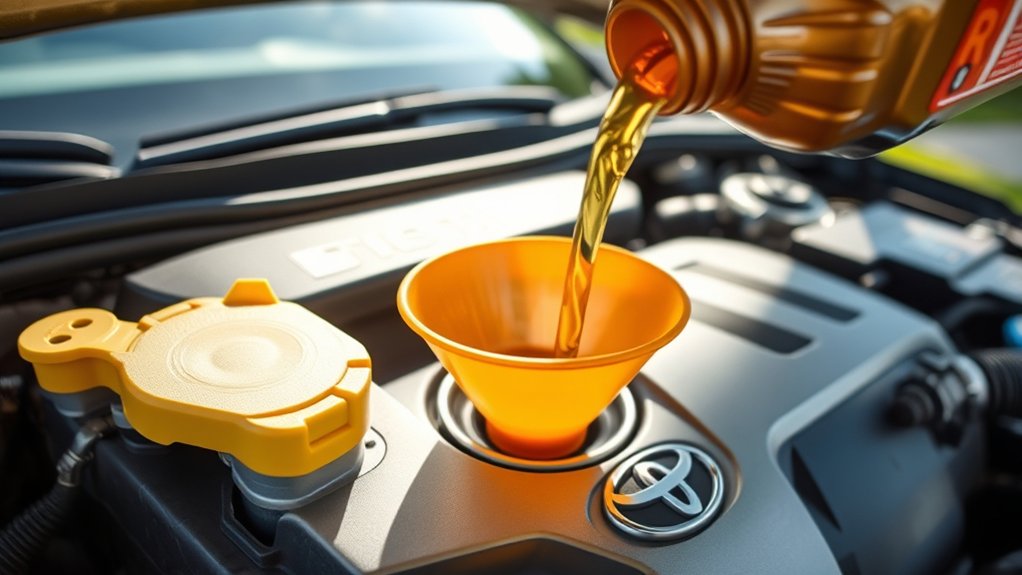
Adding oil to a Toyota Camry is a simple maintenance task, but using the wrong oil or adding too much can damage the engine. The correct procedure depends on your Camry’s model year, engine, and current oil level. This guide explains how to add oil safely, choose the right grade, read the dipstick, and recognize problems that need professional attention.
Quick Answer
To add oil to a Toyota Camry, park on level ground and turn off the engine. Check the dipstick, then remove the engine oil filler cap. Add the manufacturer-specified oil slowly using a clean funnel. Check the dipstick after each addition, stop before the upper mark, and securely reinstall the cap.
At a Glance
| Difficulty | Easy for a routine oil top-up |
| Tools Needed | Correct engine oil, clean funnel, and lint-free cloth or paper towel |
What Oil Does a Toyota Camry Need?
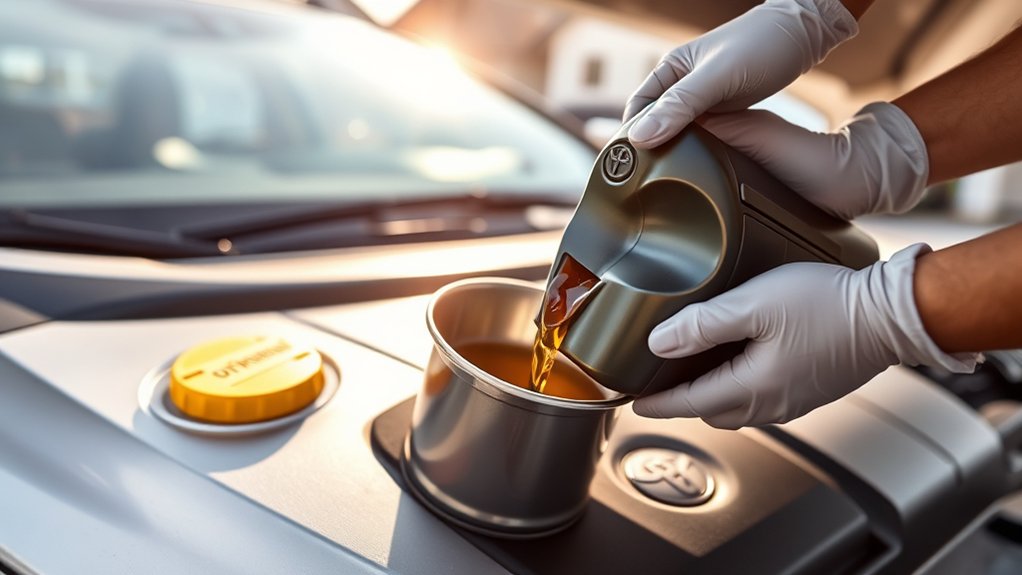
A Toyota Camry’s correct engine oil depends on its model year and engine. Common specifications include SAE 0W-16, 0W-20, and 0W-8. Older Camrys may require different grades.
For example, a U.S.-market 2022 Camry with the 2.5L gasoline engine specifies SAE 0W-16, while its 3.5L V6 uses SAE 0W-20. The 2025 Camry Hybrid specifies SAE 0W-8 meeting the JASO GLV-1 standard.
Check the Toyota owner’s manual for your vehicle before buying or adding engine oil. Confirm the engine, recommended viscosity, and required oil quality standard.
What Do 0W-16, 0W-20, and 0W-8 Mean?
These numbers describe how easily engine oil flows at different temperatures. The number before W relates to cold-temperature performance, while the number after W describes viscosity at operating temperature.
Modern Camry engines often use low-viscosity synthetic oil to reduce friction and improve fuel efficiency. However, thinner oil is not automatically better for every engine.
Use the grade approved for your specific Camry rather than selecting oil based only on climate or driving style.
Can You Use a Different Oil Grade?
Some Toyota engines permit a temporary alternative when the recommended grade is unavailable. The allowed substitute depends on the exact engine.
- 2022 Camry 2.5L: SAE 0W-20 may temporarily replace 0W-16. Toyota specifies returning to 0W-16 at the next oil change.
- 2022 Camry 3.5L V6: SAE 5W-20 may temporarily replace 0W-20, with a return to the recommended grade at the next change.
- 2025 Camry Hybrid: SAE 0W-16 may temporarily replace 0W-8. Toyota specifies returning to 0W-8 at the next oil change.
These are model-specific examples, not universal substitutions. Do not assume that 5W-30 or 10W-40 is suitable simply because the weather is cold or hot.
How Much Oil Does a Toyota Camry Take?
A Toyota Camry’s engine oil capacity varies by model year and engine. For example, a 2022 Camry 2.5L gasoline engine requires approximately 4.8 U.S. quarts with an oil filter change, while the 2025 Camry Hybrid requires approximately 4.5 U.S. quarts.
The quantities below apply to draining and refilling engine oil during an oil change. They are not instructions to pour that amount into an engine that already contains oil.
| Camry Model | Engine | Oil Capacity With Filter |
|---|---|---|
| 1997 Camry | 2.2L 4-cylinder (5S-FE) | 3.8 qt. (3.6 L) |
| 1997 Camry | 3.0L V6 (1MZ-FE) | 5.0 qt. (4.7 L) |
| 2022 Camry | 2.5L 4-cylinder (A25A-FKS) | 4.8 qt. (4.5 L) |
| 2022 Camry | 3.5L V6 (2GR-FKS) | 5.7 qt. (5.4 L) |
| 2025 Camry Hybrid | 2.5L hybrid (A25A-FXS) | 4.5 qt. (4.3 L) |
The original 1997 Toyota Camry owner’s manual lists different capacities for its four-cylinder and V6 engines. Later Camry models also have engine-specific capacities.
For example, the Toyota 2022–2023 Camry factory oil-service procedure specifies 4.8 U.S. quarts with a filter change for the 2.5L gasoline engine.
How Much Oil Should You Add When the Level Is Low?
When topping off the oil, use the dipstick to determine how much to add. A low reading does not mean the engine is empty.
For the 2022 Camry 2.5L gasoline engine, Toyota identifies approximately 1.6 U.S. quarts between the low and full dipstick marks. The 2022 V6 has a different range, so do not apply the same amount to every engine.
Start with a small addition, then measure again. The goal is to bring the level into the marked range without exceeding the maximum.
How Should You Prep Before Adding Oil?
Prepare your Toyota Camry by parking on level ground, turning off the engine, and gathering the correct oil and basic tools. You must check the existing oil level before adding anything.
Toyota generally recommends checking engine oil after the engine reaches operating temperature and has been shut off long enough for the oil to drain back into the pan.
For example, Toyota’s guidance for the 2025 Camry calls for warming the engine, turning off the hybrid system, and waiting about five minutes before checking the dipstick.
What You Need
- Engine oil approved for your Camry’s year and engine.
- A clean funnel that fits the filler opening.
- A lint-free cloth or clean paper towel.
- Your Camry owner’s manual for the correct specifications.
- A clean, level parking surface.
Open the hood and locate the engine oil filler cap, usually marked with an oil can symbol. Also identify the engine oil dipstick, which has a handle designed for removal by hand.
Keep dirt, water, and other fluids away from the oil filler opening. Set the cap in a clean location after removing it.
Warning: Engine components and oil may remain hot after driving. Keep your hands clear of hot surfaces, cooling fans, and moving parts. On a Camry Hybrid, switch the hybrid system completely off before working under the hood because the gasoline engine may start automatically while the system is in READY mode.
How Do You Fill a Toyota Camry With Oil?
To add engine oil, check the current level first, remove the filler cap, and pour in the correct oil gradually. Finish by checking the dipstick and confirming that the cap is secure.
These instructions cover topping off engine oil. A complete oil change also requires draining old oil and servicing the oil filter.
- Park the Camry on level ground. Turn off the engine or hybrid system and follow the owner’s manual procedure for obtaining an accurate oil reading.
- Check the dipstick. Remove it, wipe it clean, reinsert it fully, and pull it out again. Confirm that the oil is low or near the minimum mark.
- Remove the oil filler cap. Turn the cap counterclockwise and place it on a clean surface.
- Insert a clean funnel. Make sure the funnel sits securely in the oil filler opening.
- Add the correct oil slowly. Pour a small amount of fresh, approved motor oil through the funnel. Do not add the engine’s full oil-change capacity.
- Recheck the oil level. Allow the added oil to settle, then read the dipstick again. Repeat small additions if needed.
- Secure the filler cap. Turn it clockwise until properly tightened, remove the funnel, and clean any spilled oil.
- Confirm the final level. Follow your manual’s checking procedure again. Make sure the oil remains in the acceptable range and there are no unusual warnings.
On a 2025 Camry Hybrid, Toyota specifically instructs owners to add oil slowly while checking the dipstick. The oil must remain between the low mark and the refill upper limit mark.
The Toyota Camry engine oil checking and filling instructions also explain how to identify the filler cap, measure oil, and avoid overfilling.
What Should You Do After Adding Oil?
After adding oil, make sure the filler cap is secure and the dipstick is fully seated. Confirm the level using the checking method specified for your Camry.
If you have performed a complete oil and filter change, start the engine according to the service procedure and check for leaks. Then shut it off, allow the specified drain-back time, and verify the final dipstick reading.
Do not reset the oil maintenance reminder merely because you topped off the oil. Adding fresh oil does not replace a scheduled oil and filter change.
How Do You Check the Toyota Camry Oil Level?
Check your Toyota Camry’s oil level with the dipstick while the car is on level ground and the engine is off. The correct measurement procedure depends on the model, but Toyota commonly specifies checking after a warm engine has rested for several minutes.
Never judge the amount of oil solely by looking through the filler opening. The dipstick provides the proper reference.
Park and Allow the Oil to Settle
Park on a level surface and switch off the engine. Allow the oil to drain back into the oil pan before measuring.
For many Camrys, Toyota specifies waiting more than five minutes after shutting down a warm engine. The 2025 Camry Hybrid manual specifies about five minutes.
A completely cold engine can produce a different reading from Toyota’s recommended warm-engine procedure. Follow the instructions for your exact model rather than assuming a cold reading is always the most accurate.
Read the Dipstick
Remove the dipstick, wipe it with a clean cloth, insert it fully, and remove it again. Examine the oil film and compare its position with the dipstick markings.
Depending on the Camry model, these may be labeled low and full, or low and refill upper limit.
| Checkpoint | What is observed | Meaning |
|---|---|---|
| Position | Between marks | Normal oil level |
| Appearance | Very dark or gritty oil | Check maintenance history and possible contamination |
| Surface | Continuous, smooth oil film | Reading can be compared with the marked range |
Engine oil naturally darkens during use, so color alone cannot determine whether it needs replacement. A gritty texture, milky appearance, or unusual contamination deserves further inspection.
If the dipstick appears dry, verify the reading carefully. Do not continue driving with an engine that may have dangerously low oil.
Add Oil If Needed
Add the specified engine oil when the level is below or near the low mark. Use small additions and repeat the dipstick check until the level is acceptable.
Do not automatically add a full quart. The required quantity depends on how far the oil level is below the upper mark and on the engine’s dipstick range.
If you accidentally exceed the maximum or refill upper limit, do not keep operating the engine as though nothing happened. Excess oil can cause foaming, increased crankcase pressure, and engine damage.
Have the excess oil removed safely before normal driving.
What If Your Toyota Camry Is Low on Oil or Leaking?
If your Camry repeatedly needs more oil, the engine may be leaking or consuming oil between services. A single low reading does not identify the cause, so monitor the level and look for other symptoms.
Oil consumption can increase with engine wear, heavy loads, prolonged idling, or demanding driving. A visible leak is another possible cause.
Low Oil Warning
A red engine oil pressure warning requires immediate attention. It indicates potentially inadequate oil pressure, which can cause severe engine damage even if the dipstick shows an acceptable oil level.
Warning: If the low oil pressure warning appears while driving, pull over safely and shut off the engine immediately. Do not continue driving or assume adding oil will solve the problem. If the cause is uncertain or the warning persists, arrange professional inspection and towing rather than restarting the engine.
A low oil level message is not necessarily the same as a low oil pressure warning. Check the exact message and follow your model’s instructions.
Toyota’s 2025 Camry warning-light documentation identifies low engine oil pressure as a serious warning condition.
If the dipstick confirms a low level but no oil pressure warning is present, add the correct oil carefully. Arrange an inspection if the level continues dropping.
Finding Oil Leaks
Finding a Toyota Camry engine oil leak begins with looking for fresh oil residue and tracking changes in the dipstick reading. Common leak locations include the oil pan drain plug, filter gasket, and engine seals.
- Under the vehicle: Look for fresh oil spots where the Camry is normally parked.
- Oil drain plug: Inspect for wetness around the plug and its sealing washer.
- Oil filter: Look for seepage around the filter housing or gasket.
- Oil filler cap: Make sure the cap is correctly installed and not leaking.
- Engine seals: Inspect accessible areas for oil residue. A rear main seal leak usually needs professional confirmation.
- Oil consumption: Record repeated dipstick readings to identify oil loss without visible external leakage.
A leak that appears immediately after an oil change may involve the filter, drain plug, or sealing gasket. Prompt inspection helps prevent further oil loss.
Oil leak stopper additives may temporarily affect some seal-related seepage, but they are not a reliable repair for a damaged gasket, loose drain plug, or failed seal. Fixing the actual cause is preferable.
Note: Have a qualified technician inspect your Camry if oil loss continues, the engine makes unusual knocking or ticking noises, or oil appears contaminated. Do not drive a vehicle with an active low oil pressure warning.
Frequently Asked Questions
How Do I Add Oil to My Toyota Camry?
Park on level ground, turn off the engine, and check the oil level using the dipstick. If oil is needed, remove the filler cap and add the correct grade slowly through a clean funnel. Recheck the dipstick until the level is within the marked range, then tighten the cap.
Can I Fill Up Engine Oil Myself?
Yes, most Camry owners can safely top off engine oil themselves. You need the manufacturer-approved oil, a clean funnel, and a cloth for checking the dipstick. Adding oil does not replace an oil change, and you should seek professional help if there is a leak or oil pressure problem.
How to Fill Up a Toyota Camry?
If you mean engine oil, locate the oil filler cap under the hood and add the specified motor oil gradually after confirming a low dipstick reading. If you mean a complete oil change, the old oil must first be drained and the oil filter serviced before refilling to the specified capacity.
How Do I Read the Oil Level on My Toyota Camry?
With the engine off and the car level, follow Toyota’s specified oil settling time. Remove the dipstick, wipe it clean, insert it completely, and pull it out again. The oil should appear within the marked range. A reading below the low mark means the engine needs oil.
Can You Add Oil Without Changing the Filter?
Yes, you can top off low engine oil without replacing the filter. Topping off restores the oil level but does not remove contaminants or reset the oil’s service life. Continue following your Camry’s scheduled oil and filter replacement intervals.
What Happens If You Put Too Much Oil in a Toyota Camry?
Too much engine oil can cause foaming, increased internal pressure, oil leaks, and engine damage. If the level is above the maximum mark, have the excess oil removed before normal driving. Always add oil gradually and verify the final amount with the dipstick.
Conclusion
Adding oil to a Toyota Camry is straightforward when you use the correct oil grade and check the dipstick carefully. Always distinguish between topping off a low engine and refilling after a complete oil change. Avoid overfilling, keep the filler cap secure, and investigate repeated oil loss or warning lights before they become serious engine problems.
Sources
- Toyota Owners — Manuals and Warranties: Official owner documentation and vehicle-specific oil requirements.
- Toyota 2025 Camry Owner’s Manual — Engine Compartment: Official dipstick procedure, topping-off instructions, and overfilling precautions.
- Toyota 2022–2023 Camry Factory Service Procedure: Engine oil viscosity, capacity, and oil-filter replacement information for the A25A-FKS engine.
- 1997 Toyota Camry Owner’s Manual: Original Toyota engine oil capacity specifications for the 5S-FE and 1MZ-FE engines, available through a manual archive.
- Toyota 2025 Camry — Warning Lights and Indicators: Official warning-light descriptions, including low engine oil pressure.