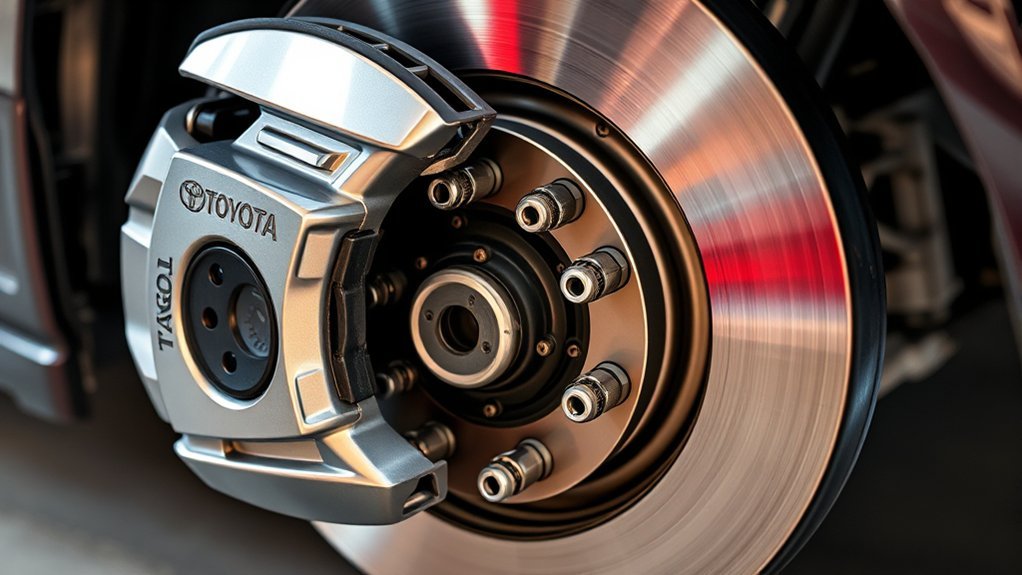
The Toyota Camry braking system uses hydraulic friction brakes plus electronic controls such as ABS, Brake Assist, and stability-control functions to slow the car and help preserve directional control. On the current 2026 U.S. Camry, Toyota lists an all-hybrid powertrain, four disc brakes, and regenerative braking. A persistent red brake-system warning, sudden pedal change, active fluid leak, or reduced braking is a stop-driving condition. Because hardware, warning logic, and maintenance instructions vary by model year and market, confirm details in the manual for your exact Camry.
Last updated: September 11, 2026
Quick Answer
The Toyota Camry braking system converts pedal input into controlled hydraulic pressure that applies the wheel brakes. ABS helps prevent sustained wheel lock, while current hybrid Camrys blend regenerative and friction braking. The 2026 U.S. Camry uses four disc brakes and an all-hybrid powertrain. A persistent red brake-system warning is a stop-now condition; an ABS warning requires prompt diagnosis because ABS or Brake Assist may be unavailable.
Key Takeaways
- Most braking force is created when hydraulic pressure pushes brake pads or shoes against rotating components at the wheels.
- The current 2026 U.S. Camry is all-hybrid and uses four disc brakes, while older generations and other markets can use different hardware.
- ABS helps prevent sustained wheel lock and preserve steering control, but it cannot create traction or guarantee a shorter stop.
- Current U.S. Camrys blend regenerative braking with conventional friction braking.
- A persistent red brake-system warning, fluid leak, sudden pedal change, grinding with reduced braking, or sharply longer stopping distance requires immediate attention.
Verification basis: Current-generation details were checked against Toyota’s U.S. Camry specifications and owner resources. Warning responses were checked against Toyota brake-warning guidance, while recall checks should be performed by VIN through NHTSA. Older model years and non-U.S. versions can differ.
At a Glance
| Current 2026 U.S. Setup | All-hybrid powertrain, four disc brakes, and regenerative braking |
| Normal Braking | Hydraulic friction brakes provide dependable wheel braking; hybrid models also recover energy during many decelerations |
| Electronic Support | ABS, Brake Assist, brake-force distribution, traction/stability control, and model-specific driver-assistance braking functions |
| Stop-Driving Triggers | Persistent red brake warning, reduced braking, sinking or suddenly abnormal pedal, active fluid leak, or severe grinding with weak braking |
Warning: Do not continue driving if braking performance is reduced, the pedal suddenly sinks or becomes unusually hard, brake fluid is actively leaking, grinding is accompanied by weak braking, or the red brake-system warning stays on after the parking brake is fully released. Stop in a safe location and arrange professional inspection or towing.
How Does the Toyota Camry Braking System Work?
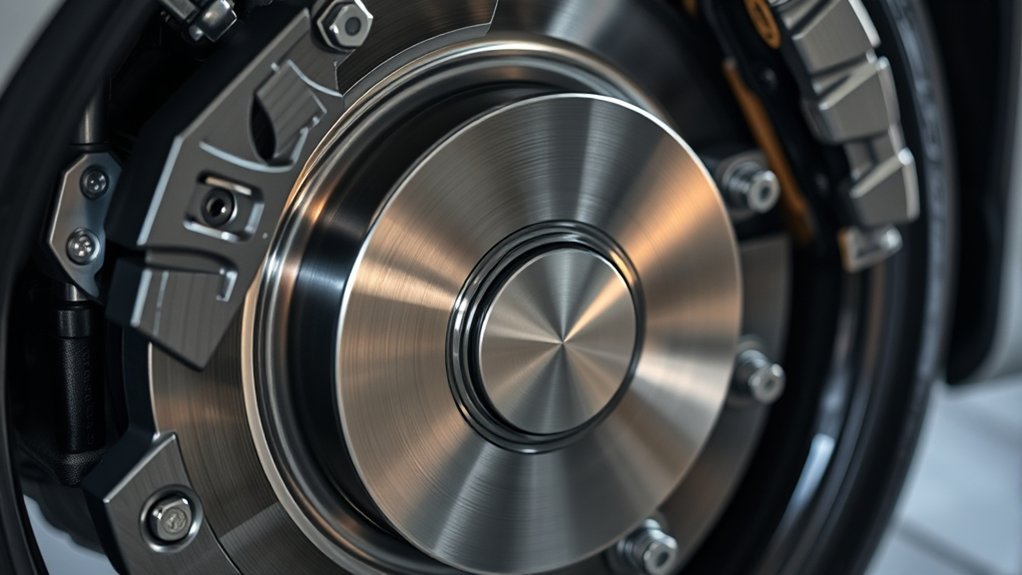
When you press the brake pedal, the Camry’s brake booster or electronically controlled brake actuator helps translate pedal input into hydraulic pressure. Brake fluid carries that pressure through lines and flexible hoses to the wheel brakes. Friction between the pads or shoes and the rotating brake surfaces converts vehicle motion into heat and slows the wheels.
The exact arrangement depends on the model year and market. The current 2026 U.S. Camry is all-hybrid, and Toyota’s current Camry specifications list four disc brakes and regenerative braking. Earlier generations and non-U.S.-market versions can differ, so check the specifications and Toyota manual for your exact Camry rather than assuming every generation is identical.
In a disc-brake assembly, one or more hydraulic pistons move the caliper pads against a rotor that turns with the wheel. On a vehicle equipped with drum brakes, hydraulic wheel cylinders push curved brake shoes against the inside of a rotating drum.
Brake hardware may vary, but the basic principle is the same: controlled hydraulic pressure creates friction at the wheels to reduce vehicle speed.
The hydraulic service-brake system normally uses more than one circuit so that a single fault is less likely to remove all braking force. The Anti-lock Braking System can then adjust pressure at individual wheels when its sensors detect impending wheel lock.
Depending on the year and trim, the parking brake may be operated by a pedal, lever, or electronic switch. It is a separate holding system and should not be treated as a substitute for normal service-brake repairs.
What Are the Key Components of the Camry’s Brake System?
The Camry’s brake system contains mechanical, hydraulic, and electronic components that work together. A fault in one area can produce symptoms that resemble a problem elsewhere, so warning lights and pedal changes should be diagnosed rather than guessed at.
Disc Brakes Overview
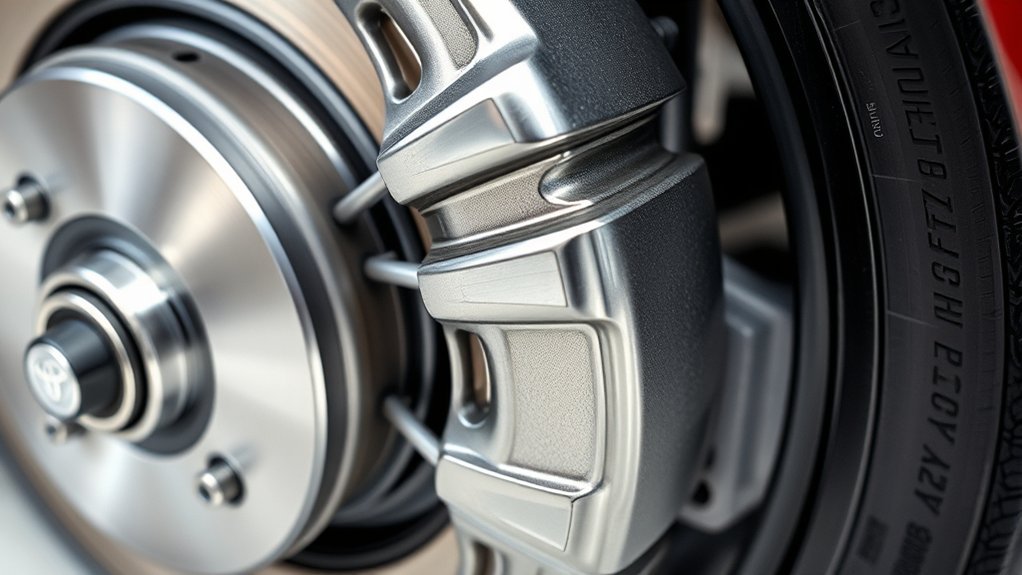
Disc brakes provide consistent stopping force and dissipate heat through exposed rotors. Their main components include:
- Brake calipers: Hold the pistons and position the pads around the rotor.
- Brake pads: Use friction material to slow the rotor. Some pads have mechanical wear indicators that create a high-pitched squeal when the material becomes thin.
- Brake rotors: Rotate with the wheels and absorb substantial heat during braking.
- Slide pins and hardware: Allow a floating caliper and its pads to move correctly.
- Dust shields: Help protect components from road debris without sealing out all moisture or corrosion.
Not every Camry has an electronic brake-pad wear sensor. A squeal from a mechanical wear indicator may be the first warning, while grinding can mean the friction material has worn through or another component is contacting the rotor.
Hydraulic System Functionality
The hydraulic system uses brake fluid to transmit and control force between the pedal or brake-control system and the wheel brakes. Important parts include:
- Master cylinder or brake actuator: Generates and manages hydraulic pressure.
- Brake booster: Reduces the pedal effort required from the driver. Hybrid and newer systems may use electronically controlled assistance.
- Brake lines and hoses: Carry fluid to the wheel brakes while allowing steering and suspension movement.
- Caliper pistons or wheel cylinders: Convert fluid pressure into mechanical movement.
- ABS actuator and valves: Increase, hold, or reduce pressure when wheel-lock control is needed.
Brake fluid is designed to operate under high temperatures, but it can absorb moisture over time. Air, leaks, incorrect fluid, internal seal problems, or contaminated fluid can reduce hydraulic performance. Because braking systems differ, use only the fluid specification printed on the reservoir cap or listed in the exact owner’s manual.
Hybrid Regenerative Braking
The current 2026 U.S. Camry lineup is all-hybrid. During many routine slowdowns, the electric motor operates as a generator and converts part of the vehicle’s motion into electrical energy for the hybrid battery. The control system blends this regenerative braking with the hydraulic friction brakes.
The friction brakes remain essential. They provide additional force during harder stops, operate when regeneration is limited, bring the vehicle to a complete stop, and hold it stationary. A slight change in pedal feel as the system blends regenerative and friction braking can be normal, but a sudden or persistent change still requires inspection.
Note: Regenerative braking may reduce friction-pad use during some trips, but it does not eliminate brake maintenance. Light use can also allow rust or uneven contact to develop on rotors, especially in wet or salted-road conditions.
Electronic Brake and Stability Systems
Toyota groups several systems under its active-safety technology. Depending on the model year, these can include:
- Anti-lock Braking System: Helps prevent sustained wheel lock during hard braking.
- Electronic Brake-force Distribution: Adjusts brake-force distribution according to operating conditions.
- Brake Assist: Can help provide additional braking force when the system detects an emergency stop.
- Vehicle Stability Control and Traction Control: Can reduce engine output or apply selected brakes to help manage loss of traction or directional control.
- Pre-Collision System: May warn the driver and provide braking assistance or automatic emergency braking under specified conditions.
These systems support the driver but cannot overcome tire, speed, visibility, weather, or road-surface limitations. Toyota’s official safety-system information and the vehicle manual explain the equipment and limitations for each version.
How Does Hydraulic Pressure Affect Camry Braking?
Brake fluid is nearly incompressible under normal conditions. When the driver presses the pedal, pressure created in the master cylinder or brake actuator is transmitted through the filled system. Piston size and mechanical leverage allow the system to produce substantial clamping force at the wheel brakes.
Hydraulic pressure affects braking in four important ways:
- Force transmission: Fluid carries pedal force to the calipers or wheel cylinders.
- Balanced application: Properly functioning circuits distribute pressure so the vehicle can stop predictably.
- Brake assistance: A booster or electronic actuator reduces the physical effort required at the pedal.
- Fault response: Air, a leak, damaged hoses, failed seals, or actuator problems can change pedal travel and reduce braking force.
A pedal that feels soft or spongy may indicate air, a leak, overheated fluid, internal hydraulic leakage, or excessive component travel. A very hard pedal may indicate a brake-assist problem. Neither symptom should be diagnosed by repeatedly driving the vehicle.
Pro Tip: Never mix brake fluids based only on color or bottle appearance. Confirm the required specification on the reservoir cap or in the exact Toyota manual, and use fluid from a clean, recently opened container.
What Does ABS Do in a Toyota Camry?
The Anti-lock Braking System monitors wheel-speed signals and intervenes when one or more wheels approach lock-up during braking. It rapidly adjusts hydraulic pressure so the tires can continue rotating rather than remaining fully locked.
Preventing Wheel Lock-Up
A rolling tire generally provides more directional control than a locked, sliding tire. When ABS activates, the driver may feel pulsation in the pedal and hear clicking, buzzing, or motor-like sounds. Those sensations can be normal during system operation.
During an emergency stop in an ABS-equipped Camry:
- Press the brake pedal firmly and continuously.
- Do not pump the pedal in an attempt to operate ABS manually.
- Look and steer toward a safe path if room and traction allow.
- Keep enough distance for the tires, road surface, vehicle load, and weather conditions.
Enhanced Vehicle Control
ABS can help preserve steering control, but it cannot create grip. Tires, inflation, tread depth, speed, road contamination, temperature, and driver reaction still determine how much traction is available.
| ABS Function | What It Means for the Driver |
|---|---|
| Monitors wheel speed | Detects when a wheel is approaching lock-up |
| Modulates hydraulic pressure | Allows controlled wheel rotation during hard braking |
| Helps preserve directional control | May allow steering around an obstacle when traction and space permit |
| Creates pedal feedback | Pulsation and system noise can be normal during activation |
ABS does not guarantee a shorter stopping distance on every surface. Loose gravel, deep snow, ice, worn tires, excessive speed, and other conditions can still produce a long stop.
Rapid Brake Pressure Pulsing
ABS valves and the hydraulic pump or actuator can increase, hold, and release pressure rapidly while the system responds to changing wheel speed. The exact cycling behavior is controlled by the vehicle and should not be reduced to one universal pulses-per-second figure.
ABS also does not prevent brake fade. Fade is usually associated with excessive heat, overheated friction material, overheated fluid, or sustained braking. Avoid riding the brake pedal, use an appropriate lower range when descending a long grade if the manual recommends it, and stop safely if braking performance changes.
During an ABS-assisted emergency stop, use firm, continuous pedal pressure. The system performs the rapid pressure adjustments automatically.
What Camry Brake Warning Signs Need Immediate Attention?
Brake symptoms should be evaluated by severity. A noise caused by a mechanical wear indicator is different from a sudden loss of hydraulic pressure, even though both deserve attention.
| Symptom | Possible Causes | Recommended Response |
|---|---|---|
| High-pitched squeal | Mechanical pad wear indicator, glazing, debris, corrosion, or pad vibration | Arrange an inspection soon, especially if pad thickness is unknown |
| Grinding or scraping | Severely worn pads, damaged hardware, shield contact, or debris | Stop driving if braking is reduced or the sound is severe; have the vehicle inspected |
| Soft, spongy, or sinking pedal | Air, leak, overheated fluid, excessive travel, master-cylinder fault, or actuator problem | Treat a sudden change as urgent and arrange towing |
| Very hard pedal | Loss of brake assist, actuator fault, vacuum problem on applicable models, or obstruction | Stop safely and obtain professional diagnosis |
| Pedal or steering-wheel vibration | Rotor runout, thickness variation, uneven deposits, loose components, tire issues, or suspension wear | Schedule inspection; do not assume the rotor is simply “warped” |
| Vehicle pulls while braking | Uneven brake application, seized caliper, contaminated friction material, tire pressure, alignment, or suspension problem | Inspect promptly; stop driving if the pull is strong or unpredictable |
| Longer stopping distance or burning odor | Overheating, fade, dragging brake, worn friction material, tires, or hydraulic fault | Stop safely, allow components to cool, and arrange inspection |
| Red brake warning | Parking brake applied, low fluid, hydraulic fault, or another serious brake-system condition | Release the parking brake fully. If the red warning remains on, stop in a safe place and contact Toyota or arrange professional assistance; do not continue driving |
| Amber ABS warning | ABS or Brake Assist fault | Have the vehicle inspected promptly; if a red brake warning also appears or normal braking changes, stop immediately |
Dashboard symbols and warning behavior differ by generation. Read the warning-light section in the exact owner’s manual instead of relying on symbol color alone.
Can You Keep Driving With a Camry Brake Warning?
The safest response depends on the exact warning and whether normal braking has changed. Use the dashboard message and your model-year manual, but the following severity guide helps separate an urgent stop from a wear-related inspection.
| Condition | Response |
|---|---|
| Red brake-system warning remains on after the parking brake is released | Stop in a safe place. Toyota warns that continued driving may be dangerous. Contact Toyota or arrange professional assistance. |
| ABS warning only, with no red brake warning | ABS or Brake Assist may be malfunctioning. Follow the exact manual and obtain prompt inspection. Stop immediately if normal braking changes or a red brake warning appears. |
| Grinding, leaking fluid, sinking pedal, or reduced stopping ability | Do not road-test the vehicle. Stop safely and arrange towing or professional inspection. |
| Light squeal with unchanged pedal feel and stopping | A wear indicator, debris, corrosion, or vibration may be involved. Schedule a brake inspection soon rather than waiting for grinding. |
How Can You Safely Troubleshoot Common Camry Brake Problems?
Owner troubleshooting should be limited to safe observations. Do not disassemble hydraulic or electronic brake components without the correct procedures, equipment, support stands, torque specifications, and diagnostic capability.
- Read the dashboard message: Note which warning lights appeared, whether they remain on, and whether the red brake and amber ABS warnings appear together.
- Assess the pedal without driving: With the vehicle stationary in a safe place, notice whether the pedal has suddenly become soft, sinks, or requires unusually high effort.
- Check beneath the vehicle: Look for fresh fluid near a wheel, along the underbody, or below the engine compartment. Do not crawl beneath an unsupported vehicle.
- Inspect the reservoir visually: Confirm the fluid is between the marked limits without opening the cap unnecessarily.
- Listen and smell: Grinding, a strong burning odor, smoke, or heat from one wheel can indicate severe wear or a dragging brake. Do not touch a hot wheel or brake component.
- Review recent work: A symptom that began immediately after tire, brake, bearing, suspension, or electrical service should be reported to the repairer.
- Check recalls: Search the vehicle identification number through the NHTSA recall lookup in the United States.
Warning: Do not perform a road test to “see whether the brakes improve” when the pedal has changed, fluid is leaking, a red brake warning remains on, or stopping ability is uncertain.
How Should You Maintain a Toyota Camry’s Brakes?
Regular inspections help identify gradual wear before it becomes a safety problem or damages additional parts. Use the maintenance guide for your exact Camry rather than applying one interval to every generation.
For the 2026 U.S. Camry, Toyota’s published maintenance data includes inspection of the brake friction components at the 5,000-mile service and inspection of brake lines and hoses at the 15,000-mile service. Later intervals and special operating conditions remain model-specific, so use Toyota’s maintenance schedule and the Warranty & Maintenance Guide for the exact vehicle.
- Inspect brake pads or shoes: Check remaining friction material and look for uneven wear, contamination, cracks, or overheating.
- Inspect rotors or drums: Check condition and measure them against Toyota’s service limits rather than judging by appearance alone.
- Check calipers and hardware: Confirm that slide pins, boots, clips, pistons, and parking-brake mechanisms operate correctly.
- Inspect hoses and lines: Look for wetness, cracking, swelling, corrosion, abrasion, or damaged fittings.
- Evaluate brake fluid: Verify the level, specification, service history, and condition according to the model-specific schedule and professional test results.
- Maintain the tires: Tire condition and inflation directly affect available braking traction.
- Use the parking brake: Regular operation can help keep applicable mechanisms moving, but follow Toyota’s instructions for service, towing, car washes, or cold-weather conditions.
- Avoid riding the brakes: Continuous light pressure can create unnecessary heat and accelerate wear.
Frequent mountain driving, towing where permitted, heavy traffic, road salt, long periods of storage, repeated short trips, or aggressive driving can justify more frequent inspections. Hybrid regenerative braking can reduce some pad wear, but it does not remove the need to inspect friction surfaces and hydraulic components.
Brake-fluid replacement should follow the exact Toyota maintenance guide and the system’s condition. There is no universal Toyota rule requiring every Camry to receive fluid every one or two years.
Related Camry Brake Guides
How Do You Check Toyota Camry Brake Fluid?
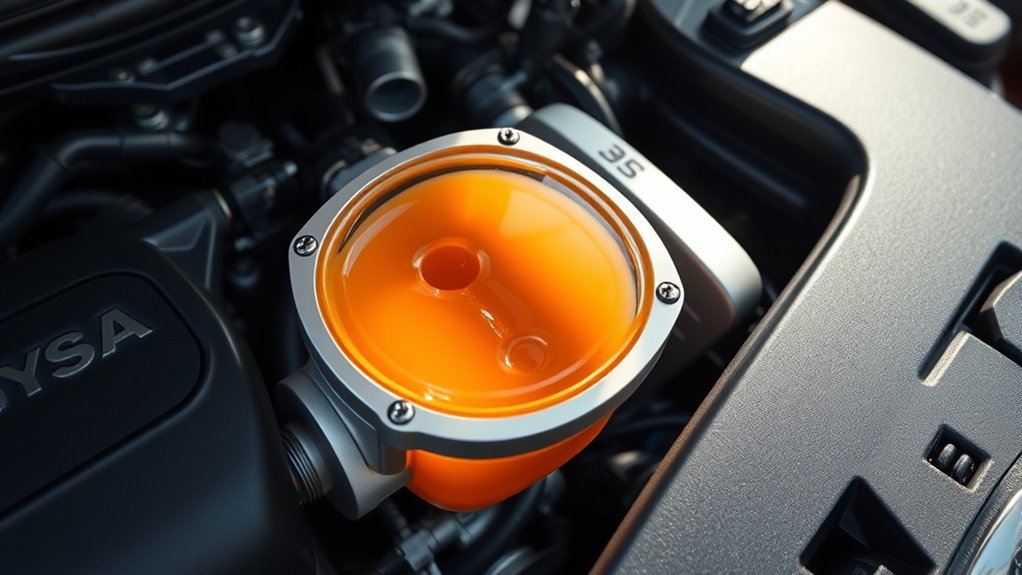
You can usually check the brake-fluid level without opening the reservoir. The reservoir is normally located toward the rear of the engine compartment, but its shape and location vary by model year.
- Park safely: Stop on level ground, select Park, apply the parking brake, switch the vehicle off, and allow hot components to cool.
- Consult the manual: Confirm the reservoir location, fluid specification, and precautions for your exact Camry.
- Clean the area: Wipe dust from the outside of the reservoir and cap so contamination cannot enter if the cap must be opened.
- Read the level: Look through the translucent reservoir and verify that the fluid sits between the “MIN” and “MAX” markings.
- Observe the appearance: Fluid is often clear to light amber when new, but color alone cannot determine moisture content, boiling performance, or whether replacement is required.
- Investigate a low level: A gradual drop can accompany normal pad wear, while a rapid or unusually low level can indicate a leak or another fault. Do not repeatedly top it up without finding the cause.
Brake-fluid level is a diagnostic clue. A low reservoir should prompt an inspection for worn friction material, leakage, or another system problem—not automatic topping up.
Warning: Brake fluid can damage painted surfaces and can be contaminated by dirt, petroleum products, or moisture. Use only the specified fluid, avoid leaving the reservoir open, clean spills immediately according to Toyota’s instructions, and never use fluid from a dirty or long-open container.
Do not remove the cap simply to smell, touch, or sample the fluid. A trained technician can inspect the hydraulic system, review service history, and perform appropriate moisture or condition testing when needed.
Why Should You Regularly Inspect Your Camry’s Brakes?
Brake components wear gradually, and drivers can adapt to small changes without realizing that stopping performance has deteriorated. Routine inspection creates an opportunity to find thin pads, uneven wear, corroded rotors, sticking calipers, damaged hoses, low fluid, or parking-brake problems before they become more serious.
Inspection also protects related components. Replacing worn pads before the backing plates contact the rotors can prevent additional damage. Correcting a dragging caliper can reduce overheating, uneven tire loading, and accelerated wear.
Brakes should be inspected according to the vehicle’s maintenance guide and sooner when you notice noise, vibration, pulling, warning lights, pedal changes, heat, odor, leakage, or longer stopping distances. Drivers who regularly operate in mountains, heavy traffic, winter road salt, or other severe conditions may need more frequent checks.
Use Toyota’s manual and maintenance-guide portal for vehicle-specific information, and check the VIN periodically through the NHTSA recall database.
Frequently Asked Questions
What does the red brake-system warning light mean on a Toyota Camry?
A red brake-system warning can indicate that the parking brake is applied, the brake-fluid level is low, or the brake system has a malfunction. Fully release the parking brake. If the red warning remains on, stop the vehicle in a safe place and contact Toyota or arrange professional assistance. Toyota warns that continued driving may be dangerous.
How do you turn off automatic braking on a Toyota Camry?
First identify the feature. “Automatic braking” may refer to the Pre-Collision System, parking-related braking, or another driver-assistance function. Settings, menu names, allowable adjustments, and restart behavior vary by model year and market. Use the exact owner’s manual and dashboard instructions rather than a universal menu path. Disabling a safety feature can reduce protection, so restore it as soon as the condition requiring the change has ended.
How does the Toyota Camry brake system work step by step?
The driver presses the pedal; the brake booster or electronic actuator assists the input; hydraulic pressure travels through the brake circuits; caliper pistons or wheel cylinders move the friction material; the pads or shoes press against the rotors or drums; and friction slows the wheels. On hybrid Camrys, regenerative braking can provide part of the deceleration before or alongside the friction brakes. ABS can modify wheel pressure if lock-up is approaching.
Why does my Toyota Camry shut off while braking or turning?
On a hybrid Camry, the gasoline engine can stop normally while the vehicle remains on and the “READY” indicator stays illuminated. A complete loss of vehicle power, a “READY” indicator that goes out, stalling in a non-hybrid, or loss of brake assistance is not normal. Possible causes include charging-system, electrical-ground, fuel, engine-control, idle-control, hybrid-control, or brake-actuator faults. Stop safely, avoid continued driving, document warning messages, and arrange professional diagnosis.
What is the 30-30-30 rule for brakes?
There is no recognized Toyota maintenance standard that requires brake checks every 30 days, every 30 miles, or after 30 days of inactivity. Similar wording may be confused with a pad-bedding procedure, but bedding instructions depend on the brake-pad manufacturer and repair procedure. Follow the Toyota maintenance guide and the instructions supplied with approved replacement parts.
Can you drive a Toyota Camry with the ABS light on?
Toyota identifies an ABS warning as a possible malfunction in the ABS or Brake Assist system. Have the vehicle inspected promptly and follow the exact model-year manual. If the red brake-system warning is also illuminated, the pedal changes, fluid is low, or braking performance is reduced, stop driving immediately and arrange professional assistance or towing.
How often should Toyota Camry brakes be inspected?
Follow the maintenance guide for the exact model year and have the brakes checked sooner when symptoms appear. For the 2026 U.S. Camry, Toyota’s maintenance data includes brake friction-component inspection at the 5,000-mile service and brake-line/hose inspection at the 15,000-mile service. Mountain driving, heavy traffic, road salt, long storage, repeated short trips, or high loads can justify additional checks.
Why can a hybrid Camry’s brakes feel different?
A hybrid control system blends regenerative braking from the electric motor with hydraulic friction braking. The proportion can change with speed, battery condition, traction, temperature, and requested braking force. Mild transitions can be normal, but a sudden change, warning message, unusually long pedal travel, noise, or reduced stopping force requires inspection.
Conclusion
The Toyota Camry braking system uses hydraulic pressure, friction components, and electronic controls to provide normal and emergency stopping. Current U.S. Camrys also recover energy through regenerative braking, but they still depend on properly maintained friction brakes and hydraulic components.
The most useful maintenance habits are simple: follow the exact Toyota schedule, respond immediately to a persistent red brake warning or a major pedal change, keep the tires in good condition, and have noises, leaks, pulling, heat, or reduced stopping performance inspected promptly. Do not road-test a Camry when stopping ability is uncertain; arrange professional inspection or towing instead.
Sources
- Toyota Camry Official Model Page — current U.S. all-hybrid Camry context
- Toyota Camry Comparison and Specifications — current disc-brake and regenerative-braking specifications
- Toyota Manuals and Warranties — model-year-specific operating, warning, and maintenance instructions
- Toyota Warning Lights — ABS and related warning-system guidance
- Toyota Maintenance Schedule — factory maintenance-schedule access and service guidance
- Toyota Safety Hub — Toyota Safety Sense and driver-assistance system information
- National Highway Traffic Safety Administration Recall Lookup — VIN-based safety-recall searches and recall alerts
- Federal Motor Vehicle Safety Standard No. 116 — federal requirements for motor-vehicle brake fluids
