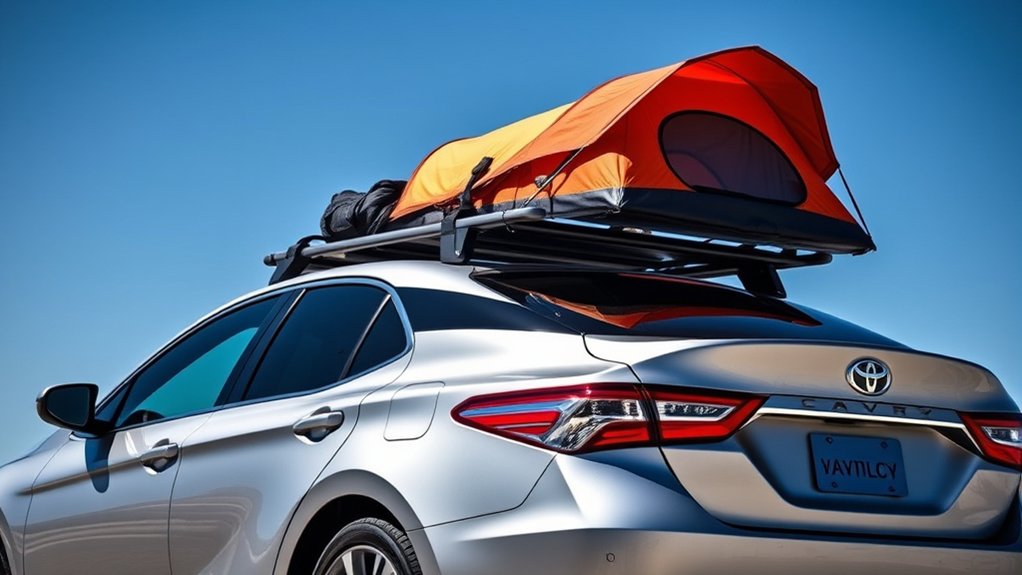
Your Toyota Camry does not have one universal roof load limit that safely applies to every model year, market, roof design, and rack system. Before carrying luggage, bicycles, kayaks, skis, or a cargo box, verify the rules for your vehicle and every installed component. The complete setup is limited by its smallest remaining allowance.
Quick Answer
Do not assume your Toyota Camry has a 100-, 150-, or 165-pound roof capacity. Check the official manual for your model year and market, then use a vehicle-specific rack fit. Interpret each vehicle, rack, and carrier rating according to its instructions and use the smallest remaining cargo allowance.
Key Takeaways
- A Toyota Camry roof limit must be verified for the model year, market, roof configuration, and installed rack.
- A general crossbar or cargo-box rating does not override a lower vehicle-specific limit or a no-fit result.
- Read how each rating is defined so you do not omit equipment weight or subtract the same weight twice.
- A moving-load rating does not prove that the roof can support a person or rooftop tent while parked.
- Roof cargo changes handling, height, wind sensitivity, noise, fuel consumption, and driving range.
How to Determine Your Toyota Camry Roof Load Limit
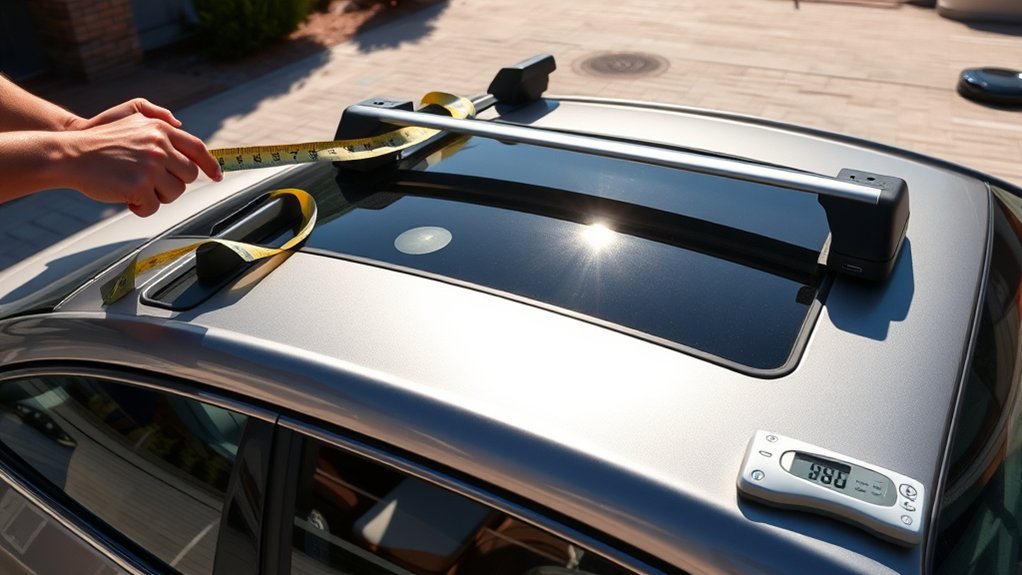
Start with the model year, trim, body style, market, production details, and roof configuration of your Camry. A rack listed for a different generation or roof design may use different mounting points, clips, pad shapes, bar spacing, hardware, or load restrictions.
At a Glance
| Time Required | About 15 to 30 minutes to verify documents and calculate the available load |
| Difficulty | Easy to moderate, depending on the rack design and installation method |
| Tools Needed | Owner’s manual, rack fit guide, rack and carrier instructions, tape measure, and a scale when equipment weights are unknown |
| Cost | No cost to verify; equipment and professional-installation costs vary by system |
- Identify the vehicle and market. Confirm the model year, trim, body style, country of sale, and whether the roof is bare, has approved mounting points, or includes a sunroof or other glass panel.
- Check Toyota’s documentation. U.S. owners can use the Toyota Manuals and Warranties portal. Owners in Canada or another country should use the Toyota portal or supplied manual for that market. Search for “roof,” “luggage carrier,” “cargo,” “loading,” and “maximum load.”
- Read any prohibition or restriction first. If Toyota explicitly prohibits a roof carrier or a particular installation, an aftermarket product rating does not override that restriction.
- Confirm the complete rack fit. The bars, feet, towers, clamps, pads, and fit kit must all be listed for the exact Camry configuration. Check the VIN or production date when the fit guide identifies a midyear change.
- Check the fit status. Use a confirmed fit. An “unconfirmed” result means the combination has not been approved for use, while “no fit” means you should select another system.
- Read the carrier instructions. A roof box, bicycle tray, kayak cradle, ski carrier, basket, or cargo bag may have its own weight, spacing, positioning, speed, and tie-down requirements.
- Interpret each rating correctly. Determine whether the number covers the entire load on the vehicle roof, the payload placed on the bars, or only the cargo placed inside a carrier.
- Use the smallest remaining allowance. Calculate the cargo allowed under each applicable rating, then follow the lowest result.
Warning: Do not install a universal rack merely because its clamps appear to fit. An unconfirmed system can damage the roof, glass, weather seals, or door frames and may detach during braking, cornering, bumps, or crosswinds.
How the Lowest Roof-Load Rating Controls
Treat the roof-loading system as a chain of related limits. The controlling number is not necessarily the smallest number printed on a product page; it is the smallest cargo allowance left after each rating is interpreted according to the instructions that define it.
Manufacturer Specifications Overview
Check each source separately because the documents may measure different loads.
| Source | What to Verify | Why It Matters |
|---|---|---|
| Toyota owner’s manual | Vehicle restrictions, approved carrier guidance, and whether a stated roof limit includes the rack | An accessory cannot override a vehicle prohibition or lower limit |
| Rack fit guide | Confirmed model-year fit, required components, foot placement, bar spacing, and vehicle-specific moving-load capacity | A general bar rating may be higher than the capacity approved for one vehicle installation |
| Carrier manual | The empty carrier weight and the cargo permitted inside or on the carrier | The carrier may have the smallest remaining cargo allowance |
| Tire and loading label | The combined occupant-and-cargo limit for the vehicle | Roof cargo also consumes part of the vehicle’s total payload allowance |
Use the following method instead of subtracting every item from one number without checking what that number represents:
| Rating Type | Typical Calculation |
|---|---|
| Vehicle roof limit that includes everything on the roof | Vehicle limit minus feet, towers, bars, carrier, locks, and other roof equipment |
| Rack capacity defined as load carried on the bars | Rack capacity minus the carrier and any accessories placed on the bars; include the base rack only when the instructions say it counts |
| Carrier cargo limit | Use the cargo limit stated for that box, basket, tray, cradle, or bag |
| Vehicle occupant-and-cargo limit | Vehicle payload minus occupants, cabin cargo, trunk cargo, roof equipment, and roof cargo |
Usable roof cargo weight is the smallest remaining allowance after every vehicle, rack, and carrier rating is interpreted according to its own instructions.
For example, suppose a vehicle roof limit is 150 pounds and explicitly includes everything installed on the roof. If the base rack weighs 20 pounds and an empty cargo box weighs 35 pounds, that vehicle limit leaves 95 pounds for cargo. If the rack and box calculations allow more than 95 pounds, the vehicle calculation still controls. This is only an example, not a Toyota Camry specification.
Pro Tip: Weigh the empty rack, carrier, and removable accessories when their instructions do not list the weights. Locks, adapters, awnings, extra mounts, accumulated ice, and wet equipment can reduce the remaining allowance.
What If the Manual Does Not List a Roof Limit?
A silent manual is not the same as an explicit prohibition, but it also does not justify choosing a number from another Camry year. Look for accessory, loading, and roof-carrier sections in every manual supplied with the vehicle. Then use a rack manufacturer that lists a confirmed fit and provides a vehicle-specific capacity and installation procedure.
If Toyota prohibits roof loading, the rack company lists no fit, the required capacity is missing, or the documents conflict, do not install the system until Toyota and the rack manufacturer provide compatible written guidance.
Roof Type Considerations
A Camry with a bare roof generally needs a vehicle-specific system with shaped feet, pads, and clips positioned near defined areas around the door openings. Clamp shape, pad shape, bar spread, and foot location can change between generations or production periods.
Do not assume that a sunroof or glass panel accepts the same system as a solid roof. Confirm that the feet remain on approved structural areas and that bars, clamps, straps, cargo, and carrier hardware cannot contact or obstruct the glass.
If the rack manufacturer lists the vehicle as unconfirmed or no fit, choose another system. Do not drill the roof, modify clamps, add homemade spacers, or change the prescribed bar spread unless the rack manufacturer and a qualified installer provide an approved procedure.
Weight Distribution Importance
Correct distribution allows the mounting feet and bars to share the load as designed. It does not increase any rated capacity.
| Factor | Safe Practice |
|---|---|
| Roof load | Stay below every applicable vehicle, rack, mount, carrier, and payload limit |
| Side-to-side balance | Center the load unless the carrier instructions specify another position |
| Front-to-rear placement | Support the load across both bars and follow all spacing and overhang requirements |
| Heavy and light items | Keep dense items low and inside the vehicle when practical; reserve the roof for lighter bulky equipment |
| Load movement | Use approved restraints and attachment points so the cargo cannot slide, lift, rotate, or bounce |
| Weather exposure | Account for absorbed rainwater, snow, ice, and wet fabric before driving |
Roof Rack Types for Camry: Compatibility and Load Limits
The correct rack type depends on the roof and a confirmed vehicle fit, not only the Camry name.
- Vehicle-specific bare-roof rack: Uses shaped feet, pads, and clips designed for defined positions around the door frames.
- Approved fixed-point system: Uses manufacturer-designated mounting points when the particular vehicle is equipped with them.
- Temporary soft carrier: May use straps through the cabin or around an approved rack. Use it only when the carrier manufacturer approves the roof type and routing method. Keep buckles, hooks, and other hardware outside the door seals unless the instructions expressly show otherwise.
- Universal suction or magnetic products: Do not treat these as substitutes for a confirmed load-bearing rack unless the manufacturer supplies clear vehicle compatibility, preparation, load, speed, and inspection instructions.
A product page may advertise a high crossbar capacity while the vehicle-specific installation has a lower rating or no confirmed fit. For example, the Thule roof-rack fit guide distinguishes confirmed, unconfirmed, and no-fit combinations. Use the result for your exact vehicle rather than a general product headline.
Effective Strategies for Even Load Distribution on Your Camry Roof
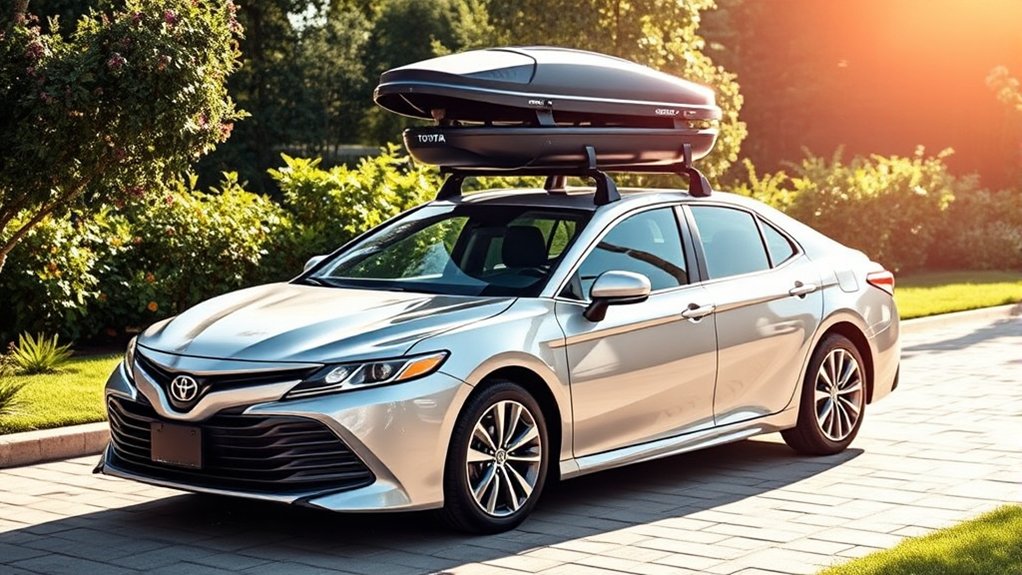
Use the following process each time you load the roof:
- Place the rack feet and crossbars at the exact measurements shown in the fit instructions.
- Center the carrier or position it according to its manual.
- Spread cargo across the supported area instead of concentrating it at one end.
- Keep dense items in the trunk when practical to reduce the vehicle’s center of gravity.
- Use restraints with adequate working strength and inspect them for cuts, fraying, damaged stitching, corrosion, weakened buckles, or ultraviolet deterioration.
- Prevent loose strap ends from striking the roof, windows, or painted surfaces.
- Do not place hard buckles, hooks, or tensioning devices where a closing door can crush them.
- Confirm that every door latches normally and that approved interior straps do not prevent occupants from entering or leaving safely.
- Push and pull the loaded carrier before driving. It should not move independently of the vehicle.
- Take a brief low-speed test drive, stop in a safe place, and recheck the feet, mounts, fasteners, lid, locks, and straps.
- Repeat inspections at the intervals specified by the rack and carrier manufacturers and after severe wind, heavy rain, rough roads, or sudden braking.
Note: Long items may need front and rear tie-downs in addition to their main carrier straps. Follow the kayak, canoe, paddleboard, or cargo manufacturer’s instructions and comply with local overhang, visibility, and marking laws.
Pre-Drive Roof Cargo Safety Checklist
Complete this check before every trip and whenever you reload the carrier:
- Verify the total roof equipment and cargo weight.
- Confirm that the vehicle remains below its combined occupant-and-cargo limit.
- Check every foot, clip, tower, bolt, bar, clamp, and lock.
- Confirm that the carrier lid is fully closed and locked.
- Make sure straps cannot flap, loosen, or contact sharp edges.
- Remove snow and ice and account for equipment that has absorbed water.
- Measure the vehicle’s total loaded height before entering a garage or parking structure.
- Check the rack and carrier instructions for a maximum speed below the posted road limit.
- Delay the trip when wind, storms, or road conditions exceed the equipment manufacturer’s limits.
- Verify that the windshield, lights, mirrors, cameras, antennas, and license plate remain unobstructed.
Pro Tip: Record the loaded vehicle height on a removable dashboard note before a trip. Include the rack and cargo box, bicycle, kayak, or other item at its highest point.
Mistakes to Avoid With Roof Racks on Your Camry
Avoid these common loading and installation errors:
- Using a memorized capacity: A number found for another year, country, roof, or rack may not apply to your Camry.
- Misreading a rating: Determine whether it covers the complete roof load, load on the bars, or cargo inside the carrier.
- Ignoring equipment weight: Count every component when the applicable vehicle or system rating includes it.
- Subtracting the same component twice: Do not deduct base-rack weight from a rack payload rating unless its instructions say the base rack is included.
- Relying only on the cargo-box rating: A box may hold more than the vehicle-specific installation permits.
- Overtightening clamps: Excess torque can deform components, damage paint, or affect a door frame. Use the supplied torque tool or specified torque value.
- Mounting on glass or trim: Rack feet must sit only where the fit instructions specify.
- Pinching strap hardware in a door: Keep buckles and hooks out of door seals and follow the approved interior-strap route.
- Allowing cargo to block visibility: Do not obstruct the windshield, lights, cameras, license plate, or required mirrors.
- Opening a sunroof under the rack: Bars, feet, straps, or cargo may interfere with the moving panel.
- Ignoring snow or water weight: Ice buildup and saturated fabric can add weight and alter aerodynamics.
- Driving as though the roof were empty: Roof cargo increases wind sensitivity and changes steering and braking response.
- Forgetting overhead clearance: Measure the total height before entering garages, automated car washes, parking structures, or areas with low branches.
- Leaving unused equipment installed: Empty bars and boxes can add wind noise and aerodynamic drag.
Choosing the Right Roof Rack for Your Camry
Choose a rack by confirmed fit and documented installation requirements before comparing advertised capacity. A high-capacity rack that does not match the vehicle is not a safe substitute.
Roof Rack Compatibility Checklist
- Match the model year, body style, country of sale, production range, and roof configuration.
- Confirm every required component number, including bars, feet, towers, clips, pads, adapters, and locks.
- Check whether the system is approved for a sunroof or glass roof.
- Verify the front-bar position, rear-bar position, crossbar spread, and permitted overhang.
- Ensure that doors latch correctly and that no buckle or hardware is pinched in a weather seal.
- Make sure the planned carrier fits the bar shape, bar width, and required spacing.
- Review maximum speed, weather, load, torque, and reinspection instructions.
- Keep the installation manual in the vehicle or save an offline digital copy.
Weight Capacity Considerations
Roof cargo also contributes to the Camry’s total cargo load. In the United States, the driver-side Tire and Loading Information placard states the maximum combined weight of occupants and cargo. The requirement is described in 49 CFR 571.110. Owners in other markets should use the equivalent label and loading instructions supplied with the vehicle.
Passengers, child seats, luggage in the cabin, trunk contents, roof equipment, and roof cargo all use part of the vehicle’s available payload. Staying below the rack limit does not make the vehicle safely loaded when the combined occupant-and-cargo allowance has already been exceeded.
Do not use a roof box’s volume as a guide to weight. A large box can exceed the permitted weight when filled with dense items even though space remains. Pack lighter, bulky gear such as sleeping bags, clothing, or empty sports equipment on the roof when practical.
Installation Ease and Stability
A suitable rack should provide clear measurements, shaped contact pads, secure tightening mechanisms, and instructions for periodic inspections. Professional installation is sensible when the approved system requires drilling, permanent tracks, unusual trim removal, or procedures you cannot complete exactly.
Stop using the rack if you notice any of these conditions:
- A foot, tower, clip, clamp, or bar moves when pushed.
- Paint, trim, glass, or weather seals show new damage.
- A door becomes difficult to close or latch.
- Water enters around a strap or door seal.
- A bar bends or a metal or plastic component cracks.
- The rack produces a new knocking, whistling, or shifting sound.
- Fasteners repeatedly loosen after correct installation.
- Straps stretch, fray, fade, or no longer hold tension.
Cleaning, Corrosion, and Storage
Dirt trapped under pads or straps can abrade paint. Clean and dry the roof and contact surfaces before installation, and follow the rack manufacturer’s instructions for protective films or pads. Do not add unapproved rubber, tape, or homemade padding because it can change clamping force.
Inspect metal hardware for corrosion after winter driving, coastal exposure, or road-salt use. Rinse and dry components as directed, replace damaged fasteners with approved parts, and store removable equipment clean and dry. Recheck all measurements whenever the rack is reinstalled.
Dynamic, Static, and Roof-Tent Loads
A dynamic roof-load rating applies while the vehicle is moving. Braking, cornering, potholes, road vibration, and wind can apply forces far greater than the cargo’s resting weight.
A static rating applies only while the vehicle is parked and only when the manufacturer publishes one for the specified vehicle and rack combination. Do not estimate a static limit by multiplying the moving-load rating or by using a general rule found online.
Federal roof-crush standards are also not cargo or human-support ratings. The purpose of 49 CFR 571.216a is to reduce rollover injuries caused by roof intrusion into the passenger compartment.
Warning: Do not stand, sit, or sleep on a Toyota Camry roof. Do not install a rooftop tent unless Toyota and the complete rack-system manufacturer explicitly approve your exact vehicle for that application and publish suitable moving and stationary load ratings.
How Roof Cargo Affects Driving and Fuel Economy
Roof cargo raises the center of gravity and increases aerodynamic drag. Slow down, increase following distance, brake earlier, and avoid sudden steering. Use extra caution in crosswinds, on exposed bridges, and while passing large trucks.
According to FuelEconomy.gov, a large blunt rooftop cargo box reduced fuel economy by about 2% to 8% in city driving, 6% to 17% on the highway, and 10% to 25% at 65 to 75 mph in the cited test conditions. The study used selected vehicles and one box design, so the percentages are not a Camry-specific prediction.
A Camry Hybrid can also use more fuel when a rack or carrier increases drag. The effect generally becomes more noticeable as speed rises, and the vehicle’s displayed driving range may fall faster than expected.
Remove an empty cargo box or rack when it is no longer needed, provided the instructions permit regular removal and reinstallation. Verify all positions, measurements, torque settings, and clearances each time the equipment is refitted.
Related Guides
Frequently Asked Questions
How much weight can a Toyota Camry roof hold?
No single number applies safely to every Camry. Check Toyota’s documentation for the model year and market, then use a confirmed vehicle-specific rack. Calculate the remaining cargo allowance under the vehicle, rack, carrier, and total-payload limits and use the smallest result.
Is 165 pounds the universal Toyota Camry roof limit?
No. A 165-pound figure may describe a particular carrier, crossbar product, vehicle, or installation, but it is not a universal Camry specification. Use only documentation that matches your vehicle and complete rack system.
Can a Toyota Camry roof support a 300-pound person?
Do not assume it can. A rollover roof-strength requirement is not an approved cargo or human-weight rating. Do not stand, sit, or sleep on the bare roof, and use a person-supporting product only when Toyota and the rack manufacturer explicitly approve the application.
How much weight can a Toyota roof rack hold?
Capacity depends on the Toyota model, roof, mounting feet, fit kit, crossbars, and carrier. A general product rating may exceed the capacity approved for one vehicle installation. Follow the vehicle-specific fit instructions and the smallest remaining allowance.
Does the weight of the roof rack count toward the limit?
It counts when the applicable rating includes everything installed on the vehicle roof. A rack payload rating may be defined differently, so read its instructions before subtracting the base rack. The carrier and cargo must always remain within every applicable limit.
Can I use a roof rack on a Camry with a sunroof?
Only use a system whose fit guide approves the exact roof configuration. Confirm that the mounting feet sit on the specified structural areas and that bars, clamps, straps, and cargo cannot contact the glass. Do not operate the sunroof when any component may interfere with it.
Can a Toyota Camry carry a kayak or bicycle on the roof?
It may be possible when Toyota does not prohibit the installation and the rack and sports carrier are confirmed for the vehicle. Count all equipment and cargo weight, follow the carrier’s spacing and tie-down rules, and use front or rear tie-downs when required.
Does roof cargo count toward vehicle payload?
Yes. Roof equipment and roof cargo contribute to the vehicle’s total load along with occupants, cabin luggage, and trunk contents. Check the Tire and Loading Information label or the equivalent loading label for your market.
What happens if you exceed the roof-rack weight limit?
Overloading can damage the rack, mounting areas, roof, glass, doors, or carrier. It can also increase body roll, reduce steering stability, lengthen vehicle response, and allow cargo to shift or detach. Warranty, insurance, and legal consequences depend on the product terms, incident, policy, and local law.
Conclusion
The safe Toyota Camry roof load is determined by the complete vehicle, rack, mount, carrier, payload, and cargo combination. Do not rely on a generic 100-to-165-pound range or a figure quoted for another year or market. Verify the fit, interpret each rating correctly, weigh the equipment, secure the load, inspect it regularly, and adjust your driving for the added height, drag, weight, and wind exposure.
Sources
- Toyota Manuals and Warranties — official U.S.-market model-specific owner’s manual lookup.
- Thule Roof Racks for Cars — vehicle-fit status, rack-system information, and compatibility guidance.
- 49 CFR 571.110 — federal occupant-and-cargo placard and vehicle-capacity requirements.
- 49 CFR 571.216a — federal passenger-compartment roof-crush requirements and their rollover-safety purpose.
- FuelEconomy.gov Driving More Efficiently — government guidance and test-based estimates for rooftop-cargo fuel-economy effects.
