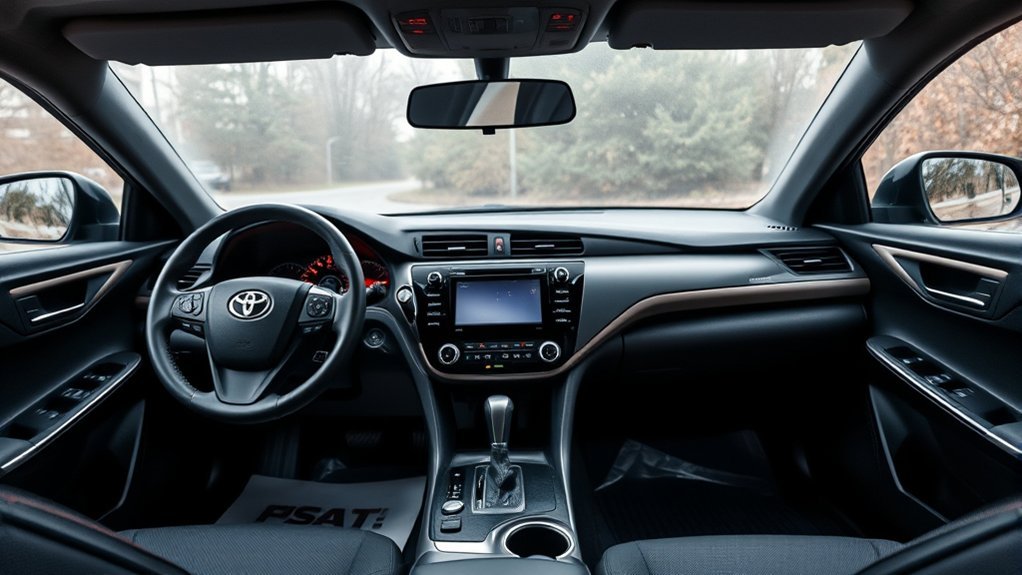
If your Toyota Camry’s heater is not working, first identify whether the vents have no airflow, weak airflow, or normal airflow that stays cold. Those symptoms point to different systems. Low coolant, a thermostat fault, restricted heater-core flow, a blower problem, or a failed air-mix actuator can all affect cabin heat. The correct diagnosis depends on your Camry’s model year, engine, powertrain, and climate-control configuration.
Quick Answer
A Toyota Camry heater commonly blows cold air because of low coolant, a thermostat stuck open, restricted heater-core flow, trapped air, or a faulty air-mix actuator. If no air comes from the vents, inspect the blower circuit and cabin filter instead. Never open a hot cooling system.
Key Takeaways
- Normal airflow that stays cold usually points to a coolant, thermostat, heater-core, circulation, or air-mix door problem.
- Little or no airflow points more strongly to the cabin filter, blower motor, fuse, relay, controller, wiring, or control panel.
- Check coolant only when the engine is completely cold, and investigate any repeated coolant loss.
- A persistent coolant-like odor, greasy windshield film, damp carpet, or falling coolant level can indicate a leaking heater core.
- Stop driving if the engine overheats, produces steam, loses coolant rapidly, or the windshield cannot be kept clear.
Last updated: July 13, 2026
At a Glance
| Time Required | About 20–45 minutes for basic owner checks; longer for pressure testing, bleeding, electrical diagnosis, or component repair |
| Difficulty | Easy for visual and control checks; moderate to advanced for cooling-system, electrical, or dashboard repairs |
| Tools Needed | Flashlight, protective gloves, clean cloth, model-correct coolant if needed, and optionally an infrared thermometer and compatible scan tool |
| Cost | Basic inspection may cost nothing; diagnosis and repair cost depend on the model year, failed component, access requirements, and labor rate |
Warning: Never remove a radiator, coolant-reservoir, or pressure cap while the engine is hot. Pressurized coolant and steam can cause severe burns. Let the engine cool completely and follow the procedure in your exact Camry owner’s manual.
Identifying Common Heater Issues in Your Toyota Camry

Before replacing a heater core or thermostat, identify exactly what the system is doing. A lack of airflow requires a different diagnostic path from air that flows normally but remains cold.
| Symptom | Likely Areas to Check |
| No air from any vent | Blower fuse, relay, blower motor, electronic blower controller, wiring, or climate-control panel |
| Weak airflow | Clogged cabin filter, weak blower, obstructed intake, dirty blower wheel, or a mode-door problem |
| Strong airflow that stays cold | Low coolant, thermostat fault, heater-core restriction, trapped air, circulation problem, or air-mix door fault |
| Heat improves while driving | Low coolant, trapped air, restricted heater-core flow, or reduced coolant circulation; this symptom alone does not prove a failed water pump |
| One side hot and the other cold | Air-mix actuator, door linkage, temperature sensor, calibration, wiring, or partial heater-core restriction |
| Coolant-like odor or greasy windshield film | Possible heater-core, hose-connection, or other cooling-system leak |
Also watch the engine-temperature gauge. A gauge that remains unusually low after normal driving can suggest a thermostat stuck open. A gauge that climbs toward hot, fluctuates sharply, or accompanies steam signals a cooling-system problem that needs immediate attention.
Before You Begin Testing
Use the same control setup for each test so the results are meaningful:
- Allow the vehicle to complete a representative warm-up or normal drive unless overheating occurs.
- Set the temperature to its hottest position. On dual-zone systems, synchronize both sides or set both to the same temperature.
- Try every blower speed and switch among dashboard, floor, and windshield modes.
- Compare the temperature and airflow from the left, center, and right vents.
- Note whether the problem began after coolant loss, thermostat work, hose replacement, battery disconnection, or other service.
On a Camry Hybrid, engine cycling and hybrid operating strategy can affect warm-up time and temperature measurements. Diagnose persistent cold-air symptoms after a representative drive and follow the operating and service information for the exact model year.
Warning: Do not drive if fog, frost, or condensation prevents a clear view through the windshield and the defroster cannot restore visibility. Park safely and arrange repair before continuing.
Why a Toyota Camry Heater Blows Cold Air
Low Coolant or a Cooling-System Leak
Low coolant can prevent a steady supply of hot fluid from reaching the heater core. Check the translucent reservoir only after the engine has cooled completely. Depending on the model year and cooling-system layout, the manual may specify an additional inspection point.
If the level drops again after topping it up, do not keep adding coolant without investigating the cause. Inspect beneath the vehicle and around the radiator, reservoir, hose connections, water pump, engine, and heater-hose connections for wet areas or dried coolant residue.
A Thermostat Stuck Open
The thermostat helps the engine reach and maintain its designed operating temperature. If it sticks open, the engine may warm slowly, the temperature gauge may stay below its usual position, and the vents may produce only lukewarm air during cold weather.
A thermostat stuck closed usually creates the opposite problem: overheating. Shut the engine off and arrange service if the gauge enters the hot range or a high-temperature warning appears.
Restricted Heater-Core Flow
Old, contaminated, incorrectly mixed, or neglected coolant can contribute to deposits inside the cooling system. A restricted heater core may produce weak heat even when the engine reaches normal temperature.
A technician may compare inlet and outlet temperatures, inspect coolant condition, and test system pressure before recommending a heater-core flush or replacement. A temperature difference is a diagnostic clue, not proof by itself.
A Faulty Air-Mix or Blend-Door Actuator
The air-mix door controls how much air passes through or around the heater core. If the actuator, linkage, door, sensor, wiring, or control circuit fails, the heater core can be hot while the vents still blow cold air.
Clicking or repetitive tapping behind the dashboard, no temperature change when you adjust the setting, or different temperatures from the left and right vents can point toward an actuator or door problem.
Blower or Airflow Problems
If no air comes from the vents, the heater core may not be the problem. Check whether the blower works at any speed. A failed fuse, relay, blower motor, electronic controller, wiring connection, or control panel can stop airflow.
A heavily restricted cabin air filter can reduce airflow but normally does not make otherwise hot air turn cold. Inspect or replace the filter according to the maintenance information for your model year.
Trapped Air or Poor Coolant Circulation
Air can enter the cooling system after coolant loss, hose replacement, thermostat service, or an incomplete refill. An air pocket may cause gurgling, inconsistent heat, or heat that changes with engine speed.
A worn water pump, damaged impeller, slipping drive component on applicable engines, or internal blockage can also reduce circulation. These faults require more testing than a simple coolant-level check.
Note: Toyota Camry HVAC layouts, coolant specifications, actuator designs, and bleeding procedures vary by year and powertrain. Select your exact vehicle or enter its VIN through the Toyota Manuals and Warranties portal. You can also check the VIN for open safety recalls through the NHTSA recall lookup.
Understanding the Role of the Heater Core
The heater core is a small heat exchanger inside the HVAC housing. Hot engine coolant passes through its internal tubes, while the blower pushes cabin air across its fins. The warmed air then travels through the selected dashboard, floor, or defroster vents.
A healthy heater core needs adequate coolant level, normal engine temperature, and steady circulation. However, a hot heater core cannot warm the cabin if the blower does not move air or the air-mix door routes air around it.
A leaking heater core can produce a persistent coolant-like odor, a greasy film on the windshield, unexplained window fogging, damp carpeting, or gradual coolant loss. These symptoms warrant prompt inspection because coolant inside the cabin can damage materials and create an exposure risk.
Windshield defog mode may also use air-conditioning dehumidification when the system and ambient conditions allow. An illuminated A/C indicator during defogging does not by itself prove that a refrigerant-system fault is causing the lack of cabin heat.
Warm heater hoses do not automatically prove that the HVAC system is working correctly. Coolant flow, blower airflow, and air-mix door position must all work together.
Troubleshooting a Toyota Camry Heater Step by Step

1. Check Coolant Levels Safely
Park on level ground and let the engine cool completely. Inspect the coolant reservoir and confirm that the level sits within the marked range. Use only the coolant type and mixture specified for your exact Camry.
Do not assume that topping up the reservoir completes the repair. Repeated coolant loss can indicate a leaking hose, radiator, water pump, engine component, reservoir, cap, heater connection, or heater core.
2. Check the Engine Temperature
Start the Camry and observe how the temperature gauge behaves during a normal drive. If the engine never approaches its normal temperature range, a stuck-open thermostat becomes more likely.
If the gauge climbs toward hot, fluctuates sharply, or a warning appears, stop driving as soon as it is safe. Continuing to drive an overheating engine can cause serious damage.
3. Confirm Blower Operation and Airflow
Try every blower-speed setting and change between dashboard, floor, and defroster modes. No response at any speed suggests an electrical or blower fault. Operation at only some speeds can indicate a blower controller, resistor on applicable models, switch, connector, or wiring problem.
If the blower sounds normal but airflow is weak, inspect the cabin air filter and outside-air intake for restriction. A blower wheel with debris or damaged fins can also reduce airflow or create noise.
4. Inspect for Heater-Core Symptoms
Look for a persistent coolant-like odor, damp front carpeting, coolant residue, unexplained coolant loss, or a greasy film on the inside of the windshield. These signs can indicate a heater-core or connection leak, although another coolant leak may produce a similar odor.
A cooling-system pressure test can locate small leaks that are difficult to see. Because the system must be tested with appropriate equipment and pressure limits, professional testing is usually the safer choice.
5. Compare Heater-Hose Temperatures
After the engine reaches normal operating temperature, a technician can compare the two heater-hose temperatures at the firewall. Use a non-contact infrared thermometer rather than touching hot hoses.
- Both hoses hot: Coolant may be circulating normally, shifting attention toward the air-mix door, actuator, blower, or duct system.
- One hot and one much cooler: Restricted heater-core flow, trapped air, or another circulation problem becomes more likely.
- Both relatively cool: Low coolant, a thermostat problem, poor circulation, or insufficient engine warm-up may be involved.
Hose temperatures are only one part of the diagnosis. Ambient temperature, engine load, hybrid operation, measurement location, and thermometer accuracy can affect the readings.
6. Test the Blend-Door or Air-Mix Actuator
With the blower running, move the temperature setting from its coldest to hottest position. Listen for smooth actuator movement and check whether the vent temperature changes.
Clicking, grinding, no movement, or a persistent left-to-right temperature difference can indicate an actuator, door, linkage, sensor, wiring, calibration, or control-module fault.
Do not condemn the actuator through a generic continuity test. Connector pinouts and test procedures vary. Use the correct wiring diagram and service procedure from Toyota’s Technical Information System, or have a technician command and monitor the actuator with compatible diagnostic equipment.
7. Check Fuses and Diagnostic Codes
Consult the fuse diagram for your exact model year before removing or replacing a fuse. A blown fuse may be a symptom of a short circuit or failing motor, so replacing it repeatedly without diagnosing the cause is not a complete repair.
Some Camry climate-control systems store HVAC-related diagnostic codes or support actuator active tests. A compatible scan tool can shorten the diagnosis, especially when automatic or dual-zone climate control is fitted. A code identifies a circuit or operating condition to test; it does not automatically prove that the named component must be replaced.
Pro Tip: Record the vent temperature, outside temperature, engine-temperature gauge position, blower speed, selected vent mode, and whether the problem affects one side or both. Also note any recent cooling-system or battery work. These details help a technician reproduce the fault and avoid unnecessary parts replacement.
Toyota Camry Heater Repairs by Confirmed Cause
The correct repair depends on the test results rather than the most common guess. Use the following repair path:
- Low coolant: Find and repair the leak, refill with the specified coolant, and remove trapped air using the correct procedure.
- Thermostat stuck open: Replace the thermostat and seal with parts appropriate for the engine, then refill and bleed the system.
- Restricted heater core: Confirm the restriction before flushing. A severely corroded or leaking core may require replacement.
- Failed air-mix actuator: Verify power, ground, command, feedback, door movement, wiring, and calibration before replacement.
- No blower operation: Diagnose the fuse, relay, motor, controller, wiring, connectors, and climate-control command.
- Weak airflow: Replace a restricted cabin filter and inspect the air intake, blower wheel, evaporator surface, and mode doors.
- Water-pump or circulation fault: Confirm and repair the failed component, then inspect the entire cooling system for related damage.
A heater-core flush should not be treated as routine preventive maintenance or a guaranteed cure. Excessive pressure can damage a weakened core, and incompatible chemicals can affect seals or cooling-system materials.
How to Prevent Toyota Camry Heater Problems
The heater depends on the engine cooling system, so coolant maintenance affects both engine temperature and cabin comfort. Follow the maintenance schedule and coolant specification for your exact model year rather than using a universal replacement interval.
Inspect the coolant level periodically when the engine is cold. Check hoses, the reservoir, visible connections, and the area beneath the vehicle for leakage. Address small leaks before low coolant introduces air or causes overheating.
Replace the cabin air filter at the specified interval or sooner in dusty conditions. A clean filter supports normal airflow through the heater, air conditioner, and defroster.
Do not mix coolant types based only on color. Different products can share similar colors while using different formulations. Toyota’s official manual selector provides the model-specific requirements.
When to Seek Professional Help for Heater Repairs

Basic visual checks are reasonable for many owners, but cooling-system and dashboard repairs can require pressure-testing equipment, scan tools, wiring diagrams, model-specific fill procedures, and extensive disassembly.
Arrange professional service when you notice any of the following:
- Engine overheating: The temperature gauge enters the hot range, a warning appears, or steam comes from the engine compartment.
- Rapid or repeated coolant loss: The reservoir level falls again after topping it up.
- Coolant inside the cabin: The carpet becomes wet, the windshield develops a greasy film, or a persistent coolant-like odor remains.
- Unusual water-pump noise or leakage: Grinding, whining, wobble, or coolant residue appears near the pump.
- Electrical problems: Fuses repeatedly blow, wiring becomes hot, or the blower operates intermittently.
- Dashboard clicking or temperature imbalance: An actuator or internal air door may require active testing or dashboard access.
- Unsuccessful bleeding or flushing: Heat remains inconsistent, coolant gurgles, or engine temperature fluctuates after cooling-system service.
- Unsafe windshield visibility: The defroster cannot keep the glass clear during the conditions in which the vehicle must be driven.
Heater-core replacement can require substantial dashboard disassembly. A correct diagnosis is important before approving that repair because an actuator, airflow fault, hose-connection leak, or circulation problem can produce similar symptoms.
How to Fix Coolant Flow Issues Safely
Start with a completely cold engine. Verify the coolant level and inspect for leaks before attempting to remove trapped air. Use the coolant specified for your Camry’s year and engine.
Do not use “run it with the radiator cap off” as a universal procedure. Some systems are filled through a reservoir, some require a particular warm-up sequence, and some service procedures use a vacuum-filling tool. Follow the applicable Toyota manual or repair information.
If testing suggests a heater-core restriction, a technician may disconnect the heater hoses and flush the core at controlled pressure. The coolant must be captured rather than discharged onto the ground or into a drain.
After any cooling-system repair, verify all of the following:
- The coolant level remains stable after the engine cools.
- The engine reaches and maintains its normal temperature.
- The heater produces consistent warmth at idle and while driving.
- No leaks, unusual odors, warning lights, or gurgling noises appear.
- The left and right vents respond correctly on dual-zone systems.
- The windshield defroster produces adequate airflow and keeps the glass clear.
Warning: Automotive coolant may contain ethylene glycol, which is toxic when swallowed. Keep coolant and contaminated materials away from children and pets, clean spills promptly, and contact local waste authorities for proper disposal. Never pour used coolant into a drain, storm sewer, or onto the ground.
Frequently Asked Questions
Why is the heat not working in my Toyota Camry?
If air flows normally but stays cold, check the coolant level, engine temperature, thermostat, heater-core flow, circulation, and air-mix actuator. If little or no air comes from the vents, inspect the cabin filter, blower motor, fuse, relay, controller, wiring, and climate-control panel.
What is the most common cause of a car heater not working?
No single cause applies to every vehicle. Low coolant and thermostat problems commonly cause cold airflow, while blower, fuse, controller, and wiring problems commonly cause no airflow. Identifying the exact symptom is more reliable than replacing the most frequently blamed part.
What would cause my Camry’s heat not to turn on?
If the blower does not turn on, possible causes include a blown fuse, failed blower motor, relay, electronic blower controller, wiring fault, connector problem, or climate-control fault. If the blower runs but the air is cold, investigate the coolant, thermostat, heater-core, circulation, and air-mix systems.
Why is my Camry blowing cold air when the heat is on?
Cold airflow can result from low coolant, an engine that is not warming fully, restricted heater-core flow, trapped air, poor coolant circulation, or an air-mix door that remains in the cold position.
Why does the heat work only while I am driving?
Heat that improves with engine speed can indicate low coolant, trapped air, restricted heater-core flow, or weak coolant circulation. Check the coolant only when the engine is cold and arrange a pressure and circulation test if the symptom continues.
Why is one side of my Camry warm and the other side cold?
On a dual-zone system, a left-to-right temperature difference can result from a failed air-mix actuator, stuck door, sensor or calibration fault, wiring problem, or partial heater-core restriction. HVAC code scanning and temperature measurements can narrow the cause.
Can low coolant cause a Toyota Camry heater to stop working?
Yes. Low coolant can reduce or interrupt hot-coolant flow through the heater core, producing cold or inconsistent air. Check the reservoir only when the engine is completely cold, and diagnose the leak if the level falls again.
Is it safe to drive if the heater or defroster is not working?
A loss of cabin heat alone may not require an immediate stop if the engine temperature is normal and no coolant is leaking. However, do not continue driving if the engine overheats, coolant escapes rapidly, steam appears, or the windshield cannot be kept clear.
Conclusion
A Toyota Camry heater problem becomes easier to diagnose when you separate airflow faults from heat-generation and temperature-control faults. Start by checking the blower, vent modes, engine temperature, and cold coolant level. Then inspect for leaks, compare heater-hose temperatures safely, and evaluate the air-mix system.
Do not open a hot cooling system, touch hot hoses, continue driving an overheating vehicle, or drive with an obscured windshield. Because Camry systems vary by year and powertrain, confirm coolant specifications, fuse locations, bleeding steps, actuator tests, and applicable recalls through Toyota’s and NHTSA’s model-specific information before beginning a repair.
Sources
- Toyota Manuals and Warranties — vehicle-specific owner’s manuals, coolant information, safety warnings, controls, and operating instructions
- Toyota Technical Information System — model-specific repair procedures, wiring diagrams, diagnostic tests, active tests, and service information
- CDC/NIOSH: Ethylene Glycol — ethylene-glycol characteristics, toxicity, and exposure information
- U.S. EPA: Household Hazardous Waste — safe handling and local disposal guidance for hazardous household products
- Experimental Validation of Eco-Driving and Eco-Heating Strategies for Connected and Automated HEVs — background on engine-coolant use and cabin-heating behavior in an instrumented power-split hybrid vehicle
- NHTSA Recall Lookup — VIN-based checks for unrepaired safety recalls and year-make-model searches for recalls and manufacturer communications
