
Frozen Toyota Camry doors commonly occur when rain, melted snow, freezing rain, or car-wash water remains between the rubber weatherstripping and the painted door frame. When that moisture freezes, it can bond the two surfaces together. You can lower the risk by keeping the seals clean and dry, using a product labeled safe for automotive rubber, and repairing damaged weatherstripping before winter.
Quick Answer
Clean and completely dry your Camry’s door weatherstripping, then apply a thin film of silicone lubricant or conditioner labeled safe for automotive rubber. Wipe away the excess. If a door freezes, press it inward to crack the ice bond, avoid yanking the handle, and warm the cabin gradually through another accessible door.
Key Takeaways
- Moisture between the seal and door frame—not cold by itself—creates the ice bond.
- Use only a product whose label confirms compatibility with automotive rubber weatherstripping.
- Do not pour water over a frozen door, use an open flame, or pull hard on the exterior handle.
- Repeated freezing in one spot can indicate a torn, flattened, loose, contaminated, or misaligned seal.
At a Glance
| Time Required | About 10 to 15 minutes for inspection, cleaning, drying, and treatment |
| Difficulty | Easy |
| Tools Needed | Microfiber cloths, mild automotive soap, clean water, and a rubber-safe weatherstrip conditioner |
| Cost | Low; inspection and cleaning use basic car-care supplies, plus the cost of a compatible conditioner if needed |
Understanding Why Toyota Camry Doors Freeze Shut
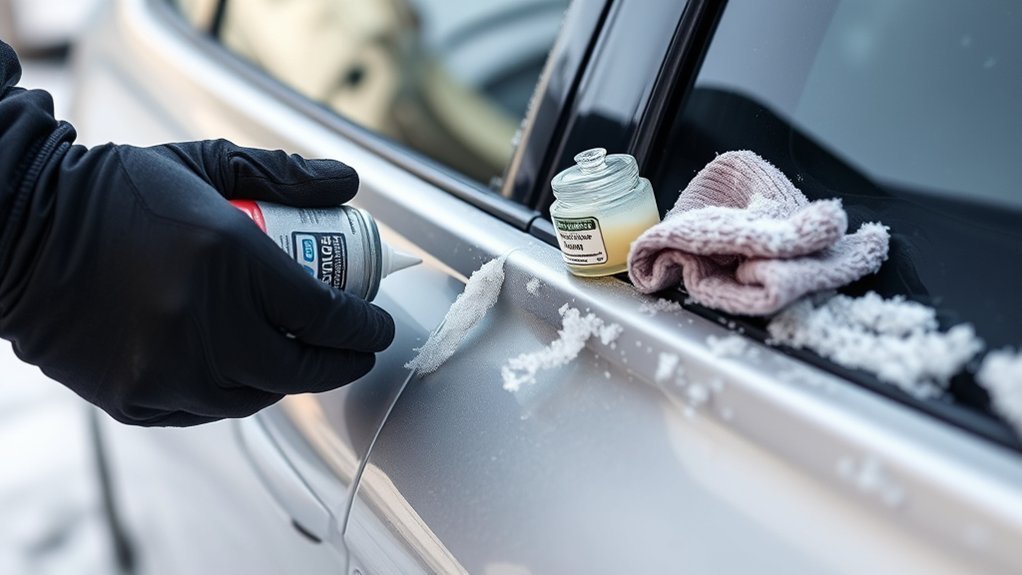
Your Camry’s rubber weatherstripping compresses against the body when you close the door. Rain, melting snow, freezing rain, or water from a car wash can remain between those surfaces.
When the temperature drops below freezing, trapped water turns to ice. The ice can bond the seal to the frame strongly enough to keep the door closed even after you unlock it.
Freeze-thaw cycles can make the problem worse. Water may melt during the day, move deeper into a fold or contact area, and freeze again overnight. Dirt, salt, and grit can also retain moisture against the rubber.
Older or damaged weatherstripping raises the risk. A seal that is torn, loose, flattened, hardened, contaminated, or poorly seated may hold more water and may no longer press evenly against the door frame.
A cold rubber seal does not create the problem by itself. The door sticks when water between the seal and body freezes into an ice bond.
Is the Seal, Lock, Handle, or Latch Frozen?
Identify the affected part before applying a product:
- Frozen door seal: The door unlocks, but one or more edges feel bonded to the body.
- Frozen key cylinder: A mechanical key will not enter fully or will not turn.
- Frozen exterior handle: The handle will not move normally or does not return to its resting position.
- Frozen latch: The door opens but will not latch securely when you try to close it.
A weatherstrip conditioner is intended for rubber seals. A frozen mechanical lock requires a product specifically labeled as a lock de-icer or lock-safe lubricant. A frozen or damaged handle or latch may require gradual warming and professional service rather than more force.
How to Prevent Toyota Camry Door Seals From Freezing
Prepare the seals before sustained freezing weather and repeat the treatment only as the product label recommends. Recheck them after repeated winter washing, freezing rain, or heavy exposure to road salt and slush.
1. Inspect the Weatherstripping
Open each door and examine the full seal. Look for tears, loose sections, crushed or permanently flattened areas, hard rubber, gaps, folds that have rolled inward, and dirt packed into the channels.
Check the painted contact surface as well. Even a small amount of grit or sticky residue can retain water where the seal meets the body.
2. Clean the Seals and Door Frame
Mix a small amount of mild automotive soap with clean water. Dampen a microfiber cloth and wipe the weatherstripping, including its folds, corners, and lower sections.
Use a separate cloth to clean the painted door jamb and contact area. Avoid strong solvents, household degreasers, bleach, abrasive cleaners, brake cleaner, and carburetor cleaner.
3. Dry Every Surface
Dry the rubber and door frame with a clean microfiber towel. Pay close attention to folds and bottom corners, where water often collects.
Do not apply conditioner over a wet, snowy, or icy surface. Water trapped beneath the coating can still freeze and can prevent the product from spreading evenly.
4. Apply a Rubber-Compatible Product
Choose a silicone lubricant or weatherstrip conditioner whose label confirms that it is suitable for automotive rubber. Apply a small amount to a cloth or built-in applicator and spread a thin, even film over the seal.
Products such as WD-40 Specialist Silicone are different from general multipurpose sprays. The manufacturer states that its silicone formula is safe for most common rubbers when used as directed, recommends testing a small area first, and lists vehicle door seals and locks among its uses.
A dedicated product such as nextzett Gummi Pflege is designed specifically for automotive weatherstripping. Its manufacturer describes it as a petroleum-solvent-free, water-based rubber conditioner and says it helps keep vehicle doors from sticking in freezing weather.
Pro Tip: Put spray lubricant on a microfiber cloth instead of spraying it directly at the door. This gives you better control and reduces overspray on glass, paint, upholstery, trim, and nearby touch points.
5. Wipe Away Excess Product
Leave only a light, even coating on the rubber. Heavy residue can attract dust, transfer to clothing, or make nearby surfaces slippery.
Close and reopen the door once to confirm that the seal is seated correctly and does not fold or roll inward.
6. Recheck the Seals During Winter
No universal six-month schedule works for every product, climate, or driving routine. Follow the conditioner’s label and inspect the seals after frequent car washes, freezing rain, or long periods of snow, slush, and road salt.
Reapply the product when the label calls for it or when the rubber appears dry and begins sticking again. Clean away salt and grit before adding another coat.
Note: Weatherstrip materials and door designs differ across Camry model years. Check the manual for your vehicle through Toyota’s official manuals and warranties portal, follow the treatment product’s label, and test any new product on a small hidden area.
Recommended Products for Preventing Frozen Door Seals
The best choice is a product made for automotive rubber seals. Read the complete label before applying it, even when the front of the package says “silicone.” Product formulas and approved uses differ.
Suitable Product Types
- Automotive weatherstrip conditioner: Designed for rubber door, trunk, sunroof, and window seals.
- Rubber-safe silicone lubricant: Useful when the label confirms compatibility with automotive rubber and the intended area.
- Lock de-icer: Intended for a frozen mechanical key cylinder, not for coating the weatherstripping.
- Lock-safe silicone product: Appropriate only when the manufacturer specifically lists vehicle locks as an approved use.
Products and Shortcuts to Avoid
- Do not rely on talcum powder or a fixed six-month application schedule.
- Do not apply painter’s tape to the door jamb as a long-term moisture barrier.
- Do not assume every multipurpose oil or spray is safe for weatherstripping.
- Do not use petroleum jelly as the default solution unless Toyota or the seal-product manufacturer confirms compatibility with the specific weatherstrip material.
- Do not coat the seal with cooking oil, which can attract dirt, transfer to clothing, and become messy.
- Do not use harsh solvents, brake cleaner, carburetor cleaner, or strong degreasers on the rubber.
- Do not use windshield de-icer, rubbing alcohol, or homemade de-icing mixtures on the seal unless the product label specifically approves that use.
The product name alone is not enough. For example, standard WD-40 Multi-Use Product and WD-40 Specialist Silicone have different formulas and intended uses. Choose by the exact label rather than the brand name.
How to Safely Thaw Frozen Toyota Camry Door Seals

Work slowly when your Camry’s door is frozen. Excess force can damage the exterior handle, tear the weatherstripping, or pull a loose seal away from its channel.
- Try another door. A rear or passenger door may have less ice exposure. Enter through that door when possible.
- Confirm that the vehicle is unlocked. Repeated pulling will not help if the lock has not released.
- Press the frozen door inward. Use both hands to press around the door’s perimeter. This can crack the ice bond without putting most of the load on the handle.
- Pull gently. Use steady, controlled pressure on the handle. Stop if the handle flexes, feels abnormal, or the door does not begin moving.
- Remove loose ice. Brush away snow and use a plastic scraper carefully on the metal seam. Do not cut, pry, or scrape directly against the rubber.
- Warm the cabin gradually. When another door opens, start the vehicle outdoors and use the heater and defroster. Allow warmth to reach the frozen door from inside.
- Treat a frozen key cylinder separately. Apply a commercial lock de-icer according to its label. Do not heat the key with an open flame.
- Dry and condition the seal. After the door opens, wipe away melted water, inspect the seal, and apply a thin layer of rubber-safe conditioner if the surface is clean and dry.
Warning: Do not yank the exterior handle, use an open flame, aim a heat gun at the seal, or pour water over the door. Added water can enter the jamb and refreeze, while hot water near frozen automotive glass can cause damage. Never run the engine in a closed or poorly ventilated garage because exhaust can create a deadly carbon-monoxide hazard.
Can Remote Start Help?
Factory remote start may gradually warm the cabin on some Camry model years, but it is not a substitute for checking the door and seal. Use remote start only as described in the owner’s manual, keep the vehicle outdoors and clear of snow around the exhaust, and never use it in a closed or poorly ventilated garage.
Should You Use a Hair Dryer or Heat Gun?
A heat gun, torch, or open flame can overheat rubber, paint, plastic trim, wiring, or glass and should not be used. A household hair dryer also creates electrical and moisture hazards outdoors and can concentrate heat in one area. Gradual cabin heat is the safer approach.
What If the Door Opens but Will Not Latch?
Ice may be blocking the latch mechanism, or the latch may not have returned to its normal position. Do not drive with a door that cannot close and latch securely.
Move the vehicle only after the latch operates normally. Let the area warm, remove visible ice without using sharp tools, and arrange professional service if the latch remains stiff, will not return, or fails to hold the door closed.
Winter Habits That Reduce Refreezing
Small habits can keep water away from your Camry’s seals and reduce repeated freezing:
- Brush snow from the roof and door openings before it melts and runs into the jamb.
- After a winter car wash, open each door and dry the weatherstripping and painted contact surfaces.
- Do not close the door while the seal is wet when freezing temperatures are expected.
- Park in a garage, carport, or sheltered location when one is safely available.
- Keep a lock de-icer in your home, bag, or coat rather than inside the locked vehicle.
- Remove road salt and grit before applying more conditioner.
- Check visible bottom-door drain openings for blockage, but do not push sharp tools into them.
- After freezing rain, inspect the top and rear edges of each door before the next temperature drop.
NHTSA recommends checking your vehicle before winter and carrying supplies for common cold-weather problems. Its winter driving guidance also covers batteries, tires, lights, wipers, emergency supplies, and carbon-monoxide safety.
When Should You Replace a Camry Door Seal?
Conditioner cannot repair damaged weatherstripping. Have the seal inspected or replaced when you notice:
- Visible cuts, tears, holes, or missing sections
- A seal that repeatedly pulls out of its mounting channel
- Hard, brittle, or permanently flattened rubber
- A gap between the seal and the door frame
- Water entering the cabin during rain or a car wash
- New wind noise around the door at road speed
- Repeated freezing in the same location after cleaning, drying, and conditioning
- A door that must be slammed or lifted to latch
A door that sits unevenly may also need hinge, striker, or body alignment. A Toyota dealer or qualified body technician can determine whether the problem comes from the weatherstripping, latch, door fit, or previous body repair.
When to Stop DIY Troubleshooting
Arrange professional service if the handle flexes or cracks, the latch will not secure the door, the seal repeatedly pulls out, water enters the cabin, or the door sits unevenly. These symptoms can involve hardware or alignment problems that conditioner cannot correct.
Related Guides
Frequently Asked Questions
What should you put on car door seals to keep them from freezing?
Apply a thin film of automotive weatherstrip conditioner or silicone lubricant whose label confirms that it is safe for rubber door seals. Clean and dry the weatherstripping first, test a hidden area, and wipe away excess product.
Will WD-40 keep car doors from freezing shut?
It depends on the exact product. WD-40 Specialist Silicone is labeled for most common rubbers and specifically lists vehicle door seals and locks. Do not assume the standard multipurpose formula has the same uses. Read the label and test a small area first.
Can you put Vaseline on door seals to prevent freezing?
Petroleum jelly is not the preferred default because automotive weatherstrip materials and product compatibility vary, and the residue can attract dirt. A dedicated weatherstrip conditioner with confirmed rubber compatibility provides clearer application and compatibility guidance.
What should you spray on a car door lock to prevent freezing?
For a mechanical key cylinder, use a lock de-icer or lubricant whose label specifically approves use in automotive locks. Do not put thick weatherstrip conditioner into the lock cylinder unless its manufacturer lists locks as an approved use.
How often should you condition Toyota Camry door seals?
Treat them before sustained freezing weather and follow the product label for reapplication. Inspect the seals after repeated winter washing, heavy road-salt exposure, or freezing rain. Reapply when the label calls for it or when the rubber looks dry and begins sticking again.
Can you pour warm water on a frozen car door?
Avoid pouring water on the door. It can flow into the jamb, latch, or lock and freeze again. Hot water also creates a risk near cold automotive glass. Press the door inward, try another entrance, and warm the cabin gradually instead.
What should you do if every door is frozen shut?
Confirm the vehicle is unlocked, clear loose snow, and press around each door’s perimeter before pulling gently. Try the least exposed door or trunk access only if the vehicle design allows safe entry. Do not force a handle, climb through an unsafe opening, or run the engine in an enclosed space.
Can you use rubbing alcohol or windshield de-icer on door seals?
Do not use either product on weatherstripping unless its label specifically approves that material and use. Formulas vary, and a product made for glass may not be suitable for rubber, paint, or interior trim.
Why does the same part of the door keep freezing?
Repeated freezing in one location often means water is collecting there. Inspect for a torn, folded, flattened, loose, or dirty seal, a blocked visible drain opening, or uneven door alignment. Have the area checked if cleaning and conditioning do not solve the problem.
Conclusion
You can prevent many Toyota Camry door-seal freezing problems by controlling moisture. Keep the weatherstripping clean, dry it after winter washing or freezing rain, and apply only a thin layer of conditioner labeled safe for automotive rubber.
When a door is already frozen, press inward to loosen the ice bond and warm the cabin gradually through another accessible door. Avoid pulling hard, adding water, or using concentrated heat. If one area repeatedly freezes, inspect the seal for damage, contamination, poor seating, latch trouble, or door-alignment problems.
Sources
- Toyota Manuals and Warranties — official year-and-model manual lookup and owner information
- NHTSA Winter Weather Driving Tips — winter vehicle preparation, emergency supplies, exhaust clearance, and carbon-monoxide safety guidance
- WD-40 Specialist Silicone — manufacturer guidance on rubber compatibility, water resistance, vehicle door-seal use, lock use, and spot testing
- nextzett Gummi Pflege Rubber Care Stick — manufacturer guidance on automotive weatherstrip conditioning, product composition, and freezing-weather use
