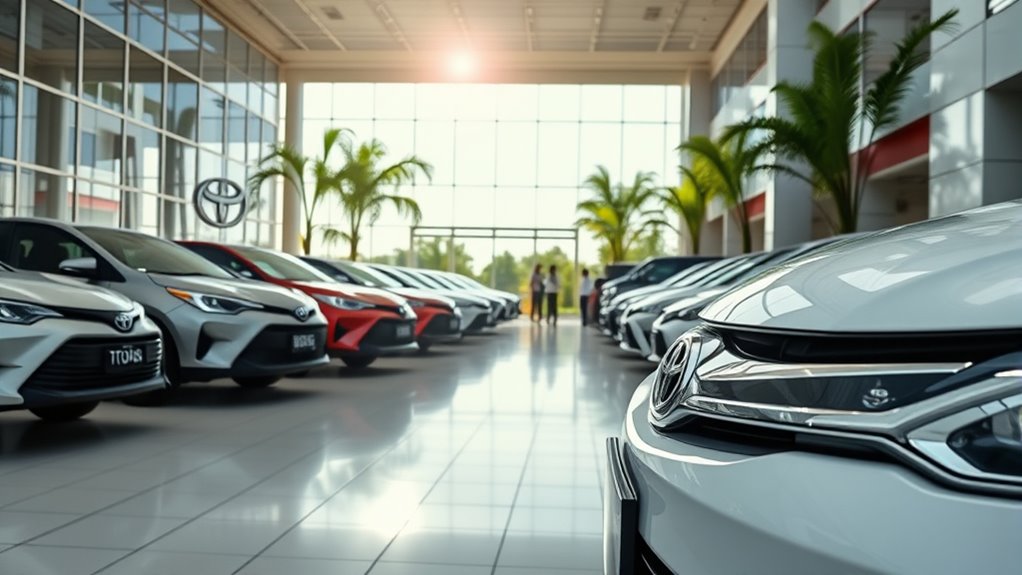
Indiana-built Toyota cars can offer Philippine buyers competitive pricing, dependable supply, and strong after-sales support. The Highlander, Sienna, and Sequoia are among the models commonly built in Indiana, with availability and delivery timing often more predictable than imported units. Buyers may notice small fit-and-finish differences versus Japan-built Toyotas, but reliability remains strong. Warranty coverage, parts access, and dealership support stay important. Assembly origin can shape value, ownership experience, and resale expectations in the Philippines.
Key Takeaways
- Indiana-built Toyota models may offer competitive pricing in the Philippines, making them attractive for budget-conscious buyers.
- Expect strong reliability, with Toyota’s U.S. manufacturing standards and broad dealer support backing ownership confidence.
- Availability may improve for select models like the Highlander, Sienna, and Sequoia, with potentially shorter wait times.
- Japanese-built units may feel slightly more refined in fit and finish, though overall performance and durability remain high.
- Warranty, free periodic maintenance, and Toyota safety technologies can add value and reduce long-term ownership costs.
What Indiana-Built Toyotas Mean for PH Buyers
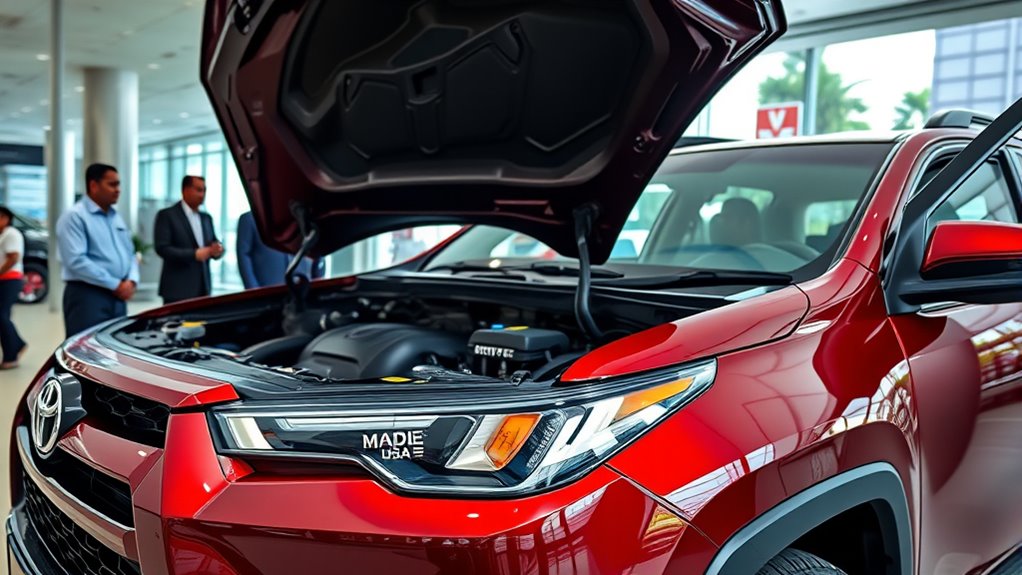
For Filipino buyers, Indiana-built Toyotas such as the RAV4 and Highlander represent a practical blend of Toyota reliability and American manufacturing standards.
In market terms, Indiana-built Toyotas signal durable assembly, with American manufacturing quality often associated with robust construction and consistent fit. This can matter to Filipino buyers seeking dependable mobility without premium-brand pricing pressure.
The vehicles also tend to align with local preferences through useful comfort, safety, and utility features, supporting daily freedom in commuting, family travel, and long-distance use. Competitive pricing versus some Japan-sourced units can improve value for budget-conscious households.
Useful comfort, safety, and utility features support daily commuting, family travel, and long-distance driving.
Beyond purchase cost, extensive service backing and parts availability strengthen ownership confidence. For buyers aiming to reduce dependence on status-driven choices, these models offer a pragmatic route to quality, reliability, and maintainability.
In practice, they expand options in the Philippine market while preserving Toyota’s core reputation.
Which Toyota Models Are Built in Indiana?
Toyota’s Indiana plant primarily builds the Highlander and Sienna, using advanced production methods and a workforce of more than 4,000 team members.
In markets such as the Philippines, model availability can vary by distributor and import channel, making build origin an important factor in supply and specification. Indiana-assembled units are generally associated with Toyota’s established quality and reliability standards, alongside output from other global facilities.
Indiana-Built Toyota Models
Indiana’s Toyota assembly operations primarily produce the Highlander, Sienna, and Sequoia, making the state a key manufacturing location for these North American-market models.
These Indiana-built models are engineered with family-friendly features and spacious interiors, reflecting regional demand for utility, comfort, and practical mobility. The plant’s advanced manufacturing methods support quality and efficiency, reinforcing Toyota’s production standards.
Sustainability initiatives at the facility include recycling programs and energy-efficiency measures, aligning output with broader environmental targets. The operation also anchors local employment, supporting thousands of workers and nearby businesses.
For industry observers, Indiana represents a stable, high-capacity base where production discipline, labor scale, and environmental management intersect. The result is a manufacturing footprint designed for dependable supply, disciplined execution, and long-term operational resilience.
Model Availability In PH
Indiana-assembled Toyota models available in the Philippines may include imported units of the Highlander, Sienna, and Sequoia, depending on local market demand and distributor allocation.
For Toyota Motor Philippines, availability remains selective, with electrified models gaining attention as buyers seek efficient family vehicles. The brand’s Indiana output is oriented toward North American demand, so PH listings can shift without notice.
- Highlander: often positioned as a versatile three-row option.
- Sienna: a practical MPV choice with hybrid appeal.
- Sequoia: a larger SUV alternative, sometimes compared with the Land Cruiser.
Availability may change as import plans, trim mixes, and market preferences evolve. Consumers should verify current showroom inventory and official release schedules before expecting specific units.
Build Origin And Quality
Model availability leads naturally into build origin, since many buyers also want to know which Toyota models are actually assembled in Indiana and how those vehicles compare in quality.
Indiana production centers on the Highlander and Sienna, key contributors to Toyota’s North American supply. The Highlander stands out for a spacious cabin and family-focused packaging, while both models serve broad U.S. demand.
Quality standards in Indiana match those used in Japan, even if consumer perceptions differ. The plant is also noted for efficiency and sustainability, with eco-friendly methods embedded in its operations.
For a new account of Toyota’s assembly footprint, the evidence remains consistent: Indiana-built vehicles retain strong reliability ratings and customer satisfaction, supporting informed choice rather than inherited assumptions.
What Changes for PH Buyers First
For Philippine buyers, the first visible change from local Toyota assembly would likely be shorter wait times and better model availability.
Lower import-related costs may also support more competitive pricing, while localized production can improve service access and ownership support.
A shift in assembly origin often brings faster inventory flow and models more closely aligned with local demand.
Assembly Origin Shift
As Toyota shifts certain models to the Indiana assembly plant, Philippine buyers may first notice changes in pricing, supply, and delivery timing.
The assembly benefits stem from lower shipping exposure and a more direct production route, which can support leaner pricing. This shift also has a local impact through steadier parts flow and potential job creation as operations widen.
For consumer expectations, the change suggests improved availability and the possibility of specifications better aligned with regional roads and usage.
- Lower logistics burden may support cost control.
- Supply chain reliability may strengthen market continuity.
- Regional tuning may improve product fit for Philippine conditions.
What Buyers May Notice
Philippine buyers would likely notice Toyota’s Indiana-assembled units through more competitive pricing, steadier availability, and faster delivery of in-demand models, especially if reduced tariff and logistics exposure carries through to showroom pricing.
Assembly benefits may also appear in better alignment with local preferences, including trims, features, and color choices suited to Philippine roads and usage patterns.
Buyers can expect Toyota’s global standards to remain intact, preserving the reliability and performance associated with the brand.
For consumers, the practical gain is access without excess delay or cost.
The broader economic impact may include more jobs, stronger supplier activity, and localized value creation.
In the near term, these shifts could make ownership more attainable while keeping quality and service expectations unchanged.
Fit, Finish, and Quality Differences
Fit and finish perceptions for Indiana-assembled Toyota vehicles can differ from those of models built in Japan, with some consumers noting a more refined tactile quality in Japanese-built cars.
In industry terms, fit consistency, quality assurance, and consumer expectations often shape how these differences are judged. Assembly location does not alone define value, yet perceptions of trim alignment, panel gaps, and cabin feel can influence market reception.
Some North American-built units are also associated with occasional quirks and glitches, while Japanese-manufactured counterparts are often viewed as more polished.
- Quality judgments remain model-specific.
- Manufacturing origin affects expectations, not every outcome.
- Buyers weighing liberation through choice may compare build standards carefully.
Indiana vs Japan: Owner Feedback
Owner feedback on Indiana-assembled Toyota vehicles often reflects a comparison with Japanese-built models, with build location shaping expectations of quality.
Many buyers view Japanese production as the benchmark, while Indiana units receive mixed assessments that range from satisfaction to reports of minor fit and finish concerns.
These owner comparisons continue to influence perceptions of handling, assembly precision, and overall value.
Build Location Differences
Differences in build location often shape owner perceptions of Toyota vehicles assembled in Indiana versus Japan. Reports from owners point to distinct production methods and assembly techniques that influence consumer preferences.
- Indiana-built models are sometimes described as showing more variation in feel and finish.
- Japan-built models are often praised for a more refined, responsive driving character.
- Community feedback frequently links location to tactile and aesthetic differences that guide purchase choices.
Anecdotal owner input also notes more quirks and glitches in some Indiana-assembled units, while Japanese production is associated with tighter consistency.
These observations are based on lived experience, not formal rankings, yet they remain influential in market conversations. For buyers seeking practical independence, build location is a meaningful factor in the decision set.
Quality Perceptions
Consumer feedback often links Toyota’s manufacturing location to perceived quality, with many owners viewing Japan-built vehicles as exhibiting stronger craftsmanship than Indiana-assembled models.
In market discussions, consumer perceptions frequently center on assembly quality, with Japanese production associated with tighter fit-and-finish, cleaner tactile feel, and fewer reported defects.
Anecdotal owner feedback also points to fewer reliability concerns in Japan-built units, while some Indiana-built examples are described as showing minor quirks or glitches.
Quality impressions can vary by model and trim, and not all owners report the same experience.
Still, these patterns shape value judgments in the Philippines and abroad, as buyers use origin as a proxy for consistency, durability, and overall confidence in the vehicle.
Owner Comparisons
Comparisons between Indiana-assembled and Japan-built Toyota vehicles often center on owner feedback about fit, finish, and day-to-day refinement.
Industry discussions show that owner satisfaction is shaped by perceived assembly quality, even when both plants deliver dependable products.
- Indiana-built models receive mixed reviews, with some owners noting minor glitches and inconsistent trim details.
- Japan-built models are often favored for tactile feel and visual consistency, which many owners link to higher value.
- Driving experience reports suggest Japanese-made Toyotas feel more polished, while Indiana units may seem less refined to some users.
Anecdotal evidence indicates that manufacturing origin influences quality perceptions, guiding purchase choices.
For PH buyers seeking autonomy in selection, these comparisons remain relevant, though reliability stays strong across both sources.
Which Models Benefit Most in the Philippines?
In the Philippine market, the Toyota Innova, Vios, Fortuner, Hilux, and Corolla Altis stand out as the models that benefit most. Their fit with family, fleet, and work demands gives them strong relevance in local buying decisions. Innova advantages include cabin space and reliability for shared mobility. Vios appeal rests on fuel savings and accessible pricing for first-time owners. Fortuner versatility supports city use and rougher provincial routes. Hilux adds work-ready strength, while the Corolla Altis offers durability and manageable upkeep.
| Model | Primary Strength | Philippine Use |
|---|---|---|
| Innova | Space | Family and shuttle |
| Vios | Efficiency | Daily commuting |
| Fortuner | Versatility | Urban-rural travel |
| Hilux | Capability | Work transport |
| Corolla Altis | Durability | Broad ownership |
These models align with practical mobility and consumer freedom.
What Warranty and Service Support Matters Most
Warranty coverage is a practical consideration for buyers of Indiana-assembled Toyota vehicles in the Philippines, with most models typically backed by a 3-year or 100,000-kilometer standard warranty. This support delivers clear warranty benefits: protection against defects, predictable ownership, and stronger confidence in daily use.
Warranty coverage offers protection, predictability, and daily confidence for Indiana-assembled Toyota owners in the Philippines.
Local owners also gain from Toyota’s broad dealership and service-center network, which supports service reliability through trained technicians, prompt repairs, and access to spare parts.
- Free periodic maintenance may be included for a limited period, reducing maintenance costs.
- Parts and labor guarantees can improve long-term confidence in vehicle durability.
- Authorized service availability across the country helps keep upkeep simple and accessible.
For consumers seeking mobility without unnecessary dependence, these service provisions matter. They help preserve vehicle performance while keeping maintenance costs visible and manageable.
What Indiana-Built Toyotas May Cost You
Indiana-built Toyota models such as the Highlander and RAV4 typically fall in the $30,000 to $40,000 range, with final pricing shaped by trim level and equipment. Lower labor costs in Indiana support competitive pricing strategies, helping Toyota align value with consumer preferences while tracking market trends in the Philippines and beyond.
| Model | Estimated Price |
|---|---|
| Highlander | $35,000–$40,000 |
| RAV4 | $30,000–$38,000 |
| Promos/financing | Can reduce outlay |
These figures reflect a balance of features and affordability, not bare-minimum transport. Reliability from the Indiana facility can support stronger resale value, improving long-term cost-effectiveness. Buyers may also see price shifts from incentives or financing packages, which can make ownership more accessible. For consumers seeking practical freedom from excessive expense, Indiana-built Toyotas present a measured purchase case grounded in durability, recognizable brand value, and disciplined cost control.
What PH Buyers Think About Assembly Location
Philippine buyers often view Toyota assembly location as more than a production detail, linking locally assembled vehicles to affordability, easier access, and stronger brand confidence.
In the market, assembly impact shapes consumer perceptions around value, service reach, and ownership practicality. Many buyers see local production as a sign that Toyota understands Philippine conditions, from financing needs to maintenance support. That view also supports local pride, since assembly is tied to jobs and wider economic activity.
- Locally assembled units are often associated with easier financing and leasing.
- Buyers expect accessible parts and after-sales support.
- Some consumers still compare quality with imported models.
Even so, the appeal remains strong because local assembly suggests inclusion, reliability, and a clearer path to ownership.
Local assembly still appeals because it suggests inclusion, reliability, and a clearer path to ownership.
For many Filipino buyers, that combination matters more than origin alone.
Should You Wait for Indiana-Assembled Toyota Cars?
Buyer interest naturally shifts from assembly location to timing, especially when Indiana-assembled Toyota cars are expected to reach the Philippine market. For buyers weighing wait benefits, the key issue is whether current needs justify holding off for newer stock with stronger consumer expectations and clearer delivery timelines.
| Factor | Likely Effect | Buyer Impact |
|---|---|---|
| Advanced manufacturing | Better quality and reliability | Higher confidence |
| Select-model output | Steadier supply chain | Fewer stock gaps |
| Reduced shipping time | Faster local availability | Shorter waiting period |
| Latest features | Global Toyota innovations | Better value |
Industry signals suggest a practical case for waiting. Indiana-built units may arrive with competitive pricing, improved availability, and updated technology. For buyers seeking liberation from delays and uncertainty, that combination can be attractive. Still, urgency matters: if a vehicle is needed immediately, current models may remain the faster choice. Where patience aligns with delivery timelines, waiting could deliver stronger value.
Frequently Asked Questions
What Toyota Cars Are Built in Indiana?
Toyota builds the Highlander and Sienna in Indiana. The Toyota assembly process there supports quality, while Indiana manufacturing impact includes stronger Local job creation, regional supply chains, and steady output for North American markets.
How Long Does It Take Toyota to Assemble a Car?
How long? Toyota typically assembles a car in 12 to 24 hours. Assembly efficiency, production timelines, and manufacturing processes drive that pace. One may imagine robots and checks steadily shaping freedom through precision.
What Is the Best-Selling Toyota Model in the Philippines?
The Toyota Vios is the best-selling model in the Philippines. Toyota sales trends in the Philippine car market reflect consumer preferences for affordability, fuel efficiency, and reliability, reinforcing the model’s enduring market leadership and accessibility.
Are Japan-Built Toyotas Better?
Japan-built Toyotas are often perceived as better, yet not universally. Japanese engineering and manufacturing quality support strong brand reputation, while model, plant, and market specifics still determine outcomes. Buyers seeking freedom should compare individual vehicles, not origin alone.
Conclusion
For Philippine buyers, Indiana-assembled Toyota cars may simply signal a different route to the same destination: dependable mobility. Initial reactions often hinge on coincidence—an owner notices a panel gap, a friend recalls a Japanese-built unit, and doubts begin. Yet warranty coverage, dealer support, and model specs usually matter more than assembly location. If pricing and supply align, Indiana-built Toyotas could be a practical choice rather than a compromise, especially for buyers prioritizing availability over origin.

