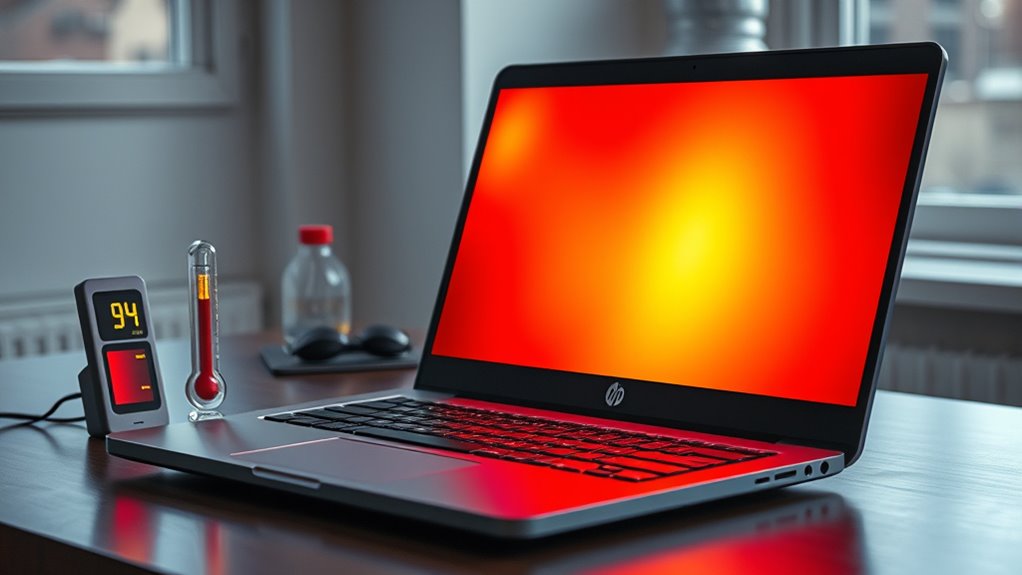
An HP computer reaching 94°C is close to the thermal ceiling for many Intel-based systems, especially under load. Brief spikes can be expected during gaming or heavy processing, but sustained temperatures at that level often point to cooling restrictions, dust accumulation, or aging thermal paste. The real issue is not the peak alone, but how long it stays there and whether performance drops soon after.
Is 94°C Safe for HP Gaming Laptops?
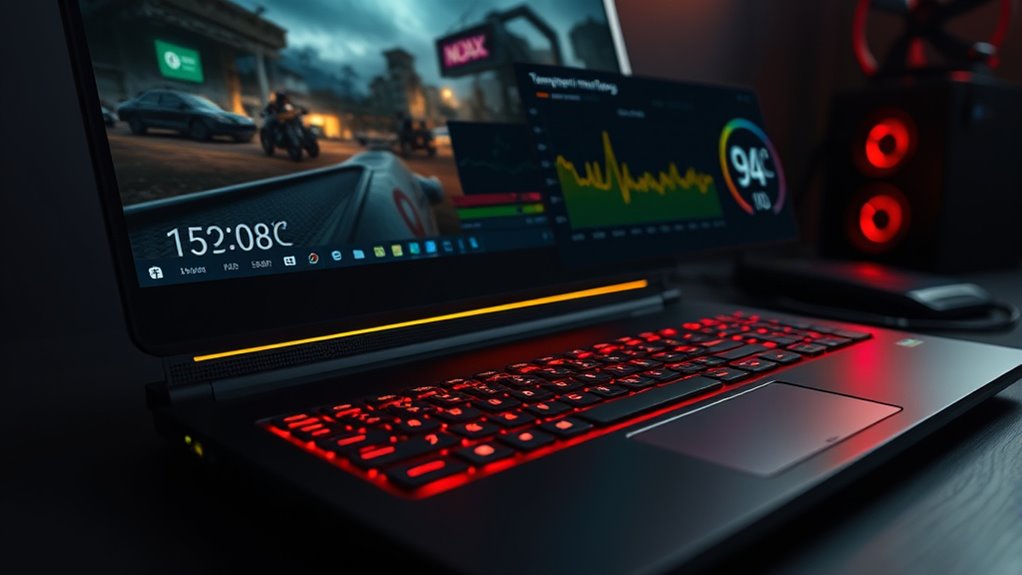
A CPU temperature of 94°C on an HP gaming laptop is generally considered high and close to the upper operating limit, since Intel rates many CPUs with a TJ max near 100°C.
At 94°C, the system is not necessarily failing, but it is operating in a constrained thermal state that can shorten component life and trigger thermal throttling. For sustained gaming, this level is above the commonly accepted range of 75-82°C reported by many users as more acceptable.
At 94°C, the laptop may still run, but thermal throttling and long-term wear become real concerns.
The result is reduced performance headroom and increased stress on the cooling assembly. Liberation from unnecessary heat requires maintenance: clean dust from vents and fans, verify fan operation, and use a cooling pad if needed.
Regular monitoring is essential, because prolonged exposure to 94°C can accelerate wear and erode stability over time. For HP gaming laptops, this temperature should be treated as a warning, not a normal target.
What CPU and GPU Temps Are Normal?
Normal CPU and GPU temperatures depend on workload, cooling design, and hardware class, but under heavy use Intel CPUs commonly operate in the 70°C to 85°C range, with a TJ max near 100°C.
Gaming GPUs often sit between 70°C and 90°C. A CPU temperature in this band is generally acceptable during sustained load, especially in compact systems.
GPU readings near 80°C to 87°C, including cards such as the Nvidia GTX 1650, also fall within expected operating limits.
Gaming laptops often run warmer than desktops because their thermal headroom is narrower.
Temperatures above 80°C can be tolerable in many scenarios, but persistent CPU readings around 94°C deserve scrutiny. That level suggests reduced thermal margin and possible overheating risk if maintained.
Tools such as HWMonitor and HWINFO allow real-time verification, enabling users to determine whether readings reflect normal load behavior or a condition that requires attention and intervention for liberation from hidden thermal constraint.
Why Your HP Laptop Runs So Hot
HP laptops, especially gaming models, often run hot because their cooling systems are compact and operate near their design limits under sustained load. When a workload pushes the CPU and GPU simultaneously, CPU temperatures may climb into the 85-95°C range. That level can be normal during heavy gaming, yet it also signals that thermal headroom is limited.
Intel processors such as the i5-10200H are rated to TJ max at 100°C, so sustained proximity to that ceiling increases the risk of throttling and long-term wear. Heat rise is often intensified by dust accumulation, restricted airflow, or degraded thermal paste, each reducing the system’s ability to reject heat.
For users seeking control rather than resignation, regular cleaning and unobstructed ventilation are practical forms of self-defense. Persistent high readings above 80°C deserve attention, especially when performance drops or fan noise stays elevated.
How to Check HP Laptop Temperature
To assess an HP laptop’s thermal state, the user can obtain a CPU temperature reading either through the BIOS/UEFI or with dedicated monitoring software. This is the core of how to check hp laptop temperature without guesswork. In BIOS/UEFI, a restart and entry through advanced startup options reveals a static temperature readout. For live diagnostics, HWMONITOR or HWINFO deliver dynamic updates and alert controls, enabling continuous oversight during demanding workloads.
| Method | Use |
|---|---|
| BIOS/UEFI | Direct readout |
| HWMONITOR | Real-time tracking |
| HWINFO | Custom alerts |
| Safe target | Below 80°C |
| Critical sign | Around 94°C |
Regular checks preserve autonomy over device performance. Most HP systems tolerate about 95°C, yet repeated 94°C readings warrant close scrutiny because thermal margin is thin. Accurate measurement lets the user distinguish normal load from escalation, supporting informed decisions and protecting sustained performance.
Fixes That Lower HP Laptop Temps
Lowering an HP laptop’s temperature usually begins with airflow and load control: dust should be cleared from vents and fans, the system should rest on a hard, flat surface, and unnecessary background processes should be closed through Task Manager to reduce CPU strain.
Start with airflow and load control: clear dust, use a hard surface, and close unnecessary background processes.
These steps restore cooling efficiency and reduce avoidable thermal buildup. A cooling pad can further improve intake beneath the chassis, especially during sustained workloads such as gaming, rendering, or large updates.
If temperatures remain elevated after airflow improvements, the thermal interface between the CPU and heatsink may have degraded; reapplying thermal paste can improve heat transfer and stabilize readings.
The goal is not cosmetic comfort but operational freedom: lower temperatures preserve performance, limit throttling, and reduce stress on internal components.
Regular maintenance, combined with disciplined process control, gives the laptop room to breathe and helps it operate within a healthier thermal range without unnecessary restriction.
When 94°C Becomes a Real Problem
A temperature reading of 94°C moves beyond routine warmth and into a range where the system’s thermal margin is nearly exhausted. At this point, 94°C is not merely elevated; it is a diagnostic signal that sustained heat may be approaching the CPU’s rated ceiling near 100°C.
Continued exposure can provoke thermal throttling, reducing clock speed to preserve silicon integrity and exposing the machine to avoidable performance loss. Intel processors may survive brief peaks above this level, even near 105°C, but endurance is not a strategy for freedom; reliability declines when heat becomes habitual.
Prolonged operation at 94°C can shorten component lifespan and destabilize power management, sometimes forcing the GPU to limit draw to avoid added stress.
The appropriate response is corrective: clear dust from vents, verify airflow, and consider external cooling support. Regular monitoring turns heat from an invisible constraint into a manageable variable.
Should You Worry About Gaming Temps?
Gaming temperatures are not automatically hazardous, as many laptops can tolerate CPU readings near 94°C and GPU readings in the mid-80s.
However, sustained operation above 85°C raises concern for long-term wear.
Thermal throttling should be suspected if clock speeds fall, frame rates stutter, or fans remain at maximum while temperatures stay elevated.
Improved airflow, a cooling pad, and unobstructed vents can reduce heat and bring gaming temperatures closer to the more acceptable 75–82°C range.
Safe Gaming Temperature Ranges
When evaluating safe gaming temperature ranges, CPU readings near 94°C are high but not automatically catastrophic, since many Intel processors are rated for a maximum junction temperature around 100°C.
In practice, a safe temperature for sustained gaming is often considered roughly 70°C to 85°C, giving useful thermal headroom and preserving user autonomy over performance. Values above that zone warrant inspection, especially in compact HP systems where cooling margin can be limited.
Graphics cards also deserve attention, because overheating can trigger performance limiting. Dust accumulation and blocked vents reduce cooling efficiency, so routine cleaning is a practical liberation from heat stress.
Monitoring tools such as HWMonitor or HWINFO provide real-time readings, allowing precise diagnosis before temperatures drift beyond acceptable limits.
Signs Of Thermal Throttling
Thermal throttling is the CPU or GPU’s protective response to excessive heat, and it commonly begins around 90°C to 95°C on Intel processors such as i5 and i7 models.
In practice, thermal throttling appears as abrupt frame-rate drops, stuttering, or reduced clock speeds during gaming. These symptoms indicate the silicon is limiting output to stay within safe thermal limits.
Gaming laptops often tolerate high temperatures, yet sustained readings above 90°C can trigger performance reduction and raise wear risk.
Monitoring software provides a diagnostic view of temperature and frequency behavior, helping users confirm whether thermal throttling is active.
When the pattern is repeated, the device is not failing; it is enforcing thermal protection.
Recognizing these signs allows informed, autonomous decisions about continued use.
Cooling Tips For Laptops
If thermal throttling has been observed, attention naturally shifts to cooling practices that can keep laptop temperatures within a safer operating range.
For gaming laptops, 80°C to 94°C under load can be normal, yet sustained exposure warrants monitoring.
Effective cooling tips include cleaning dust from vents, reapplying thermal paste when degradation is suspected, and placing the machine on a hard, open surface.
Elevating the rear edge can improve intake and exhaust paths. A cooling pad may reduce surface heat, though its benefit should be verified rather than assumed.
Temperature tools such as HWMonitor or CoreTemp help determine whether heat is transient or persistent.
When temperatures remain high despite these measures, performance limits may be preferable to unchecked thermal stress.
How to Keep Your HP Laptop Cooler
To keep an HP laptop cooler, airflow should be optimized by placing the unit on a hard, flat surface, elevating the rear, and clearing vents of dust or debris.
A cooling pad can further reduce thermal load by increasing underside ventilation during sustained workloads.
CPU temperatures should be monitored with diagnostic tools such as HWMonitor or HWiNFO to confirm whether the cooling measures are effective.
Improve Airflow
Improving airflow is one of the most effective ways to reduce operating temperatures in an HP laptop.
Placement on a hard, flat surface preserves air flow beneath the chassis and limits heat retention. A slight rear elevation increases the intake gap, allowing cooler air to enter and warmer air to exit with less resistance.
During demanding workloads, a cooling pad can add active air circulation and reduce thermal strain.
Dust accumulation in vents and fans should be removed regularly, since blockage impairs convection and raises internal temperatures.
Background programs should be checked in Task Manager; unnecessary processes can be closed to reduce CPU load and the heat they generate.
These measures restore thermal autonomy and help the machine operate more freely.
Monitor Temperatures
Monitoring temperatures is essential for determining whether an HP laptop is operating within safe thermal limits. Tools such as HWiNFO or HWMonitor can provide accurate CPU readings during idle, normal use, and gaming loads.
A CPU temperature below 85°C during sustained gaming is generally preferable; repeated excursions toward 94°C indicate restricted cooling or excessive load. Logging temperature trends helps identify whether airflow, dust accumulation, or power settings are driving heat buildup.
If readings rise sharply under load, the device should be inspected, cleaned, and elevated to improve ventilation. A cooling pad can reduce surface heat and improve intake flow. Balanced power mode may also limit unnecessary CPU strain.
Systematic monitoring gives users control over thermal behavior and supports freer, safer operation.
Frequently Asked Questions
Is a CPU Temperature of 94 Degrees Celsius Normal?
No, a CPU temperature of 94°C is not normal for sustained use. It is near TJ max for many processors and indicates stressed Thermal Management, likely from dust, blocked vents, failing paste, or excessive background load.
Temporary spikes under heavy gaming can occur, but persistent readings risk throttling and long-term wear.
Independent users should inspect cooling, clean the system, and monitor load to regain safe thermal control and performance.
Is 95 Degrees Too Hot for a Laptop CPU?
Yes, 95 degrees Celsius is too hot for a laptop CPU.
At that level, thermal throttling is likely, reducing performance to protect the chip. Sustained operation near this range can accelerate wear and shorten service life.
Monitoring temperatures is advisable, and Cooling Solutions such as improved airflow, cleaning dust, and a cooling pad may restore safer operation.
Liberation from heat stress begins with control, not endurance.
Is It Normal for My GPU to Be at 90 Degrees?
90 degrees is not normal for a GPU during sustained load; it signals overheating. As the adage goes, “where there is smoke, there is fire,” and here the heat demands scrutiny.
They should check airflow, dust buildup, fan behavior, and apply Cooling Solutions such as improved ventilation, repasting, or a cooling pad.
Real-time monitoring is essential; thermal throttling may already be reducing performance and shortening component life.
Is a 90 Degree CPU Too Hot?
Yes—90°C is generally too hot for a CPU if sustained, though brief spikes under heavy load can occur.
At that level, thermal throttling is likely, and long-term wear increases. A diagnostic response should check fans, airflow, dust buildup, and thermal paste, then evaluate Cooling Solutions such as improved case ventilation or a better cooler.
Performance should remain free from avoidable heat constraints, especially during intensive tasks and gaming.
Conclusion
To sum up, a sustained CPU temperature of 94°C on an HP laptop is not ideal, though brief spikes during heavy gaming or rendering can occur. Intel mobile CPUs often begin thermal throttling near 95°C, meaning performance may already be limited. A useful diagnostic statistic is that many modern laptop CPUs are designed to target roughly 100°C as a hard ceiling, so 94°C leaves little margin. Persistent readings at this level justify cleaning, airflow improvements, and thermal inspection.
