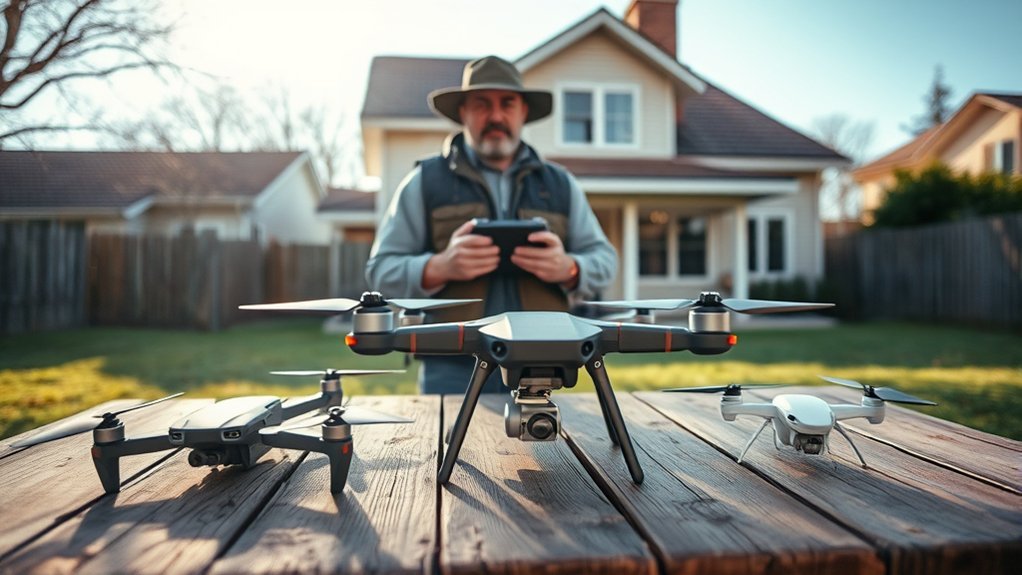
The best drone for home inspections has a sharp camera, obstacle sensing, and enough flight time to cover a whole roof. Of the two drones compared here, the DJI Air 3S is the better roof tool because it adds a 70 mm telephoto camera. The DJI Mini 4 Pro is lighter and easier to carry, but its zoom is digital only. If you are paid for the flights, you need an FAA Part 107 certificate. Many new DJI models are also hard to buy in the US, so check stock before you plan around one.
Best Drone for Home Inspections?
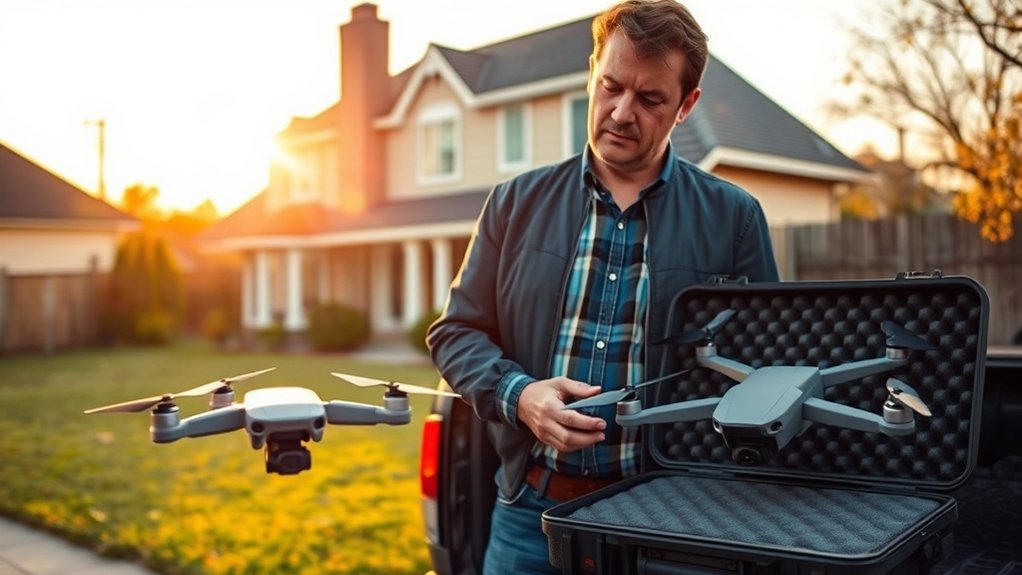
Pick by the jobs you do most. For tight lots with trees and wires, the Mini 4 Pro is the simpler choice. For close looks at shingles, flashing, and chimneys from a safe distance, the Air 3S is the better choice because of its telephoto lens.
- DJI Mini 4 Pro: under 249 g, 1/1.3-inch 48 MP camera, digital zoom only (up to 3x in 4K video), obstacle sensing in all six directions, rated for 34 minutes of flight, wind rating of 10.7 m/s (about 24 mph).
- DJI Air 3S: 724 g, 1-inch 50 MP wide camera plus a 48 MP 70 mm medium telephoto camera, omnidirectional obstacle sensing with forward LiDAR, rated for 45 minutes of flight, wind rating of 12 m/s (about 27 mph).
These are DJI’s own figures, measured in test conditions. Flights on a real job site are usually shorter, and wind and cold cut battery time.
Neither drone has a thermal camera. If you need to find heat loss or moisture, you need a dedicated thermal drone. That is a different and more costly class of aircraft.
How to Choose a Home Inspection Drone
Home inspections mean tight lots, trees, power lines, and changing wind. Check these points before you buy.
- Zoom: A telephoto lens lets you keep your distance from the roof edge and still see cracked shingles or damaged flashing. Digital zoom crops the image, so detail drops.
- Obstacle sensing: It helps near trees and walls, but sensors can miss thin wires and small branches. Never rely on them alone.
- Flight time and wind rating: You want enough battery for the whole property with a safety buffer. Lighter drones drift more in wind.
- Photo transfer: Fast transfer to your phone or tablet makes it easier to review shots before you leave.
- Legal fit: Paid work needs Part 107, registration, and Remote ID. The rules are covered below.
DJI Mini 4 Pro or Air 3S?
The Mini 4 Pro suits routine exterior photos on small, cluttered lots. The Air 3S suits roofs where you want more detail and more margin in wind.
DJI Mini 4 Pro
- Pros: Light and easy to carry. Obstacle sensing in all six directions.
- Cons: Digital zoom only. Lower wind rating and shorter rated flight time than the Air 3S.
DJI Air 3S
- Pros: 70 mm telephoto camera for roof detail. Longer rated flight time and higher wind rating. Forward LiDAR helps with obstacle sensing.
- Cons: At 724 g it is heavier and bulkier. It must be registered with the FAA and carry Remote ID.
What About Autel and Other Brands?
Autel is not an easy way around the DJI problem. Autel drones were also added to the US Covered List, so they face the same restrictions on new models. We could not confirm current specs or US stock for the Autel EVO Lite+ or the Autel Alpha, so we do not recommend them here.
Some inspectors use US-made enterprise drones, such as those from Skydio. These are built for business users, and specs, support, and cost differ a lot from consumer drones. Check current models with the seller before you decide.
FAA Rules for Paid Home Inspections
- Part 107 certificate: Required when you are paid to fly. You must be at least 16, pass the FAA knowledge test, and clear TSA vetting. You then take online recurrent training every 24 months.
- Registration: Every drone used for paid work must be registered, whatever its weight. Registration lasts three years. A sub-250 g drone like the Mini 4 Pro is only exempt for limited recreational flying.
- Remote ID: A registered drone must broadcast Remote ID. It can be built in, added with a broadcast module, or flown inside an FAA-recognized identification area. Confirm your model’s support.
- Flying basics: Keep the drone in sight, stay under 400 ft above ground, get the homeowner’s permission, and get FAA authorization in controlled airspace near airports.
US availability: In December 2025 the FCC added foreign-made drones to its Covered List. New models cannot get FCC authorization, so they cannot be newly marketed or sold in the US. The rule does not ban owning or flying a drone you already have. Newer DJI models such as the Mini 5 Pro are not sold through DJI’s official US channels, and stock of the Mini 4 Pro and Air 3S varies by seller. See our guide on which DJI drones are still available in the US.
Last checked: October 2026.
Must-Have Drone Accessories for Inspectors
- Extra batteries, because rated flight time is 34 minutes for the Mini 4 Pro and 45 minutes for the Air 3S in ideal conditions.
- A hard carrying case to protect the drone between properties.
- ND filters to cut glare on bright roofs and light siding.
- Propeller guards made for your exact model, for work near eaves and walls.
- A phone or tablet mount and a sun shade so you can see the screen outdoors.
Frequently Asked Questions
What Is the Best Drone for a Home Inspector?
Of these two, the DJI Air 3S is the better all-round choice because of its 70 mm telephoto camera, longer rated flight time, and higher wind rating. The Mini 4 Pro is the lighter option for tight lots.
What Is the Best Drone for Roof Inspections in 2026?
The Air 3S, because the telephoto lens shows roof detail without flying close. Availability varies in the US, so check stock first.
Can Home Inspectors Use Drones?
Yes. If you are paid for the flights, you need a Part 107 remote pilot certificate, a registered drone, and Remote ID.
Which DJI Drone Is Best for Roof Inspections?
Between the Mini 4 Pro and Air 3S, the Air 3S gives better roof detail. The Mini 4 Pro is better when space is tight and you want a very light drone.
Conclusion
Choose the drone that matches your jobs: the Air 3S for roof detail and wind, the Mini 4 Pro for small, cluttered lots. Then make sure you hold a Part 107 certificate, register the drone, and confirm Remote ID before your first paid flight.
