An iPhone 13 showing over 100GB of backups usually reflects iCloud backup data or selected app data, not backup files stored on the device. First, check Settings > [Name] > iCloud > Manage Storage** to confirm backup size and available iCloud space. Then check Settings > General > iPhone Storage** to compare local usage. If iCloud is full, delete old backups or disable nonessential app backups. The next steps explain how to shrink backups and prevent failures.
Is the Storage Error From iPhone or iCloud?
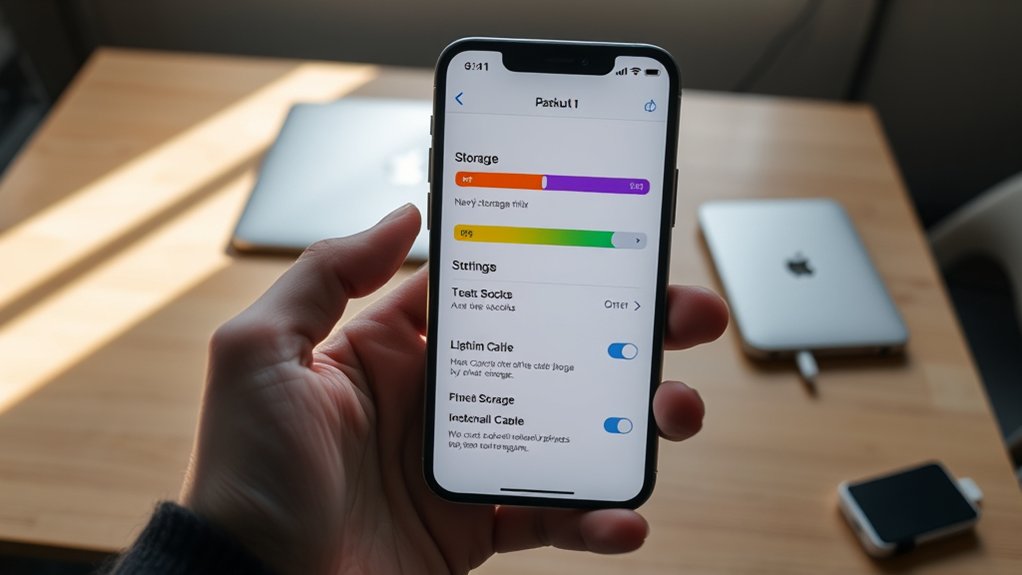
When an iPhone 13 backup reports an “out of storage” error, the first step is to determine whether the limit comes from iCloud or the device itself. This distinction breaks Storage confusion and restores control. A backup failure can occur because of iCloud limitations even when the phone still has ample local space. The message does not automatically mean the handset is full.
An out-of-storage backup error often points to iCloud limits, not a full iPhone 13.
A precise diagnosis follows two checks. First, review the backup size and remaining cloud space in Settings > [Your Name] > iCloud > Manage Storage. If the backup exceeds the available plan, the error is cloud-based.
Second, confirm Device capacity in Settings > General > iPhone Storage. That screen shows total and available local storage. Understanding the separation between these systems is essential for accurate Backup management.
If the problem is insufficient iCloud space, resolution may come from deleting older backups or upgrading the storage plan, not from replacing hardware or purchasing more device storage.
Check iPhone 13 and iCloud Storage
Before any fix is attempted, storage must be checked in both locations separately. On the iPhone 13, open Settings > General > iPhone Storage**. This screen shows total capacity and available space** on the device, which directly affects iPhone performance and storage optimization decisions.
- Check on-device capacity and free space first
- Open Settings > [your name] > iCloud > Manage Storage
- Compare iPhone storage with iCloud backup usage
- Verify whether the warning targets device or iCloud space
- Confirm the iCloud plan supports current backup needs
For iCloud, navigate to Settings > [your name] > iCloud > Manage Storage. This reveals space used by backups and other synced data.
If backup usage appears above 100GB, that usually points to iCloud storage rather than local device storage. The user should then confirm whether an “out of storage” alert refers to iPhone capacity or iCloud limits.
This distinction frees troubleshooting from guesswork and supports efficient correction.
Why iPhone 13 Backup Looks Over 100GB
A backup size above 100GB usually reflects the total data selected for backup rather than a fault. On an iPhone 13, backup data commonly includes app data, photos, messages, and device settings, so the total can expand quickly. The figure may also rise when apps leave behind redundant files that were never fully purged.
A clear review begins in Settings > General > iPhone Storage. This path shows which apps consume the most local space and helps explain why backups appear unusually large.
iCloud can further amplify the number when multiple devices use the same account, because stored backups accumulate over time under one storage pool. If the total exceeds available iCloud capacity, the system issues prompts to manage data or buy more space.
In practical terms, the large number often signals broad inclusion of content, not damage. Understanding this relationship supports informed storage management and gives users more control over digital clutter.
Fix the Backup Storage Error on iPhone 13
Start by confirming whether the warning refers to iCloud capacity rather than the iPhone 13’s internal storage, since an “out of storage” message paired with backups above 100GB often points to limited iCloud space.
- Open Settings > General > About to verify device capacity and available local storage.
- Compare the reported backup size against available iCloud storage space.
- Remove outdated or unnecessary iCloud backups to restore control through better storage management.
- Retry the backup after cleanup to see whether the error clears.
- Consult Apple community discussions or technical experts for case-specific backup troubleshooting guidance.
This sequence helps separate a cloud-space problem from an on-device storage issue.
If local storage remains available but iCloud space is insufficient, backups may fail even when the phone itself is not full.
Deleting older backups can free capacity without changing the device.
When uncertainty persists, expert input can accelerate diagnosis and help the user regain freedom from repeated backup warnings and confusion.
Lower Backup Size Without Buying More iCloud
To lower iPhone 13 backup size without purchasing more iCloud storage, the user should first identify the largest backup contributors in Settings > General > iPhone Storage and the iCloud backup list in Settings > [your name] > iCloud > Manage Storage > Backups.
The next step is to reduce backup data by deleting unnecessary apps, removing old messages and large attachments, and disabling backup for apps that do not require preservation.
iCloud space can then be managed more efficiently by enabling Optimize iPhone Storage in Settings > Photos and reviewing backup content regularly.
Find Backup Storage Source
When a backup warning appears, the first step is to identify whether the limit comes from the iPhone’s local storage or from iCloud. This separates backup types and storage options, giving the user a clear route to regain control.
First, open Settings > General > About to verify total capacity and available device space. Then open Settings > [your name] > iCloud > Manage Storage to see backup consumption in iCloud.
If iCloud is the constraint, old backups and unused apps may be the source.
- Check local capacity in About
- Review iCloud backup totals
- Compare backup size with available iCloud space
- Identify obsolete backups or unused apps
- Monitor usage regularly to avoid future alerts
This method clarifies the storage source before any further action and prevents unnecessary purchases or confusion.
Reduce Backup Data
Reduce backup data by trimming what iCloud saves instead of expanding storage. On iPhone 13, open Settings > [name] > iCloud > Manage Storage > Backups, then delete obsolete backups. Next, select the current device and disable app backups for nonessential apps. These backup management tips give the user direct control and remove captive, low-value data.
| Action | Path | Result |
|---|---|---|
| Delete old backups | iCloud > Manage Storage > Backups | Removes legacy backup weight |
| Disable app backup | Backups > [device] | Excludes unnecessary app data |
Then enable Optimize iPhone Storage under Settings > Photos. Continue with data optimization strategies: remove stale messages, duplicate photos, and expired downloads. For large videos or photo libraries, transfer files to a computer or trusted third-party cloud service. This keeps backups lean and flexible.
Manage iCloud Space
Managing iCloud space builds on backup trimming by targeting stored data that inflates backup size. Through iCloud settings, the user can open Manage Storage, perform data review, and identify backup types consuming capacity. This enables app selection, data prioritization, and lower backup frequency where practical.
- Open Settings > [Name] > iCloud > Manage Storage for space monitoring.
- Delete obsolete device backups and dormant app data.
- Use photo management with Optimize iPhone Storage for storage optimization.
- Remove large Message attachments and similar media-heavy files.
- Watch storage notifications and repeat reviews regularly.
This method reduces dependence on paid upgrades while preserving essential content. Regular space monitoring exposes unnecessary files early, and disciplined app selection keeps backups lean.
The result is greater control, less digital clutter, and more liberated use of available iCloud storage.
What to Try if iPhone 13 Backup Fails
A failed iPhone 13 backup should first be traced to the correct storage source by checking available capacity in Settings > General > About and confirming that iCloud Backup is enabled in Settings > [your name] > iCloud > iCloud Backup.
The next step is to verify whether the backup size exceeds the available iCloud or device storage. If space is insufficient, unnecessary files or old backups should be removed to create enough capacity for a successful backup.
Check Storage Source
When an iPhone 13 backup fails, the first step is to confirm whether the storage warning refers to iCloud or the device itself. This separates the problem and supports clearer storage management and backup strategies.
Navigate to Settings > [Your Name] > iCloud > Manage Storage to see whether iCloud capacity is exhausted.
- Check iCloud storage status first.
- Remove old backups if necessary.
- Upgrade iCloud storage when required.
- Open Settings > General > iPhone Storage.
- Restart or update iOS if needed.
If iCloud is full, deleting unnecessary backups or buying more storage can restore progress.
Then check device space in Settings > General > iPhone Storage to confirm available local capacity.
If both locations show adequate space, a restart or pending software update may remove hidden barriers and restore backup freedom quickly.
Verify Backup Size
Next, check Settings > [Your Name] > iCloud to compare backup size against available iCloud capacity.
If the backup fails, the issue may be insufficient cloud space, not a problem with the iPhone itself.
Accurate review of iCloud settings helps isolate the constraint and restores control over the process.
For reliable testing, the device should remain connected to Wi-Fi and power during the backup attempt.
This method lets the user identify whether storage limits are blocking completion before making further changes.
Free Up Space
If iCloud capacity appears limited, the following check is whether the issue involves iCloud storage or the iPhone’s local storage. This distinction helps restore control and avoid misdirected fixes.
Review iCloud settings first, then open Settings > General > Storage to compare backup size with available device space.
- Confirm whether the warning references iCloud or on-device storage
- Check Settings > General > Storage for space discrepancies
- Remove unnecessary apps, photos, or messages consuming capacity
- Use app management to offload unused apps without deleting data
- Consider cloud alternatives for media, or back up to Finder or iTunes
If the iPhone is full, deleting expendable content can free room for backup processes.
When local cleanup is insufficient, cloud alternatives or a computer backup can provide a more independent path forward.
Frequently Asked Questions
Why Are My iPhone Backups so Large?
iPhone backups are large because backup size includes photos, videos, app data, messages, and system settings. For storage management, one should review iPhone Storage, remove unused apps, clear caches, and limit apps included in backups.
My iPhone System Data Is Over 100GB. What Should I Do?
Naturally, a phone hoarding 100GB deserves intervention: he should review iPhone Storage, clear Safari caches, delete old messages, remove unused apps, update iOS, then apply storage optimization tips and backup management strategies, restoring if necessary.
Why Is My iPhone Telling Me Storage Is Full When It’s Not?
It usually indicates an iCloud backup or system-data constraint, not true device capacity. One should verify local storage, then iCloud usage, apply storage management, and reduce oversized backups through backup optimization to restore control.
Should You Delete iPhone Backups?
Yes, if backups are outdated, duplicated, or unnecessary; no, if they remain essential for recovery. Effective backup management requires identifying current needs, reviewing backup dates, deleting redundancies, and preserving recent copies for storage optimization and user autonomy.
Conclusion
An iPhone 13 showing more than 100GB of backups usually reflects backup data listed in iCloud, not files stored directly on the device. A useful check is comparing iPhone Storage with iCloud Storage step by step in Settings. Significantly, Apple provides only 5GB of free iCloud storage, so large backups accumulate quickly. By reviewing app backup selections, deleting outdated backups, and retrying failed backups, the user can reduce size and restore normal backup behavior.
