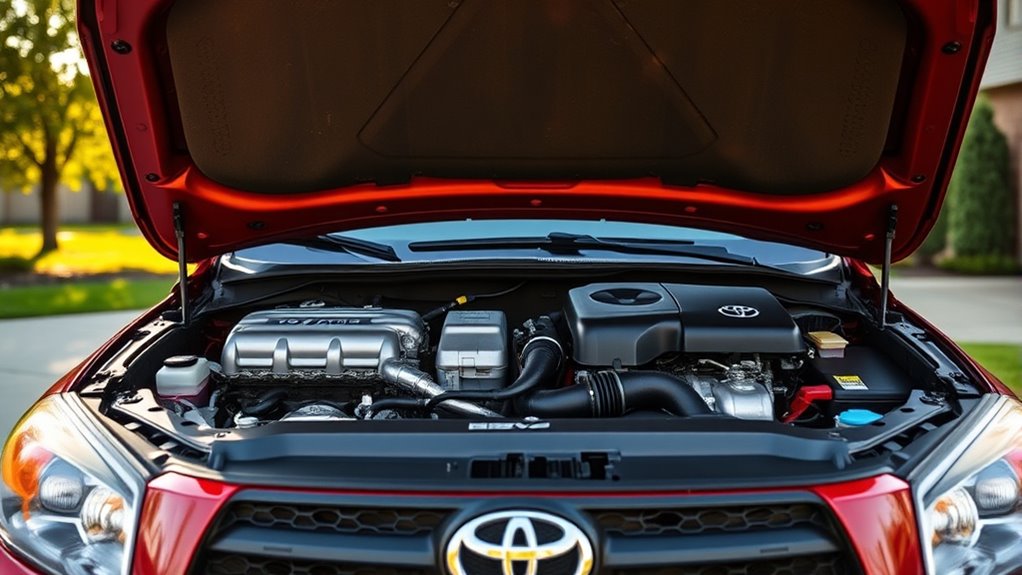
The 2008 RAV4 V6 is better for drivers who want stronger acceleration, passing power, and towing capability. It makes 269 horsepower versus 166 from the 4-cylinder, but it also uses more fuel and typically costs more to buy and maintain. The 4-cylinder is the better choice for reliability, lower ownership costs, and better fuel economy at 24 MPG combined. The best engine depends on whether performance or long-term practicality matters most, and more details follow below.
Key Takeaways
- The V6 is better for power, acceleration, towing, and passing, with 269 horsepower versus the 4-cylinder’s 166.
- The 4-cylinder is better for fuel economy, getting about 24 MPG combined compared with the V6’s 21 MPG combined.
- The 4-cylinder is generally the better reliability choice, with fewer known issues and stronger long-term dependability.
- The V6 costs more upfront and can have higher maintenance and repair expenses over time.
- Choose the V6 if you want performance, or the 4-cylinder if you want lower cost and better daily-driver practicality.
2008 RAV4 V6 Vs 4-Cylinder: Which Fits You Best?
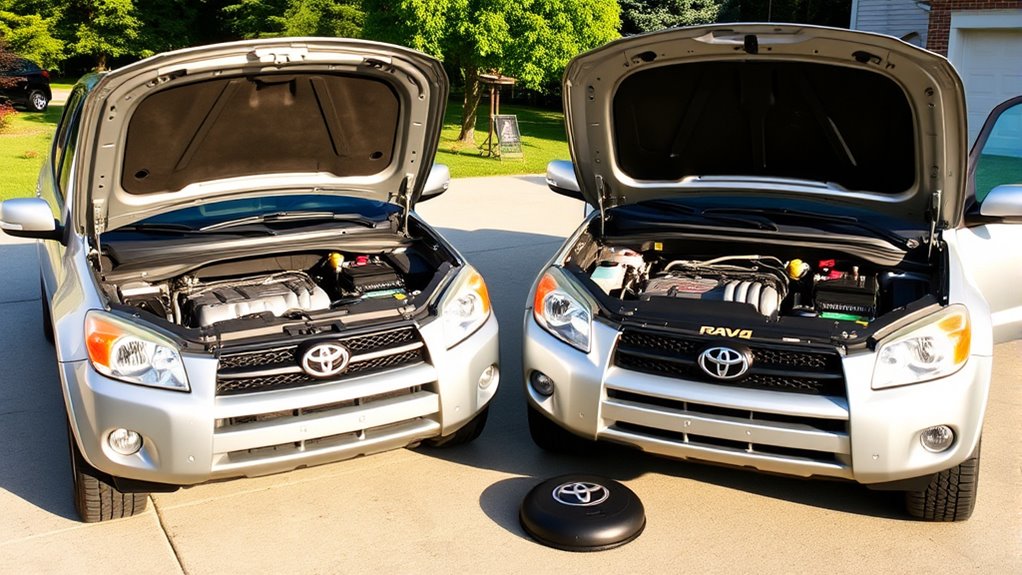
When comparing the 2008 RAV4 V6 and 4-cylinder, the choice largely depends on priorities: the V6 delivers 269 horsepower and substantially higher torque, making it the stronger option for acceleration, towing, and climbing grades, while the 4-cylinder’s 166 horsepower and roughly 24 MPG combined make it the more efficient and economical daily driver.
The RAV4 V6 suits drivers who want a freer, more responsive feel under load, especially in hilly terrain or with passengers and cargo. It typically costs about $2,000 more, and its 21 MPG combined rating reflects that performance bias.
By contrast, the 4-cylinder offers lower operating costs and stronger reliability reports, with fewer long-term issues noted by owners. That makes it the steadier choice for buyers prioritizing budget discipline, mechanical simplicity, and dependable transport.
The RAV4 V6 remains the more dynamic option, but the 4-cylinder better serves practical, efficiency-focused ownership.
2008 RAV4 V6 Power And Performance
The 2008 RAV4 V6 delivers a clear horsepower advantage, with 269 hp versus the 4-cylinder’s 166 hp.
Its higher torque output improves acceleration under load, particularly during passing, merging, and towing.
That extra reserve also gives the vehicle a more responsive, sportier driving feel in everyday use.
V6 Horsepower Advantage
With 269 horsepower on tap, the 2008 RAV4 V6 delivers a substantial performance advantage over the 4-cylinder’s 166 horsepower, giving it noticeably stronger acceleration and a more responsive feel in everyday driving.
The V6 engine adds 90 horsepower and roughly 50 percent more torque, creating a wider operating margin for drivers who value authority over restraint. This output improves merge confidence, passing reserve, and overall throttle immediacy without requiring high engine speeds.
In technical terms, the powertrain offers a freer, less constrained character that better suits drivers seeking mobility with fewer compromises.
Fuel economy remains competitive, at 26 mpg highway versus 28 mpg for the four-cylinder, preserving efficiency while expanding capability.
For many, that balance defines genuine freedom.
Acceleration Under Load
Under load, the 2008 RAV4 V6 shows a clear performance advantage thanks to its 269-horsepower output and roughly 50 percent greater torque.
This extra reserve improves acceleration under load when the vehicle is carrying passengers, cargo, or a trailer, because the engine can maintain stronger momentum without frequent downshifts.
Compared with the 166-horsepower four-cylinder, the V6 responds with less strain on grades and during highway merging, where demand rises quickly.
Its higher torque output also supports steadier passing power at speed.
Despite the added output, the V6 remains reasonably efficient at 21 MPG combined, so capability does not require a severe fuel penalty.
For drivers seeking autonomy in demanding conditions, the V6 offers the more capable powertrain.
Sportier Driving Feel
For drivers prioritizing a sportier feel, the 2008 RAV4 V6 stands out through its 269-horsepower output and stronger torque delivery. That advantage creates a sportier driving feel that is more immediate, responsive, and controlled in everyday use.
- Quicker launch response
- Stronger passing power
- Better load performance
- More engaging handling
- Greater driver confidence
Compared with the 166-horsepower 4-cylinder, the V6 provides more authority during acceleration and highway merging.
Fuel economy is slightly lower at 21 MPG city and 26 MPG highway, yet many drivers consider the trade-off acceptable.
For those seeking motion without constraint, the V6 supports a more dynamic and liberated driving experience, with user reports commonly noting improved responsiveness and a more satisfying ride overall.
2008 RAV4 4-Cylinder Fuel Economy
The 2008 RAV4’s 4-cylinder engine delivers an estimated 21 MPG combined, including 19 MPG in city driving and 26 MPG on the highway. For RAV4 4-cylinder buyers, that figure reflects a practical balance between mobility and restraint.
The engine produces 166 horsepower, enough for routine commuting, merging, and family transport without excess fuel demand. Compared with the V6, the 4-cylinder configuration is generally the more economical choice, lowering operating costs for drivers who value efficiency and self-directed spending over added power.
166 horsepower supports daily driving, while the 4-cylinder keeps fuel costs and ownership expenses lower.
Its calibration favors predictable daily use, making it well suited to urban traffic and moderate highway travel. For households seeking to reduce fuel expenses over time, the savings can be meaningful.
While it does not match the V6 for towing or high-output performance, the 4-cylinder remains a technically sensible option for those prioritizing fuel economy, affordability, and practical independence.
How Reliable Is The 2008 RAV4 V6?
The 2008 RAV4 V6, powered by the 3.5L 2GR-FE, is generally rated below the I-4 in long-term reliability despite its stronger performance output.
Reported concerns include oil consumption and a ruptured external oil line, both of which can increase the risk of engine damage if not monitored.
These factors can raise ownership costs over time, making regular inspection and maintenance important for prospective buyers.
V6 Reliability Ratings
Despite its strong 269-horsepower performance, the 2008 RAV4 V6 carries a mixed reliability record and is generally rated below the four-cylinder model.
In V6 reliability ratings, the 3.5L engine is valued for acceleration, yet its long-term dependability is less favored by owners and reviewers seeking mechanical autonomy.
- Lower reliability scores than the 4-cylinder
- Higher satisfaction with driving performance
- External oil line rupture risk
- Oil consumption complaints
- Greater concern for oil-pressure related damage
The four-cylinder is usually judged more dependable, with fewer reported issues over time.
For drivers prioritizing power, the V6 remains compelling; for those prioritizing durable, low-drama transport, the 4-cylinder is the stronger statistical choice.
Common V6 Issues
A few common issues temper the 2008 RAV4 V6’s strong performance reputation, most notably the 3.5L 2GR-FE’s external oil line rupture risk, which can cause rapid oil loss and serious engine damage if not caught early. Other common V6 issues include elevated oil consumption in 2006-2008 models and occasional sensor or gasket seepage concerns. Regular level checks are essential to preserve mechanical freedom.
| Issue | Effect |
|---|---|
| Oil line failure | Sudden oil loss |
| Oil consumption | Low-level operation |
| General wear | Higher repair attention |
Compared with the 4-cylinder, the V6 demands tighter monitoring and may show less consistent reliability, despite its 269-horsepower advantage. A disciplined maintenance routine helps owners keep the powertrain liberated from avoidable failure and retain its strong acceleration.
Long-Term Ownership Costs
Long-term ownership costs for the 2008 RAV4 generally favor the 4-cylinder model, which has a stronger reliability record and fewer reported maintenance concerns than the V6. Over time, its long-term ownership costs remain lower because routine service is simpler and major failures are less common.
The V6 adds performance, but it also introduces more risk and expense.
- Better fuel economy reduces operating cost
- Lower repair exposure supports reliability
- Fewer oil-related failures improve durability
- Insurance may be less expensive
- Everyday driving needs are usually met
For owners seeking practical autonomy from unexpected bills, the 4-cylinder is the more economical choice. The V6 can still satisfy performance demands, yet its higher fuel use and potential repair burden raise total ownership cost.
Why The 4-Cylinder Usually Costs Less
The 4-cylinder engine in the 2008 RAV4 usually costs less because its design is simpler and cheaper to manufacture than the V6. That lower production complexity helps explain why the 4-cylinder engine typically enters the market at a starting price near $9,600, about $2,000 below the V6, which is commonly listed around $11,600.
Lower purchase price gives buyers more control over capital and reduces the burden of ownership from the outset. Insurance premiums may also be lower, since insurers often price simpler, less expensive powertrains more favorably.
Over time, maintenance costs usually remain reduced because the 4-cylinder has fewer parts, and its stronger reliability rating suggests fewer repair events. For drivers seeking practical independence from avoidable expense, this powertrain can preserve resources without demanding extra financial commitment.
How The RAV4 Feels On The Road
On the road, the 2008 RAV4’s character shifts noticeably between the two engines. The V6 brings 269 horsepower, so its acceleration is stronger and its response feels more assertive, while the 4-cylinder delivers 166 horsepower and adequate daily drivability.
The V6 brings 269 horsepower for stronger acceleration, while the 4-cylinder offers adequate daily drivability.
Both versions ride comfortably, but the V6 is generally smoother at highway speeds and during merging. The RAV4’s compact turning radius supports agile maneuvering in tight spaces, regardless of engine choice.
- V6: quicker launch and passing
- 4-cylinder: simpler, practical power
- V6: steadier feel under load
- Both: comfortable suspension tuning
- Gas mileage favors the 4-cylinder, though the V6 Limited’s 21 MPG remains reasonable for added performance
For drivers seeking liberated movement with minimal compromise, the V6 offers a more dynamic road feel; the 4-cylinder prioritizes efficiency and everyday ease.
2008 RAV4 Common Engine Problems
Although both engines in the 2008 RAV4 are generally durable, each has a few well-documented problem areas worth noting. The 2.5L four-cylinder engine is usually the steadier unit, yet earlier examples are associated with elevated oil consumption, making periodic checks essential to prevent low oil levels and unnecessary wear.
The 3.5L V6 delivers strong output, but its external oil line has been known to rupture; if oil pressure is lost, severe engine damage can follow quickly. Across both models, failed ignition coils may trigger misfires, especially when maintenance is deferred.
Water pump leaks also appear often, with repair costs higher on the V6. Some owners report clunking or knocking during turns, usually linked to a worn intermediate steering shaft rather than the engine itself.
These issues are manageable, but they reward vigilant inspection, timely service, and a refusal to accept hidden mechanical vulnerability.
Which 2008 RAV4 Engine Should You Buy?
Choosing between the 2008 RAV4’s two engines depends largely on how the vehicle will be used and how much operating cost matters over time. For a used Toyota Rav buyer, the 4-cylinder is usually the rational choice. It delivers 166 horsepower, stronger fuel economy, and better reliability, while keeping purchase, insurance, and maintenance costs lower.
For most used Toyota Rav buyers, the 4-cylinder offers the best mix of reliability, economy, and lower ownership costs.
The V6, with 269 horsepower, suits drivers who need brisk acceleration, towing capability, or frequent hauling. Its added thrust supports freedom from hesitation under load, but it also brings higher ownership expense and noted oil line concerns.
- 4-cylinder: better MPG
- V6: stronger performance
- 4-cylinder: lower repair risk
- V6: higher running costs
- Budget buyers: favor 4-cylinder
The price gap is about $2,000, and that difference often compounds over years. For most daily drivers, the 4-cylinder is the better buy; for performance-focused owners, the V6 remains the premium option.
Frequently Asked Questions
Is the 2008 Toyota RAV4 With a V6 Engine Reliable?
Generally, the 2008 Toyota RAV4 V6 is reliable, though less consistent than the four-cylinder. Engine Longevity depends on diligent oil monitoring, since oil-line and consumption issues can cause catastrophic failure if ignored.
Which Is Better, a 4-Cylinder or a 6-Cylinder Toyota RAV4?
A mechanic once noted the V6’s 269 horsepower as a freight train beside the 4-cylinder’s commuter bike. For Engine Performance, the V6 wins; for efficiency, reliability, and everyday autonomy, the 4-cylinder remains the wiser choice.
Which RAV4 Engine Is Best?
The 4-cylinder is usually best for Fuel Efficiency, reliability, and lower operating cost. The V6 delivers superior power and towing, but sacrifices economy and adds risk. Choice depends on liberation from restraint versus efficiency.
Which Year to Stay Away From RAV4?
He would stay away from 2006-2008 RAV4s, especially V6 models. Engine Comparisons show oil consumption, external oil-line failures, and weaker long-term reliability. For practical freedom, newer model years are the safer, more independent choice.
Conclusion
The 2008 RAV4’s V6 is the stronger choice for drivers who value acceleration, towing capability, and a more effortless highway feel, while the 4-cylinder remains the wiser pick for lower purchase cost and better fuel economy. Each engine has its own lane, and the right answer depends on priorities rather than superiority alone. In this comparison, the V6 delivers the punch, but the 4-cylinder keeps ownership costs lighter—two engines, two very different roads.
