Strong fishing knots help you keep more fish connected from the first bite to the final net. Weak, rushed, or poorly seated knots can slip, cut into the line, or break under pressure. In this guide, you’ll learn the essential fishing knots beginners should know, when to use each one, and how to tie them with more confidence.
Quick Answer
The best fishing knots for beginners are the Palomar Knot, Improved Clinch Knot, Uni Knot, Rapala Knot, and Surgeons Knot. These cover the most common needs: tying hooks, attaching lures, joining lines, and making strong loop connections.
Key Takeaways
- Start with the Palomar Knot and Improved Clinch Knot for basic hook and lure connections.
- Use the Uni Knot when you need one versatile knot for several line and tackle jobs.
- Choose the Surgeons Knot or Albright Knot when joining two fishing lines.
- Always moisten the knot, pull it tight slowly, and trim the tag end cleanly.
At a Glance
| Time Required | 5 to 15 minutes of practice per knot |
| Difficulty | Beginner-friendly |
| Tools Needed | Fishing line, hook or lure, small scissors or line cutters |
| Cost | No extra cost if you already have line and tackle |
Welcome to Fishing Knots
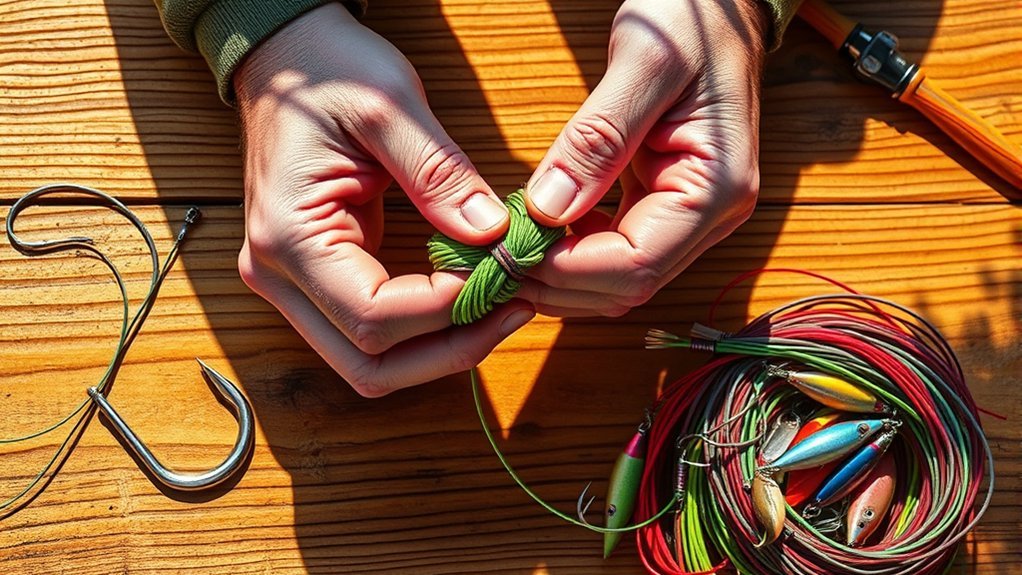
When you head out to fish, understanding fishing knots is vital for a successful trip. Your line, hook, lure, swivel, and leader all depend on secure connections. Even a strong fishing line can fail if the knot is tied poorly, tightened too fast, or damaged by friction.
Mastering a few key knots can greatly improve your experience on the water. Among the most important are the Palomar Knot and the Uni Knot. The Palomar Knot is highly regarded for its strength and reliability, especially when securing hooks or lures with braided line. It is also easy to remember, which makes it a smart choice for beginners.
The Uni Knot is incredibly versatile. You can use it with monofilament, fluorocarbon, and many terminal tackle setups. It works well for attaching line to a hook, swivel, or reel spool. Practicing these knots will save you time and help you focus on catching fish instead of struggling with your gear. Prioritize these two knots first, and you’ll build a strong foundation for your fishing adventures.
Importance of Fishing Knots
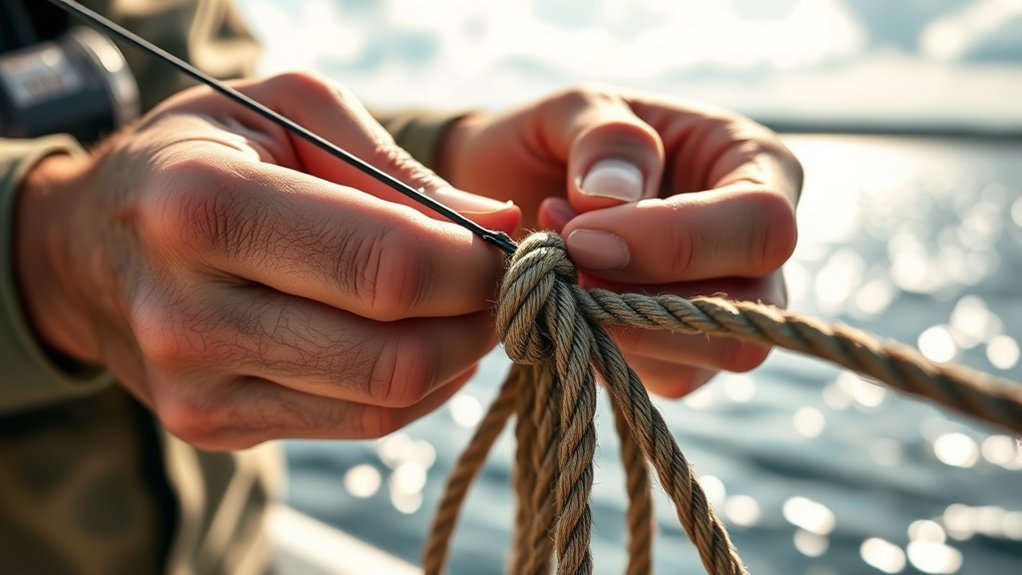
Fishing knots play a pivotal role in your overall success as an angler because they create secure connections between your lines, hooks, and lures. A good knot helps your tackle handle casting pressure, sudden strikes, snags, and the steady pull of a hooked fish.
Mastering essential knots not only enhances your fishing experience but also increases your chances of landing a catch. For instance, the Overhand Knot is a basic building block for many other knots, while the Surgeons Loop is useful for creating a loop or joining lines of different diameters.
Here’s a quick comparison of some key knots:
| Knot Type | Purpose | Strength Retention |
|---|---|---|
| Overhand Knot | Basic stopper knot or foundation knot | Lower than most fishing-specific knots |
| Surgeons Loop | Creating loops or joining lines of different materials | Moderate to strong when tied cleanly |
| Uni Knot | Versatile knot for line and tackle connections | Strong when seated and tightened correctly |
Warning: Never cinch a fishing knot dry at full speed. Friction can weaken the line. Moisten the knot first, pull it tight slowly, and check for twists, gaps, or crossed wraps.
Essential Knots for Beginners
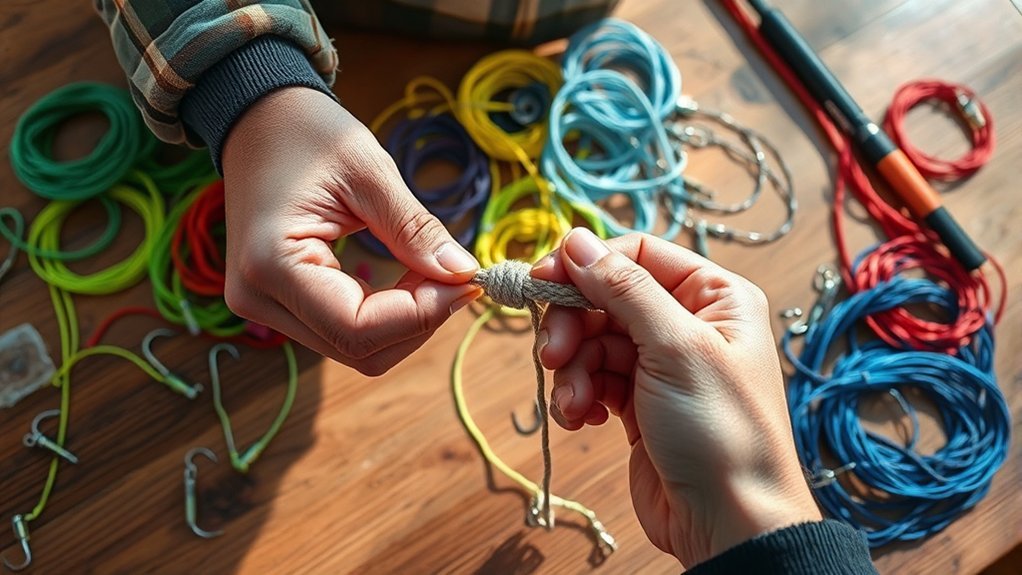
Mastering four essential knots can transform your fishing experience, especially for beginners. These knots are fundamental tools that can enhance your success on the water. Here’s a quick overview of the knots you should focus on:
- Palomar Knot: A popular, beginner-friendly knot that works well for securing hooks, swivels, and many lures, especially with braided line.
- Rapala Knot: A loop knot designed for attaching lures while allowing more natural lure movement in the water.
- Uni Knot: A versatile knot effective for monofilament, fluorocarbon, braided line, and terminal tackle, making it useful for attaching line to a reel or hook.
- Surgeons Knot: Also known as the double surgeons knot, it is a simple method for joining lines of different weights with two overhand passes.
You do not need to learn every fishing knot at once. Start with one knot for hooks, one knot for lures, and one knot for joining lines. Once those feel natural, add more specialized knots for specific rigs, leaders, and fishing styles.
Step-by-Step Guide to Tying Knots

Tying fishing knots correctly is essential for ensuring your tackle performs effectively on the water. Work slowly at first. A neat knot with smooth wraps is usually stronger than a rushed knot with crossed or bunched-up line.
Start with the Improved Clinch Knot. Run the line through the hook eye, wrap the tag end around the standing line 5 to 7 times, and pass it back through the small loop near the hook eye. Then pass it through the larger loop you just created. Moisten the line, pull the standing line to tighten, and trim the tag end.
For a strong lure attachment, try the non-slip loop knot. Create a loose overhand knot in the line, pass the tag end through the lure eye, and bring it back through the overhand knot. Wrap the tag end around the standing line several times, then pass it back through the overhand knot. Tighten slowly so the finished loop remains small and clean.
The double surgeons knot is useful for joining lines of different weights. Overlap the two lines, form a loop with both strands, and pass the lines through the loop twice. Moisten the knot and pull all four line ends evenly until the knot seats firmly.
Finally, consider the Palomar Knot for braided lines. Double the line, pass the loop through the hook eye, tie a loose overhand knot, and pass the loop over the hook or lure. Moisten the knot, pull both the standing line and tag end evenly, and trim the excess. Each of these knots serves a distinct purpose and improves your fishing setup when tied correctly.
Pro Tip: Practice with thick cord at home before using thin fishing line. Larger material makes each wrap easier to see, so your hands learn the pattern faster.
Joining Lines Effectively
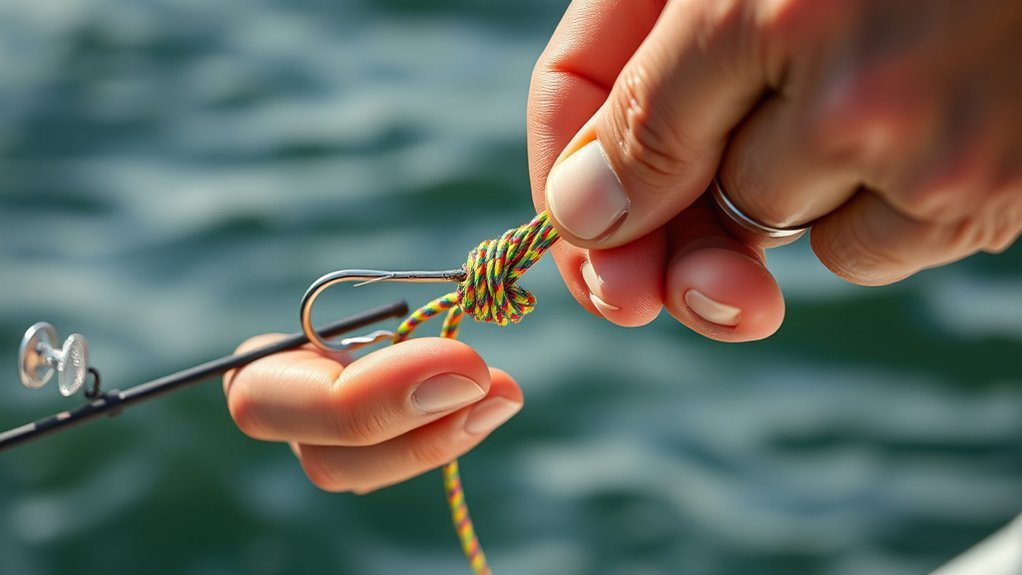
When you want to join lines effectively, selecting the right knot is crucial for maintaining strength and reliability. Line-joining knots matter when you add a leader, repair a break, connect backing, or combine lines with different diameters.
- Surgeons Knot: Ideal for similar or slightly different line weights, it uses two overhand passes for a secure connection.
- Albright Knot: Useful for joining monofilament or fluorocarbon to braided fishing line, especially when the lines have different diameters.
- Slim Beauty Knot: Best for connecting small braided lines to larger leaders or tippets, known for its strength and compact profile.
- Uni Knot: A versatile option for various fishing scenarios, easily adaptable for different line types and terminal tackle connections.
Avoid relying on the Blood Knot for connecting monofilament to braided lines because it can be less dependable when the line materials and diameters differ. For best results, make sure the tag end around each line is snug and secure, especially when forming a double line. Choosing the right knot can notably improve your fishing experience and help prevent breakages.
Which Knot Should You Use?
The right knot depends on what you are tying and what type of line you use. A simple hook connection does not need the same knot as a braided line to fluorocarbon leader connection. Use the guide below as a practical starting point.
- For hooks and swivels: Use the Palomar Knot, Improved Clinch Knot, or Uni Knot.
- For lures that need movement: Use the Rapala Knot or another non-slip loop knot.
- For braid to mono or fluorocarbon: Use the Albright Knot or a carefully tied double Uni Knot.
- For quick line repairs: Use the Surgeons Knot when the line sizes are close enough.
- For tying line to a reel spool: Use the Arbor Knot or Uni Knot.
Note: No single knot is best for every situation. Match the knot to your line type, hook eye size, lure action, and the strength of the fish you plan to target.
Common Knot-Tying Mistakes to Avoid
Many beginners lose fish because of small knot mistakes, not because they picked the wrong rod or lure. The good news is that these problems are easy to fix with practice and a quick inspection before every cast.
- Forgetting to moisten the knot: Dry line creates friction and can weaken as you tighten it.
- Leaving crossed wraps: Crossed or overlapping wraps can cut into the line under pressure.
- Trimming the tag end too short: Leave a small tag end so the knot has room to settle under strain.
- Using the wrong knot for the line: Some knots work better with braid, while others suit monofilament or fluorocarbon.
- Skipping the pull test: Gently pull the knot before fishing to make sure it seats properly.
Exploring Similar Knots
While exploring similar knots, you’ll find several options that can effectively attach your line to hooks or swivels. The Improved Clinch, Orvis, San Diego Jam, Trilene, and Uni Knot are all solid choices, each with unique strengths.
To tie the Improved Clinch, pass the end of your main line through the hook eye, wrap it around the standing line, and then bring the end through the loop created near the hook. As you pull to tighten the knot, make sure it is secure to prevent slippage.
For braided line attachments, the Palomar and Rapala knots are useful options. With the Palomar, you double the line, pass it through the hook eye, tie an overhand knot, and pass the loop over the hook. With the Rapala Knot, you create a small loop so the lure can move more freely.
Each knot serves a distinct purpose, so mastering at least one from each category will enhance your versatility on the water. By practicing these knots, you’ll increase efficiency and tie them quickly when it matters most.
Engaging With the Fishing Community
Engaging with the fishing community is essential for honing your knot-tying skills and refining your techniques. By sharing your favorite knots and fishing strategies in forums or local meetups, you contribute to collective knowledge and gain insights from more experienced anglers. This interaction fosters a supportive environment where you can learn and improve your fishing abilities effectively.
Share Your Knots
Sharing your knot-tying experiences with the fishing community not only sharpens your skills but also fosters a collaborative spirit among anglers. By engaging with fellow enthusiasts, you can enhance your techniques, especially for knots like the Palomar and Uni Knot. Consider these ways to connect:
- Participate in forums or social media groups to share photos and videos.
- Discuss preferred knots for specific conditions, improving your catch rates.
- Host local knot-tying workshops or online challenges to build community.
- Share personal success stories related to knot performance, inspiring others.
You can also ask other anglers to check your knots in person. A small correction in wrap placement, tag-end length, or tightening method can make a big difference.
Favorite Fishing Techniques
As you connect with fellow anglers, understanding their favorite fishing techniques can greatly enhance your own strategy on the water. Engaging in discussions about specific knots, like the Palomar or Uni Knot for securing lures effectively, can reveal invaluable insights.
Don’t hesitate to share your experiences with different types of fishing, whether it’s fly fishing or baitcasting, as this fosters camaraderie. Online forums and social media groups are excellent platforms for exchanging tips on knot tying and tackle setups. Attending local meetups or tournaments can expose you to popular techniques and new knot variations. Always ask for feedback on your methods and the knots you use; this refinement will boost your overall fishing success.
Frequently Asked Questions
How do you tie a good fishing knot for beginners?
Start with the Palomar Knot because it is simple and strong. Double the line, pass it through the hook eye, tie a loose overhand knot, pass the loop over the hook, moisten the line, and pull both ends tight. Trim the tag end after the knot seats cleanly.
What are the 4 knots everyone should know?
The four fishing knots beginners should know are the Palomar Knot, Rapala Knot, Uni Knot, and Surgeons Knot. Together, they help you secure hooks, attach lures, connect lines, and handle many common freshwater and saltwater fishing situations.
What are the 7 basic knots in scouting?
Seven common scouting knots include the Square Knot, Bowline, Clove Hitch, Taut-Line Hitch, Sheet Bend, Fisherman’s Knot, and Figure Eight Knot. These knots help with securing, joining, adjusting, and stopping rope in outdoor settings.
How do you do a Fisherman’s Knot for beginners?
To tie a Fisherman’s Knot, overlap the two line ends. Wrap one tag end around the opposite line several times, then pass it through the loop and tighten. Repeat with the other tag end. Moisten both knots and pull the standing lines so the knots slide together.
What is the easiest fishing knot to learn first?
The Palomar Knot is one of the easiest fishing knots to learn first. It has only a few steps, works well with many hooks and lures, and gives beginners a reliable connection when tied neatly.
Should you wet fishing line before tightening a knot?
Yes. Wetting the line before tightening helps reduce friction and heat as the knot cinches down. This makes the knot seat more smoothly and helps protect the line from damage.
Conclusion
Mastering fishing knots is like adding a trusty tool to your tackle box; it gives you confidence when the next bite comes. By learning essential knots like the Palomar, Uni, Improved Clinch, Rapala, and Surgeons Knot, you are not just tying line. You are building stronger connections between your gear and the fish you want to land.
Grab a short piece of line, practice at home, and test each knot before you fish. With steady practice, clean wraps, and smart knot choices, your strong connections will help you spend less time retying and more time reeling in fish.