
There is no single rule that says ice anglers should stand on shoveled snow, packed snow, or bare ice. The best setup depends on the shelter, snow depth, temperature, and surface conditions. Some anglers clear loose snow, some pack a thin layer, and others use foam flooring. The important part is to verify safe ice first, then create a dry, stable work area without treating a dry-looking spot as proof that the ice is strong.
Quick Answer
Ice anglers commonly clear loose snow from the immediate fishing area, pack snow around a shelter skirt, or place water-resistant foam mats over verified safe ice. Avoid widespread slushy or dark areas, keep gear back while drilling, and never assume that a dry or raised-looking patch of ice is automatically safer.
Key Takeaways
- Verify ice conditions before worrying about whether the fishing area is dry; no lake ice is guaranteed safe.
- Treat widespread pre-existing slush, dark ice, cracks, pressure ridges, and water on the surface as warning signs that deserve extra caution.
- Keep mats, tackle, and other gear away from the hole until drilling is complete, then skim displaced ice and slush before arranging the area.
- Closed-cell foam floor tiles can insulate feet and create a water-resistant barrier, but they do not make questionable ice safer.
- If snow is packed around an ice-shelter skirt to reduce drafts, keep every ventilation opening clear, especially when using a fuel-burning heater.
At a Glance
| Time Required | About 10–20 minutes to clear and organize a fishing area after reaching a location where ice conditions have already been checked |
| Difficulty | Easy for snow clearing; judging ice conditions requires experience, repeated checks, and local knowledge |
| Tools Needed | Auger, ice skimmer, shovel or scoop, traction cleats, ice picks, ice chisel or spud bar, and a charged phone; foam floor tiles are optional |
| Cost | No additional cost if basic ice-fishing equipment is already owned; shelter flooring and other comfort accessories are optional |
How to Deal With Slush on Ice
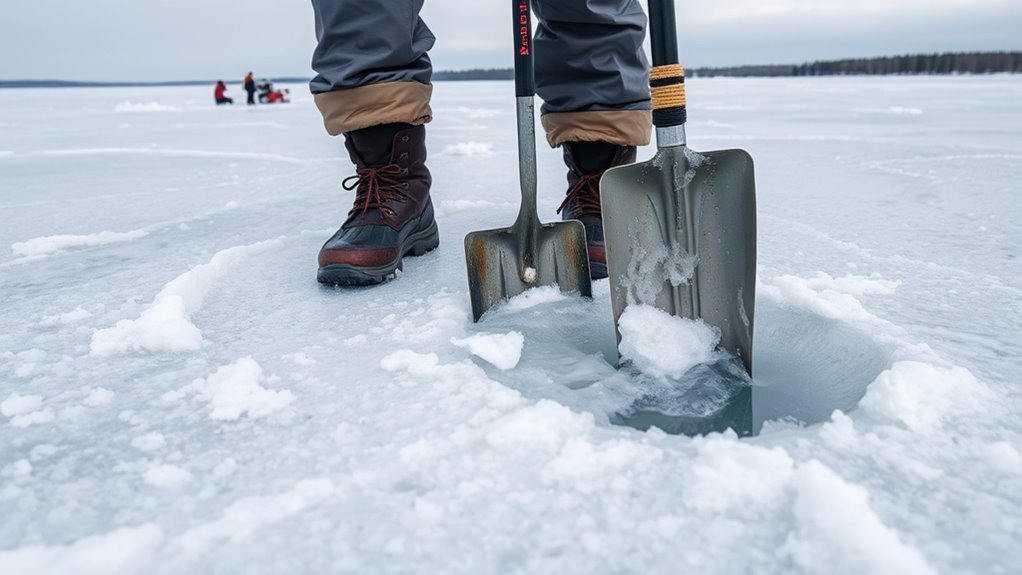
Slush deserves more attention than simply finding a way to keep your boots dry. A small amount of wet ice and water can appear immediately around a newly drilled hole, but widespread slush that was already present before drilling may indicate deteriorated or inconsistent ice conditions.
North Dakota Game and Fish advises anglers to be cautious around slushy or darker areas and notes that snow can hide cracks, weak ice, and open water. Snow also acts as insulation, which can slow the formation of strong, clear ice.
Warning: A dry-looking patch is not proof of safe ice. Ice thickness and strength can change over a very short distance. Check conditions repeatedly as you travel, and leave the ice if you encounter questionable areas, open water, significant cracking, widespread slush, or rapidly deteriorating conditions.
Once you have selected a location where the ice has been properly checked, clear only as much loose snow as needed for footing, shelter placement, and access to the hole. Keep tackle, mats, electronics, and loose gear several feet from the auger until drilling is finished. After breakthrough, use an ice skimmer to remove loose chips and wet slush from the hole area.
If the surface becomes wetter during the session, do not keep moving simply to find a visually higher patch and assume it is stronger. Recheck the ice and reassess the route back to shore. Dryness is a comfort issue; verified ice condition is the safety issue.
[Amazon Products Picked for You]

Toothed Iron Scoop Design: The toothed edge breaks and knocks ice easily. Portable ice fishing scoop clears ice quickly from fishing holes. Portable ice fishing skimmer removes ice chunks with each scoop. Ice scooper provides efficient ice removal for winter fishing. The toothed design makes breaking ice simple and quick. You can clear your fishing hole in seconds. The durable iron scoop handles tough ice conditions. This reliable tool makes ice fishing preparation effortless

Fit for 8″ & 10″ Ice Holes: The Ice Fishing Scoop clears slush quickly from 8″ and 10″ auger holes, helping you maintain a clean fishing hole in seconds.

360° Adjustable Head: Our ice fishing scoop features a spoon that rotates a full 360 degrees, offering maximum flexibility to easily clear slush from any angle. Effortlessly adapt whether sitting or standing for a smoother ice fishing experience.
Check Ice Safety Before Clearing Snow
The Minnesota Department of Natural Resources stresses that there is no such thing as completely safe ice. Ice strength depends on more than thickness, including age, snow cover, currents, water depth, temperature, and local conditions.
A commonly published guideline is that about 4 inches of new, clear ice may support one person traveling on foot, but this is a guideline rather than a guarantee. Old, white, snow-covered, thawed, refrozen, or honeycombed ice can be substantially weaker. Continue checking conditions instead of relying on one measurement near shore.
- Carry ice picks where they can be reached immediately.
- Use an ice chisel or test holes to check changing conditions as you move.
- Wear traction cleats on slick bare ice.
- Consider a flotation suit or appropriate life jacket for added protection.
- Carry a charged phone in a protected location.
- Tell someone where you are going and when you expect to return.
- Avoid currents, inlets, outlets, narrows, pressure ridges, and visibly deteriorated ice.
- Do not assume that vehicle tracks, plowed routes, or previous foot traffic prove the ice is safe.
Note: Fresh slush created when an auger breaks through is different from a broad slushy area that existed before you drilled. The first is mainly a housekeeping problem; the second can be a warning that conditions require closer evaluation.
Why Anglers Kick Snow to the Apron
Some anglers move loose snow toward the edge of a shelter or the cleared working area. Around a portable shelter, snow can be lightly packed along the outside skirt to reduce drafts and help seal gaps between the fabric and ice.
In this article, the word apron refers to the cleared or packed working area around a fishing hole or the skirt area around a shelter. It is a setup term, not an ice-safety measurement.
Wind Block Benefits
Loose snow placed along the outside edge of a shelter can reduce the amount of wind blowing underneath the shelter skirt. This can improve comfort and reduce drafts without requiring anglers to clear a large area down to bare ice.
Do not pile snow where it blocks a door, emergency exit, manufacturer-designed vent, or heater ventilation opening. Snow that drifts during the day can also cover openings that were clear when the shelter was first set up.
Apron Insulation Layer
A thin packed layer of snow can provide some insulation between bare ice and the shelter area, while snow around the outside skirt can help reduce air movement. Whether to leave, pack, or remove snow depends on surface conditions and the shelter design.
| Setup Choice | Potential Benefit | Important Limitation |
|---|---|---|
| Clear loose snow | Creates a flatter work area and exposes the surface for inspection | Bare ice can be slippery and may become wet inside a heated shelter |
| Pack a thin snow layer | Can smooth minor irregularities and provide some insulation | Snow can conceal hazards and should not replace inspection |
| Bank snow around a shelter skirt | Reduces drafts around the shelter edge | Never block ventilation openings |
Easier Floor Setup
Before installing foam tiles or another portable floor, remove large chunks of snow and ice that would make the surface uneven. A relatively flat base helps interlocking tiles remain seated and reduces tripping hazards around chairs, electronics, and fishing holes.
If some packed snow is left beneath the floor, keep the layer even. Avoid placing flooring over unknown holes, large cracks, pressure ridges, or suspiciously dark or slushy areas merely to hide them.
Pro Tip: Clear and drill the fishing holes before placing most floor tiles. That keeps auger chips and drilling slush off the flooring and makes it easier to arrange tiles safely around the finished holes.
How Floor Mats Improve Ice Fishing
Floor mats can make a long ice-fishing session more comfortable by separating boots and gear from direct contact with the ice. Purpose-built products commonly use closed-cell foam that provides an insulating, water-resistant barrier. For example, Eskimo’s shelter floor tiles use rigid closed-cell foam designed to keep anglers off the ice while allowing openings for fishing holes.
| Benefit | What It Does |
|---|---|
| Insulation | Reduces direct heat transfer between boots or gear and the ice |
| Comfort | Adds cushioning during long periods of standing or kneeling |
| Traction | Can provide a less slippery standing surface when designed for shelter use |
| Moisture control | Creates a water-resistant barrier rather than absorbing wet slush |
| Organization | Provides a defined dry area for tackle, electronics, and other gear |
Flooring is a comfort accessory, not a substitute for ice inspection. If water starts appearing across a larger area or conditions are deteriorating, covering the surface with mats does not solve the underlying safety concern.
[Amazon Products Picked for You]
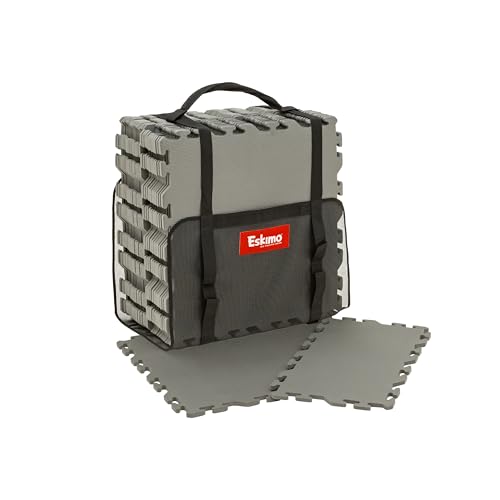
CLOSED CELL FOAM TILES – Sturdy, rigid foam provides a thick insulating barrier against the ice without sacrificing traction.

CLOSED CELL FOAM TILES – Sturdy, rigid foam provides a thick insulating barrier against the ice without sacrificing traction.

CLOSED CELL FOAM TILES – Sturdy, rigid foam provides a thick insulating barrier against the ice without sacrificing traction.
Where to Drill to Avoid Slush
Choose a drilling location only after the route and ice have been checked. Avoid broad slushy or dark patches, cracks, pressure ridges, areas near moving water, and other locations where ice quality is questionable.
A dry-looking fishing spot may be convenient, but it is not evidence that the ice beneath it is stronger.
- Check ice conditions as you travel instead of relying on one shoreline measurement.
- Stay away from inlets, outlets, narrows, springs, and other areas affected by moving water.
- Avoid widespread slush or dark ice until conditions have been properly evaluated.
- Leave enough open space around each hole to move safely without stepping into it.
- Keep loose equipment out of the auger’s working area.
- Recheck conditions after substantial warming, rain, drifting snow, or other weather changes.
If you are using a shelter, holes may be drilled inside it or through openings in a shelter floor when the equipment is designed for that purpose. There is no general requirement to keep every fishing hole away from the shelter.
How to Drill for a Dry Setup
A drier setup comes from controlling loose snow and drilling debris rather than trying to force water to “drain” across the ice. The simplest sequence is to verify the location, prepare a small work area, drill the hole, skim away loose ice, and then arrange the shelter and floor.
[Amazon Products Picked for You]

Size for Targeted Protection: with dimensions of about 16 x 24 inches, the ice fishing tent mat offers an appropriately sized surface to cover the high-traffic area inside your shelter's entrance; It's ideal for use inside or outside a tent, or as a convenient outdoor mat for any activity, enriching your winter fun
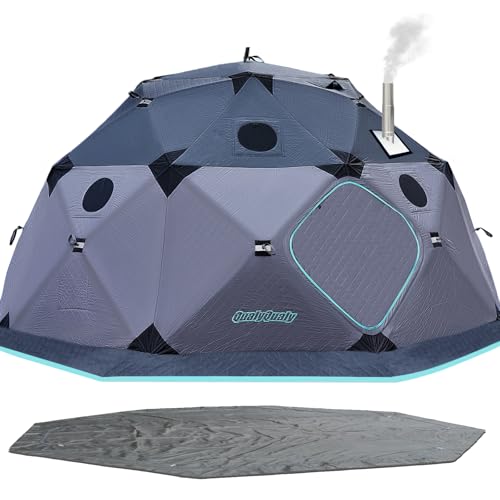
8-10 Person Pop-up Ice Fishing Tent: The size of our fishing tent is 157 x 169 x 86 inch (400 x 430 x 220 cm), with an fishing area of 147 square feet, which is much more roomy than other tents and allows for 8-10 people to fish in it! With a convenient pop-up design, weighing 72 pounds can be easily set up and taken down by one person. Products include: ice anchors * 10, fixing rope * 8, portable fishing shelter storage bag * 1.

60-SECOND SET-UP: Hub design makes set-up and take-down quick and easy. Shelter fits 3 people with a set-up size of 5.8ft L x 5.8ft W x 6.7ft H, with extra elbow room measuring 7.5ft x 7.5ft
Choose Sound, Drier Ice—Not Just “Higher” Ice
A slightly raised or drier-looking patch can be more comfortable to work on, but appearance alone should never determine where you fish. The safer choice is ice that has been checked repeatedly and does not show warning signs such as broad slush, dark patches, open water, pressure cracks, or obvious deterioration.
- Confirm the route onto the lake before hauling heavy gear.
- Check ice conditions frequently as you move.
- Clear enough snow to inspect and work around the fishing area.
- Keep walking and equipment paths free of open holes and loose auger chips.
Avoid Slush Zones
Do not treat a large pre-existing slush field as merely a spot where boots might get wet. Slush, dark areas, or water on top of the ice can accompany weakened or inconsistent conditions. If you cannot confidently assess the ice, relocate or return to shore rather than attempting to create a dry platform over it.
Well-traveled routes and plowed lake roads also require normal ice-safety checks. The fact that other people or vehicles have crossed an area does not guarantee that the same route remains safe later in the day or after changing weather.
Drill, Then Step Clear and Skim the Hole
Keep floor mats, tackle bags, and electronics back while operating the auger. When the auger breaks through, some water and ice chips may rise around the opening. Withdraw the auger carefully, shut it down according to its instructions, and step to a safe position where you can see the completed hole.
- Keep bystanders outside the auger’s operating area.
- Drill only after checking the ice at the location.
- Remove loose chips and drilling slush with an ice skimmer.
- Place mats and gear only after the immediate hole area is organized.
- Maintain a clear path between the fishing area and the shelter exit.
Stepping clear protects boots and equipment from the initial wet mess; it does not cause the ice to drain. Water appearing repeatedly across the surrounding surface should prompt another assessment of conditions.
Keep Heated Ice Shelters Ventilated
If a fuel-burning heater is used, keeping the shelter dry is only one concern. Carbon monoxide is colorless and odorless and can accumulate inside an inadequately ventilated shelter.
The Minnesota DNR’s carbon-monoxide guidance for ice shelters recommends keeping vents clear, following heater instructions, using heaters approved for the intended environment, and having a working carbon-monoxide detector.
Warning: Do not bank snow over shelter vents. If anyone develops headache, dizziness, nausea, unusual fatigue, shortness of breath, or confusion while a heater is operating, get everyone into fresh air immediately and seek emergency help when appropriate.
Snow can drift after the shelter has been set up, so check ventilation openings throughout the session rather than only when the heater is first turned on.
How Weather Affects Slush and Access
Weather can change both the surface and the strength of lake ice. Fresh snow may insulate the ice and hide cracks or weak areas, while warming periods, rain, repeated thaw-and-freeze cycles, and moving water can produce highly variable conditions.
Heavy or drifting snow also makes travel slower and can hide fishing holes, pressure ridges, and changes in the ice surface. A route that was easy to cross earlier may become much harder to evaluate after new snow or deteriorating visibility.
When weather changes the ice faster than you can confidently evaluate it, the safer response is to end or relocate the trip rather than fight through worsening slush.
Check the forecast before leaving home, ask local authorities or experienced local operators about recent conditions, and continue observing the ice after arrival. Never rely exclusively on yesterday’s report because conditions can vary from one part of a lake to another and can change with weather.
Frequently Asked Questions
What Is the 80/20 Rule in Fishing?
The 80/20 rule is an informal application of the Pareto principle: anglers often use it to describe the idea that a relatively small number of productive locations or techniques may account for a large share of their catches. It is a fishing heuristic, not a scientific law or regulation, so the exact 80/20 split should not be taken literally.
Should a 70 Year Old Man Shovel Snow?
Age alone does not determine whether someone can shovel snow safely, but heavy shoveling in cold weather can place substantial stress on the cardiovascular system. The American Heart Association urges particular caution for people with heart disease, previous heart attack or stroke, high blood pressure, diabetes, high cholesterol, obesity, smoking history, poor conditioning, or other cardiovascular risks. Someone with relevant medical concerns should ask their clinician for individualized advice and should stop immediately if chest pressure, unusual shortness of breath, dizziness, or other concerning symptoms occur.
Are You Supposed to Be Quiet When Fishing?
It is sensible to avoid unnecessary stomping, banging, or dropping heavy objects on the ice, especially in shallow water, but there is no universal rule requiring complete silence. Fish responses to sound and vibration vary by species, depth, distance, and environmental conditions. Keeping noise reasonable also makes the experience more pleasant for nearby anglers.
When’s the Worst Time to Go Fishing?
There is no universal worst time for catching fish because activity varies by species, waterbody, season, weather, and food availability. For ice fishing, however, the wrong time to go from a safety standpoint is whenever ice conditions are questionable, during rapidly deteriorating weather, after significant thawing or rain without reliable local information, or when poor visibility prevents safe travel.
Does Slush Mean the Ice Is Unsafe?
Not every small patch of wet material has the same meaning. Slush created immediately around a drilled fishing hole can simply be displaced water and ice chips. Broad slushy or dark areas that were present before drilling deserve much more caution because official ice-safety guidance identifies them as possible signs of thinner or weaker conditions. When in doubt, move back toward verified ice or shore.
Should You Shovel All the Snow Out of an Ice Fishing Shelter?
Not necessarily. Some anglers clear to bare ice, while others leave a thin packed snow layer or install closed-cell foam flooring. Clear enough snow to inspect the surface and create stable footing, then choose the setup that works with the shelter. Never use snow or flooring to hide questionable ice, and keep heater ventilation openings clear.
Conclusion
Managing snow and slush while ice fishing is mainly about combining safe ice assessment with a clean, practical setup. Clear or pack only the snow needed for stable footing, keep equipment away while drilling, skim the hole before placing mats, and use water-resistant flooring when it improves comfort. Most importantly, do not mistake dry-looking ice for safe ice. Recheck changing conditions, avoid suspicious slush or dark areas, and keep heated shelters properly ventilated. A dry setup is useful, but a safe route onto and off the ice always comes first.
Sources
- Minnesota Department of Natural Resources — Ice Safety — ice variability, condition checks, and the principle that no ice is completely safe.
- North Dakota Game and Fish — Ice Safety — snow-covered ice, slush and dark-area warnings, test holes, and basic safety equipment.
- Minnesota Department of Natural Resources — Carbon Monoxide Poisoning in Ice Shelters — heater ventilation, CO detectors, vent clearance, and propane-heater precautions.
- American Heart Association — Snow Shoveling Can Be Hazardous to Your Heart — cardiovascular strain and risk factors associated with heavy snow removal.
- Eskimo Ice Fishing Gear — Floor Tile Pack — closed-cell foam flooring used as an insulating barrier between anglers and the ice.
