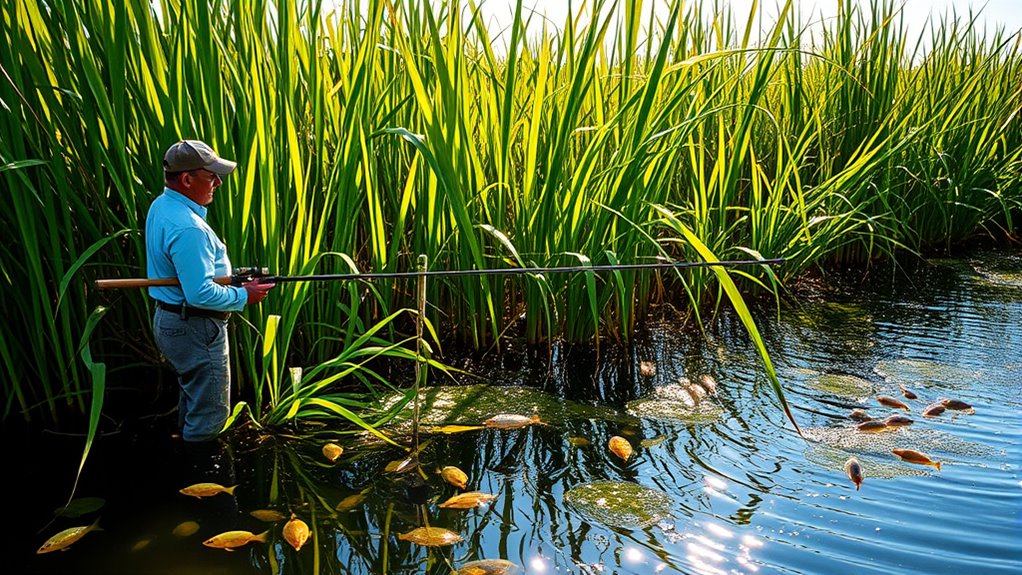
Weed bed fishing gives you one of the most reliable ways to target largemouth bass because healthy vegetation holds shade, oxygen, baitfish, bluegills, crayfish, and ambush cover. Instead of randomly casting into the thickest grass, focus on weed edges, holes, points, lanes, and hard-bottom spots inside the vegetation. Match your rig to the cover, keep steady contact with your bait, and watch for subtle line jumps that signal a bass has picked it up.
Quick Answer
To fish weed beds for largemouth bass, target inside and outside weed edges, pockets, points, and hard-bottom openings. Use Texas-rigged soft plastics, compact creature baits, jigs, swimbaits, frogs, or spinner-style rigs based on weed thickness. Keep your lure weedless, maintain line tension, and be ready for strikes as the bait falls or first lifts from the bottom.
Key Takeaways
- The best weed bed spots are edges, holes, lanes, points, shade pockets, and hard-bottom transitions near healthy vegetation.
- Texas rigs, punch rigs, compact creature baits, swim baits, jigs, and topwater frogs help you fish grass without constant snagging.
- Most bass bites in thick weeds feel light, so watch your line, keep steady contact, and check the bait during the first lift.
- Season, water clarity, weed density, wind, and forage should guide your lure size, weight, color, depth, and retrieve speed.
At a Glance
| Best Time | Late spring through fall, with strong action during summer shade periods and late-season weed die-off. |
| Difficulty | Moderate, because you must manage weeds, line tension, lure weight, and bite detection. |
| Core Gear | Medium-heavy to heavy rod, high-speed reel, 40 to 65 lb braid, weedless hooks, tungsten weights, jigs, soft plastics, and topwater options. |
| Best Targets | Largemouth bass around milfoil, hydrilla, coontail, cabbage, lily pads, and mixed vegetation. |
Understanding Weed Bed Composition

Weed beds are vibrant ecosystems, and understanding their composition is key to successful fishing. These underwater jungles may include milfoil, coontail, hydrilla, cabbage, eelgrass, lily pads, and other aquatic plants. Each plant type creates a different kind of cover, shade line, and ambush point for bass.
Largemouth bass often hunt along the edges of these weed beds, especially where the vegetation meets open water, hard bottom, deeper lanes, or scattered baitfish. Identifying the vegetation type can greatly improve your chances because not all grass holds fish the same way.
The density and structure of the weeds influence fish behavior. Bass often lurk near inside edges, outside edges, holes, clumps, and isolated points, waiting to ambush prey. Clean green vegetation usually fishes better than dead, slimy, decaying grass because it offers better cover and often attracts more forage.
The right knowledge about weed bed composition helps you locate bass and predict their movements. Instead of casting blindly, study where the grass changes height, thickness, color, or bottom composition. Those small changes often create the highest-percentage casts on the whole weed bed.
Note: Healthy weeds usually look green and firm. Dying vegetation often looks brown, slimy, or loose. Bass may still use nearby cover during a die-off, but they often slide toward cleaner weeds, hard spots, or deeper edges.
Effective Fishing Techniques for Weed Beds
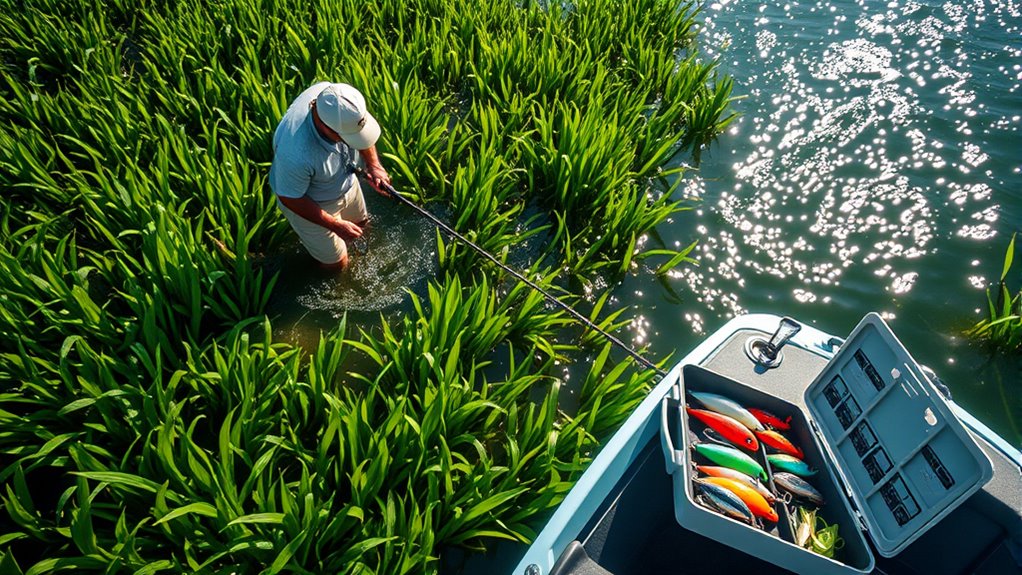
When fishing weed beds, targeting the edges can lead to some of your best catches. Bass use those edges as travel lanes, feeding stations, and shade lines. Start outside the grass, then work your way into pockets and thicker cover once you know where fish are positioned.
Use a spinner rig setup when you want to cover weed tops, weed edges, or mixed-species water with a steady presentation. For bass, weedless soft plastics, swim jigs, frogs, and punch rigs are usually stronger choices in heavy cover. For walleyes and other weed-oriented fish, spinner rigs can shine over the tops and edges of vegetation.
Targeting Weed Edges
How can you maximize your success while fishing near weed edges? Focus on casting along the inside edge and outside edge of the weed line, especially where the depth changes, the grass forms a point, or an opening breaks up the cover. In many lakes, largemouth bass use depths from about 5 to 15 feet, but the best depth depends on water clarity, weed growth, sunlight, and forage.
Use a flipping technique with compact creature baits and a punch rig when the vegetation is thick. A 1 to 2 oz tungsten weight can help the bait punch through mats, hydrilla, or milfoil. If the cover is moderate, start lighter so the bait falls naturally and does not bury too fast.
Pay close attention to your retrieval speed and line tension. Many strikes happen right after your lure settles or when you first lift it. Test different baits, including Texas-rigged soft plastics for inactive fish and swim baits for active fish cruising the edges. Observing fish behavior can greatly enhance your success.
| Technique | Bait Type | Ideal Depth (feet) |
|---|---|---|
| Flipping | Creature baits | 8 – 15 |
| Texas rigging | Soft plastics | 10 – 15 |
| Swimming | Swim baits | 5 – 10 |
Spinner Rig Setup
A well-constructed spinner rig can be a game changer for fishing over weed beds when you need flash, vibration, and a controlled path above the grass. This approach is especially useful for walleyes near weed tops, but it can also help you locate active fish along open lanes and edges.
Using a Lindy spinner, pre-tied and ready to go, minimizes tangles and simplifies your setup. Opt for a single hook Indiana spinner or a two-hook crawler harness to improve bait presentation with leeches or crawlers. The flash and vibration help fish find the bait around vegetation.
Cast about 20 yards to reach the weed edges, and maintain a speed around 1.5 mph when trolling or slowly moving a spinner rig. Aim to fish around five feet deep over ten feet of water when fish are holding near the tops of the weeds. Adjust that depth if the fish appear deeper, shallower, or tight to the grass.
Don’t worry about occasional ticks into the weeds. Light contact can make the bait look natural and may trigger a reaction strike. However, if the rig constantly fouls, shorten the line, raise the rod tip, reduce speed, or switch to a more weedless bass presentation.
Choosing the Right Baits for Largemouth Bass
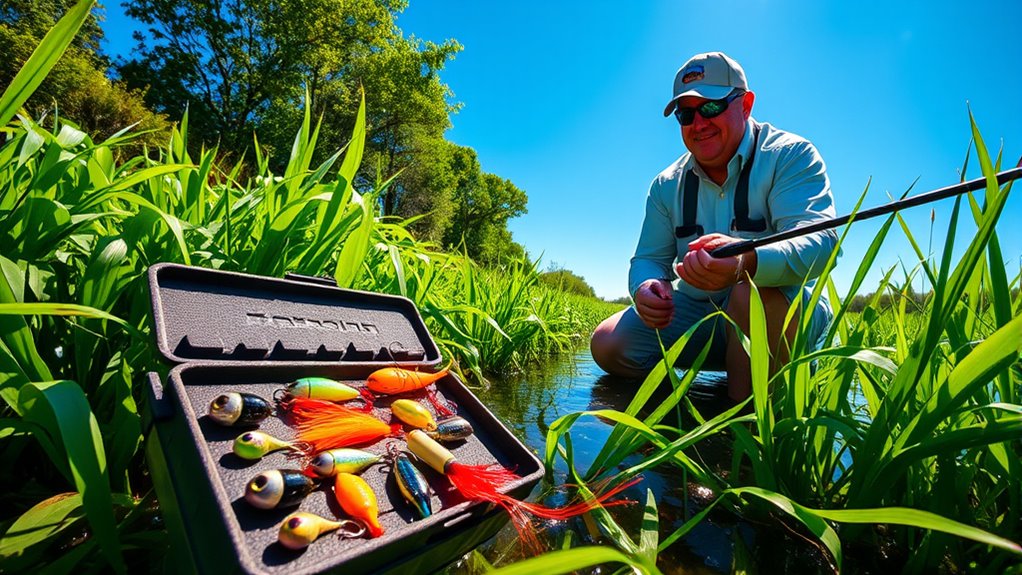
Choosing the right bait for largemouth bass can make all the difference in your fishing success, especially when targeting fish hiding among weeds. Start by reading the vegetation thickness, water clarity, weather, and bass activity level before choosing a lure.
In clear water, Texas-rigged soft plastics are a stealthy option for reaching inactive bass buried deep within cover. This technique lets you present your bait subtly and avoid spooking fish. Use natural colors when the water is clear and darker or brighter colors when the water is stained.
For bass cruising along the edges, the Eco Rig with a smaller profile can entice strikes without overwhelming them. Smaller presentations work well when bass are pressured, feeding on young bluegills, or following small perch and baitfish.
When conditions are right and fish are more active, swim baits shine because they mimic bluegills and other forage bass love to chase. Retrieve them along outside weed edges, through open lanes, and over submerged grass tops. A steady retrieve works, but a pause or slight speed change can trigger following fish.
If you notice surface-feeding bass in a positive mood, poppers can create the disturbance needed to draw them out. Frogs, buzzbaits, and weedless topwater lures also work well over mats, pads, and scattered surface grass.
Always consider the water clarity and select baits that match the bass’s behavior and mood. The best bait is not always the biggest or flashiest one. It is the bait that reaches the fish cleanly, looks natural in the cover, and lets you detect the bite.
Pro Tip: If your bait comes back covered in grass every cast, do not keep forcing it. Switch to a more weedless hook, peg the weight, lighten the rig, raise your rod tip, or fish the cleaner edge first.
Spinner Rig Setup for Weed Fishing
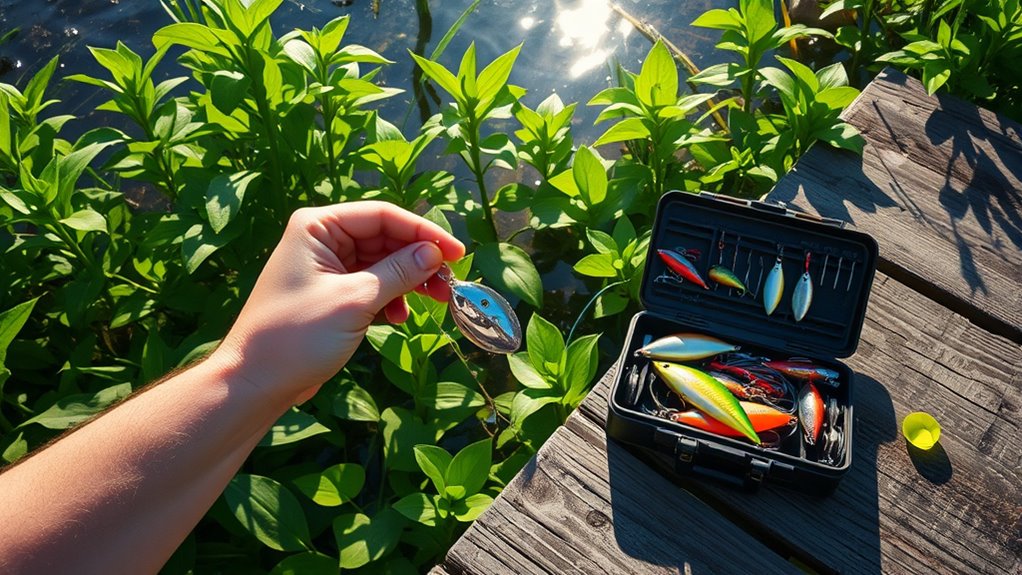
When setting up your spinner rig for weed fishing, choosing the right hook is essential for maximizing your catch and reducing snags. A single hook Indiana version paired with a leech minimizes exposed metal, while a two-hook crawler harness expands your bait options for fish feeding along weed tops.
Don’t forget to use a quarter-ounce sinker when conditions allow. It helps you cast effectively, control your depth, and keep the rig running near the weeds instead of digging into them. In thicker weeds or stronger wind, adjust weight carefully so the rig stays clean and natural.
Effective Hook Selection
While fishing in weed beds can be challenging, selecting the right hook is essential for success. A Lindy spinner rig simplifies your setup, allowing you to focus on boat speed, depth, and lure path. For effective use with a leech, opt for a single hook Indiana version to keep the hook less exposed and reduce tangles in vegetation.
If you’re looking to increase attraction with live bait, a two-hook crawler harness can help present a crawler naturally while adding flash and vibration. For bass-focused weed fishing, an offset hook with soft plastics or a weedguard-style jig usually gives you a cleaner presentation in heavy cover.
Here’s a quick reference table for your hook selection:
| Hook Type | Best Bait | Key Feature |
|---|---|---|
| Single Hook | Leeches | Less exposed |
| Two-Hook Harness | Crawler | Increased attraction |
| Indiana Spinner | Various | Versatile and effective |
| Treble Hook | Jigs | Better hold |
| Offset Hook | Soft Plastics | Weedless design |
Focus on a fishing speed of around 1.5 mph for spinner rigs when you need a steady moving presentation. If fish follow but do not strike, slow down, make a turn, or change blade size to alter vibration.
Optimal Sinker Weight
Finding the right sinker weight is essential for a successful spinner rig setup in weed bed fishing. A quarter-ounce sinker is often a good starting point because it gives you enough casting distance and depth control without constantly burying in weeds.
Using lighter sinker materials or lighter weights can reduce snagging in shallow grass while still maintaining contact with the water. Adjust your sinker weight based on water conditions and depth. Lighter weights work better in shallow areas, while heavier weights help when you need to stay down in wind, current, or deeper weed edges.
Consistently maintaining a speed around 1.5 mph keeps your spinner in the strike zone without excessive tangling. Don’t hesitate to experiment with different sinker weights because small changes can trigger strikes from fish in various weed bed environments.
Optimal Fishing Depth and Speed
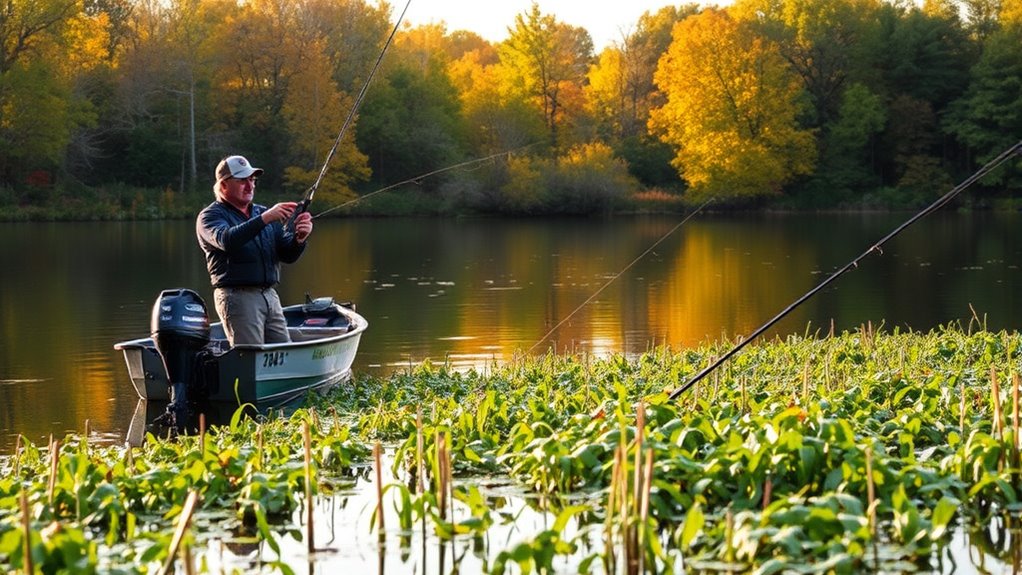
To effectively target fish in weed beds, start by finding the top of the vegetation and the nearest clean edge. In many situations, fish may feed around five feet down over deeper weeds, but that is not a fixed rule. Clear water, bright sun, baitfish position, and weed height all affect the best depth.
Adjusting your fishing gear for seasonal patterns and water temperature is essential. Warmer months often see fish lingering near the tops, shade pockets, and inside weed edges. During cooler periods, bass may slide to hard spots, deeper edges, or remaining green clumps.
Cast about 20 yards to reach weed edges with moving baits or spinner rigs, then vary your angle. Parallel casts keep your bait in the strike zone longer. Perpendicular casts help you find the exact depth or edge where fish are holding.
When using spinners, maintain a speed of about 1.5 mph as a starting point. This steady movement can entice strikes from nearby fish. With bass lures, match your speed to the bait: crawl a Texas rig, hop a jig, swim a swimbait steadily, or pause a frog over openings.
If you notice changes in fish behavior, don’t hesitate to tweak your technique. Consistent movement past the weeds can provoke curious fish into action, while a slow fall or dead-stick pause can tempt inactive bass buried in the cover.
Stay attuned to the conditions to improve your chances of a successful outing. Watch the water, check your lure after each cast, and adapt your approach when the weeds, wind, light, or baitfish activity changes.
Strategies for Triggering Strikes
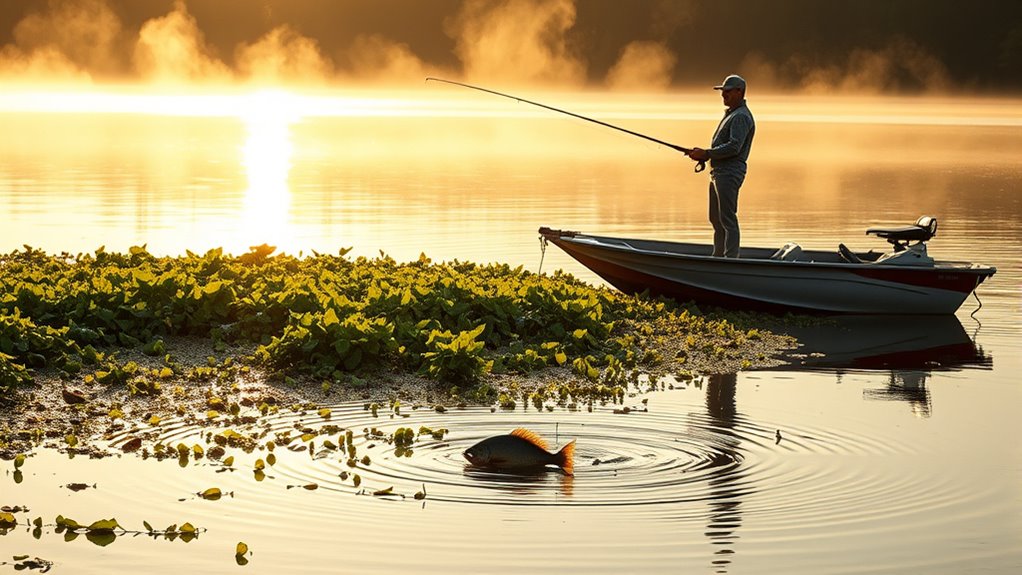
To trigger strikes effectively, focus on lure presentation, timing, and clean contact with the cover. Bass in weeds often do not chase far, so your bait needs to enter the strike zone without dragging a pile of grass behind it.
Try adjusting your techniques by incorporating a slower descent, short pauses, and subtle shakes to entice fish lurking in the weeds. In thick vegetation, one small movement can make the bait look alive without pulling it out of the strike zone too quickly.
Optimal Lure Presentation
While fishing in thick weeds can present challenges, mastering ideal lure presentation is key to triggering strikes. Start with a slower tumble presentation, allowing your compact creature bait to fall naturally through the vegetation.
Focus on the first lift after your lure settles. Many strikes happen right then, so keep an eye on your line for subtle bites. A sideways jump, sudden slack, or heavy feeling can all mean a bass has the bait.
Utilize 1 to 2 oz tungsten weights on punch rigs for better penetration when the cover is dense. If the vegetation is sparse or the bass are pressured, lighten the weight to create a slower, more natural fall.
Experiment with shaking techniques to create movement and attract fish. Don’t forget to adjust your lure color selection based on the environment and employ seasonal bait adjustments. Natural greens, browns, and bluegill tones often work in clear water, while black, blue, junebug, white, or chartreuse accents can help in stained water.
Timing of Strikes
Mastering the timing of strikes can greatly boost your success when fishing in weed beds. Most strikes happen during the fall, right after the lure settles, or during the first lift from the bottom. Be ready to check for bites immediately instead of waiting until the bait is already out of the best cover.
Utilizing a slower tumble through the weeds enhances bait movement and makes it more enticing to lurking fish. Jigs like the AT Grassmaster or Trashmaster are especially effective in dense vegetation because they can move through cover while keeping the hook protected.
| Strategy | Description |
|---|---|
| First Lift | Check for bites right after your lure settles. |
| Slow Tumble | Helps trigger strikes by mimicking natural movement. |
| Line Tension Monitoring | Feel subtle bites even with dense weeds. |
Adjusting Fishing Techniques
When fishing in weed beds, adjusting your techniques can considerably increase your chances of triggering strikes. Start by utilizing a flipping technique with heavy weights, around 1 to 2 oz, and compact creature baits to penetrate dense vegetation effectively.
Most bites occur right after the lure hits the bottom, so pay close attention during that initial lift. Instead of allowing your lure to drop too quickly every time, try a slower fall to entice lurking fish. A pegged weight helps the bait and sinker move together through the vegetation.
Use jigs like the AT Grassmaster or Trashmaster, and keep a close eye on line tension to detect those subtle strikes. Finally, experiment with weights, ideally no heavier than needed for the cover. Incorporate slight lure shaking to enhance the fall and prompt aggressive bites from bass.
Warning: Thick grass can hide stumps, rocks, shallow flats, and sudden depth changes. Move carefully, wear a life jacket when conditions call for it, and slow down when navigating unfamiliar weedy water.
Importance of Patience and Observation
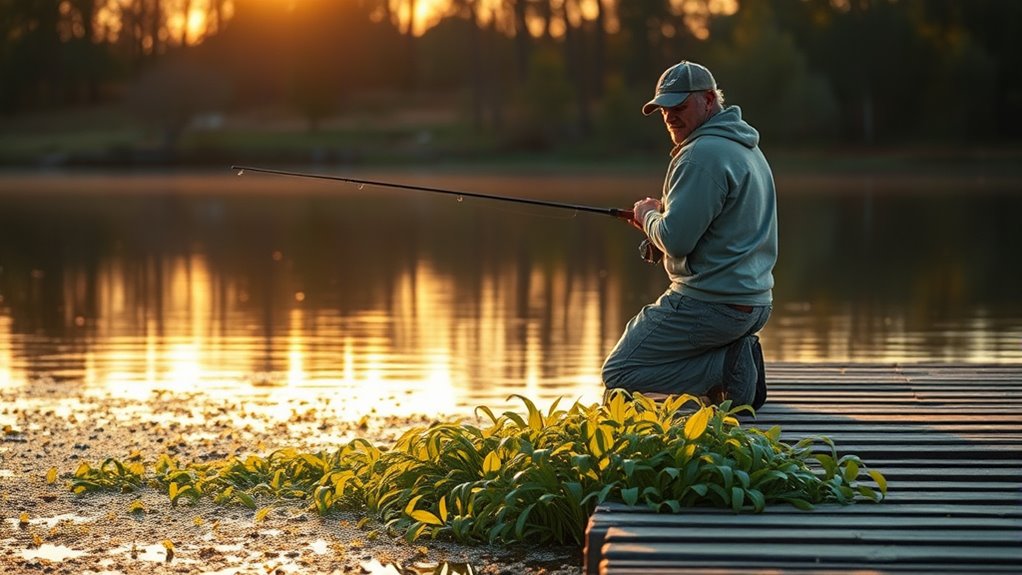
Patience and keen observation are your best allies in weed bed fishing, as success often hinges on how well you can read the water and adapt your approach. Bass may not strike every bait that enters the grass, but they often reveal patterns if you pay attention.
Fishing patience is essential because fish may take their time responding to lures, especially when they’re nestled deep within dense vegetation. By observing patterns in water conditions, sunlight, wind direction, bait movement, and weather changes, you can gain valuable insight into fish behavior.
Regularly checking for subtle line tension or movement can help you detect bites that might otherwise go unnoticed in weedy environments. Do not wait for a hard thump every time. Sometimes the bite feels like extra weight, a mushy pull, or a line that suddenly moves sideways.
Take the time to identify specific types of weeds and their edges, as bass often prefer these areas for shelter and feeding. If one grass type keeps producing bites, look for more of that same grass elsewhere on the lake.
Maintaining a consistent fishing rhythm and being willing to experiment with different baits will increase your chances of attracting fish, no matter their mood. Stay patient, observe, and adapt for the best results.
Tools and Equipment for Weed Fishing
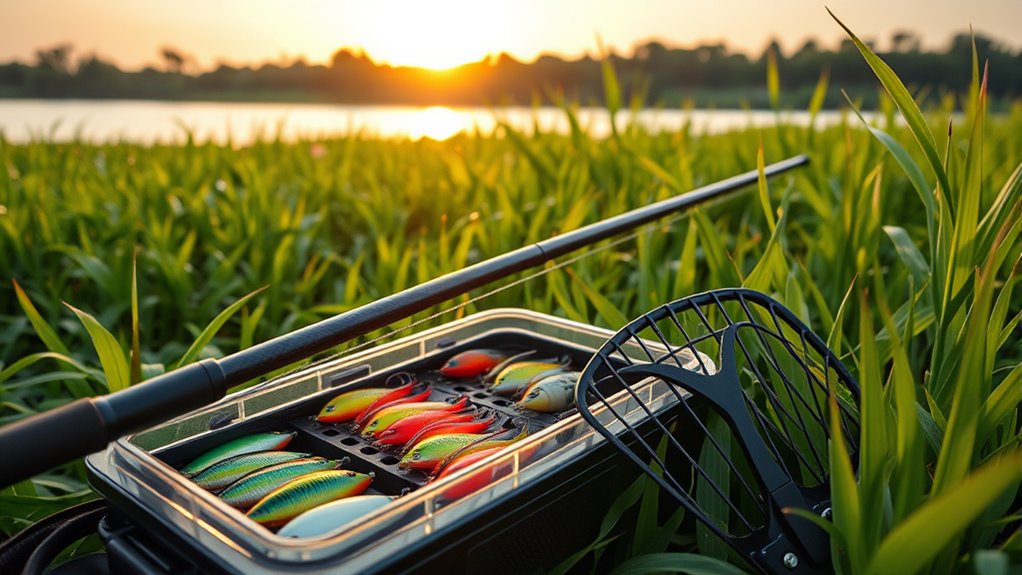
Equipping yourself with the right tools and equipment is essential for successful weed bed fishing. You need gear strong enough to pull fish from cover, sensitive enough to detect light bites, and balanced enough to cast accurately all day.
Here are some must-haves to enhance your experience:
- 50# braided line: This offers superior strength and cutting ability through dense weeds, helping your lure penetrate effectively while giving you power to pull bass from cover.
- Pegged 3/4 oz. bullet weight: This works well for flipping in hydrilla beds, maintaining control and reducing snags while allowing a smooth fall through vegetation.
- St. Croix Bass X series rods: These deliver quality performance at an entry-level price, making them a practical option for bottom fishing in weedy environments.
Implement line selection strategies to match your conditions. In sparse grass, 30 to 40 lb braid may be enough. In matted grass, pads, reeds, or heavy hydrilla, 50 to 65 lb braid gives you better control.
Don’t forget tackle maintenance tips to keep everything in top shape. Check your knot after pulling through weeds, inspect the first few feet of line for frays, sharpen or replace dull hooks, and clear vegetation from the bait after every cast.
For rod pairing advice, choose a rod that balances well with your setup to maximize casting efficiency. A medium-heavy rod works well for Texas rigs and swim jigs, while a heavy rod is better for punching, frogs, and thick mats. With the right gear, you’ll be well-equipped to tackle those challenging weed beds.
Seasonal Considerations for Targeting Bass
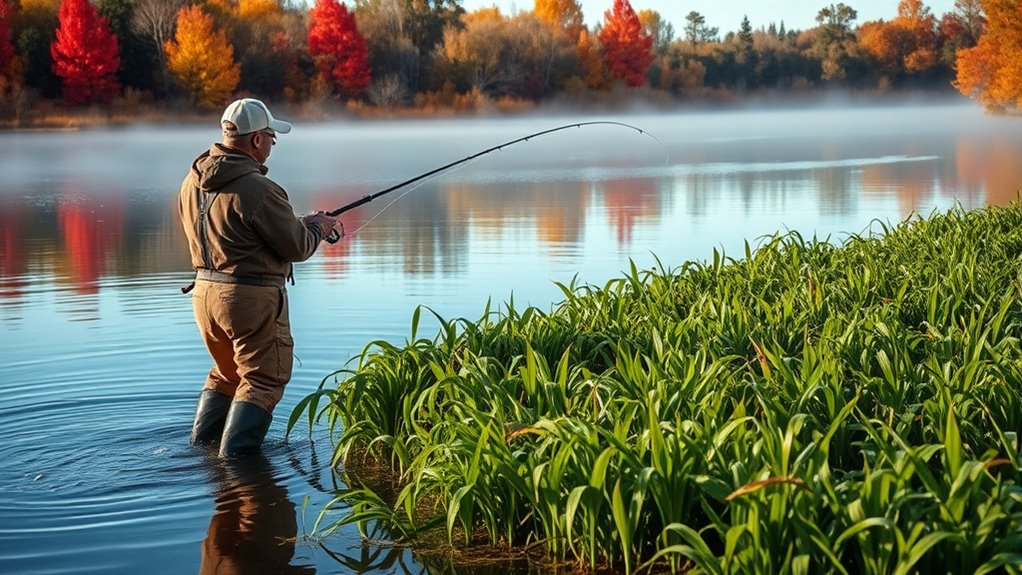
As you prepare for your weed bed fishing adventures, understanding seasonal considerations can greatly enhance your success in targeting bass. Weed growth changes throughout the year, and bass adjust with it.
In early spring, when water temperatures start to rise, bass become more accessible as weeds begin to grow. Focus on hard-bottom areas, emerging grass, and warmer pockets before the vegetation thickens. A Texas rig, swim jig, or suspending bait near early grass can work well.
As summer heats up, those weeds grow denser, so adapt your techniques to target the inside edges of weed lines where bass seek refuge. In bright sun, bass may bury deeper into shade. Early and late in the day, they may slide to the edges or top of the grass to feed.
Come October, during the late-season die-off, bass change behavior, moving toward hard spots in the weed beds, remaining green clumps, and deeper outside edges. Dying weeds can reduce cover quality, so look for the healthiest vegetation left in the area.
Monitor water temperature fluctuations, as they considerably impact fish activity levels. Adjust your bait types, retrieve speed, and depths accordingly. Additionally, keep an eye on seasonal patterns in forage availability, such as pumpkinseeds, bluegills, minnows, crayfish, and yellow perch, to diversify your bait selection and improve your chances of landing that prized catch.
Navigating Challenges in Weedy Environments
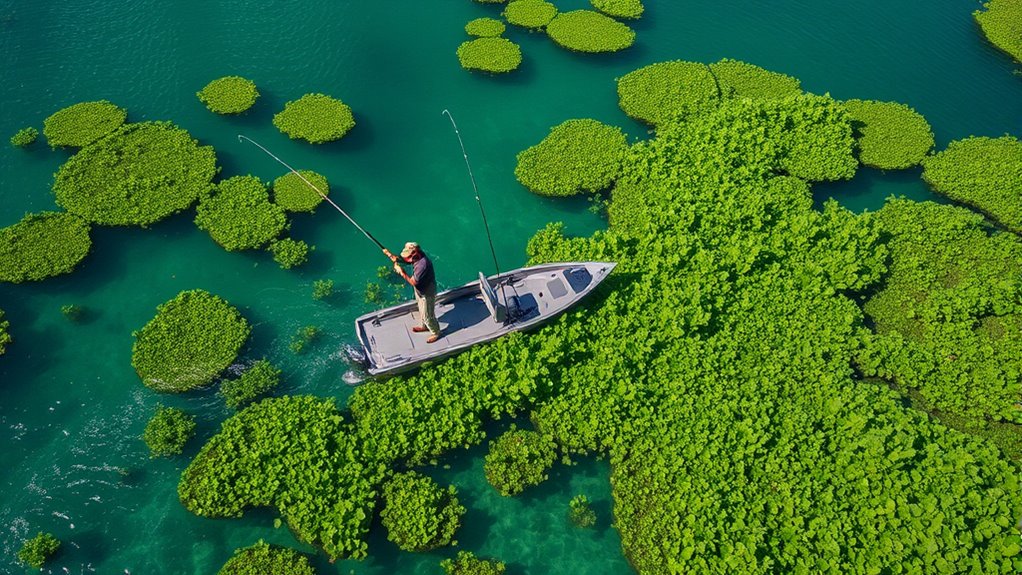
While fishing in weedy environments can present unique challenges, mastering the art of maneuvering through these tangled waters opens up a world of opportunities. The same cover that snags your lure also protects baitfish and gives bass a perfect ambush position.
To enhance your fishing success, keep these tips in mind:
- Identify weed types: Recognize which weeds attract fish and target those areas, as fish behavior often shifts with different vegetation.
- Maintain line tension: Be aware that dense vegetation can complicate bite detection, so stay patient and monitor your line tension closely to feel those subtle strikes.
- Use appropriate tackle: Opt for heavy line, like 50 to 65 lb braid, to cut through weeds and minimize snags, enhancing your overall effectiveness.
Also pay attention to casting angles. A lure that snags when pulled directly through grass may come through cleanly when worked parallel to the edge. If the weed bed has scattered holes, pitch to each opening and let the bait fall straight down before moving to the next target.
Wind can help or hurt you. A light wind may push baitfish into the grass and make bass feed more confidently. Strong wind can make boat control, casting accuracy, and bite detection harder. Use anchors, shallow-water poles, spot-lock features, or controlled drifts when needed.
How to Read the Best Weed Bed Spots
The best weed bed is rarely one solid wall of grass. Look for irregular features that break up the cover and create ambush points. Bass often favor places where two or more forms of cover meet, such as weeds plus rocks, weeds plus wood, or weeds plus a drop-off.
Start with the outside edge if you are new to the lake. This edge is easier to fish, easier to see on electronics, and often holds active bass. After you get bites, move into the inside edge, pockets, and holes to find less pressured fish.
Hard-bottom areas inside weed beds deserve extra attention. If your sinker suddenly feels cleaner, firmer, or more gravelly, slow down. Bass often use those hard spots for feeding and travel, especially during seasonal transitions.
Weed points can be excellent because they extend toward deeper water like underwater ambush ramps. Cast across the point from multiple angles before moving on. A single grass point may hold several bass if baitfish are nearby.
Common Weed Bed Fishing Mistakes
One common mistake is fishing only the thickest grass. Heavy vegetation can hold bass, but it can also waste time if your lure never reaches the fish. Start with edges, lanes, and holes, then move into the thickest cover once you know bass are using it.
Another mistake is using the same weight all day. A weight that works in sparse grass may fail in thick mats. A heavy punch weight may break through cover but look unnatural in open lanes. Match the weight to the weed density and the fall rate fish want.
Many anglers also set the hook too late. In weeds, a bass can grab the bait and move only a short distance before burying itself. When you feel weight, see the line jump, or notice sideways movement, reel down and set the hook with authority.
Finally, avoid ignoring your bait after each cast. A small strand of grass on the hook can ruin the action. Keep your bait clean, check your hook point, and make each cast count.
Frequently Asked Questions
What is the 80/20 rule in fishing?
The 80/20 rule in fishing means you often catch most of your fish from a small percentage of your spots. In weed bed fishing, that usually means focusing on the highest-value areas, such as weed points, clean edges, holes, hard-bottom patches, and places where baitfish are active.
What is the best bait for weed bed fishing?
The best bait for weed bed fishing depends on the cover. Texas-rigged soft plastics and compact creature baits work well in thick grass. Swimbaits and swim jigs are strong along edges. Frogs and poppers work over surface mats. Spinner rigs can help when fish are feeding above weed tops or along open lanes.
What is the best rig for fishing in weeds?
The best rig for fishing in weeds is usually a weedless Texas rig, punch rig, swim jig, frog, or weedless swimbait. A slip bobber can work for live bait over vegetation, but bass anglers usually rely on weedless hooks and pegged weights to move through cover without snagging.
How do you fish really weedy lakes?
Fish really weedy lakes by treating the grass like structure. Target edges, holes, lanes, points, and hard-bottom openings. Use braid, weedless rigs, pegged weights, and compact baits. Work slowly in thick cover, and switch to frogs, swimbaits, or spinner-style presentations when fish feed over the grass.
Should you fish the inside edge or outside edge of weeds first?
Start with the outside edge when you need to locate fish quickly because it is easier to fish and often holds active bass. Then check the inside edge, pockets, and holes if the fish are tucked deeper into cover or feeding closer to shallow water.
What line should you use for weed bed bass fishing?
For most weed bed bass fishing, use braided line because it cuts through vegetation and gives you strong hooksets. Many anglers use 40 to 65 lb braid, depending on weed thickness. In clearer water or sparse grass, you can add a fluorocarbon leader if needed.
Conclusion
As you cast your line into the tangled embrace of weed beds, remember that patience is your best ally. Each ripple tells a story, and every line jump could lead to the catch of a lifetime. By mastering weed composition, bait choice, lure weight, casting angles, and strike timing, you’ll navigate these green labyrinths like a seasoned angler.
Gear up, embrace the challenge, and let the thrill of the chase drive you. Focus on clean grass, edges, openings, hard spots, and subtle bite signals. The bass are waiting in the cover, so make every cast with purpose.
