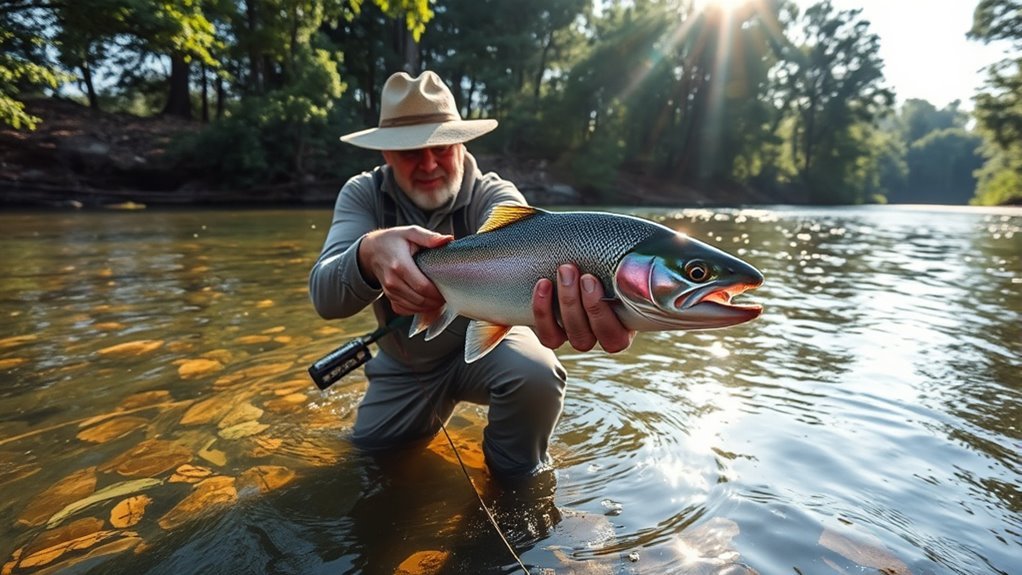
Catch and release fishing helps you enjoy the fight, photo, and memory of a fish without removing it from the waterway. Done well, it supports healthier fish populations, protects local ecosystems, and gives other anglers a better chance to enjoy the same fish later. The key is simple: use fish-friendly gear, land fish quickly, keep them wet, remove hooks carefully, and release them only when they can swim away strongly.
Quick Answer
Catch and release fishing means you return a fish to the water after catching it. For the best survival chance, use barbless or circle hooks, fight the fish quickly, keep it in the water, wet your hands before touching it, remove the hook gently, and release it once it can swim upright on its own.
Key Takeaways
- Catch and release works best when you plan ahead with the right hooks, net, pliers, and camera setup.
- Keep fish wet, supported, and calm. Avoid squeezing the belly, touching the gills, or dragging fish onto dry banks.
- Short air exposure matters. Remove the hook quickly and keep the fish in the water whenever possible.
- Warm water, deep hooking, long fights, and rough handling can reduce survival, so adjust your method when conditions are stressful.
- Always check local fishing regulations before you fish because some waters require release for certain species, sizes, or seasons.
At a Glance
| Time Required | A few minutes per fish, with most handling kept as short as possible |
| Difficulty | Easy to moderate, depending on fish size, hook placement, and water conditions |
| Tools Needed | Barbless or circle hooks, rubber or knotless net, long-nose pliers, line cutters, wet hands or gloves, and a camera ready before lifting the fish |
| Cost | Low if you already fish, though a fish-friendly net and hook tools are worth adding |
Understanding Catch and Release Fishing
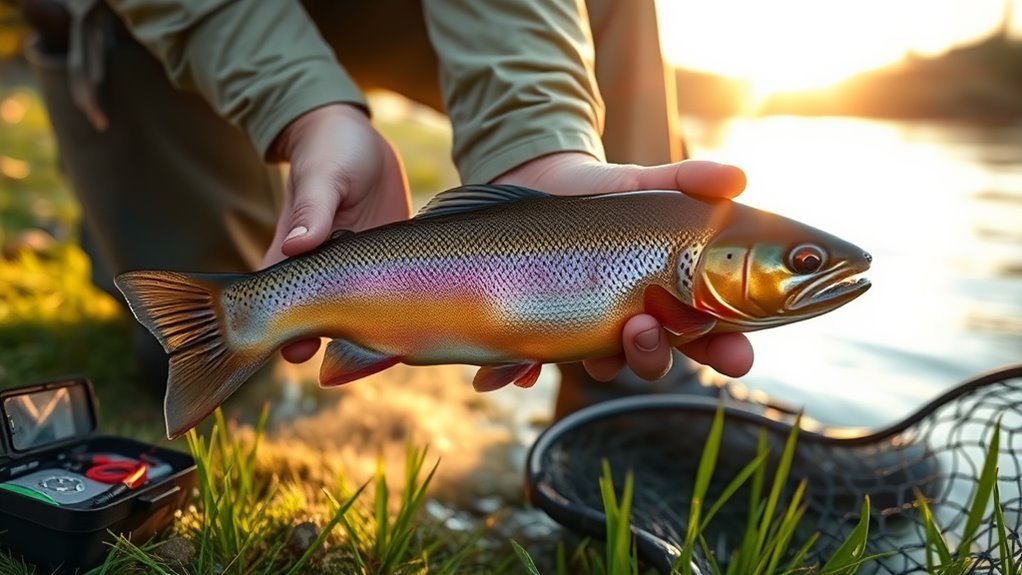
When you participate in catch and release fishing, you’re not just enjoying a day on the water. You’re also choosing a method that can support the health of aquatic ecosystems when you handle fish correctly. This practice involves returning caught fish back to their habitat instead of keeping them, which can help protect spawning fish, improve future fishing, and reduce unnecessary harvest.
Catch and release only helps when the fish survives after release, so your handling method matters as much as your decision to let it go.
By releasing fish, you help maintain the balance of native species and encourage breeding in their natural environments. This matters most in waters with heavy fishing pressure, slow-growing species, strict size limits, or fragile habitats.
To maximize the benefits of catch and release fishing, follow best practices before, during, and after the catch. Handle the fish gently, use barbless hooks when possible, land fish quickly, and minimize the time they’re out of the water.
These techniques can improve survival rates and reduce stress, especially for trout, bass, panfish, redfish, snook, pike, muskie, salmon, and other popular sport fish. Different species tolerate handling differently, so adjust your approach based on the fish and the conditions.
Consider joining guided fishing trips, local clubs, or conservation events to refine your skills and learn effective strategies for releasing fish in your area. Local knowledge helps because release methods can change based on water temperature, season, hook type, and fish species.
Note: Catch and release does not mean every fish will survive. Your goal is to reduce stress, injury, and air exposure so each released fish has the best possible chance.
Benefits of Catch and Release

When you practice catch and release fishing, you’re actively helping to sustain fish populations, especially in areas where fishing pressure is high. You also help protect larger breeding fish, preserve sport fishing opportunities, and encourage a conservation mindset among other anglers.
This approach not only protects aquatic ecosystems but also promotes responsible angling practices among fellow fishermen. It works best when you combine it with local rules, good judgment, and careful fish handling.
Sustain Fish Populations
Catch and release fishing plays an essential role in sustaining fish populations, especially in areas facing high fishing pressure. When you practice catch and release, you help ensure that fish in the water can return to their habitats, spawn, grow, and remain part of the ecosystem.
By following proper techniques to remove hooks and release the fish unharmed, you contribute to conservation efforts, allowing species to thrive for future generations of anglers. Many fish released with careful handling can survive, but survival depends on hook location, water temperature, fight time, handling time, and predator risk after release.
Complying with catch and release regulations for sensitive species also protects vulnerable populations and promotes biodiversity. Your responsible fishing practices can make a real difference in preserving these aquatic environments.
Protect Aquatic Ecosystems
By choosing to practice catch and release fishing, you’re not just enhancing your angling experience; you’re also playing an important role in protecting aquatic ecosystems.
This method supports the health of fish populations and helps maintain a balanced environment. Here are three key benefits of catch and release:
- Sustains Fish Populations: Minimizing the removal of fish allows species to thrive and reproduce in their natural habitats.
- Supports Biodiversity: By adhering to specific regulations, you help maintain ecological balance, protecting apex predators and lower trophic levels that support food webs.
- Future Generations: Responsible catch and release practices help ensure that future anglers can enjoy healthy waterways.
Your commitment to these practices contributes greatly to the preservation of aquatic ecosystems. It also encourages cleaner shorelines, better respect for habitat, and more thoughtful fishing habits.
Promote Responsible Angling Practices
Practicing responsible angling not only enhances your fishing experience but also promotes the well-being of our aquatic ecosystems.
By engaging in catch and release, you help sustain fish populations, especially in areas under high fishing pressure. This practice is vital for conservation, ensuring that future generations can enjoy fishing too.
Following proper techniques minimizes stress and injury to fish, allowing for a safe return to their habitats. Additionally, many regulations require the release of specific species or sizes, making catch and release essential for compliance.
Embracing this approach fosters a culture of environmental stewardship, encouraging you and fellow anglers to share knowledge and advocate for sustainable fishing practices in your community.
Together, we can protect our precious aquatic resources. A respectful release also sets a good example for young anglers, visitors, and anyone watching from the bank or boat.
When Catch and Release Matters Most
Catch and release can help in many fishing situations, but it becomes especially important when fish are under extra pressure. You should be more careful when targeting slow-growing fish, large breeding adults, heavily fished lakes, small streams, or waters with seasonal spawning closures.
It also matters when local rules require you to release fish outside a legal size slot. For example, some fisheries protect very small fish so they can mature and very large fish because they produce strong future generations.
Warm water can make release harder on some species because fish may already be stressed. Long fights, low oxygen, and rough handling can add more stress. During hot weather, use heavier tackle, land fish quickly, and consider stopping catch and release for heat-sensitive fish if they seem slow to recover.
Warning: Do not assume release is harmless during extreme heat, deep-water barotrauma, heavy bleeding, or severe exhaustion. In those cases, follow local regulations and use the most humane, legal option available.
Essential Gear for Catch and Release
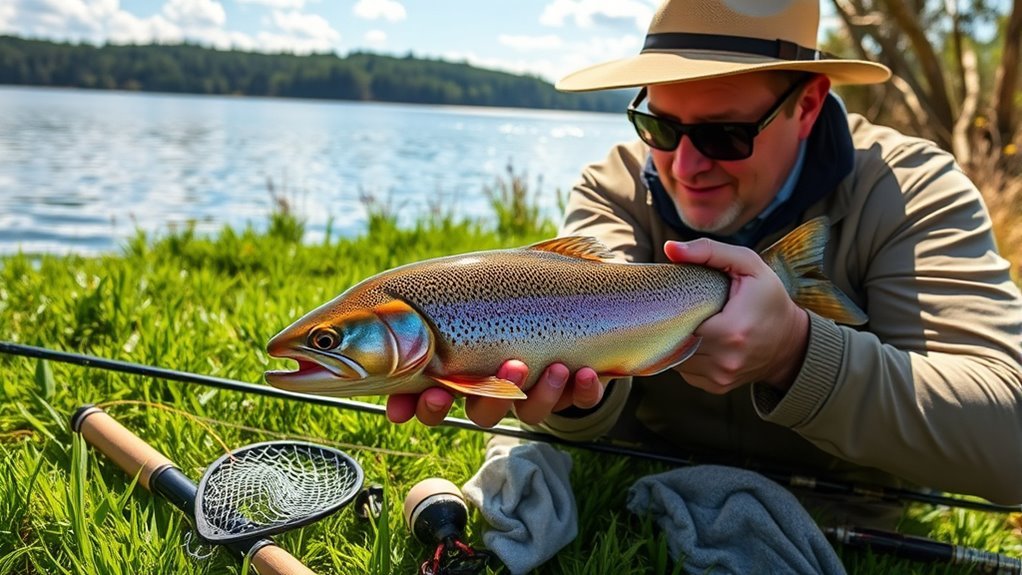
When you head out for a day of catch and release fishing, having the right gear can make all the difference in protecting the fish and ensuring a successful release. Good gear helps you shorten the fight, control the fish safely, remove hooks cleanly, and return the fish before it loses strength.
Here are three essential items you shouldn’t forget:
- Barbless or Circle Hooks: Using barbless hooks or crimped barbs minimizes injury and makes removing hooks easier, while circle hooks reduce the risk of deep hooking, enhancing survival chances for released fish.
- Rubber Landing Net: A rubber or knotless landing net is important for protecting the fish’s slime coat, which is critical for its health during recovery.
- Hook Removal Tools: Long-nose pliers or specialized hook removers are necessary for safely removing hooks without causing additional harm to the fish.
You should also carry line cutters, forceps for small flies, a measuring board, and a camera that is ready before you lift the fish. If you fish from a boat or kayak, keep your release tools within reach so you do not waste time searching for them while the fish is stressed.
Choose Tackle That Lands Fish Quickly
Ultra-light tackle can be fun, but it may extend the fight too long for larger fish. Match your rod, reel, line, and leader to the fish you expect to catch. The goal is to play the fish under control and bring it in before it becomes completely exhausted.
For toothy fish, use the right leader so you do not leave hooks or lures behind. For larger species, use a net or cradle that supports the fish instead of hanging it vertically from the line.
Keep a Release Kit Ready
A simple catch and release kit can save time. Pack barbless hooks, pliers, line cutters, a rubber net, a measuring device, and a wet towel only if you need extra grip. Avoid dry towels because they can remove the fish’s protective slime coat.
If you plan to take photos, keep your phone or camera accessible. Decide on the photo before lifting the fish so you can return it quickly.
Proper Fish Handling Techniques
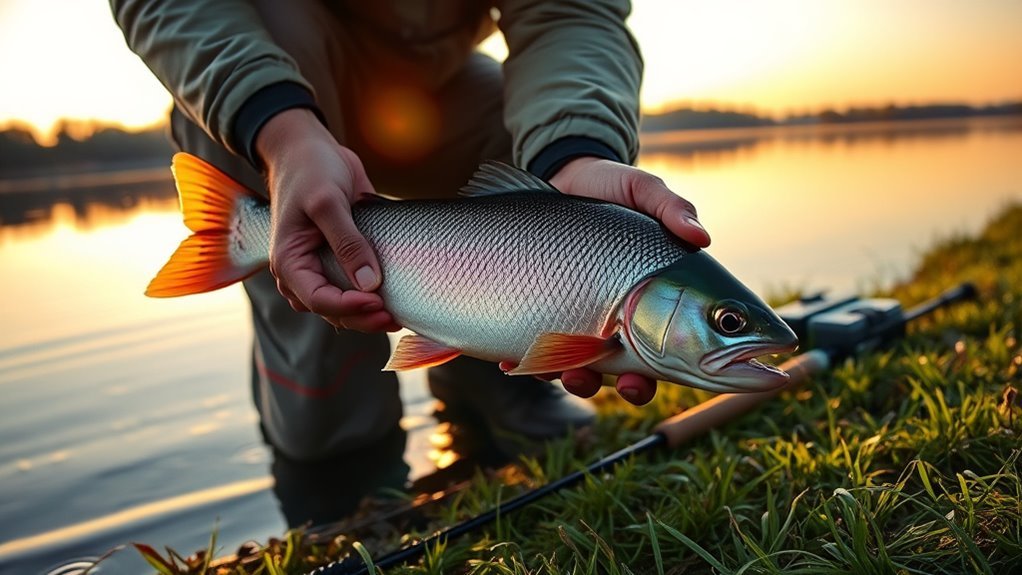
Proper fish handling techniques are essential for ensuring the well-being of the fish you catch. Always wet your hands before handling a fish to protect its delicate slime coat, which helps defend it against infection and injury.
When you catch a fish, support the fish with both hands, avoiding any squeezing, and keep it in the water whenever possible to minimize stress. Hold one hand under the belly and the other near the tail or lower jaw, depending on the species and size.
Limit the fish’s exposure to air as much as possible. A good rule is to keep the fish in the water while you prepare tools, then lift it only briefly if you need a quick photo or measurement.
Use long-nose pliers or hook removers to gently remove the hook, ensuring you avoid jerking movements that could cause harm. If the hook is deeply swallowed, it’s best to cut the line close to the hook instead of trying to remove it.
Never lift a heavy fish by the gills, eyes, or jaw alone. Vertical holds can damage internal organs, especially on larger fish. If you need to lift the fish, keep it horizontal and supported.
Pro Tip: Practice the “water first” habit. Unhook, measure, revive, and release the fish while it stays in or just above the water whenever you can.
How to Catch and Release a Fish Step by Step
A simple release routine helps you stay calm and protect the fish. Follow these steps each time until they become automatic.
- Use the right hook before you cast: Choose barbless, crimped-barb, or circle hooks when they fit your method and local rules.
- Set the hook and control the fight: Keep steady pressure and avoid playing the fish to complete exhaustion.
- Land the fish carefully: Use a rubber or knotless net and keep the fish in the water while you prepare.
- Wet your hands: Wet hands reduce damage to the slime coat before you touch the fish.
- Remove the hook gently: Back the hook out with pliers or a hook remover. Cut the line if the hook is deeply swallowed.
- Take a fast photo only if needed: Hold the fish horizontally, keep it low over the water, and avoid long posing.
- Revive the fish: Hold it upright in calm water facing into gentle current until it can swim away on its own.
- Release without tossing: Let the fish leave your hands under its own power whenever possible.
Techniques for Removing the Hook
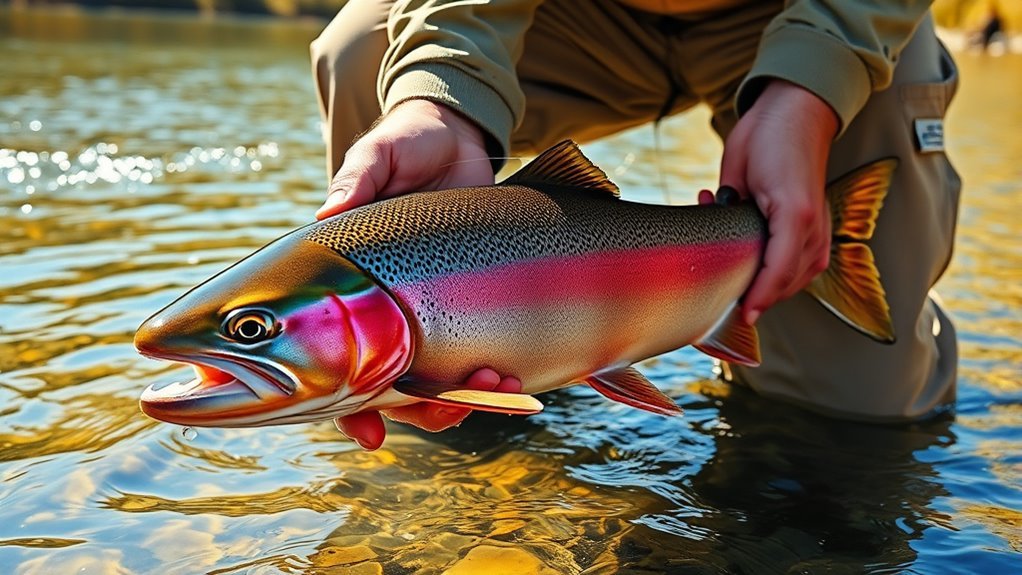
When it comes to removing the hook, start by carefully evaluating its position in the fish’s mouth. Do not rush and pull blindly, because rough hook removal can cause more harm than the hook itself.
Use long-nose pliers or a dedicated hook remover to gently back the hook out, avoiding any jerking movements that could cause injury.
If the hook is deeply swallowed, cutting the line close to it is often the best option for the fish’s safety. Pulling a deep hook can damage the throat, gills, or stomach.
Assess Hook Position
Evaluating the hook position is essential for ensuring a safe and effective removal process. By analyzing the hook position, you can minimize injury to the fish and make informed decisions on how to remove it.
Here’s how to proceed:
- Easily Accessible Hooks: If the hook is visible, use long-nose pliers to gently back it out without jerking.
- Deeply Swallowed Hooks: If the hook is deeply lodged, cut the line close to it instead of trying to pull it out; this reduces stress on the fish.
- Hard-to-Reach Areas: For hooks in difficult spots, consider using a dehooking device while keeping the fish in the water to facilitate safe removal.
Always prioritize keeping the fish healthy and let it go quickly. If the fish is bleeding heavily or cannot stay upright, follow your local rules for that species and waterbody.
Use Safe Tools
Using the right tools can make all the difference in safely removing a hook from a fish. To enhance fish survival rates during catch and release, consider using barbless hooks or crimped barbs, which minimize damage.
For effective hook removal, employ long-nose pliers or specialized hook removers. Gently back out the hook without jerking to avoid injuring the fish. Always assess the hook’s position in the mouth to determine the best removal method.
If the hook is swallowed, cut the line close to it instead of trying to remove it, as this reduces stress.
Additionally, utilize rubber or knotless landing nets for protective handling, preserving the fish’s slime coat and overall health post-release.
Best Practices for Releasing Fish
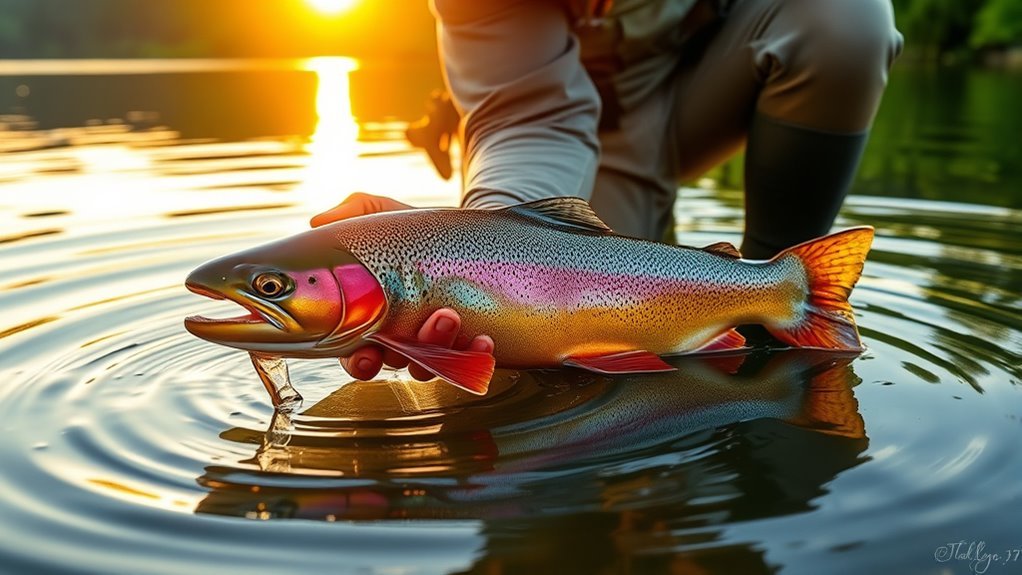
To guarantee the best chance of survival for the fish you catch, it’s important to follow some key practices during the release process. Proper techniques not only protect the fish but also enhance your fishing experience.
- Keep it Wet: Always keep the fish in the water as much as possible. This protects its gills and essential slime coat, which are crucial for health and survival.
- Use Barbless Hooks: Opt for barbless or circle hooks, making it easier to remove the hook and minimizing internal injuries during the releasing process.
- Be Gentle: Wet your hands before touching the fish to preserve its protective slime.
Limit time out of water as much as possible, and release it gently back into the water, ideally facing upstream in moving water, to help it regain strength and orientation.
Do not throw the fish back. Lower it into the water and support it upright. If it rolls over, hold it gently until it stabilizes. In current, point the fish into gentle flow so water passes through its mouth and over its gills.
How to Revive a Fish Before Release
A tired fish may need a short recovery before it can swim away safely. Hold the fish upright in the water with one hand under the belly and the other near the tail. Face it into gentle current or slowly move it forward in calm water so fresh water passes over its gills.
Release the fish when it can hold itself upright, kick strongly, and swim away without rolling. If the fish keeps tipping over, give it more time. Avoid pushing it back and forth quickly because backward movement can force water through the gills the wrong way.
Photo and Measurement Tips
Photos and measurements are common, but they should not come before fish care. Keep the fish in the net or water while you get your camera ready. Lift the fish briefly, hold it low over the water, take the photo, and return it right away.
Use a wet measuring board instead of laying fish on dry rocks, dirt, grass, docks, or boat carpet. Dry, hot, or rough surfaces can damage the slime coat and scales.
Special Situations That Need Extra Care
Not every release is the same. Some conditions make fish more vulnerable, so you need to adapt your approach.
Warm Water and Low Oxygen
Warm water holds less oxygen and can stress fish faster. During hot weather, land fish quickly, use heavier tackle, and reduce handling. For heat-sensitive species such as trout, consider fishing early in the morning or choosing cooler waters.
Deep-Water Fish and Barotrauma
Fish caught from deeper water may suffer pressure-related injury, often called barotrauma. Signs can include bulging eyes, a swollen belly, or difficulty swimming back down. Some fisheries recommend descending devices for certain deep-water species, while other places have specific rules. Check local guidance before you fish deep water.
Toothy or Spiny Fish
Pike, muskie, catfish, saltwater predators, and spiny fish require extra care. Use proper tools, protect your hands, and avoid placing fingers near teeth, gill plates, or sharp spines. Safe handling protects both you and the fish.
Common Mistakes to Avoid
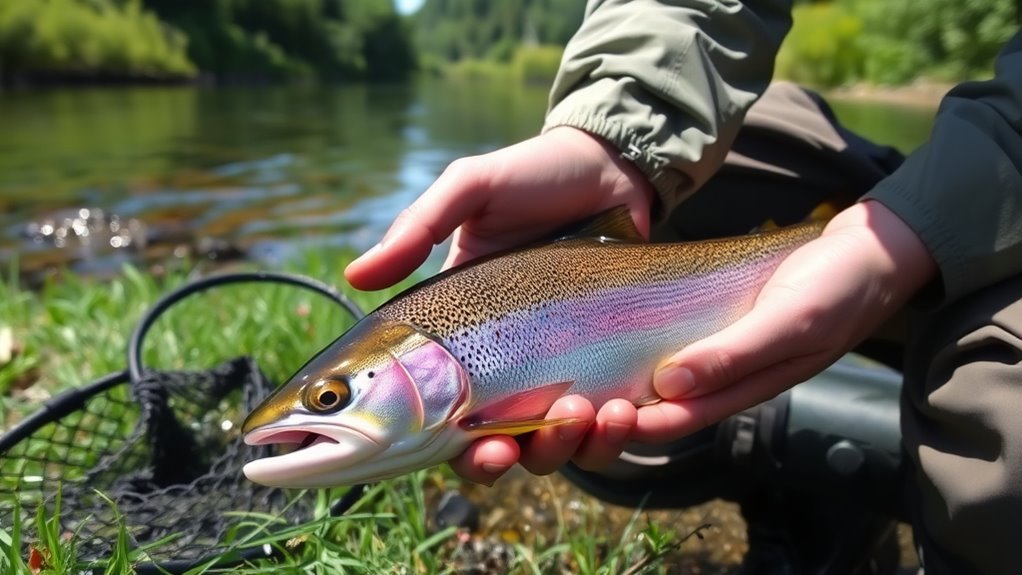
Even with the best practices for releasing fish in mind, it’s easy to make mistakes that can harm the very fish you’re trying to protect. One common error is lifting fish by their gills or jaw, which can injure them severely. Always use the right equipment, like a landing net, to minimize stress during handling.
Avoid long air exposure; the longer the fish is out of water, the lower its chances of a strong release. Also, be careful with offset circle hooks, as they can increase the risk of deep hooking in some situations compared with non-offset circle hooks.
When it’s time to let go, don’t release weak or exhausted fish into strong currents, as this can lead to predation or further stress. By following these guidelines, you’ll enhance the fish’s chances post-release and contribute positively to the ecosystem.
Other common mistakes include using dry hands, dropping fish onto hard surfaces, dragging fish up a bank, holding large fish vertically, taking too many photos, or using tackle that is too light for the target species.
Regulations and Conservation Efforts

While fishing can be a relaxing escape, it’s important to recognize the role regulations play in preserving aquatic ecosystems. Understanding and following these regulations not only helps protect fish populations but also ensures that you contribute to conservation efforts.
Here are three key points to keep in mind:
- Catch and Release Practices: Many locations mandate catch and release to safeguard vulnerable species and maintain ecological balance.
- Compliance Matters: Adhering to local fishing regulations helps you avoid fines and supports the sustainability of fish populations.
- Educational Initiatives: Engage with local conservation programs that promote sustainable fishing practices and raise awareness about the importance of protecting aquatic ecosystems.
Regulations can change by state, province, waterbody, season, species, length, and bag limit. Before you fish, check the current rules for that exact location. Do not rely only on old signs, social media posts, or advice from another angler.
Some waters also have gear rules, such as artificial lures only, single hooks, barbless hooks, slot limits, closed seasons, or mandatory release for certain fish. Following these rules protects the fishery and keeps your trip legal.
Engaging With the Fishing Community

Engaging with the fishing community can greatly enhance your skills and knowledge, as it opens doors to shared experiences and valuable techniques from fellow anglers.
By joining local fishing forums, social media groups, and online communities, you can gain insights into catch and release practices and regulations that apply to your area. Many fishing organizations and clubs offer workshops and events focused on sustainable recreational fishing, allowing you to learn from experts and fellow enthusiasts.
Sharing your catch and release success stories can inspire others to adopt sustainable practices, contributing to essential conservation efforts.
Volunteering for local conservation projects or participating in community clean-up events not only helps protect aquatic ecosystems but also fosters connections with like-minded anglers.
Through these interactions, you’ll build relationships, improve your fishing skills, and become a more responsible steward of the waters you love.
You can also help by reporting tagged fish when local programs request it, sharing accurate regulation updates, and teaching new anglers how to handle fish safely before their first catch.
Related Guides
Frequently Asked Questions
What is catch and release fishing?
Catch and release fishing means you catch a fish and return it to the water instead of keeping it. The goal is to enjoy fishing while reducing harvest pressure and giving the fish the best possible chance to survive after release.
What is the 80/20 rule in fishing?
In fishing, the 80/20 rule usually means a small number of choices create most of your success. For catch and release, that 20% includes using the right hooks, landing fish quickly, keeping them wet, and removing hooks carefully.
What is the catch and release method?
The catch and release method involves catching a fish, controlling it carefully, removing the hook with minimal injury, and returning it to the water. Good technique includes wet hands, a rubber net, short air exposure, and a gentle release.
How do you properly catch and release?
To properly catch and release, use barbless or circle hooks, land the fish quickly, keep it in the water, wet your hands, support its body, remove the hook gently, and revive it upright before letting it swim away.
Are barbless hooks better for catch and release?
Barbless hooks are usually better for catch and release because they are easier to remove and can reduce handling time. You can buy barbless hooks or crimp the barb on many standard hooks with pliers.
Should you cut the line if a fish swallows the hook?
Yes, if the hook is deeply swallowed, cutting the line close to the hook is often safer than pulling hard to remove it. Forcing out a deep hook can damage the throat, stomach, or gills.
Can you take a photo before releasing a fish?
Yes, but prepare the camera first and keep the photo quick. Hold the fish horizontally, keep it low over the water, avoid squeezing it, and return it to the water as soon as possible.
Conclusion
As you release that shimmering fish back into the water, you can’t help but notice the sunlight dancing on the surface, like the flicker of a memory. By practicing catch and release with care, you’re not just enjoying a day on the water; you’re contributing to the health of our ecosystems.
With the right gear, gentle handling, short air exposure, and respect for local regulations, you can help ensure future generations experience the thrill of fishing. Remember, every release is a promise to the waters you love, and every careful choice gives that fish a better chance to survive.