Most anglers do not realize snook often move with tides, current, bait, and structure instead of staying in one fixed spot. You will catch more fish when you learn how moving water, shadows, mangroves, docks, bridges, and low-light feeding windows work together. This guide covers where snook live, when they feed, which tackle works best, how to rig lines and leaders, and how to fish live bait, lures, and night spots with more confidence.
Quick Answer
To catch snook, fish moving tides near structure such as mangroves, docks, bridges, inlets, seawalls, and channel edges. Use a 7–8 ft medium or medium-heavy spinning setup, 15–30 lb braid, a 20–40 lb fluorocarbon leader, and live bait or lures that match local forage.
Key Takeaways
- Snook feed best around current seams, shadow lines, ambush points, and bait-rich structure.
- Incoming and outgoing tides usually matter more than the exact location alone.
- A medium to medium-heavy spinning rod with braid and fluorocarbon gives you casting distance, feel, and abrasion resistance.
- Live shrimp, pilchards, mullet, pinfish, and sardines work well, while soft plastics, bucktail jigs, swimbaits, and topwater plugs cover many lure situations.
- Check current local snook regulations before every trip because seasons, slots, permits, and harvest rules can change.
At a Glance
| Best Fishing Windows | Dawn, dusk, night, and the strongest moving-water periods around tide changes |
| Difficulty | Beginner to intermediate, depending on current, structure, and casting accuracy |
| Basic Gear | 7–8 ft spinning rod, saltwater reel, 15–30 lb braid, 20–40 lb fluorocarbon leader, circle hooks, lures, and live bait |
| Best Places to Start | Mangrove shorelines, dock lights, bridge pilings, seawalls, cuts, passes, inlets, beaches, and channel edges |
What Is a Snook and Where They Live
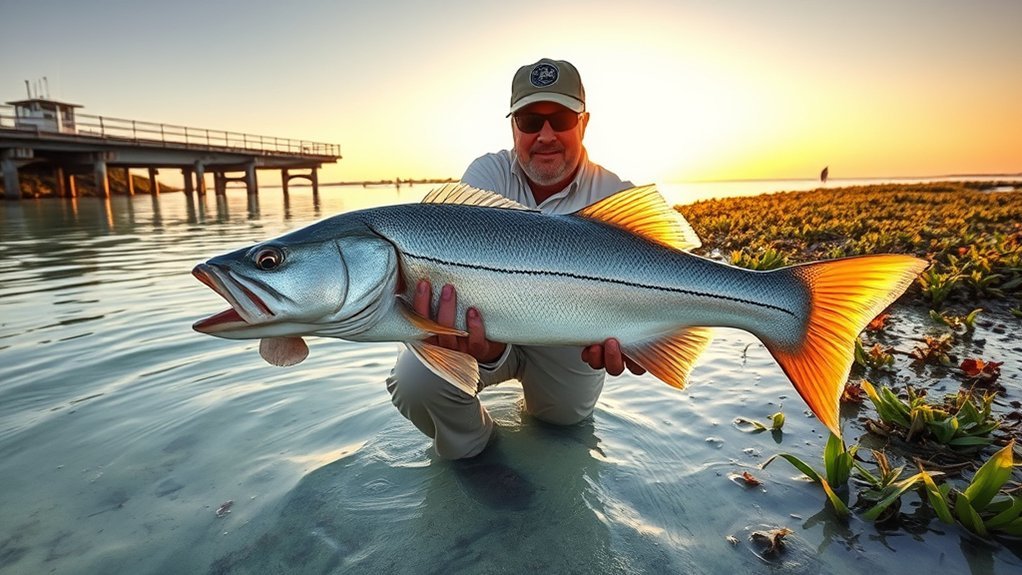
Snook are inshore gamefish found along warm coastal waters of the Americas. In the United States, anglers most often target common snook in Florida’s Atlantic and Gulf waters, especially around estuaries, passes, bridges, beaches, canals, and mangrove-lined shorelines.
You can recognize a snook by its long body, sloped forehead, large mouth, and dark lateral line running down each side. That pronounced lateral line helps the fish sense vibration and movement, which makes snook skilled ambush feeders.
Learn their habitats so you can find them faster. Snook favor coastal areas with structure, including mangrove roots, dock pilings, seawalls, rock edges, bridge shadows, oyster bars, and creek mouths. They also move through brackish water and may push into freshwater canals and rivers when conditions suit them.
Treat them as ambush predators that use shadows and current breaks to conserve energy while waiting for small fish, shrimp, crabs, and other prey to drift within striking range.
Snook are also sensitive to cold. Their feeding slows when water cools, and sharp cold fronts can move fish into deeper canals, rivers, basins, and other protected areas.
When you target snook, prioritize structure, edges, current seams, and places where bait gets trapped or funneled. Those small changes in water movement often matter more than a wide-open flat with no cover.
Stay nimble, read the water, and fish with intention to reclaim productive days on the water.
Note: Snook behavior changes by region. A pattern that works near a Florida Gulf pass may need adjustment near an Atlantic bridge, beach trough, or residential canal.
Seasonal Patterns and Best Times to Fish

You will often find snook most active during warm months, when bait is abundant and fish feed aggressively around beaches, passes, inlets, bridges, and mangrove shorelines.
Time your outings around incoming and outgoing tides, especially when moving water pushes bait past ambush points. The hour before and after a tide change can be productive, but the strongest bite often depends on how current moves through a specific spot.
At night and near structure, these patterns become even more important. Dock lights, bridge shadows, seawalls, and current breaks can hold feeding fish when tide, moon, bait, and low light align.
Peak Spawn Months
During late spring, summer, and early fall, snook move into inlets, passes, beaches, and nearshore waters to spawn in many areas. That movement can concentrate fish, but it also makes conservation more important.
During the peak spawn months, you may find prime snook fishing around inlets, passes, beaches, jetties, bridges, and other fishing spots where warmer water and strong tidal flow gather bait.
Fish early morning and late evening when snook feed more comfortably in low light. These windows also help you avoid heavy boat traffic and bright midday sun.
Respect conservation regulations. Many areas restrict harvest during sensitive periods to protect the snook population, and following rules helps keep fisheries strong and abundant.
Learn the seasonal patterns, target legal spots at the right times, and you will increase success while supporting sustainable snook fisheries and your freedom to fish in future seasons.
Tide and Moon
After you time trips around warm seasonal patterns, pay close attention to tides and moon phases because they shape when and where snook feed.
You will find snook active on incoming and outgoing tide, especially when tidal currents push shrimp, mullet, pilchards, sardines, glass minnows, or other forage past ambush cover.
Fish near structures where currents funnel prey: docks, mangrove edges, bridge pilings, points, cuts, seawalls, and channel bends.
Plan warm-season trips when water temperatures support active feeding. During cooler periods, look for deeper water, dark bottom, sunny shorelines, canals, and protected pockets that hold more stable temperatures.
Do not ignore night fishing. Full moon periods can boost nocturnal feeding, while dark nights can make dock lights and bridge lights stand out as bait magnets.
Read local tide charts and moon schedules, then position yourself where current carries bait toward likely ambush points. Cast up-current or across the flow so your bait moves naturally.
That rhythm frees you to fish smarter, not harder.
Best Weather and Water Conditions
Stable weather usually helps snook settle into predictable feeding lanes. A light chop, mild cloud cover, and moving tide can make fish less wary and more willing to strike.
Clear water calls for longer leaders, natural bait colors, quiet casts, and lighter presentations. Dirty or wind-stirred water may call for bigger profiles, stronger vibration, brighter accents, scent, or live bait that fish can track more easily.
Before a front, snook may feed hard as pressure changes and bait moves. After a strong cold front, slow down, fish deeper shelter, and avoid stressing cold-stunned or sluggish fish.
Essential Snook Tackle and Gear
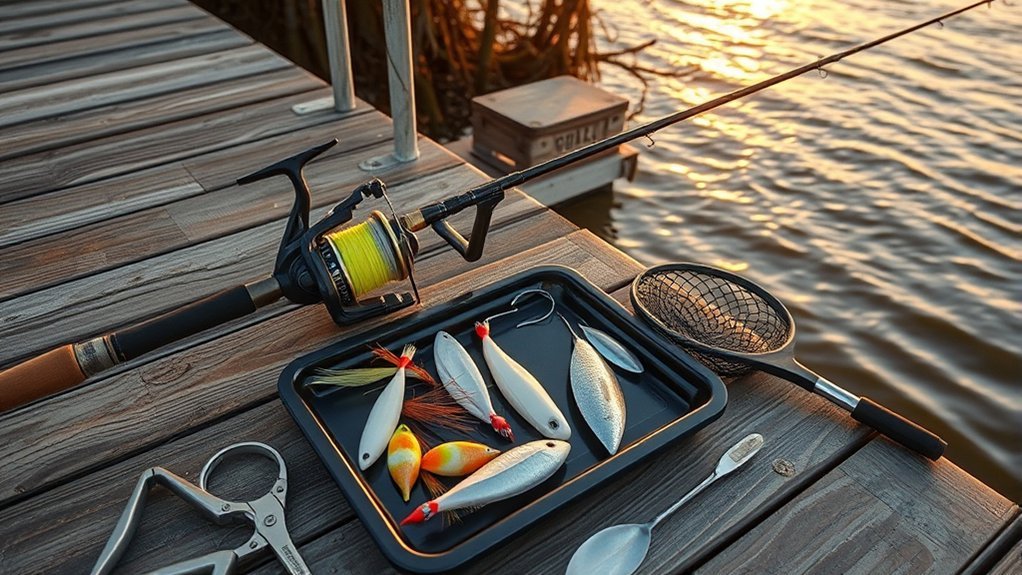
For snook, you will want a 7–8 ft medium to medium-heavy spinning rod with a smooth saltwater reel. This setup gives you casting distance, lure control, and enough backbone to steer fish away from cover.
Pair braided 15–30 lb test line with a 20–40 lb fluorocarbon leader for sensitivity and abrasion resistance around docks, mangroves, bridge pilings, and seawalls.
Use strong 3/0–5/0 hooks for many live bait situations, and keep topwater plugs, soft plastics, swimbaits, bucktail jigs, shrimp, and small baitfish on hand to match conditions.
Rod and Reel Choices
One clear, well-matched rod and reel setup makes snook fishing far more productive and enjoyable than mismatched gear.
You will want a 7–8 foot medium-heavy spinning rod paired with a saltwater spinning reel that has a smooth drag and enough line capacity for long runs near structure.
Use braided line in the 15–30 pound test range for sensitivity and strength. That combo helps you feel subtle takes, drive hooks cleanly, and control strong runs while catching snook.
Add a fluorocarbon leader for abrasion resistance against rough mouths, sharp gill plates, barnacles, rocks, and dock pilings.
For live bait work, use circle hooks sized 3/0–5/0 when appropriate to improve corner-of-mouth hookups and support healthier releases.
Set up this way, and you will have gear that liberates your technique and boosts consistent, ethical success.
Line, Leader, Hooks
Now that your rod and reel are matched, focus on line, leader, and hooks to put that setup to work.
You will want a 20 lb braided line for sensitivity and strength around moderate structure, tied to a 20–30 lb fluorocarbon leader for abrasion resistance. Around heavy bridges, barnacle-covered pilings, rocks, and big fish, step up to a heavier leader when needed.
Use circle hooks (3/0–5/0) with live bait to support catch-and-release success. For artificial lures, choose strong single hooks or trebles that match the lure size, then replace weak factory hardware when fishing heavy cover.
Match this to your medium-heavy fast-action rod and quality spinning reels with smooth drag to handle runs, jumps, and sudden turns.
- Braided line: 15–30 lb for feel, casting distance, and power.
- Fluorocarbon leader: 20–40 lb to resist cuts and abrasion.
- Hooks: circle hooks 3/0–5/0 for many live bait rigs and safer hookups.
- Gear combo: medium or medium-heavy fast-action rod with spinning reels for control.
Pro Tip: Set your drag before the first cast. You need enough pressure to steer snook away from structure, but not so much that a sudden run breaks your leader.
Choosing Lines, Hooks, and Leaders
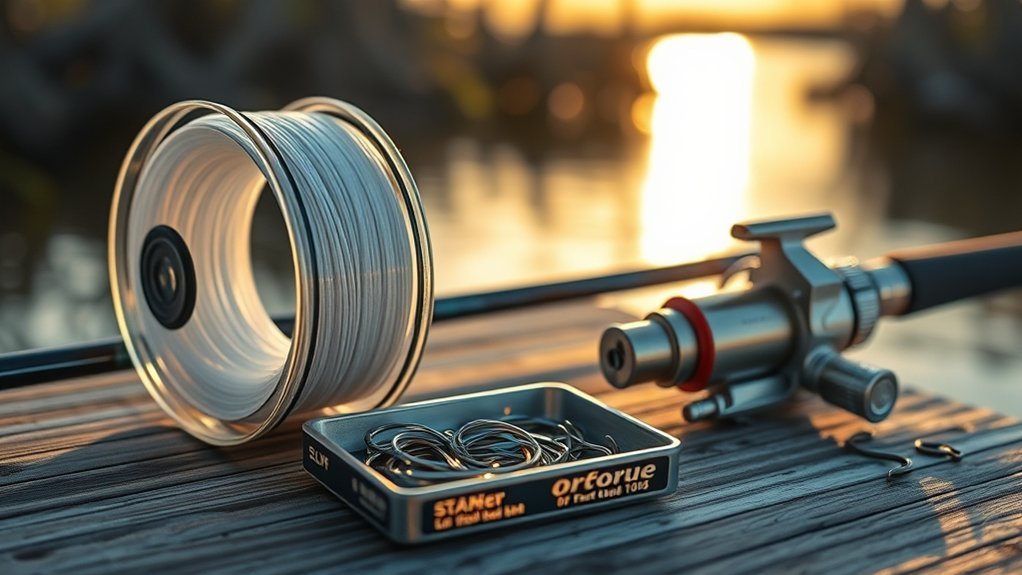
Line choice, hook size, and leader setup make or break your snook rig, so pick gear that matches the fish’s power, the water clarity, and the structure you plan to fish. Use a braided line in the 15–30 pound test range for strength and sensitivity; it lets you feel subtle takes and control runs without much stretch.
Line, hook, and leader choices make or break your snook rig. Use 15–30 lb braid for strength and feel, then adjust leader size to the cover and water clarity.
Tie a fluorocarbon leader of 20–30 pound test for many open-water or moderate-cover situations. Around heavy structure, sharp shells, barnacles, bridge pilings, and large fish, move up to heavier leader because snook have abrasive mouths and sharp gill plates that can cut weak leaders fast.
For live bait, choose circle hooks in the 3/0 to 5/0 range to reduce gut-hooking and support ethical catch-and-release. Connect braid to leader with a reliable line-to-line knot such as the Double Uni Knot, Albright Knot, FG Knot, or Alberto Knot to keep the join slim and strong.
Attach hooks to the leader with the Palomar Knot, Trilene Knot, loop knot, or improved clinch knot, depending on the bait or lure. A loop knot often gives soft plastics, plugs, and jigs a freer swimming action.
Pack extra leaders and practice these knots until they feel automatic. Freedom on the water comes from preparedness, clean rigging, and confidence when a fish hits close to cover.
Simple Snook Rigs for Beginners
A simple free-line live bait rig works well when current is moving. Tie braid to fluorocarbon leader, add a circle hook, then let a shrimp, pilchard, pinfish, or mullet swim naturally with the tide.
Use a split shot or small egg sinker only when you need extra depth or casting distance. Too much weight can make live bait look unnatural and can cause snook to drop it.
For artificial lures, start with a jighead and soft plastic paddle tail or jerk bait. This rig casts well, reaches different depths, and lets you cover docks, mangroves, bridge edges, flats, and sandy potholes.
Top Lures and Live Baits for Snook
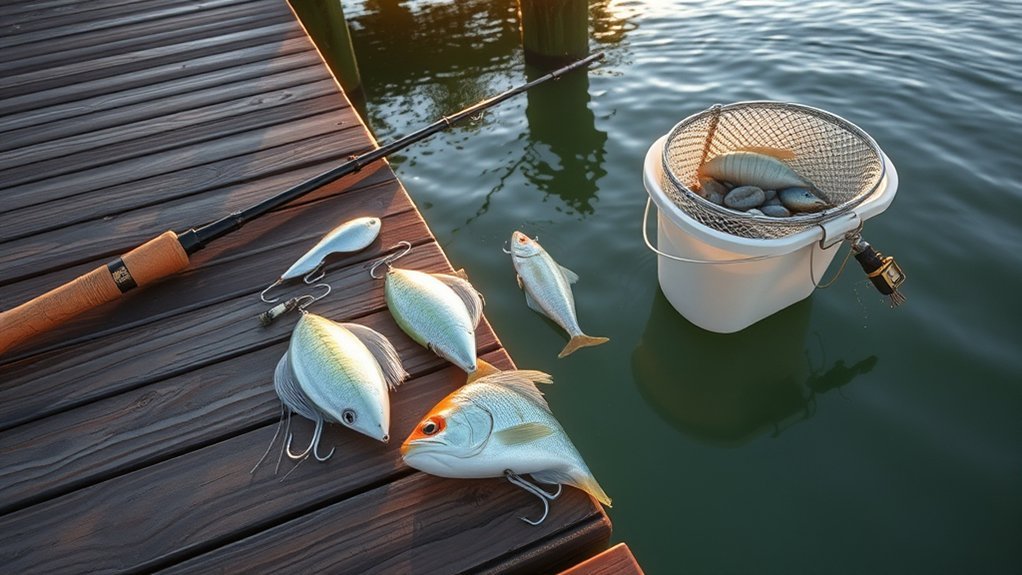
Baits and lures that mimic local forage will get you the most strikes, so match your presentation to what snook are feeding on that day.
You will want top lures and live baits that imitate shrimp, pilchards, mullet, pinfish, glass minnows, or sardines and work well around docks, mangroves, beaches, bridges, and other ambush points. Use artificial lures that move like prey, including bucktail jigs with plastic tails, soft plastics such as jerk shads, paddle tails, twitch baits, and topwater plugs like walk-the-dog style surface lures for low-light strikes.
- Bucktail jigs with plastic tails: versatile for structure, beaches, bridges, and flats.
- Soft plastics such as jerk shads and paddle tails: twitch, hop, or swim them to mimic wounded baitfish.
- Topwater plugs: use them at dawn, dusk, and night for explosive surface strikes.
- Live bait such as shrimp, pilchards, mullet, pinfish, and sardines: rig them naturally with circle hooks when suitable.
Practice catch-and-release practices: use circle hooks when fishing live bait, minimize handling, keep fish in the water when possible, and revive fish before release.
On the Gulf Coast, Atlantic Coast, and in many backcountry areas, these fishing techniques will help you achieve consistent snook fishing while honoring the resource and seeking liberation on the water.
How to Match Lures to Conditions
Use smaller, natural-colored lures when water is clear, bait is tiny, or snook are pressured. White, silver, pearl, olive, tan, and translucent colors often match common baitfish and shrimp.
Use louder, darker, brighter, or more vibrating lures when the water is stained, the sky is dark, or fish need help finding your presentation. A paddle tail, rattle plug, spinner-style bait, or larger profile can help in low visibility.
Topwater lures shine around low light, calm water, beach troughs, points, and dock lights. If snook swipe but miss, slow down, pause longer, or switch to a subsurface twitch bait.
Reading Tides, Currents, and Water Conditions
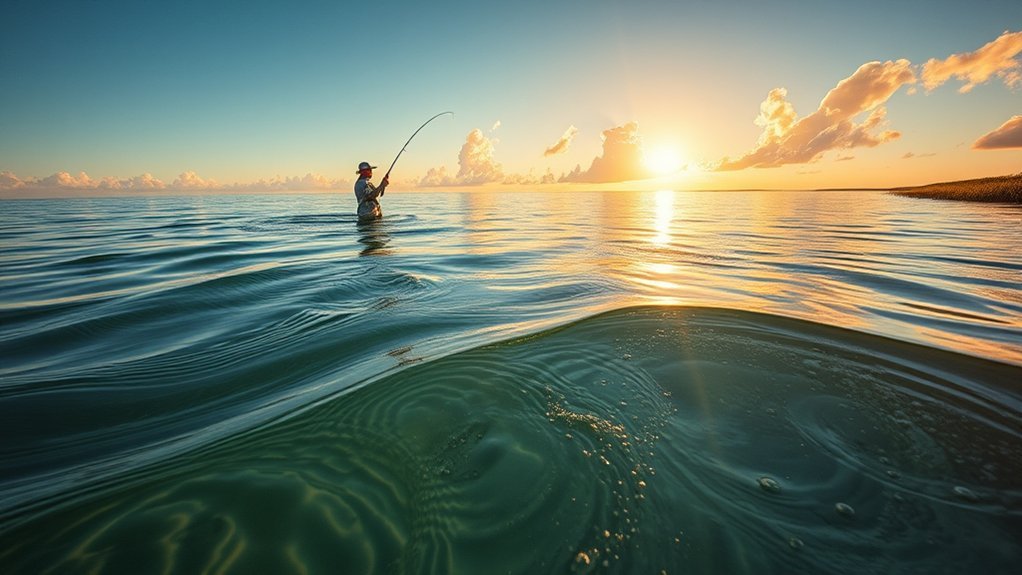
Tides, currents, and water conditions dictate where and when snook feed, so learn to read them and fish accordingly. Check local tide charts to target incoming and outgoing tides, focus on structure and drop-offs where currents funnel bait, and watch water temperature, clarity, and surface chop because stronger currents and broken water often create ambush opportunities.
You will use reading tides and currents to find prime times when snook move toward shore, push along beaches, stage at creek mouths, or hold on edges of channels. Monitor local tide charts daily and pair that information with water conditions such as temperature, clarity, wind direction, and surface chop.
Strong currents near mangroves, docks, bridges, seawalls, oyster bars, and drop-offs are productive because snook use them to ambush prey. Even rough, stirred-up water can help because it hides your approach and exposes food.
Stay observant, adapt to shifting currents, and prioritize feeding windows. That discipline will turn knowledge into consistent hookups.
Where to Stand or Position the Boat
Position yourself so your bait moves with the current instead of fighting it. Snook usually face into current and wait for food to come to them, so a natural drift often beats a lure pulled at the wrong angle.
From shore, stand slightly up-current of the target and cast past the structure. Let the bait or lure sweep into the strike zone. From a boat or kayak, keep enough distance to avoid spooking fish, especially in clear shallow water.
Avoid casting directly on top of visible fish. Lead them, use quiet presentations, and let the tide carry your bait into their feeding lane.
Techniques for Casting, Pitching, and Night Fishing

Start by placing your casts close to structure, including docks, mangroves, bridge pilings, seawalls, troughs, and channel edges, especially on higher water when snook move closer to shore.
You will use casting to cover water and pitching to drop bait quietly into tight pockets. Watch tidal movements; incoming and outgoing tides concentrate snook near structure.
- Use a sidearm pitching motion to present bait or artificial lures softly into holes and shadowed edges without spooking fish.
- During low-light conditions and night fishing, choose lures with strong silhouettes, flash, vibration, or slow action to improve visibility and trigger strikes.
- Around cover, favor a slow, steady retrieve that mimics prey; pause, twitch, then resume to turn follows into strikes.
- Be mindful of where you place lures relative to structures and current. Positioning beats power when you want consistent hookups.
You will gain freedom on the water by mastering these precise, tactical approaches to catching snook.
Night Fishing for Snook
Night fishing can be one of the easiest ways to locate feeding snook because lights show you where bait gathers. Look for dock lights, bridge lights, marina lights, seawall lights, and shadow lines near moving water.
Cast to the dark edge instead of directly into the brightest part of the light. Bigger snook often sit in the shadow and rush into the glow to grab bait.
Use quiet casts, slow retrieves, and lures that match the size of the baitfish under the light. Small paddle tails, shrimp imitations, twitch baits, and live shrimp can all work well.
Common Snook Fishing Mistakes
Many beginners fish good-looking structure at the wrong tide. A dock with no current or bait may look perfect but hold inactive fish. Return when water moves and bait gathers.
Another mistake is using a leader that is too light around sharp cover. Snook often strike hard and run straight toward pilings, mangroves, rocks, or bridge supports.
Do not rush the release. If you plan to release a snook, keep it wet, support its body, remove the hook quickly, and revive it until it swims away under its own power.
Warning: Never assume snook harvest is open because you saw someone keep a fish. Check the current rules for your exact location before you fish, especially near season changes or after emergency regulation updates.
Regulations, Conservation, and Responsible Angling
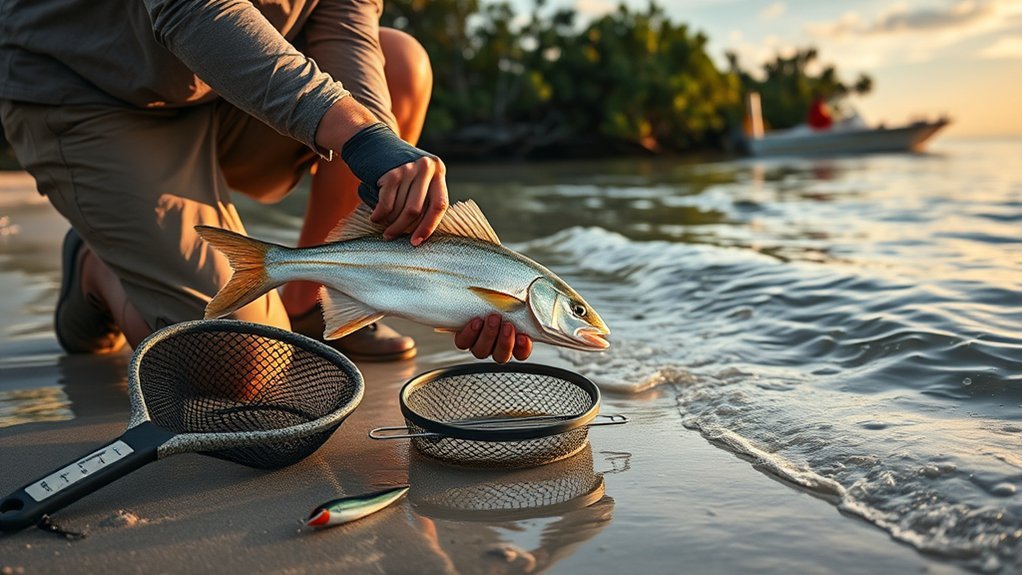
When you head out for snook, follow local regulations, including fishing license rules, snook permit requirements where applicable, seasonal openings, slot limits, bag limits, gear rules, and regional closures.
Do not rely on old memory for seasons, size limits, or bag limits. Snook rules can vary by coast, management zone, date, and emergency order, so check the current regulation page for your state or region before every trip.
Practice responsible angling: use proper tackle, minimize fight time, handle fish with wet hands, support the belly of larger fish, and release fish carefully to improve survival. Adopt catch-and-release fishing during spawning movements and whenever fish appear stressed.
Use proper tackle, shorten fight time, and release snook gently. Careful catch-and-release helps protect large breeding fish and future seasons.
Learn tidal patterns and support habitat restoration groups to counter habitat loss, water-quality problems, and shoreline damage. Carry the license and permit required in your area, check updates before you go, and report violations you see.
Conservation is not passive. It preserves your freedom to fish. By following regulations, backing restoration, and prioritizing sustainable populations, you help protect the coastline and make sure future anglers can enjoy snook without compromising the ecosystem.
Frequently Asked Questions
How Do You Catch Snook for Beginners?
Start by fishing moving tides near structure such as mangroves, docks, bridges, seawalls, passes, and inlets. Use live shrimp, pilchards, mullet, pinfish, or simple lures such as soft plastics and jigs. Cast up-current, let the bait move naturally, and keep your presentation close to ambush cover.
What Is the Best Setup for Snook Fishing?
A strong beginner setup is a 7–8 ft medium or medium-heavy spinning rod, a saltwater spinning reel with smooth drag, 15–30 lb braided line, and a 20–40 lb fluorocarbon leader. Use 3/0–5/0 circle hooks for many live bait rigs and stronger lure hooks around heavy structure.
How Old Is a 40 Inch Snook?
A 40 inch snook is generally an older, mature fish, but exact age depends on sex, region, habitat, food supply, water temperature, and growth rate. Large snook are valuable breeders, so handle them carefully and follow local harvest rules.
What Pound Line Should You Use for Snook?
Use 15–30 lb braided line for most snook fishing. A 20 lb braid works well as an all-around choice, while heavier braid helps near bridges, docks, rocks, and mangroves. Add a 20–40 lb fluorocarbon leader based on water clarity and structure.
What Is the Best Bait for Snook?
The best bait is usually what snook are already eating in that area. Live shrimp, pilchards, mullet, pinfish, sardines, and finger mullet are common choices. Around dock lights or small bait schools, match the bait size with small soft plastics or live shrimp.
Can You Catch Snook From Shore?
Yes. Shore anglers can catch snook from beaches, bridges, piers, seawalls, passes, jetties, canals, and mangrove edges. Focus on moving water, bait, troughs, shadow lines, and nearby cover instead of casting randomly into open water.
Conclusion
You have learned snook science, seasonal signs, sensible setup, smart selection of lines and lures, and skillful casting. Now add steady stewardship every time you fish.
Stay sharp: structure-seeking snook favor tide turns, shadow lines, current seams, and ambush cover, so shift spots and strategies as the water changes. Practice precise presentations, pick proper gear, protect populations with proper releases and legal limits, and pass on patient, principled practices.
Consistent care and conscious conservation create cleaner creeks, healthier shorelines, and stronger snook seasons for future anglers.
Sources
- Florida Fish and Wildlife Conservation Commission: Snook — current Florida snook regulations and responsible harvest guidance
- Florida Fish and Wildlife Conservation Commission: Snook Research — snook biology, habitat, and research background
- NOAA Fisheries: Common Snook — species overview and distribution background
- Florida Saltwater Fishing Regulations: Snook — seasonal, slot, and bag-limit reference for anglers