Ice fishing gives you a quiet, exciting way to enjoy winter, but safe planning matters more than any catch. Before you step onto a frozen lake, check the ice thickness, pack basic safety gear, and choose simple equipment that fits your target fish. For walking, many ice safety guides use at least 4 inches of clear, solid ice as a common minimum, but ice is never guaranteed safe. Start with a hand auger, a short light-action rod, warm layers, and bait such as minnows, waxworms, mealworms, shiners, or nightcrawlers. Once you know where fish hold in winter, you can set up in 3 to 20 feet of water, stay patient, and enjoy the rhythm of fishing through the ice.
Quick Answer
To start ice fishing, confirm safe ice, dress in warm waterproof layers, drill a hole with an auger, and fish with a short ice rod or tip-up. Use small jigs, live bait, or minnows near weeds, drop-offs, rock piles, or basin edges where fish feed in winter.
Key Takeaways
- Check ice often. Four inches of clear, solid ice is a common minimum for walking, but thickness can change across the same lake.
- Start simple with a short ice rod, light line, small jigs, bait, an auger, an ice scoop, and basic safety gear.
- Fish near winter structure such as weed edges, rock piles, drop-offs, points, and basin transitions.
- Move if you do not get bites. Drilling several holes helps you find active fish faster.
- Follow local license rules, season dates, bait rules, size limits, and daily bag limits before keeping fish.
At a Glance
| Time Required | 2 to 6 hours for a beginner trip, plus travel and setup time |
| Difficulty | Beginner-friendly when ice conditions are safe and local rules are followed |
| Tools Needed | Ice auger, ice scoop, short rod, reel, line, bait, tackle, bucket or sled, ice picks, cleats, warm layers, and a first aid kit |
| Cost | Low to moderate for basic gear; higher if you add a shelter, heater, flasher, or fish finder |
Ice Fishing Basics
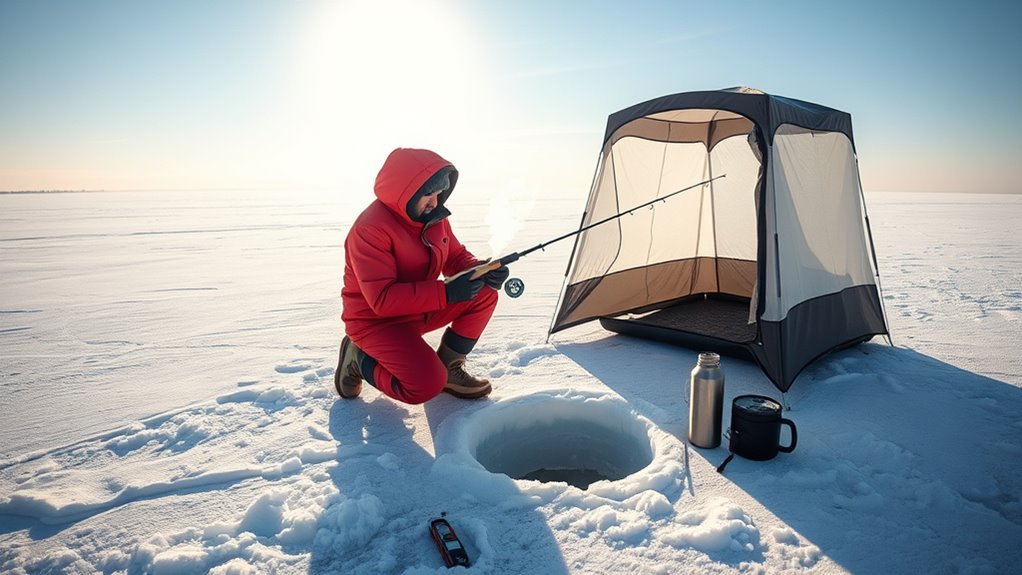
When winter sets in and lakes freeze over, ice fishing opens up a new season for anglers who want to keep catching fish after open water closes. The idea is simple: you find safe ice, drill a fishing hole, lower bait or a lure below the ice, and wait for fish to move through.
To get started, you need essential ice fishing gear, including an ice auger to bore fishing holes into clear, solid ice. Many safety agencies use a minimum thickness of 4 inches of clear ice as a common walking guideline, but you should always follow local guidance and check conditions yourself.
Warning: No ice is 100% safe. Clear, new ice is usually stronger than white, slushy, honeycombed, or refrozen ice. Avoid pressure ridges, current, bridges, inlets, outlets, docks, aerators, and dark or wet-looking patches.
During your fishing trips, check your state or province rules before setting lines. Some places allow multiple traps, tip-ups, or lines per angler, while others set lower limits. The original rule of setting up to five traps can apply in some locations, but it is not universal. Always confirm the number of lines, hooks, bait types, and allowed species before you fish.
Look for ideal spots in water depths of 3 to 20 feet, especially near rock piles, weed beds, points, drop-offs, and old creek channels. Shallow weeds often hold panfish early in the ice season, while deeper basins and edges may produce better action later in winter.
Use bait like shiners, minnows, waxworms, mealworms, spikes, or nightcrawlers. Try jigging for active fish and tip-ups for a more passive setup. Jigging works well when fish need a moving target, while tip-ups help you cover more water for species such as pike, walleye, and lake trout where legal.
Don’t forget ice picks for safety and an ice shelter to stay warm. A bucket, sled, or small pack can carry your tackle, bait, snacks, and extra gloves. This beginner’s guide to ice fishing will help you make the most of your time on the ice while keeping safety and comfort in mind.
Ice Fishing Safety
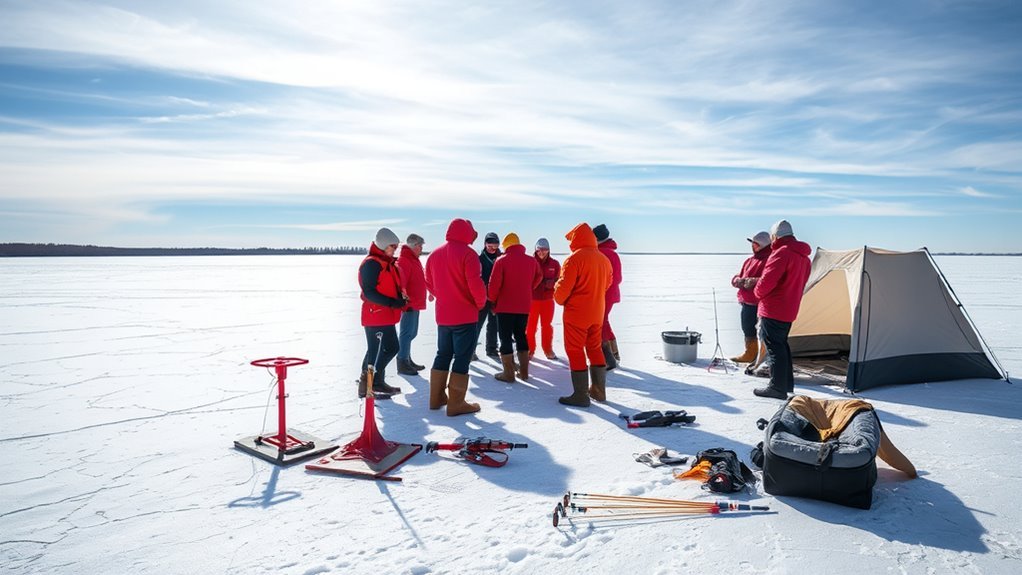
While ice fishing brings excitement and opportunities for great catches, safety should always be your first decision. A good bite is never worth stepping onto unsafe ice.
To support ice fishing safety, always check the ice thickness before walking out. A common guideline is at least 4 inches of clear, solid ice for safe walking. Many ice safety charts suggest thicker ice for snowmobiles, ATVs, side-by-sides, or vehicles, but local agencies often recommend keeping cars and trucks off ice whenever possible.
Ice can be thick in one place and dangerously thin a few steps away, especially near current, springs, shorelines, and pressure cracks.
Regularly test the ice as you move using a spud bar, chisel, or auger. The original advice to test every 150 feet is a helpful habit on open, uniform ice, but test more often near shore, vegetation, moving water, cracks, old holes, or unfamiliar areas.
Stay clear of areas with flowing water, springs, old ice holes, pressure ridges, and snow-covered slush. Snow can hide weak ice and also insulate the surface, slowing ice growth. Dark, clear ice is usually stronger than cloudy white ice, but all ice deserves caution.
Always fish with a buddy or tell someone where you are going, when you plan to return, and what access point you will use. Carry a charged phone in a waterproof pouch, but do not rely on it as your only safety plan.
Pack ice picks where you can reach them, not buried in your sled. Add a basic first aid kit, rope, whistle, headlamp, spare gloves, hand warmers, and traction cleats. With proper precautions and emergency preparation, you can enjoy a safer and more comfortable day on the ice.
What to Do If You Break Through the Ice
If you fall through, try not to panic. Turn toward the direction you came from because that ice held your weight moments earlier. Kick your feet, use ice picks to pull your body onto the ice, and roll away from the hole instead of standing right away.
Once you are away from the weak spot, get to shelter, remove wet clothing, and warm up as soon as possible. Cold water can drain strength quickly, so call emergency services if anyone shows confusion, shivering that stops, slurred speech, or extreme fatigue.
Essential Gear for Beginners
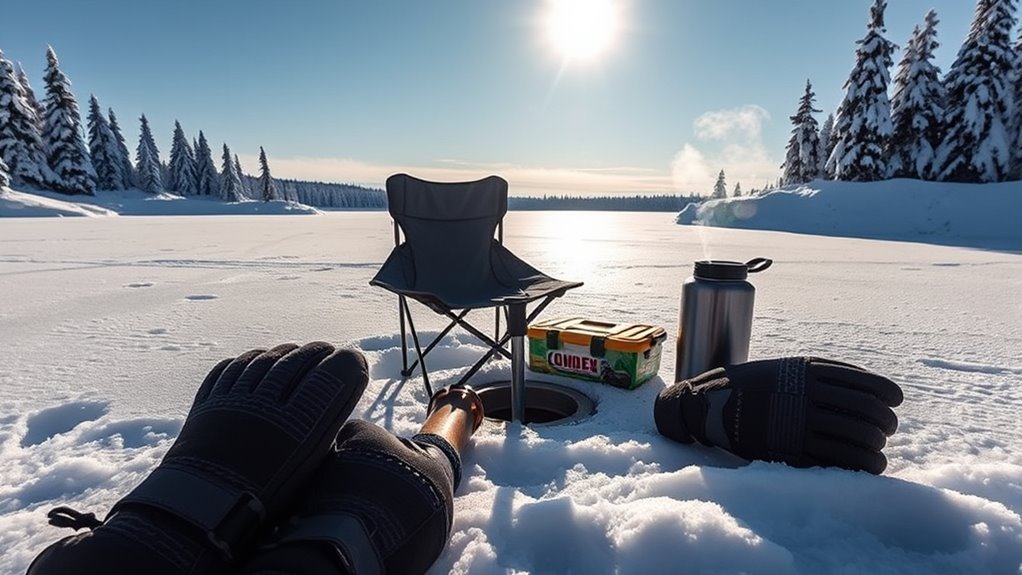
To make your ice fishing experience enjoyable and successful, having the right gear is essential. You do not need the most advanced setup on your first trip. A simple, reliable kit helps you learn faster and keeps the day less stressful.
Start with a medium to light action ice fishing rod, about 24 to 28 inches long, paired with an ultralight reel and a 4 to 6 pound test line for sensitivity. Use lighter line for panfish and trout in clear water. Step up to heavier line or a wire leader when fishing for toothy species such as northern pike.
A hand auger, ideally 5 to 8 inches in diameter, will help you drill holes in the ice, while an ice scoop clears away the shavings. Smaller holes work well for panfish, perch, and trout. Larger holes help when you target walleye, pike, lake trout, or other bigger fish.
For transporting your gear, a sled is a good idea. A bucket can also work as a seat, storage container, and fish holder. Add a rod holder, tackle box, bait puck, small towel, and needle-nose pliers so you can manage fish and hooks safely.
When you’re out on a winter day, layering your clothing is vital. Begin with a wool or synthetic base layer, add an insulating fleece or puffy layer, and finish with a waterproof or wind-resistant coat and snow pants. Avoid cotton as a base layer because it holds moisture and can chill you quickly.
A portable ice shelter can shield you from the elements, ensuring comfort while you fish. If you use a propane heater inside a shelter, follow the heater instructions, keep ventilation open, and use a carbon monoxide detector designed for outdoor shelter use.
Don’t forget live bait and consider visiting your local tackle shop for additional essentials. Local shops often know which baits, jig colors, lake depths, and access points are producing fish during the current ice season.
If you plan on fishing often, a reliable fish finder, flasher, or underwater camera can elevate your fishing experience by helping you locate fish beneath the ice. These tools are helpful, but they are not required. Many beginners catch fish with only a rod, bait, and good location choices.
Beginner Ice Fishing Gear Checklist
- Fishing license and any required stamps, tags, or permits
- Ice auger, spud bar, and ice scoop
- Short ice rod, reel, line, hooks, jigs, and sinkers
- Live bait or artificial lures that match your target species
- Tip-ups or traps if legal in your area
- Bucket, sled, or gear bag
- Ice picks, cleats, rope, whistle, and first aid kit
- Warm layers, waterproof boots, gloves, hat, and spare socks
- Headlamp, phone in a waterproof pouch, snacks, and water
Note: Local fishing rules can change by waterbody. Check your state or provincial regulation booklet before using live bait, multiple lines, tip-ups, or keeping fish.
Where to Find Fish Under the Ice
Finding fish matters more than owning expensive gear. Fish still feed in winter, but their activity often slows as water gets colder and oxygen levels change. Start by studying a lake map before you go. Look for weed flats, points, drop-offs, humps, inside turns, and basin edges.
Early in the ice season, shallow green weeds can hold bluegill, crappie, perch, bass, and pike. During midwinter, some fish slide deeper toward basin areas, channels, and soft-bottom zones. Late in the season, fish may move shallower again as meltwater and longer daylight improve activity.
Drill several holes in a safe area instead of waiting all day over one quiet spot. Try a shallow hole, a mid-depth hole, and a deeper edge. If you do not mark fish or get bites after 15 to 30 minutes, move until you find signs of activity.
Best Depths for Common Winter Fish
- Bluegill and sunfish: weed edges, shallow flats, and basin edges, often with tiny jigs and waxworms.
- Crappie: suspended over basins, near weed edges, or around structure, often active near low light.
- Yellow perch: flats, mud basins, and transitions where small insects and minnows gather.
- Walleye: points, humps, rock edges, and drop-offs, especially near dawn, dusk, and after dark where legal.
- Northern pike: weed lines and shallow ambush areas, often with tip-ups and larger minnows.
- Trout: shallow cruising lanes, points, or deeper cold-water areas depending on the lake and species.
Techniques and Tips for Ice Fishing
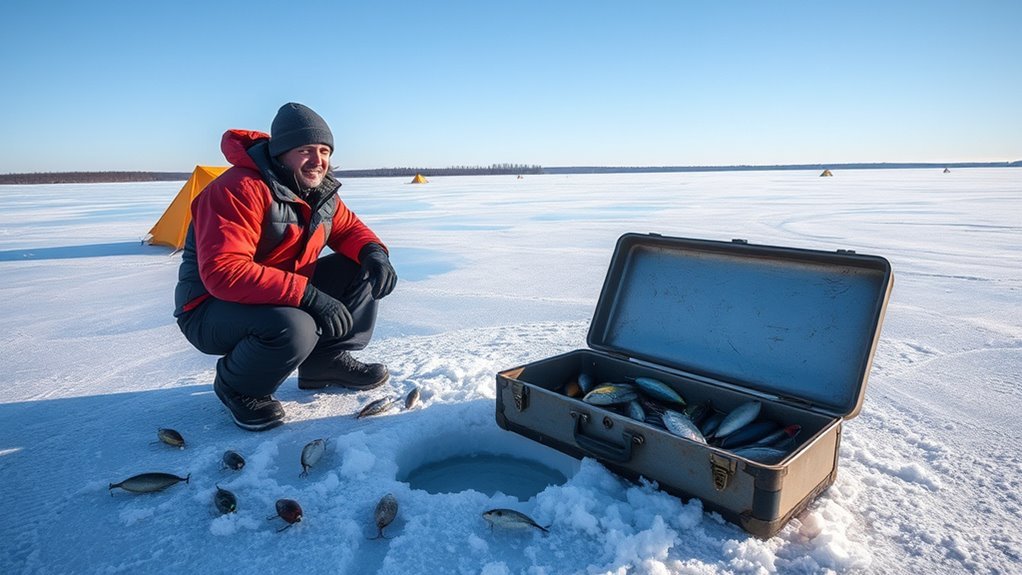
Have you ever wondered how to maximize your success on the ice? To have a rewarding ice fishing trip, use a simple plan instead of drilling one hole and hoping fish arrive.
- Use tip-ups for a passive approach while you enjoy a day on the ice.
- Experiment with different bait types, including live minnows, worms, waxworms, mealworms, spikes, or jigs, to find the best bait for the fish in your lake.
- Monitor various depths, ranging from 3 to 20 feet, to locate where fish feed.
- Drill a small spread of holes so you can test different depths and structures.
- Start with subtle jigging in cold water, then add sharper lifts if fish follow but do not bite.
When you drill your hole, patience is key. Fish often take their time, so don’t rush. Still, patience does not mean sitting over dead water all day. Give a spot a fair try, then move if nothing happens.
Use a fish finder, flasher, or sonar unit to pinpoint fish beneath the ice and adjust your strategy accordingly. If fish rise toward your bait and turn away, downsize your jig, switch color, use fresher bait, or slow your movement.
Verify your setup includes the right fishing rods and an appropriate pound test for your target species. A spring bobber or sensitive rod tip can help you see light bites from panfish. For walleye and pike, use stronger hooks, larger bait, and a setup that can handle sudden runs.
Remember to dress in layers and check ice thickness frequently. Cold hands and wet feet can end a trip early, so bring spare gloves and socks in a dry bag.
Pro Tip: If fish show interest but will not bite, hold the jig still for a few seconds. In cold water, a motionless bait often looks easier to catch than one that moves too aggressively.
Simple Jigging Method for Beginners
- Drop your bait near the bottom or to the depth where fish appear on sonar.
- Lift the rod tip 2 to 6 inches, then let the jig fall back slowly.
- Pause for 3 to 10 seconds.
- Repeat the motion with small changes until fish respond.
- Set the hook with a short upward lift when the line jumps, tightens, or feels heavy.
Tip-Up Basics
A tip-up lets you suspend bait below the ice while a flag signals a bite. Set the bait slightly above weeds, near the bottom, or at the depth where fish are cruising. When the flag pops, walk carefully to the hole, watch the spool, and set the hook by hand when the fish moves steadily away.
Use tip-ups only where legal, and check them often. Some areas require your name, address, or license number on the device. Others set limits on how far you can be from a line or how many lines you can use.
Common Beginner Mistakes to Avoid
Most ice fishing mistakes are easy to prevent. The biggest one is assuming that nearby anglers, tracks, or old holes prove the ice is safe. Conditions can change quickly, and yesterday’s safe route may not be safe today.
- Fishing one hole too long: Move when you do not see fish or get bites.
- Using bait that is too large: Winter fish often prefer smaller, slower meals.
- Forgetting regulations: Check line limits, bait rules, seasons, size limits, and daily limits.
- Dressing for the car, not the lake: Wind over open ice can feel much colder than the parking area.
- Making too much noise: Heavy stomping, dragging gear, and drilling too close can spook fish in shallow water.
- Ignoring slush and cracks: Wet, gray, or unstable-looking ice deserves extra caution.
Enjoying Your Catch
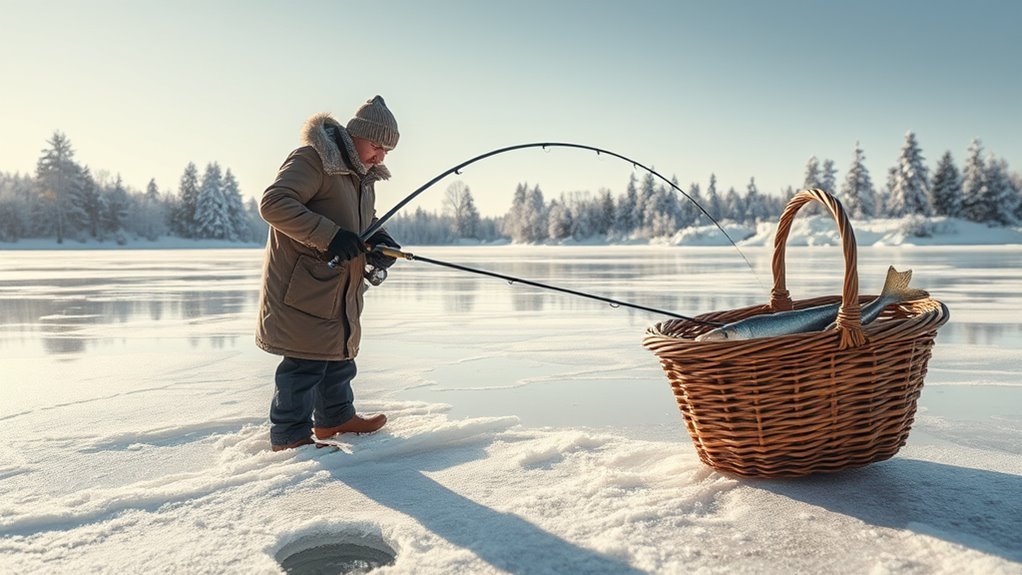
Enjoying your catch is one of the most rewarding aspects of ice fishing. Fresh fish provide a nutritious meal, and nothing beats the satisfaction of cooking what you’ve just caught.
To maintain the quality of your fish, keep them cold and clean. In freezing weather, do not let fish freeze solid if you plan to fillet them later that day because frozen fish can be harder to clean. A cooler, bucket, or insulated bag can help protect your catch from snow, dirt, and temperature swings.
Using stringers can help keep your catch alive in some situations, ensuring you have a fresh supply throughout the day. However, rules for live fish transport vary, and some waters have disease-prevention rules. Check local regulations before moving live fish away from the water.
When you’re ready to prepare your fish, be mindful of local regulations regarding sizes and limits. Sustainable fishing practices are essential for preserving our waters, so keep only what you will use and release unwanted fish quickly when conditions allow.
Experiment with various cooking methods, like grilling, frying, baking, or making fish chowder, to showcase the diverse flavors of your catch. Small perch and panfish work well as fillets, while trout can be baked whole with lemon, herbs, and butter.
Whether you’re savoring a simple pan-fried fillet or a grilled meal after a long day outside, each bite rewards your efforts on the ice. Embrace the experience of enjoying your catch, and you’ll find that ice fishing isn’t just about the thrill. It is also about winter memories, fresh food, and time outdoors.
Frequently Asked Questions
What Is the 80/20 Rule in Fishing?
The 80/20 rule in fishing means that a large share of your catch often comes from a small number of productive spots. For ice fishing, focus on key structure, bait selection, seasonal fish movement, and safe access instead of drilling random holes across the lake.
What Is the 90/10 Rule in Fishing?
The 90/10 rule is another way anglers describe how most fish are caught from a small percentage of the water. On ice, that means you should spend more time finding fish-holding structure and less time waiting over unproductive holes.
What Is the Best Way to Fish in the Winter?
The best way to fish in winter is to match your method to cold-water fish behavior. Start with safe ice, use small baits or jigs, fish near structure, and move until you find active fish. Always check regulations, dress in layers, and bring safety gear.
What Fish Bite Most in Winter?
Common winter ice fishing targets include yellow perch, bluegill, crappie, walleye, northern pike, trout, and lake trout where available. The best species depends on your region, local seasons, lake type, and bait rules.
How Thick Should Ice Be for Ice Fishing?
Many ice safety guides use at least 4 inches of clear, solid ice as a common minimum for walking. You need more ice for snowmobiles, ATVs, or larger loads. Since thickness can vary across one lake, test often and follow local safety guidance.
What Bait Should Beginners Use for Ice Fishing?
Beginners can start with waxworms, mealworms, spikes, small minnows, shiners, or nightcrawlers, depending on local rules and target species. Pair small bait with small jigs for panfish. Use larger minnows or legal dead bait for pike and walleye where allowed.
Do You Need a Fishing License for Ice Fishing?
In most places, you need a valid fishing license for ice fishing unless you qualify for an exemption. You may also need to follow special winter rules for bait, shelters, tip-ups, night fishing, size limits, and daily limits.
Sources
- Minnesota Department of Natural Resources — ice thickness guidance and ice safety reminders
- National Weather Service Winter Safety — winter weather safety and cold exposure preparation
- Centers for Disease Control and Prevention — carbon monoxide safety information for heaters and enclosed spaces
- Take Me Fishing — beginner ice fishing basics, gear, and technique overview
Conclusion
Ice fishing can turn a quiet winter day into a memorable outdoor adventure. With your essential gear packed, your bait ready, and your safety plan in place, you can focus on learning the lake and enjoying each bite.
Keep safety as your trusty sidekick every time you step onto frozen water. Check the ice often, fish with a buddy when possible, follow local regulations, and move carefully. Once those basics become routine, each trip gives you a better feel for winter fish, better locations, and better stories to tell.
Bundle up, keep casting, and let your winter fishing journey become a season of frozen excitement, fresh meals, and unforgettable memories.