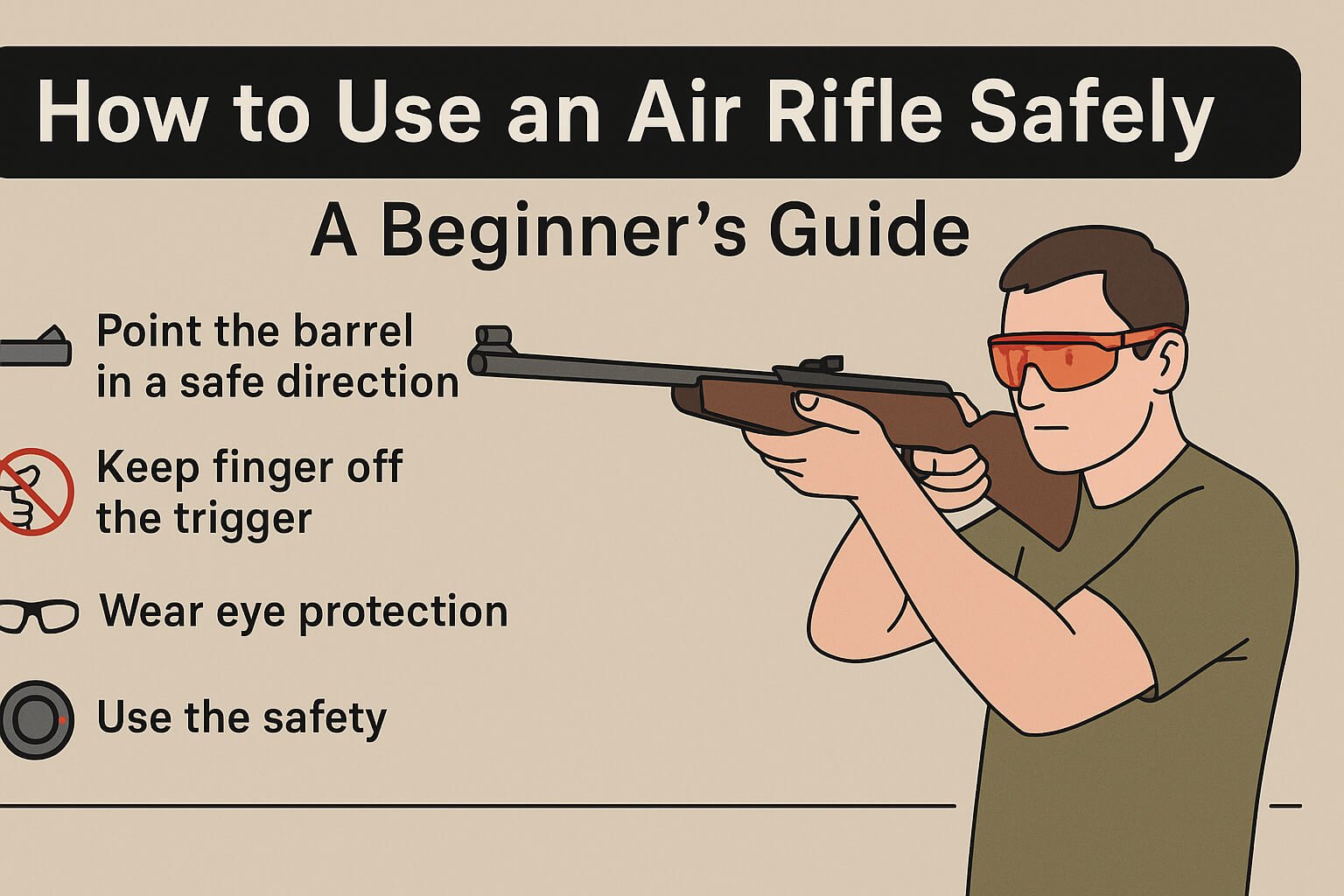
Air rifle safety for beginners starts with the same core habits every time: keep the muzzle pointed in a safe direction, keep your finger outside the trigger guard until you are ready to shoot, treat every air rifle as if it is loaded, and know your target and what is beyond it. Wear shooting glasses, use a backstop suitable for your exact airgun, follow the owner’s manual, and store the rifle unloaded and secured from unauthorized access.
This guide focuses on safe handling, legal-location checks, backstop safety, supervision, storage, maintenance, and what to do if something does not work as expected. Air rifles differ in design and operation, so the manual for your exact model always takes priority over generic instructions.
Last updated: September 11, 2026
Quick Answer
Beginner air rifle safety comes down to muzzle control, trigger discipline, treating the rifle as loaded, checking the target and the area beyond it, wearing eye protection, using a suitable backstop, following local law, and securing the rifle when it is not in use. Never rely on a mechanical safety as a substitute for safe handling.
Key Takeaways
- An air rifle is not a toy. BB and pellet guns can cause serious injury or death when misused.
- Keep the muzzle pointed safely, keep your finger off the trigger until ready to shoot, treat the rifle as loaded, and know your target and what is beyond it.
- Use shooting glasses and a backstop appropriate for the exact airgun; inspect the backstop for wear and stop using it if projectiles rebound or ricochet.
- Read the owner’s manual before handling a new air rifle because loading, unloading, power sources, safeties, and maintenance differ by model.
- Store the air rifle unloaded, secured from unauthorized users, and separate from ammunition or pellets.
At a Glance
| Before First Use | Read the exact owner’s manual and get supervised instruction if you are new to airguns |
| Difficulty | Beginner-friendly only when safety rules and model-specific instructions are followed without shortcuts |
| Safety Gear | Shooting glasses, a safe target, a suitable backstop or pellet trap, and secure storage |
| Legal Check | Confirm current state, local, property, range, and age rules before use; requirements vary by jurisdiction |
Why Air Rifle Safety Is Non-Negotiable
It is easy to underestimate an air rifle, but an air rifle is not a toy. The U.S. Consumer Product Safety Commission warns that BB guns and pellet rifles can cause fatal injuries, and current manufacturer guidance treats airguns as devices that require adult supervision, eye protection, safe muzzle control, and secure storage. CPSC safety guidance and Crosman’s airgun safety rules both emphasize that careless handling can cause serious harm.
- Eye and bodily injury: Pellets or BBs can cause severe injury, especially if they strike a vulnerable area.
- Unintended harm: A poorly controlled shot can injure people or animals or damage property.
- Ricochet and over-travel: Hard surfaces, water, weak targets, or inadequate backstops can send a projectile where you did not intend.
The safest habit is to assume that a mistake can happen and build your handling, target setup, supervision, and storage around preventing that mistake from hurting anyone.
Warning: Never point an air rifle at a person, pet, vehicle, window, road, or anything you do not intend to shoot. Never display or brandish an airgun in public; it may be mistaken for a firearm.
What Are the 4 Core Air Rifle Safety Rules?
These rules match the core themes in current manufacturer safety guidance and should be followed every time you handle an air rifle.
- Always point the muzzle in a safe direction. A safe direction is one where an unintended discharge would not endanger a person or damage property. Do not choose a direction just because it feels convenient; consider what the projectile could strike if it misses or passes through the intended target.
- Keep your finger off the trigger until you are ready to shoot. Keep your finger outside the trigger guard while handling, moving, checking, loading, or unloading the rifle. Move it to the trigger only when you are at a safe firing point and have decided to fire.
- Treat every air rifle as if it were loaded. Check its condition according to the owner’s manual whenever you pick it up, receive it from another person, or remove it from storage. Never rely on someone else’s statement that it is unloaded.
- Know your target and what is beyond it. Use a target and backstop suitable for your airgun, keep the surrounding area clear, and do not shoot at hard surfaces or water where a ricochet can occur.
A mechanical safety is a backup device, not a substitute for muzzle control, trigger discipline, and knowing what is beyond the target.
Before You Use Any Air Rifle: Fit, Manual, and Local Rules
Air rifles differ in their safeties, loading systems, power sources, controls, and maintenance needs. Before using a rifle for the first time, read the owner’s manual from start to finish and make sure the rifle is manageable for the user without strain.
- Learn the exact controls: Identify the safety, loading area, power source, and manufacturer-approved unloading procedure before use. Do not assume another air rifle works the same way.
- Use only the specified projectile: Follow the caliber and projectile type marked on the rifle and in the manual. Do not reuse fired, damaged, or deformed ammunition.
- Check local rules: Airgun possession, age limits, transport, and discharge rules vary by location. Confirm the current rules that apply where you live and where you plan to shoot.
Should a Beginner Choose an Air Rifle by Power?
No. More power does not make an air rifle more suitable for a beginner. The safer choice is a model the user can handle comfortably, understand from the manual, and use legally in a controlled setting. New shooters benefit most from direct supervision and a clear range routine rather than from chasing velocity or impact energy.
Note: If you are new to airguns, a supervised range or qualified instructor is safer than trying to learn a new rifle through trial and error.
Does Caliber Change the Safety Rules?
No. The same core safety rules apply regardless of caliber or power source.
- Use the correct size and type: Check the markings on the rifle and the owner’s manual before loading any projectile.
- Do not substitute or reuse ammunition: Fired, damaged, deformed, or incorrect projectiles can create unsafe conditions or damage the airgun.
For a safety guide, the important beginner decision is not “Which caliber is best?” but “Can I operate this exact model safely, legally, and according to its manual?”
How Do You Set Up a Safe Air Rifle Shooting Area?
A safe session requires more than careful gun handling. The location must be lawful and controlled, the firing direction must remain safe, and the target area needs a backstop appropriate for the exact airgun.
1. Confirm the Location Is Legal and Controlled
- Private property: Check current state and local rules, property restrictions, and any applicable age or supervision requirements. You also need permission to use land you do not own.
- Range use: A supervised airgun or shooting range can provide a controlled firing line, established safety commands, and a purpose-built target area. Follow the range officer’s rules even if they are stricter than your normal routine.
2. Use a Suitable Backstop
A backstop must safely stop the projectile and must be placed where a miss or backstop failure will not endanger anyone.
- Use an appropriate trap or backstop: Choose a purpose-built pellet trap or other backstop specifically suitable for the airgun and projectile you are using. Follow its rating and instructions, and place it so the area remains safe even if the backstop fails.
- Avoid ricochet hazards: Do not shoot at hard, flat surfaces or water. Do not assume a fence, wall, thin board, or improvised household material will safely contain a projectile.
3. Wear the Right Safety Gear
- Shooting glasses: The shooter and nearby observers should wear shooting glasses or other impact-resistant eye protection recommended by the manufacturer or range.
- Hearing protection: Follow the owner’s manual and range rules. Noise varies by airgun and environment, so use hearing protection whenever the manufacturer, range, or measured sound level calls for it.
- Correct ammunition: Use only the size and type specified for the rifle. Do not reuse fired pellets or BBs.
Pro Tip: Inspect the backstop before and after each session. Stop using it if it is worn, damaged, or allowing projectiles to rebound or ricochet.
What Is the Safest Routine Before, During, and After a Session?
Because air rifles operate differently, use the owner’s manual for the exact loading, unloading, cocking, charging, and clearing procedures. The general safety sequence below applies around those model-specific steps.
- Read the manual first: Know how the safety, loading system, power source, and unloading procedure work before handling the rifle.
- Control the muzzle: Keep it pointed in a safe direction whenever the rifle is being handled.
- Keep your finger clear: Keep your finger outside the trigger guard until you are at a safe firing point and ready to shoot.
- Check the target area: Confirm the target, backstop, surrounding area, and what lies beyond them before loading or firing.
- Use eye protection: Make sure the shooter and nearby observers are wearing appropriate shooting glasses.
- Load or cock only when appropriate: Follow the exact manufacturer procedure and do not leave the rifle loaded or cocked when the session is paused or finished.
- End the session safely: Follow the manual to unload and uncock the rifle, confirm its condition as instructed, and secure it before leaving the area.
Warning: If the rifle fails to fire or you suspect a jam, keep the muzzle in a safe direction, do not load another projectile, and do not force the mechanism. Follow the troubleshooting procedure in the owner’s manual or stop and contact an authorized service provider.
How Should You Store an Air Rifle Safely?
Secure Storage Is Part of Safe Ownership
Safe storage prevents children, visitors, and other unauthorized people from accessing the rifle. Current manufacturer guidance recommends storing airguns unloaded, secured from unauthorized users, and separate from ammunition or pellets.
- Unload: Follow the owner’s manual and confirm the rifle is unloaded before storage.
- Use the safety as directed: Set the mechanical safety as the manual instructs, but do not rely on it as the only safeguard.
- Secure access: Use locked or otherwise secure storage that prevents unauthorized handling.
- Separate ammunition: Store pellets or BBs separately from the rifle.
- Control keys and access: Keep keys, combinations, and the stored rifle inaccessible to children and unauthorized users.
What About Children and New Shooters?
New shooters need direct, responsible supervision and should learn the safety rules before handling an air rifle. Follow all manufacturer age warnings and local age or supervision laws.
- Supervise directly: Do not leave a child or inexperienced shooter alone with an air rifle.
- Teach safety before handling: Review muzzle control, trigger discipline, target awareness, and the rule to treat the rifle as loaded.
- Use a controlled setting: A supervised range or qualified instructor is preferable for a first session.
- Do not rush responsibility: The supervising adult or instructor should retain control until the learner consistently follows the safety routine.
How Do You Maintain an Air Rifle Safely?
Maintenance instructions vary by model. Use only the cleaning, lubrication, inspection, and service procedures listed in the owner’s manual, and do not improvise with products or disassembly steps intended for a different airgun.
- Keep it dry and clean as directed: Wipe exterior surfaces and clean the bore only with products and methods the manufacturer approves.
- Inspect before use: Stop using the rifle if controls, the stock, sights, seals, power system, or other parts appear damaged or work differently than expected.
- Do not tamper with the mechanism: Manufacturer safety guidance warns against unauthorized disassembly or modification. Use an authorized service provider when the manual calls for professional repair.
What Should You Do If an Air Rifle Misfires or Jams?
- If the rifle fails to fire: Keep the muzzle pointed in a safe direction, keep your finger off the trigger, do not assume the rifle is unloaded, and follow the exact malfunction procedure in the owner’s manual. If the condition does not clear as instructed, stop using the rifle.
- If a pellet or BB is jammed: Do not load another projectile and do not force or improvise a clearing method. Use only the manufacturer-approved procedure or have the rifle inspected by an authorized service provider.
Air Rifle Safety FAQ
What are the basic air rifle safety rules?
Keep the muzzle pointed in a safe direction, keep your finger outside the trigger guard until you are ready to shoot, treat every air rifle as if it is loaded, and know your target and what is beyond it. Add shooting glasses, a suitable backstop, legal-location checks, and secure storage.
Do you need eye protection when shooting an air rifle?
Yes. Current manufacturer safety guidance tells shooters and nearby observers to wear shooting glasses or other suitable impact-resistant eye protection because pellets, BBs, target fragments, or ricochets can cause serious eye injuries.
Can you shoot an air rifle in your backyard?
It depends on the law and the property. State and local laws, property rules, and range requirements may restrict airgun discharge. Confirm the rules that apply to your exact location before shooting, even on private property.
What makes a safe air rifle backstop?
A safe backstop is suitable for the exact airgun and projectile, is used within its rating or instructions, and is positioned so a miss or backstop failure will not endanger anyone. Stop using a backstop if it is worn, damaged, or causing rebounds or ricochets.
How should an air rifle be stored?
Store it unloaded and secured from unauthorized access, with pellets or BBs stored separately. Follow the owner’s manual for the exact storage condition of the safety, power source, and any pressurized components.
Final Word: Make Safety the Routine
Air rifle safety is built from repeatable habits, not confidence or experience alone. Read the manual, control the muzzle, keep your finger off the trigger until you are ready to shoot, verify the target and backstop, wear eye protection, follow local rules, and secure the rifle after use. If you later want a separate buying guide, see:
👉 Best Air Rifles in 2026: 7 Top Picks for Hunting and Target Practice
If any procedure is unclear, stop and check the owner’s manual or get supervised instruction before continuing.
Sources
- U.S. Consumer Product Safety Commission — injury risk and airgun safety awareness
- Crosman Safety Guidelines — muzzle control, eye protection, backstops, ammunition, storage, and supervision
- Umarex USA Air Gun Safety — owner’s-manual use, eye protection, target/backstop safety, storage, and responsible handling

2 thoughts on “The Ultimate Beginner’s Guide to Air Rifle Safety (2026)”