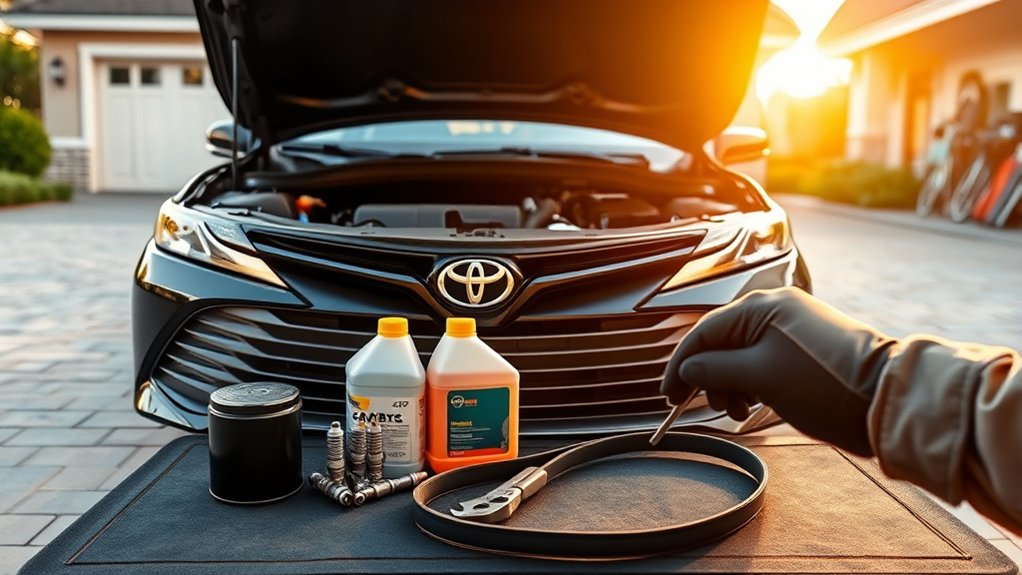
A Toyota Camry can remain dependable well beyond 150,000 miles, but there is no single maintenance package that applies to every year, engine, hybrid system, or drivetrain. The best plan combines your Camry’s factory maintenance schedule with its actual service history and present condition. At this mileage, focus on overdue fluids and filters, brakes, tires, steering and suspension parts, leaks, cooling-system health, and any symptoms that have developed with age.
Quick Answer
At 150,000 miles, service your Toyota Camry according to its exact model-year maintenance guide rather than replacing every fluid automatically. Check oil and filters, coolant history, transmission requirements, brakes, tires, steering, suspension, belts, leaks, spark-plug history, and model-specific AWD or hybrid components. Correct overdue maintenance before adding optional services.
Key Takeaways
- Your model year, engine, drivetrain, operating conditions, and previous maintenance determine what is actually due at 150,000 miles.
- A transmission flush is not a universal Toyota requirement at 150,000 miles; inspect or replace fluid according to the applicable maintenance schedule.
- Recent Camry coolant schedules may call for the first engine-coolant replacement at 100,000 miles and later replacements at 50,000-mile intervals.
- Use the exact engine-oil viscosity and specification listed for your Camry rather than choosing oil solely because the car has high mileage.
- Brakes, tires, steering, suspension, boots, filters, leaks, and open recalls deserve as much attention as engine fluids.
At a Glance
| Time Required | About 1–3 hours for a comprehensive inspection and routine service; repairs or major fluid work can take longer. |
| Difficulty | Basic for tire pressure, fluid-level, filter, and visual checks; moderate to advanced for brakes, transmission, coolant, suspension, and hybrid-system work. |
| Tools Needed | Owner’s Manual or maintenance guide, tire-pressure gauge, flashlight, maintenance records, and basic hand tools for owner-serviceable checks. A lift, scan tools, and specialty equipment may be required for deeper inspection. |
| Cost | Varies widely by model year, region, service history, parts required, and whether repairs are discovered. Request an itemized estimate before authorizing optional work. |
Understanding the Importance of Maintenance After 150,000 Miles
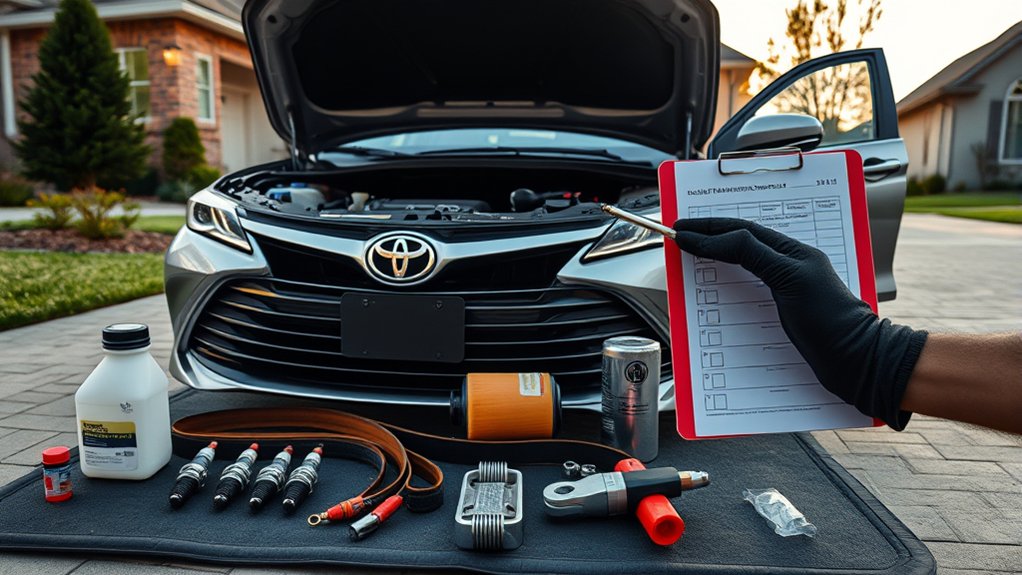
Once a Camry has passed 150,000 miles, maintenance becomes less about one milestone and more about maintaining a complete service history. Rubber components age, seals can begin to seep, suspension parts wear, fluids may have missed earlier replacement intervals, and previous owners may not have followed the factory schedule.
Toyota recommends following the factory schedule for the exact vehicle. Its current owner resources note that many Toyota vehicles have scheduled maintenance visits every 5,000 miles or six months, although the work performed at each visit varies. You can check the Toyota maintenance schedule or the maintenance guide for your specific model year.
Pro Tip: Before paying for a large “150,000-mile service package,” compare every proposed item with your Camry’s maintenance guide and your service records. Ask the shop to separate factory-scheduled work, condition-based repairs, and optional preventive services on the estimate.
Essential Maintenance Checklist for Your Toyota Camry at 150,000 Miles
A useful 150,000-mile checklist starts by determining what has already been done. A Camry with documented coolant, spark-plug, transmission, brake, and filter service may need far less work than a similar car with no maintenance records.
Confirm the Model Year, Engine, Drivetrain, and Service History
- Find your model year and engine information in the Owner’s Manual, vehicle records, or VIN-linked Toyota owner resources.
- Determine whether the vehicle is gasoline or hybrid and front-wheel drive or all-wheel drive.
- Review receipts for engine coolant, spark plugs, transmission service, brake work, filters, and previous repairs.
- Check whether the car has mostly seen normal driving or special operating conditions such as heavy loading, extensive low-speed use, repeated short cold-weather trips, or dusty-road use.
Toyota’s manuals and warranties portal is the best starting point when the paper maintenance guide is missing.
Fluid Replacement Schedule
Do not replace every fluid simply because the odometer has reached 150,000 miles. Instead, compare each fluid with the schedule for your exact Camry:
- Engine oil and filter: Replace at the interval specified for the model year and operating conditions. Some recent Camrys permit longer normal-service intervals when the specified oil is used, while special operating conditions can shorten the interval.
- Engine coolant: On applicable recent Camrys, Toyota specifies the first engine-coolant replacement at 100,000 miles/120 months and subsequent replacement every 50,000 miles/60 months. That makes 150,000 miles an important coolant milestone when the first service was completed on time.
- Transmission fluid: Follow the exact inspection or replacement interval in the model-year maintenance guide. Do not assume a power flush is automatically required.
- Brake fluid: Check level and condition and inspect the hydraulic system for leaks. Use the applicable Toyota schedule, measured fluid condition, and repair requirements rather than a universal two-year interval.
- AWD fluids: Camrys equipped with AWD can have additional differential or transfer-case inspection/service requirements.
- Hybrid cooling circuits: Hybrid Camrys may have more than one coolant circuit. The schedule for engine coolant and inverter/intercooler coolant can differ.
Essential Part Inspections
- Engine oil level and leaks: Check for consumption, valve-cover seepage, oil-pan leakage, and other signs of fluid loss.
- Spark plugs: Confirm whether the scheduled replacement has already been completed for your exact engine.
- Drive belts: Inspect for cracking, glazing, contamination, excessive wear, or other deterioration where applicable.
- Cooling system: Inspect coolant level and condition plus the radiator, hoses, connections, and water-pump area for leakage.
- Brakes: Inspect pads, discs/rotors, lines, hoses, fluid condition, and parking-brake operation.
- Steering and suspension: Check ball joints, linkage, boots, bushings, struts/shocks, wheel bearings, and abnormal free play.
- Drive-shaft/CV boots: Look for tears, grease leakage, cracking, or deterioration.
- Engine and cabin air filters: Replace when scheduled or when inspection shows excessive contamination.
- Tires: Check pressure, tread depth, age, damage, and uneven wear.
- Exhaust: Inspect pipes, mufflers, hangers, shields, and connections for rust, damage, or leaks.
Recommended Service Intervals
The table below is a planning guide, not a substitute for your Camry’s model-year maintenance schedule.
| Service Item | High-Mileage Guidance | What to Do |
|---|---|---|
| Engine Oil and Filter | Model- and use-dependent | Follow the exact normal or special-condition interval and required oil specification. |
| Transmission | Model- and use-dependent | Inspect for leakage and service fluid when the applicable Toyota schedule calls for it. |
| Engine Coolant | Often important at 150,000 miles on recent models | Verify whether the first 100,000-mile service was completed and follow the subsequent interval. |
| Spark Plugs | Engine-specific | Confirm the scheduled interval and replacement history. |
| Tire Rotation | Commonly every 5,000 miles on recent Camry schedules | Rotate according to the Owner’s Manual and inspect for abnormal wear. |
| Brakes | Inspect regularly | Measure wear and inspect fluid, hoses, lines, and discs/rotors rather than replacing parts by mileage alone. |
Toyota Camry Transmission Service Beyond 150,000 Miles
Transmission maintenance deserves attention on a high-mileage Camry, but a “complete flush at 150,000 miles” is not a universal Toyota requirement. For example, Toyota’s 2024 Camry maintenance guide lists transmission inspection at major intervals and specifies fluid replacement under certain special operating conditions. The correct procedure depends on the vehicle, transmission, prior service, and how it has been used.
Preventive Maintenance Benefits
- Find leaks early: Sealed transmissions can still develop leakage at seals, housings, or connections.
- Preserve shift quality: Correct fluid type, level, and condition help the transmission operate as designed.
- Avoid unnecessary service: Following the actual maintenance guide prevents paying for a generic flush package that may not apply.
- Create a service record: Documenting inspection and maintenance makes future diagnosis easier.
Signs of Transmission Issues
Have the vehicle diagnosed if you notice slipping, delayed engagement, harsh or erratic shifting, unusual noises, fluid leakage, warning lights, or a sudden change in driving behavior. These symptoms can have several causes, and fluid replacement alone is not a diagnosis.
Warning: If the transmission is slipping badly, will not engage a gear, leaks heavily, or triggers a serious warning message, avoid continued driving until it has been evaluated. Continuing to drive can turn a smaller fault into a more expensive failure.
Cost-Effective Service Options
- Start with the factory schedule: Identify exactly what Toyota calls for on your model.
- Inspect before replacing: Pay for diagnosis when symptoms exist rather than approving multiple services by guesswork.
- Use the correct fluid: Transmission-fluid specifications vary, so use the fluid specified for the exact transmission.
- Request an itemized estimate: Separate required maintenance from repairs and optional dealership services.
Engine Oil Recommendations for High-Mileage Toyota Camrys

High mileage does not automatically change the oil viscosity your Camry requires. Use the grade and specification listed in the Owner’s Manual for the exact model year and engine. For example, recent A25A-FKS gasoline Camrys have used 0W-16 as the specified viscosity, while applicable 2GR-FKS V6 models have used 0W-20. Older and newer Camrys may specify something different.
A product labeled “high mileage” can be used if it meets every specification required for your engine, but that label does not replace the manufacturer’s viscosity and quality requirements.
Note: Do not select a thicker oil simply because the odometer has passed 150,000 miles. If the engine is consuming oil, leaking, smoking, or making abnormal noises, diagnose the cause instead of masking the symptom with an unapproved viscosity.
Oil-change intervals also vary. Toyota documentation for recent Camrys allows longer normal-service intervals when the specified oil is used, while qualifying special operating conditions can require oil and filter replacement every 5,000 miles or six months. Follow the schedule for your exact vehicle rather than an arbitrary 3,500–4,000-kilometer interval.
How to Care for Your Cooling System: Flushing and Replacing Coolant
The cooling system becomes especially important on a high-mileage Camry because overheating can cause severe engine damage. Check the maintenance history before deciding whether coolant is overdue.
Importance of Correct Coolant Service
For applicable recent Camrys using Toyota Super Long-Life Coolant or an equivalent meeting Toyota’s requirements, the official schedule specifies an initial engine-coolant replacement at 100,000 miles/120 months and replacement every 50,000 miles/60 months afterward. That means a properly maintained vehicle may be due again around 150,000 miles.
- Control engine temperature: Correct coolant transfers heat and helps prevent overheating and freezing.
- Protect cooling-system materials: The specified coolant contains corrosion-inhibiting chemistry designed for the system.
- Catch leaks early: Inspect the radiator, hoses, connections, reservoir, water-pump area, and surrounding components.
- Respect separate hybrid circuits: Some hybrid Camrys have engine and inverter/intercooler coolant schedules that are not identical.
Signs of Coolant Issues
Watch for a rising temperature gauge or temperature warning, low coolant level, visible leakage, a sweet coolant odor, dried coolant residue, repeated need for top-offs, heater-performance changes, or unexplained overheating. A recurring low level should be diagnosed rather than repeatedly topped off.
Warning: Never remove a pressurized radiator or coolant-system cap when the system is hot. Hot coolant and steam can cause severe burns. Hybrid vehicles also contain high-voltage components; do not touch orange high-voltage cables, connectors, or the service plug.
Spark Plug Inspection and Replacement: Essential Tips
Spark-plug intervals vary by engine and model year. On the 2024 Camry schedule, for example, the 2GR-FKS V6 has a spark-plug service at 60,000 miles, while the applicable 120,000-mile service includes spark-plug replacement for the other scheduled powertrain configuration. Do not assume those numbers apply to every Camry generation.
- Check your maintenance records before buying another set of plugs.
- Use the exact plug type specified for your engine.
- Investigate misfires, rough idle, difficult starting, reduced performance, or a flashing check-engine light instead of assuming worn plugs are the only cause.
- At high mileage, inspect ignition coils, connectors, and plug wells for damage or contamination when spark plugs are serviced.
Regular Fluid Checks for Engine and Transmission Health
Fluid inspection is one of the simplest ways to detect a developing problem before it becomes a breakdown. Use the owner’s manual for the correct checking procedure because some systems are sealed or require specific temperature and service procedures.
| Fluid/System | What to Check | High-Mileage Action |
|---|---|---|
| Engine Oil | Level, leaks, consumption, service history | Use the correct viscosity/specification and scheduled interval. |
| Transmission | Leaks, shift quality, scheduled inspection/service | Follow the transmission-specific Toyota procedure. |
| Engine Coolant | Level, condition, leaks, replacement history | Confirm whether the 100k and subsequent service intervals were completed where applicable. |
| Brake Fluid | Level, condition, hydraulic leaks | Replace when the applicable schedule, measured condition, or brake repair requires it. |
| AWD Differential/Transfer Case | Leaks and applicable service history | Inspect or replace according to AWD-specific schedule and operating conditions. |
Some older Camrys may also have hydraulic power-steering fluid. Many newer models use electric power steering and therefore do not have a conventional power-steering fluid reservoir. Follow the equipment installed on your vehicle.
Tire Rotations and Alignments: Key Steps for Longevity

Regular tire care improves traction, steering response, tire life, and fuel efficiency. Recent Toyota Camry maintenance schedules commonly include tire rotation at 5,000-mile service visits. The exact pattern and restrictions should come from the Owner’s Manual.
NHTSA recommends checking cold tire pressure at least monthly and replacing tires when tread is worn to 2/32 inch.
- Rotate Tires: Follow the Camry’s specified interval and pattern to reduce irregular wear.
- Check Cold Pressure Monthly: Use the pressure on the driver’s-door tire placard or Owner’s Manual, not the maximum pressure molded into the tire sidewall.
- Inspect Tread and Sidewalls: Look for cuts, bulges, cracking, punctures, exposed material, and uneven wear.
- Check Alignment When Needed: Have alignment inspected if the car pulls, the steering wheel is off-center, tires show abnormal wear, or the car has had a significant pothole/curb impact or relevant suspension repair.
- Balance New Tires: Wheel balance should be addressed when new tires are installed or when vibration indicates a problem.
For additional tire guidance, see the NHTSA tire-safety guide.
Brake System Inspections: Keeping Your Safety in Check
Brake wear depends heavily on traffic, driving style, terrain, vehicle load, corrosion, and whether the Camry uses regenerative braking. Mileage alone cannot tell you when pads or rotors must be replaced.
Inspect pad thickness, disc/rotor condition, hoses, metal brake lines, fluid level and condition, and signs of leakage. Replace worn or damaged parts according to Toyota’s service specifications rather than relying on a universal 3-mm rule or a fixed mileage estimate.
Brake fluid also should not be assigned a universal two-year/20,000-mile replacement interval for every Camry. Toyota’s recent U.S. maintenance documentation specifies inspection of brake-fluid level and condition, with additional service based on the applicable vehicle schedule and inspection results.
Warning: Have the brake system inspected immediately if the brake warning light stays on, the pedal feels unusually soft or sinks, stopping distance increases, the vehicle pulls strongly while braking, fluid is leaking, or you hear severe grinding.
Additional High-Mileage Inspections Worth Doing
A thorough 150,000-mile inspection should look beyond the engine and transmission. Ask for the following items to be checked when they apply to your Camry:
- Ball joints and dust covers
- Steering linkage, boots, and excessive steering free play
- Struts/shocks and suspension bushings
- Drive-shaft or CV boots
- Wheel bearings and abnormal hub noise/play
- Drive belts
- Engine and cabin air filters
- Radiator, condenser, and cooling-system hoses
- Fuel-system lines and visible connections
- Exhaust pipes, mufflers, mounts, and heat shields
- 12-volt battery condition and charging-system performance
- Wiper blades, exterior lights, and washer operation
- Underbody corrosion, especially on vehicles exposed to road salt
AWD and Hybrid-Specific Items
AWD Camrys can have additional rear-differential, transfer-case, propeller-shaft, and related inspection requirements. Hybrid Camrys can add inverter/intercooler coolant and a high-voltage-battery cooling intake/filter to the maintenance list. These components should be serviced according to the exact model-year guide.
What If You Do Not Know the Maintenance History?
Do not respond to missing records by replacing everything at once. Start with safety-critical inspections, scan for diagnostic trouble codes if symptoms or warning lights exist, check fluid levels and leaks, identify obviously overdue factory items, and build a new service baseline.
- Address active warning lights, overheating, brake problems, severe leaks, or drivability concerns first.
- Verify engine oil, coolant, tires, and brakes.
- Check whether spark plugs, filters, and coolant appear overdue under the factory schedule.
- Inspect transmission, AWD components, suspension, and steering before authorizing service.
- Record the date, mileage, fluid/part specification, and work performed so the next interval is clear.
Check for Open Recalls and Keep Service Records
High mileage does not cancel an open safety recall. Enter the vehicle’s VIN in the NHTSA recall lookup to see whether an unrepaired safety recall applies to your Camry.
Keep receipts and a simple mileage log for oil, coolant, transmission work, brakes, spark plugs, tires, filters, and repairs. Accurate records prevent duplicate work and make it easier to diagnose future problems.
Community Insights: Using High-Mileage Camry Owner Experiences Wisely
High-mileage Camry owners can provide useful clues about common wear patterns, repair costs, and symptoms, but owner experiences should not replace Toyota’s maintenance schedule. A driver who changes oil every few thousand kilometers or replaces transmission fluid annually may simply be following a personal routine rather than a factory requirement.
Use forums and owner groups to learn what symptoms others experienced, then confirm the diagnosis, part specification, service interval, or repair procedure with Toyota documentation or a qualified technician. Driving conditions and maintenance history can make two 150,000-mile Camrys need very different work.
Frequently Asked Questions
What maintenance should be done on a Toyota Camry at 150,000 miles?
Start with the factory schedule for your exact year and powertrain. Check oil and filters, coolant history, transmission requirements, brakes, tires, steering and suspension, drive belts, CV or drive-shaft boots, leaks, spark-plug history, and any AWD or hybrid-specific items. Replace only the items that are scheduled, worn, contaminated, leaking, or otherwise due.
What is the Toyota 145,000-mile service?
On recent Toyota schedules built around 5,000-mile/6-month visits, 145,000 miles is another scheduled inspection point rather than a universal major overhaul. The exact work depends on model year and operating conditions, so use the maintenance guide for your Camry rather than a generic package.
Should I flush the transmission at 150,000 miles?
Not automatically. Toyota’s transmission inspection and fluid-replacement requirements vary by model year, drivetrain, and operating conditions. Check the applicable maintenance guide and service history. If the transmission already slips, shifts abnormally, leaks, or has warning lights, have the problem diagnosed rather than assuming a flush will fix it.
What are the major service intervals for a Toyota Camry?
There is no single interval list that covers every Camry generation. Recent U.S. Toyota schedules commonly use 5,000-mile/6-month maintenance checkpoints, with specific replacements occurring at longer intervals. Oil, coolant, spark plugs, filters, transmission service, AWD components, and hybrid items can all follow different schedules.
What maintenance does a Toyota Camry need after 100,000 miles?
Continue the regular maintenance schedule and verify whether major items such as engine coolant, spark plugs, filters, transmission inspections, brakes, tires, steering, suspension, and drivetrain fluids are due. On applicable recent Camrys, the first engine-coolant replacement occurs at 100,000 miles/120 months, followed by shorter subsequent intervals.
Should I switch to high-mileage oil after 150,000 miles?
You do not have to switch solely because of mileage. A high-mileage formulation can be used if it meets the oil viscosity, quality, and certification required for your exact engine. Do not substitute a different viscosity just because the engine is old unless Toyota documentation or a qualified diagnosis supports that change.
Sources
- Toyota Maintenance Schedule — factory maintenance scheduling and model-specific service guidance.
- Toyota 2024 Camry Warranty & Maintenance Guide — oil, coolant, transmission, spark-plug, brake, tire, AWD, and inspection intervals for the 2024 model.
- Toyota 2025 Camry Warranty & Maintenance Guide — current-generation maintenance chart and hybrid-specific maintenance items.
- Toyota Manuals and Warranties — official model-year Owner’s Manuals and maintenance documentation.
- NHTSA Tire Safety — tire pressure, tread, rotation, balancing, and alignment guidance.
- NHTSA Recall Lookup — VIN-based open safety-recall checks.
Conclusion
Maintaining a Toyota Camry beyond 150,000 miles is less about buying a generic “major service” and more about knowing what your exact vehicle needs. Check the model-year maintenance guide, review previous service records, correct overdue factory items, and inspect safety-critical systems such as brakes, tires, steering, suspension, and cooling. With a documented, condition-based maintenance plan, you can address developing problems early and give your Camry its best chance of delivering many more reliable miles.