If your Toyota Camry engine fan runs constantly, the fan itself may not be the problem. The cooling system can deliberately command fan operation when engine temperature rises or when the air-conditioning system needs airflow through the condenser. If the fan runs from a true cold start with the climate system off, continues after shutdown, or runs while the engine overheats, the cooling system, temperature-sensor circuit, wiring, fan controller, or relay system needs closer diagnosis.
Quick Answer
If your Toyota Camry’s radiator fan runs constantly, first check whether the A/C or defroster is requesting airflow and whether the engine is actually hot. If the fan runs from a cold start with climate control off, inspect coolant level, ECT data, wiring, and the fan-control circuit. Diagnose by model year before replacing parts.
Key Takeaways
- Cooling-fan operation with the A/C on or with high coolant temperature can be normal.
- A fan that starts immediately on a cold engine with climate control fully off deserves further diagnosis.
- Do not automatically buy a fan relay or coolant-temperature sensor; Camry control hardware varies by model year, engine, and hybrid configuration.
- Low coolant, leaks, thermostat or coolant-flow problems can create genuine overheating, which can make continuous fan operation a symptom rather than the cause.
- An OBD-II scan tool can help separate a temperature-input problem from an electrical fan-control problem.
At a Glance
| Time Required | 10–20 minutes for basic checks; longer for scan-tool and electrical diagnosis |
| Difficulty | Easy for observation and coolant checks; moderate to advanced for electrical testing |
| Tools Needed | Flashlight, vehicle-specific fuse/service information, OBD-II scan tool; multimeter for qualified electrical testing |
| Cost | Basic visual checks cost nothing; scan diagnosis and repairs vary with the actual fault and Camry model year |
Warning: Never remove a radiator or pressurized coolant-system cap while the engine is hot. Hot coolant and steam can cause severe burns. Also keep hands, clothing, hair, and tools away from electric cooling fans. Toyota warns that an electric cooling fan can start automatically when conditions call for it.
Is Constant Camry Fan Operation Normal?
Sometimes. Before assuming the fan has failed, note exactly when it operates.
- Fan runs with the A/C on: This can be normal because the condenser needs airflow, especially while the car is stopped or moving slowly.
- Fan runs when engine temperature is high: This is normal fan behavior, although the reason the engine became unusually hot may still require diagnosis.
- Fan starts immediately on a fully cold engine with A/C and defrost off: This is more suspicious and can point toward incorrect temperature data, wiring, fan-control electronics, or another control input.
- Fan continues indefinitely after shutdown: A brief after-run strategy can vary by vehicle, but a fan that does not stop or begins draining the 12-volt battery should be diagnosed.
- Fan runs constantly while the temperature gauge continues climbing: Treat this as a possible overheating problem, not simply a fan-control problem.
Note: Camry cooling-fan hardware is not identical across every generation. Older vehicles may use temperature switches and conventional relays, while other versions use ECU-controlled relays, fan controllers, or integrated electronic control. Confirm the model year, engine, and hybrid status before testing or replacing electrical parts.
Getting to Know Your Camry’s Cooling System
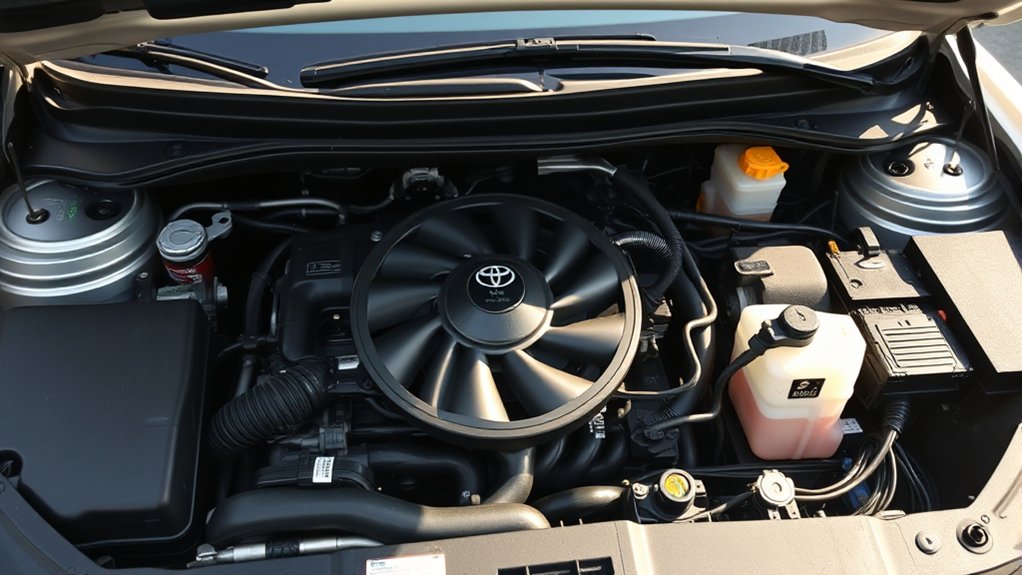
Your Toyota Camry’s cooling system removes heat from the engine through coolant circulation, the radiator, airflow, and electronic controls. Depending on the model year, the system can include the radiator, coolant reservoir, thermostat or coolant-control hardware, electric water pump or mechanically driven pump, temperature sensors, cooling fans, and electronic fan-control components.
The radiator fan pulls air through the radiator and A/C condenser when natural airflow is not enough. The engine-control system also uses coolant-temperature information when managing engine operation. DENSO notes that coolant-temperature-sensor data can be used by the ECU for functions such as fuel injection and ignition control.
Regular maintenance remains important. Check the coolant level only when the cooling system is cold, watch for leaks, and use the coolant specified for your exact Camry.
A cooling fan that is running is not proof that the fan system has failed. First determine whether the car is deliberately commanding the fan because of coolant temperature or climate-system demand.
A malfunctioning coolant-temperature sensor or damaged temperature-sensor circuit can send implausible data to the control module. Depending on the vehicle’s control strategy, the system may respond conservatively by increasing cooling-fan operation.
Fan operation during idling, hot weather, heavy traffic, or A/C use can therefore be expected in many situations. What matters is whether the operation matches engine temperature and operating conditions.
Signs Your Engine Fan Is Always On
Have you noticed your engine fan running constantly? Record the pattern before replacing anything.
- The fan runs immediately after a true cold start even though the A/C and windshield defroster are off.
- The fan stays at high speed regardless of engine temperature.
- The fan keeps operating after the vehicle is shut down and does not stop within a reasonable period.
- The 12-volt battery becomes weak after the fan remains powered with the vehicle off.
- The check-engine light or temperature warning appears at the same time.
- The temperature gauge reads abnormally low, abnormally high, or behaves erratically.
- The engine overheats even though the fan is already running.
A faulty coolant-temperature sensor is one possible cause, but so are damaged wiring, a disconnected sensor circuit, an electrical control fault, a fan controller, a relay on vehicles that use one, an A/C-related request, or genuine overheating.
Low coolant should not be treated simply as a false-sensor problem. A low coolant level may mean the system is leaking and can reduce its ability to control engine temperature.
Key Reasons Your Fan Runs Continuously
Several conditions can make a Camry cooling fan operate for an unusually long time.
- Normal A/C or condenser-cooling demand: The cooling fan may operate when the air conditioner is active because airflow is required through the condenser.
- High engine coolant temperature: The control system may correctly command continuous fan operation because the engine is genuinely hot.
- Faulty or implausible ECT signal: A failed Engine Coolant Temperature sensor, poor connector, damaged wire, or circuit fault can provide incorrect data.
- Fan relay or fan-controller fault: Depending on the Camry, a stuck relay, failed fan-control module, integrated controller, or power-stage fault may keep a fan powered.
- Shorted or damaged wiring: Wiring damage can create incorrect fan-control behavior even when the sensor and fan motor are good.
- Low coolant or a cooling-system leak: This can cause genuine overheating and prolonged fan operation.
- Thermostat or coolant-flow problem: If coolant cannot circulate or release heat efficiently, the fan may stay on because temperature remains high.
- Restricted radiator airflow or heat transfer: Debris, damaged fins, or an internal cooling-system problem can reduce heat rejection.
- Climate-control or pressure-related request: The fan may be commanded because the A/C system needs condenser cooling even when engine temperature is normal.
A fan that stays powered when the control system is no longer requesting cooling points toward the power side of the fan circuit rather than automatically proving that the temperature sensor is bad.
Diagnosing a Faulty Fan Relay or Fan-Control Circuit
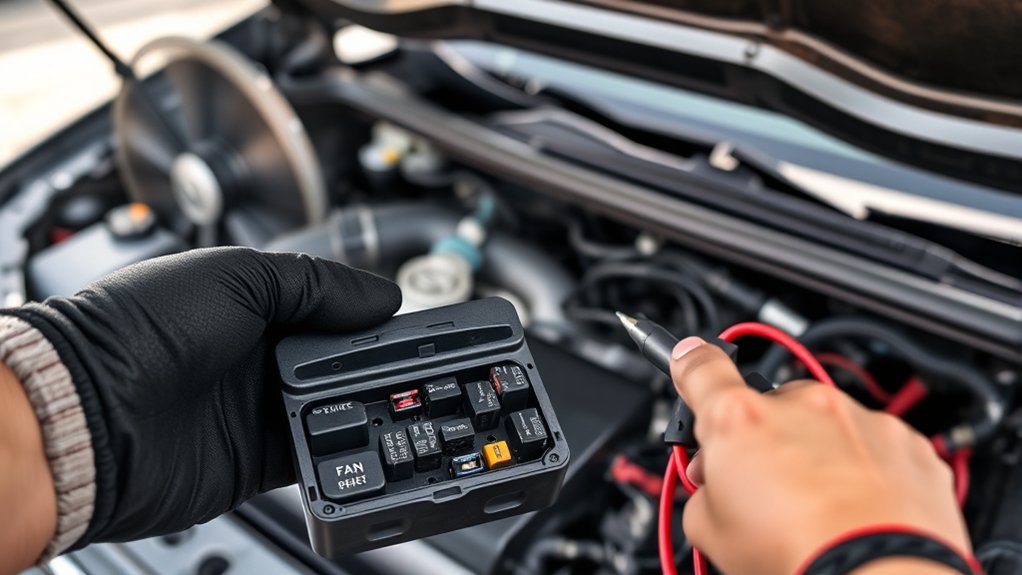
Do not begin diagnosis by buying a relay. First determine whether your specific Camry uses a conventional fan relay, an electronic fan controller, or another control layout.
Follow this sequence:
- Record the conditions. Note whether the engine is cold or hot, whether A/C or windshield defrost is on, whether warning lights are present, and whether the fan continues after shutdown.
- Switch the climate system fully off. If fan behavior changes, the climate system may have been requesting condenser airflow.
- Check coolant only when cold. Inspect the reservoir level and look for obvious leakage. Do not open a hot pressurized cooling system.
- Scan for diagnostic trouble codes. Do this before disconnecting sensors or clearing codes so useful evidence is not lost.
- Check live coolant-temperature data. After the car has sat long enough to become fully cold, an ECT value that is obviously inconsistent with ambient conditions is a strong clue that the temperature signal needs testing.
- Compare fan command with actual fan operation if your scan tool supports it. If the control system commands the fan on, diagnose why. If it commands the fan off but the fan keeps running, focus more heavily on the controller, relay, power circuit, or wiring.
- Inspect connectors and wiring. Look for corrosion, loose pins, water intrusion, damaged insulation, previous repairs, or disconnected plugs.
- Test relays only when applicable. If service information confirms a relay-based circuit, inspect and electrically test the correct relay. Do not swap relays unless the replacement is confirmed to have the same specification and pin configuration.
Pro Tip: A cold-soak scan is often more useful than immediately replacing a sensor. If the engine has been parked overnight, coolant-temperature data should make sense for the surrounding temperature. An implausible reading gives you a direction for testing, but it still does not prove the sensor itself is bad; wiring and connectors can create the same symptom.
The Role of the Coolant Temperature Sensor
The coolant temperature sensor (CTS or ECT sensor) detects engine-coolant temperature and sends that information to the engine-management system. The ECU can use this information for several functions, including fuel and ignition control.
If the signal becomes implausible because of a failed sensor, connector fault, or damaged wiring, you may notice fan-control problems along with other engine-management symptoms.
Sensor Malfunction Symptoms
Possible symptoms of a coolant-temperature-signal problem include:
- Erratic or implausible temperature information.
- Poor fuel economy.
- The engine running richer or leaner than expected.
- A check-engine light or stored sensor/circuit fault.
- Cooling fans operating when the engine does not appear to require additional cooling.
These symptoms overlap with other faults, so scan data and circuit testing are more reliable than replacing the sensor based on fan noise alone.
Importance of Accurate Temperature Data
The important issue is not a do-it-yourself “calibration” procedure. It is whether the coolant-temperature signal is accurate and believable.
The control module depends on temperature data when making engine-management decisions. If that data is wrong, the system can behave differently from what the actual engine temperature would require.
Also make sure the coolant level is correct when the engine is cold. Significant coolant loss or trapped air after cooling-system service can create cooling problems and should be corrected using the proper bleeding procedure for that specific Camry.
Model Year, Engine, and Hybrid Differences Matter
Toyota has produced the Camry with different engines, electrical systems, fan assemblies, and cooling-system layouts. A diagnostic step that is correct for one generation may be wrong for another.
Before disconnecting relays or ordering parts, identify:
- Model year
- Engine
- Gasoline or hybrid configuration
- Which under-hood fan is running
- Whether the fan is controlled by a conventional relay or an electronic controller
Use the Toyota Owners manuals and warranties portal to locate information for your model year. More detailed electrical diagnosis may require Toyota service information or an equivalent professional wiring diagram.
Warning for Camry Hybrid owners: The hybrid system contains high-voltage components and orange high-voltage wiring. Do not probe, disconnect, disassemble, or service high-voltage components as part of a cooling-fan diagnosis. The under-hood radiator/condenser fan is also different from the hybrid-battery cooling system.
What to Do If Your Fan Runs Continuously?
If your Camry fan will not shut off, work from the easiest observations toward electrical testing:
- Turn the A/C and defroster fully off. See whether fan operation changes.
- Check the temperature display or gauge. If the engine is overheating, treat that as the priority.
- Let the engine become fully cold before checking coolant. Look for low level or visible leaks.
- Check for stored trouble codes. Record them before clearing anything.
- Read live ECT data. Compare the cold reading with realistic ambient conditions.
- Inspect the ECT connector and nearby wiring. A disconnected or damaged circuit can imitate a failed sensor.
- Identify the fan-control design for your exact Camry. Inspect the correct relay, controller, fuse, wiring, and connectors rather than assuming one component.
- Compare control command with actual operation when possible. This helps separate an input problem from a stuck electrical output.
Replace the coolant-temperature sensor, fan relay, fan controller, or wiring only after diagnosis supports that repair.
What If the Fan Keeps Running After the Car Is Off?
First, note how long the fan remains on and whether the vehicle was very hot just before shutdown. Control strategy varies by model year, so a short period of fan activity should be evaluated against the correct owner or service information.
A fan that continues indefinitely, restarts unexpectedly while the car is cold, or drains the 12-volt battery is not something to ignore. Possible areas include a stuck relay where fitted, fan controller or power-stage failure, shorted wiring, or an incorrect control signal.
Do not remove the cooling-fan fuse and then continue driving as a permanent solution. Disabling the fan can leave the engine without enough airflow during traffic, idling, or A/C operation.
Maintenance Tips to Prevent Future Cooling Issues
To reduce future cooling-system trouble in your Toyota Camry, establish a regular maintenance routine based on the schedule for your exact model year.
Check the coolant level with the engine cold and investigate unexplained coolant loss instead of repeatedly topping it off. Inspect the radiator and condenser area for heavy debris or visible damage, and watch for coolant stains around hoses, connections, the reservoir, radiator, and pump area.
Periodically inspect the coolant-temperature-sensor connector and wiring when other service work exposes that area. Keep electrical connectors secure and protected from contamination.
The original maintenance discussion also mentions the idle air control valve and vacuum leaks. Those faults can matter on Camrys equipped with the relevant hardware because they may cause idle or drivability problems, but they are not primary causes of a radiator fan being commanded on continuously. Diagnose those systems separately when their own symptoms are present.
Follow Toyota’s maintenance guidance for coolant inspection and replacement rather than using a generic flush interval that may not match your Camry.
When to Consult a Mechanic for Persistent Problems?
Seek professional help if the fan problem continues after the basic checks or if the vehicle shows signs of overheating.
- Continuous fan operation after shutdown: Have the electrical control circuit diagnosed if the fan will not stop and threatens to discharge the 12-volt battery.
- Fan runs while temperature keeps rising: Stop driving when safe and have the cooling system inspected. A working fan cannot compensate for every coolant-flow, thermostat, radiator, leak, or pump problem.
- Fan behavior does not match scan data: This usually requires a wiring diagram and electrical testing of the controller, relay system, power supply, and command circuit.
- Temperature data is implausible: A technician can test the ECT sensor circuit instead of replacing parts by trial and error.
- You already replaced a sensor or relay without success: Further parts swapping is unlikely to be efficient. Diagnose the full circuit.
- Hybrid electrical components are involved: Leave high-voltage diagnosis to qualified personnel.
You can also check your VIN through the NHTSA recall lookup for any open safety recalls that apply specifically to your vehicle.
Related Guides
Frequently Asked Questions
What Would Cause My Radiator Fan to Run Continuously?
Possible causes include normal A/C demand, genuinely high coolant temperature, an inaccurate coolant-temperature signal, damaged sensor wiring, a fan controller or relay fault depending on the model, shorted wiring, low coolant, restricted heat transfer, or another cooling-system problem. Start by noting whether the engine is cold or hot and whether the climate system is on.
What Causes the Fan to Keep Running When the Car Is Off?
The answer depends on the Camry’s model year and control system. If the fan continues indefinitely or drains the 12-volt battery, possible causes include a stuck relay where one is used, an electronic fan-controller fault, shorted wiring, or an incorrect control signal. Do not disable the fan permanently to stop the noise.
What Is the Most Common Problem With the Toyota Camry?
There is no single problem that can accurately be called the most common across every Camry generation, engine, and model year. If you are troubleshooting a specific car, use its year, engine, symptoms, diagnostic codes, maintenance history, and VIN-specific recall information rather than relying on a general Camry failure claim.
Can a Bad Coolant Temperature Sensor Cause a Fan to Stay On?
Yes, an incorrect coolant-temperature signal can contribute to abnormal fan behavior, but the sensor itself is only one possibility. A connector problem or damaged wiring can create similar data. Read fault codes and live ECT data before replacing the sensor.
Does the A/C Make a Toyota Camry Cooling Fan Run?
It can. Toyota owner guidance notes that electric cooling fans may operate when air conditioning is on and/or coolant temperature is high. If you are diagnosing constant fan operation, turn the A/C and windshield defroster fully off and compare the behavior.
Is It Safe to Drive If the Radiator Fan Runs Constantly?
Do not judge safety from fan noise alone. If coolant temperature is normal and there are no warnings, the issue may be an electrical or control fault that still needs diagnosis. If the temperature gauge rises into the hot range, a high-temperature warning appears, coolant is leaking, or steam is visible, stop safely and address the overheating condition.
Conclusion
A Toyota Camry engine fan that runs constantly is a symptom, not a diagnosis. The fan may be operating normally because the A/C needs airflow or because coolant temperature is high. If it runs on a cold engine with climate control off, remains powered after shutdown, or cannot prevent overheating, check coolant condition, scan data, the ECT circuit, wiring, and the correct fan-control hardware for your model year. Confirm the fault before replacing a sensor, relay, controller, or fan assembly.
Sources
- Toyota Owners — Manuals and Warranties — model-year-specific owner information, cooling-system precautions, and operating guidance.
- DENSO Auto Parts — Coolant Temperature Sensors — ECT sensor function and common sensor-failure symptoms.
- National Highway Traffic Safety Administration — Recall Lookup — VIN-specific safety recall checking.
- Toyota Technical Information System — vehicle-specific Toyota technical and service information for detailed electrical diagnosis.

