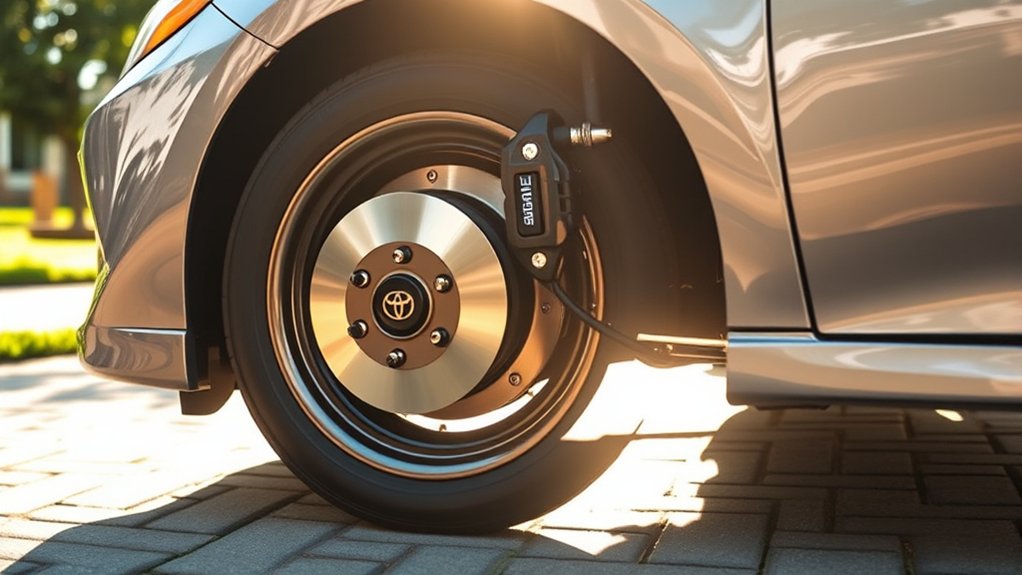
Toyota Camry Hybrid brake blending automatically combines regenerative braking with hydraulic friction braking. During light or moderate deceleration, a motor-generator can slow the car while recovering some energy for the traction battery. The hydraulic brakes add the force needed for harder stops, low-speed control, limited battery charging, or traction and stability intervention. You use the brake pedal normally; the car manages the blend in the background.
Last updated: September 22, 2026 — rechecked against Toyota’s 2025 and 2026 Camry information, Toyota owner-manual guidance, and U.S. Department of Energy hybrid-braking references.
Quick Answer
Toyota Camry Hybrid brake blending uses regenerative braking for as much of a normal slowdown as operating conditions allow, then adds hydraulic friction braking to meet the driver’s requested deceleration. Friction braking becomes more important during hard stops, at very low speed, when the battery cannot accept as much charge, or when ABS and stability systems are managing traction. The transition is automatic; safe stopping always takes priority over energy recovery.
Key Takeaways
- Regenerative braking turns a drive motor into a generator and sends recovered electricity to the hybrid battery.
- Hydraulic friction brakes add or take over whenever regeneration cannot provide the requested braking force.
- Speed, brake demand, battery condition, temperature, traction, and stability-system activity can change the blend.
- A slight, predictable change in deceleration near the end of a stop can be normal.
- Warning lights, grinding, pulling, a sinking pedal, or reduced stopping power require prompt inspection.
What Brake Blending Means in a Toyota Camry Hybrid
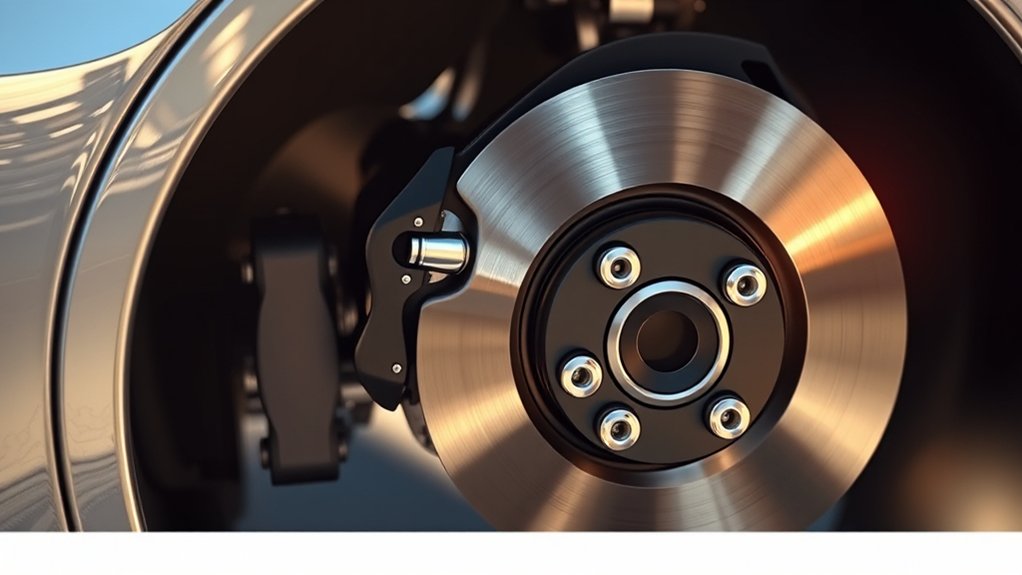
Brake blending applies to Camry models equipped with Toyota’s hybrid system. Earlier U.S. Camry lineups included both gasoline-only and hybrid versions, so only models identified as a Camry Hybrid recover braking energy through the hybrid drive system. For the 2025 and 2026 U.S. model years, Toyota lists the Camry as an all-hybrid lineup. Other countries may have different engines, trims, and model-year timing, so confirm the powertrain in the owner’s manual or by vehicle identification number.
| Camry type | Regenerative brake blending? | What to check |
|---|---|---|
| Earlier Camry Hybrid models | Yes | Use the manual for the exact year because displays, controls, and brake feel vary. |
| Earlier gasoline-only Camry models | No hybrid energy recovery | These models use conventional friction braking, although they still may have ABS and stability control. |
| 2025–2026 U.S. Camry | Yes; the U.S. lineup is hybrid | Follow the model-year manual for drive modes, warning messages, and maintenance. |
| Camry sold outside the United States | Varies by market | Confirm the engine and hybrid designation instead of relying on the model name alone. |
In a hybrid Camry, the brake-control system interprets pedal input as a request for deceleration. It can use the motor-generators to create drag and generate electricity, the hydraulic brakes to clamp the brake rotors, or both at the same time.
The U.S. Department of Energy explains that a hybrid charges its traction battery partly through regenerative braking. During deceleration, rotating wheels can drive a motor-generator, and the generated electricity is sent toward the traction battery when the system can accept it.
Brake blending is not a choice between regenerative and friction braking. It is the controlled use of both systems to deliver the stopping force the driver requests.
Toyota calls the electronically managed hydraulic system Electronically Controlled Braking. In its 2025 Camry technical announcement, Toyota said a new pump motor in the brake actuator provided on-demand pressurization to improve controllability and brake feel. The exact hardware, display, control logic, and pedal feel differ by model year, so the Toyota owner-manual portal remains the best source for vehicle-specific instructions.
How Regenerative Braking Works With Friction Brakes
Regenerative and friction braking work together. The vehicle continuously calculates the total braking force requested, how much regenerative force is available, and how much hydraulic force is needed to make up the difference.
Toyota technical literature describes this principle as regenerative cooperative control: the brake-control system coordinates motor-generator braking with hydraulic wheel-brake pressure so the requested stopping force remains consistent while recoverable energy is captured. The exact hardware and control strategy vary by generation.
How Regenerative Braking Activates
When you release the accelerator or press the brake pedal, the hybrid control system may command a motor-generator to resist wheel rotation. That resistance slows the car while converting part of its kinetic energy into electrical energy.
The system routes that electricity toward the traction battery when operating conditions allow. Energy recovery changes from one stop to another because of several factors:
- Requested deceleration: A gentle stop may allow regeneration to provide a larger share of the braking than a sudden stop.
- Vehicle speed: Available regenerative torque changes with speed, and hydraulic braking normally becomes more important as the car approaches a complete stop.
- Battery state and temperature: Regeneration can be limited when the battery is near its managed charge limit, is very cold, is hot, or otherwise cannot accept the usual charging power.
- Wheel traction: ABS and stability controls may reduce or change regenerative torque while managing wheel slip.
- System protection: The control system can limit energy recovery to protect the battery, motor-generators, and power electronics.
Some Camry models show a power-flow display or a charge area on the hybrid system indicator. Treat it as feedback, not as a braking target. Keep your attention on traffic, leave enough stopping distance, and use the brake pedal as conditions require.
When Friction Brakes Engage
The hydraulic friction brakes engage whenever regenerative braking alone cannot meet the requested deceleration. They may provide a larger share during the final part of a stop, hard or emergency braking, ABS operation, poor traction, or conditions that limit battery charging.
The changeover does not occur at one universal speed for every Camry. Exact thresholds and control strategies vary by generation, software, battery condition, road grip, and braking demand. For the same reason, there is no single energy-recovery percentage that accurately describes every stop.
Note: A slight and repeatable change in deceleration near the end of a stop can be normal as the system shifts more work to the friction brakes. A strong surge, repeated grab, warning light, or major pedal change should be inspected.
What Happens During a Blended Stop
A typical stop follows this sequence, although the driver usually does not feel each step separately:
- You request deceleration. Sensors measure brake-pedal movement and other vehicle conditions.
- The controller calculates available regeneration. It considers speed, battery acceptance, traction, and the requested stopping force.
- The motor-generator slows the car. Electrical energy flows toward the traction battery when conditions allow.
- Hydraulic pressure fills the gap. Friction brakes provide any additional force needed.
- Friction braking completes and holds the stop. As regenerative torque becomes less useful at very low speed, hydraulic braking supplies the control needed to stop and hold the vehicle.
During a hard or emergency stop, the system does not delay braking to save energy. It commands the braking force needed for safety, even when that means relying heavily on the friction brakes and recovering little or no energy.
| Driving situation | Likely brake-blending behavior | What the driver should do |
|---|---|---|
| Early, gentle slowdown | Regeneration can provide a larger share while hydraulic brakes fill any gap. | Brake smoothly and keep a safe following distance. |
| Hard or emergency stop | Friction braking supplies more of the required stopping force; energy recovery becomes secondary. | Use the braking force needed to stop safely. |
| Very low speed / final stop | Hydraulic braking becomes more important for precise stop-and-hold control. | Expect a subtle transition, not a surge or loss of response. |
| Battery near its managed charge limit or temperature-limited | Available regeneration can decrease, so friction braking may do more work. | Drive normally; do not chase the CHG display. |
| ABS / stability control on a slippery surface | Regenerative torque may be reduced or changed while the system manages wheel slip. | Prioritize traction, steering control, and stopping distance. |
Is Camry Brake Blending the Same as One-Pedal Driving?
No. The Camry Hybrid uses regenerative braking, but the 2025–2026 U.S. Camry is designed for conventional brake-pedal use rather than a high-regeneration one-pedal driving mode. Lifting off the accelerator can create some deceleration and energy recovery, but you should still use the brake pedal for normal stops, traffic control, parking, and any situation that requires predictable braking.
This distinction matters because regenerative braking and one-pedal driving are not synonyms. Brake blending describes how the car combines motor-generator braking and hydraulic braking after you request deceleration; one-pedal driving describes a driver-control strategy in which accelerator lift-off alone can provide strong deceleration and, on some vehicles, bring the vehicle to a stop.
Benefits and Limits of Regenerative Braking
Regenerative braking improves hybrid efficiency because it recovers part of the vehicle’s motion instead of turning all braking energy into heat. It also reduces how often the friction brakes must provide the entire stopping force.
Energy Recovery and Fuel Economy
The captured electricity can later help power the electric motor, reducing some of the work required from the gasoline engine. The opportunity is usually greater in stop-and-go driving than during long periods of steady-speed travel because the vehicle slows more often.
No single recovery percentage applies to every stop or every Camry. Published efficiency figures may measure different things, such as motor efficiency, battery charging efficiency, or the share of trip energy recovered. Speed, braking force, traffic, terrain, battery charge, temperature, tire grip, and drivetrain losses all affect the result.
Reduced Friction-Brake Wear
Because regeneration can handle part of normal deceleration, brake pads and rotors may wear more slowly than they would in a similar non-hybrid vehicle. The U.S. Department of Energy’s maintenance guidance says hybrid brake systems generally last longer because regenerative braking reduces friction-brake use.
That does not make the hydraulic brakes maintenance-free. Pads can wear, rotors can corrode, caliper slides can stick, hoses and seals can leak, and brake fluid can deteriorate. Cars driven gently, parked for long periods, or used in wet and salty climates may develop rotor corrosion even when the pads still have substantial thickness.
Environmental Effects
Recovering energy can reduce fuel use and tailpipe emissions over the vehicle’s operating cycle. Using the friction brakes less often may also reduce some brake-wear material during routine driving. The total environmental effect still depends on driving conditions, energy losses, tire and road wear, climate, and maintenance.
Regeneration cannot recover all braking energy. Air resistance, rolling resistance, electrical losses, battery limits, and friction braking still dissipate part of the vehicle’s energy. Safe stopping always takes priority over maximizing battery charge.
Driving Techniques for Smooth, Efficient Braking
You do not need a special braking method to drive a Camry Hybrid safely. Normal, smooth driving lets the control system manage the blend. For a technique-focused companion, see Toyota Camry regenerative braking tips. These habits can improve efficiency without distracting you from the road:
- Look farther ahead. Ease off the accelerator early when traffic is slowing.
- Brake progressively. Apply steady pressure instead of waiting and braking sharply.
- Leave a safe following distance. More space gives you time to slow gradually and respond to hazards.
- Use Drive for normal travel. Do not select a lower range only to chase a larger charge reading.
- Follow the manual on long descents. Use the recommended range or braking mode, when equipped, to control speed and reduce friction-brake overheating.
- Do not coast in Neutral. Neutral can prevent normal regenerative braking and removes the ability to accelerate immediately if conditions change.
Pro Tip: The most efficient stop is often the one avoided through early observation. A steady pace, adequate following distance, and early deceleration usually save more energy than trying to maximize the charge gauge during every braking event.
“Pulse and glide” is often misunderstood and can encourage unnecessary speed changes. In everyday traffic, smooth acceleration, steady cruising, and early deceleration are simpler, more predictable, and safer efficiency strategies.
Lower Ranges, Braking Modes, and Long Descents
A lower range or braking mode is primarily a speed-control tool for long or steep descents. On the 2025 U.S. Camry, Toyota uses an S mode with selectable ranges that can increase engine braking; older Camry Hybrid generations used different selector labels, including B on some models. These modes do not guarantee faster battery charging, especially when the traction battery is already near its managed charge limit. Use D for normal driving and follow the selector guidance in the owner’s manual for your exact Camry.
What Drivers May Notice During Brake Blending
Brake feel can vary among Camry generations. Toyota revised the 2025 Camry’s electronically controlled braking hardware to improve controllability and pedal feel, but a hybrid brake pedal may still feel different from the pedal in a conventional gasoline vehicle.
Normal Brake-Blending Characteristics
- A smooth initial slowdown with light pedal pressure.
- A subtle, predictable change in deceleration as the car approaches a stop.
- Less visible charging when the battery is near its managed upper limit.
- Reduced regeneration during hard braking, slippery conditions, or ABS activity.
- A different pedal response from another vehicle, especially immediately after switching cars.
These sensations should remain predictable. The car should track straight, respond promptly, and stop with reasonable pedal effort.
Normal Feel Versus Warning Signs
| Often normal | Needs inspection |
|---|---|
| A slight, repeatable transition near the end of a stop | A new surge, repeated grab, or sudden loss of braking response |
| Less regeneration when the battery is cold or near its charge limit | A persistent brake, ABS, stability-control, or hybrid-system warning |
| Pedal pulsation during active ABS braking on a slippery surface | Pulsation during ordinary dry-road braking, especially if it is worsening |
| A charge display that changes from one trip to another | Grinding, pulling, a sinking pedal, fluid loss, smoke, or an overheated wheel |
Signs That Deserve Inspection
Do not dismiss a sudden or worsening brake change as “just the hybrid system.” Have the vehicle inspected if you notice:
- Grinding, scraping, or repeated clunking during braking.
- A soft, sinking, unusually hard, or repeatedly pulsating pedal during ordinary braking.
- The car pulling to one side.
- Longer stopping distance or reduced braking response.
- A persistent brake, ABS, stability-control, or hybrid-system warning.
- A burning smell, smoke, visible fluid, or an overheated wheel.
How to Troubleshoot Brake Performance Issues
Brake diagnosis should begin with safety, not with trying to decide whether the regenerative system or friction system is responsible. Electronic, hydraulic, traction, and hybrid-control components work together, so a fault in one area can affect overall braking behavior. If a dashboard warning is part of the symptom, use the separate Toyota Camry brake-system warning-light guide to identify the exact warning before driving farther.
Warning: If braking power is reduced, the pedal sinks, a red brake warning remains on, fluid is leaking, or the vehicle cannot stop normally, pull over as safely as possible and arrange professional assistance. Do not continue driving to see whether the problem clears.
- Read the warning message. Check the instrument panel and the owner’s manual for the exact light or message.
- Note when the symptom occurs. Record speed, road conditions, temperature, pedal feel, sounds, and whether ABS or stability control activated.
- Check the brake-fluid reservoir only when it is safe. A low level can accompany worn pads or a leak. Do not open the hydraulic system or simply add fluid without finding the cause.
- Inspect visible brake parts without crawling under an unsupported vehicle. Look for obvious fluid leakage, severe rotor scoring, damaged hoses, smoke, or an unusually hot wheel.
- Have diagnostic codes scanned with suitable equipment. Relevant faults may involve the brake actuator, wheel-speed sensors, ABS, stability control, hybrid control, power supply, or related circuits.
- Use a qualified technician. Hybrid brake systems use electronically controlled hydraulic components and the vehicle contains high-voltage equipment. Correct service procedures and diagnostic tools are important.
The charge display alone is not a reliable brake diagnostic. A low or absent regeneration reading can result from battery state, temperature, low vehicle speed, strong brake demand, traction-control activity, or normal system limits.
Seasonal Effects on Regenerative Braking
Cold weather can change hybrid operation because the battery and other components may need to warm before they can accept or deliver their usual power. You may see less regenerative charging during the first part of a cold trip or when the battery is near a charge limit.
Winter also changes the road surface. On snow, ice, gravel, or loose material, the vehicle may alter regenerative torque while ABS and stability controls manage traction. That change can be normal, but the driver must still slow down for the available grip.
Winter tires can slightly affect fuel economy because of tread design, rolling resistance, and cold tire pressure. They do not require a higher speed for regeneration. Drive at a speed appropriate for visibility, traffic, and road conditions.
In wet or salty climates, inspect the friction brakes regularly. Because a hybrid may use them less during gentle driving, corrosion can develop on rotor surfaces or caliper hardware even when pad wear is modest.
Best Maintenance Practices for Hybrid Brakes
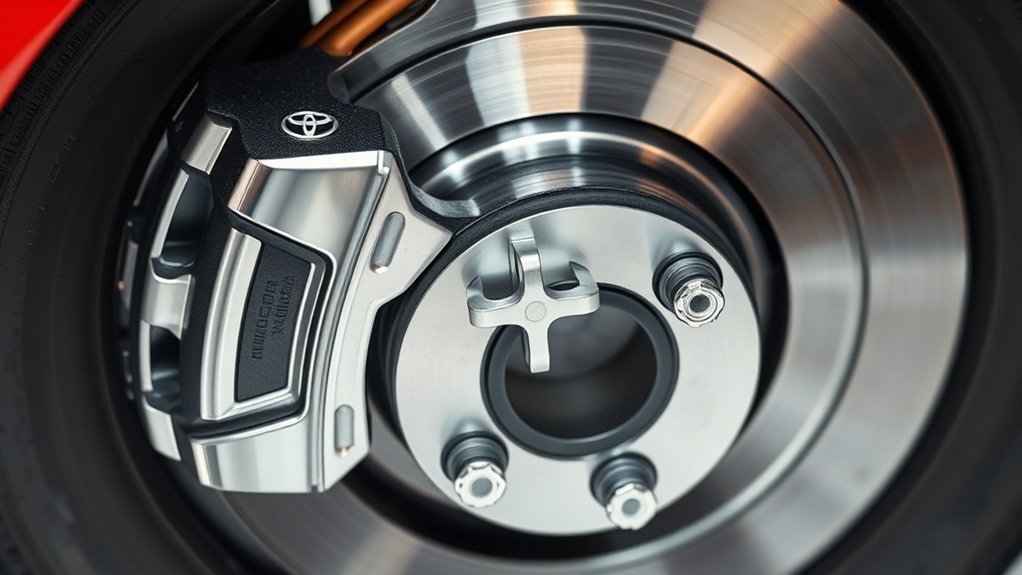
Follow the maintenance schedule for the exact year and market. Toyota provides model-specific manuals and warranty-and-maintenance guides through its official owner-manual portal. For inspection timing and what technicians should check, see the Toyota Camry brake inspection interval guide.
- Inspect pads, rotors, and calipers. Check pad thickness, wear pattern, corrosion, slide-pin movement, and rotor condition.
- Inspect brake fluid and hydraulic parts. Follow Toyota’s model-specific inspection and replacement guidance, and repair leaks immediately.
- Address warning lights promptly. Brake-actuator, ABS, wheel-speed-sensor, power-supply, and hybrid-control faults require proper diagnosis.
- Keep tires matched and correctly inflated. Tire condition affects traction, ABS operation, stability control, and stopping performance.
- Use the correct service procedure. Electronically controlled brake components require model-specific depressurization, initialization, bleeding, and diagnostic steps.
- Use the friction brakes normally. Safe, ordinary braking helps sweep light surface film from the rotors, but do not perform hard stops solely for maintenance.
Regenerative braking can extend friction-brake life, but mileage alone cannot show whether pads, rotors, calipers, or fluid are healthy. Inspection condition matters more than a universal replacement interval.
Brake Blending on the 2025 and 2026 Camry
The 2025 U.S. Camry introduced Toyota’s fifth-generation hybrid system across the lineup. Toyota also adopted an updated Electronically Controlled Braking system with on-demand pressurization from a new pump motor in the brake actuator. Toyota described the change in terms of controllability and brake feel; it did not publish one universal regeneration percentage or one fixed transition speed.
Toyota’s 2026 Camry announcement confirms that the U.S. lineup remains exclusively hybrid and continues to use Electronically Controlled Braking with pump-motor pressurization in the brake actuator. That supports the 2025–2026 scope used in this guide without assuming what Toyota may offer in later model years.
All-wheel-drive Camry models use a dedicated rear electric motor for traction. Toyota’s public product information does not specify that every motor supplies the same regenerative contribution in every condition. Drivers should therefore avoid assumptions about front-versus-rear energy recovery; the control strategy can vary with speed, battery condition, traction, and stability-control demand.
Brake-blending development continues to focus on smoother pedal feel, faster pressure control, and better coordination with driver-assistance and stability systems. Even as the transition becomes less noticeable, hydraulic friction brakes remain essential for full stopping capability, low-speed control, emergency braking, and backup functions.
Frequently Asked Questions
How does Toyota regenerative braking work?
During deceleration, a motor-generator creates resistance that slows the vehicle and converts part of its kinetic energy into electricity. The hybrid system sends that electricity toward the traction battery when the battery and other operating conditions allow it.
What is the difference between friction braking and regenerative braking?
Friction braking uses pads and rotors to turn motion into heat. Regenerative braking uses a motor-generator to slow the vehicle while recovering some energy as electricity. A Camry Hybrid blends both methods automatically.
Does every Toyota Camry have regenerative braking?
No. Earlier Camry lineups included gasoline-only models that do not recover braking energy. Camry Hybrid models do, and the 2025 and 2026 U.S. Camry lineups are hybrid. Availability outside the United States varies by market.
Why does regenerative braking sometimes feel weaker?
Regeneration may be limited when the battery cannot accept much charge, components are cold, the car is moving very slowly, the driver requests strong braking, or ABS and stability controls are managing traction. The friction brakes provide the remaining stopping force.
Is a slight change in braking near a complete stop normal?
A small, predictable change can be normal as hydraulic braking takes a larger role at low speed. A new surge, repeated grab, warning light, sinking pedal, pulling, or reduced stopping power is not something to dismiss.
Should I use a lower range or braking mode to charge the battery faster?
Not for normal driving. Use Drive and brake smoothly. A lower range or braking mode is mainly for controlling speed on long or steep descents according to the owner’s manual, and it may increase engine braking rather than battery charging.
Do Camry Hybrid brake pads last longer?
They often can because regenerative braking reduces friction-brake use. Pad life still varies with driving style, climate, road salt, corrosion, load, and maintenance. Inspect the brakes on schedule instead of relying on a fixed mileage estimate.
Does a low charge reading mean the brakes are failing?
Not by itself. The charge display can fall because of battery state, temperature, low speed, strong braking, traction-control activity, or normal system limits. Diagnose brake problems from warning messages, pedal behavior, stopping performance, noises, leaks, and professional testing.
Is Camry regenerative braking the same as one-pedal driving?
No. The Camry Hybrid recovers energy during deceleration, but normal stopping still uses the brake pedal. The car blends regenerative and friction braking automatically; it is not a true one-pedal driving system.
Conclusion
Brake blending lets a Toyota Camry Hybrid recover energy without giving up the stopping capability of conventional hydraulic brakes. The system changes the balance automatically according to pedal input, battery condition, speed, traction, and the needs of ABS and stability control.
For the best everyday results, look ahead, leave adequate following distance, brake smoothly, and follow the maintenance guide for the exact model year. Do not chase a fixed recovery percentage or assume every change in pedal feel is normal. Promptly inspect warning lights, unusual noises, pulling, fluid loss, a sinking pedal, or reduced braking response.
Sources
- Toyota Manuals and Warranties — model-specific operating instructions, warning-light information, and maintenance guidance.
- Toyota USA Newsroom: 2025 Camry — all-hybrid U.S. lineup, fifth-generation hybrid system, AWD rear motor, and updated Electronically Controlled Braking hardware.
- Toyota USA Newsroom: 2026 Camry — 2026 all-hybrid U.S. lineup and continued Electronically Controlled Braking hardware.
- Toyota Technical Review: Toyota Hybrid System — regenerative cooperative control between motor-generator braking and hydraulic braking.
- MotorTrend: 2025 Toyota Camry XLE AWD First Test — independent confirmation that the current Camry uses conventional brake-pedal operation rather than a high-regeneration one-pedal mode.
- U.S. Department of Energy: How Hybrid Electric Cars Work — regenerative-braking and traction-battery charging fundamentals.
- U.S. Department of Energy: Maintenance and Safety of Electric Vehicles — hybrid maintenance and reduced friction-brake wear.
