
Toyota Camry rust usually begins where paint or factory coatings have been damaged and moisture, dirt, or road salt can stay in contact with metal. Climate, road treatment, storage, accident repairs, and maintenance history matter more than the badge alone, so inspect the exact car rather than relying on a blanket claim about one model year.
This guide shows you where to look, how to slow corrosion, which small cosmetic spots may be suitable for a careful DIY repair, and when rust needs a qualified body shop or mechanic.
Quick Answer
A Toyota Camry can rust, especially where paint is chipped or road salt and moisture collect. Check rocker panels, wheel arches, underbody seams, brake and fuel lines, subframes, trunk seams, and glass edges. Wash salt away, keep drains clear, repair chips quickly, and send perforation or structural corrosion to a qualified shop.
Key Takeaways
- Rust risk depends heavily on salt exposure, coastal air, trapped moisture, paint damage, and previous body repairs.
- Bubbling paint, swelling seams, flaky scale, deep pitting, and damp trunk or cabin areas deserve prompt inspection.
- Small, non-structural surface rust may be repairable at home, but perforation and corrosion near safety-related parts are professional jobs.
- Check the model-year warranty guide and the vehicle’s VIN before assuming a repair is or is not covered.
At a Glance
| Time Required | About 15 to 30 minutes for an inspection; longer for cleaning or a small cosmetic repair |
| Difficulty | Easy for inspection and washing; moderate for a small non-structural paint repair |
| Tools Needed | Flashlight, inspection mirror, clean towels, car-wash supplies, and repair-specific PPE and materials if treating a small spot |
| Cost | Inspection can be free; washing and DIY supplies vary; structural or perforation repair requires a body-shop estimate |
Common Rust Hotspots in the Toyota Camry
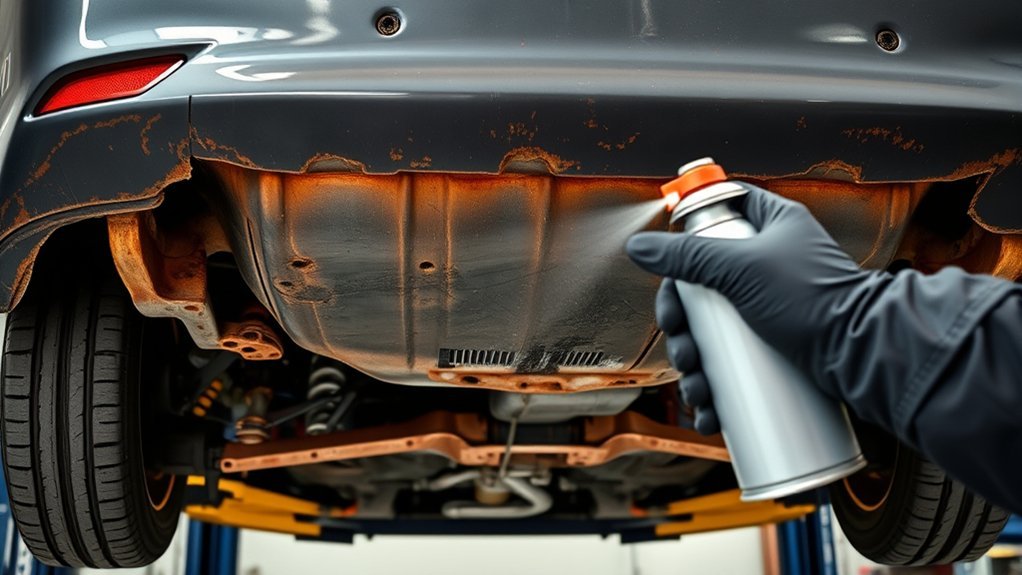
There is no single rust pattern that applies to every Camry generation. Still, the following inspection points are vulnerable on many unibody sedans because they are exposed to chips, road spray, seams, or trapped debris:
- Rocker panels and door-sill seams: Inspect the painted outer rocker, the pinch weld below it, and the lower seams near the front and rear wheels.
- Wheel arches and liner edges: Dirt can collect behind plastic liners and at the lip of the wheel opening. Look for bubbling paint and packed debris.
- Lower door seams and drain holes: Check the folded seam along the bottom of each door. Drain openings should be clear, not sealed with wax, mud, or undercoating.
- Hood and trunk-lid edges: Stone chips on the hood’s leading edge and moisture inside folded seams can start corrosion.
- Trunk floor and spare-tire well: Damp carpet, water marks, or surface rust may point to a leaking lamp seal, trunk seal, body seam, or prior collision repair.
- Windshield and rear-glass edges: Rust may form where paint was damaged during glass replacement or where a leak keeps a seam wet.
- Subframes, suspension mounting areas, and crossmembers: Surface discoloration is different from heavy scaling, swelling metal, cracks, or perforation.
- Brake lines, fuel lines, brackets, and fasteners: These parts need close attention in areas that use road salt. Deep pitting, flaking, wetness, or a leak requires professional inspection.
Most modern Camry bumper covers are plastic and do not rust. Inspect the steel reinforcement, brackets, fasteners, and nearby body seams behind the cover instead of treating the plastic cover as a rust hotspot.
Note: A car used in a road-salt region, parked near the coast, stored outdoors, flooded, or repaired after a collision may need more frequent and more detailed checks.
Early Signs of Rust: What to Look For
Inspect a clean, dry Camry in bright light. Use a flashlight and a small mirror for seams and underbody areas. Do not crawl beneath a vehicle supported only by a jack.
- Orange or brown staining: This may be light surface oxidation or runoff from a nearby fastener. Clean the area and identify the source.
- Paint discoloration or bubbles: Raised paint often means corrosion is spreading beneath the finish.
- Roughness and pitting: A surface that feels uneven after cleaning may have lost metal.
- Flaking scale: Layers that lift or crumble indicate more advanced corrosion than a thin surface film.
- Swollen seams: A folded edge that is opening or expanding can hide corrosion between metal layers.
- Holes or soft metal: Perforation is not a touch-up-paint job. The affected metal may need to be cut out or the part replaced.
- Water inside the trunk or cabin: Fix the leak before repairing the visible rust, or the problem will return.
| Condition | What It Usually Looks Like | Best Next Step |
|---|---|---|
| Light surface rust | Thin discoloration with solid metal underneath | Clean, assess, and protect promptly |
| Scaling or bubbling | Flaking rust, lifted paint, pitting, or swollen seams | Remove enough coating to judge the true extent; consider a body-shop assessment |
| Perforation or structural corrosion | Holes, thinning metal, cracks, deformation, or corrosion at a load-bearing mount | Stop DIY work and arrange a professional inspection |
Prevent Rust on Your Camry With These Steps
Rust prevention works best before corrosion spreads under paint or inside a seam. Focus on removing contaminants, preserving drainage, and restoring damaged coatings.
The most effective rust repair is the one you avoid by washing away salt, fixing leaks, and sealing paint damage early.
- Rinse road salt and mud away: Wash the body, wheel wells, and underbody after heavy salt exposure when weather and local rules allow. The U.S. Environmental Protection Agency notes that road salt has corrosive effects on cars, trucks, bridges, and roads.
- Keep drains open: Check the lower door drains, cowl drains, sunroof drains if equipped, and trunk water paths. Use a soft, non-damaging method and follow the owner’s manual rather than forcing a sharp tool into a drain.
- Repair chips and scratches quickly: Clean and dry the area, remove loose corrosion, and use a compatible primer and touch-up system when bare steel is exposed.
- Protect sound paint: Wax or a compatible paint sealant adds a sacrificial barrier, but it cannot stop rust that is already active beneath the finish.
- Inspect after body or glass work: Look for chipped primer, missing seam sealer, overspray, leaks, and exposed edges around repaired panels and replaced glass.
- Protect damaged underbody coatings: Clean and dry the area first. Use a product intended for the exact surface and keep it off brakes, tires, exhaust parts, sensors, electrical connectors, and drain holes.
Pro Tip: Photograph the same high-risk areas during each seasonal inspection. Side-by-side photos make new bubbling, spreading scale, or coating damage easier to spot.
When Should You Call a Pro for Rust Repair?

Call a qualified body shop or mechanic when you cannot confirm that the rust is shallow, cosmetic, and limited to a replaceable exterior panel. Corrosion can spread inside seams and boxed sections where a surface-only repair will not reach it.
Visible Rust Damage
Professional help is appropriate when paint bubbles cover a broad area, a seam is swelling, rust returns after a previous repair, or sanding reveals deep pitting. Rust at a windshield edge may require glass removal and proper restoration of the pinchweld, not filler applied around the seal.
A shop can also determine whether an apparently small spot began on the back of a panel. That matters because corrosion must be treated from the source side when access is possible.
Extensive Rust Spread
Multiple rust areas do not prove that a Camry has a factory defect, but they can show that the vehicle had heavy salt exposure, poor drainage, flood damage, neglected paint chips, or incomplete collision repair. Ask for a full underbody and body-seam inspection before approving cosmetic work.
Do not rely on a fresh layer of paint or thick undercoating as proof that the metal is sound. Flaky rust hidden under a coating will continue to weaken the part.
Compromised Structural Integrity
Arrange immediate professional inspection if corrosion affects any of these areas:
- Front or rear subframes and their mounting points
- Suspension, steering, or engine-cradle mounts
- Brake or fuel lines with deep pitting, swelling, wetness, or leakage
- Seat-belt anchor areas, floor reinforcements, rocker structures, or jacking points
- Metal with holes, cracks, deformation, or large sections of flaking scale
These conditions can affect braking, fuel containment, alignment, crash performance, or the ability to lift the car safely. A visual check alone may not establish the remaining metal thickness.
Warning: Do not drive a Camry with a leaking brake or fuel line, a badly corroded suspension mount, or obvious structural perforation until a qualified technician has assessed it.
Check Warranty and Recall Coverage Before Paying
Toyota’s current U.S. warranty overview lists rust-through coverage of 60 months with unlimited miles for corrosion perforation of sheet metal on new vehicles. Surface rust, stone chips, environmental damage, prior repairs, and other conditions are not automatically the same as covered perforation. The warranty guide for your exact model year and market controls.
Use the official Toyota recall and service-campaign lookup or the NHTSA recall tool with the vehicle’s VIN. A year-and-model search can show general recalls and manufacturer communications, but a VIN search is the better way to check the individual car.
Rust Repair: DIY Techniques for Car Owners
A DIY repair is reasonable only for a small, accessible, non-structural spot where the metal remains solid. The goal is to remove loose corrosion, stop moisture from reaching the steel, and rebuild the coating with compatible products.
Warning: Sanding, grinding, fillers, solvents, primers, and spray coatings can expose you to dust, volatile chemicals, noise, and other hazards. Review the product safety data and label, wear suitable eye, skin, hearing, and respiratory protection, and work with proper ventilation. OSHA lists sanding dust, paint and solvent vapors, isocyanates, cutting tools, and noise among autobody hazards.
- Find and stop the cause: Fix a leak, blocked drain, rubbing trim piece, or recurring chip source before refinishing the metal.
- Clean and dry the area: Wash away dirt and salt, then use a surface cleaner approved for the paint system. Let seams dry fully.
- Protect nearby surfaces: Mask trim, glass, intact paint, and openings. Keep debris out of the cabin and mechanical parts.
- Remove loose paint and rust: Sand back to firmly bonded coating and solid metal. Do not keep grinding until a thin panel becomes weaker or distorted.
- Decide whether the panel is still repairable: Stop if you uncover a hole, deep pitting, a swollen seam, or corrosion extending beyond the accessible area.
- Treat residual rust only as directed: A rust converter is intended for certain remaining iron-oxide surfaces, not as a universal coating over every clean bare-metal repair. Follow the converter and paint manufacturers’ compatibility instructions.
- Prime the exposed metal: Apply a corrosion-resistant automotive primer that is compatible with the color and clear coats. Respect flash and curing times.
- Apply color and clear coat: Use the exact paint code or a professionally matched color. Build thin coats rather than one heavy coat.
- Allow full curing and inspect: Keep the area dry for the stated curing period, then check the back of the panel or seam when accessible.
For a tiny stone chip with no spreading rust, a touch-up pen or bottle may be enough after cleaning and proper preparation. For visible exterior panels, professional blending usually gives a better color and gloss match than a small spot repair.
Essential Long-Term Maintenance Tips to Prevent Rust on Your Camry
Build rust checks into normal maintenance instead of waiting for paint to bubble. A practical schedule is based on exposure rather than a single fixed interval:
- After heavy salt or coastal exposure: Rinse the underbody, wheel wells, rocker areas, and lower door seams when conditions allow.
- During regular washing: Look for new chips, blocked drains, packed mud, and loose underbody coating.
- At seasonal changes: Inspect the trunk floor, spare-tire well, brake and fuel lines, subframes, suspension mounts, and pinch welds.
- After a collision, flood, or glass replacement: Check repaired seams, sealers, drainage, and hidden areas for moisture.
- Before buying or keeping an older Camry long-term: Pay for an underbody inspection if you cannot safely see the structural and safety-related parts yourself.
Aftermarket wax, oil, or lanolin-style corrosion inhibitors may help in exposed regions when they are applied to suitable clean surfaces and renewed as their manufacturer directs. Do not use them to conceal active scale, and do not spray them on braking surfaces, exhaust components, oxygen sensors, belts, tires, or drainage openings.
Repainting Your Camry After Rust Repair
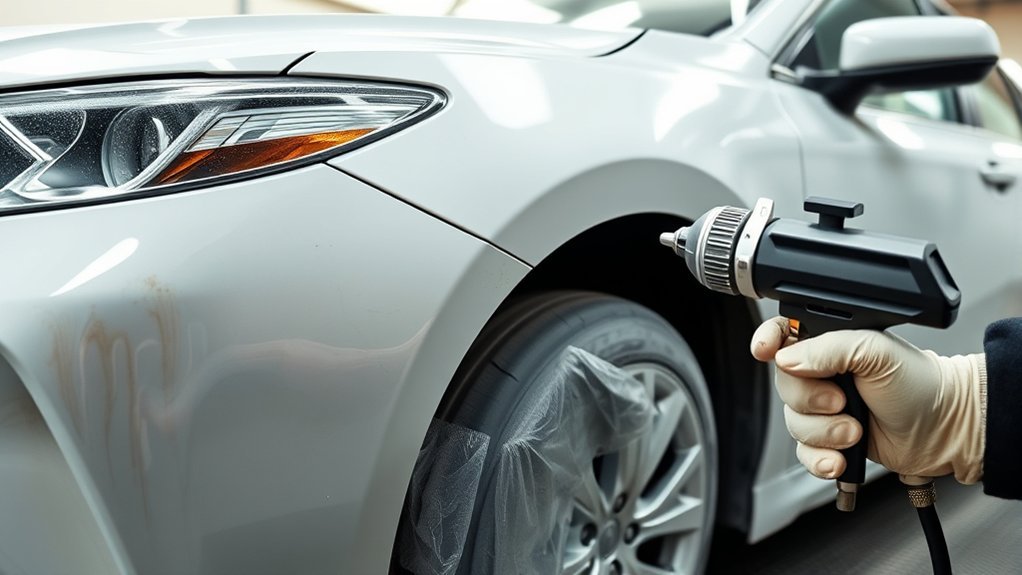
Repainting protects the repaired metal only when the corrosion source is gone and each layer is compatible. Color match is important, but adhesion, edge sealing, curing, and back-side protection are what keep the repair from failing early.
| Step | Key Considerations |
|---|---|
| Surface Preparation | Remove loose corrosion and failed coating, feather stable paint edges, clean the surface, and keep it dry. |
| Primer Application | Cover exposed metal evenly with a primer approved for the substrate and topcoat system. |
| Paint Color Matching | Confirm the VIN-specific paint code through the vehicle label, parts catalog, or Toyota dealer, then test the match before blending a visible panel. |
| Clear Coat Finish | Apply the compatible clear coat within the stated recoat window and build enough coverage without runs. |
| Curing and Back-Side Protection | Allow the full cure time and restore seam sealer or cavity protection where the repair exposed a hidden surface. |
| Professional Help | Use a body shop for perforation, welded patches, structural areas, glass-edge corrosion, broad blending, or coatings that require professional spray controls. |
The Occupational Safety and Health Administration identifies paint and solvent vapors, isocyanates, sanding dust, welding fumes, noise, and cutting tools as autobody hazards. Do not treat professional refinishing products as ordinary household paint.
How to Inspect a Used Camry for Rust
Do not reject or buy a Camry based only on model-year rumors. Inspect the individual vehicle and its history:
- Check the VIN for recalls and service campaigns.
- Review collision, flood, title, and geographic history when available.
- Inspect rocker panels, pinch welds, wheel arches, door bottoms, trunk seams, and the spare-tire well.
- Look underneath for scaling on subframes, suspension mounts, brake and fuel lines, and jacking points.
- Watch for fresh undercoating over flaky metal, mismatched seam sealer, overspray, or uneven paint that may hide a prior repair.
- Arrange a pre-purchase inspection, especially for a car from a road-salt or coastal region.
Frequently Asked Questions
Does a Toyota Camry Rust?
Yes. A Camry can rust when protective paint or underbody coatings are damaged and steel remains exposed to moisture, salt, or trapped debris. The actual risk depends on climate, storage, maintenance, age, and repair history.
What Is the Most Common Problem With Toyota Camry?
There is no single most common problem across every Camry generation, engine, market, and mileage. Check the exact model year, service history, diagnostic results, recall status, and a pre-purchase inspection instead of relying on a broad claim.
Does Toyota Have Rust Problems?
Toyota vehicles can develop corrosion, but that does not mean every Camry has a shared rust defect. Exposure and vehicle history matter. Use Toyota’s VIN lookup and the model-year warranty guide for vehicle-specific information.
What Toyota Camrys to Stay Away From?
Avoid any individual Camry with structural perforation, heavily scaled subframes or mounts, badly corroded brake or fuel lines, flood evidence, concealed rust, or poor collision repairs. The article’s original blanket warning about late-2018 cars is not a sound basis for choosing a vehicle.
Does Toyota’s Warranty Cover Camry Rust?
Toyota’s current U.S. overview lists 60 months with unlimited miles for rust-through perforation of sheet metal on new vehicles. Coverage depends on the exact model-year guide, market, exclusions, cause, and inspection findings. Surface rust or damage from chips is not automatically covered.
Can I Repair Camry Rust Myself?
You may be able to repair a small, shallow, non-structural spot on an accessible exterior panel. Stop and use a professional if you find a hole, deep pitting, hidden seam corrosion, a safety-related component, or damage that requires welding or glass removal.
Conclusion
A Toyota Camry can develop rust, but the useful question is not whether every Camry rusts. It is where the individual car has been exposed, whether water and salt can collect, and whether protective coatings are still intact. Inspect seams and the underbody, wash contaminants away, repair chips early, and fix leaks before refinishing.
Keep DIY work limited to small cosmetic surface spots on solid metal. Perforation, structural corrosion, damaged brake or fuel lines, and rust at safety-critical mounts need professional assessment.
Sources
- Toyota Manuals and Warranties — current U.S. new-vehicle and rust-through coverage overview, with model-specific guides.
- Toyota Safety Recall and Service Campaign Lookup — VIN and license-plate lookup for eligible U.S.-market Toyota vehicles.
- National Highway Traffic Safety Administration Recall Lookup — VIN, model, complaint, investigation, and manufacturer-communication search guidance.
- U.S. Environmental Protection Agency: Winter Is Coming, and With It Tons of Salt on Our Roads — road salt’s corrosive effects on vehicles and infrastructure.
- OSHA Autobody Repair and Refinishing — sanding, paint, solvent, welding, cutting-tool, and noise hazards.
