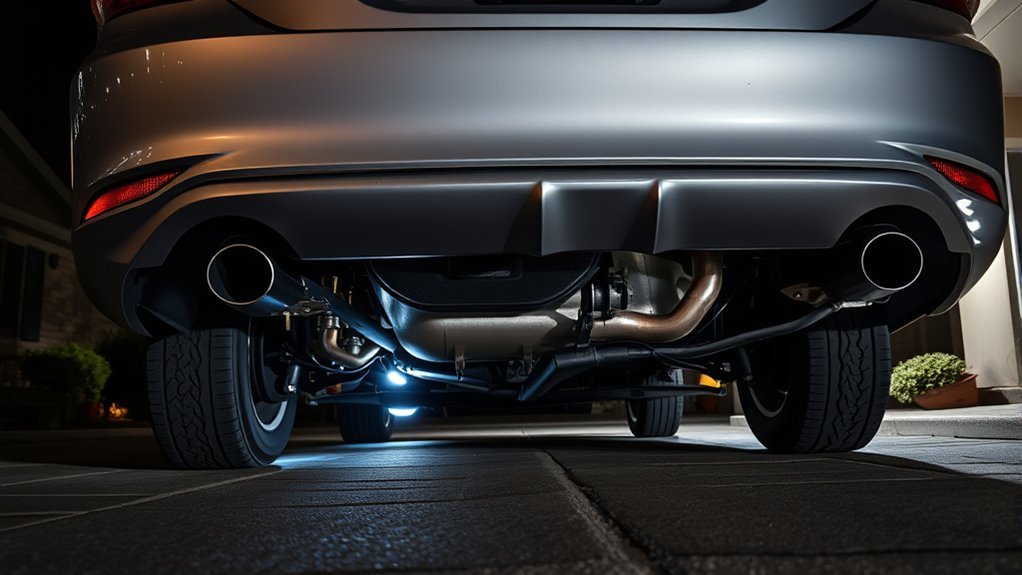
The best way to prevent Toyota Camry catalytic converter theft is to use layered protection: a model-specific shield, plate, cage, clamp, cable, or strap; safer parking; a properly adjusted alarm; and converter identification where permitted. No device can guarantee prevention. Verify fit for your exact model year and powertrain, and keep comprehensive-insurance details ready in case theft still occurs.
Last updated: September 19, 2026. U.S. guidance unless noted; local theft patterns, insurance terms, and emissions rules vary.
Quick Answer
Use a compatible physical barrier first, then add safer parking, lighting or camera coverage, a properly adjusted vibration or tilt alarm, and VIN or license-plate marking where permitted. Confirm fit for your Camry’s exact year and powertrain, verify comprehensive coverage, and never confront a suspected thief.
Key Takeaways
- A Camry can be targeted, but current national rankings do not show every Camry as a top target; local risk varies by configuration and parking exposure.
- A shield, cage, plate, or strap adds difficulty but cannot guarantee that theft will not happen.
- Choose a device made for your exact model year, engine, and hybrid or gas configuration.
- Park in a locked garage when possible, or use a visible, busy area covered by lighting and cameras.
- Comprehensive insurance may cover the theft, subject to your policy terms and deductible.
At a Glance
| Time Required | Basic precautions can be reviewed immediately; device-installation time varies by product, Camry configuration, and shop. |
| Difficulty | Easy for parking and insurance steps; moderate for device selection and professional installation. |
| Tools Needed | No tools for basic precautions; professional tools may be needed for a shield, cage, strap, alarm, or identification marking. |
| Cost | Varies by device, Camry configuration, labor rate, alarm system, and local marking program. |
Why Toyota Camry Catalytic Converter Theft Still Matters
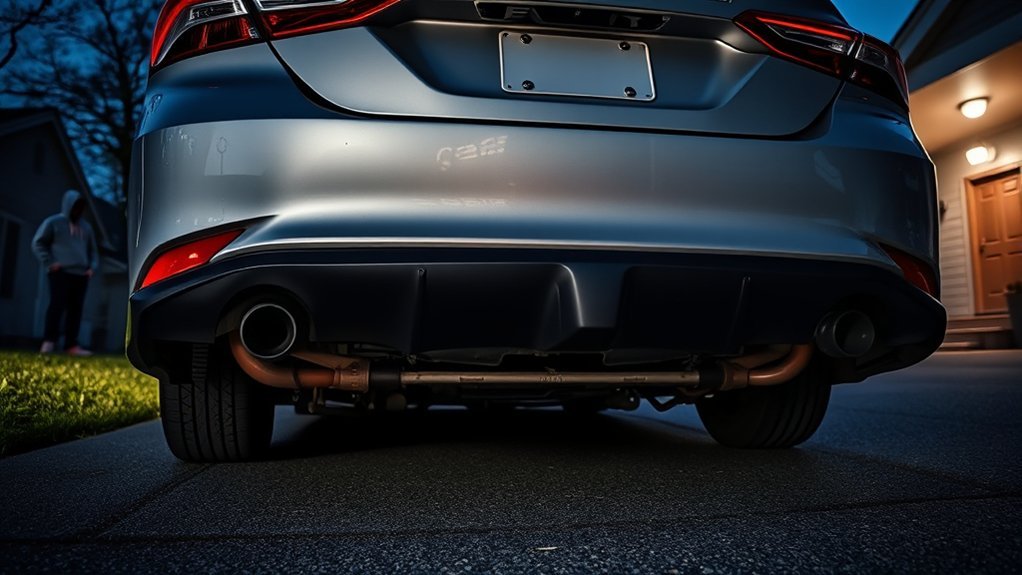
A catalytic converter reduces harmful exhaust emissions by using metals such as platinum, palladium, and rhodium. Those metals, the converter’s exposed location under a vehicle, and demand for replacement parts can make the component attractive to thieves.
The national trend is not a simple straight line. State Farm reported a 74% reduction in its catalytic converter theft claims during the first half of 2024 compared with the same period in 2023. However, Carfax estimated more than 137,000 thefts during 2025 and reported renewed law-enforcement warnings in several areas during 2026.
Converter theft declined sharply in some insurance data, but current reports show that the risk has not disappeared and can change quickly by region.
These figures come from different reporting systems and should not be compared as though they measure every theft nationwide. Your practical risk depends more on your Camry’s configuration, where it is parked, local theft activity, and how quickly someone can reach the exhaust system.
Recognize Your Camry’s Theft Risk Factors
No reliable evidence supports a single model-year cutoff that makes every Camry built after a certain date especially vulnerable.
Is the Toyota Camry a top catalytic-converter theft target?
Current national data does not support calling every Camry a top target. Carfax’s June 2026 national list of 10 most-targeted vehicles does not include the Camry, although regional and local patterns differ. The practical question is therefore not whether every Camry is high risk, but how exposed your specific Camry is where it is parked.
Review the following factors instead:
- Powertrain and converter configuration: Gas and hybrid Camrys can use different exhaust layouts. Device compatibility and access can also vary by engine and model year.
- Parking location: A Camry left overnight in an open driveway, apartment lot, commuter lot, or repeated workplace space may be easier to observe and target.
- Visibility and escape access: Dark edges of parking lots, spaces beside walls, and quiet side streets can give a thief more cover.
- Local theft patterns: Vehicle-targeting patterns differ by city and region. Check neighborhood alerts and ask local law enforcement whether converter theft is active nearby.
- Existing protection: A vehicle without a shield, marking, alarm response, lighting, or camera coverage presents fewer obstacles.
Note: Lower ride height can reduce underbody access compared with some higher-clearance vehicles, but it does not make a Camry theft-proof. Risk still depends on the converter’s exact location, the vehicle’s configuration, parking exposure, and local theft activity.
Toyota Camry Catalytic Converter Theft Prevention Devices
The most useful device is one that fits your exact Camry and is installed without damaging the exhaust, wiring, heat shields, or required identification. A brand name alone does not confirm compatibility or effectiveness, so verify the model year, engine or hybrid powertrain, mounting points, and service access before purchase.
Practical order: If your Camry regularly sits outside overnight, prioritize a compatible physical barrier first, then improve lighting or camera coverage and alarm response. If it is usually garage-kept, keep the garage secured and still verify insurance and marking options. This layered approach follows the same basic principle used by public-agency and insurer guidance: add time, visibility, and traceability rather than relying on one device.
| Protection Type | How It Helps | What to Check |
|---|---|---|
| Shield or plate | Covers the converter area and can increase removal time, tool use, and noise. | Exact year, engine, hybrid compatibility, material, ventilation, service access, and mounting points. |
| Cage or clamp | Creates a physical barrier around the converter or exhaust section. | Clearance, heat exposure, rattling, corrosion resistance, and inspection requirements. |
| Cable or strap | Adds another material that must be cut before the converter can be removed. | Routing near moving or hot parts, attachment method, tension, and exact vehicle fit. |
| Vibration or tilt alarm | May sound when the vehicle is lifted, struck, or disturbed. | Sensitivity, false alarms, notification range, battery use, and whether the factory alarm supports adjustment. |
| VIN or plate marking | May discourage resale and help law enforcement identify a recovered converter. | Local marking rules, required converter labels, safe marking location, and professional application. |
The California Bureau of Automotive Repair recommends professionally installed plates, shields, clamps, cages, straps, marking, adjusted alarms, and safer parking. It also warns that a device should not damage the converter or hide required identifying information.
Warning: Do not weld an anti-theft device directly to the catalytic converter or drill into unknown areas under the vehicle. Exhaust parts become extremely hot, and incorrect installation can damage wiring, sensors, fuel-related components, or emissions equipment.
Before buying a device, confirm the Camry’s model year, engine, trim, hybrid or gas configuration, and required hardware. Ask whether the device must be removed for exhaust service and whether the installer provides a workmanship warranty.
[Amazon Products Picked for You]

Designed and manufactured in the USA, made from 16 gauge 304 stainless steel with stainless steel tamper-proof screws.
Designed and manufactured in the USA, made from premium-grade aluminum with stainless steel tamper-proof screws.
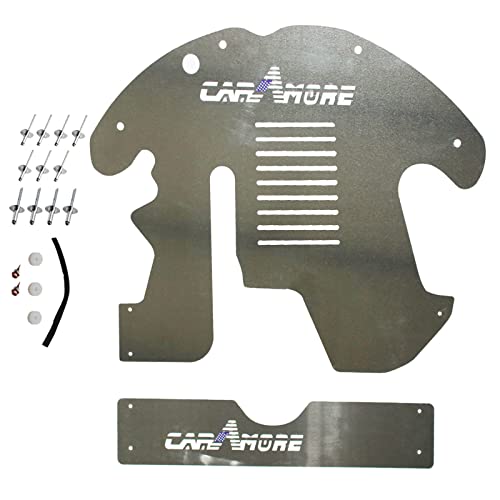
Prius Catalytic Converter Shield Fits:2010-2015 Prius .
Smart Parking Tips to Deter Thieves
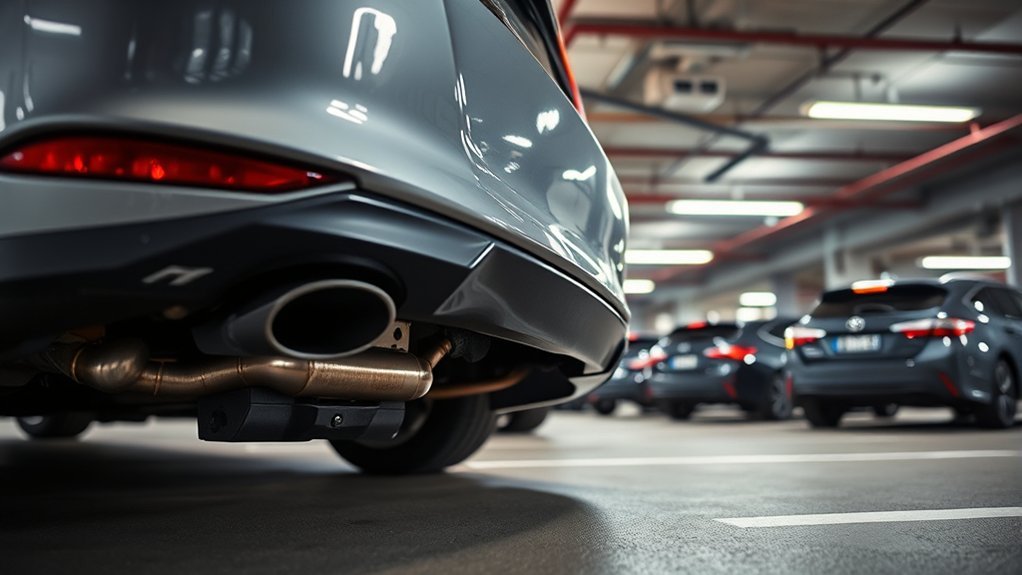
Parking decisions work best when they add visibility, limit access, and increase the chance that suspicious activity will be noticed.
- Use a locked garage: Close and lock the garage door rather than leaving it open because the vehicle is at home.
- Improve driveway visibility: Add motion-sensitive lighting and position a camera so it captures the vehicle, nearby approach routes, and identifying details.
- Choose active public areas: Park close to entrances, staffed locations, pedestrian traffic, or visible security cameras.
- Avoid isolated edges: Dark corners and spaces hidden by landscaping, walls, large vehicles, or storage containers can provide cover.
- Change predictable routines when practical: Repeatedly leaving the Camry in the same quiet space for long periods can make it easier to observe.
- For multiple vehicles, park strategically: Arrange vehicles so access to the Camry’s underside is more difficult without blocking emergency access or violating parking rules.
Pro Tip: Review recorded camera footage during daylight and at night. A camera that shows only glare, a roof, or an unreadable license plate may provide little useful evidence after a theft.
[Amazon Products Picked for You]

ENERGY SAVING: LED units output 72W, 7500 Lumens, 5000K brightness(daylight white), equivalent to 720W incandescent bulb. Also save your electricity bill by up to 88%.

【156 High-Efficiency LEDs & 2500LM Ultra-Bright Illumination】 Experience unmatched brightness with 156 upgraded LEDs—engineered to deliver 2500LM while consuming less power than bulkier 200+ LED designs. Flood your driveway, backyard, or patio with powerful 6500K daylight-white light. Whether for home security or as Commercial Street & Area Lights, Daphino delivers the brightest, most saturated light to illuminate every dark corner of your property.

【9000LM SUPER BRIGHT 4 HEAD FlOOD LIGHT】With an output of 80W, this floodlight emits a powerful 9000 lumens of 5000K light. The four adjustable heads and unique four beam design provide uniform and extensive illumination, ensuring coverage of up to 2,370 sq. ft. Additionally, it offers over 88% energy savings compared to traditional halogen bulbs.
Signs Your Catalytic Converter May Have Been Stolen
A missing converter often becomes obvious as soon as you start the Camry. Common warning signs include:
- A sudden, extremely loud exhaust roar or rumbling sound.
- An exhaust sound that becomes louder when you accelerate.
- A check-engine light or other warning message.
- Reduced power, rough running, or unusual exhaust behavior.
- Cut pipes, hanging wires, damaged oxygen-sensor wiring, or fresh metal marks under the vehicle.
- A strong exhaust smell around or inside the vehicle.
Do not crawl beneath a running or recently driven Camry. Exhaust components may be hot, and a thief’s cutting tools may have damaged wiring, pipes, shields, or other components.
What to Do If Your Camry’s Catalytic Converter Is Stolen
- Move to safety: If you discover an active theft, stay away from the person and contact emergency services or local police. Do not confront or chase anyone.
- Turn off the engine: If the vehicle is unusually loud or you see damage underneath it, shut it down in a safe location.
- Document the scene: Photograph visible damage, the parking space, cut pipes, nearby cameras, and anything left behind. Save relevant security footage.
- File a police report: Record the report number, responding agency, date, time, and location.
- Contact your insurer: Ask whether comprehensive coverage applies and what documents, estimates, or photographs are required.
- Arrange an inspection: A qualified repair shop should check the exhaust, oxygen sensors, wiring, underbody components, and mounting points.
- Use the correct replacement: The replacement converter must meet the legal and emissions requirements that apply to your vehicle and location. In California, the Bureau of Automotive Repair says the replacement must be OEM or a CARB-approved aftermarket converter with the correct Executive Order number for the vehicle.
- Add protection during repair: Ask whether a correctly fitted shield, strap, marking, or alarm adjustment can be completed before the Camry returns to regular parking.
Warning: Avoid driving the vehicle until a qualified professional confirms it is safe. Theft may damage oxygen-sensor wiring or nearby components, and the open exhaust can expose occupants to excessive noise and exhaust gases.
[Amazon Products Picked for You]

Designed and manufactured in the USA, made from 16 gauge 304 stainless steel with stainless steel tamper-proof screws.

Universal design easily bends to conform to fit most converters

PRECISE FIT: Compatible with Rear Lexus ES300 2002-2003, Toyota Camry 2002-2006 3.0L. Use the Confirm Fit tool above before ordering to avoid returns.
How Insurance Can Help You Recover From Theft
Catalytic converter theft may be covered when your auto policy includes comprehensive coverage. Liability-only coverage normally does not pay to replace a stolen part on your own vehicle. Coverage, exclusions, payment limits, and deductibles depend on your policy and insurer.
State Farm advises drivers to confirm whether their policy covers catalytic converter theft and to contact the police and insurer promptly after a loss.
Before a theft happens, ask your insurer:
- Whether theft of an attached vehicle part is covered.
- What comprehensive deductible applies.
- Whether related wiring and exhaust damage are included.
- Whether towing or rental-car coverage is available.
- Whether an anti-theft device affects coverage or discounts.
- What photographs, receipts, reports, or repair estimates would be required.
Do not choose a deductible based only on one possible converter claim. Compare the premium difference, your Camry’s value, your emergency savings, and the amount you could comfortably pay after any comprehensive loss.
Related Guides
Frequently Asked Questions
How can I prevent catalytic converter theft on a Toyota Camry?
Use layered protection. Install a model-specific shield, cage, plate, or strap through a qualified shop, adjust a vibration or tilt alarm, mark the converter where permitted, and park in a locked garage or a visible area covered by lighting and cameras. No single measure guarantees prevention.
Are Toyota Camrys targeted for catalytic converter theft?
Yes, a Toyota Camry can be targeted, but current national data does not support calling every Camry a top target. Carfax’s June 2026 national top-10 list does not include the Camry. Risk still varies by model year, powertrain, region, parking location, converter access, and local theft activity.
Which Toyota models are targeted for catalytic converter theft?
Targeting changes by year and region. The Prius has long received attention because of the perceived value of some hybrid converters, while the Tacoma appears in Carfax’s June 2026 list of frequently targeted vehicles in the western United States. Camrys, Corollas, Tundras, and other Toyotas may also be targeted in local theft patterns.
Does Toyota offer catalytic converter protection for every Camry?
Protection options vary by model year, engine, market, and dealer. Ask a Toyota dealer or qualified exhaust shop whether an approved or compatible shield is available for your exact Camry. Confirm fit before buying because gas and hybrid exhaust layouts may differ.
Does a catalytic converter shield guarantee that it will not be stolen?
No. A shield or cage can increase the time, noise, tools, and effort required to reach the converter, which may encourage a thief to leave. A determined person may still cut through or remove a device, so combine it with safer parking, lighting, cameras, alarms, and marking.
Can I drive my Camry after the catalytic converter is stolen?
Avoid driving until a professional checks the damage. The car may run, but cut pipes, damaged sensor wiring, excessive noise, exhaust gases, warning lights, and local emissions laws can make driving unsafe or illegal. Arrange towing when the condition of the exhaust or wiring is uncertain.
How much can catalytic converter theft cost to repair?
Costs vary by vehicle, related wiring or exhaust damage, labor rates, and replacement rules. State Farm reported an average catalytic-converter-theft claim of nearly $2,900 in the first half of 2024, while Carfax says an uninsured replacement can cost as much as about $3,000. A Camry-specific estimate requires the VIN and an inspection.
Conclusion
You cannot eliminate every catalytic converter theft risk, but you can make your Toyota Camry a less convenient target. Start with safer parking and better visibility, then add a properly fitted shield, cage, strap, alarm, or converter marking where appropriate. Review comprehensive insurance before a loss happens and keep a clear response plan for reporting, documenting, and repairing theft-related damage.
The strongest approach is layered protection rather than reliance on one branded device or an unsupported success claim. Your next step is to identify the Camry’s exact year and powertrain, confirm a compatible protection option with a qualified installer, and verify your comprehensive deductible before the car returns to its usual parking routine. Never place yourself in danger by confronting a suspected thief.
Sources
- California Bureau of Automotive Repair: Catalytic Converter Theft — supports professional installation, protective devices, marking, alarm, parking, and replacement guidance.
- State Farm: Catalytic Converter Theft — supports prevention, vehicle-risk, insurance, police-report, and repair guidance.
- State Farm 2024 Claims Report — supports the reported decline in first-half 2024 converter-theft claims.
- Carfax: Catalytic Converter Theft and Targeted Vehicles — supports June 2026 theft estimates, current trend context, vehicle targeting, and theft warning signs.