
Last Updated: September 22, 2026
To clean Toyota Camry wheels safely, start with the guidance for your exact model year. Recent Camry owner instructions call for a neutral detergent, prompt rinsing, soft cleaning tools, and cool wheels. Avoid acidic, alkaline, or abrasive detergents and hard brushes unless Toyota’s instructions for your specific vehicle explicitly say otherwise. For stubborn brake dust, a pH-balanced, non-acidic iron-reactive cleaner may be useful when its label confirms compatibility with the wheel finish.
Quick Answer
Let the wheels cool, rinse off loose dirt, and clean one wheel at a time with a neutral detergent or pH-balanced wheel cleaner that is compatible with the finish. Do not let cleaner dry. Rinse thoroughly and dry with microfiber. For stubborn brake dust, use only a pH-balanced, non-acidic iron-removing cleaner whose current label approves the wheel finish. Apply tire dressing only to clean tire sidewalls and keep it off the tread and braking surfaces.
Key Takeaways
- Clean only when the wheels and brake components are cool to the touch.
- For recent Camry models, Toyota’s baseline is a neutral detergent followed by prompt rinsing; check the manual for your exact model year.
- Avoid acidic, alkaline, abrasive cleaners and hard brushes unless the instructions for your exact wheel finish specifically permit them.
- Work on one wheel at a time and never allow wheel cleaner to dry on the surface.
- Use soft, dedicated wheel tools so brake dust is not transferred to the Camry’s paint.
- Keep tire dressing, sealant, and other slippery products off the tire tread and all braking surfaces.
At a Glance
| Time Required | Varies with wheel design and brake-dust buildup; work on one wheel at a time |
| Difficulty | Easy |
| Tools Needed | Hose, bucket, neutral detergent or compatible pH-balanced wheel cleaner, soft wheel-face brush, barrel brush, small detail brush, microfiber towels, and optional gloves and eye protection |
| Cost | Low if you already have wash tools; the main consumables are cleaner and dedicated towels or brushes |
Editorial note: This guide is based on Toyota owner guidance, current product-manufacturer instructions, and published brake-wear research. It does not claim hands-on testing of every cleaner, wheel finish, or Camry model year.
Why Cleaning Your Toyota Camry Wheels Matters

Brake dust is produced as brake components wear. Published research has identified iron and other metals such as copper, barium, manganese, and zinc in brake-wear particles. Regular washing removes this contamination along with road grime, salt, and oily film before the buildup becomes more difficult to clean. See the peer-reviewed brake-wear particle study indexed by PubMed.
A clean wheel is also easier to inspect. While drying, look for cracks, bends, peeling clear coat, deep corrosion, damaged lug-nut seats, missing wheel weights, or a valve-stem problem. Cleaning does not prove that a wheel is structurally safe, so have the wheel professionally inspected if you notice damage, recurring air loss, vibration, or a change in handling.
The safest wheel-cleaning method is not the strongest chemical or stiffest brush. It is the least aggressive method that removes the contamination without harming the finish.
What Does Toyota Recommend for Camry Wheel Cleaning?
Toyota Camry wheels vary by model year, trim, accessory package, and previous repairs. Your car may have painted or clear-coated alloy wheels, machined-face wheels, black-finished wheels, chrome-finished accessories, steel wheels with covers, or aftermarket wheels.
Recent Camry owner guidance instructs owners to remove wheel dirt with a neutral detergent, wash the detergent off promptly, avoid acidic, alkaline, or abrasive detergent, avoid hard brushes, and avoid using detergent on hot wheels. Because equipment and wording can vary by model year and market, use the Toyota Manuals and Warranties portal to check the instructions for your exact Camry.
Check the cleaner label for compatible finishes before use. If the Camry has aftermarket, refinished, matte, polished, anodized, chrome-plated, or damaged wheels, follow the wheel manufacturer’s or refinisher’s instructions as well as the vehicle guidance.
Note: “Wheel cleaner” is a product category, not a guarantee of compatibility. Some formulas are acidic or alkaline. For a Camry, a neutral or pH-balanced product that also matches the specific finish is the safer starting point.
What Supplies Do You Need to Clean Camry Wheels?
Gather everything before wetting the first wheel. This helps you work quickly enough to prevent the cleaner from drying.
- Neutral detergent or pH-balanced wheel cleaner: Use a mild product that is compatible with the wheel finish. Reserve a specialty iron-reactive product for contamination that does not respond to routine washing.
- Soft wheel-face brush or microfiber mitt: Use it on the visible face and spokes with light pressure.
- Wheel-barrel brush: A long, soft brush helps reach behind the spokes and around the inner barrel.
- Small detail brush: Use it carefully around lug-nut recesses, badges, edges, and the valve-stem area.
- Bucket of clean water: Rinse brushes frequently so trapped grit does not continue rubbing against the finish.
- Dedicated microfiber towels: Keep wheel towels separate from towels used on paint, glass, or the interior.
- Hose or gentle water rinse: A normal garden hose is adequate for routine cleaning and avoids unnecessary high-pressure exposure around tires and brake components.
- Protective equipment: Follow the cleaner label. Gloves and eye protection are sensible when handling concentrated or reactive products.
Warning: Do not use oven cleaner, steel wool, scouring pads, household acids, strong alkaline degreasers, or an unlabeled chemical mixture. Do not combine cleaning products. Work in a ventilated area and follow all label directions, dwell times, and first-aid precautions.
How Do You Clean Toyota Camry Wheels Step by Step?
1. Park in Shade and Let the Wheels Cool
Park on a level surface away from direct sun. If you have just driven the Camry, wait until the wheels, calipers, and brake rotors are cool to the touch. Heat can make water and cleaner evaporate too quickly, and Toyota warns against using detergent on hot wheels.
2. Work on One Wheel at a Time
Complete the full wash, rinse, and inspection process on one wheel before moving to the next. This gives you more control over dwell time and makes it less likely that cleaner will dry on another wheel.
3. Rinse Away Loose Dirt
Rinse the wheel, tire, wheel well, and accessible inner barrel to remove sand and loose grit. Start at the top and flush downward. Do not begin scrubbing a dry, gritty wheel because loose particles can mark the finish.
4. Test and Apply the Cleaner
Start with a neutral detergent or pH-balanced product that the label approves for the wheel finish. Read the label before spraying. If the manufacturer recommends a test spot, apply a small amount in an inconspicuous area and check the result before treating the entire wheel.
5. Allow Only the Labeled Dwell Time
Give the cleaner only the amount of working time stated on its label. Do not assume that a longer dwell produces a better result. Rinse immediately if the surface begins to dry.
6. Agitate Gently
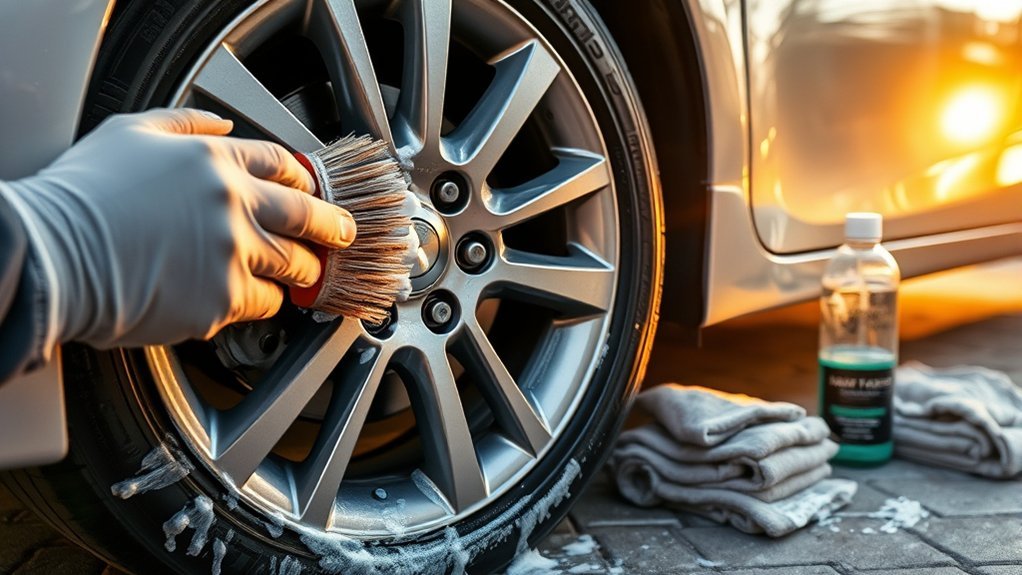
Use a soft brush or microfiber mitt on the wheel face and spokes. Clean lug-nut recesses and tight edges with a small detail brush. Use a separate barrel brush behind the spokes and around the inner rim. Rinse the tools often to release collected grit.
Avoid forcefully striking wheel weights, valve stems, painted brake calipers, or flexible brake components. Aggressive pressure is rarely necessary after the cleaner has loosened the dirt.
7. Rinse Thoroughly
Flush the face, lug recesses, spoke backs, barrel, tire, and lower edges until no foam, reaction residue, or loosened dirt remains. Cleaner left in a recess can dry into a stain or attract more grime.
8. Inspect the Result Before Repeating
If contamination remains, repeat the same gentle process rather than immediately switching to a harsh chemical or abrasive pad. Determine whether the mark is removable brake dust, road tar, adhesive residue, corrosion, curb damage, or failed clear coat.
9. Dry the Wheel
Use a clean wheel-only microfiber towel to dry the face, spokes, lug areas, and accessible barrel surfaces. Drying reduces water spotting and makes remaining contamination or finish damage easier to see.
10. Dry the Brakes Before Parking When Your Manual Directs It
Water from washing can remain on the brake discs and pads. Check the instructions for your exact Camry model year. Recent Camry owner guidance advises driving slowly in a safe area and applying the brakes several times after washing so the brake components can dry before the vehicle is parked.
Pro Tip: Use different brush shapes for the face, barrel, and lug recesses instead of forcing one brush into every area. The job is easier, and less pressure is needed on delicate edges.
How Do You Remove Heavy Brake Dust From Camry Wheels?
Heavy or embedded brake dust may need more than one cleaning pass. Start with Toyota’s neutral-detergent baseline and increase cleaning strength only when the product remains compatible with both the vehicle guidance and the wheel finish.
| What You See | Safest Next Step |
|---|---|
| Light gray road film or fresh brake dust | Neutral detergent or compatible pH-balanced cleaner, soft agitation, then rinse |
| Dark brake dust that survives a normal wash | Repeat the gentle wash, then consider a pH-balanced, non-acidic iron-reactive cleaner if its label approves the finish |
| Tar or adhesive residue | Identify the contamination and use only a finish-compatible specialty spot treatment rather than stronger wheel cleaner everywhere |
| Cloudiness, peeling, bubbling, pitting, corrosion, or curb damage | Stop escalating chemicals; the problem may require repair or refinishing rather than cleaning |
- Rinse and perform a normal wash first. Removing loose grime allows the next cleaning step to contact the remaining contamination.
- Choose a neutral or pH-balanced iron-reactive cleaner when needed. Confirm that the current product label approves your wheel finish. One example is Griot’s Garage Heavy-Duty Wheel Cleaner, which its manufacturer currently describes as pH-balanced, non-acidic, non-caustic, and safe for any wheel finish.
- Follow the exact dwell time. Do not let the product dry, and do not extend the dwell time simply because the wheel remains dirty.
- Agitate lightly. Use soft tools to reach spoke backs, corners, and the inner barrel.
- Rinse completely and reassess. Repeat a safe cycle if needed rather than using steel wool, abrasive pads, acidic household products, or strong alkaline degreasers.
If a dark mark does not respond to repeated label-compliant cleaning, it may be staining, pitting, corrosion, burnt contamination, or damage beneath the clear coat. Polishing or refinishing may be required, and those processes depend on the wheel finish.
Warning: Stop if the finish becomes cloudy, soft, streaked, discolored, or rough. Rinse immediately. Do not polish matte wheels, damaged clear coat, chrome plating, or a refinished wheel unless the finish manufacturer specifically approves the process.
How Can You Keep Toyota Camry Wheels Clean Longer?
- Rinse fresh contamination promptly: Brake dust, mud, and road salt are usually easier to remove before they build into a bonded layer.
- Clean after salt and heavy contamination: Toyota advises prompt washing after exposure to conditions such as salted roads. Do not rely on a universal calendar interval; inspect the wheels during normal washes and clean when buildup is visible.
- Keep separate tools: Do not use a wheel brush or towel on the Camry’s paint.
- Use a compatible protectant: A wheel sealant, wax, or coating can make later cleaning easier, but it must be approved for the finish and applied to a fully clean, prepared surface.
- Follow the protectant’s maintenance schedule: Do not rely on a universal three-month or one-year interval. Durability varies by product, preparation, weather, mileage, and cleaning method.
- Check brake-dust changes: A sudden increase on one wheel, unusual noise, heat, odor, pulling, or reduced braking performance should be evaluated by a qualified technician rather than treated as a cosmetic cleaning issue.
Which Product Type Should You Use on Camry Wheels?
The safest product is one that matches Toyota’s guidance for your model year, the wheel finish, the contamination level, and the cleaner manufacturer’s instructions. More chemical strength is not automatically better.
For Routine Cleaning
Use neutral automotive wash detergent or a pH-balanced wheel cleaner labeled for the finish. Routine cleaning normally requires less chemical action and less agitation than neglected brake-dust buildup.
For Heavy Brake Dust
If normal neutral-detergent cleaning is not enough, consider a pH-balanced, non-acidic iron-reactive cleaner whose current label specifically approves the wheel finish. Test when directed and rinse before the product dries.
For Wheel Protection
Use a compatible wheel wax, sealant, or coating only after the wheel is fully clean and dry. Follow the product instructions for surface preparation, curing, maintenance washes, and reapplication.
For Tire Appearance
Clean the tire first and let it dry if required by the dressing label. Apply a controlled amount to the tire sidewall with an applicator when possible. Wipe away excess product to reduce sling.
Warning: Never apply tire dressing, wheel wax, sealant, or ceramic product to the tire tread, brake rotor, brake pad, or another braking surface. If overspray reaches one of these areas, follow the vehicle and product manufacturer’s cleaning guidance before driving.
When Is Wheel Cleaning Not Enough?
Cleaning will not repair structural or finish damage. Arrange a professional inspection when you find:
- a visible crack, bend, or deeply gouged area;
- air leaking near the bead or valve stem;
- new vibration or steering-wheel shake;
- a loose, missing, or damaged lug nut;
- severe corrosion or flaking metal;
- peeling or bubbling clear coat;
- one wheel that becomes much hotter or dustier than the others;
- brake noise, pulling, odor, warning lights, or reduced braking response.
Related Guides
Frequently Asked Questions
How do you clean Toyota Camry rims safely?
Let the wheels cool, rinse away loose dirt, apply a neutral detergent or compatible pH-balanced cleaner, and gently agitate with soft wheel-only tools. Clean one wheel at a time, never let cleaner dry, rinse every recess thoroughly, and dry with microfiber. Check the model-year manual and aftermarket-wheel instructions when the finish is uncertain.
What does Toyota recommend for cleaning Camry wheels?
Recent Camry owner guidance calls for removing wheel dirt with a neutral detergent and rinsing the detergent off promptly. It also warns against acidic, alkaline, or abrasive detergent, hard brushes, and applying detergent to hot wheels. Check Toyota’s manual for your exact model year because wording and equipment can vary.
What is the best thing to clean car rims with?
For a Toyota Camry, neutral automotive detergent or a pH-balanced wheel cleaner compatible with the finish is the safest starting point. For heavier brake dust, a pH-balanced, non-acidic iron-reactive cleaner may help when its current label approves the wheel finish. Pair the cleaner with soft wheel-only tools and plenty of rinse water.
How do you remove heavy brake dust from rims?
Wash off loose grime first with a neutral cleaning method. If dark brake dust remains, use a pH-balanced, non-acidic iron-reactive cleaner only when its current label approves the wheel finish. Follow the labeled dwell time, agitate gently, and rinse completely before it dries. Persistent dark areas may be staining, pitting, corrosion, or clear-coat damage rather than removable dirt.
How can you make rims look new again?
Begin with a thorough but gentle cleaning. A compatible sealant or coating can improve gloss and make future washing easier when the finish is intact. Scratches, curb rash, peeling clear coat, corrosion, and plating damage require repair or refinishing; cleaning products cannot restore missing or failed material.
Can you use dish soap on Toyota Camry wheels?
A neutral automotive detergent or compatible automotive wheel cleaner is the safer default because its intended surfaces and dilution are stated for vehicle care. Household dish soap can strip existing protection and is not formulated or labeled for every automotive wheel finish. Use a product intended for vehicle washing instead.
Can you pressure-wash Camry wheels?
A garden hose is adequate for routine Camry wheel cleaning and avoids unnecessary high-pressure exposure. If you use a pressure washer, follow both the washer instructions and the guidance for your exact Camry model year, use an automotive-appropriate spray pattern and distance, and do not hold the nozzle close to valve stems, damaged finishes, seals, brake hoses, electrical components, or other brake parts.
How often should Toyota Camry wheels be cleaned?
There is no single cleaning interval that fits every Camry. Inspect the wheels during normal car washes and clean them when brake dust or road film becomes visible. Clean sooner after road salt, mud, heavy contamination, or other conditions that can leave corrosive residue on the wheels.
Conclusion
To clean Toyota Camry wheels safely, start with the vehicle manufacturer’s conservative baseline: cool wheels, neutral detergent, soft tools, prompt rinsing, and no acidic, alkaline, or abrasive cleaner unless guidance for the exact wheel specifically permits it. Remove loose grit first, clean one wheel at a time, rinse completely, and dry with dedicated microfiber towels.
If ordinary cleaning cannot remove heavy brake dust, a pH-balanced, non-acidic iron-reactive cleaner can be the next step when its current label approves the wheel finish. Stop escalating chemicals when you see peeling clear coat, corrosion, pitting, curb damage, or another condition that cleaning cannot repair. After the wash, follow the post-wash brake instructions in the manual for your Camry model year before parking.
Sources
- Toyota Manuals and Warranties — model-year-specific Toyota owner information and manuals.
- Griot’s Garage Heavy-Duty Wheel Cleaner — current manufacturer information describing its brake-dust cleaner and wheel-finish compatibility.
- Metal Contents and Size Distributions of Brake and Tire Wear Particles — peer-reviewed research on elemental markers found in brake-wear particles.
