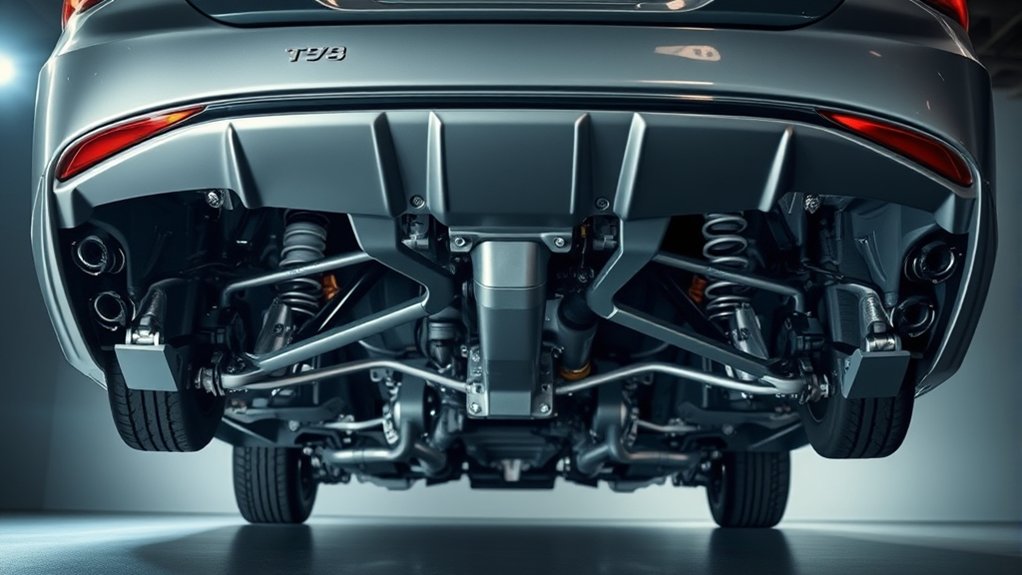
The Toyota Camry suspension affects ride comfort, steering response, tire wear, braking stability, and how confidently the car tracks over uneven pavement. The basic design, replacement parts, alignment settings, and service procedures can vary by model year and trim, so identify the exact vehicle before diagnosing a problem or ordering components.
Quick Answer
The Toyota Camry’s suspension varies by model year and trim. Toyota’s 2025 U.S. Camry uses MacPherson struts in front and a multi-link rear setup. Diagnose noise, pulling, leaks, or uneven tire wear before replacing parts, and verify fitment, alignment settings, calibration steps, and torque values with VIN-specific service information.
Key Takeaways
- Do not assume suspension parts interchange across multiple Camry model years, even when online listings group those years together.
- Clunks, pulling, fluid leaks, a leaning body, steering looseness, and uneven tire wear deserve prompt inspection.
- Check tire pressure, tire condition, and wheel alignment before blaming every handling complaint on the suspension.
- Use the exact Toyota repair procedure for torque values, fastener preparation, alignment specifications, and electronic calibrations.
- Suspension upgrades can improve one characteristic while reducing comfort, clearance, suspension travel, or tire life.
Overview of the Toyota Camry Suspension System
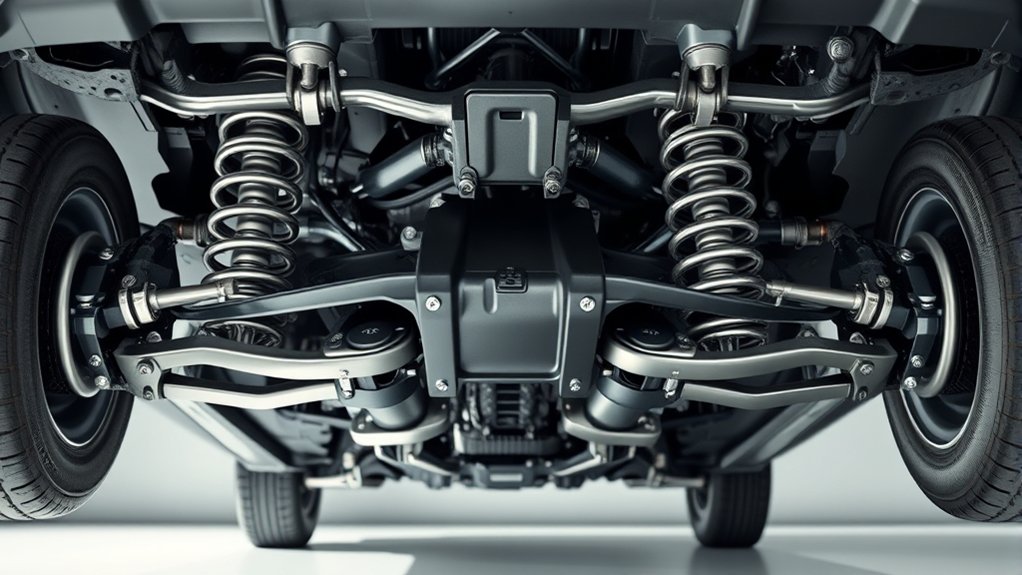
A suspension system connects the wheels to the body while allowing each wheel to move over bumps. Springs support the vehicle’s weight, dampers control repeated bouncing, and links or control arms guide wheel movement.
For the 2025 U.S.-market Toyota Camry, Toyota specifies a MacPherson strut front suspension and a multi-link rear suspension. Toyota also states that the SE and XSE receive sport-oriented tuning, including different shock tuning and a larger-diameter front stabilizer bar.
That description should not be applied automatically to every older Camry. Toyota has redesigned the vehicle across multiple generations, and suspension components may differ by model year, trim, drivetrain, production date, wheel package, and factory option.
Note: A listing that says a suspension part fits “2002–2011 Camry” is not enough by itself. Confirm the VIN, trim, drivetrain, build date, original part number, mounting points, and manufacturer fitment notes before buying.
Older Camrys were sold with different four-cylinder, V6, hybrid, front-wheel-drive, and market-specific configurations. The 2025 U.S. Camry, by contrast, was introduced as an exclusively hybrid model. Always connect an engine, drivetrain, alignment, or suspension statement to a specific model year.
What Are the Key Parts of the Front Suspension?
The front suspension must support vehicle weight, absorb bumps, allow the wheels to steer, and maintain useful tire contact during acceleration, braking, and cornering. Several parts work together to accomplish those tasks.
Strut Assembly Components
A MacPherson strut assembly normally combines a damper and coil spring in one compact unit. The strut helps control wheel movement, while the spring carries much of the vehicle’s weight.
The upper strut mount attaches the assembly to the body. On a steerable front axle, the mount may include a bearing that lets the strut rotate as the driver turns the wheel. A worn mount or bearing can produce knocking, creaking, binding, or a spring-windup sensation during low-speed steering.
Oil or heavy wetness on the outside of a conventional strut can indicate a leaking damper. A light film is not always proof of failure, so the strut should be evaluated together with bounce control, tire contact, noise, and handling symptoms.
Control Arm Functionality
A control arm connects the steering knuckle or wheel hub area to the vehicle’s structure. Its bushings allow controlled movement while isolating some vibration. A ball joint permits the suspension and steering to move through changing angles.
Cracked rubber does not always mean a bushing has failed, but separation, excessive movement, fluid loss from a hydraulic bushing, metal-to-metal contact, or a change in wheel position can require replacement. Ball-joint looseness is safety-critical because severe wear can affect steering control.
| Component | Main job | Possible warning signs |
|---|---|---|
| Coil spring | Supports vehicle weight and allows vertical travel | Vehicle sits low, broken coil, metallic noise, tire contact |
| Strut or shock absorber | Controls spring movement and repeated bouncing | Excessive bouncing, fluid leakage, poor body control |
| Upper mount and bearing | Secures the strut and may allow steering rotation | Clunking, creaking, binding, steering noise |
| Control arm and bushings | Guides wheel movement and isolates vibration | Knocking, wandering, braking movement, uneven wear |
| Ball joint | Allows steering and suspension articulation | Play, clunking, steering looseness, abnormal tire position |
Sway Bar, End Link, Tie Rod, and Knuckle Functions
The stabilizer bar, also called a sway bar or anti-roll bar, connects the left and right sides of the suspension. When the body leans in a corner, the bar twists and resists part of that motion. It is normally connected through end links and mounted to the body with bushings.
A loose end link or worn sway-bar bushing often creates a light clunk over small, alternating bumps. A thicker bar can reduce body roll, but excessive stiffness may reduce independence between the left and right wheels or alter the vehicle’s balance.
The steering knuckle supports the hub and connects several suspension and steering parts. Tie rods transfer steering-rack movement to the knuckle. A worn tie-rod end can cause looseness, wandering, an off-center steering wheel, or rapid tire wear and requires prompt attention.
Why Suspension Quality Matters for Ride Comfort and Handling
Good suspension control helps the tires follow the road instead of bouncing across it. That supports predictable steering, braking, and cornering. It also limits harsh impacts before they reach the passenger compartment.
Suspension condition is only one part of the result. Tire pressure, tread, wheel balance, alignment, steering components, wheel bearings, and brake condition can produce similar symptoms. For example, a vehicle that pulls may have an alignment problem, an unevenly inflated tire, tire conicity, brake drag, or a damaged suspension part.
The National Highway Traffic Safety Administration’s tire guidance recommends regular pressure and condition checks and explains that proper wheel alignment helps maximize tire life and prevent veering.
Uneven tire wear is evidence of a problem, not a complete diagnosis. Confirm tire condition, alignment measurements, and suspension play before replacing parts.
Understanding the Multi-Link Rear Suspension in the Toyota Camry
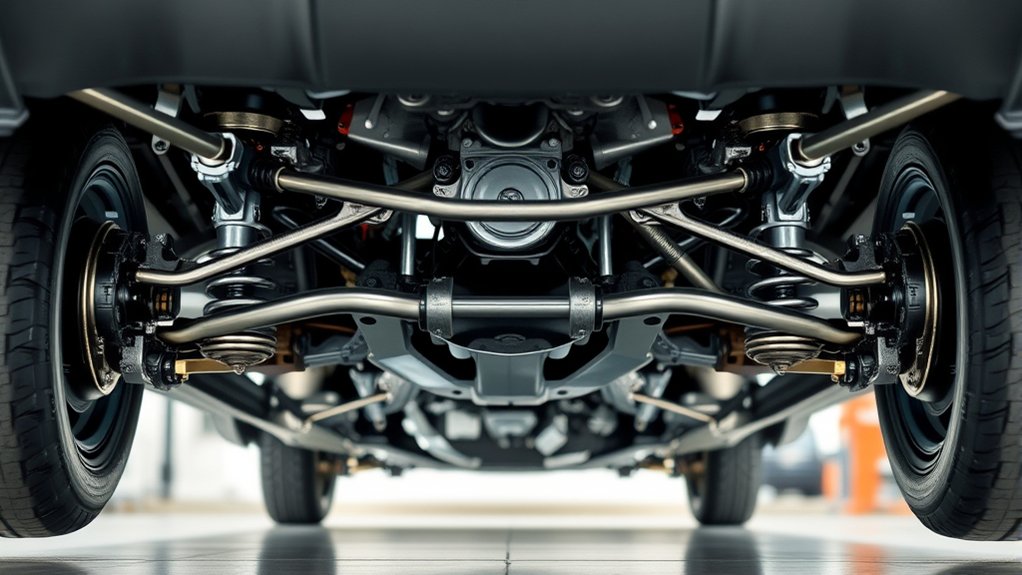
A multi-link rear suspension uses several links to control the wheel’s path as it moves up and down. Separating those duties among multiple links gives engineers more freedom to tune alignment changes, ride comfort, stability, and packaging.
On the 2025 Camry, the multi-link rear system works with the MacPherson strut front suspension. The SE and XSE use sport-oriented suspension tuning, while other trims prioritize a different balance of comfort and control.
“Multi-link” does not mean that every rear component is interchangeable among Camry years. Link length, bushing design, spring and damper rates, mounting brackets, sensors, wheel hubs, and alignment specifications may differ.
- Independent movement: One rear wheel can respond to a bump without forcing the opposite wheel to follow the same path.
- Alignment control: The links guide changes in toe and camber as the suspension moves.
- Ride tuning: Springs, dampers, bushings, and link geometry work together to balance comfort and body control.
- Service complexity: Several joints and bushings must be inspected rather than assuming one shock absorber causes every rear noise.
Identifying Common Toyota Camry Suspension Issues
Suspension complaints should be diagnosed by symptom and operating condition. Note whether the sound occurs while turning, braking, accelerating, crossing a driveway, driving over small bumps, or traveling at highway speed.
| Symptom | Possible causes | Recommended next step |
|---|---|---|
| Clunk over small bumps | End link, sway-bar bushing, strut mount, control-arm bushing, loose hardware, brake hardware | Inspect joints and fasteners under the conditions that reproduce the noise |
| Creak or pop while steering | Upper strut bearing, spring seat, ball joint, tie-rod end, steering component | Check for binding, play, damaged boots, and spring movement |
| Vehicle continues bouncing | Weak strut or shock, incorrect spring, loose mounting point | Inspect dampers for control, leakage, damage, and correct installation |
| Pulling or off-center steering wheel | Tire pressure, tire construction, alignment, brake drag, bent or worn suspension part | Inspect tires and brakes, then measure alignment rather than guessing |
| Uneven tire wear | Incorrect pressure, alignment error, worn joint, bent component, missed rotations | Record the wear pattern and obtain a tire and alignment inspection |
| Vehicle leans on level ground | Broken or incorrect spring, damaged mount, uneven load, tire-size difference | Compare ride height and inspect the springs before driving farther |
| Vibration at a certain speed | Wheel balance, bent wheel, tire damage, hub or bearing issue, driveline fault | Begin with a tire, wheel, and hub inspection |
Warning: Stop driving and arrange professional inspection if a spring is broken or contacting a tire, a wheel has shifted visibly, steering has severe free play, a suspension joint is separating, the vehicle is difficult to control, or a component is dragging on the road.
A Safe Diagnostic Sequence
- Record the symptom. Note speed, road surface, steering angle, brake use, temperature, and which corner appears affected.
- Check the tires first. Compare cold pressure with the driver-door placard and inspect tread, sidewalls, wheel damage, and tire sizes.
- Look at ride height. On level ground, check for a leaning body, broken spring, low corner, or wheel that no longer sits normally in the opening.
- Inspect visible components. Look for damaged boots, loose brackets, displaced bushings, leaking dampers, polished contact marks, rust fractures, and missing hardware.
- Check joints correctly. Ball joints, wheel bearings, tie rods, and bushings require the correct loading and test method. Apparent movement can be misread if the suspension is supported incorrectly.
- Perform a controlled road test. A qualified technician can compare the sound or handling complaint with inspection findings.
- Measure alignment. An alignment printout can reveal a bent, shifted, worn, or incorrectly installed component, but alignment alone does not repair loose parts.
Some older Camry owners report upper-mount or steering-shaft noises. Do not apply a remembered bulletin or a generic dielectric-grease remedy based only on a model-year range. Search the current Toyota service information using the VIN and confirm that the bulletin matches the exact symptom and vehicle.
The Toyota Technical Information System provides repair manuals and service bulletins for North American Toyota vehicles. Safety recalls can also be checked through the official NHTSA recall lookup.
Top Suspension Upgrades for the Toyota Camry: Recommendations and Benefits
A useful upgrade starts with a goal. Decide whether you want less body roll, a lower appearance, sharper response, improved track durability, greater load control, or a more comfortable replacement for worn factory parts.
Do not upgrade around unresolved faults. New coilovers or sway bars will not correct a loose ball joint, damaged tire, bent wheel, failing bearing, or misaligned structure.
Enhanced Handling Performance
Start with tires in good condition, correct pressure, sound bushings and joints, and an alignment within the proper specification. Tires often change steering response and grip more than a single suspension component.
Matched dampers and springs can improve body control when they are designed for the vehicle’s weight, travel, and intended use. Excessively stiff parts can make the tires skip over rough pavement and may reduce real-world grip even when the car feels more immediate.
A larger stabilizer bar or firmer bushings can reduce body roll, but they also change the balance between the front and rear axles. The result may increase or decrease understeer depending on which end is changed and how the rest of the vehicle is configured.
Adjustable Ride Height
Coilovers provide spring and damper assemblies that may offer ride-height and damping adjustment. More adjustment is not automatically better. The usable range, spring rate, damper travel, bump-stop clearance, tire clearance, and alignment range matter more than a marketing claim such as “36 damping settings.”
Lowering the vehicle can reduce suspension travel and ground clearance. It may also change camber, toe, headlight aim, sensor position, axle angles, and tire-to-body clearance. The vehicle should be aligned after the final ride height is set.
Air-suspension systems can provide adjustable height, but they add air lines, fittings, control hardware, electrical components, and possible leak points. A show-oriented installation may not suit winter roads, heavy daily use, or repeated high-load driving.
Pro Tip: Before buying an upgrade, ask for written fitment confirmation using the VIN, installed wheel and tire sizes, drivetrain, desired ride height, and intended use. Also confirm replacement-part availability and warranty terms.
Product names previously associated with Camry upgrades—including Ksport Kontrol Pro, Airtech, Procomp, and Voodoo13—should not be treated as universal recommendations. Current specifications, legal status, availability, and model fitment must be verified directly with the manufacturer and a qualified installer.
Improved Stopping Power
Brakes are a related chassis system, not a suspension component. Larger rotors, multi-piston calipers, performance pads, and higher-temperature fluid may improve repeated braking performance when the system is properly engineered.
A large brake kit can also change unsprung mass, wheel clearance, pedal balance, spare-wheel compatibility, and service requirements. Claims such as “356 mm rotors” or “8-piston calipers” are meaningful only when tied to a verified kit, exact Camry application, compatible wheel, and complete installation instructions.
For normal street driving, quality tires, fresh correct-specification brake fluid, suitable pads, functioning factory hardware, and proper bedding may provide more practical value than the largest available brake package.
Maintenance Tips for a Long-Lasting Suspension System
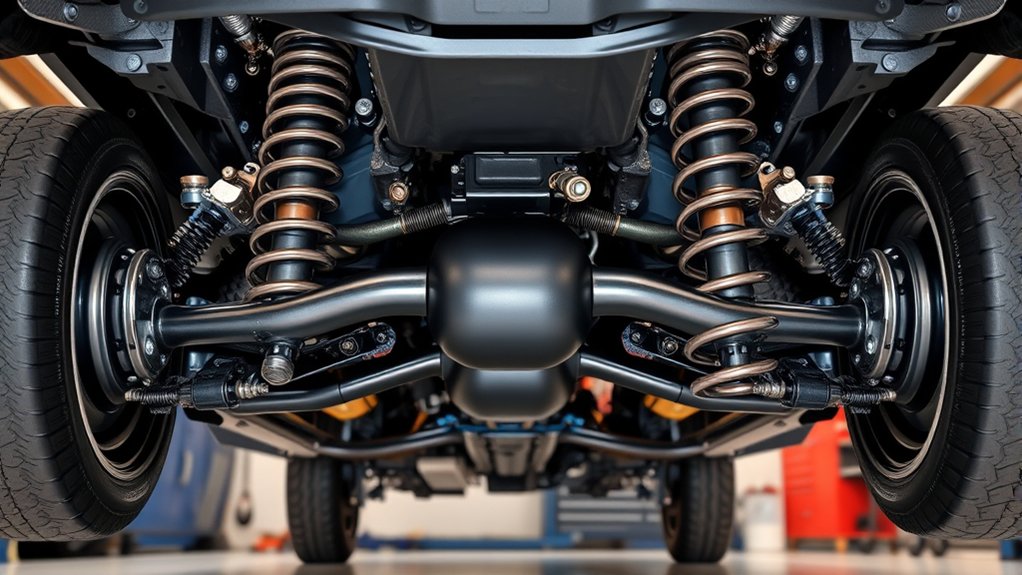
Toyota does not use one universal replacement interval for every suspension component. Inspection should be based on the vehicle’s maintenance schedule, mileage, road conditions, age, impacts, corrosion exposure, and symptoms.
- Check tire pressure regularly: Use the driver-door placard rather than the pressure molded into the tire sidewall.
- Inspect tread wear: Feathering, cupping, one-sided wear, or rapid wear can point to pressure, balance, alignment, or component problems.
- Inspect after an impact: A pothole, curb strike, or collision can bend a wheel or suspension component without creating an immediate loud noise.
- Look during tire service: Tire rotations provide a good opportunity to inspect boots, bushings, links, springs, dampers, and wheel bearings.
- Address noises early: A small worn link is cheaper to correct before movement damages another component or ruins a tire.
- Measure alignment when needed: Obtain an inspection when the car pulls, the steering wheel becomes off-center, tire wear changes, ride height is altered, or steering and suspension parts are replaced.
- Keep records: Save alignment printouts, part numbers, installation dates, and the conditions under which a symptom appeared.
Warning: Never work under a vehicle supported only by a jack. Use approved lifting points and properly rated jack stands on stable ground. A coil spring stores enough energy to cause severe injury; removing a loaded spring or strut requires the correct equipment and procedure.
Fasteners, Torque, and Lubrication
Do not coat every suspension nut and bolt with anti-seize or lithium grease. Lubrication reduces friction and can produce excessive clamp load when a dry torque value is used. Other locations may require a specified lubricant, threadlocker, new nut, cotter pin, or one-time-use bolt.
Generic values such as 37 lb-ft for a front top-mount bolt or 92 lb-ft for a rear lower fastener must not be applied across all Camry years. The correct value depends on the exact fastener and vehicle configuration. Use the VIN-specific Toyota repair procedure and tighten fasteners in the stated sequence and vehicle position.
Some rubber-bushed control-arm fasteners must receive final tightening with the suspension at its specified normal ride position. Tightening them while the suspension hangs can preload the rubber and shorten bushing life if the repair procedure requires ride-height tightening.
Alignment and Electronic Calibration
Toe describes whether the tires point slightly inward or outward when viewed from above. Camber describes wheel tilt when viewed from the front. Caster describes the steering axis angle when viewed from the side.
Factory adjustment methods vary. Aftermarket cam bolts may offer additional camber movement, sometimes advertised near 1.75 degrees, but their range, compatibility, strength, and approved installation differ. Do not assume that caster is non-adjustable or that an aftermarket correction method is acceptable without checking the exact repair and alignment information.
Some repairs or alignments may require steering-angle, yaw-rate, zero-point, driver-assistance, or related calibration. That does not mean every suspension adjustment requires the same procedure. Follow the model-specific instructions and scan-tool prompts.
The correct maintenance schedule and basic owner information are available through Toyota’s warranty and owner’s manual portal. Technician-level repair procedures, bulletins, specifications, and calibrations are available through Toyota TIS.
Enhancing Your Toyota Camry’s Suspension Performance: Further Considerations
Suspension performance is a system result. A change that works well on smooth track pavement may be uncomfortable or less effective on broken public roads. Consider the entire vehicle before choosing parts.
- Intended use: Daily commuting, winter driving, long-distance comfort, autocross, and track use require different compromises.
- Ride quality: Firmer springs, dampers, mounts, and bushings can increase noise, vibration, and harshness.
- Suspension travel: Excessive lowering may cause frequent bump-stop contact and reduce grip on rough surfaces.
- Ground clearance: Check driveways, speed humps, snow, underbody panels, exhaust clearance, and lifting access.
- Tire clearance: Verify clearance through full steering lock and suspension travel, not only while parked.
- Alignment range: Confirm that the target ride height can be aligned without unsafe or improvised corrections.
- Load and drivetrain: Hybrid equipment, all-wheel drive, passengers, cargo, and towing-related loads can affect component selection.
- Roadworthiness: Confirm local inspection, modification, lighting, bumper-height, and insurance requirements.
- Serviceability: Choose parts with available replacement dampers, seals, bushings, mounts, and documentation.
A balanced street setup usually begins with sound factory joints, suitable tires, correct alignment, and matched springs and dampers. Make one controlled change at a time so you can identify whether it improved the car.
Related Guides
Frequently Asked Questions
What type of suspension does a Toyota Camry have?
It depends on the model year and market. Toyota specifies MacPherson struts in front and a multi-link rear suspension for the 2025 U.S. Camry. Older Camrys may use different components, geometry, tuning, and part numbers, so verify the exact vehicle before ordering parts.
What is the main difference between front and rear suspension?
The front suspension must allow steering while supporting braking and cornering loads. The rear suspension mainly controls rear-wheel movement, ride, and stability. Both ends work together, and changing one end can alter the vehicle’s overall balance.
How does the Toyota Camry front suspension work?
The spring supports weight, the strut controls bouncing, and the control arm guides wheel movement. The ball joint and steering knuckle allow the wheel to steer and move vertically, while the stabilizer bar helps limit body roll.
How can I tell whether my Camry suspension needs repair?
Common signs include clunking, excessive bouncing, fluid leakage, a leaning body, steering looseness, pulling, an off-center steering wheel, or unusual tire wear. Tires, brakes, wheel bearings, and alignment can create similar symptoms, so inspect before replacing parts.
Do I need a wheel alignment after suspension work?
An alignment check is advisable after replacing parts that locate a wheel, changing ride height, loosening alignment-related fasteners, or correcting impact damage. The applicable Toyota procedure determines whether additional steering-angle or zero-point calibration is required.
Can I install lowering springs or coilovers on a Toyota Camry?
Yes, compatible kits are available for some Camry applications. Confirm VIN-specific fitment, spring and damper compatibility, suspension travel, tire clearance, alignment range, legal requirements, and installation instructions. The car should be inspected and aligned after its final ride height is set.
Do Toyota Camry paddle shifters change the suspension?
No. Paddle shifters change transmission or simulated gear control on equipped models. They do not adjust spring rate, damper stiffness, ride height, or suspension geometry unless the vehicle has a separate adaptive-chassis system specifically designed to do so.
Conclusion
A Toyota Camry suspension should be evaluated as a complete system rather than as a list of isolated parts. Begin with the exact model year and VIN, inspect the tires, reproduce the symptom, check joints and dampers safely, and use measured alignment data before buying components.
When repairs or upgrades are needed, use verified fitment and the applicable Toyota procedure for lifting, spring handling, fastener preparation, torque, alignment, and calibration. That approach protects ride comfort, tire life, predictable handling, and the safety of everyone in the vehicle.
Sources
- Toyota: 2025 Camry product announcement — verifies the 2025 U.S. model’s hybrid powertrain, MacPherson strut front suspension, multi-link rear suspension, and trim-specific tuning.
- Toyota Warranty and Owner’s Manuals — provides model-year owner information and maintenance documentation.
- Toyota Technical Information System — provides Toyota repair manuals, service bulletins, specifications, and technician-level procedures.
- NHTSA Tire Safety — supports tire-pressure, tire-condition, rotation, balance, and alignment guidance.
- NHTSA Recall Lookup — provides official VIN and vehicle recall searches.
