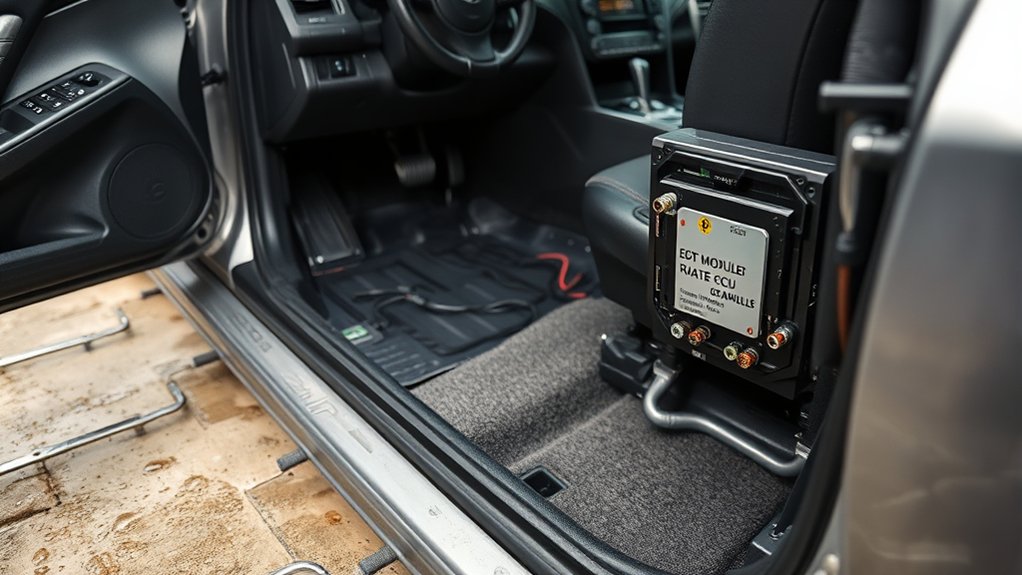
Water inside your Toyota Camry can cause more than a damp carpet. A small rain leak may soak the padding and create odors, while deeper flood exposure can reach wiring, control modules, seat components, brakes, the engine intake, or hybrid-system parts. The safest response depends on the water source, the highest waterline, and whether the car was running when the exposure occurred.
Quick Answer
Water inside a Toyota Camry can soak hidden padding, corrode wiring and seat-system connectors, support mold, and—after flooding—damage the engine or hybrid components. Stop the source, photograph the waterline, and start drying immediately. Do not start or drive the car when water reached wiring, seat rails, the engine intake, or hybrid-system areas.
Key Takeaways
- A minor clean rain leak and a partially submerged vehicle require very different responses.
- Wet carpet can hide saturated padding, standing water in floor channels, and moisture around wiring or seat components.
- Begin drying immediately and aim to dry affected materials within 24 to 48 hours, while recognizing that hidden moisture may take longer.
- Do not restart a stalled or submerged Camry or cycle the ignition when water may have reached wiring, the engine intake, or hybrid components.
- Saltwater, sewage, storm surge, and unknown floodwater require professional cleaning and a more extensive safety inspection.
- Repair and verify the leak source before reinstalling carpet or declaring the cleanup complete.
At a Glance
| Time Required | 15 to 30 minutes for documentation and an initial inspection; complete drying may take 24 to 48 hours or longer |
| Difficulty | Easy for a small clean-water leak; advanced for electrical, airbag, engine, contaminated-water, or hybrid-system exposure |
| Tools Needed | Flashlight, suitable gloves, absorbent towels, wet vacuum, fans or dehumidifier, moisture meter if available, and basic trim tools only when you know how to use them safely |
| Cost | Varies widely by leak source, water depth, contamination, drying time, and whether electrical, safety, mechanical, or hybrid components were affected |
Why Water Intrusion Is a Serious Concern for Your Toyota Camry
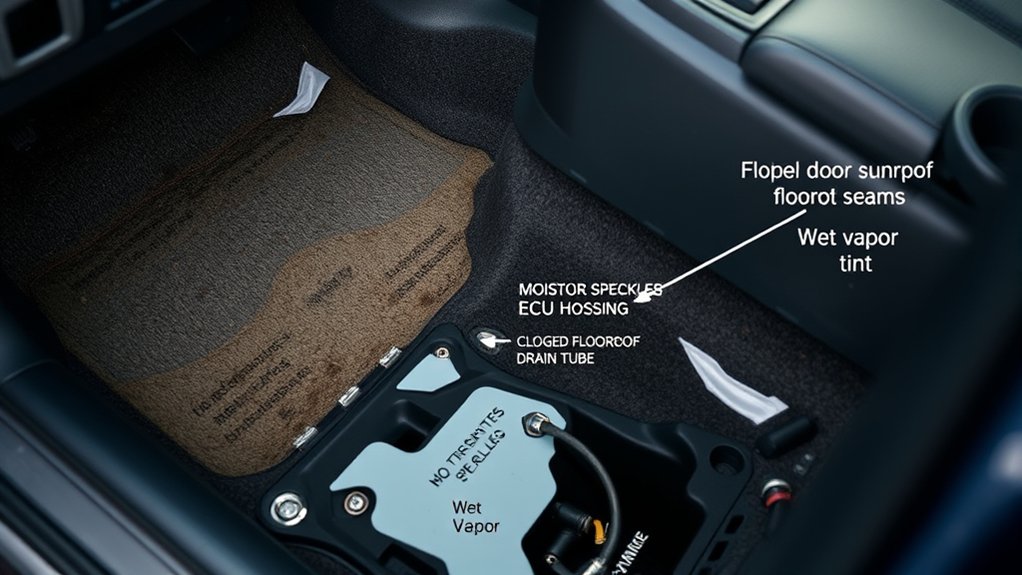
Water intrusion can affect several layers of your Camry’s interior. The visible carpet may feel only slightly damp while the foam padding underneath holds much more water. Moisture can also collect in floor channels, the spare-tire well, electrical connectors, seat-mount areas, and body seams that are difficult to inspect from above.
The severity depends on the exposure. Clean rainwater from a door or windshield leak usually calls for leak repair and thorough drying. Street flooding, saltwater, sewage-contaminated water, or water that reached the seat rails, dashboard, engine intake, or hybrid-system area requires a more cautious professional assessment.
Common entry points can include damaged weatherstripping, a poorly sealed windshield, clogged sunroof drains on equipped models, door vapor barriers, trunk seals, tail-light seams, body seams, or a blocked air-conditioning condensate drain. The exact layout varies by model year, trim, previous body repairs, and whether your Camry has a sunroof, all-wheel drive, or a hybrid powertrain.
Use the Waterline to Choose the Safest Response
| Highest Water Level | Primary Concern | Recommended Response |
|---|---|---|
| Removable floor mat only | Surface moisture and an active leak | Remove the mat, press a dry towel into the carpet, stop the source, and confirm that the underlying carpet and padding are dry |
| Carpet or padding | Hidden standing water, floor wiring, corrosion, and mold | Extract water, lift or remove wet padding, and avoid cycling the ignition if wiring, connectors, or seat components may be wet |
| Seat rails or lower console | Seat wiring, occupant sensors, airbag circuits, modules, and harnesses | Do not treat the car as roadworthy; arrange towing or qualified electrical and safety-system inspection |
| Dashboard, air intake, or engine-bay electronics | Engine water ingestion, module damage, starter damage, and widespread electrical faults | Do not start or crank the engine; have the vehicle recovered and inspected |
| Hybrid battery area or orange high-voltage components | High-voltage shock, short circuit, heat, smoke, or fire | Stay away from the components and contact a Toyota dealer, trained recovery service, or emergency services as conditions require |
This matrix is intentionally cautious. Water can move through padding, harness coverings, and floor channels beyond the visible waterline.
Warning: Never drive through floodwater. If your Camry stalled in deep water or was partially submerged, do not restart it. Arrange towing. On a Camry Hybrid, do not touch orange high-voltage cables, the traction-battery area, or damaged electrical components. If the traction battery may be damaged, contact a dealer or emergency services.
The National Weather Service warns that about 12 inches of moving water can float a car or small SUV. The road beneath the water may also be washed out or obstructed.
Key Signs of Water Damage in Your Camry
Check the cabin and trunk after heavy rain, a car wash, air-conditioning use, or any flood exposure. Early signs often appear before a warning light or obvious corrosion develops.
- Damp floor mats or carpet: Press firmly with a clean towel, especially along the edges, beside the center console, and under the front seats.
- Musty odor: A persistent earthy smell can point to wet padding or microbial growth even when the carpet surface feels dry.
- Fogged windows: Repeated interior condensation can indicate trapped moisture.
- Water in the spare-tire well: Lift the trunk floor and inspect the lowest areas for pooling, dirt lines, or rust staining.
- Stains on the headliner or pillars: These can suggest a windshield, sunroof drain, or roof-seam leak.
- Electrical symptoms: Flickering lights, inoperative windows or locks, repeated warning messages, or intermittent accessories need prompt diagnosis.
- New rust or greenish residue: Corrosion on seat brackets, connectors, or metal fasteners suggests that moisture has remained for some time.
- Wet cabin air filter or weak airflow: Water near the passenger footwell or cowl can affect the filter or HVAC housing and create recurring odors.
- Silt or debris in unusual places: Dirt beneath seats, inside the trunk, or behind lower trim can reveal deeper flood exposure.
Where the Water Appears Can Narrow the Cause
| Wet Area | Possible Leak Path | Useful Clue |
|---|---|---|
| Front passenger footwell | A/C condensate drain, cowl, windshield, HVAC housing, or door area | Water after using A/C points toward condensate drainage; water after rain points toward an exterior seal or cowl path |
| Driver footwell | Windshield, cowl, door seal, body seam, or wiring-grommet area | Inspect the upper carpet edge, lower dash area, door sill, and nearby weatherstripping |
| Rear footwell | Door seal, door vapor barrier, front-floor water migration, or sunroof drain on equipped models | Check whether the door sill, front carpet, or headliner is also wet |
| Headliner or A-pillar | Windshield seal, roof seam, or sunroof drain | Staining often begins near the entry point and spreads downward |
| Trunk or spare-tire well | Trunk weatherstrip, tail-light seam, body seam, pressure vent, or rear-glass area | Water trails, dust tracks, or a concentrated rust line can reveal the path |
This table is a starting point, not a model-year diagnosis. A controlled hose test performed in small sections can help locate a rain leak, but keep water away from open trim, exposed connectors, and interior electronics. Use a helper inside the dry vehicle and stop as soon as the entry point appears.
How Water Damage Affects Electrical Systems in Your Camry
Modern Camrys use many connectors, sensors, switches, harnesses, and control units. Moisture can bridge electrical contacts while wet, while minerals, salt, dirt, and other residue can promote corrosion after the visible water disappears. A vehicle may work normally at first and develop intermittent faults later.
Sensor Malfunction Risks
Seat areas can contain wiring for occupant detection, seat-belt reminders, power seats, heated or ventilated seats, and supplemental restraint systems, depending on the model year and trim. Water under the carpet can also travel along a wiring harness. Possible symptoms include:
- Airbag, ABS, stability-control, brake, hybrid-system, or check-engine warning lights
- Power windows, locks, seats, or mirrors that work intermittently
- Climate-control, audio, navigation, or infotainment problems
- Battery drain or a repeated no-start condition
- Warning messages that return after being cleared
- Unexpected chimes or an incorrect passenger-seat status indication
Do not assume a warning light is harmless because the cabin has dried. A scan tool may identify the affected circuit, but a technician may still need to expose the carpet and inspect connectors for moisture, residue, terminal damage, or corrosion.
Short Circuits and Corrosion
Water can create an unintended conductive path between electrical contacts. Even clean-looking water can carry minerals or contamination. Saltwater, sewage, and storm runoff are especially damaging because conductive residue can remain on terminals and circuit boards.
| Impact of Water Intrusion | Potential Result |
|---|---|
| Temporary conductivity | Blown fuses, erratic operation, overheating, or a short circuit |
| Residue in connectors | Intermittent faults after the cabin appears dry |
| Terminal corrosion | Higher resistance, broken pins, communication faults, or module failure |
| Water around seat wiring | Airbag, occupant-sensor, seat, or seat-belt faults |
| Water near hybrid components | High-voltage shock or fire risk requiring trained inspection |
Warning Lights and No-Start Problems
Multiple warning lights after water exposure can indicate low 12-volt system voltage, wet connectors, damaged wiring, sensor faults, or disrupted communication between control modules. Do not keep cycling the ignition to see whether the lights disappear. Record every message, photograph the instrument panel, and arrange a diagnostic scan.
If the airbag, red brake, ABS, stability-control, or hybrid-system warning remains on, avoid treating the car as fully roadworthy until the system is inspected. These indicators can mean that a safety system may not operate as intended.
Should You Disconnect the 12-Volt Battery?
Disconnecting the 12-volt battery is not a universal first step. Procedures, battery locations, memory effects, alarm behavior, airbag precautions, and hybrid-system shutdown requirements vary by model year and powertrain. Do not reach through standing water, disturb wet connectors, or work near hybrid components to access a battery.
Follow the exact Toyota owner’s manual or leave battery isolation to a qualified technician. Disconnecting the 12-volt battery does not make a hybrid traction battery safe to touch.
Mold and Odor Risks After a Camry Water Leak
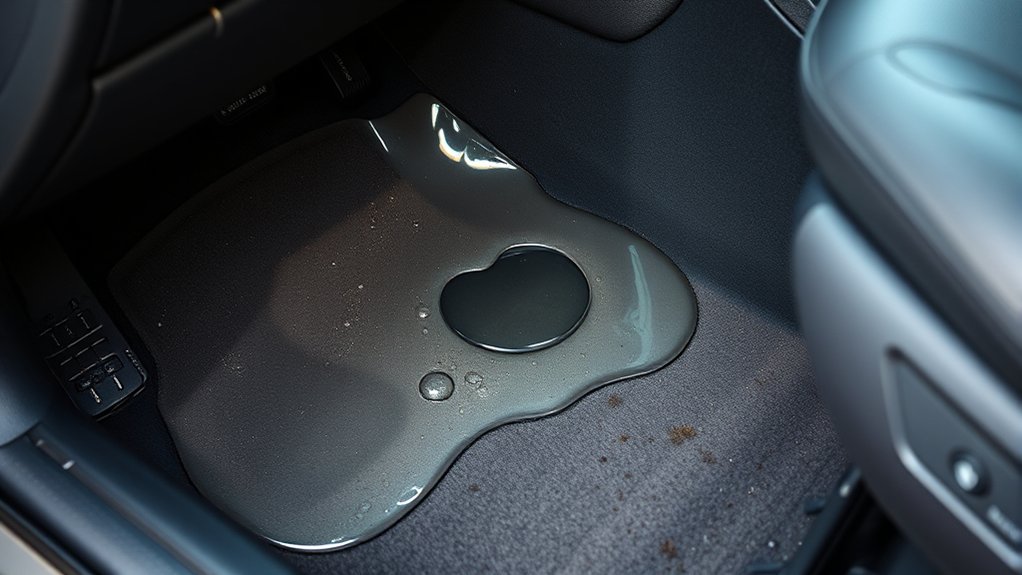
Mold can grow on carpet, fabric, upholstery, dust, insulation, and other materials when moisture remains. The U.S. Environmental Protection Agency recommends drying water-damaged materials within 24 to 48 hours to help prevent mold growth in most cases. This is a target rather than a guarantee, and a dry carpet surface does not prove that the padding or insulation below it is dry.
Health Risks Associated With Mold
Health effects vary from person to person. According to the Centers for Disease Control and Prevention, damp and moldy environments may cause no symptoms in some people, while others may develop a stuffy nose, sore throat, coughing, wheezing, eye irritation, or skin rash. People with asthma, mold allergies, chronic lung disease, or weakened immune systems may face stronger reactions.
A musty smell is a reason to inspect and dry the car, but it does not identify the mold species or prove a specific medical condition. Seek medical advice if symptoms occur or become worse when you use the vehicle.
Damage to Interior Components
Prolonged moisture can stain upholstery, break down carpet backing and foam, corrode seat frames and fasteners, damage adhesive-backed insulation, and affect electrical connectors. Porous materials that stayed saturated, especially after contaminated floodwater, may need replacement rather than surface cleaning.
Do not simply spray fragrance or disinfectant over a wet interior. Remove standing water, expose the padding, dry the structure, clean affected surfaces with products approved for automotive materials, and fix the leak source. Never mix bleach with ammonia or other cleaners, and do not use strong chemicals in a closed cabin without following the product’s ventilation and safety instructions.
How to Confirm the Interior Is Dry
- Press clean, dry towels against carpet edges and the lowest floor areas.
- Compare suspicious areas with a known-dry section using a suitable moisture meter when available.
- Check beneath removable mats, trunk liners, and accessible carpet edges.
- Inspect the spare-tire well and floor channels for droplets or condensation.
- Run the climate system only after electrical safety has been confirmed, then check for returning odor.
- Reinspect the interior after 24 to 48 hours and again after the next rain or car wash.
Pro Tip: Mark the highest waterline with removable tape and photograph each wet area before drying. Include the dashboard, carpet edges, trunk, under-seat area, and exterior. This helps a technician trace the leak and gives your insurer a clearer record.
Immediate Steps to Take After Water Exposure
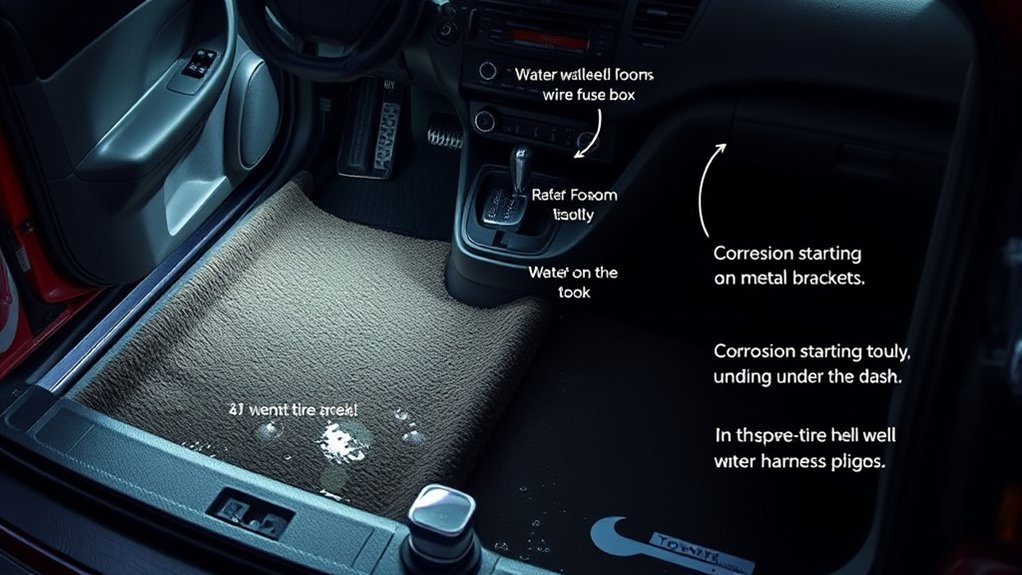
Your first steps should protect people, preserve evidence, and prevent additional damage. Use the following order.
- Move away from danger. If the car is in active floodwater, do not enter the water to retrieve it. Follow emergency instructions and arrange professional recovery.
- Do not restart a stalled or submerged vehicle. Starting or cranking the engine can worsen damage if water entered the intake, cylinders, starter, or electrical system.
- Document the exposure. Photograph the waterline, cabin, trunk, instrument-panel warnings, exterior, and contaminated material before major cleanup.
- Identify the water source. Clean rainwater, air-conditioning condensate, freshwater flooding, street runoff, saltwater, and sewage-contaminated water require different cleanup levels.
- Contact the insurer when appropriate. Report flood or storm damage promptly and ask what documentation or inspection is required. Do not delay emergency water extraction solely to wait for an adjuster.
- Remove clean standing water safely. Use suitable gloves, absorbent towels, or a wet vacuum only after the car is in a dry, secure location and no electrical or high-voltage hazard is present.
- Lift removable mats and expose wet padding. Carpet padding often needs to be raised or removed to dry completely. Avoid cutting wiring or disturbing seat, airbag, and occupant-sensor connectors.
- Ventilate and dehumidify. Use externally powered fans and a dehumidifier in a secure, well-ventilated location. Avoid uncontrolled high heat, which can damage trim, adhesives, wiring insulation, and upholstery.
- Inspect the HVAC area. Check whether the cabin air filter, blower housing, or passenger-side ducts became wet. Replace a saturated filter with the correct model-specific part after the leak is repaired.
- Arrange inspection when needed. Water above the carpet, water near seat wiring, warning lights, engine stalling, saltwater exposure, contaminated water, or hybrid-system exposure calls for professional diagnosis.
Do not disconnect electrical components while standing water remains. Battery-isolation procedures vary by model year and powertrain. Follow the correct Toyota owner’s manual or leave the work to a qualified technician.
Clean Water Versus Contaminated Floodwater
| Water Source | Typical Response |
|---|---|
| Clean rainwater or A/C condensate | Stop the source, extract the water, expose the padding, dry completely, and verify the repair |
| Street runoff or unknown freshwater flooding | Treat as contaminated, minimize contact, and obtain professional advice before cleaning porous materials |
| Sewage or chemical contamination | Avoid DIY interior remediation; porous materials may require removal and replacement by trained professionals |
| Saltwater or storm surge | Arrange towing and comprehensive electrical, mechanical, and hybrid-system assessment because salt residue is highly corrosive |
Assessing Engine Damage After Water Exposure
Engine concerns apply mainly when the Camry was driven through deep water, stalled in water, or was submerged high enough for water to reach the air intake. A normal cabin rain leak does not automatically mean the engine is damaged.
If the engine stalled in water, do not crank it again. Liquid in a cylinder can prevent the piston from completing its travel and damage connecting rods, pistons, valves, the starter, or other components. Have the car towed for inspection.
A technician may check the air box and filter, intake path, engine oil, cylinders, spark plugs, starter operation, wiring, connectors, and stored diagnostic codes. Milky or unusually high oil can indicate contamination, but normal-looking oil does not rule out water ingestion.
White vapor from the exhaust by itself is not a reliable flood-damage test because normal condensation can produce visible vapor, especially during a cold start. More serious clues include a stall during a water crossing, a locked engine, abnormal cranking, knocking, misfires, contaminated fluids, or a no-start condition after exposure.
Other Mechanical Systems That May Need Inspection
A Camry that starts and idles is not automatically safe to drive after deep-water exposure. Depending on the waterline, a technician may also need to inspect:
- Brakes: Mud, grit, and corrosion can affect pads, rotors, calipers, parking-brake components, and sensors.
- Wheel hubs and bearings: Contaminated water can enter damaged seals or remain around rotating components.
- Transmission and driveline components: Vents, seals, and connectors may admit water when submerged. The required checks differ among gasoline, hybrid, front-wheel-drive, and all-wheel-drive models.
- Underbody wiring and sensors: Harnesses, connectors, oxygen sensors, ABS wiring, and shields can be damaged by water, debris, or impact.
- Exhaust and heat shields: Trapped debris, bent shields, or water remaining in low sections can produce noise or heat problems.
- Fluids: Engine oil, transmission fluid, coolant, brake fluid, and other lubricants should be evaluated according to the exposure and model-specific service information.
Do not use a test drive to determine whether these systems are safe when the water reached the wheel hubs, floor pan, engine intake, or underbody electronics.
Note: The National Weather Service advises drivers not to enter floodwater because the water can conceal a washed-out road, debris, electrical hazards, and chemicals. Turn around rather than testing the depth.
Camry Hybrid Safety After Water Exposure
A Camry Hybrid contains a conventional 12-volt system and a separate high-voltage traction system. Battery chemistry, component location, and shutdown procedures vary by model year. Do not assume that removing the 12-volt battery cable disables every high-voltage hazard.
The National Highway Traffic Safety Administration warns that flood-exposed hybrid and electric vehicles can present high-voltage shock and fire hazards. Contact a Toyota dealer, trained hybrid technician, recovery company, or emergency services if water reached the traction-battery area or if you notice heat, smoke, hissing, popping, unusual odors, or damaged orange cables.
If the model-year manual identifies a lithium-ion traction battery and battery damage is suspected, follow NHTSA guidance not to park the vehicle in a garage or within 50 feet of a house, other structure, vehicle, or combustible material. Do not apply that statement as a substitute for the model-specific Toyota emergency or owner guidance.
Warning: Do not touch, cut, unplug, probe, or attempt to dry orange high-voltage cables or traction-battery components. Keep people away from a flood-damaged hybrid that is smoking, heating, making abnormal sounds, or showing signs of battery damage, and call emergency services.
Preventing Long-Term Damage From Water Intrusion
Drying the visible surface is only the first stage. Long-term prevention requires removing trapped moisture, cleaning residue, repairing the entry point, and confirming that affected systems still work correctly.
- Remove or lift soaked materials: Mats, carpet, padding, trunk liners, and insulation may trap water against metal and wiring.
- Dry hidden cavities: Check floor channels, seat-mount areas, the spare-tire well, lower trim pockets, and accessible body cavities.
- Inspect the cabin filter and HVAC intake: Replace a wet filter and correct any cowl, drain, or HVAC-housing leak before operating the system for long periods.
- Clean contamination: Floodwater can carry dirt, fuel, sewage, salt, and chemicals. Extensive or contaminated exposure is a professional cleanup job.
- Inspect connectors before applying products: Dielectric grease should not be used as a shortcut on wet or corroded terminals. A technician should clean, dry, repair, or replace affected connectors before applying an approved protective compound.
- Repair the leak source: Replace damaged seals, clear drains correctly, repair a vapor barrier, or reseal the verified entry point.
- Verify the repair: Perform a controlled water test and recheck the carpet, trunk, cabin filter, odors, and warning lights over the next several days.
- Measure rather than guess: Compare moisture readings or towel tests with a known-dry area before reinstalling padding and trim.
Keep receipts, photos, diagnostic reports, moisture readings, insurer correspondence, and a list of replaced parts. Water-related faults can be intermittent, so documentation helps if symptoms return.
When to Call an Expert for Water Damage Repair
Professional help is the safer choice when the damage extends beyond a small, clean rain leak. Arrange towing or inspection when you notice any of the following:
- The engine stalled while driving through water or will not crank normally
- Water reached the carpet padding, seat rails, dashboard, center console, wiring harnesses, or electronic modules
- The airbag, brake, ABS, stability-control, hybrid-system, or check-engine light remains on
- The vehicle was exposed to saltwater, sewage, storm surge, chemical runoff, or unknown floodwater
- A Camry Hybrid has water near the traction battery, orange cables, inverter, or other high-voltage components
- Heat, smoke, unusual odors, hissing, popping, or battery damage is present
- Carpet padding remains wet after surface drying
- The cabin air filter or HVAC housing remains wet or musty
- Mold is visible, odors persist, or occupants develop symptoms in the car
- The leak returns after weatherstripping or drains were cleaned
- Rust, green corrosion, overheated wiring, blown fuses, or repeated battery drain appears
- Water reached the brakes, wheel hubs, drivetrain vents, or underbody electrical components
Choose a repair facility that can handle leak diagnosis, electrical testing, supplemental restraint systems, and the specific Camry powertrain. A body shop may be better for windshield, seam, body-repair, or tail-light leaks, while a Toyota dealer or qualified automotive electrician may be better for module, network, airbag, and hybrid-system faults.
Tips for Keeping Your Camry’s Interior Dry and Safe
- Inspect door, trunk, and window weatherstripping for tears, gaps, flattening, or debris.
- Keep sunroof drain entrances clear on equipped models, but do not force rigid wire or high-pressure air through a drain because it can damage or disconnect the tube.
- Remove leaves and debris from the cowl area at the base of the windshield.
- Check the spare-tire well and carpet edges after heavy rain or an automatic car wash.
- Make sure the air-conditioning condensate drains outside the car. A wet front passenger floor after A/C use deserves inspection.
- Inspect the cabin air filter when water enters near the cowl, HVAC intake, or passenger footwell.
- Repair cracked tail-light seals, body seams, door vapor barriers, or windshield bonding only after confirming the leak path.
- Avoid covering damp carpet with rubber mats, which can trap moisture underneath.
- Do not leave wet towels, soaked mats, or a running household dehumidifier inside an unsecured vehicle.
- Review the model-year-specific Toyota manual before removing seats, disconnecting the battery, arranging towing, or working near airbags and hybrid components.
Frequently Asked Questions
Can water inside a car damage anything?
Yes. Water can soak carpet and padding, corrode metal and connectors, damage electronics, create odors, and support mold growth. The risk increases when the water is deep, contaminated, salty, or left in hidden materials for more than a day or two.
What is the most common problem with a Toyota Camry?
No single problem is the most common across every Camry generation, engine, trim, and market. Water leaks are not established as the model’s universal leading fault. Diagnose the exact wet area and timing, then check model-year service information, repair history, and applicable recalls rather than relying on a broad claim.
How do I know if my car is damaged after driving through a flood?
Do not restart a car that stalled in floodwater. Warning signs include a wet air filter, abnormal fluid level or appearance, unusual cranking, warning lights, misfires, electrical faults, contaminated carpet, and a visible waterline. Because hidden damage is common, towing and professional inspection are safer than a test drive.
What damage can a water leak cause?
A leak can damage carpet, padding, upholstery, sound insulation, seat hardware, wiring, connectors, control modules, and the HVAC filter or housing. It can also produce odors and mold if materials remain wet. Repeated leaks may cause corrosion even when each individual leak seems small.
How quickly should I dry a wet Camry interior?
Begin immediately and aim to dry water-damaged materials within 24 to 48 hours. Lift or remove soaked padding because the carpet surface can dry while moisture remains underneath. Extensive flooding, saltwater, sewage, or unknown water should be handled professionally.
Can a Toyota Camry be saved after flooding?
Sometimes, but the answer depends on water depth, exposure time, contamination, salt content, battery type, and which systems were reached. Water limited to removable carpet is different from water reaching modules, airbags, the engine, transmission, brakes, or hybrid battery. A repair estimate and insurer assessment are essential before deciding.
Is a musty smell proof that mold is present?
A musty smell strongly suggests a moisture problem and may indicate microbial growth, but odor alone cannot identify the organism or the full extent of contamination. Inspect beneath carpet and trim, check the cabin filter, correct the leak, and dry or replace affected materials.
Can I drive a Toyota Camry after the carpet gets wet?
A damp removable mat is different from saturated carpet or padding. Do not drive when water reached seat wiring, electrical connectors, the center console, safety-system components, or when warning lights are on. For anything beyond a small clean-water leak with confirmed dry wiring, obtain an inspection first.
Should I disconnect the battery after water enters my Camry?
Not automatically. Battery location and shutdown procedures vary by year and powertrain, and reaching a battery through standing water can be dangerous. Follow the model-year Toyota manual or use a qualified technician. Disconnecting the 12-volt battery does not make a hybrid traction battery safe to touch.
Will car insurance cover Toyota Camry water damage?
Coverage depends on the policy, the cause of the water damage, exclusions, deductibles, and the insurer’s assessment. Photograph the waterline and damage, keep receipts, and contact the insurer promptly. Do not discard major parts before inspection when it is safe and practical to preserve them.
Conclusion
Water intrusion in a Toyota Camry ranges from a manageable seal or drain leak to a serious flood-damage event. Match the response to the water source and highest waterline. Stop the source, document the exposure, dry hidden padding, check the HVAC area, and watch for electrical, brake, engine, or hybrid-system symptoms. When water reaches wiring, seat components, the engine intake, underbody systems, or high-voltage parts, towing and trained inspection are safer than trial-and-error testing.
Sources
- U.S. Environmental Protection Agency: A Brief Guide to Mold, Moisture and Your Home — supports the 24-to-48-hour drying target, hidden-moisture guidance, and moisture-control recommendations.
- Centers for Disease Control and Prevention: Mold — supports the balanced description of possible health effects and higher-risk groups.
- National Weather Service: During a Flood — supports the warning not to drive into floodwater and the water-depth safety information.
- National Highway Traffic Safety Administration: Hurricane- and Flood-Damaged Vehicles — supports inspecting a flood-damaged vehicle before starting it and documenting damage for an insurer.
- National Highway Traffic Safety Administration: Electric and Hybrid Vehicle Safety — supports high-voltage flood precautions and the lithium-ion battery storage warning.
- Toyota Manuals and Warranties — provides model-year-specific owner manuals, towing instructions, battery procedures, and safety information.

