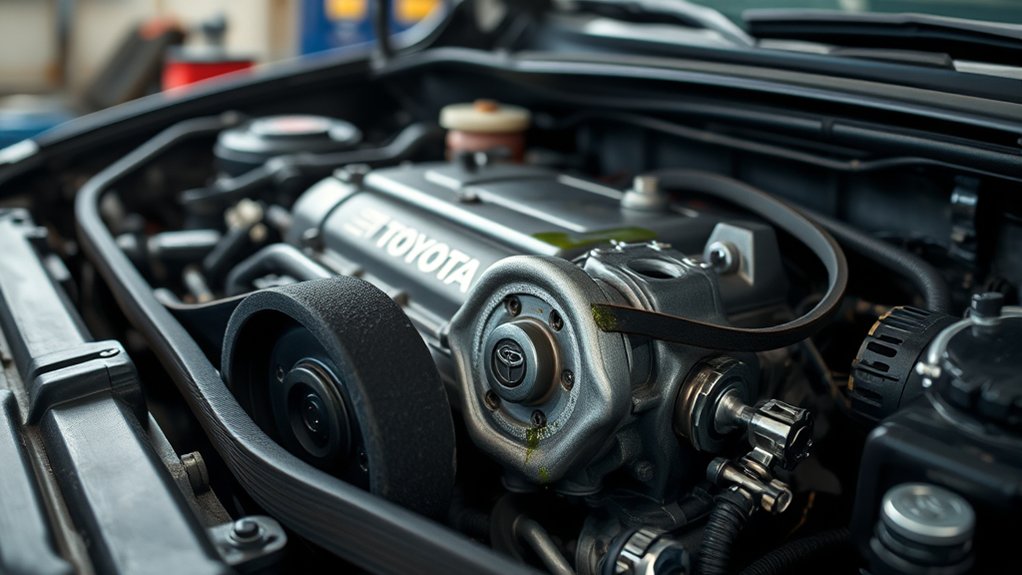
A Toyota Camry water pump does not have one guaranteed replacement mileage. Its service life depends on the model year, engine, pump design, coolant condition, heat cycles, and whether the cooling system has been serviced correctly. The safest approach is to watch for leaks, abnormal noise, warning lights, diagnostic trouble codes, and overheating rather than replacing the pump only because the odometer reaches a certain number.
Quick Answer
There is no universal Toyota Camry water-pump lifespan or scheduled replacement mileage. A pump may remain reliable for many years or fail earlier because of seal wear, bearing damage, contaminated coolant, electrical faults, or another cooling-system problem. Replace it when testing confirms failure or during applicable timing-belt service.
Key Takeaways
- Do not rely on a fixed 100,000-mile, 200,000-kilometer, or 200,000-mile guarantee.
- Confirm your Camry’s model year, engine, and pump design before ordering parts or following a repair procedure.
- Coolant loss, overheating, pump-area noise, diagnostic codes, and dried residue require investigation, but none proves pump failure by itself.
- Never remove a radiator or pressurized coolant cap while the engine is hot.
- If the temperature warning appears, steam is visible, or coolant is pouring out, stop driving and arrange a tow.
What Is the Average Lifespan of a Toyota Camry Water Pump?
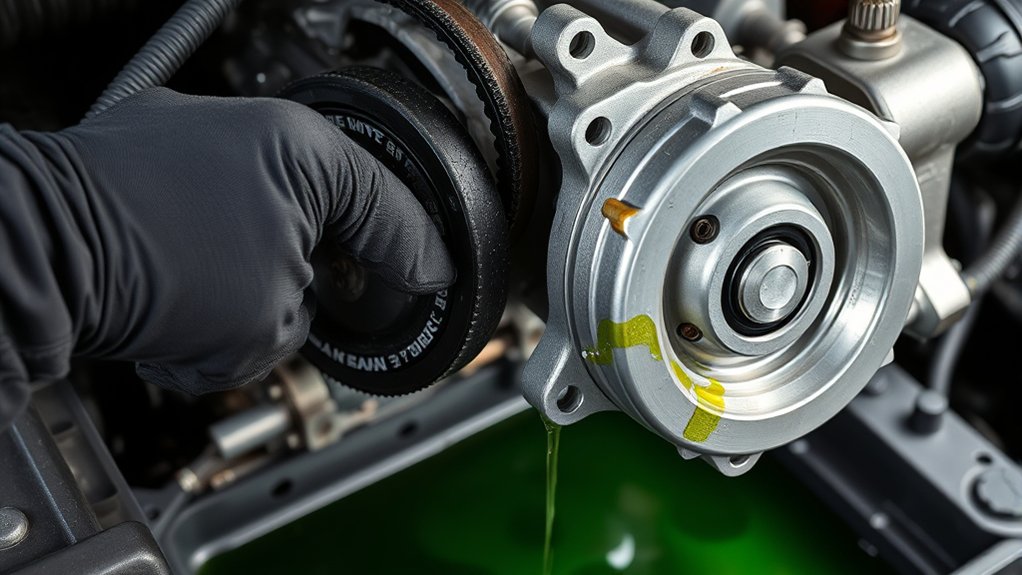
Toyota does not give one water-pump replacement interval that applies to every Camry. Some original pumps last well into high mileage, while others fail much sooner. Mileage alone cannot show the condition of the pump’s seal, bearing, impeller, motor, wiring, or control circuit.
Your exact Camry matters because the nameplate covers many generations and engine families. Older engines may use a mechanical pump that is driven by a belt. Other engines use a pump mounted separately from the timing system. Newer engine designs may use a motor-driven water pump that is controlled electronically. Hybrid models can also have more than one coolant circuit.
Before diagnosing or replacing anything, identify the model year and engine from the under-hood emissions label, VIN information, or service records. Then check the correct Toyota Owner’s Manual and Warranty & Maintenance Guide. A part listing or repair video for a different Camry engine may show the wrong pump, coolant capacity, torque specification, or bleeding process.
Note: A water pump is normally replaced because it leaks, becomes noisy, develops shaft play, stops circulating coolant correctly, sets a confirmed electrical fault, or must be removed during an applicable timing-belt service. It is not usually replaced only because the car reaches a universal mileage.
Factors That Affect Water-Pump Life
- Coolant condition: Incorrect, mixed, contaminated, or badly degraded coolant can reduce corrosion protection and damage seals.
- Low coolant or trapped air: Poor filling or bleeding can reduce circulation and create localized hot spots.
- Belt condition and tension: On mechanically driven pumps, a damaged belt, misaligned pulley, or incorrect tension can affect the pump bearing.
- Heat cycles: Repeated heating and cooling age seals, gaskets, plastic fittings, and electrical components.
- Electrical condition: A motor-driven pump can fail because of the pump motor, connector, wiring, control circuit, or power supply.
- Previous repairs: Incorrect sealant, reused gaskets, improper torque, or incomplete bleeding can cause an early repeat failure.
Common Symptoms of a Failing Water Pump
A failing water pump can cause coolant loss or poor circulation, but the same symptoms can come from other parts of the cooling system. Look for a pattern instead of assuming that one puddle or warning light proves the pump is bad.
| What you notice | What it may mean |
| Wet coolant or dried crust near the pump | Pump seal, gasket, housing, nearby hose, or fitting leak |
| Whining, grinding, chirping, or growling | Mechanical pump bearing, belt, tensioner, idler, alternator, or another rotating component |
| Temperature gauge rises or warning appears | Low coolant, failed pump, thermostat fault, fan problem, radiator restriction, air pocket, or another cooling-system issue |
| Cabin heater suddenly blows cool air while the engine is hot | Low coolant, trapped air, or interrupted coolant circulation |
| Repeated coolant loss with no obvious puddle | Small external leak, leak that occurs only under pressure, heater-core leak, or possible internal engine leak |
| Cooling-system or pump-related diagnostic code | Possible electric-pump, wiring, control, temperature-sensor, or circulation fault that requires model-specific testing |
Dried coolant residue may appear pink, red, pale, or crusty. Clean the area only when the engine is cold, then check whether fresh moisture returns. Old residue left from a previous repair does not prove that the pump is currently leaking.
How to Diagnose Water-Pump Issues in Your Toyota Camry
You can perform a safe preliminary inspection at home, but confirming a failed pump may require a cooling-system pressure tester, scan tool, infrared thermometer, electrical tests, or access to Toyota’s repair procedure.
At a Glance
| Time Required | 10 to 20 minutes for a cold visual inspection |
| Difficulty | Basic inspection; professional diagnosis may be required |
| Tools Needed | Flashlight, gloves, clean paper towel, service information, and an optional OBD-II scan tool |
| Cost | No cost for a visual check; diagnostic and replacement costs vary by model, engine, access, and local labor rate |
Warning: Never remove the radiator cap, coolant pressure cap, or pressurized reservoir cap while the engine is hot. Hot coolant and steam can cause severe burns. Let the car cool completely and follow the cap instructions in the exact owner’s manual.
Common Symptoms Overview
- Coolant loss: Check the reservoir level only as directed by the manual and with the engine cold. A level that repeatedly drops indicates a leak or another cooling-system problem.
- Fresh residue: Inspect the pump area, nearby hoses, thermostat housing, radiator, reservoir, and underbody splash shield for fresh coolant.
- Abnormal noise: On a mechanical pump, listen for a noise that changes with engine speed. Do not place hands, clothing, or tools near moving belts.
- Temperature problems: Note when overheating occurs, such as at idle, highway speed, during air-conditioner use, or under load. The pattern can help separate pump, fan, airflow, and thermostat faults.
- Warning lights or codes: Record all diagnostic trouble codes before clearing them. Electric-pump and sensor faults require the correct code chart and test procedure.
Diagnostic Steps Explained
- Verify the vehicle: Record the year, engine, VIN, and whether the car is a hybrid.
- Allow a complete cool-down: Park on level ground, switch the engine off, and wait until the cooling system is fully cold.
- Check coolant level and condition: Use the reservoir markings and instructions in the owner’s manual. Do not mix coolant types based only on color.
- Inspect for leaks: Use a flashlight to look for wetness, crust, splash marks, or a trail leading away from the pump and nearby components.
- Inspect the drive system: If the pump is belt-driven, check the visible belt for cracking, contamination, fraying, or misalignment. Keep the engine off during close inspection.
- Scan for stored codes: A basic scanner may reveal useful powertrain codes, but some manufacturer-specific tests require a capable scan tool.
- Pressure-test the system: A technician can pressurize the cold system to locate leaks that appear only under pressure. The correct pressure limit must be used.
- Confirm circulation and temperature: A technician may compare hose, radiator, and engine temperatures or command an electric pump with a scan tool. Visible movement in an open filler neck is not a dependable universal test.
- Rule out other causes: Test the thermostat, cooling fans, radiator, cap, hoses, temperature sensor, and possible internal engine leakage before condemning the pump.
Pro Tip: Photograph the coolant level and any residue before cleaning the area. Recheck after a few normal trips. A returning wet trail provides stronger evidence than an old stain that never changes.
When Timing-Belt and Water-Pump Service Overlap
Replacing a timing belt does not automatically make every Camry water pump last longer. The recommendation to replace both parts together applies only to engines where the pump is driven by the timing belt or where reaching the pump requires much of the same disassembly.
Confirm the Engine Design First
Do not assume your Camry has a timing belt. Depending on the year and engine, it may use a timing belt, timing chain, external accessory-belt-driven pump, or motor-driven pump. Check the exact maintenance guide or repair information before buying a timing kit.
When an applicable older engine has a timing-belt-accessed water pump, installing a quality pump during scheduled belt service may reduce the chance of paying for the same disassembly again. The pump should still be inspected, and replacement should follow the engine-specific service procedure.
Preventive Maintenance Benefits
Joint replacement can make sense when the existing pump has high age or mileage, shows seepage, feels rough, or must be removed during belt service. It can also prevent an aging pump from leaking onto a newly installed timing belt.
This does not mean that every pump, timing chain, or accessory-belt-driven pump should be replaced on the same schedule. Follow the maintenance information for the exact engine rather than a general 60,000-to-100,000-mile rule.
Reduced Repeat Labor
The main benefit of replacing an applicable water pump with the timing belt is reduced repeat labor and preventive risk. A new timing belt does not directly restore a worn pump seal or bearing. The pump, belt, tensioner, idlers, fasteners, coolant, and installation procedure must each be correct.
Is It Safe to Drive With a Failing Water Pump?
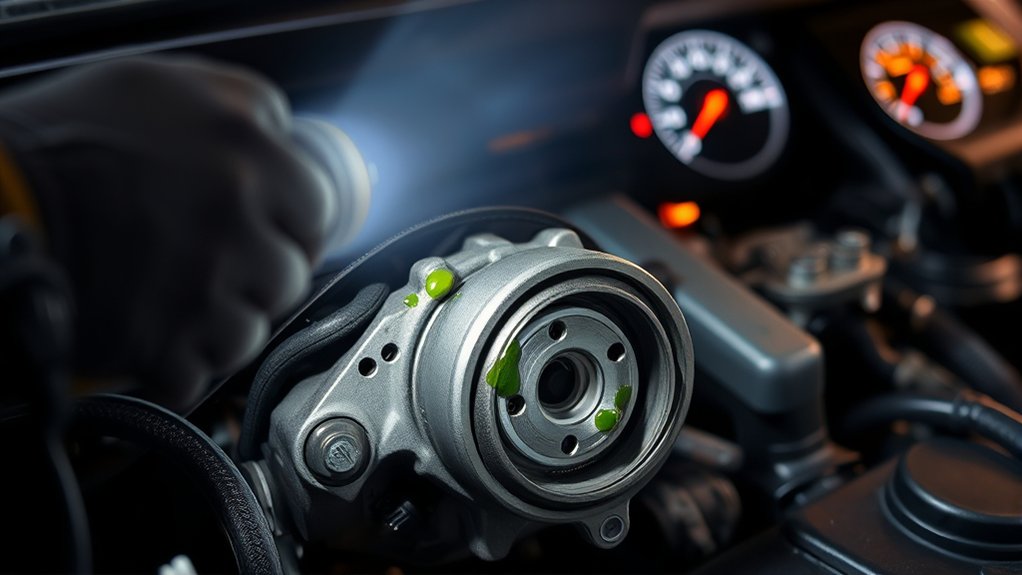
Do not continue driving if the engine is overheating, steam is coming from under the hood, coolant is pouring out, or the temperature warning remains on. A circulation failure can quickly damage the cylinder head, head gasket, catalytic converter, and other engine components.
If the warning appears while driving, switch off the air conditioner, move to a safe location, stop the engine, and arrange roadside assistance. Do not open the cooling system while it is hot. Adding cold coolant to a severely overheated engine may also cause damage, so follow the owner’s manual or a technician’s instructions.
A minor dry stain without overheating is less urgent than active coolant loss, but it still deserves inspection. Monitor the cold coolant level and schedule diagnosis before a small leak becomes a roadside failure.
Recognizing Overheating Signs
Watch for the following signs:
- A high temperature-gauge reading or coolant-temperature warning
- Steam or a strong hot-coolant smell
- Coolant bubbling or overflowing into the reservoir
- Sudden loss of cabin heat while the engine temperature rises
- Reduced engine power or an overheating protection message
- Coolant dripping rapidly beneath the vehicle
An overheating warning is a stop-driving signal, not a reminder to finish the trip and inspect the car later.
Overheating does not automatically prove the pump has failed. A stuck thermostat, inoperative fan, blocked radiator, leaking hose, weak cap, trapped air, sensor fault, or internal engine problem can produce similar symptoms.
How Coolant Leaks Relate to Water-Pump Failure
A mechanical water pump may leak from its seal, weep area, gasket, or housing. An electric pump can also leak at its housing or connections, although an electrical failure may occur without visible coolant loss.
Coolant often travels along the engine, bracket, splash shield, or belt before reaching the ground. A puddle beneath the pump area may therefore originate higher up from a hose, thermostat housing, radiator connection, or reservoir line.
A cold-system pressure test is one of the most useful ways to trace a small leak. If pressure falls but no external leak appears, further testing may be needed for a heater-core leak, combustion-gas intrusion, or coolant entering the engine.
Note: Never pour stop-leak products into the cooling system unless Toyota specifically approves the product and procedure for your vehicle. Sealers may restrict small passages and complicate the final repair.
Why Regular Maintenance Is Essential for Longevity
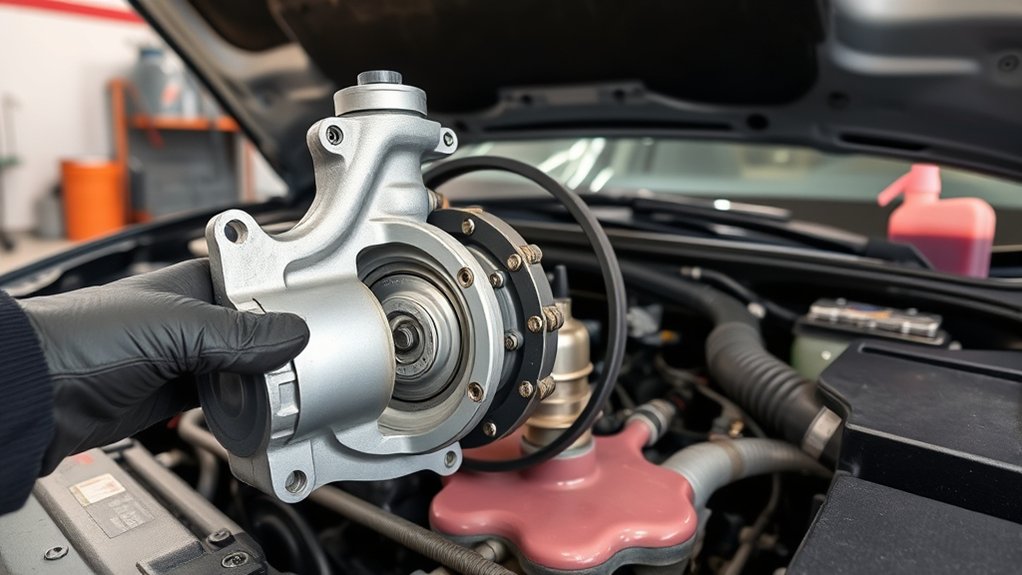
Good cooling-system maintenance cannot guarantee that a pump will never fail, but it reduces preventable corrosion, contamination, overheating, and installation-related problems.
- Use the specified coolant: Follow the exact manual for coolant type, mixture, capacity, and replacement interval. Coolant color alone is not a reliable compatibility test.
- Correct leaks promptly: Repeatedly topping up the reservoir without finding the cause allows air and contamination to enter the system.
- Inspect belts and hoses: Cracked hoses, weak clamps, contaminated belts, and failing tensioners can create symptoms that resemble pump failure.
- Bleed the system correctly: Air trapped after coolant service can cause poor heater operation, temperature swings, and localized overheating.
- Use correct parts and torque: Incorrect gaskets, sealant, fastener torque, or pulley installation can shorten the replacement pump’s life.
- Check recalls and campaigns: Search your VIN through NHTSA’s recall lookup and Toyota’s owner resources before paying for repairs.
When Should You Replace Your Toyota Camry Water Pump?
Replace the pump when diagnosis confirms one or more of the following:
- An active leak from the pump seal, housing, gasket, or weep area
- Bearing roughness, shaft play, or pump-specific mechanical noise
- A damaged, loose, or slipping pump pulley
- Insufficient circulation after the thermostat, radiator, coolant level, and fan system have been checked
- A confirmed electric-pump motor, wiring, control, or performance fault
- Physical damage, corrosion, or contamination that prevents reliable operation
- Removal during applicable timing-belt service when replacement is recommended by the engine-specific procedure
Do not replace the pump only because the coolant reservoir is low or the engine overheated once. Confirm the source first. A new pump will not fix a leaking radiator, failed fan, stuck thermostat, blocked hose, air pocket, defective sensor, or damaged head gasket.
Replacement cost varies widely because pump location and design differ. The final estimate may include the pump, gasket or seal, coolant, belt or timing components, diagnostic time, bleeding, and labor. Ask the shop to identify the failed part and test result on the estimate.
Frequently Asked Questions
How do I know if my Toyota Camry water pump is bad?
Possible signs include fresh coolant around the pump, pump-specific bearing noise, shaft play, overheating, repeated coolant loss, or a confirmed electric-pump fault. Because hoses, the thermostat, radiator, cooling fans, sensors, and internal engine leaks can cause similar symptoms, testing should confirm the pump before replacement.
How long does a Toyota Camry water pump last?
There is no dependable lifespan that applies to every Camry. Some pumps remain serviceable for many years and high mileage, while others fail earlier. Base replacement on the exact maintenance information, pump condition, leak testing, noise, diagnostic codes, and cooling-system performance.
Should I replace the water pump with the timing belt?
Only when the recommendation applies to your exact engine. On an engine where the water pump is timing-belt-driven or shares substantial labor with timing-belt replacement, replacing both can prevent duplicate labor. Many Camrys use a different pump or timing-system design, so verify the VIN and repair manual first.
Can a bad water pump fail without leaking?
Yes. An impeller can be damaged, a bearing can bind, or a motor-driven pump can develop an electrical or control fault without leaving an obvious puddle. Temperature testing, scan-tool data, electrical checks, and model-specific procedures may be needed.
Can I drive a short distance with a leaking water pump?
Do not drive if the engine is overheating, steam is visible, coolant is escaping rapidly, or the temperature warning remains on. A minor seep without overheating still needs prompt inspection because the leak can worsen unexpectedly. Towing is safer when coolant loss or temperature control is uncertain.
Does a Camry Hybrid have more than one water pump?
Depending on the generation, a Camry Hybrid may use separate pumps or coolant circuits for the engine and hybrid power-control components. Do not assume that a reservoir, warning, or pump from one circuit belongs to the other. Use the manual and repair information for the exact hybrid model.
Conclusion
A Toyota Camry water pump should be judged by its condition and the design of the exact engine, not by a universal mileage promise. Check coolant only when the system is cold, investigate recurring loss, and stop driving immediately if the engine overheats. Confirm the leak source or electrical fault before replacement, and combine the pump with timing-belt service only when the model-specific procedure supports it.
Sources
- Toyota Manuals and Warranties — model-specific owner’s manuals, maintenance guides, coolant warnings, and specifications
- Toyota Technical Information System — official repair procedures, diagnostic charts, wiring information, torque specifications, and coolant-filling instructions
- National Highway Traffic Safety Administration Recall Lookup — VIN-based recall and safety-campaign research

