Last updated: September 19, 2026 — checked against Toyota’s 2026 U.S. Tundra Warranty & Maintenance Guide, Toyota’s model-year manual resources, Toyota Canada regional guidance, and current federal brake-fluid requirements.
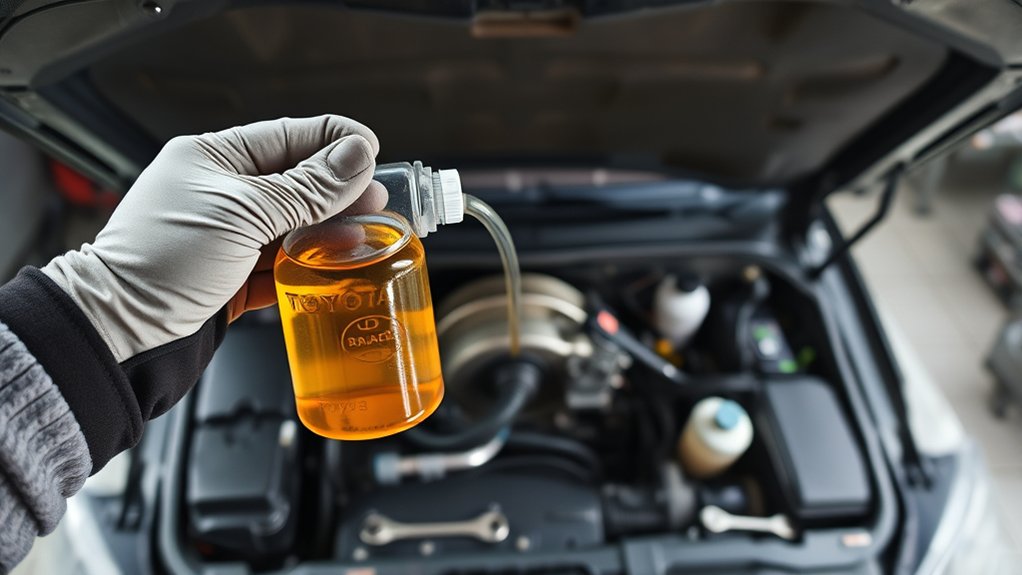
Your Toyota Tundra’s brake fluid should be inspected at the scheduled maintenance visits for its exact model year and market. For the 2026 U.S. Tundra, Toyota schedules maintenance every 5,000 miles or six months, whichever comes first, and its maintenance chart marks “All Fluid Levels” for inspection at each interval; the chart footnote specifically includes brake-fluid level and condition. Toyota does not publish a blanket two- or three-year replacement rule for every U.S. Tundra. Replace the fluid when the applicable manual or repair procedure, inspection findings, contamination, testing, or hydraulic-system work supports replacement.
Quick Answer
For the 2026 U.S. Tundra, inspect brake-fluid level and condition at scheduled maintenance every 5,000 miles or six months, whichever comes first. Toyota does not list a universal two- or three-year replacement interval for every U.S. Tundra. Replace the fluid when the applicable manual or repair procedure, testing, contamination, repairs, or a qualified inspection indicates it is necessary.
Key Takeaways
- Check the maintenance guide for your exact Tundra model year, engine, and sales market.
- For the 2026 U.S. Tundra, Toyota schedules maintenance every 5,000 miles or six months, whichever comes first, with brake-fluid level and condition included in the fluid inspection.
- Regional schedules can differ, so do not apply a U.S. interval automatically to a Canadian-market or other-market truck.
- Dark fluid can justify closer inspection, but color alone does not prove that the fluid has failed.
- A soft or sinking pedal, fluid leak, or brake warning requires prompt diagnosis and may make the truck unsafe to drive.
- Use only the brake-fluid specification shown in the owner’s manual and on the reservoir cap.
At a Glance
| Inspection Interval | Follow the exact model-year guide. For the 2026 U.S. Tundra, scheduled maintenance is every 5,000 miles or six months, whichever comes first, and the fluid inspection includes brake-fluid level and condition. |
| Time Required | Varies by model year and procedure. Diagnosis, hydraulic repairs, seized bleeders, or scan-tool-assisted bleeding can add substantial time. |
| Difficulty | Intermediate to advanced. A bleeding error, leak, wrong fluid, or empty reservoir can leave the brakes unsafe. |
| Tools Needed | Correct sealed brake fluid, protective gloves and eyewear, a suitable bleeder setup, clear hose, catch container, proper wrench, torque information, and any factory-required diagnostic equipment. |
| Cost | Varies by model year, location, shop rate, fluid specification, service method, and whether leaks or other brake faults require repair. |
How this guide was checked: Toyota’s 2026 U.S. maintenance chart was reviewed together with its maintenance-interval instructions and chart footnotes. Brake-fluid performance and labeling statements were cross-checked against 49 CFR §571.116, while regional guidance was kept separate because non-U.S. schedules can differ.
What Is Brake Fluid and Why Is It Important for Your Toyota Tundra?
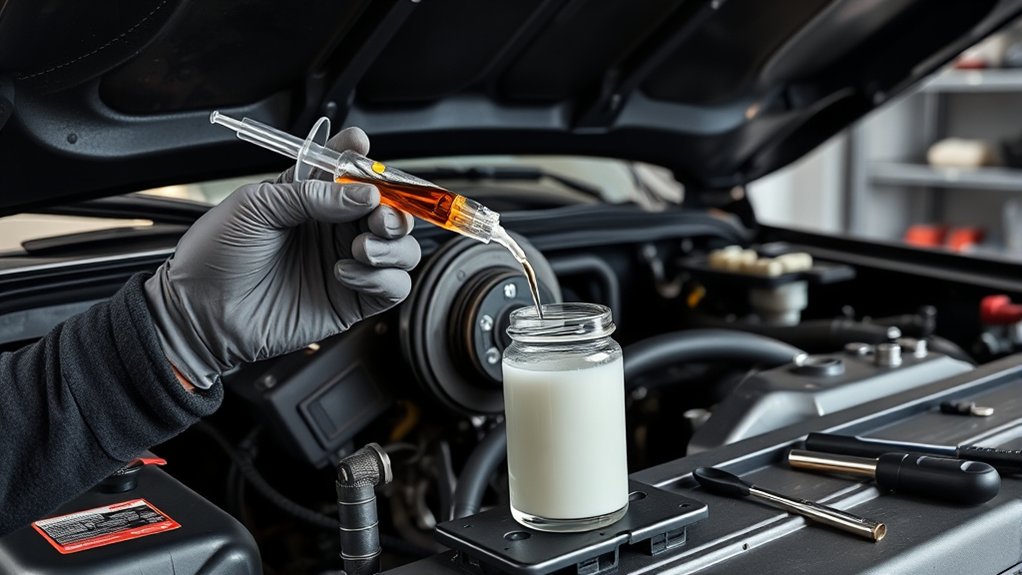
Brake fluid transfers the force from the brake pedal through the truck’s hydraulic system. When you press the pedal, the master cylinder creates hydraulic pressure that helps apply the brakes at each wheel. The system depends on clean, compatible fluid and a sealed hydraulic circuit.
Most conventional automotive brake fluids absorb moisture gradually after exposure to air. Moisture and contamination can reduce the fluid’s heat tolerance and contribute to corrosion or poor hydraulic performance. Federal Motor Vehicle Safety Standard No. 116 therefore requires brake-fluid containers to instruct users to keep the fluid clean, dry, and tightly closed.
The federal standard also sets separate dry and wet boiling-point minimums. These figures describe certified fluid performance under standardized tests; they are not Toyota Tundra replacement thresholds.
| Fluid Grade | Minimum Dry Boiling Point | Minimum Wet Boiling Point |
|---|---|---|
| DOT 3 | 401°F (205°C) | 284°F (140°C) |
| DOT 4 | 446°F (230°C) | 311°F (155°C) |
You can review the official performance and labeling requirements in 49 CFR §571.116.
Which Brake Fluid Does a Toyota Tundra Use?
Use the specification printed on your Tundra’s brake-fluid reservoir cap and stated in the owner’s manual for the exact model year. Do not choose a fluid solely because another Tundra owner uses it or because a bottle claims broad compatibility.
- Buy fluid in a sealed container that clearly identifies its DOT grade.
- Keep the cap and reservoir area clean so dirt cannot enter the hydraulic system.
- Close the fluid container immediately after use because opened fluid can absorb moisture.
- Do not use silicone-based DOT 5 fluid unless the vehicle manufacturer specifically requires it.
- Never introduce engine oil, power-steering fluid, petroleum products, water, or cleaners into the reservoir.
Note: Specifications can vary by model year and market. Use Toyota’s Manuals and Warranties portal to locate the documents for your truck.
How Do You Know Your Toyota Tundra Brake Fluid or Brake System Needs Attention?
Brake-fluid condition cannot be diagnosed reliably from one symptom. Some warning signs relate to the fluid, while others point to leaks, trapped air, worn friction parts, hydraulic faults, or electronic brake-system problems. Treat any meaningful change in braking as a reason for inspection.
Darkened Fluid Color
New DOT 3, DOT 4, and non-silicone DOT 5.1 fluids are generally colorless to amber. Fluid may darken with age, heat exposure, suspended wear material, or contamination. A marked change in appearance deserves attention, especially when the service history is unknown.
Color alone, however, does not measure water content or boiling point. Fluid that appears fairly clear may still test poorly, while darker fluid does not automatically prove that a complete flush is required. Check the level, service history, applicable maintenance guide, and test results together.
Ask for a closer inspection when the fluid is:
- Cloudy or unusually opaque
- Contaminated with visible particles
- Separated into layers
- Suspected of containing an incorrect petroleum-based product
- Accompanied by corrosion, leaks, or an unknown maintenance history
Spongy, Soft, or Sinking Brake Pedal
A pedal that suddenly feels softer, travels farther, requires pumping, or sinks while steady pressure is applied is not a normal maintenance reminder. Possible causes include air in the lines, a hydraulic leak, master-cylinder trouble, an incorrect bleeding procedure, overheated fluid, or another brake-system fault.
Moisture-contaminated fluid can reduce heat resistance and may contribute to poor braking under severe heat, but pedal feel alone cannot identify the cause. The entire hydraulic system must be checked.
Warning: Do not continue normal driving with a suddenly soft or sinking pedal, a visible brake-fluid leak, greatly increased stopping distance, or a red brake warning that remains on. Stop in a safe place and arrange professional inspection or towing.
Unusual Brake System Noise
Grinding, scraping, clicking, or repeated squeaking should be inspected, but these sounds do not usually identify contaminated brake fluid. Noise may come from worn pads, damaged rotors, debris, loose or dry hardware, shields, wheel bearings, or other mechanical parts.
A complete inspection should evaluate both the friction components and the hydraulic system rather than assuming a fluid flush will correct the noise.
Low Fluid, Warning Lights, or Visible Leaks
A low reservoir level can occur as brake pads wear and caliper pistons extend, but it can also indicate a leak. Before adding fluid, inspect the reason for the low level. Look for wet areas around the master cylinder, brake hoses, lines, calipers, and the inside surfaces of the wheels.
Have the truck checked promptly when you notice:
- A red brake-system warning light that remains illuminated
- A rapid or unexplained drop in reservoir level
- Wet fluid around a brake line, hose, caliper, or master cylinder
- A pedal that changes after towing, descending a long grade, or hard braking
- Brake fluid spilled on painted surfaces, which should be rinsed according to appropriate vehicle-care guidance
How Should You Test Toyota Tundra Brake Fluid?
Brake-fluid testing can help support a replacement decision, but no inexpensive test should be treated as a complete brake inspection. Different tools measure or estimate different properties, and their accuracy depends on proper use and fluid compatibility.
| Method | What It Can Show | Important Limitation |
|---|---|---|
| Visual inspection | Level, obvious debris, cloudiness, separation, and possible leakage | Appearance does not directly measure boiling point or prove moisture percentage. |
| Conductivity-style pen | A quick screening estimate based on the fluid’s electrical properties | Readings can depend on fluid chemistry, calibration, temperature, and contamination other than water. |
| Chemical test strips | Depending on the strip, indicators associated with contamination or corrosion inhibitors | The strip must be designed for the fluid and interpreted within its stated time window. |
| Boiling-point tester | A direct assessment of a sample’s boiling behavior | Professional equipment, safe sampling, and correct interpretation are important. |
| Professional brake inspection | Fluid condition plus leaks, pedal operation, pads, rotors, hoses, warning lights, and service history | Quality depends on following the correct factory procedure and documenting the findings. |
Pro Tip: Ask a shop what its tester measures, what limit it uses, and whether that limit comes from Toyota, the tool manufacturer, or the shop’s own policy. A simple red or green reading without context is not a complete diagnosis.
What Is the Toyota Tundra Brake Fluid Change Interval?
Start with the maintenance guide for your exact Tundra. Toyota’s 2026 U.S. Toyota Tundra Warranty & Maintenance Guide says scheduled maintenance is due every 5,000 miles or six months, whichever comes first. Its maintenance chart marks “All Fluid Levels” for inspection at each 5,000-mile checkpoint, and the chart footnote specifically says to inspect brake-fluid level and condition. A dealer may recommend service based on those inspection results.
The 2026 U.S. chart does not establish a universal brake-fluid replacement requirement of every two years, every three years, or every 20,000 miles. Another model year or market may use different wording, so confirm the schedule by vehicle identification number or by selecting the correct year and model in Toyota’s manuals portal.
For the 2026 U.S. Tundra, Toyota’s published approach is inspection-based: include brake-fluid level and condition in the scheduled 5,000-mile/6-month maintenance visit, then replace the fluid when the applicable procedure and findings justify service.
For the complete service timeline beyond brake fluid, see our Toyota Tundra maintenance schedule by mileage.
Do Regional Toyota Brake-Fluid Schedules Differ?
Yes. Maintenance requirements can differ by sales market. For example, Toyota Canada states that the 36-month/48,000-km maintenance service for specific vehicles can include brake-fluid replacement when that replacement is required by the applicable Toyota Owner’s Manual Supplement. That statement does not mean every Canadian Tundra automatically uses a 36-month/48,000-km brake-fluid interval; check the supplement for the exact vehicle before applying it.
Canadian owners can use Toyota Canada’s supplementary coverage and maintenance information together with the model-specific Owner’s Manual Supplement.
When Brake Fluid Replacement Makes Sense
A flush or full fluid exchange may be appropriate when:
- The applicable Toyota maintenance guide gives a replacement interval.
- A properly performed condition or boiling-point test fails the accepted service limit.
- The fluid contains dirt, water, petroleum products, or another incompatible substance.
- The hydraulic system has been opened for component replacement and the repair procedure calls for new fluid and bleeding.
- The service history is unknown and inspection suggests aged or contaminated fluid.
- The fluid has been severely overheated during brake fade or repeated high-load braking.
- A technician finds corrosion, sediment, cloudiness, or another condition that supports replacement.
- The truck regularly tows, descends long grades, operates off-road, or experiences severe brake heat and a qualified technician recommends a shorter inspection or service interval.
A shop may recommend a preventive two- or three-year interval based on local humidity, operating conditions, its testing policy, or general industry practice. That may be a reasonable maintenance choice, but it should not be described as Toyota’s universal requirement unless the manual for the specific truck says so.
What Is the Difference Between a Brake-Fluid Flush, Bleeding, and Topping Off?
These services are related but not interchangeable:
- Brake-fluid flush or exchange: Removes old fluid throughout the hydraulic system and replaces it with fresh, compatible fluid.
- Brake bleeding: Removes air from the hydraulic circuit. Bleeding is normally required after opening a line or replacing certain components, and it may be part of a fluid exchange.
- Topping off: Adds a small amount of the correct fluid to restore the reservoir level. It does not remove contaminated fluid or trapped air.
Do not automatically top off a low reservoir without investigating the cause. Gradual pad wear can lower the level, while a sudden loss can indicate a leak. Overfilling can also create problems when caliper pistons are later pushed back during pad replacement.
Note: Some repairs or electronic brake-system conditions may require a factory sequence or scan-tool-assisted procedure. Consult Toyota’s Technical Information System or use a qualified repair facility.
What Happens if You Ignore Brake Fluid Maintenance?
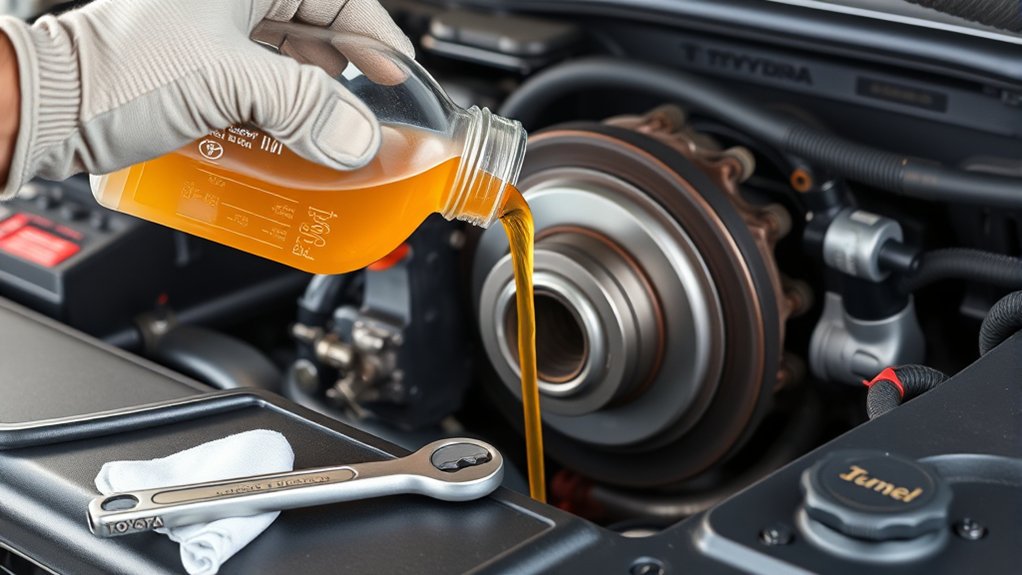
Ignoring fluid condition, leaks, or hydraulic symptoms can allow a manageable maintenance issue to become a safety problem. The outcome depends on the type and degree of contamination, the operating temperature, and the condition of the rest of the brake system.
| Condition | What Can Happen | Possible Impact |
|---|---|---|
| Moisture accumulation | Reduces the fluid’s available boiling-point margin | Greater risk of poor pedal response or brake fade under severe heat |
| Dirt or incompatible fluid | Can damage seals, passages, valves, or other hydraulic components | Costly repairs and unreliable braking |
| Unrepaired leak | Allows fluid loss and may permit air to enter the system | Soft pedal, reduced hydraulic pressure, or loss of braking ability |
| Skipped inspections | Delays discovery of low fluid, deterioration, leaks, and worn parts | Larger repair bills and increased safety risk |
Should You Change Toyota Tundra Brake Fluid Yourself or Hire a Professional?
A careful, experienced DIYer with the correct factory information may be able to service brake fluid on some Tundra model years. However, brake work has little margin for error. Using the wrong fluid, allowing the reservoir to run dry, introducing air, damaging a bleeder screw, overlooking a leak, or following the wrong bleeding order can leave the truck unsafe.
Professional service is the safer choice when:
- You have not previously bled a hydraulic brake system.
- The pedal is already soft, sinking, or inconsistent.
- A brake warning or ABS-related warning is active.
- The reservoir has run empty.
- The fluid may contain petroleum products or another incompatible substance.
- A line, hose, master cylinder, caliper, actuator, or ABS-related component has been replaced.
- The factory procedure requires diagnostic equipment.
- A bleeder is seized, damaged, or leaking.
What a Proper Brake Fluid Service Should Include
A complete service should include more than removing fluid from the reservoir. The technician or qualified DIYer should:
- Confirm the exact fluid specification and factory procedure.
- Inspect the reservoir, cap, master cylinder, lines, hoses, calipers, and visible connections for leakage or contamination.
- Check pad and rotor condition because wear can affect fluid level and pedal feel.
- Protect painted surfaces and keep the work area clean.
- Exchange or bleed the fluid without allowing the reservoir to empty.
- Use the specified bleeding sequence, torque values, and diagnostic procedure.
- Verify a firm pedal before moving the truck.
- Check for leaks and confirm that no brake or ABS warning remains active.
- Perform an appropriate low-speed operational check in a safe area.
- Record the date, mileage, fluid specification, and service performed.
- Dispose of used brake fluid according to local hazardous-waste requirements.
Warning: Never road-test the truck if the pedal is not firm, fluid is leaking, the reservoir cannot maintain its level, or a serious brake warning remains active. Correct the fault or arrange professional transport first.
Related Guides
Frequently Asked Questions
How often should Toyota Tundra brake fluid be changed?
Follow the maintenance guide for the exact model year and market. For the 2026 U.S. Tundra, Toyota schedules maintenance every 5,000 miles or six months, whichever comes first, and includes inspection of brake-fluid level and condition in the fluid check. The maintenance chart does not list a universal calendar-based brake-fluid replacement interval. Replace the fluid when the applicable manual, test results, contamination, repairs, or inspection findings call for it.
Is changing Toyota brake fluid every two years always necessary?
Not as a universal rule. Some dealers and independent shops recommend a two-year interval as preventive maintenance, particularly in humid or severe-use conditions. That recommendation should be distinguished from the official schedule for your specific Tundra.
Does the Toyota brake-fluid schedule differ outside the U.S.?
It can. Toyota maintenance requirements vary by market and vehicle. Toyota Canada states that the 36-month/48,000-km maintenance service for specific vehicles can include brake-fluid replacement when the applicable Owner’s Manual Supplement requires it. That does not establish the same interval for every Canadian Tundra, so check the supplement for the exact vehicle.
Can brake-fluid color tell me when it needs replacement?
Color is only a screening clue. Cloudiness, particles, separation, or a major color change justify inspection, but appearance alone does not measure boiling point, identify every contaminant, or prove that the fluid is still serviceable.
Which brake fluid should I use in a Toyota Tundra?
Use the DOT grade and specification printed on the brake-fluid reservoir cap and listed in the owner’s manual for your exact model year. Use fresh fluid from a sealed container, and do not substitute silicone DOT 5 or another fluid unless Toyota specifically requires it.
Can I simply top off low brake fluid?
First determine why the level is low. Normal pad wear can lower the reservoir level gradually, but a rapid drop may indicate a leak. Topping off does not repair a leak, remove air, or replace contaminated fluid, and overfilling can cause problems during later brake service.
Do I need a scan tool to bleed Toyota Tundra brakes?
Not for every Tundra fluid exchange or bleeding procedure. The required method depends on the model year, brake system, and which hydraulic components were opened. Some electronic-brake or ABS-related procedures can require a factory sequence or diagnostic equipment. Check Toyota’s repair information for the exact truck before starting.
Is it safe to drive with a spongy brake pedal?
A newly soft, sinking, or unusually long-travel pedal can indicate air, leakage, overheating, or another hydraulic fault. Stop normal driving, move to a safe location if possible, and arrange inspection or towing rather than assuming a fluid change alone will solve the problem.
Conclusion
Brake-fluid maintenance is an important part of keeping your Toyota Tundra’s hydraulic brake system dependable, but the correct schedule must come from the truck’s exact model-year and market documentation. For the 2026 U.S. Tundra, Toyota schedules maintenance every 5,000 miles or six months, whichever comes first, and includes brake-fluid level and condition in the fluid inspection rather than publishing a universal two- or three-year replacement rule.
Check the fluid specification before adding anything, investigate low fluid or pedal changes promptly, and use test results as part of a complete inspection rather than as the only decision point. When the service history is unknown, the hydraulic system has been opened, contamination is suspected, or the pedal does not feel normal, a qualified brake inspection is the safest next step.
Sources
- Toyota 2026 Tundra Warranty & Maintenance Guide — supports the 5,000-mile/six-month scheduled-maintenance cadence, fluid-inspection schedule, and brake-fluid condition guidance.
- Toyota Manuals and Warranties — provides model-year-specific owner and maintenance documents.
- 49 CFR §571.116, Motor Vehicle Brake Fluids — provides federal fluid performance, color, packaging, and contamination-warning requirements.
- Toyota Technical Information System — provides factory service information, repair manuals, diagnostics, and technical procedures.
- Toyota Canada Supplementary Coverage — explains that the 36-month/48,000-km maintenance service for specific vehicles can include brake-fluid replacement when required by the applicable Owner’s Manual Supplement.