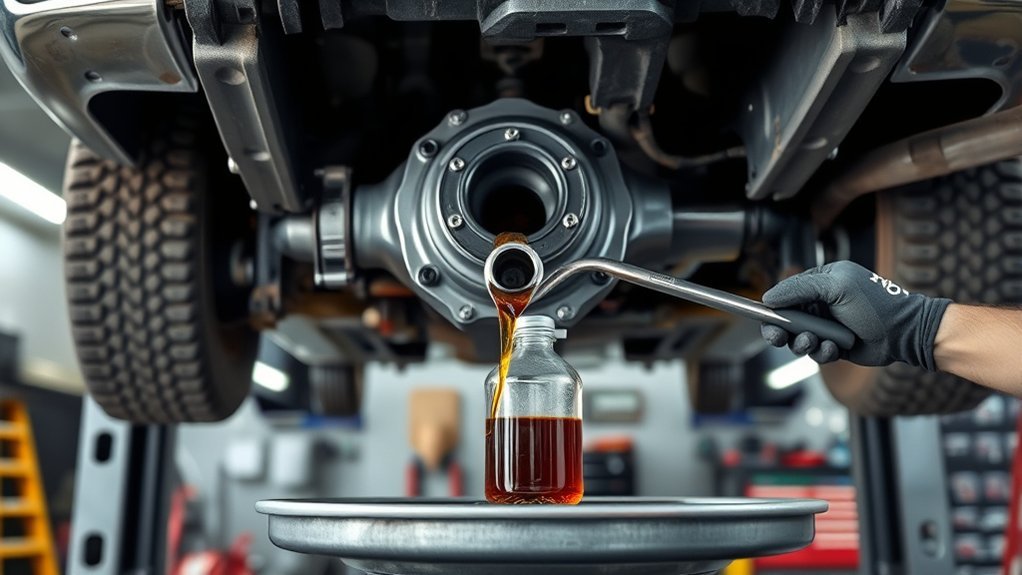
Your Toyota Tundra does not have one differential-fluid replacement interval that fits every model year, axle, and driving condition. Toyota’s schedules can treat the front differential, rear differential, and transfer case differently. Before servicing your truck, confirm its model year, drivetrain, fluid specification, capacity, plug gaskets, and torque values.
Quick Answer
Follow the Warranty & Maintenance Guide for your exact model year. On the 2026 U.S. Tundra, Toyota lists routine differential-fluid inspections and, for frequent towing or heavy loading, front-fluid replacement every 15,000 miles and rear-fluid replacement every 30,000 miles. Other years differ, and synthetic oil does not automatically extend the interval.
Last updated: July 12, 2026.
Key Takeaways
- Use the maintenance guide for your Tundra’s exact model year rather than a universal mileage rule.
- Front differential, rear differential, and transfer-case fluids are separate and may have different service requirements.
- Frequent towing and heavy loading can shorten replacement intervals, but the front and rear intervals may not match.
- Synthetic gear oil does not let you ignore or automatically double Toyota’s listed interval.
- Verify fluid grade, capacity, plug gaskets, and torque specifications before opening either plug.
At a Glance
| Time Required | About 45 to 90 minutes per axle, excluding seized-plug or leak repairs |
| Difficulty | Moderate; safe lifting, accurate torque, and fluid-level verification are required |
| Tools Needed | Wheel chocks, rated support equipment, drain pan, correct sockets, hand pump, torque wrench, gloves, and eye protection |
| Cost | Variable; you need the specified quantity of gear oil, new plug gaskets or washers, and any local disposal fees |
Understanding Differential Fluid and Its Importance
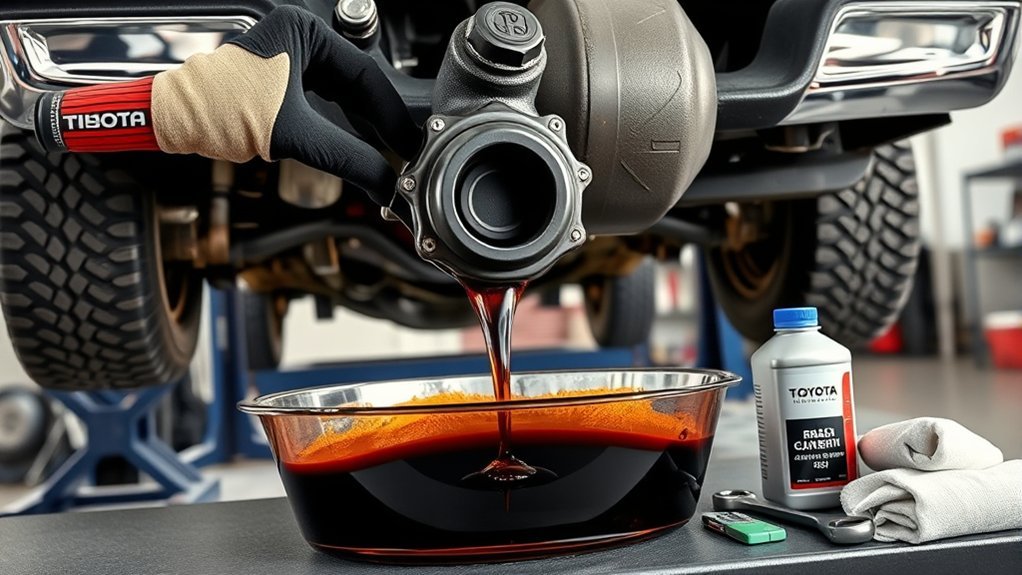
Differential fluid lubricates the ring gear, pinion gear, bearings, and other moving parts inside the axle housing. It also carries heat away from loaded contact surfaces and helps protect metal components from wear and corrosion.
A 2WD Tundra normally has a rear differential but no driven front differential. A 4WD Tundra has front and rear differentials plus a transfer case. These assemblies do different jobs, and you should not assume they use the same fluid.
Old, contaminated, low, or incorrect fluid can reduce lubrication and increase heat. However, changing the fluid will not repair damaged bearings, worn gears, incorrect gear setup, or a persistent seal leak.
Note: Toyota’s maintenance guide, owner’s manual, and repair information for your exact model year take priority over generalized online advice.
Recommended Change Intervals for Different Driving Conditions
The correct Toyota Tundra differential-fluid interval depends on the model year, axle, and how you use the truck. Toyota’s current charts distinguish routine inspection from replacement under special operating conditions.
For example, the 2026 Toyota Tundra Warranty & Maintenance Guide provides the following U.S. schedule:
| Driving condition | 2026 U.S. guidance | What you should do |
|---|---|---|
| Routine road use | Inspect front and rear differential oil at the listed service points, including 15,000-mile intervals. | Replace it when your exact guide calls for replacement or an inspection finds leakage, contamination, or degraded fluid. |
| Primarily towing, using a car-top carrier, or heavy loading | Replace front differential oil every 15,000 miles and rear differential oil every 30,000 miles. | Follow the special-condition row only when most of your driving meets the condition described by Toyota. |
| Primarily dirt or dusty roads | Perform the additional inspections listed by Toyota and service the transfer case when specified. | Do not automatically apply the towing interval to both differentials. |
| Deep sand, mud, or water exposure | Toyota calls for off-road inspections that include checking differential and transfer-case oil. | Inspect promptly for water entry, leakage, damaged breathers, and milky fluid. |
Model-year differences matter. The 2024 Tundra guide, for example, lists front and rear differential-oil replacement at the 30,000-mile service when the truck is primarily used for towing or heavy loading. That differs from the 2026 front-axle schedule.
Use Toyota’s manual and warranty-guide lookup to find the documents for your exact year. Owners of a 2013 Tundra should use the 2013 guide rather than applying a later truck’s interval.
Severe Duty Recommendations
Severe or special operating conditions can include frequent towing, heavy loading, long periods on dirt roads, or repeated off-road exposure. These conditions increase heat, load, dust, and the chance of water contamination.
Do not treat every occasional trailer trip as permanent severe service. Toyota’s guide says the additional items apply when you drive primarily under the listed conditions. When towing or heavy loading makes up most of your use, follow the front, rear, and transfer-case rows separately.
After deep mud or water crossings, inspect sooner than the normal schedule. Water can enter through a damaged seal or submerged breather and turn the oil cloudy or milky.
Normal Usage Guidelines
Under routine road use, inspect the differential housings for leaks and follow the inspection points in your model-year guide. Replacement may be appropriate when the fluid is contaminated, the axle has been repaired, or the service history is unknown.
- Confirm the truck’s model year, drivetrain, and axle configuration.
- Review the Warranty & Maintenance Guide for inspection and replacement entries.
- Check both housings for leaks during routine service.
- Record the date, mileage, fluid specification, and work performed.
Do not extend an interval to 60,000 miles merely because the bottle says synthetic. The factory schedule and inspection findings still control.
Towing Impact Considerations
Towing places more load on the gears and bearings. That load can increase lubricant temperature, especially during long climbs, low-speed maneuvering, and hot-weather travel.
Use the special-condition schedule when towing or heavy loading represents most of your driving. Check the axle seals and housing after demanding trips, particularly when you notice fresh oil around a pinion seal, axle seal, drain plug, or fill plug.
The correct interval comes from the maintenance chart for your model year, not from the word “synthetic” on the bottle.
Signs You Need to Change Your Differential Fluid
Fluid condition can reveal a maintenance problem, but noises and driving symptoms may indicate damage that a fluid change alone cannot correct.
- Milky or cloudy fluid: This usually points to water contamination and requires prompt inspection.
- Burnt odor or badly degraded fluid: Excessive heat or an overdue service may have damaged the lubricant.
- Low fluid level: Low fluid usually means a leak. Find and repair the cause instead of repeatedly topping it off.
- Metal chips, flakes, or chunks: Large or sharp debris can indicate internal damage. A light paste on a magnetic plug may be less serious, but compare it with the service information and previous inspections.
- Fresh oil around seals or plugs: Wet areas, drips, or an oily underbody require leak diagnosis.
- Whining, howling, grinding, or clunking: These noises can come from bearings, gears, driveshaft components, or incorrect gear contact. Have the axle diagnosed before assuming fresh fluid will solve it.
- Binding or abnormal behavior while turning: Incorrect fluid or limited-slip friction characteristics may contribute, but mechanical faults also require inspection.
Warning: Stop driving and arrange an inspection if the differential is grinding, leaking heavily, overheating, or releasing large metal pieces. Continuing to drive can turn a repairable fault into an axle failure.
How to Choose the Correct Differential Fluid for Your Tundra
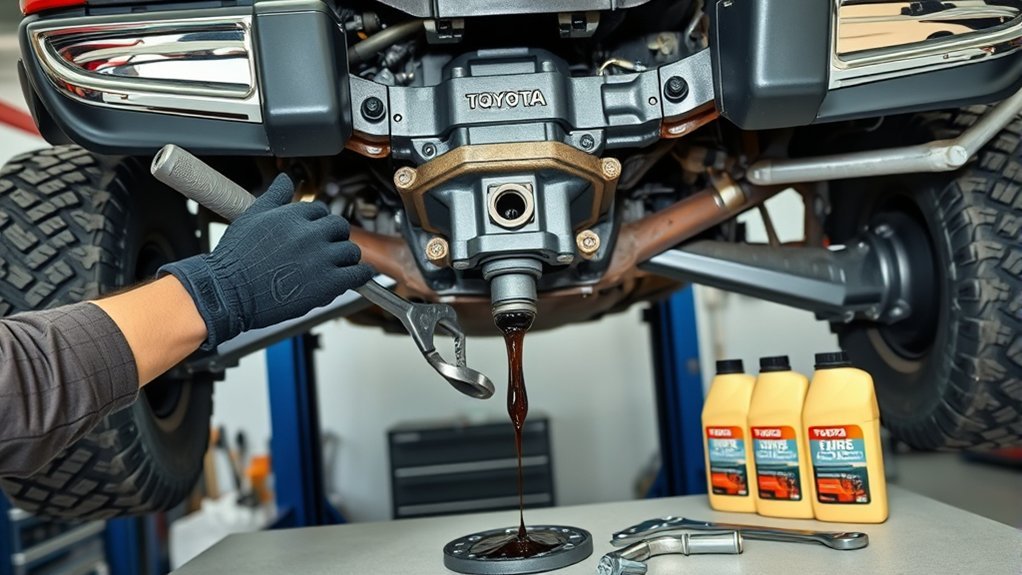
Choose differential fluid by specification rather than brand name. Confirm the viscosity, performance category, axle type, capacity, and any limited-slip requirements in the owner’s manual or repair information for your exact truck.
The American Petroleum Institute’s gear-lubricant guidance explains that API GL-5 lubricants are intended for heavily loaded axle gears, including hypoid gears. It also says the axle manufacturer defines additional friction requirements for limited-slip differentials.
- Viscosity: Use the exact SAE grade listed for your model year and axle.
- Performance specification: Match the required GL category or Toyota specification.
- Limited-slip compatibility: Use the required friction characteristics if your axle calls for them.
- Capacity: Purchase enough fluid for the specified axle capacity, but set the final level using Toyota’s procedure.
- Front versus rear: Verify each axle separately because the requirements can differ.
- Transfer case: Treat transfer-case oil as a separate fluid. Do not substitute differential oil unless Toyota specifically permits it.
Products from Mobil, Amsoil, Red Line, Super Tech, Toyota, and other reputable brands can work only when the label matches the specification required by your truck. Brand popularity does not compensate for the wrong viscosity or performance category.
A hand pump, including bottle-mounted designs such as the Slippery Pete style, can make filling easier in the limited space around the axle. Keep the pump clean and do not use one contaminated with another fluid.
How to Change Your Differential Fluid: DIY Tools and Tips
Gather the correct supplies before opening the differential. A safe service requires more than gear oil and a drain pan.
- The exact fluid and quantity specified for your VIN and axle
- New drain-plug and fill-plug gaskets or washers verified for the truck
- A fluid-transfer or hand pump
- Correct six-point sockets or hex-bit sockets
- A breaker bar and calibrated torque wrench
- A drain pan, funnel, shop towels, and suitable cleaner
- Wheel chocks and rated vehicle-support equipment when lifting is required
- Nitrile gloves and safety glasses
- A sealable container for used gear oil
Warning: Never work beneath a truck supported only by a jack. Park on firm, level ground, chock the wheels, use Toyota-approved lift points, and secure the vehicle with properly rated stands or lifting equipment.
Pro Tip: Loosen the fill plug before removing the drain plug. If the fill plug will not open, you can stop while the differential still contains oil.
- Verify the specifications. Confirm fluid type, capacity, plug-gasket part numbers, fill-level procedure, and torque values for the exact differential.
- Warm the fluid briefly. A short drive can help the oil drain, but let the axle cool enough to avoid burns.
- Secure and level the truck. Apply the parking brake, chock the wheels, and keep the axle level. Use rated support equipment when clearance requires lifting.
- Clean the plug areas. Remove dirt around both plugs so debris cannot enter the housing.
- Remove the fill plug first. Confirm you can refill the axle before draining it.
- Position the drain pan and remove the drain plug. Wear eye protection and keep clear of the first stream of hot oil.
- Inspect the old fluid and plug. Look for water, burnt odor, large metal pieces, damaged threads, or an unusual amount of debris.
- Clean the plug and install a new gasket. Replace a damaged plug. Do not reuse a gasket when Toyota calls for replacement.
- Install and torque the drain plug. Use the exact model-year repair specification. Do not rely on a torque figure copied from another Tundra generation.
- Pump in the correct fluid. Fill to the level and temperature condition specified by Toyota. Many axles use the lower edge of the fill opening as the reference, but verify your truck’s procedure.
- Install the fill plug with a new gasket. Tighten it to the correct year-specific torque.
- Clean and inspect. Remove spilled oil, drive briefly, and inspect both plugs and nearby seals for leakage.
- Record the service. Note the mileage, date, fluid used, amount added, and anything found on the drain-plug magnet.
- Recycle the used fluid. Store it in a sealed container and take it to an approved used-oil collection facility.
Differential Fluid Change Troubleshooting
- The fill plug will not loosen: Stop before draining. Use the correct tool, clean the recess, and seek professional help before rounding the plug.
- The plug threads are damaged: Do not force the plug. The housing may need thread repair or replacement.
- The axle leaks after service: Check the gasket, plug seating surface, torque, and fluid level. Repair damaged seals rather than repeatedly topping off.
- The fluid contains large metal pieces: Save a sample and have the differential inspected before driving farther.
- The axle still whines after the change: Fluid cannot correct worn bearings, damaged gears, or incorrect backlash and contact patterns.
- The fluid became milky after off-road use: Check axle breathers and seals, replace contaminated fluid, and inspect for internal corrosion risk.
Checking and Maintaining Your Differential Fluid Levels
Regular inspections help you find leaks and contamination before the axle runs low. Perform the check on level ground and follow the temperature and fill-level procedure specified for your truck.
Fluid Level Inspection Procedures
- Park the Tundra on firm, level ground and secure it against movement.
- Identify the correct differential and locate its fill plug.
- Clean the housing around the plug.
- Remove the fill plug with the correct tool.
- Verify the oil level using the procedure in the owner’s or repair manual.
- Inspect the visible fluid for water, burnt odor, debris, or abnormal discoloration.
- Add only the exact specified fluid when the level is low.
- Install a new gasket when required and torque the plug to the correct specification.
- Inspect for leaks after driving.
A low level should prompt a leak inspection. Gear oil normally remains inside a sealed housing, so repeated topping off is not a complete repair.
Signs of Fluid Contamination
Watch for these conditions during an inspection or fluid change:
- Milky white, tan, or cloudy oil: Possible water entry
- Burnt odor: Possible overheating or severe lubricant degradation
- Distinct layers: Possible mixing with water or another incompatible product
- Large metallic chips: Possible gear, bearing, or internal-component damage
- Thick sludge: Extended service, contamination, or incompatible fluids
- Foaming: Possible overfilling, contamination, or incorrect lubricant
Do not judge fluid only by color. Some gear oils darken during use, and different products start with different colors. Odor, debris, water, level, service history, and axle behavior provide better context.
How Differential Fluid Maintenance Affects Your Vehicle’s Lifespan
Correct differential maintenance protects the gears and bearings while helping the axle manage heat and load. It also gives you an opportunity to find seal leaks, loose plugs, water entry, or unusual wear debris early.
- Maintains lubrication: Correct fluid creates the protective film required between loaded gear surfaces.
- Controls heat: Proper fluid quantity and condition help carry heat away from gears and bearings.
- Identifies leaks: Scheduled inspections can reveal low fluid before the axle runs dry.
- Supports towing reliability: Following the special-use schedule reduces the chance of operating heavily loaded gears on degraded oil.
- Creates a service history: Records help you and future technicians track fluids, mileage, leaks, and metal findings.
Maintenance cannot guarantee that a differential will never fail. It can, however, reduce avoidable wear and expose developing problems before they become more expensive.
Frequently Asked Questions
How often should I change the differential fluid in a Toyota Tundra?
Use the maintenance guide for your exact model year. Toyota may list routine inspections rather than a fixed normal-use replacement interval. For a 2026 U.S. Tundra used primarily for towing or heavy loading, Toyota lists front differential-oil replacement every 15,000 miles and rear replacement every 30,000 miles.
How often should rear differential fluid be changed on a Toyota?
Toyota does not use one rear-differential interval for every model. Check the year-specific maintenance chart. On the 2026 U.S. Tundra, the rear differential is inspected during routine service and replaced every 30,000 miles when the truck is driven primarily while towing or heavily loaded.
Can differential fluid last 100,000 miles?
Do not assume it can. Fluid may remain in an axle for that distance, but contamination, leakage, towing, heat, water exposure, and model-specific maintenance requirements can require earlier service. Follow Toyota’s schedule and inspection results.
How often should I change differential fluid on my 4×4 Tundra?
A 4WD Tundra has separate front and rear differentials, and their intervals may differ. It also has a transfer case with its own fluid requirements. Check all three rows in the maintenance guide for your model year.
Does synthetic gear oil double the change interval?
No automatic extension applies. Use the lubricant specified by Toyota and follow the factory maintenance schedule. A synthetic label does not override mileage, time, towing, contamination, or inspection requirements.
Can I use the same fluid in the front and rear differentials?
Only when Toyota lists the same viscosity, performance specification, and compatibility requirements for both axles. Verify each differential separately before buying or adding fluid.
Should I change the fluid after driving through deep water?
Inspect it promptly. Milky or cloudy oil indicates likely water contamination and should be replaced after you identify the entry point. Also inspect the axle breather and seals.
Conclusion
Your Toyota Tundra’s differential-fluid schedule depends on its model year, drivetrain, axle, and working conditions. Check the exact Toyota guide before choosing an interval, fluid, capacity, gasket, or torque value. Frequent towing may require earlier front or rear service, while water contamination, leaks, large metal debris, or abnormal noise require prompt inspection rather than another routine fluid change.
Sources
- 2026 Toyota Tundra Warranty & Maintenance Guide — current inspection, special-use, towing, heavy-loading, and off-road maintenance guidance
- 2024 Toyota Tundra Warranty & Maintenance Guide — demonstrates model-year differences in differential service requirements
- Toyota Manuals and Warranties — model-year owner’s manuals and maintenance-guide lookup
- American Petroleum Institute Lubricant Service Designations — GL-5 application and manufacturer-specification guidance
- OSHA Jack Safety Standard — securing, blocking, and supporting a raised load
- EPA Used-Oil Recycling Guidance — proper collection and recycling of used automotive oils
