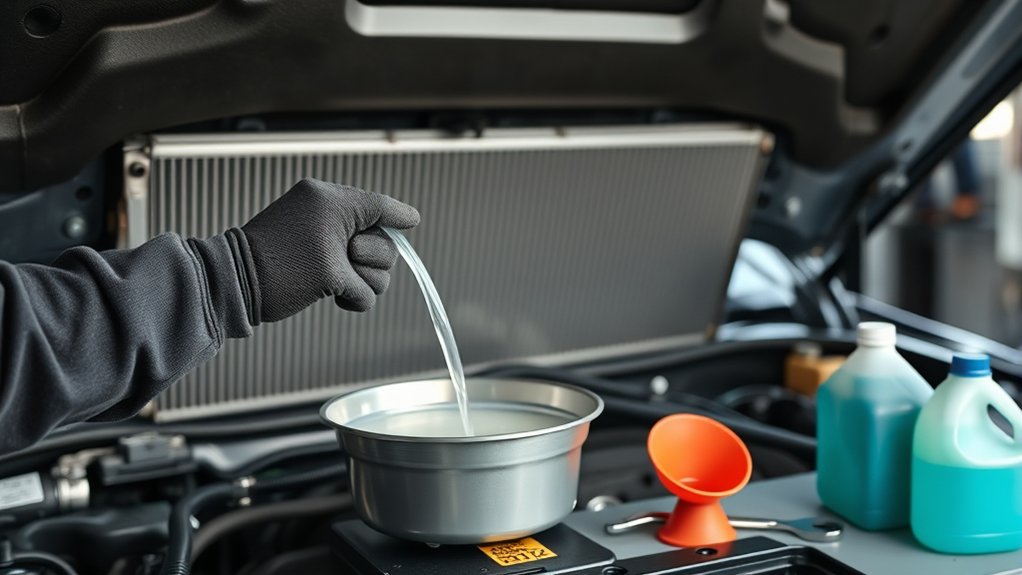
For most modern U.S.-market Toyota Tundras equipped with Toyota Super Long Life Coolant, the first engine-coolant replacement is due at 100,000 miles or 120 months, whichever comes first. Replace it every 50,000 miles or 60 months after that. Because specifications can vary by model year, engine, market, and previous service history, always confirm the schedule in the maintenance guide for your truck.
Quick Answer
Toyota generally schedules the first coolant replacement on modern Tundras at 100,000 miles or 10 years. Later replacements are normally due every 50,000 miles or five years. Use the interval that comes first, and verify it against the Toyota maintenance guide for your exact model year.
Key Takeaways
- The commonly published modern Tundra schedule is 100,000 miles or 120 months initially, then 50,000 miles or 60 months.
- Toyota specifies Super Long Life Coolant or a chemistry-matched equivalent, not simply any coolant that happens to be pink.
- Use premixed coolant as supplied. Add water only when the product is a concentrate and its instructions require dilution.
- A sweet odor, recurring low level, residue, or overheating warning can indicate a leak or system fault that needs diagnosis.
- Some newer turbocharged Tundras have separate engine and intercooler coolant circuits that both require inspection and service.
Understanding the Role of Engine Coolant
Engine coolant absorbs heat from the engine and carries it to the radiator, where the heat can move into the surrounding air. The thermostat, water pump, radiator, fans, hoses, and pressure cap all work with the coolant to keep the engine within its intended operating range.
Coolant also provides freeze protection and contains additives that limit corrosion, scale, and cavitation inside the cooling system. Those additives gradually lose effectiveness, which is why coolant has both a mileage limit and a time limit.
Toyota states that applicable Tundras use Genuine Toyota Super Long Life Coolant or a similar high-quality non-silicate, non-amine, non-borate ethylene-glycol coolant with long-life hybrid organic acid technology. The equivalent chemistry uses low phosphates and organic acids rather than conventional silicate-based protection. You can review the specification in Toyota’s 2024 Tundra Warranty and Maintenance Guide.
Coolant Change Intervals for Toyota Tundra
For many modern Tundras using Toyota Super Long Life Coolant, Toyota publishes the following replacement schedule:
| Service point | Typical Toyota interval | What it means |
|---|---|---|
| First replacement | 100,000 miles or 120 months | Replace the factory-fill coolant when either limit arrives. |
| Later replacements | Every 50,000 miles or 60 months | Start this shorter interval after the first replacement. |
| Routine level checks | At regular maintenance visits and between visits when needed | Check the reservoir, coolant condition, hoses, and visible connections. |
Toyota’s maintenance guides use the phrase initial replacement at 100,000 miles or 120 months, followed by replacement every 50,000 miles or 60 months. This is different from changing the coolant every five years from the date the truck was new.
The exact schedule for an older Tundra, a truck sold outside the United States, or a vehicle filled with a different coolant may not match this interval. Use Toyota’s Manuals and Warranties portal to select the correct model year or enter the VIN.
Note: Some newer turbocharged Tundras have a separate intercooler cooling circuit. Toyota’s maintenance guide may list both engine coolant and intercooler coolant. Check and service each circuit separately rather than assuming one reservoir serves the entire system.
Signs Your Toyota Tundra Needs Cooling-System Service
A maintenance interval tells you when routine coolant replacement is due. Symptoms such as coolant loss or overheating can require service sooner, but they do not automatically mean a flush will solve the problem.
| Warning sign | What it may indicate | Recommended response |
|---|---|---|
| Sweet odor, pink residue, or a puddle | A leaking hose, radiator, reservoir, water pump, fitting, or another component | Inspect the system and repair the leak before repeatedly topping it up. |
| Coolant level keeps dropping | An external leak, internal leak, or trapped air | Arrange a pressure test and diagnosis. Coolant is not normally consumed like fuel or engine oil. |
| Gurgling sounds or inconsistent cabin heat | Low coolant, trapped air, restricted circulation, or a filling problem | Check the cold level and have the system inspected and bled correctly. |
| Temperature gauge enters the hot zone or an overheating warning appears | Low coolant, failed fan, thermostat fault, water-pump problem, blockage, or another cooling-system failure | Pull over safely, shut the engine off, allow it to cool, and diagnose the cause before driving farther. |
| Cloudy, rusty, oily, or heavily contaminated coolant | Degraded coolant, mixed chemistries, corrosion, or possible cross-contamination | Have the fluid and cooling system evaluated. A thorough flush may be appropriate after the cause is identified. |
| Check-engine or other warning light | Many possible faults, some unrelated to coolant | Read the stored diagnostic codes instead of assuming the coolant needs flushing. |
Warning: Never remove a radiator cap or pressurized coolant-reservoir cap while the engine is hot. Escaping steam and coolant can cause severe burns. Wait until the engine and cooling system have cooled completely.
Best Coolant Types for Your Toyota Tundra

The safest choice is the coolant specification listed in the owner’s manual for your exact Tundra. For many modern models, that means Genuine Toyota Super Long Life Coolant or an equivalent that explicitly meets Toyota’s required chemistry.
Do not select coolant by color alone. Different manufacturers may use similar colors for products with different additive packages, and the same coolant family may appear in more than one shade.
Toyota OEM Pink Coolant
Genuine Toyota Super Long Life Coolant is formulated for Toyota cooling systems and helps provide freeze protection, heat-transfer performance, and corrosion control.
Toyota describes the suitable equivalent as a high-quality ethylene-glycol coolant that is:
- Non-silicate
- Non-amine
- Non-borate
- Formulated with long-life hybrid organic acid technology
- Based on low phosphates and organic acids
Follow the product label before adding anything. If the coolant is premixed, use it as supplied. Add distilled or deionized water only when you are working with a concentrate and the product instructions require dilution.
Compatible Alternative Coolants
An aftermarket coolant may be suitable when its manufacturer clearly states that it matches the coolant specification required by your exact Toyota model. A generic claim such as “works with Asian vehicles” is less useful than a documented chemistry and application statement.
Before switching products, confirm:
- The required coolant specification in your model-year manual
- Whether the product is premixed or concentrated
- Whether the existing coolant is known and compatible
- Whether the truck has more than one cooling circuit
- Whether changing coolant types requires a complete drain and cleaning procedure
Can You Mix Different Coolant Colors?
Avoid mixing coolants unless compatibility is clearly documented. Mixing products with different additive packages can shorten service life, reduce corrosion protection, or create deposits. If the coolant already in the truck is unknown, have the system inspected before adding a different product.
How to Check Coolant Levels in Your Toyota Tundra
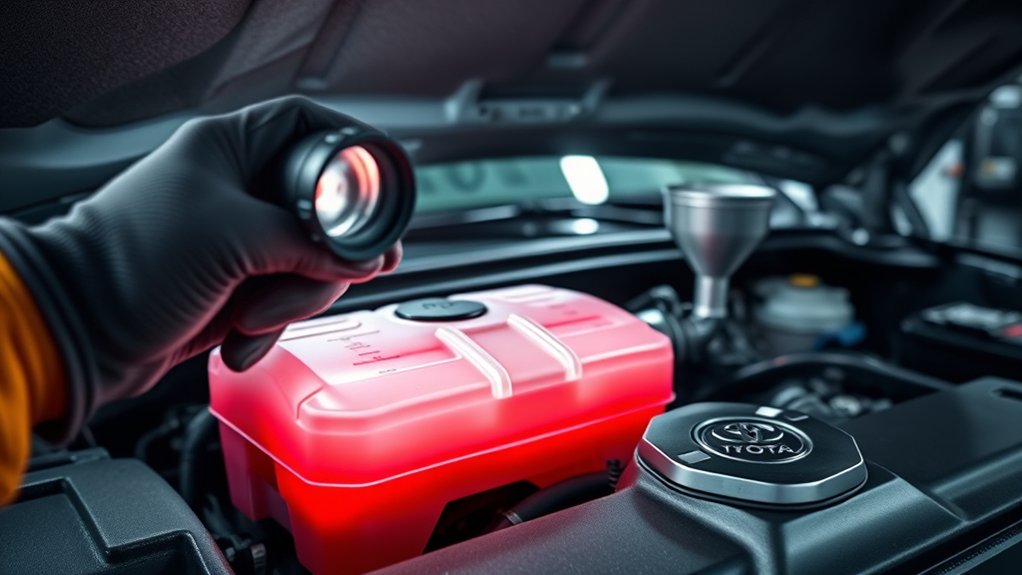
Checking the reservoir takes only a few minutes, but the engine must be cool. A recurring low level is evidence of a problem, not a reason to keep adding coolant indefinitely.
At a Glance
| Time Required | About 5 to 10 minutes after the engine has cooled |
| Difficulty | Easy visual inspection |
| Tools Needed | Flashlight, clean rag, gloves, and the correct coolant if a small top-up is needed |
| Cost | No cost for inspection; top-up cost depends on the required coolant and quantity |
- Park on level ground. Turn the engine off and allow it to cool completely.
- Locate the correct reservoir. Consult the owner’s manual if your Tundra has separate engine and intercooler coolant reservoirs.
- Read the level through the translucent tank. The cold coolant level should fall within the marked range specified by the manual.
- Inspect the fluid and surrounding area. Look for residue, damp connections, damaged hoses, discoloration, or contamination.
- Add only the correct coolant if needed. Use premixed coolant as supplied and stop at the specified cold-level mark.
- Monitor the level. If it drops again, arrange a leak inspection or cooling-system pressure test.
Pro Tip: Photograph the cold reservoir level after service. Comparing the image with later checks can help you identify slow coolant loss before it causes overheating.
Why Regular Coolant Maintenance Matters
Coolant maintenance protects more than the fluid itself. It supports the radiator, water pump, thermostat, heater core, seals, hoses, and internal coolant passages.
Engine Longevity Benefits
Fresh, compatible coolant helps control corrosion and deposits inside the system. Following the proper replacement interval also protects the water-pump seal, radiator, heater core, and aluminum components from preventable deterioration.
Coolant replacement should include an inspection of hoses, clamps, connections, the reservoir, and visible radiator surfaces. A new fluid fill cannot compensate for a leaking hose or damaged component.
Prevent Overheating Issues
Low coolant can reduce circulation and allow air into the system. Old or contaminated coolant can also reduce corrosion protection and contribute to restrictions. However, overheating may also result from a failed fan, thermostat, water pump, pressure cap, sensor, or radiator.
Coolant replacement is preventive maintenance. Active overheating requires diagnosis of the entire cooling system, not just a fluid change.
Maintain Optimal Performance
A correctly filled and bled cooling system helps the engine maintain a stable operating temperature. It also supports consistent cabin-heater performance and prevents air pockets that can interfere with coolant circulation.
Use Toyota’s scheduled inspections to check the coolant level, condition, and freeze protection. The 2024 maintenance guide includes regular fluid-level checks and more detailed coolant inspections at specified service visits.
Top Mistakes to Avoid During Your Coolant Change
- Using the wrong specification: Match Toyota’s required chemistry rather than choosing by color alone.
- Diluting premixed coolant: Adding water to a ready-to-use product weakens the intended mixture.
- Mixing unknown coolants: Different additive packages may not be compatible.
- Opening a hot system: Pressurized coolant and steam can cause severe burns.
- Ignoring the bleeding procedure: Trapped air may cause gurgling, poor heater output, unstable levels, or overheating.
- Overlooking a second cooling circuit: Equipped turbocharged Tundras may have separate engine and intercooler reservoirs.
- Dumping used coolant: Collect it in a sealed, labeled container and use an approved recycling or household hazardous-waste location.
Keep coolant away from children and animals. Ethylene glycol can be dangerous if swallowed. Clean spills promptly and never store used coolant in a beverage or food container.
DIY vs. Professional Coolant Service: Pros and Cons
A basic cold-level inspection and small top-up are reasonable DIY tasks for many owners. A full coolant replacement requires more care because the system must be drained, refilled with the correct fluid, and bled without leaving trapped air.
When DIY Service May Be Reasonable
- You have the correct model-year procedure and coolant specification.
- The cooling system has no leaks, contamination, or overheating history.
- You can safely lift or access the truck when the procedure requires it.
- You have suitable drain containers and a legal disposal option.
- You can perform the required bleeding procedure and verify the final cold level.
When Professional Service Is Better
- The truck has overheated or repeatedly loses coolant.
- The existing coolant is unknown, mixed, rusty, oily, or contaminated.
- The heater output is inconsistent or the system gurgles after service.
- The truck has multiple cooling circuits or a procedure requiring special equipment.
- A pressure test, vacuum fill, diagnostic scan, or internal-leak test is needed.
Toyota’s maintenance guide describes routine coolant service as draining and refilling the cooling system. A machine or chemical flush is usually reserved for contamination, mixed coolant, deposits, or another diagnosed problem.
Consequences of Not Changing Your Coolant
Coolant additives do not remain effective forever. As the fluid ages, its corrosion protection and reserve alkalinity can decline even when the reservoir still appears full.
- Corrosion: Internal metal surfaces, radiator passages, and the heater core may deteriorate.
- Deposits and restrictions: Contamination can reduce coolant flow and heat transfer.
- Seal and water-pump wear: Poor fluid condition may contribute to leakage or premature component failure.
- Freeze or boil protection loss: An incorrect or overly diluted mixture may not protect the system at temperature extremes.
- Overheating damage: Severe overheating can damage gaskets, cylinder heads, and other engine components.
Replacing the coolant on schedule is less costly and less disruptive than repairing a cooling system after corrosion, contamination, or overheating has progressed.
Frequently Asked Questions
How often should you change the coolant in a Toyota Tundra?
For many modern U.S.-market Tundras using Toyota Super Long Life Coolant, the first replacement is due at 100,000 miles or 120 months. Replace it every 50,000 miles or 60 months after that. Always verify the schedule for your exact model year.
Does Toyota recommend a coolant flush?
Toyota’s scheduled maintenance guidance describes draining the cooling system and refilling it with the specified coolant. A more extensive flush may be appropriate when coolant is contaminated, incompatible products were mixed, or another problem has been diagnosed.
How long does Toyota factory coolant last?
On many modern Tundras, the factory fill is scheduled for replacement at 100,000 miles or 10 years, whichever comes first. Later fills have a shorter 50,000-mile or five-year interval.
Can you mix pink and red Toyota coolant?
Do not rely on color to determine compatibility. Confirm the required specification and the fluid already in the truck. If the existing coolant is unknown, have the system inspected before mixing or changing products.
Should you add distilled water to Toyota pink coolant?
Only when the coolant is sold as a concentrate and its label requires dilution. Do not add water to premixed, ready-to-use coolant because doing so changes the intended concentration.
Does a newer Toyota Tundra have more than one coolant reservoir?
Some turbocharged Tundras have separate engine and intercooler cooling circuits. Consult the owner’s manual before checking or filling either reservoir, and follow the maintenance schedule for both circuits.
Sources
- Toyota 2024 Tundra Warranty and Maintenance Guide — coolant replacement intervals, coolant chemistry, inspections, and intercooler-coolant guidance
- Toyota 2021 Tundra Warranty and Maintenance Guide — earlier model-year replacement interval and Super Long Life Coolant specification
- Toyota Manuals and Warranties — model-year and VIN-specific owner’s manuals and maintenance guides
- Genuine Toyota Super Long Life Coolant — Toyota coolant product information
- U.S. Environmental Protection Agency: Household Hazardous Waste — safe storage and disposal guidance for hazardous household chemicals
- CDC/NIOSH Ethylene Glycol Safety Information — health and exposure hazards associated with ethylene glycol
Conclusion
For most modern Tundras using Toyota Super Long Life Coolant, plan for the first coolant replacement at 100,000 miles or 10 years and later replacements every 50,000 miles or five years. Follow whichever limit arrives first.
Use the coolant chemistry specified for your exact model year, avoid mixing unknown products, and never open a hot cooling system. If the level repeatedly drops, the truck overheats, or the coolant looks contaminated, diagnose the underlying problem instead of assuming a routine flush will correct it.
