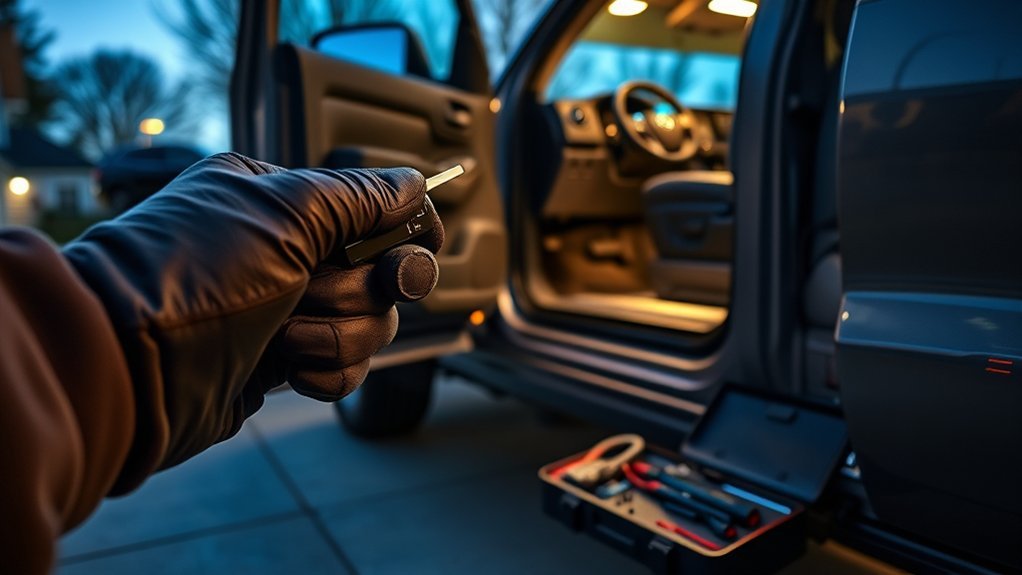
If your Toyota Tundra won’t lock, start by identifying exactly what fails. A problem affecting one door usually points to that door’s actuator, latch, linkage, or wiring. If every door stops responding, check the key fob, interior switch, 12-volt battery, fuses, shared wiring, and electronic controls before buying parts.
Quick Answer
Test the locks with the key fob, spare key, interior switch, and manual key. One failed door often indicates a local actuator or latch problem. Failure across every door suggests a key-fob, fuse, power, wiring, switch, or control-module issue. Use your model-year manual before replacing parts or attempting any reset.
Key Takeaways
- A single failed door usually has a local mechanical, actuator, connector, or door-jamb wiring fault.
- If every door fails, test both key fobs and the interior switch before inspecting shared power and control circuits.
- Buzzing or weak movement can indicate a worn actuator, while silence may indicate either an electrical fault or a failed actuator.
- Toyota Tundra lock systems differ by model year, cab style, trim, and key system.
- Replace only the components that testing confirms are faulty.
At a Glance
| Time Required | About 15–30 minutes for basic diagnosis; roughly 1–3 hours for many actuator replacements, depending on the door and experience level |
| Difficulty | Easy for key-fob and fuse checks; moderate for electrical testing or door-panel removal |
| Tools Needed | Spare key or fob, small screwdriver, trim-removal tool, socket set, flashlight, and digital multimeter when electrical testing is required |
| Cost | A key-fob battery or cleaning may cost little. Actuator, latch, wiring, diagnostic, and labor costs vary by model year, door, location, and part choice. |
Identifying Common Door Lock Problems in Toyota Tundras

The fastest way to narrow down a Tundra door-lock problem is to note which controls and doors are affected. Avoid assuming that the actuator has failed until you compare the key fob, interior lock switch, mechanical key, and individual doors.
| Symptom | Likely Areas to Check |
|---|---|
| Only one door will not lock | That door’s actuator, latch, linkage, connector, or door-jamb wiring |
| Every door fails with the key fob, but the interior switch works | Key-fob battery, damaged fob, programming, interference, or vehicle receiver issue |
| Every door fails with both the fob and interior switch | 12-volt power, applicable fuse, switch circuit, shared wiring, body control, or communication fault |
| The lock buzzes or moves slowly | Weak actuator motor, binding latch, stiff linkage, low voltage, or mechanical resistance |
| The manual key is stiff or will not turn | Worn key, contaminated cylinder, corrosion, freezing, or internal lock damage |
| A door locks and immediately unlocks | Door-ajar input, latch-position fault, binding mechanism, or control-system issue |
Also confirm that every door is fully closed. A misaligned latch, damaged striker, or incorrect door-ajar signal can affect locking behavior on some configurations.
Pro Tip: Write down which doors fail, which control you used, whether you heard a sound, and whether the problem changes with the engine running. That symptom pattern can prevent unnecessary parts replacement.
How to Diagnose Key and Electronic Lock Problems
Begin with simple comparisons before removing a door panel or probing a circuit.
- Try the interior lock switch: If it operates every door normally, the actuators and much of the vehicle-side circuit are probably working.
- Try the spare key fob: If the spare works, inspect the primary fob and its battery.
- Move closer to the truck: Weak range can point to a low fob battery, interference, or fob damage.
- Try the manual key: This separates a mechanical cylinder or latch problem from a remote-control problem.
- Check the 12-volt battery condition: Low vehicle voltage can cause several electrical features to behave inconsistently.
- Check the applicable fuse: Use the fuse-box diagram and the manual for your exact model year. Do not substitute a higher-rated fuse.
- Listen at each door: Buzzing, clicking, weak movement, or complete silence provides useful diagnostic clues.
Inspect the key for wear, bending, or damage. Test it gently and do not force a stiff lock cylinder. For model-specific key, lock, fuse, and feature information, use Toyota’s manual and warranty portal.
Note: Feedback beeps, automatic locking, selective unlocking, and smart-key behavior can depend on the model year and customized vehicle settings. A missing or different beep does not confirm an actuator failure by itself.
Understanding the Role of Door Lock Actuators in Tundras
A door lock actuator converts an electrical command into mechanical movement inside the door. Depending on the Tundra’s year and door design, the actuator may be integrated with the latch assembly rather than sold or serviced as a separate motor.
Functionality of Door Actuators
When you press the key-fob or interior lock button, the vehicle’s control system sends a command through the door-lock circuit. The actuator moves the latch or linkage into the locked or unlocked position.
Four details help with diagnosis:
- The actuator needs electrical power and ground: A good actuator cannot work through a broken wire, poor connector, or failed control circuit.
- The latch must move freely: Dirt, corrosion, damage, freezing, or misalignment can overload the actuator.
- Each door can fail independently: One dead door does not prove that every actuator needs replacement.
- System design varies: Use a model-specific wiring diagram and repair procedure before testing terminals.
Common Actuator Failures
| Symptom | Possible Cause | Next Check |
|---|---|---|
| Buzzing or grinding | Worn actuator gears or motor, or a binding latch | Inspect latch movement and test actuator operation |
| Slow or weak movement | Worn actuator, mechanical resistance, or low voltage | Check vehicle voltage and mechanical binding |
| No movement, but correct power reaches the actuator | Failed actuator or latch assembly | Confirm ground and follow the service-manual test |
| No movement and no voltage at the connector | Fuse, switch, wiring, connector, or control fault | Trace the circuit with the correct wiring diagram |
Replacement Process Overview
Actuator replacement usually requires removing the interior door panel, moisture barrier, electrical connector, linkages or cables, and latch fasteners. The exact process varies among front doors, rear doors, cab styles, and Tundra generations.
Do not replace every actuator simply because one has failed. Test each affected door and replace only the parts that diagnosis confirms are defective. Use the truck’s VIN when checking fitment through Toyota’s official parts catalog.
Troubleshooting Electrical Issues in Tundra Door Lock Systems

If the locks fail through both the key fob and interior switch, inspect the shared electrical system before removing multiple door panels.
| Step | Action | What the Result Suggests |
|---|---|---|
| 1 | Check whether other electrical features are weak or intermittent | Several affected systems can indicate low battery voltage, power, or ground trouble |
| 2 | Inspect the correct lock-related fuse using the manual | A blown fuse requires circuit inspection, not only fuse replacement |
| 3 | Inspect accessible connectors and door-jamb wiring | Loose pins, corrosion, or broken conductors can cause intermittent operation |
| 4 | Test voltage and ground at the affected actuator according to the wiring diagram | Correct command voltage with no movement points toward the actuator or mechanical assembly |
| 5 | Scan the appropriate vehicle systems when basic tests pass | Stored faults or live data may reveal an input, communication, or control problem |
Warning: Do not bridge terminals, pierce sealed wires unnecessarily, or apply battery voltage to an unknown connector. A short circuit can damage wiring or electronic modules. Follow the correct Toyota wiring diagram and connector test procedure.
Toyota’s Technical Information System provides model-specific repair manuals, wiring diagrams, service bulletins, and diagnostic information for North American vehicles.
Can You Perform a Soft Reset on a Tundra Lock System?
No single ignition-key sequence can be recommended for every Toyota Tundra. Lock customization, key registration, smart-key functions, immobilizer procedures, and body-control diagnostics vary by year and equipment.
Turning the ignition on three times is not a verified universal door-lock reset, and a flashing security light does not reliably confirm that a lock reset succeeded. Do not repeat undocumented sequences as preventive maintenance.
If the problem began after a weak or disconnected 12-volt battery, first confirm that the battery is charged and securely connected. Then check the exact owner’s manual for initialization or customization instructions. Key registration, immobilizer work, and control-module diagnosis may require Toyota-compatible equipment or professional service.
Inspecting and Repairing Your Tundra Door Lock Mechanism
A mechanical problem can imitate an electrical actuator failure. Open the affected door and inspect the latch, striker, visible linkage, rods, cables, and fasteners.
- Check for binding: Operate the manual lock while watching and listening for stiff movement.
- Inspect the striker: Look for looseness, unusual wear, or signs that the door has shifted.
- Check rods and cables: A disconnected or bent linkage can stop the lock from moving correctly.
- Look for contamination: Dirt, corrosion, ice, or old lubricant can restrict movement.
- Use a suitable lock or latch lubricant: Follow the product instructions and avoid flooding electrical parts.
Warning: Do not close the door if you have manually moved its latch into the closed position. Reset the latch to the open position first. A door that will not latch securely should be repaired before the truck is driven.
If the mechanism moves smoothly by hand but the actuator cannot operate it, test the actuator circuit. If the mechanism binds even when disconnected from the actuator, repair the latch, linkage, alignment, or damaged hardware first.
Key Fob Issues and Battery Solutions
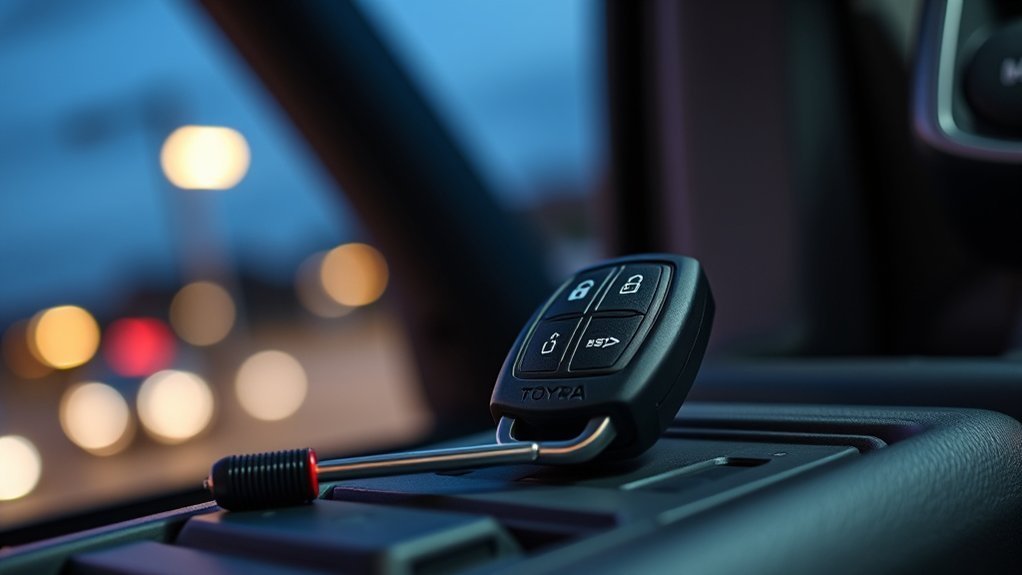
A weak key-fob battery commonly causes reduced range or intermittent remote operation. However, it will not explain a lock failure that also occurs through the interior door switch.
- Try the spare fob: A working spare points toward a problem with the primary fob.
- Inspect the case and buttons: Look for cracks, water damage, sticking buttons, or a loose battery contact.
- Confirm the battery type: Read the marking on the installed coin cell or check the manual for your exact model year. Do not assume every Tundra uses the same battery.
- Install it in the correct direction: Match the polarity shown inside the fob.
- Test every button: Compare lock, unlock, panic, and other equipped functions.
- Seek diagnosis when both fobs fail: The vehicle receiver, registration, antenna, power supply, or related control system may need testing.
A replacement battery does not normally fix a damaged circuit board, broken button, lost key registration, or vehicle-side receiver problem.
Essential Maintenance Tips for Keeping Tundra Door Locks Functioning
Door locks do not require electronic resets as routine maintenance. Basic inspection and careful cleaning are more useful.
- Keep door drains clear so moisture does not remain inside the door.
- Clean dirt from the latch and striker without forcing debris deeper into the mechanism.
- Use a lubricant suitable for automotive latches or lock cylinders and follow its directions.
- Replace a weak key-fob battery with the exact specified type.
- Inspect door-jamb wiring boots when operation changes as the door moves.
- Repair water leaks, damaged weather seals, and loose door hardware promptly.
- Record intermittent symptoms, weather conditions, affected doors, and control inputs.
If a replacement fuse blows again, stop replacing it and diagnose the short or overloaded circuit.
Steps to Replace a Faulty Door Lock Actuator
Replace the actuator only after confirming that the latch moves freely and the actuator receives the correct electrical command. Obtain the replacement by VIN because fitment can differ by year, cab, trim, door position, and production date.
Tools Required for Replacement
- Plastic trim-removal tools
- Correct screwdrivers and sockets
- Ratchet and extensions
- Small pick or clip tool when specified
- Flashlight
- Digital multimeter for diagnosis
- Replacement door-panel clips when needed
- Model-specific repair instructions
Step-by-Step Replacement Guide
- Confirm the fault: Verify power, ground, latch movement, and actuator response using the correct wiring diagram.
- Prepare the truck: Park safely, turn the ignition off, lower the window if practical, and follow the repair manual’s battery-disconnection precautions.
- Remove trim pieces and fasteners: Use plastic tools and note each screw and clip location.
- Lift off the door panel: Support it while disconnecting switch connectors, courtesy lights, and handle cables.
- Peel back the moisture barrier carefully: Avoid tearing it or contaminating the reusable sealant.
- Document the linkage layout: Photograph rods, cables, clips, and connector routing before disassembly.
- Disconnect and remove the actuator or latch assembly: Follow the model-specific sequence and support the assembly while removing fasteners.
- Install the VIN-matched replacement: Reconnect every rod, cable, clip, connector, and retaining fastener securely.
- Test before installing the panel: Check lock, unlock, inside handle, outside handle, manual key, child lock when equipped, and door-ajar operation.
- Restore the moisture barrier and panel: Replace damaged clips and confirm that no wiring is pinched.
Do not close the door until you have confirmed that both handles, the latch, and the lock operate correctly.
When to Seek Professional Help for Tundra Door Lock Problems
Professional diagnosis is sensible when basic checks do not isolate the fault or when the repair involves security-related electronics.
- Several doors fail through both the key fob and interior switch.
- A fuse blows repeatedly.
- Door-jamb wiring is broken, corroded, or previously repaired.
- The actuator receives no command despite a working switch and healthy power supply.
- The lock problem appears with other body-electrical faults.
- Both registered key fobs fail after installing the correct batteries.
- Key registration, immobilizer service, module programming, or advanced scanning is required.
- The door cannot latch or remain securely closed.
Before authorizing repairs, ask for the diagnostic result, affected circuit or component, part number, labor estimate, and warranty terms.
You should also check the truck’s VIN through Toyota’s recall and service-campaign lookup and the NHTSA recall database. A complaint or online discussion does not prove that a recall applies to your truck.
Related Guides
Frequently Asked Questions
Why is my door suddenly not locking?
A sudden failure can come from a weak key-fob battery, failed actuator, disconnected linkage, jammed latch, broken door-jamb wire, blown fuse, low vehicle voltage, or control fault. Determine whether one door or every door is affected and compare the key fob with the interior switch.
Why is my Toyota Tundra not locking?
If only one door fails, inspect that door’s actuator, latch, linkage, connector, and wiring. If every door fails, test both fobs, the interior switch, the 12-volt battery, applicable fuses, shared wiring, and the control system.
Can I reset my Toyota Tundra power door locks?
Do not rely on a universal ignition-cycle reset. Procedures for lock customization, smart keys, initialization, and key registration vary by model year. Check the owner’s manual for your exact truck or use Toyota service information.
How do I know whether the door lock actuator is bad?
Common clues include buzzing, grinding, weak movement, or one door failing while the others work. Confirm that the latch is not binding and that the actuator receives the correct power and ground before replacing it.
Is there a Toyota Tundra door-lock defect lawsuit or recall?
Do not assume that a lawsuit, complaint, or recall covers every Tundra. Check your VIN through Toyota and NHTSA for current recalls or service campaigns. U.S. owners who believe a failure creates a safety risk can also submit a safety complaint to NHTSA.
How much does it cost to replace a Tundra door lock actuator?
The total depends on the model year, affected door, whether the actuator is integrated with the latch, OEM or aftermarket part choice, diagnostic time, and local labor rate. Use the VIN to obtain the correct part quote and request a written labor estimate.
Conclusion
When a Toyota Tundra will not lock, the symptom pattern matters more than guessing at a part. Test the key fob, spare fob, interior switch, manual key, individual doors, vehicle battery, and applicable fuse. Then inspect the latch, linkage, connectors, and wiring before condemning an actuator.
A single failed door often has a local fault, while every door failing can point to a shared power, control, or communication problem. Avoid undocumented reset procedures and use information for the truck’s exact year and equipment. Seek professional help when the door will not latch securely, a fuse keeps blowing, or advanced electrical or security-system diagnosis is required.
Sources
- Toyota Manuals and Warranties — model-specific owner’s manuals, features, key information, and fuse guidance
- Toyota Technical Information System — factory repair information, wiring diagrams, service bulletins, and diagnostics
- Toyota Genuine Parts — VIN-based vehicle and replacement-part lookup
- Toyota Recall and Service Campaign Lookup — Toyota VIN-based campaign information
- National Highway Traffic Safety Administration Recall Lookup — U.S. recall, investigation, complaint, and manufacturer-communication searches
- NHTSA Safety Complaint Portal — reporting a suspected vehicle safety defect
