
Last updated: September 22, 2026 — Toyota fuel-cap guidance, EVAP/O2 diagnostic logic, code applicability, readiness guidance, warranty references, and current repair-cost examples were rechecked.
Toyota Tundra EVAP and O2 sensor troubleshooting should start with the scan data, not a parts order. Save all stored, pending, and permanent codes, freeze-frame data, and readiness status first. Then separate an EVAP leak or purge-flow problem from an air-fuel/O2 sensor, mixture, exhaust-leak, or catalyst problem. Check the fuel cap, visible hoses, wiring, connectors, and the correct bank/sensor position before replacing any valve, sensor, canister, or catalytic converter.
The exact test depends on the Tundra’s model year, engine, emissions calibration, and code. Earlier trucks, later V8 models, and current twin-turbo V6 or hybrid Tundras do not all use the same EVAP hardware, diagnostic codes, sensor strategy, or confirmation procedure.
Quick Answer
Start a Toyota Tundra EVAP or O2 diagnosis by recording all stored, pending, and permanent codes, freeze-frame data, and readiness status. If the code is EVAP-related, inspect the correct fuel cap, hoses, purge/vent circuits, and pressure response. If it is an O2 or air-fuel-sensor code, identify the exact bank and sensor position, then check wiring, exhaust leaks, fuel trims, mixture faults, and sensor data. A diagnostic code identifies a failed monitor or circuit condition; it does not automatically identify the part that needs replacement.
Key Takeaways
- The EVAP system stores fuel vapor and later sends it to the engine under controlled conditions.
- Upstream air-fuel or O2 sensors support mixture control, while downstream sensors primarily help monitor catalytic-converter performance.
- A diagnostic code identifies a monitored fault, not necessarily the component that needs replacement.
- EVAP code availability, sensor design, component locations, test values, and drive-cycle requirements vary by Tundra year, engine, and calibration.
- Earlier Tundras may use EVAP codes such as P0440 or P0442, while later applications can use different leak-detection and pressure-sensor codes.
- Record diagnostic data before clearing codes because clearing DTCs or interrupting ECM power can reset emissions-readiness monitors.
At a Glance
| Time Required | 10 to 20 minutes for a basic scan and visual inspection; longer for live-data, electrical, smoke, or readiness testing. As one engine-specific example, Toyota service information for the 1UR-FE says an automatic Techstream EVAP check can take up to about 24 minutes. |
| Difficulty | Beginner for cap and hose checks; intermediate to advanced for electrical, smoke, active-test, and sensor diagnosis |
| Tools Needed | OBD-II scan tool, flashlight, safety glasses, model-specific repair information, and possibly a Toyota-capable scan tool, digital multimeter, or automotive EVAP smoke tester |
| Cost | A cap, hose, or connector repair may be inexpensive; valves, sensors, canisters, wiring repairs, and catalytic converters vary widely by year, engine, accessibility, parts choice, and labor rate |
Which Tundra EVAP or O2 Problem Should You Test First?
Match the code and symptom to the system before replacing anything. The table below is a starting point, not a substitute for the Toyota procedure for your exact year and engine.
| What You See | Start With | Do Not Assume |
|---|---|---|
| EVAP leak code | Fuel cap, filler sealing surface, hoses, valve sealing, pressure data, controlled smoke test | That the gas cap is automatically the failed part |
| Purge-flow code or hard start after refueling | Purge-valve command, unwanted flow when closed, hoses, wiring, intake response | That the canister must be replaced |
| Fuel nozzle repeatedly shuts off | Vent path, fresh-air filter, vent valve, hoses, filler-neck venting, canister restriction | That forcing more fuel into the tank is safe |
| Upstream A/F or O2 code | Correct bank/position, wiring, heater circuit, intake leaks, fuel pressure, fuel trims, exhaust leaks | That the sensor named in the code is defective |
| Downstream O2 or catalyst code | Exhaust leaks, upstream mixture control, misfires, oil/coolant consumption, both sensor signals, catalyst condition | That the catalytic converter is automatically bad |
| Monitor shows incomplete but no active fault | Pending codes, recent battery/code clear, fuel level, temperature, soak time, and model-specific drive conditions | That driving a fixed number of miles will always complete the monitor |
For codes outside the EVAP, oxygen-sensor, air-fuel, and catalyst systems, see the Toyota Tundra OBD2 codes guide. If you are deciding whether a warning light requires an immediate stop, see the Toyota Tundra Check Engine light guide.
Warning: Stop troubleshooting if you see liquid fuel, smell a strong persistent fuel odor, or find damaged fuel-system parts. Keep sparks, cigarettes, flames, and improvised smoke sources away from gasoline vapors. Let the exhaust cool before touching O2 sensors, and never work under a truck supported only by a jack.
Understanding the EVAP System in Your Toyota Tundra
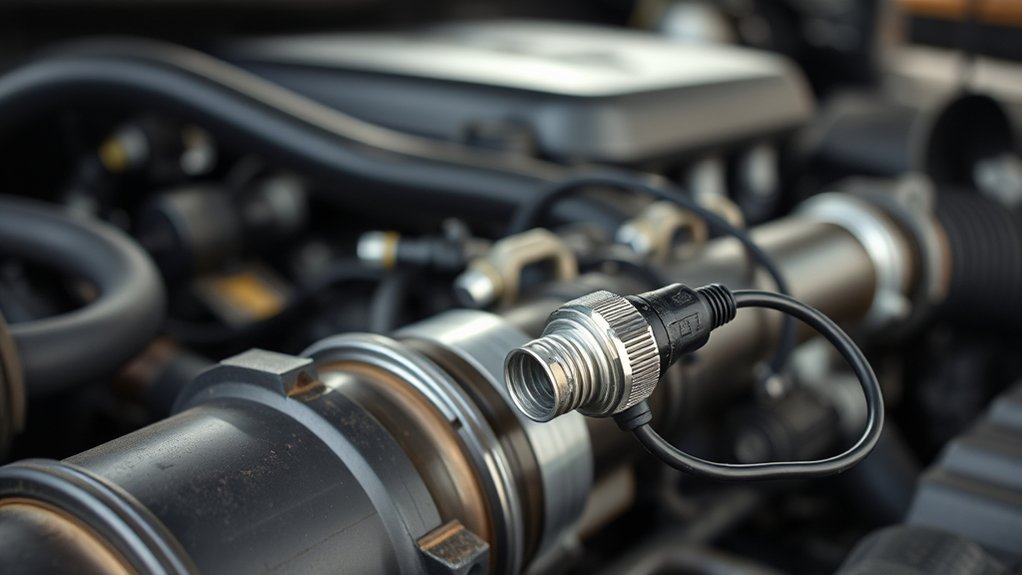
The Evaporative Emission Control, or EVAP, system prevents gasoline vapor from venting directly into the air. It stores vapor from the fuel tank in a charcoal canister. When operating conditions are suitable, the engine control module opens the purge valve so the engine can burn that vapor.
The exact design varies across Toyota Tundra generations. Earlier V8 and V6 trucks, later V8 models, and current twin-turbo V6 or i-FORCE MAX hybrid Tundras can use different valves, pressure sensors, vent arrangements, diagnostic codes, and monitor logic. Confirm the model year, engine, VIN-specific service information, and emissions label before ordering a part or applying a test specification.
Main EVAP Components
- Fuel cap and filler neck: Seal the tank opening on models that use a removable cap. Toyota’s Tundra quick-reference guidance says to tighten the fuel cap until one click is heard; insufficient tightening can illuminate the Check Engine indicator.
- Charcoal canister: Stores fuel vapor until the engine can purge it.
- Purge valve: Controls vapor flow from the canister to the intake.
- Vent valve and fresh-air filter: Allow filtered air into the system and close or control the system during applicable leak tests.
- Fuel-tank or canister pressure sensor: Helps the engine computer evaluate pressure changes and system sealing.
- Hoses, pipes, seals, and connectors: Carry vapor and connect the system components.
The engine computer runs EVAP self-tests only when the required enabling conditions are met. Fuel level, ambient temperature, engine or fuel temperature, driving pattern, soak time, and time since shutdown can affect when a monitor runs.
As one engine-specific example, Toyota service information for a 1UR-FE application says its Techstream automatic EVAP check can take up to about 24 minutes, should not be run with the tank above 90% full, and requires fuel temperature below 35°C (95°F). Do not apply those exact limits to every Tundra; use them as an example of why model-specific service information matters.
Note: A clicking, humming, or brief pump sound after shutdown can be part of a normal evaporative-leak or pressure check on some Toyota systems. Diagnose the sound only when it is unusually loud, persistent, or accompanied by a warning light or code.
Common Symptoms of EVAP System Issues
An EVAP fault often produces few driving symptoms. The Check Engine light may be the only sign. A restriction, stuck purge valve, damaged canister, or larger vapor leak can produce additional problems.
Check Engine Light and EVAP Codes
EVAP code availability depends on the Tundra generation and calibration. Earlier trucks may use codes such as P0440 or P0442. Later V8-era Toyota service information includes codes such as P0441, P0455, P0456, P043E/P043F, P0451-P0453, and pump-related faults. Always confirm the exact code definition for the truck before following a generic repair chart.
A code does not identify the failed part by itself. For example, a large-leak code could result from a loose cap, split hose, disconnected line, faulty valve, wiring problem, damaged canister, or another sealing fault.
Slow Refueling or Premature Pump Shutoff
A restricted vent path can make the fuel nozzle shut off repeatedly or cause the tank to fill unusually slowly. Possible causes include a blocked vent line, contaminated fresh-air filter, stuck vent valve, kinked hose, damaged filler-neck vent, or saturated charcoal canister.
Do not hold the fuel nozzle in an unusual position or repeatedly force more fuel into the tank after the nozzle clicks off. Toyota owner guidance says to stop filling after the nozzle automatically clicks off and not to top off the tank.
Fuel Odor, Rough Idle, and Emissions-Test Problems
A persistent fuel smell may indicate escaping vapor or liquid fuel and needs prompt inspection. A purge valve stuck open can also contribute to rough idle, hard starting, or an overly rich mixture, especially after refueling.
An illuminated malfunction indicator, stored emissions code, or incomplete readiness monitor may cause an inspection failure under local rules. Inspection requirements differ by jurisdiction, so check the current rules where the truck is registered.
The Role of O2 and Air-Fuel Ratio Sensors
Exhaust oxygen sensors provide information that helps the engine computer manage combustion and evaluate catalytic-converter performance. Toyota may describe upstream units as air-fuel ratio sensors rather than conventional narrowband O2 sensors.
Upstream sensors, also called Sensor 1, sit before the relevant catalytic converter and support fuel-mixture control. Downstream sensors, commonly called Sensor 2, sit after a catalyst and are used primarily to evaluate catalyst performance and downstream exhaust conditions.
Sensor count and placement vary by engine and exhaust layout. A V-type engine may use separate sensors for Bank 1 and Bank 2. Bank 1 is the bank containing cylinder number one. Do not assume Bank 1 is always the driver or passenger side; confirm the engine-specific layout before disconnecting or ordering a sensor.
An O2- or air-fuel-sensor code reports a circuit, response, heater, or mixture-related condition. It does not automatically prove that the sensor itself has failed.
Possible causes of an O2 or air-fuel-sensor code include:
- Damaged wiring, melted insulation, corrosion, or a loose connector
- An exhaust leak before or near the sensor
- A vacuum leak or unmetered air
- Fuel-pressure or injector problems
- Misfires or ignition faults
- Oil, coolant, silicone, or fuel contamination
- A failed sensor heater or sensor element
- A catalyst problem
- An engine-control or calibration issue
If an exhaust leak is suspected, see the Toyota Tundra exhaust leak troubleshooting guide. If misfire codes are present, diagnose them before condemning an O2 sensor or catalytic converter; the Toyota Tundra misfire guide covers that path.
Common O2, A/F, and Catalyst Code Families
The examples below appear in Toyota Tundra service information for applicable engines. They are not a universal code list for every model year.
| Code Family | What It Monitors | First Checks |
|---|---|---|
| P2195-P2198 | Upstream A/F-sensor lean/rich response on applicable V8 systems | Related DTCs, intake leaks, exhaust leaks, fuel pressure, injectors, sensor response, heater circuit, wiring |
| P0136-P0139 / P0156-P0159 | Downstream heated-O2 sensor circuit or response on applicable systems | Correct bank, wiring, heater circuit, exhaust leaks, sensor response, mixture condition |
| P0420 / P0430 | Catalyst-efficiency monitor for Bank 1 or Bank 2 | Other DTCs first, fuel control, misfires, exhaust leaks, oil/coolant consumption, upstream/downstream sensor behavior, catalyst condition |
How EVAP and O2 Faults Affect Fuel Economy
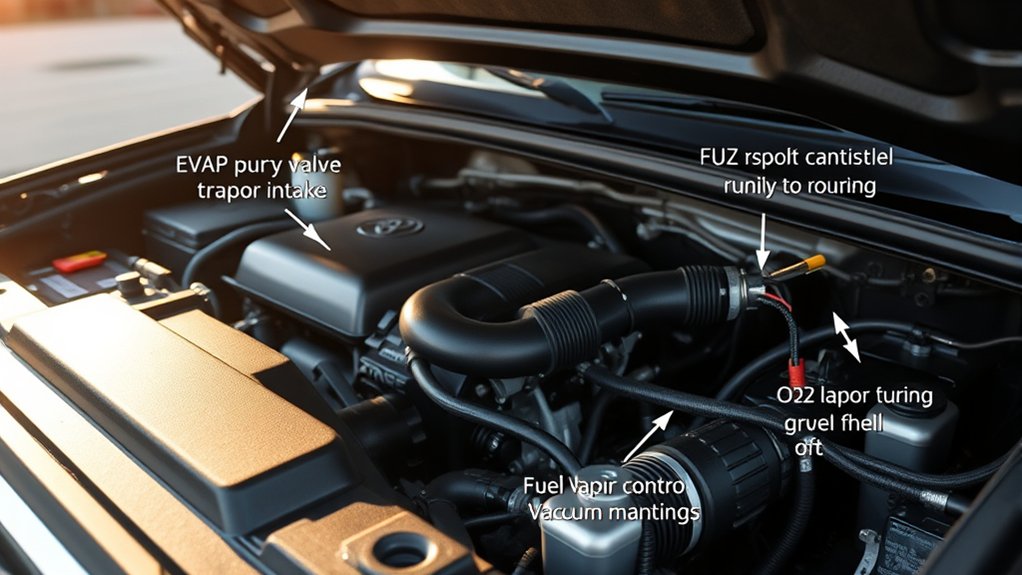
A sealed EVAP system prevents fuel vapor from escaping, but a small vapor leak may not cause a noticeable change in miles per gallon. Its main effects may be increased evaporative emissions, a warning light, and an inspection problem.
A stuck purge valve can affect the mixture because it may allow fuel vapor or unintended airflow into the engine at the wrong time. Depending on the fault, you may notice rough idle, hard starting after refueling, rich or lean fuel trims, or increased fuel use.
A faulty upstream air-fuel or O2 sensor can have a greater effect on fuel economy because the engine computer uses upstream feedback for mixture control. A downstream-sensor fault generally affects catalyst monitoring more directly, although the exact strategy depends on the engine and calibration.
How to Diagnose EVAP and O2 Sensor Issues
Before Step 1, identify the Tundra’s model year, engine, and emissions calibration. Do not assume that a diagnostic routine from an early 2UZ-FE or 5VZ-FE truck applies unchanged to a later 1UR/3UR V8 or a current twin-turbo V6.
Use a logical sequence instead of replacing the part named in a scan-tool description. Basic inspection can be performed at home, but pressure testing, active tests, advanced electrical diagnosis, hybrid-related work, and some under-vehicle procedures may require professional equipment or training.
1. Record Codes, Freeze-Frame Data, and Readiness
Scan the powertrain system before clearing anything. Record:
- Stored, pending, and permanent diagnostic trouble codes
- Freeze-frame data
- Fuel-system status and coolant temperature
- Short-term and long-term fuel trims
- O2 or air-fuel-sensor data
- EVAP pressure data, when supported
- Readiness-monitor status
Pro Tip: Toyota service procedures repeatedly use freeze-frame data to determine engine temperature, operating condition, and mixture state when a fault was detected. Save that information before clearing codes.
2. Inspect the Fuel Cap and Filler Area
Check that the correct cap is installed, its seal is clean and undamaged, and the filler-neck sealing surface is free of debris or damage. Toyota’s Tundra quick-reference guidance says to tighten the cap until one click is heard; a cap that is not tightened enough may illuminate the Check Engine indicator.
A cap inspection is a sensible first step, but do not assume every EVAP code comes from the cap. Earlier Tundras also had application-specific EVAP faults involving filler sealing surfaces and purge hardware, which is another reason to check model-specific service information instead of replacing the cap repeatedly.
3. Inspect Hoses, Wiring, and Connectors
With the engine off and cool, inspect accessible EVAP hoses for cracks, disconnections, pinching, abrasion, and damage. Check wiring near the exhaust, frame, tank, canister, and engine compartment.
For O2-related codes, inspect the harness for melted insulation, stretched wires, loose terminals, corrosion, and contact with hot exhaust parts.
4. Check Live Data and Fuel Trims
Warm the engine when the applicable Toyota procedure calls for it and compare scan data with the specifications for that engine. Fuel trims that move strongly positive can indicate that the ECM is adding fuel in response to a lean condition. Strongly negative trims can indicate that it is subtracting fuel in response to a rich condition.
Compare the pattern at idle and at a steady higher engine speed. This can help distinguish vacuum or purge faults from fuel-delivery, exhaust-leak, or sensor problems. Use active tests when the scan tool and vehicle support them. Commanding a purge or vent valve while monitoring pressure and engine response can provide more useful information than resistance testing alone.
5. Perform a Controlled EVAP Smoke Test
An automotive EVAP smoke machine can reveal leaks at hoses, seals, valves, the canister, filler neck, or tank connections. Follow the equipment maker’s pressure limit and the Toyota procedure for the specific system.
Do not pressurize the system with unrestricted shop air. Excess pressure can damage the tank, sensors, valves, or canister. Never use an open flame or homemade smoke source around fuel vapor.
Common EVAP Trouble Codes
The following codes are application-dependent. Confirm that the code is used by your Tundra’s year, engine, and calibration before following the general meaning below.
| Code | General Meaning | First Checks |
|---|---|---|
| P0440 | General EVAP system malfunction on applicable earlier Tundras | Related EVAP codes, cap, hoses, pressure sensor, valves, wiring, and leak test |
| P0441 | Incorrect purge-flow condition | Purge valve, blocked or leaking lines, wiring, intake response, and pressure behavior |
| P0442 | Small EVAP leak detected on applicable earlier Tundras | Cap seal, filler sealing surface, small hose cracks, valve sealing, pressure data, and smoke test |
| P0455 | Large or gross EVAP leak detected on applicable systems | Missing or loose cap, disconnected hose, valve sealing, canister damage, wiring, or another large leak |
| P0456 | Very small EVAP leak detected on applicable systems | Cap seal, tiny hose or fitting leaks, valve leakage, pressure data, and controlled smoke testing |
| P106B | EVAP pressure sensor-secondary air-injection pressure sensor correlation fault on applicable Tundra V8-era systems | Verify year and engine, read related pressure-sensor and secondary-air codes, then compare the applicable pressure data using Toyota procedures |
6. Test the Correct O2 or Air-Fuel Sensor Type
Do not apply one fixed voltage rule to every sensor. DENSO’s troubleshooting guidance describes a warmed conventional narrowband O2 sensor as generally moving through roughly 0.1 to 0.9 volts as the mixture changes. A Toyota wideband air-fuel ratio sensor uses a different operating and reporting method, so that narrowband test range does not apply.
Identify whether you are testing:
- Bank 1 or Bank 2
- Sensor 1 or Sensor 2
- A conventional O2 sensor or wideband air-fuel ratio sensor
- The signal circuit, heater circuit, power supply, ground, or wiring
Use model-specific scan-data ranges and connector tests. A multimeter can help check power, ground, continuity, and some heater circuits, but directly probing a signal incorrectly can damage a terminal or produce misleading readings.
Before condemning a sensor, check for exhaust leaks, intake leaks, incorrect fuel pressure, injector faults, ignition misfires, oil burning, coolant contamination, and damaged wiring.
7. Clear Codes Only After the Repair and Confirm Readiness
After completing the confirmed repair, clear the codes when the applicable repair procedure requires it. Drive the truck under the correct Toyota confirmation or readiness conditions and use a scan tool to confirm that the code does not return.
Toyota’s readiness guidance states that monitors can return to incomplete when DTCs are cleared or ECM power is lost. EPA inspection guidance also recognizes recent battery disconnection or OBD reset as a common reason a vehicle arrives with incomplete monitors. The EVAP monitor can take longer than some other monitors because its enabling conditions are more restrictive.
Avoid clearing codes immediately before an emissions inspection. If the monitor remains incomplete, verify pending codes and the exact fuel-level, temperature, soak, speed, load, and other conditions specified for the truck instead of simply driving a fixed number of miles.
Repair Options for EVAP and O2 Sensor Issues
The correct repair depends on the test results, not only the code description.
- Fuel-cap fault: Clean the sealing surface or replace a damaged, incorrect, or non-sealing cap.
- Damaged hose or seal: Replace the failed vapor-rated hose, seal, connector, or pipe.
- Faulty purge or vent valve: Replace the valve after confirming its electrical operation, commanded response, flow, and ability to seal.
- Saturated or cracked canister: Replace the canister only after confirming damage, restriction, or saturation and correcting the cause, such as repeated overfilling or vent-system damage.
- Pressure-sensor fault: Verify reference voltage, ground, signal, connectors, related DTCs, and comparison data before replacement.
- O2 or air-fuel-sensor fault: Replace the confirmed failed sensor after ruling out wiring, mixture, contamination, and exhaust problems.
- Catalyst-efficiency code: Diagnose misfires, fuel control, oil or coolant consumption, exhaust leaks, sensors, and catalyst condition before replacing the converter.
- Wiring fault: Repair damaged conductors and terminals with automotive-grade methods suitable for heat, moisture, and vibration.
Warning: Do not install software or hardware intended to hide a fault or bypass a required emissions control. Restore the system with a compliant repair that keeps the original monitoring and emissions functions working.
Choosing Replacement Parts and Checking Warranty Coverage
Toyota recommends Toyota Genuine Parts for emissions-system repairs, but Toyota’s warranty guidance also states that warranty coverage is not dependent on one replacement-parts brand. A non-Toyota part may be used for maintenance or repair, although parts that are not equivalent in quality or design can impair emissions-system performance.
Fit, Calibration, and Reliability
EVAP valves, pressure sensors, air-fuel sensors, and O2 sensors must operate within specific electrical, flow, and calibration limits. A physically similar part may still use the wrong connector, heater specification, response characteristic, or calibration.
Use the VIN, model year, engine, drivetrain, emissions label, bank, and sensor position to verify the part. Avoid universal sensors that require splicing unless the manufacturer specifically approves the application and provides a correct installation method.
Warranty and Emissions Coverage
Emissions warranty coverage varies by model year, component, registration location, and whether the vehicle uses a federal or California-certified emissions system. Toyota’s current warranty portal directs owners to the applicable Warranty and Maintenance Guide for exact emissions coverage.
For example, Toyota’s 2026 Tundra i-FORCE MAX warranty guide lists items such as the charcoal canister, fuel filler cap, and fuel tank in its federal emissions parts list and separately identifies longer coverage for certain emissions components. Do not assume that every EVAP valve, O2 sensor, or related part receives the same term; verify the specific part and vehicle.
Check applicable warranty coverage, recalls, service campaigns, or customer-support programs before authorizing an expensive emissions repair.
What Will EVAP and O2 Sensor Repairs Cost You?
No single price applies to every Toyota Tundra. The estimate depends on the model year, engine, component location, diagnostic time, parts choice, labor rate, corrosion, and whether related damage is present.
Current online estimates also show why one universal canister price would be misleading. As of September 2026, RepairPal’s year-specific examples list approximately $668-$725 for a 2023 Tundra and $1,123-$1,168 for a 2020 Tundra, before taxes, fees, location adjustments, or related repairs. Treat those figures as dated examples rather than quotes for another model year.
| Repair Level | Typical Examples | Cost Factors |
|---|---|---|
| Lower | Fuel cap, accessible hose, seal, or minor connector repair | Part quality, accessibility, and whether diagnosis is billed separately |
| Moderate | Purge valve, vent valve, pressure sensor, O2 sensor, air-fuel sensor, or wiring repair | Sensor position, seized threads, harness damage, testing time, and engine layout |
| Higher | Charcoal canister, fuel-tank work, extensive harness repair, or catalytic converter | Large assemblies, labor access, rust, related failures, emissions certification, and model year |
A complete estimate should separate the diagnostic fee, parts, labor, taxes, and any required follow-up testing. Replacing parts without confirming the cause can cost more than paying for accurate diagnosis.
Essential Troubleshooting Techniques for EVAP System Problems
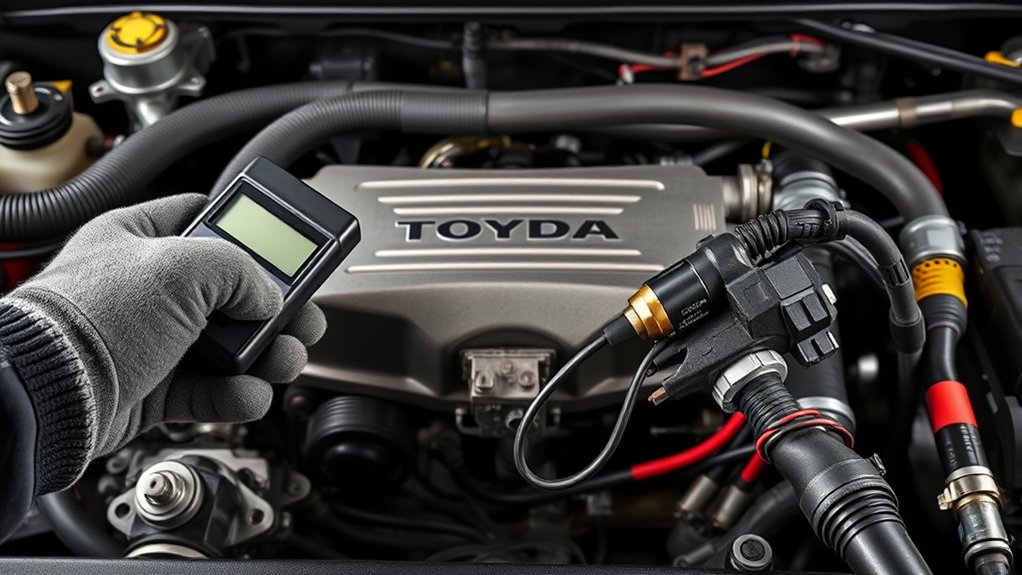
Use the symptom and code pattern to decide where to start:
- EVAP code appeared soon after refueling: Check the cap, filler area, overfilling history, and any hose or connector that may have been disturbed.
- Nozzle shuts off repeatedly: Inspect the vent valve, fresh-air filter, vent hoses, filler-neck venting, and canister.
- Rough idle or hard start after filling the tank: Test the purge valve for unwanted flow when commanded closed.
- Small-leak code: Inspect seals and hoses, then perform a controlled smoke test using the model-specific procedure.
- O2 or air-fuel-sensor circuit code: Check wiring, connector condition, heater power, ground, and the correct bank/sensor position.
- Lean code with an O2/A/F code: Check intake leaks, purge flow, fuel pressure, exhaust leaks, and sensor data before replacing the sensor.
- Catalyst-efficiency code: Check other DTCs, misfires, oil or coolant consumption, mixture control, exhaust leaks, and both sensor signals before replacing the converter.
- Monitor remains not ready: Confirm no pending faults, check whether codes or battery power were recently cleared, verify enabling conditions, and follow the applicable Toyota readiness pattern.
Common Diagnostic Mistakes Tundra Owners Should Avoid
Owner discussions and repair guides repeatedly show the same failure pattern: a code is treated as a parts list instead of the start of a test. Avoid these mistakes:
- Replacing the gas cap for every EVAP code: The cap is worth checking, but valves, hoses, filler sealing surfaces, sensors, wiring, and canisters can produce related codes.
- Replacing an O2 sensor from the code name: The code may come from wiring, an exhaust leak, a rich or lean mixture, contamination, heater failure, or catalyst performance.
- Clearing codes before saving data: This erases useful freeze-frame information and can reset readiness monitors.
- Using a universal voltage test: Wideband air-fuel sensors and conventional narrowband O2 sensors do not use identical test methods.
- Assuming every Tundra uses the same DTC set: Code availability and diagnostic logic vary by engine and generation.
- Ignoring related codes: Misfire, fuel-trim, secondary-air, catalyst, and electrical faults can change the correct diagnostic order.
- Installing a sensor because the connector fits: Incorrect heater or calibration characteristics can create poor drivability or repeat codes.
- Overfilling the fuel tank: Continuing to add fuel after the nozzle stops can contaminate EVAP components.
- Bypassing an emissions fault: Hiding the fault does not repair the system and may violate emissions law.
Frequently Asked Questions
How do I get my Toyota Tundra EVAP monitor ready?
Repair active and pending faults first, then avoid clearing the codes again. Toyota readiness information shows that monitor completion depends on specific operating conditions rather than mileage alone. Fuel level, temperature, soak time, speed, engine load, and other requirements vary by model year and calibration. Use a scan tool to check readiness and follow the applicable Toyota procedure instead of a generic drive cycle.
How much does a Toyota Tundra EVAP canister replacement cost?
It varies substantially by model year. As a September 2026 estimator snapshot, RepairPal lists approximately $668-$725 for a 2023 Tundra and $1,123-$1,168 for a 2020 Tundra before taxes, location adjustments, and related repairs. Confirm that the canister has actually failed before replacing it because a vent restriction, valve fault, wiring problem, filler-area fault, or leak can create similar symptoms.
What are the symptoms of a bad EVAP system on a Toyota Tundra?
Possible signs include a Check Engine light, EVAP codes, a persistent fuel odor, slow refueling, repeated nozzle shutoff, hard starting after refueling, or rough idle from incorrect purge flow. A small vapor leak may produce no noticeable driving symptom.
How do I fix code P0440 on a Toyota Tundra?
First confirm that P0440 applies to your Tundra’s model year and engine because Toyota’s EVAP code set changed across generations. On an applicable truck, record all related codes and freeze-frame data, inspect the fuel cap and visible hoses, check pressure-sensor and valve circuits, and test the system for leaks. P0440 is a general EVAP fault and does not identify one failed part.
Does an O2-sensor code mean the sensor needs replacement?
No. Check the exact code, bank, sensor position, sensor type, wiring, heater circuit, exhaust leaks, fuel trims, misfires, intake leaks, fuel pressure, and mixture conditions first. Replace the sensor only after testing confirms a sensor, heater, or integrated sensor failure.
What does Bank 1 Sensor 1 mean on a Toyota Tundra?
Bank 1 is the cylinder bank that contains cylinder number one, and Sensor 1 is the upstream sensor closest to the engine before the relevant catalytic converter. Do not assume Bank 1 is always the driver or passenger side; confirm the engine-specific cylinder layout before ordering or disconnecting a sensor.
Can I drive with an EVAP code?
A steady Check Engine light with no fuel smell, leaking fuel, or drivability problem may not require an immediate stop, but the fault still needs diagnosis. Stop driving and arrange service if you smell strong fuel vapor, see leaking fuel, experience stalling or severe running problems, or the Check Engine light flashes.
Why are my emissions monitors not ready after a battery change?
Toyota and EPA guidance both recognize loss of ECM power or a recent OBD reset as reasons readiness monitors can return to incomplete. The engine computer must repeat its self-tests under the required operating conditions. EVAP may take longer because its fuel-level, temperature, soak, and other enabling conditions can be more restrictive.
Conclusion
Your Toyota Tundra’s EVAP system and exhaust sensors perform different jobs even though either system can illuminate the Check Engine light. Save the codes, freeze-frame data, and readiness status first. Then identify the model year, engine, exact code, bank, sensor position, and applicable Toyota diagnostic procedure before replacing anything.
Inspect the simple items first, test the circuit or system that actually failed, repair the confirmed cause, and then verify that the code stays away and the required readiness monitors complete. Check emissions-warranty coverage before approving an expensive canister, sensor, or catalyst repair, and use professional diagnosis when fuel vapor, advanced electrical testing, controlled pressure testing, hybrid systems, or under-vehicle exhaust work is involved.
Sources
- Toyota 2026 Tundra Manuals and Warranties — model-specific manuals and current warranty information
- Toyota Tundra Quick Reference Guide — fuel-cap operation and Check Engine indicator guidance
- Toyota 2026 Tundra i-FORCE MAX Warranty and Maintenance Guide — federal and California emissions warranty guidance and replacement-parts policy
- Toyota Technical Information System — official source for VIN- and model-specific repair procedures, wiring information, DTC diagnostics, and readiness procedures
- EPA Vehicle Inspection and Maintenance Guidance — OBD readiness and emissions-inspection information
- DENSO O2 and Air-Fuel Sensor Troubleshooting — conventional O2-sensor testing, sensor types, and diagnostic checks
- RepairPal 2023 Toyota Tundra EVAP Canister Estimate — September 2026 cost-reference example
- RepairPal 2020 Toyota Tundra EVAP Canister Estimate — September 2026 cost-reference example
