
The Toyota Tundra i-FORCE MAX hybrid system is a performance-focused, non-plug-in parallel hybrid designed to add low-rpm torque, towing response, and smoother power delivery to Toyota’s full-size pickup. It combines a 3.4-liter twin-turbo V6, a 48-hp electric motor generator, a 288-volt nickel-metal hydride battery, and a conventional 10-speed automatic transmission. The truck charges its hybrid battery automatically through powertrain operation and regenerative braking.
Quick Answer
The Toyota Tundra i-FORCE MAX places a 48-hp motor generator between a 3.4-liter twin-turbo V6 and a 10-speed automatic transmission. The parallel-hybrid system produces 437 net combined horsepower and 583 lb-ft of torque, supports low-speed electric operation and regenerative braking, and can tow up to 11,450 pounds in the properly equipped configuration. It is self-contained and does not use an external charging port.
Key Takeaways
- The Tundra i-FORCE MAX does not need to be plugged in. The engine and regenerative braking recharge its hybrid battery.
- Toyota rates the system at 437 net combined horsepower and 583 lb-ft of torque.
- Toyota lists 2026 Tundra hybrid fuel economy at up to 20 mpg city and 24 mpg highway, depending on the configuration.
- The maximum 11,450-pound hybrid towing rating applies only to a properly equipped configuration.
- Toyota states that above 18 mph the gasoline engine remains in operation; motor-only driving is mainly a light-load, lower-speed function.
- Tundra and Tacoma both use the i-FORCE MAX name, but their engines, transmissions, output, and towing ratings are different.
Last updated: September 19, 2026
Model-year note: Toyota announced the updated 2027 Tundra in July 2026, but said full 2027 details would be announced in fall 2026. Unless otherwise stated, the specifications below use Toyota’s current published 2026 U.S.-market data. See Toyota’s 2027 Tundra announcement for the currently released model-year information.
What Is the Toyota Tundra i-FORCE MAX Hybrid System?
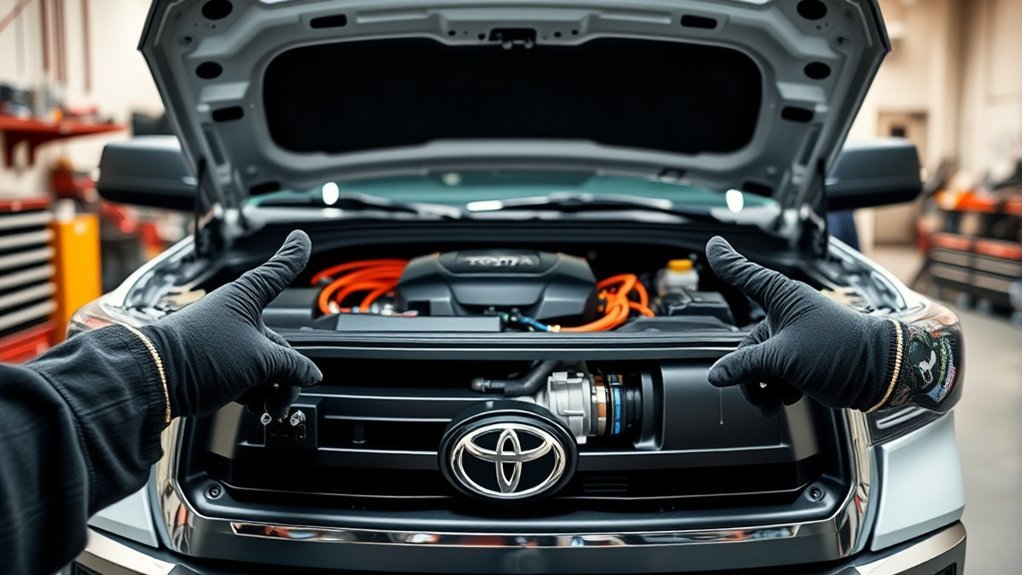
The Tundra’s i-FORCE MAX is a performance-focused hybrid rather than a system designed mainly for long electric-only driving. According to Toyota’s 2026 Tundra information, it combines a twin-turbo V6 with a motor generator and 10-speed electronically controlled automatic transmission.
The complete system produces 437 net combined horsepower at 5,200 rpm and 583 lb-ft of torque at 2,400 rpm. The low torque peak gives the truck substantial response at relatively low engine speed during acceleration, hill climbing, hauling, and towing.
The key difference is not long electric range. The electric motor adds immediate torque to a conventional truck-style drivetrain while also handling low-speed EV operation, engine starting, electric assist, and energy regeneration.
A sealed nickel-metal hydride battery sits beneath the rear passenger seat. Toyota lists the pack at 288 volts and 1.87 kWh. It supplies the motor generator with electricity and stores energy recovered during deceleration. Because the truck manages battery charging automatically, you do not connect it to an external charger.
How Does the Tundra i-FORCE MAX Hybrid Work While Driving?
The engine, electric motor, battery, transmission, and power-control electronics continuously coordinate power delivery. The driver does not manually switch between gasoline and electric propulsion.
- Starting and light low-speed driving: The electric motor can move the truck with the gasoline engine off when battery charge, temperature, accelerator demand, and other operating conditions allow it.
- Acceleration: The twin-turbo V6 and electric motor can work together. Electric assist responds quickly while the gasoline engine supplies sustained power.
- Above 18 mph: Toyota states that the gasoline engine remains in operation above 18 mph. The electric motor can still assist the engine, but the truck is not designed for sustained higher-speed electric-only driving.
- Steady cruising: The gasoline engine provides the primary sustained propulsion while the hybrid controller manages motor assistance and battery charge.
- Deceleration and braking: The motor generator recovers part of the truck’s kinetic energy and converts it into electricity for the hybrid battery.
Important distinction: The 18-mph figure does not mean the truck always stays electric below 18 mph. The gasoline engine can start sooner because of accelerator demand, battery charge, temperature, drive mode, road grade, climate-control demand, or other operating conditions.
What i-FORCE MAX Is — and Is Not
The Tundra i-FORCE MAX differs from several other types of electrified powertrain. Understanding those differences prevents common assumptions about charging, EV range, and transmission behavior.
- It is not a plug-in hybrid: There is no external charging port and no plug-in electric driving range to replenish.
- It is not an EV-focused hybrid: The electric motor mainly supports torque, low-speed operation, engine starting, and energy recovery rather than providing long electric-only trips.
- It does not use an e-CVT: The Tundra retains a conventional 10-speed automatic transmission with stepped gear ratios.
- It does not use an electric rear axle for hybrid propulsion: The motor generator is located between the gasoline engine and transmission, so power is delivered through the truck’s conventional driveline.
- It is still a gasoline-powered truck: Fuel use remains strongly affected by speed, trailer weight, payload, tires, weather, and driving style.
How Does i-FORCE MAX Improve Performance and Efficiency?
The hybrid system’s main advantage is the way the electric motor supports the gasoline engine. The motor responds immediately, while the turbocharged engine provides sustained output for a heavy full-size truck.
How the Engine, Motor, and Transmission Work Together
Toyota places the motor generator inside the bell housing between the engine and transmission. A clutch allows the system to coordinate power from the V6 and motor through the conventional 10-speed automatic transmission.
- Immediate assistance: Electric torque supports acceleration before the gasoline engine reaches higher rpm.
- Combined output: The engine and motor can work together during passing, climbing, hauling, and towing.
- Energy recovery: Regenerative braking sends recovered energy to the hybrid battery.
- Conventional shifting: The 10-speed automatic provides familiar stepped gear changes rather than e-CVT operation.
The hybrid can improve efficiency during some low-speed and stop-and-go driving, but it is not automatically more efficient in every situation. High speed, cold weather, aggressive acceleration, off-road tires, cargo, and trailer weight can all increase fuel consumption.
What Drive Modes Does the Tundra i-FORCE MAX Have?
Drive Mode Select changes settings such as accelerator response, transmission behavior, steering feel, and other vehicle controls. Exact availability varies by grade and installed equipment.
| Mode | Typical Use | What It Changes |
|---|---|---|
| Eco | Routine commuting | Uses gentler accelerator response and favors efficient operation. |
| Normal | Most everyday driving | Balances response and normal road use. |
| Sport | Quicker response or hilly roads | Provides a more responsive accelerator and transmission strategy. |
| Tow/Haul | Pulling a trailer or carrying additional load | Changes throttle and transmission operation to better suit additional load. |
| Comfort, Sport S, Sport S+, Custom | Applicable equipped grades | Adds additional control over response and, where applicable, adaptive suspension behavior. |
How Much Can a Tundra i-FORCE MAX Tow?
The motor’s immediate assistance helps the Tundra accelerate with a trailer and adds torque when climbing grades. Tow/Haul operation also changes transmission and throttle behavior for additional load.
Toyota currently lists a maximum 11,450-pound towing capacity for the Tundra i-FORCE MAX. That is a hybrid-specific maximum, not the rating of every i-FORCE MAX truck. Trim, drivetrain, bed length, equipment, passengers, accessories, cargo, hitch hardware, and tongue weight all affect how much a particular truck can safely tow.
Warning: Never select a trailer using the advertised maximum alone. Check the truck’s certification label, owner’s manual, payload label, hitch rating, gross combined weight rating, and trailer tongue weight. Passengers, cargo, accessories, and hitch equipment reduce the payload available for tongue weight.
What Components Power the Tundra i-FORCE MAX?
The Tundra i-FORCE MAX uses a parallel-hybrid layout. The gasoline engine and motor generator work through the truck’s conventional transmission, while the hybrid battery and power electronics manage electrical energy.
| Component | Specification or Function |
|---|---|
| Gasoline engine | 3.4-liter twin-turbocharged V6 |
| Electric motor generator | 48 hp and 184 lb-ft, positioned between the engine and transmission |
| Hybrid battery | 288-volt sealed nickel-metal hydride battery with 1.87-kWh capacity |
| Transmission | 10-speed electronically controlled automatic |
| System output | 437 net combined hp and 583 lb-ft of torque |
| Charging method | Powertrain-generated electricity and regenerative braking; no external charging port |
Toyota also uses the i-FORCE MAX name on the Sequoia, Tacoma, 4Runner, and Land Cruiser, but the systems are not mechanically identical. The Tundra and Sequoia use the twin-turbo V6 and 10-speed layout, while Tacoma and related midsize applications use a turbocharged 2.4-liter four-cylinder and 8-speed automatic.
For a separate explanation of Toyota’s non-hybrid powertrain naming, see what i-FORCE means on a Toyota Tundra.
How Should You Choose a Tundra i-FORCE MAX Drive Mode?
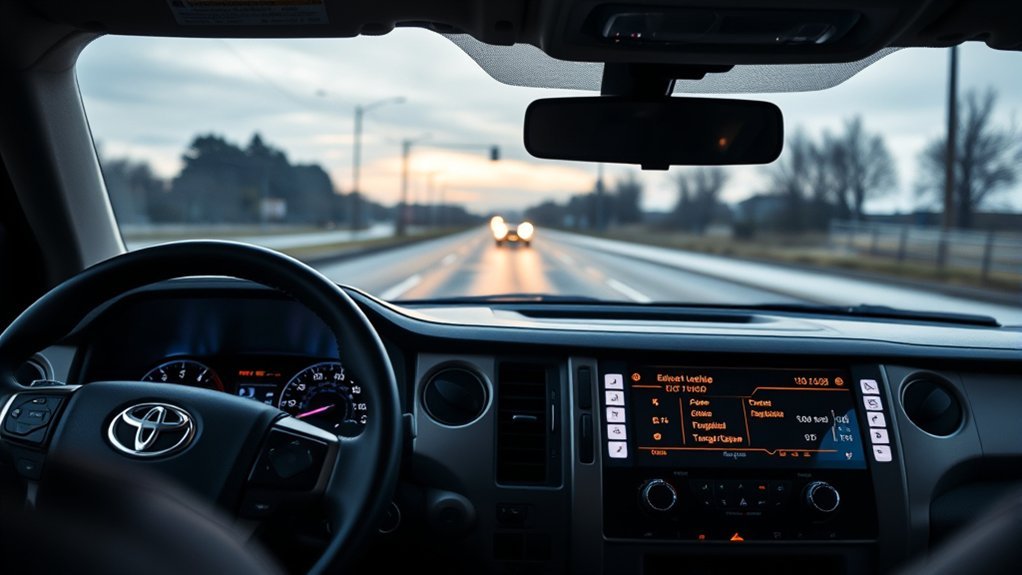
The best mode depends on traffic, road conditions, vehicle load, installed equipment, and the response you prefer. A drive mode cannot increase the truck’s certified payload or towing rating.
Understanding the Main Drive-Mode Options
- Choose Eco when you want gentler accelerator response during normal commuting or stop-and-go traffic.
- Choose Normal for balanced everyday driving when no special response is needed.
- Choose Sport when you want quicker accelerator and transmission response.
- Choose Tow/Haul when pulling a trailer or carrying substantial additional load within the truck’s ratings.
- Use Comfort, Sport S, Sport S+, or Custom only where those additional modes are provided by the truck’s grade and equipment.
- Use off-road controls separately when terrain and traction require systems such as Multi-Terrain Select or Crawl Control on an equipped truck.
Selecting a Mode Based on Driving Conditions
Normal mode is the most straightforward default. Eco can make accelerator inputs gentler in traffic, but it cannot overcome the fuel used by high speed, heavy cargo, or aggressive acceleration. Sport increases responsiveness but does not increase the truck’s certified towing, payload, or axle ratings.
When a trailer is connected, Tow/Haul is the mode specifically intended to adjust powertrain operation for towing rather than simply making the accelerator feel more responsive.
Pro Tip: Select the appropriate drive or towing mode before entering heavy traffic, a steep grade, or difficult terrain so you can keep your attention on steering, braking, surrounding vehicles, and road conditions.
What Fuel Economy Does the 2026 Tundra i-FORCE MAX Get?
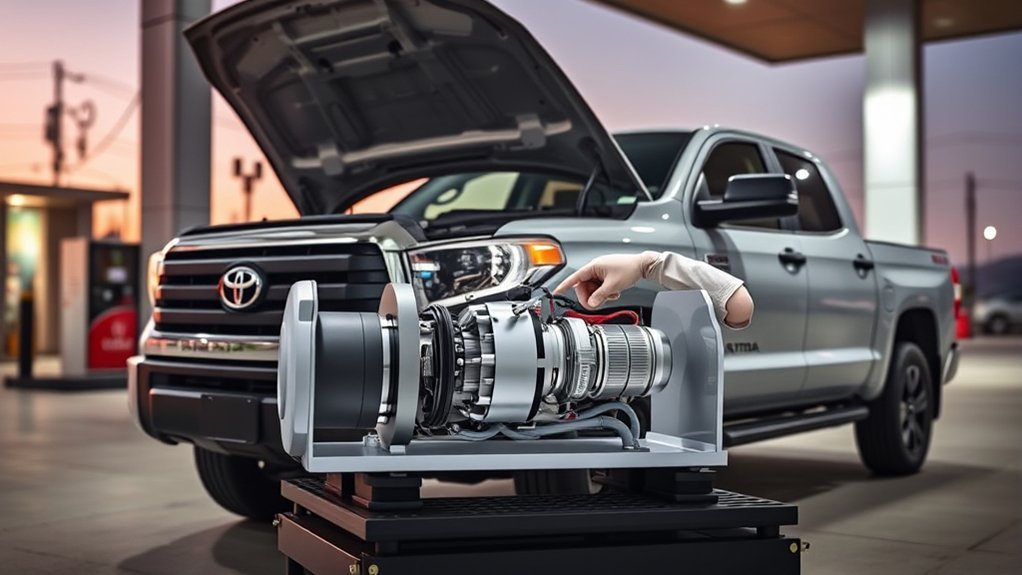
Toyota lists the 2026 Tundra i-FORCE MAX at up to 20 mpg city and 24 mpg highway. That maximum applies to specific configurations rather than every hybrid Tundra.
Toyota’s current 2026 U.S. listings show the following city/highway estimates for the main i-FORCE MAX grades:
| 2026 i-FORCE MAX Grade | EPA-Estimated City/Highway MPG Shown by Toyota |
|---|---|
| Limited i-FORCE MAX | 20/24 mpg |
| Platinum i-FORCE MAX | 19/22 mpg |
| 1794 Edition i-FORCE MAX | 19/22 mpg |
| TRD Pro | 18/20 mpg |
| Capstone | 19/22 mpg |
Use the fuel-economy label on the exact truck when comparing configurations because drivetrain, tires, grade, and equipment can change the official estimate.
Your real-world fuel economy can also change with:
- Trailer and cargo weight
- Frequent short trips and cold starts
- Cold or extremely hot weather
- Highway speed and headwinds
- Tire type and inflation pressure
- Rapid acceleration and heavy braking
- Extended idling or remote-start use
Regenerative braking can recover some energy that would otherwise become heat at the brakes, but it cannot recover all of the energy required to accelerate a full-size truck. Smooth acceleration and early, gradual braking can give the hybrid system more opportunity to manage energy efficiently.
Toyota Tundra i-FORCE vs. i-FORCE MAX
The gas-only i-FORCE and hybrid i-FORCE MAX share a twin-turbo V6 foundation, but the hybrid adds a motor generator, high-voltage battery, power electronics, and regenerative braking.
| Feature | i-FORCE | i-FORCE MAX |
|---|---|---|
| Powertrain | Twin-turbo V6 | Twin-turbo V6 plus electric motor |
| Maximum output | Up to 389 hp and 479 lb-ft | 437 net combined hp and 583 lb-ft |
| Transmission | 10-speed automatic | 10-speed automatic with motor generator between the engine and transmission |
| Hybrid hardware | None | Motor generator, 288V NiMH battery, power electronics, and regenerative braking |
| Main practical difference | Gas-only propulsion with fewer hybrid-specific components | More combined torque and electric assistance, with configuration-dependent efficiency differences |
The correct powertrain depends on how you use the truck. Compare the exact configuration rather than assuming the hybrid automatically tows more or uses substantially less fuel. Toyota’s 12,000-pound maximum for the overall Tundra lineup belongs to a qualifying gas configuration, while the i-FORCE MAX hybrid maximum is 11,450 pounds.
How Is Tundra i-FORCE MAX Different From Tacoma i-FORCE MAX?
The Tundra and Tacoma both use the i-FORCE MAX name, but they serve different truck classes and use different hybrid powertrains. The Tundra is a full-size pickup, while the Tacoma is a midsize pickup.
| Specification | Tundra i-FORCE MAX | Tacoma i-FORCE MAX |
|---|---|---|
| Engine | 3.4-liter twin-turbo V6 | 2.4-liter turbocharged four-cylinder |
| Transmission | 10-speed automatic | 8-speed automatic |
| System output | 437 hp and 583 lb-ft | 326 hp and 465 lb-ft |
| Hybrid towing maximum | Up to 11,450 pounds | Up to 6,000 pounds |
The current Tacoma range can reach up to 6,500 pounds with a qualifying non-hybrid configuration, while Toyota rates the Tacoma i-FORCE MAX at up to 6,000 pounds. The Tundra i-FORCE MAX therefore offers the higher hybrid tow ceiling, but the correct truck still depends on the exact vehicle’s tow rating, payload, tongue-weight capacity, dimensions, and intended use.
Reliability and Used-Tundra i-FORCE MAX Checks
The Tundra i-FORCE MAX entered the lineup for the 2022 model year, so its model-specific long-term field history is shorter than Toyota hybrid systems that have been sold for decades. Individual forum posts or owner complaints can identify issues worth investigating, but they cannot establish a failure rate without reliable population data.
When evaluating a used Tundra i-FORCE MAX:
- Review the truck’s maintenance and repair history.
- Check that no hybrid-system, powertrain, ABS, or charging warnings remain illuminated after startup.
- Listen for abnormal noises during engine start, low-speed transitions, acceleration, gear changes, and regenerative braking.
- Inspect the battery-cooling intake area and confirm that it has not been blocked by cargo, covers, debris, or pet hair.
- Check the exact VIN for open safety recalls through NHTSA’s recall lookup and Toyota’s recall system.
- Have a technician familiar with Toyota hybrid trucks inspect a used vehicle when its history or behavior raises questions.
For the hybrid-specific airflow and maintenance side of ownership, see the separate guide to the Toyota Tundra hybrid battery cooling system.
What Maintenance and Warranty Coverage Apply to i-FORCE MAX?
The i-FORCE MAX still requires normal engine and truck maintenance, including oil and filter service, fluid checks, tire care, brake inspections, and other model-year-specific scheduled maintenance. Regenerative braking can reduce friction-brake use in some conditions, but the conventional brake system still requires regular inspection.
Under Toyota’s current U.S. hybrid warranty information, the hybrid battery is covered for 10 years or 150,000 miles, whichever comes first. Toyota lists 8 years or 100,000 miles of limited coverage for applicable hybrid drive components. Terms, exclusions, in-service dates, emissions coverage, and regional rules can affect coverage, so the warranty guide for the specific truck remains controlling.
Warning: The hybrid system contains dangerous high voltage. Do not touch, disconnect, test, or repair orange high-voltage cables, connectors, the traction battery, inverter, or internal hybrid components unless you have the required training and equipment.
How to Test-Drive a Tundra i-FORCE MAX
Use a test drive to evaluate more than acceleration. Confirm the exact trim, drivetrain, bed length, payload label, fuel-economy rating, towing specifications, and towing equipment of the truck you are considering.
During the drive:
- Accelerate gently from a stop and notice how the motor and gasoline engine transition.
- Try Normal, Eco, and Sport modes on a safe road where those modes are available.
- Check whether the truck includes Tow/Haul controls, trailer cameras, an integrated brake controller, tow mirrors, or other equipment you need.
- Listen during low-speed operation, engine starts, acceleration, gear changes, and regenerative braking.
- Compare ride quality, braking feel, throttle response, and visibility with a gas-only Tundra if you are deciding between powertrains.
- Check the door-jamb payload label and the towing documentation for that exact configuration rather than relying on the lineup maximum.
A dealer can demonstrate the controls, but Toyota documentation, the vehicle labels, and the applicable owner’s manual remain the controlling sources for technical limits.
Frequently Asked Questions
How does the Toyota Tundra i-FORCE MAX hybrid work?
It combines a twin-turbo V6 with an electric motor generator positioned between the engine and 10-speed automatic transmission. The motor can move the truck during light low-speed operation, assist the engine during acceleration, start the engine, and recover energy during deceleration.
Do you need to plug in the Tundra i-FORCE MAX?
No. It is a non-plug-in parallel hybrid. The powertrain and regenerative braking supply electricity to the hybrid battery, and the truck has no external charging port.
What is the difference between Toyota i-FORCE and i-FORCE MAX?
The Tundra’s i-FORCE is a gas-only twin-turbo V6. The i-FORCE MAX adds an electric motor, high-voltage battery, power-control electronics, and regenerative braking. Toyota rates the main gas i-FORCE at up to 389 hp and 479 lb-ft and i-FORCE MAX at 437 net combined hp and 583 lb-ft.
At what speed does the Tundra hybrid switch to gasoline?
Toyota states that above 18 mph the gasoline engine remains in operation. Below that speed, the truck can use motor-only propulsion during light-load conditions, but accelerator demand, battery charge, temperature, road grade, climate-control demand, and other conditions can start the engine sooner.
Does the Tundra i-FORCE MAX use an e-CVT?
No. The Tundra i-FORCE MAX uses a conventional 10-speed automatic transmission. Its motor generator sits between the engine and transmission, allowing the truck to retain stepped gear ratios while adding electric assistance and regenerative braking.
How much can a Tundra i-FORCE MAX tow?
Toyota lists a maximum towing capacity of up to 11,450 pounds for a properly equipped Tundra i-FORCE MAX. The exact rating varies by trim, drivetrain, bed, options, and equipment. Payload, passengers, cargo, accessories, hitch hardware, and tongue weight must remain within their separate limits.
How long is the Toyota hybrid battery warranty?
Toyota’s current U.S. coverage supports the hybrid battery for 10 years or 150,000 miles, whichever comes first. Applicable hybrid drive components receive 8 years or 100,000 miles of limited coverage. The warranty guide for the specific truck contains the complete terms and exclusions.
Conclusion
The Toyota Tundra i-FORCE MAX uses hybrid technology primarily to strengthen truck performance rather than provide long electric-only range. A 48-hp motor generator supports the twin-turbo V6 through a conventional 10-speed automatic, while a 288V NiMH battery stores recovered energy. The complete system produces 437 net combined horsepower and 583 lb-ft of torque.
For the current 2026 U.S. model, Toyota lists up to 20/24 mpg and up to 11,450 pounds of hybrid towing, but both figures are configuration-dependent. Before choosing a truck or trailer, compare the exact vehicle’s fuel-economy label, payload sticker, towing chart, equipment, service history, and warranty guide rather than relying only on lineup maximums.
Sources
- Toyota USA Newsroom: 2026 Toyota Tundra — current powertrain layout, output, transmission, and hybrid-system operation.
- Toyota Hybrid Trucks — current 2026 Tundra hybrid fuel-economy and 11,450-pound hybrid towing maximum.
- Toyota i-FORCE MAX Powertrain Engineering Overview — 48-hp motor placement, output, battery-assisted operation, and regenerative functions.
- Toyota Tundra Technical Overview — 288V NiMH battery placement, low-speed electric operation, 18-mph gasoline-engine behavior, drive modes, and hybrid architecture.
- Toyota USA Newsroom: 2026 Toyota Tacoma — current Tacoma i-FORCE MAX engine, output, transmission, and lineup specifications.
- Toyota Electrified-Vehicle Warranty — hybrid battery and hybrid drive-component warranty coverage.
- Toyota USA Newsroom: 2027 Tundra Announcement — current 2027 model-year timing and Toyota’s statement that full details are planned for fall 2026.
- NHTSA Recall Lookup — VIN-based open safety-recall checking for used-vehicle evaluation.
