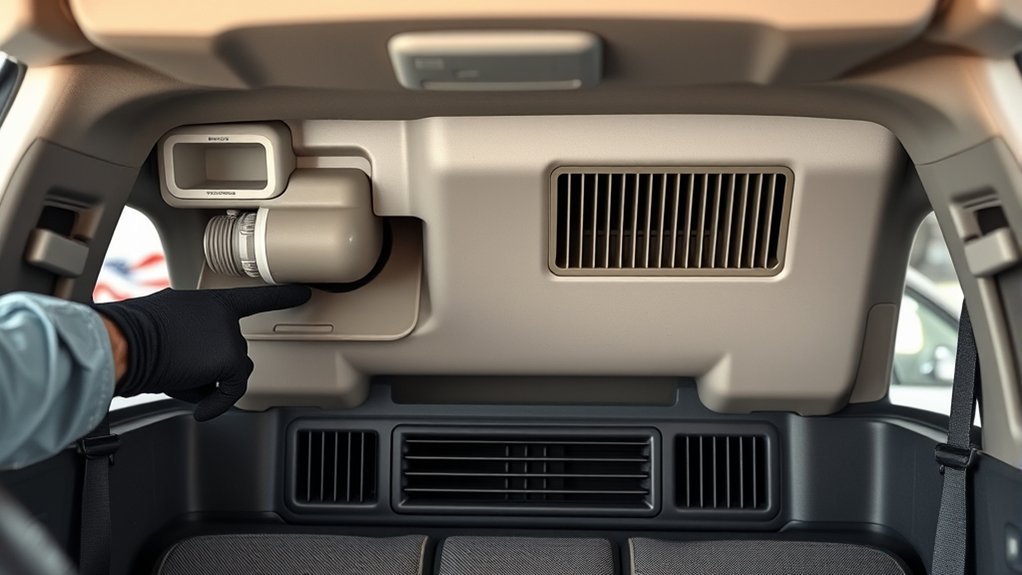
The Toyota Tundra i-FORCE MAX traction battery is air-cooled, not liquid-cooled. Toyota’s 2026 Tundra Hybrid owner guidance identifies battery-cooling air intake vents under the rear seat, while the engine, inverter, and intercooler use separate liquid-coolant circuits. Keeping those systems separate matters because battery-vent cleaning is not coolant service. This guide explains how the cooling system works, the 5,000-mile inspection and 20,000-mile cleaning schedule, and what to do when a traction-battery cooling warning appears.
Last updated: September 11, 2026
Quick Answer
The Toyota Tundra i-FORCE MAX traction battery is cooled with cabin air. On the 2026 Tundra Hybrid, Toyota describes air intake vents under the rear seat; air passes through the filtered cooling path to help control traction-battery temperature. The inverter, engine, and intercooler use separate liquid-coolant circuits, so cleaning the battery vents and servicing coolant are different maintenance jobs.
Key Takeaways
- The Tundra i-FORCE MAX traction battery uses filtered cabin air for cooling rather than liquid coolant.
- The inverter, engine, and intercooler use separate liquid-coolant circuits.
- Toyota’s 2026 U.S. schedule calls for visual inspection of the HEV battery cooling intake filter every 5,000 miles and cleaning every 20,000 miles.
- Keep the under-rear-seat air intake vents clear of cargo, covers, fabric, hair, dust, and other debris.
- If “Maintenance Required for Traction Battery Cooling Parts See Owner’s Manual” appears, Toyota says to clean the air intake vents immediately and obtain service if the problem remains.
At a Glance
| Time Required | Varies by model year, access procedure, and debris level; a visual vent check is brief, while fault diagnosis takes longer |
| Difficulty | Easy for owner-level inspection and manual-approved filter cleaning; internal cooling-system faults require professional diagnosis |
| Tools Needed | Flashlight, vacuum cleaner with a non-damaging nozzle, and the owner’s manual for your exact model year |
| Cost | No parts cost if only vacuum cleaning is needed; filter replacement and professional diagnosis costs vary |
How the Toyota Tundra Hybrid Battery Cooling System Works

The i-FORCE MAX system uses a sealed nickel-metal hydride traction battery beneath the rear-seat area. Toyota’s 2026 Tundra Hybrid product information lists the pack at 288 volts and 1.87 kilowatt-hours.
Like other batteries, the pack performs best when excessive heat is controlled. If battery temperature rises beyond the system’s preferred operating range, the hybrid controls can restrict battery input or output to protect the system.
The Tundra manages battery heat with cabin airflow through air intake vents and a filtered cooling path beneath the rear-seat area. Cooling-fan operation moves air through the system as needed. For broader powertrain context, see how the Toyota Tundra i-FORCE MAX hybrid system works.
The traction battery uses cabin-air cooling. The inverter, engine, and intercooler use separate liquid-coolant circuits.
This distinction matters because battery-filter maintenance and coolant maintenance are not interchangeable. Cleaning the battery air intake vents does not service an inverter coolant circuit, and replacing coolant does not correct a blocked battery air intake.
How Do Airflow and Filters Affect Tundra Hybrid Battery Cooling?
The battery cooling system depends on an unobstructed supply of cabin air. Toyota warns that blocked air intake vents can restrict traction-battery input and output and may contribute to a malfunction.
Importance of Airflow Design
The battery and its cooling hardware are positioned around the rear-seat area, which puts the air intake vents inside the passenger cabin. That makes cabin housekeeping part of battery-cooling maintenance: objects, covers, hair, dust, or other debris around the vents can interfere with airflow.
| Component | Function | What You Should Know |
|---|---|---|
| Air intake vents | Allow cabin air to enter the battery cooling path | Keep cargo, blankets, seat covers, and loose objects away from the vents. |
| Cooling filter | Captures dust, hair, sand, and other airborne debris | Inspect and clean it according to Toyota’s maintenance schedule and owner-manual procedure. |
| Battery cooling fan system | Moves cooling air through the traction-battery system | A fan-system fault requires diagnosis beyond routine filter cleaning. |
| Battery temperature and hybrid controls | Monitor operating conditions and manage battery protection | A persistent warning after cleaning can require professional troubleshooting. |
Note: Intake trim and filter access can differ by model year, cab configuration, and market. Use the battery-air-intake instructions in the owner’s manual for your exact Tundra rather than assuming every model uses the same access procedure.
Filter Maintenance Best Practices
Toyota’s 2026 U.S. Tundra Hybrid Warranty and Maintenance Guide calls for the HEV battery cooling intake filter to be visually checked for dirt or dust every 5,000 miles and cleaned if necessary. It also lists scheduled cleaning every 20,000 miles.
Those distances equal approximately 8,000 kilometres for inspection and 32,000 kilometres for scheduled cleaning. Canadian and other market schedules may be presented differently, so your vehicle’s maintenance guide takes priority.
Check the intake area more often when debris is likely to build up quickly, including dusty driving or frequent rear-seat use. Pet hair, lint, and loose cabin debris are also practical reasons to inspect the vents before the normal cleaning interval.
Pro Tip: Add the battery cooling vents to your normal cabin-cleaning routine. A quick visual check around the rear-seat area can reveal debris before the scheduled filter-cleaning interval.
Core Elements of the Tundra Hybrid Cooling System
The i-FORCE MAX powertrain contains both an air-cooled traction-battery system and liquid-cooled powertrain components. Knowing which system you are servicing prevents a common mistake: treating battery-filter cleaning as if it were coolant maintenance.
Air Intake, Filter, and Airflow Path
Cabin air enters through battery-cooling air intake vents under the rear-seat area. The filter catches dust, sand, hair, and other debris before that material can move farther into the cooling path.
The vents must remain unobstructed while the vehicle operates. Avoid covering them with seat covers, loose clothing, bags, blankets, cargo, or other material. Do not modify the vent opening or install material over it.
Battery Cooling Fan System and Temperature Monitoring
The battery cooling fan system supplies airflow according to hybrid-system demand. Fan sound from the rear-seat area can occur during operation, particularly when cooling demand is higher.
Fan noise by itself does not prove that a fault exists. However, unusual fan behavior combined with the traction-battery cooling warning, reduced hybrid output, or visibly clogged vents deserves attention.
Cleaning an obstructed filter or vent can correct an airflow restriction. It cannot repair damaged wiring, a failed cooling fan, a control-system problem, or another internal hybrid-system fault.
Separate Liquid Cooling for the Inverter and Intercooler
The inverter converts electrical energy between the battery and electric motor. It belongs to a liquid-cooling system rather than the traction battery’s cabin-air cooling path.
This liquid circuit should not be described as liquid cooling for the traction battery. The traction battery itself relies on the dedicated air-cooling system beneath the rear-seat area.
Coolant inspection and replacement belong to the truck’s scheduled maintenance program. For coolant type and service context, see this Toyota Tundra coolant guide. Low coolant, leakage, or a fault in a liquid circuit requires different diagnosis from a dirty battery-cooling filter.
Maintenance Tips for Optimal Cooling Efficiency
Warning: The hybrid system contains high voltage. Turn the vehicle off before inspecting or cleaning the air intake vents. Do not put a hand or leg into the vents, touch the service plug, touch orange high-voltage cables, or open high-voltage components. Internal battery, fan, sensor, wiring, and inverter repairs belong to a qualified hybrid technician.
What Toyota’s 2026 Owner Guidance Says
For the 2026 Tundra Hybrid, Toyota instructs owners to turn the power switch off, remove the air-intake-vent cover and filter as shown in the owner’s manual, and use a vacuum to remove dust and sand while moving the nozzle lightly along the filter folds. Toyota says not to use water or other liquids, not to use an air blow gun, and not to press the vacuum hard against the filter. If the traction-battery cooling-parts warning appears, clean the air intake vents immediately.
Verified Maintenance Intervals
| Maintenance Item | 2026 U.S. Schedule | System Served |
|---|---|---|
| HEV battery cooling intake filter inspection | Visually check every 5,000 miles; clean if necessary | Air-cooled traction battery |
| HEV battery cooling intake filter cleaning | Every 20,000 miles under the cited schedule | Air-cooled traction battery |
| Engine and intercooler coolant | Initially at 100,000 miles or 120 months; then every 50,000 miles or 60 months | Engine and associated intercooler circuit |
| Inverter and intercooler coolant | Initially at 150,000 miles or 180 months; then every 50,000 miles or 60 months | Inverter and power-electronics cooling circuit |
These figures come from Toyota’s 2026 U.S. maintenance schedule. Follow the schedule supplied with your truck because model-year, region, coolant, and operating-condition requirements can differ.
How to Inspect and Lightly Clean the Cooling Intake
- Park safely and turn the hybrid system off. Toyota’s 2026 cleaning procedure begins by turning the power switch off before working around the battery air intake vents.
- Clear the rear-seat area. Remove cargo, blankets, loose fabric, hair, or accessories that could cover or obstruct the battery-cooling vents.
- Inspect the air intake vents. Look for visible dust, sand, lint, hair, damage, or blockage without putting your hand, leg, or tools into the cooling opening.
- Follow the model-year procedure for the vent cover and filter. On the 2026 Tundra Hybrid, Toyota provides a specific procedure for removing the air-intake-vent cover and filter. Follow the illustrations in your exact owner’s manual rather than forcing trim pieces.
- Vacuum the filter gently. Toyota instructs owners to remove dust and sand with a vacuum and move the nozzle lightly along the filter folds. Do not press the vacuum hard against the filter.
- Do not use water or compressed-air equipment. Toyota’s 2026 manual says not to use water or other liquids and not to use an air blow gun. Do not break the filter folds.
- Reinstall the filter and cover correctly. Make sure every owner-serviceable piece returns to its original position and that the air intake vents remain unobstructed.
- Respond to the dashboard warning. If “Maintenance Required for Traction Battery Cooling Parts See Owner’s Manual” appears, Toyota says to clean the air intake vents immediately. If the warning remains or other hybrid-system problems appear, arrange professional diagnosis.
Note: For the 2026 Tundra Hybrid, do not use water or other liquids, an air blow gun, or aggressive vacuum pressure on the battery air intake vents/filter. If the filter is damaged, Toyota directs owners to have it replaced rather than continue using a damaged filter.
Common Hybrid Battery Cooling Issues and Their Solutions

A dirty filter or blocked vent is one possible cause of a traction-battery cooling warning, but it is not the only possible fault. Start with the owner-serviceable intake and filter checks, then escalate to professional diagnosis when the warning remains.
| Symptom | Possible Cause | Safe Response |
|---|---|---|
| Visible hair, lint, dust, or sand around an intake vent/filter | Restricted intake airflow or a loaded filter | Turn the vehicle off and perform only the cleaning procedure approved for your exact model year. |
| “Maintenance Required for Traction Battery Cooling Parts See Owner’s Manual” | The battery-cooling intake vents/filter may be dirty or obstructed | Toyota says to clean the air intake vents immediately. Do not ignore the message and continue driving indefinitely. |
| Cooling warning remains or returns after proper cleaning | A remaining airflow, duct, cooling-fan, electrical, sensor, or control-system problem may require diagnosis | Have the hybrid cooling system inspected by a qualified technician or Toyota dealer. |
| Filter or vent cover is torn, cracked, deformed, or otherwise damaged | Physical damage or incorrect prior service | Do not continue using a damaged filter. Have the correct filter or damaged component replaced. |
| Hybrid output is restricted or multiple warning messages appear | Protective control response or a broader hybrid-system fault | Follow the multi-information display instructions and arrange service when the condition is not resolved by the owner-approved vent/filter procedure. |
| Low coolant or visible coolant leakage | Engine, intercooler, or inverter liquid-cooling issue rather than a traction-battery airflow problem | Do not open a hot coolant reservoir. Have the affected liquid-cooling circuit inspected and repaired. |
Do not dismiss the traction-battery cooling warning because it appears during hot weather, traffic, or other demanding conditions. Toyota’s owner guidance tells you to clean the air intake vents immediately when the specified cooling-parts warning appears.
Likewise, a warning that disappears after a restart does not prove that the underlying issue has been corrected. Check the owner-serviceable vents and filter, and arrange diagnosis if the warning returns or hybrid performance remains abnormal.
What Makes Tundra Hybrid Battery Cooling Work Harder?
The cooling system is designed for normal vehicle operation, but airflow restriction and debris accumulation can make its job harder. Conditions around the rear-seat intake area deserve particular attention because that is where the battery-cooling system draws cabin air.
- Hot cabin conditions: The traction-battery cooling system uses cabin air, so keeping the cabin at a reasonable temperature can reduce the temperature of the air available to the cooling path.
- Frequent rear-seat use: More activity around the rear seating area can bring lint, hair, and other debris closer to the cooling vents.
- Pet transportation: Pet hair can collect around the intake area and should be removed before it builds up on the vent/filter.
- Dusty roads or jobsites: Dust and sand can accumulate on the cooling filter faster than under cleaner driving conditions.
- Rear-seat cargo: Bags, blankets, clothing, covers, or other objects can obstruct the battery air intake vents.
Cabin air conditioning can lower interior temperature during hot-weather driving, but it is not a repair for a clogged filter, blocked vent, or failed cooling-system component. Keep the intake path clear and respond to dashboard warnings rather than trying to compensate with colder HVAC settings.
Pro Tip: After carrying pets, dusty equipment, blankets, or loose cargo near the rear seat, give the battery air intake area a quick visual check before a long trip.
Related Guides
Frequently Asked Questions
How are Toyota Tundra hybrid batteries kept cool?
The i-FORCE MAX traction battery uses cabin-air cooling. Toyota’s 2026 Tundra Hybrid owner guidance identifies battery-cooling air intake vents under the rear seat. Air passes through the filtered cooling path so the system can manage traction-battery temperature.
Does the Tundra hybrid battery use liquid coolant?
No. The traction battery itself uses cabin-air cooling. The Tundra has separate liquid-coolant circuits for components such as the engine, inverter, and intercooler. Those circuits have their own inspection and replacement schedules.
How often should the hybrid battery cooling filter be checked?
Toyota’s 2026 U.S. maintenance schedule says to visually check the HEV battery cooling intake filter every 5,000 miles and clean it if necessary. It also specifies cleaning every 20,000 miles. Follow the maintenance guide supplied for your model year and market.
Where are the Tundra hybrid battery cooling air intake vents?
Toyota’s 2026 Tundra Hybrid owner guidance places the battery-cooling air intake vents under the rear seat. The exact covers, trim, and filter-access procedure can vary by model year, so use the illustrations in the owner’s manual for your truck.
How should I clean the Tundra hybrid battery cooling filter?
For the 2026 Tundra Hybrid, Toyota says to turn the power switch off, remove the vent cover and filter as shown in the owner’s manual, and remove dust and sand with a vacuum while moving the nozzle lightly along the filter folds. Do not press the vacuum hard against the filter.
Can I use compressed air or water to clean the hybrid battery filter?
Not on the 2026 Tundra Hybrid procedure. Toyota says not to use water or other liquids and not to use an air blow gun when cleaning the battery air intake vents/filter. Use the method specified in the owner’s manual for your exact model year.
What does “Maintenance Required for Traction Battery Cooling Parts See Owner’s Manual” mean?
It means the traction-battery cooling system needs attention, and dirty or obstructed air intake vents/filter may be involved. Toyota’s 2026 owner guidance says to clean the air intake vents immediately. If the warning remains or returns after proper owner-level cleaning, arrange professional diagnosis.
Can you keep driving with the traction-battery cooling warning?
Do not ignore the warning. Toyota says that if the specified traction-battery cooling-parts message appears, the air intake vents should be cleaned immediately. Toyota also warns that continuously driving with the message displayed may cause a malfunction or restrict traction-battery output. Follow any additional instructions shown on the multi-information display.
Is the Tundra hybrid battery covered by a separate warranty?
Toyota’s 2026 U.S. warranty information lists hybrid battery coverage for 10 years or 150,000 miles, whichever comes first. Warranty terms can differ by country, model year, and vehicle history, so confirm the warranty booklet supplied with your truck.
Conclusion
The Toyota Tundra hybrid battery cooling system is straightforward once you separate it from the truck’s liquid-coolant circuits. The traction battery depends on clear under-rear-seat air intake vents, a clean filter, and a functioning cooling system. The engine, inverter, and intercooler use liquid coolant with separate maintenance requirements.
Keep the battery air intake vents unobstructed, visually check the cooling filter at Toyota’s scheduled intervals, and use only the cleaning procedure specified for your model year. If the exact traction-battery cooling warning appears, clean the vents promptly. Leave persistent warnings, damaged cooling components, and high-voltage repairs to a qualified technician.
Sources
- Toyota 2026 Tundra Hybrid Warranty and Maintenance Guide — battery cooling filter schedule, coolant intervals, hybrid components, safety, and U.S. warranty coverage.
- Toyota Canada 2026 Tundra Hybrid Product Information — traction battery chemistry, voltage, capacity, and system specifications.
- Toyota Canada: Next-Generation Toyota Tundra Technical Release — i-FORCE MAX battery placement and hybrid-system design.
- Toyota Super Long Life Coolant — manufacturer information for Toyota liquid-cooling circuits.
- Toyota Owner’s Manuals and Warranty Information — model-year owner guidance for battery air intake maintenance, warnings, and safety procedures.
