
Quick Answer
If you are transporting a firearm by car in the United States, the legal rule depends on whether you are simply driving under a state’s vehicle-carry laws or relying on federal interstate “safe passage” protection. Under 18 U.S.C. § 926A, an eligible person traveling between places where the firearm may lawfully be possessed and carried must keep the firearm unloaded, and neither the firearm nor ammunition may be readily accessible from the passenger compartment. If the vehicle has no compartment separate from the driver, the firearm or ammunition must be in a locked container other than the glove compartment or console.
Last updated: September 16, 2026.
Important: This article provides general U.S. legal information, not legal advice. State and local firearm laws can impose different or additional requirements, including rules for loaded firearms, locked containers, permits, magazines, firearm types and restricted locations. Confirm the current law for every jurisdiction on your route before traveling.
- For federal interstate safe passage: keep the firearm unloaded and make both the firearm and ammunition inaccessible from the passenger compartment.
- For an SUV, hatchback or other vehicle without a separate trunk: use a locked container other than the glove box or console when relying on § 926A.
- Separate ammunition storage is a sensible conservative practice, but it is not stated as a universal federal requirement in § 926A. State law may be stricter.
- Do not assume your home state’s vehicle-carry rules follow you across state lines.
- Check special rules before transporting NFA firearms or other restricted firearms.
Understanding State Laws on Firearm Transportation
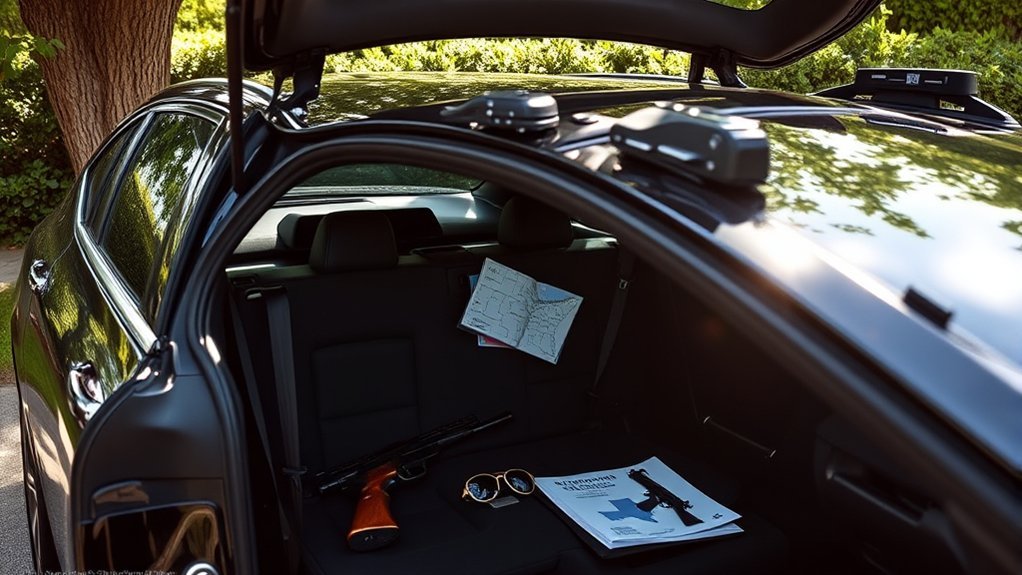
There is no single state-law rule for keeping a firearm in a car. States differ on whether a firearm may be loaded, whether a handgun must be locked, whether a permit is required, where the firearm may be stored and what locations are off-limits. Those rules can also differ between handguns and long guns.
For example, the California Department of Justice says a handgun transported under its general vehicle-transport provision must be unloaded and locked in the vehicle’s trunk or another locked container. By contrast, the Texas State Law Library explains that a qualified person may carry a handgun in a vehicle and that Texas does not impose a general rule requiring the handgun to be unloaded or stored in a particular location.
That contrast is why a nationwide statement such as “a gun in a car must always be unloaded and locked in the trunk” is inaccurate. Start with the law of the state where you are driving. For interstate travel, also determine whether you intend to rely on the federal safe-passage provision discussed below.
The ATF State Laws and Published Ordinances resource can help locate current state-law references. State attorney general, legislature and other official government pages should be used for the final check.
Federal Regulations Governing Firearm Transport
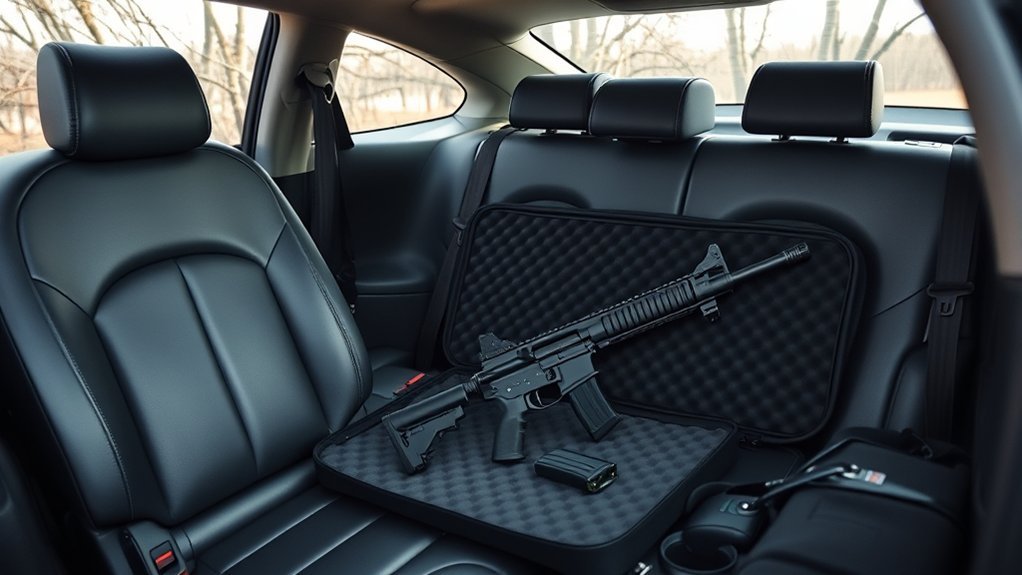
Federal law becomes especially important when a traveler is moving a firearm between states. The principal safe-passage provision is 18 U.S.C. § 926A, part of the Firearm Owners’ Protection Act framework commonly called FOPA.
What Does Federal Safe Passage Require?
Section 926A applies to a person who is not otherwise prohibited from transporting, shipping or receiving firearms and who is traveling for a lawful purpose from a place where the firearm may lawfully be possessed and carried to another place where it may lawfully be possessed and carried.
During qualifying vehicle transportation, the firearm must be unloaded. Neither the firearm nor ammunition being transported may be readily accessible or directly accessible from the passenger compartment.
If the vehicle has a compartment separate from the driver and passengers, such as a separate trunk, storing the unloaded firearm and ammunition there can satisfy the federal accessibility requirement. Section 926A does not separately state that ammunition must be in a different case from the firearm.
If the vehicle does not have a separate compartment—such as many SUVs, hatchbacks and station wagons—the statute says the firearm or ammunition must be contained in a locked container other than the glove compartment or console.
A hard-sided locked case, separate ammunition container, cable lock or vehicle-mounted lockbox may provide additional security and may help satisfy stricter state rules, but do not describe those precautions as universal federal requirements unless the applicable law actually requires them.
What Should You Know Before Crossing State Lines?
Before relying on FOPA, confirm three threshold points: you may legally possess and carry the firearm where the trip begins, you may legally possess and carry it at the destination, and you are not prohibited under federal law from transporting or possessing it. Then use the unloaded and inaccessible storage method required by § 926A.
Do not assume that a concealed-carry license automatically controls interstate transport. Permit reciprocity matters if you intend to carry a firearm under a state’s carry laws, while § 926A provides a separate federal framework for qualifying interstate transportation.
Travel interruptions also deserve caution. Courts have interpreted the federal safe-passage provision narrowly in some cases. In May 2026, ATF proposed a rule that would expressly address reasonable travel activities such as fuel stops, food, vehicle maintenance, emergencies and temporary lodging. As of September 16, 2026, ATF describes that action as a proposed rule, so travelers should not assume every detour or extended stop is automatically covered by a new final rule.
Safe Storage Practices While Traveling
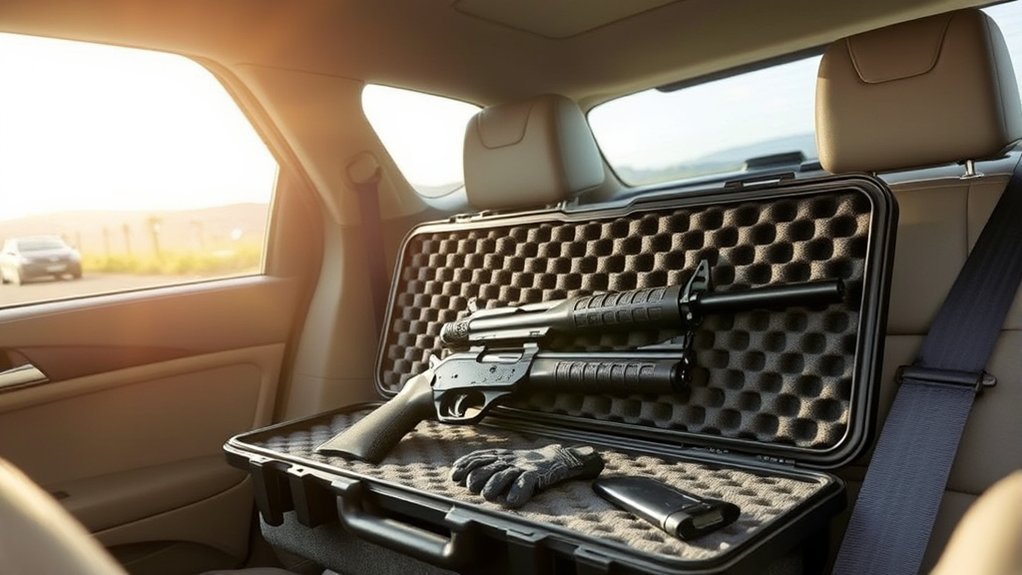
Legal compliance is the minimum standard; secure storage also reduces unauthorized access and theft. When practical, keep an unloaded firearm in a locked case or vehicle-mounted lockbox, keep it out of sight and do not leave it unattended in a vehicle longer than necessary.
Separating ammunition from the firearm can add another layer of security and may simplify compliance in jurisdictions with stricter rules, but check the actual law before describing separation as mandatory. If children or other unauthorized people will be in the vehicle, use storage that prevents them from accessing the firearm.
When you reach your destination, move the firearm to lawful secure storage rather than treating the vehicle as permanent storage. For broader secure-storage requirements, see the site’s firearm storage laws overview.
Carrying vs. Transporting: Key Differences
“Carrying” and “transporting” are useful everyday descriptions, but they are not universal legal categories with identical definitions in every state. A handgun inside a vehicle may qualify as carrying under one state’s law even when it is not physically on the driver’s body.
For practical trip planning, ask which legal framework applies. If you intend to keep a firearm loaded or accessible for lawful defensive carry, review that state’s vehicle-carry, licensing, reciprocity and prohibited-place rules. If you intend to move an unloaded firearm across state lines under federal safe-passage protection, follow § 926A’s separate requirements.
For more background on the terminology used in public carry laws, see concealed carry vs. open carry.
Traveling Across State Lines: What to Know
Plan an interstate firearm trip by checking the firearm itself, your legal status and every jurisdiction involved. Confirm that the firearm, magazine configuration and other regulated items are lawful at the origin and destination. Then check applicable state and local transportation rules for the route.
When relying on § 926A, unload the firearm before the protected transportation begins and keep it and the ammunition inaccessible as required by the statute. If your vehicle has no separate trunk, use locked container storage outside the glove compartment or console.
Also check whether your planned stops create separate possession issues. Hotels, private property, parking areas, government property and other destinations may have rules distinct from the highway itself. Because the legal effect of travel interruptions can be fact-specific, get qualified legal advice if your route involves an unusual or prolonged stop in a restrictive jurisdiction.
If your trip involves air travel rather than driving, different TSA and airline requirements apply. See the site’s separate guide to flying with firearms.
Do Different Firearms Have Different Transport Rules?
Yes, but the important distinctions come from the laws that apply to the particular firearm and jurisdiction rather than a universal handgun-versus-rifle table. Some states regulate handguns, long guns, assault-weapon classifications, magazines and other configurations differently. Federal law also imposes separate rules on certain firearms regulated under the National Firearms Act.
| Situation | General Rule to Check | Key Question |
|---|---|---|
| Ordinary in-state vehicle travel | State and local vehicle-carry / transport law | May it be loaded or accessible, and is a permit or locked container required? |
| Qualifying interstate safe passage | 18 U.S.C. § 926A plus applicable state and local law | Is it unloaded, inaccessible, and lawful at both endpoints? |
| NFA or otherwise restricted firearm | Additional federal, state and local rules may apply | Is prior authorization, registration or other documentation required? |
ATF currently states that interstate transportation of certain registered NFA firearms—including machine guns, short-barreled rifles, short-barreled shotguns and destructive devices—generally requires prior ATF authorization, subject to stated exceptions. ATF says that particular prior-approval requirement does not apply to silencers. Check the current ATF Firearms Questions and Answers before travel because federal procedures can change.
ATF also began a separate NFA interstate-transport rulemaking in May 2026. Until any change becomes effective, rely on the current rule and current ATF instructions rather than the proposed change.
What Should You Do During a Traffic Stop With a Firearm in the Vehicle?
If you are stopped, remain calm, keep your hands visible and do not reach toward the firearm, its case or another area containing it unless an officer gives you instructions to do so. Follow lawful instructions and avoid unnecessary handling of the firearm.
Whether you must proactively tell an officer that a firearm is present depends on the jurisdiction and sometimes on your permit status. Check the current duty-to-inform rule for each state on your route rather than assuming one nationwide disclosure rule applies.
Penalties for Non-Compliance and Legal Consequences
Firearm-transport violations can carry serious consequences, but the offense level and penalty depend on the specific federal, state or local law involved. Possible outcomes can include arrest, criminal charges, fines, firearm seizure or effects on firearm-license or carry privileges. It is therefore more accurate to check the statute that applies than to assume every transportation mistake produces the same misdemeanor, felony or prison term.
If you are uncertain whether a particular firearm, magazine, route, stop or storage method is lawful, consult the relevant official state authority or a qualified attorney before traveling.
Frequently Asked Questions
Does ammunition have to be stored separately from a firearm in a car?
Not as a universal requirement under federal 18 U.S.C. § 926A. When relying on federal interstate safe passage, neither the unloaded firearm nor ammunition may be readily accessible from the passenger compartment. State and local laws may impose additional storage or separation rules, so check every applicable jurisdiction.
Does FOPA require a locked firearm case?
Not in every vehicle configuration. Section 926A focuses on the unloaded firearm and ammunition being inaccessible from the passenger compartment. If the vehicle does not have a compartment separate from the driver, the statute requires the firearm or ammunition to be in a locked container other than the glove compartment or console.
Can you keep a loaded firearm in a car?
That depends primarily on the state and the person’s legal status. Some states permit qualified people to have a loaded handgun in a vehicle under specified conditions, while other states impose stricter requirements. A person relying on federal § 926A safe-passage protection must keep the firearm unloaded.
Can you drive through a state with stricter firearm laws?
Federal § 926A can protect qualifying interstate transportation when its conditions are satisfied, including lawful possession and carry at the origin and destination, an unloaded firearm and inaccessible firearm and ammunition. Because courts have interpreted the provision narrowly in some circumstances, verify the route and planned stops before relying on it.
Do NFA firearms require special permission for interstate travel?
Some do. ATF currently states that interstate movement of registered machine guns, short-barreled rifles, short-barreled shotguns and destructive devices generally requires prior authorization, subject to applicable exceptions. Confirm the current ATF rule before every interstate trip because agency procedures and regulations can change.
Conclusion
The safest way to plan firearm transportation by car is to identify the law that actually governs the trip. For ordinary vehicle carry, check the current state and local rules. For qualifying interstate transportation under 18 U.S.C. § 926A, keep the firearm unloaded, keep the firearm and ammunition inaccessible from the passenger compartment, and use a locked container outside the glove box or console when the vehicle has no separate compartment.
Before leaving, verify the firearm is legal at your starting point and destination, check every jurisdiction on the route, review any permit or restricted-firearm requirements, and confirm that the rules have not changed since this article was updated.
