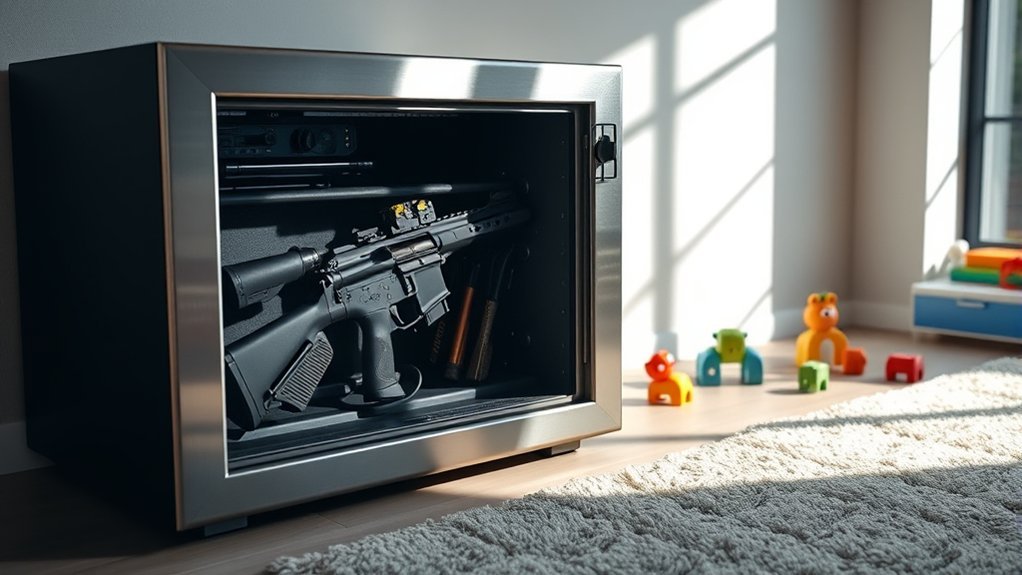
Last updated: June 30, 2026
Think of a firearm as a serious responsibility that must be secured every time it is not under your direct control. In homes with children, safe firearm storage is not optional. A curious child, visiting friend, or teen in crisis can reach an unsecured gun in seconds. The safest approach is simple: lock firearms, store ammunition separately, and make secure storage part of your daily routine.
Quick Answer
The best childproof firearm storage uses a locked gun safe, lockbox, or cable lock, with every firearm unloaded and ammunition stored separately. Choose a device that prevents child access, fits your firearm, meets your local laws, and can be opened only by authorized adults.
Key Takeaways
- Store every firearm unloaded, locked, and away from children, visitors, and unauthorized users.
- Use a gun safe, lockbox, trigger lock, cable lock, or secure vehicle lockbox based on your storage needs.
- Keep ammunition locked in a separate location whenever possible.
- Talk with other parents and caregivers about firearm storage before your child visits another home.
- Review your state and local safe-storage laws because requirements and penalties vary.
At a Glance
| Best First Step | Lock unloaded firearms in a secure safe or lockbox immediately after use. |
| Difficulty | Easy once you choose the right locking device and build a habit. |
| Tools Needed | Gun safe, lockbox, cable lock, trigger lock, separate ammunition storage, and spare keys stored away from children. |
| Main Safety Goal | Prevent access by children, teens, visitors, thieves, and anyone who should not handle the firearm. |
Importance of Secure Firearm Storage
Secure firearm storage matters because children often act faster than adults expect. A child may find a firearm while playing, a teenager may access one during a crisis, or a visiting friend may open a drawer that was assumed to be private. Safe storage reduces those risks by creating a physical barrier between the firearm and anyone who should not touch it.
Public-health and safety organizations have repeatedly warned that millions of children live in homes with at least one unlocked or loaded firearm. That does not mean every home faces the same risk, but it does mean every gun owner needs a clear storage plan. Responsible gun ownership starts with treating every firearm as if someone else could find it.
A strong safe-storage routine includes three basic habits: unload the firearm, lock it in a secure container or locking device, and store ammunition separately. These steps help prevent unintentional shootings, youth suicide, theft, and unauthorized handling.
Warning: Hiding a firearm on a shelf, in a closet, under a mattress, or inside a vehicle is not childproof storage. Children can find hidden items, and teens may know more about household storage spots than adults realize.
Overview of Be SMART Campaign
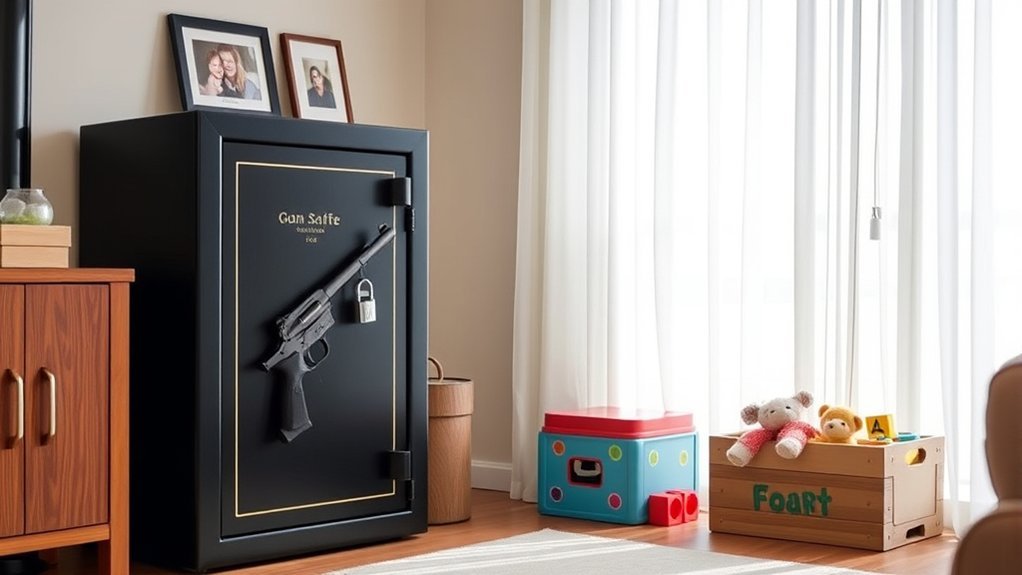
The Be SMART Campaign focuses on reducing child gun injuries and deaths by promoting responsible gun ownership and secure storage practices. It encourages parents, caregivers, and community members to talk openly about firearm safety before a tragedy occurs.
The message is practical: secure all guns in the home and vehicle, model responsible behavior, ask about unsecured guns in other homes, recognize the role of guns in suicide, and tell others to follow safe-storage practices. These conversations can feel uncomfortable, but they protect children during playdates, family visits, sleepovers, and shared custody arrangements.
Campaign Goals and Objectives
Recognizing the risk of child access to firearms, the Be SMART Campaign aims to make secure storage a normal part of responsible ownership. It gives families a simple framework for discussing gun safety without turning every conversation into a political debate.
| Goal | Objective |
|---|---|
| Promote Awareness | Educate families about secure gun storage |
| Encourage Involvement | Involve parents, schools, community leaders, and health professionals in safety discussions |
| Support Safe Practices | Share resources for locking, unloading, and separating ammunition |
| Reduce Risks | Decrease child access to firearms in homes, vehicles, and shared spaces |
Community Engagement Strategies
Engaging communities in firearm safety discussions helps make secure storage a shared expectation. The Be SMART campaign, launched in 2015, highlights practical storage habits that parents and caregivers can use right away. It also gives volunteers resources for local presentations, school conversations, and parent-to-parent outreach.
Community engagement works best when it stays specific. Instead of saying, “Be careful,” ask clear questions: Are all firearms locked? Is ammunition stored separately? Who has access to the keys or combination? Are guns secured in vehicles? These questions help families move from general concern to real prevention.
Note: Before your child visits another home, it is reasonable to ask whether firearms are present and how they are stored. You can frame it like any other safety question about pets, pools, allergies, or car seats.
Key Solutions for Safe Gun Storage
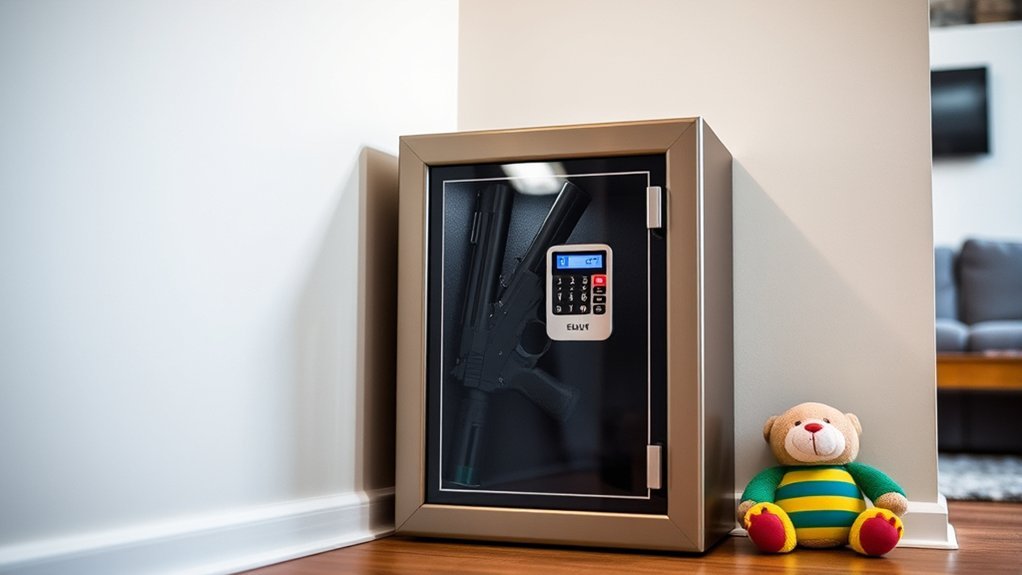
While you might feel confident in your ability to handle firearms safely, storage needs to account for everyone else in the home. Children, teens, relatives, guests, babysitters, and service workers should not be able to access a firearm without permission.
A gun safe is one of the strongest options for long-term storage because it limits access, protects firearms from theft, and can hold multiple items. Smaller lockboxes, cable locks, and trigger locks can also help when used correctly. The best solution depends on the firearm type, your home layout, your local laws, and whether the firearm is stored at home, in a vehicle, or during travel.
For the safest setup, keep firearms unloaded and locked away separately from ammunition. Store keys and combinations where children cannot find them. Avoid sharing access codes casually, and change the code if a child, teen, or unauthorized person may have learned it.
Pro Tip: Test your storage routine when you are not rushed. Confirm that the safe locks fully, the lockbox cannot be opened by pulling or prying with normal hand force, and spare keys are not stored nearby.
Types of Childproof Storage Options
When it comes to childproof firearm storage, you have several options to evaluate. The right choice should prevent child access, fit your firearm securely, and match how the firearm is stored. In many homes, the strongest plan combines more than one method.
Lockable Gun Safes
Lockable gun safes are essential tools for responsible firearm owners, especially in homes with children. A full-size safe can hold multiple firearms, documents, and accessories while reducing unauthorized access. It may also offer theft resistance, fire protection, or mounting options, depending on the model.
Common lock types include mechanical combination locks, keyed locks, electronic keypads, and biometric locks. Mechanical lock safes like the STOPBOX appeal to some owners because they do not depend on batteries or electronics. Biometric and keypad safes may offer faster opening, but they need regular testing, battery checks, and backup access planning.
No safe is truly childproof if the key is left nearby or the combination is easy to guess. Avoid birthdays, simple patterns, repeated numbers, or shared household codes. If a child has seen the code or knows where the key is stored, treat that storage method as compromised and update it immediately.
Portable Storage Solutions
Portable storage solutions help when a firearm must be secured outside a full-size home safe. Examples include compact lockboxes, vehicle safes, cable-secured cases, and TSA-compliant lock boxes for lawful travel. The STOPBOX Gun Safe Alternative is one example of a portable mechanical option designed for quick access without batteries.
Portable cases can accommodate various firearms, including handguns, making them useful for home, vehicle, or travel storage. Many feature mechanical designs for instant access without relying on electronics, which can reduce failure risk if batteries die. Still, portable does not mean loose. A small lockbox should be secured to a fixed object when possible, especially in a vehicle or shared space.
Best practices recommend that firearms be unloaded and locked in portable cases, with ammunition stored separately when practical. Because millions of children live in homes where firearms may not be fully secured, adopting effective storage options is a key part of responsible gun ownership.
Trigger Locks and Cable Locks
Trigger locks and cable locks are simple, low-cost devices that can add a layer of protection. A trigger lock blocks access to the trigger area, while a cable lock usually runs through the firearm’s action or barrel to prevent operation. Many firearm safety programs distribute cable locks at no cost or low cost.
These devices are helpful, but they are not a complete substitute for a locked safe or lockbox in a home with children. A locked firearm that remains visible or easy to carry away can still create risk. Use cable locks and trigger locks as part of a broader storage plan, not as the only barrier.
Ammunition Storage
Safe storage also includes ammunition. Store ammunition in a separate locked container when possible. This adds time, distance, and another barrier between a child and a working firearm.
Keep ammunition dry, clearly labeled, and away from heat sources. Do not store loose ammunition in drawers, bags, nightstands, or vehicle compartments where children may find it. If your safe has separate compartments, use them to keep firearms and ammunition apart.
Vehicle Storage
Vehicles require special attention because they are common targets for theft and are often accessible to passengers, valet workers, mechanics, or children. Do not leave a firearm loose in a glove box, center console, backpack, or under a seat. Those spots are easy to search and do not provide secure storage.
If lawful in your area, use a dedicated vehicle lockbox that can be secured to the vehicle frame or another fixed point. Remove the firearm from the vehicle and place it in a more secure home safe whenever possible. Always check your state and local laws before transporting or storing a firearm in a vehicle.
High-Stress Fast Access Locks
In high-stress situations, some adults want a storage method that balances safety with authorized access. High-stress fast access (HSFA) locks are designed to reduce fumbling while still preventing access by children and unauthorized users. The key is to choose a device that you can operate safely, consistently, and legally without weakening childproof storage.
Reliable mechanical designs may appeal to owners who want to avoid battery or electronic failure. Electronic keypad and biometric options can also work when they are maintained and tested. Whatever system you choose, practice opening it only in safe conditions, keep the firearm pointed in a safe direction when handling it, and never trade child safety for convenience.
Fast access should never mean open access. A firearm left loaded in a drawer or nightstand is not a secure-storage solution. If children or teens live in or visit your home, the storage device must remain locked when the firearm is not under direct adult control.
Community Engagement and Resources
How can communities effectively promote safe gun storage practices? Start with clear, practical education. Parents, schools, pediatricians, firearm instructors, local organizations, and law enforcement can all help normalize secure storage conversations.
Initiatives like Be SMART empower volunteers to deliver educational presentations, helping parents understand the risks associated with unsecured firearms. These presentations can cover lock options, safe storage habits, suicide prevention, child access prevention, and how to ask other families about guns in the home.
Communities can also support safety by distributing cable locks, sharing safe-storage reminders during hunting season, posting resources at ranges, and encouraging gun owners to review storage after moving, buying a new firearm, or welcoming a child into the home.
Legal Considerations for Safe Storage
While navigating firearm ownership, understanding the legal considerations for safe storage is vital. Many states have enacted Child Access Prevention (CAP) laws, which may hold adults accountable if a child gains access to an unsecured firearm. Some states also have separate safe-storage laws, vehicle-storage rules, or requirements tied to loaded firearms.
Legal duties vary by state and city. In some places, firearms must be locked when not in the owner’s immediate control. In others, penalties may apply only if a minor actually gains access. Because the rules can change, review official state and local guidance or consult a qualified legal professional if you are unsure.
Safe storage is not only about avoiding penalties. It helps reduce the risk of unintentional shootings, youth suicide, theft, and misuse. A locked firearm is much less likely to be accessed by a child, a distressed teen, or a visitor who should not handle it.
Warning: This article provides general safety information, not legal advice. Safe-storage laws differ by location, so check your state and local requirements before choosing a storage method.
Evidence Supporting Safe Storage Practices
Secure firearm storage practices are essential not just for compliance with laws, but also for safeguarding the lives of children and teens. Research and public-health guidance consistently connect unsecured firearms with higher risks of unintentional injury, suicide, school violence, and theft.
Secure firearm storage protects children and teens by adding time, distance, and physical barriers between a young person and a firearm.
- Adolescent firearm suicides often involve guns obtained from the young person’s home or a family member’s home.
- Many school-age shooters who use a firearm obtain it from their own home, a relative’s home, or another familiar place.
- Child Access Prevention laws are designed to reduce the chance that minors can access unsecured firearms.
- Locking firearms can reduce opportunities for unintentional shootings, impulsive self-harm, and unauthorized handling.
- Firearm theft remains a serious concern, especially when guns are left unsecured in vehicles or easy-to-access household locations.
The most useful takeaway is not one single statistic. It is the pattern: unlocked and loaded firearms create preventable risk. Locked, unloaded, and separated storage gives families more control over that risk.
Engaging in Responsible Gun Ownership
Responsible gun ownership is not just about possessing firearms. It involves a commitment to safety that protects your family and community. If children live in or visit your home, secure storage should be treated like locking up medication, pool access, power tools, or hazardous chemicals.
The Be SMART campaign highlights the importance of consistently using locking mechanisms to prevent unauthorized access. That habit matters most during ordinary moments: after returning from the range, after cleaning a firearm, before guests arrive, before a child’s sleepover, or when a family member is struggling emotionally.
You can also make responsible ownership more practical by creating a written household plan. Decide where firearms are stored, where ammunition is stored, who has access, how often locks are checked, and what happens when children visit. Review the plan with every authorized adult in the home.
Safe Storage Checklist for Homes With Children
- Unload every firearm before storing it.
- Lock each firearm in a safe, lockbox, or secure locking device.
- Store ammunition in a separate locked location when possible.
- Keep keys, combinations, and backup access tools away from children.
- Secure firearms in vehicles with a dedicated lockbox, not a glove box or console.
- Ask other households about firearm storage before playdates and sleepovers.
- Review local laws and update your storage plan when laws or household needs change.
- Recheck locks regularly to confirm they still work properly.
Conclusion
In the larger picture of responsible gun ownership, safe firearm storage is one of the most important habits you can build. By choosing childproof options like secure safes, lockboxes, cable locks, and reliable fast-access locks, you create a strong barrier against preventable tragedy.
Your goal is not just to own a lock. Your goal is to make unauthorized access unlikely every day. Lock firearms, unload them, separate ammunition, control keys and combinations, and talk openly with other caregivers. Those simple steps can turn your home into a safer place for children, teens, visitors, and the wider community.
Sources
- Be SMART — secure firearm storage campaign and parent conversation framework.
- CDC WISQARS — injury and fatality data used by public-health researchers.
- RAND Corporation Gun Policy in America — evidence review on child access prevention laws.
- Project ChildSafe — firearm safety education and storage resources.
- Bureau of Alcohol, Tobacco, Firearms and Explosives — firearm safety and security guidance.