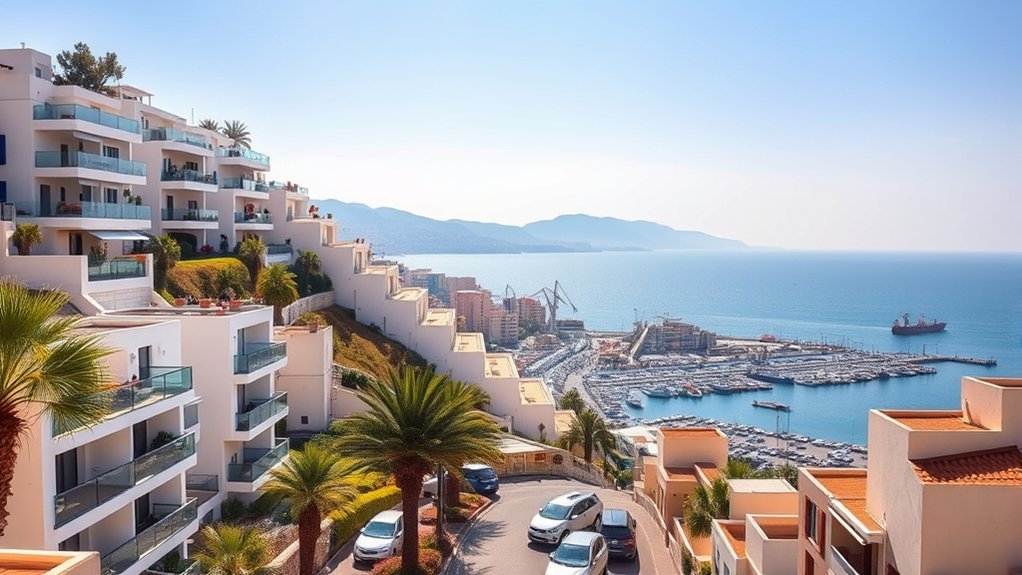
Ceuta presents a unique property investment opportunity, driven by its tax-free status and strategic Mediterranean location. The diverse cultural blend enriches the living experience while mild climates enhance property appeal. Key neighborhoods showcase beautiful coastal living, vibrant city centers, and emerging residential areas for first-time buyers. Legal requirements, property costs, and local amenities are essential to understand for a successful purchase. Exploring these aspects will offer deeper insights into the rewarding potential of investing in Ceuta.
Market Overview: Key Factors Influencing Property Prices in Ceuta

The dynamic real estate market in Ceuta is shaped by a confluence of unique factors that greatly influence property prices. Its tax-free status serves as a magnet for investors, spurring increased commercial activity and driving demand for real estate.
Ceuta’s tax-free status attracts investors, boosting commercial activity and driving real estate demand in this vibrant market.
Situated strategically on the Mediterranean Sea, this Spanish city benefits from proximity to Morocco, enhancing its allure for both residents and businesses. The mild climate, with temperatures ranging from 17°C to 28°C, further attracts those seeking a pleasant living environment, contributing positively to property values.
Additionally, the vibrant blend of Spanish and Moroccan cultures creates a rich tapestry of life, appealing to diverse demographics. Accessibility via daily ferries to mainland Spain and Tangier guarantees a steady influx of visitors, bolstering both property demand and investment potential.
Each of these elements plays an essential role in shaping the evolving landscape of property prices in Ceuta.
Evaluating Neighborhoods: Best Areas to Buy in Ceuta
When considering property investments in Ceuta, buyers should explore the appeal of coastal living options, where scenic beaches enhance lifestyle and property value.
The historic city center offers a vibrant atmosphere, rich with cultural heritage and essential amenities, making it an attractive choice for residents.
Additionally, emerging residential areas provide affordable opportunities for first-time buyers seeking to capitalize on the city’s growth potential.
Coastal Living Options
How can one choose the ideal coastal living option in Ceuta? This vibrant enclave offers a unique blend of culture and natural beauty, appealing to those seeking a liberating lifestyle.
Key neighborhoods to evaluate include:
- Plaza de Africa: A cultural hub with rich history and easy access to dining and shopping.
- La Ribera: Known for its scenic promenade and proximity to stunning beaches, perfect for outdoor enthusiasts.
- Mediterranean Maritime Park: A family-friendly area with green spaces and recreational facilities.
With average temperatures between 17°C and 28°C year-round, Ceuta’s coastal living options rival those of other Spanish cities.
Additionally, the duty-free status enhances investment potential, making it an attractive choice for buyers.
2. Historic City Center
Nestled between history and modernity, the Historic City Center of Ceuta captivates with its unique blend of Spanish and Moroccan architectural styles. The area showcases eclectic architecture, highlighted by landmarks such as the Royal Walls and Casa de los Dragones, reflecting its rich cultural heritage.
Its pedestrian-friendly layout allows residents easy access to local shops, restaurants, and historical sites, fostering a vibrant community atmosphere. Morning markets burst with fresh produce and local goods, essential for daily life.
Property prices in the historic city center vary, influenced by proximity to tourist attractions and the waterfront, appealing to both residents and investors. With a mild climate, outdoor cafés and promenades offer inviting social spaces, enhancing the allure of this dynamic neighborhood.
3. Emerging Residential Areas
As new opportunities arise, emerging residential areas in Ceuta present a compelling choice for buyers seeking both coastal charm and modern conveniences.
These neighborhoods offer a vibrant lifestyle enriched by their proximity to stunning beaches and essential amenities.
- La Ribera and El Chorrillo Beaches: Attracting those who enjoy coastal living and recreational activities.
- Plaza Africa and Calle Camoens: A blend of modern apartments and traditional architecture, appealing to locals and expatriates alike.
- Monte Hacho: Nestled in scenic hills, ideal for families and retirees seeking tranquility.
Recent developments, including the Mediterranean Maritime Park, further enhance the allure of these emerging residential areas, making them prime locations for investment and a fulfilling lifestyle.
What Legal Stuff Should You Know Before Buying?
Before purchasing property in Ceuta, potential buyers must navigate a landscape of legal requirements and tax implications.
Understanding local ownership regulations and the associated transfer taxes, which can reach up to 10% of the property’s price, is essential.
Additionally, thorough verification of legal documentation will help guarantee a smooth transaction and protect against future disputes.
Legal Requirements for Ownership
Maneuvering the legal landscape of property ownership in Ceuta requires careful consideration, especially for foreign buyers. Understanding the fundamental legal requirements is crucial for a smooth transaction.
Key points to remember include:
- Obtain a NIE (Número de Identificación de Extranjero), essential for all legal and financial activities in Spain.
- Conduct a property registry search to verify the property is free from debts or encumbrances.
- Be prepared for additional costs, such as notary fees and property taxes, which can total 10-15% of the purchase price.
Engaging a local lawyer can facilitate these processes, guaranteeing compliance with local laws and clarity in purchase agreements, which should be in Spanish for legal validation.
Tax Implications and Regulations
Understanding the tax implications and regulations surrounding property ownership in Ceuta is essential for prospective buyers, especially given the unique tax environment of this autonomous city. Although Ceuta operates under a duty-free regime, Spanish tax laws still apply, including income tax, property tax, and capital gains tax. Local taxes on goods range from 5-10%, presenting a favorable alternative to mainland Spain’s VAT rates.
| Tax Type | Rate |
|---|---|
| Property Tax | Varies |
| Income Tax | Progressive |
| Capital Gains Tax | 19%-23% |
| Local Goods Tax | 5%-10% |
| VAT Equivalent | 21% (Mainland) |
Investors must navigate these regulations carefully to maximize their benefits in this vibrant locale.
Understanding Property Costs: Taxes and Fees in Ceuta
Maneuvering the property market in Ceuta requires a keen awareness of the associated taxes and fees that can greatly impact the overall investment.
Understanding these costs is essential for prospective buyers seeking liberation in their choices. Here are the key financial considerations:
- Property Transfer Tax: Ranges from 6% to 10% based on the property’s value, a significant upfront cost.
- Legal Fees: Generally between 1% to 2% of the purchase price, essential for contract reviews and negotiations.
- Notary Fees: Typically between 0.5% and 1% of the purchase price, alongside registration costs.
Additionally, annual property taxes (IBI) can vary between 0.4% and 1.1% of the cadastral value, along with potential community fees for shared properties.
Buyers must budget wisely to embrace this investment journey fully.
How to Navigate the Border When Buying Property
Maneuvering the border when buying property in Ceuta requires careful preparation and awareness of specific regulations. Buyers must guarantee they possess a valid passport and a white landing card, as Moroccan authorities may demand these documents for re-entry into Morocco.
Understanding local real estate laws is essential, as they can markedly differ from those in mainland Spain, helping to prevent legal complications.
Ceuta’s tax-free status makes it an attractive investment, potentially influencing property prices and resale opportunities. Engaging with local real estate agents experienced in cross-border transactions is advisable to deftly navigate the nuances of property ownership in this unique enclave.
Additionally, buyers should anticipate possible delays during peak tourist seasons at the border, which can hinder property visits and transaction finalizations.
Local Amenities and Lifestyle: What to Expect
What makes life in Ceuta so appealing? The blend of vibrant local amenities and a rich lifestyle creates an inviting atmosphere for residents and visitors alike. Key features include:
- Tax-Free Shopping: With local taxes between 5-10%, Ceuta is a shopper’s paradise, attracting foot traffic enthusiastic for bargains.
- Central Market: This bustling hub offers fresh produce and local goods, best experienced in the morning when the energy is palpable.
- Diverse Dining: From seafood specialties at El Pescador to cozy cafés, culinary delights abound, often accompanied by stunning views.
Public transportation remains affordable, with bus fares around €0.80 and taxi rides from the border for about €8.
Accommodations range from budget-friendly hostels to upscale hotels, ensuring easy access to all local attractions.
This dynamic blend of amenities and lifestyle options makes Ceuta an enticing place to call home, where liberation in daily life thrives.
Steps to Finalize Your Purchase in Ceuta
Finalizing a purchase in Ceuta involves several essential steps that can streamline the process and prevent potential pitfalls.
First, travelers must verify they possess a valid passport and a white landing card, critical for re-entering Morocco. Familiarity with the Euro, the local currency, is important, as prices in Ceuta mirror those in mainland Spain, necessitating careful budget planning.
Ceuta’s duty-free status allows for VAT-free purchases, but shoppers should remain vigilant about currency exchange rates near the border.
Local transportation, including taxis and buses, can efficiently connect visitors from the ferry port to the city center, as direct services are lacking.
Finally, preparing for possible long waits at the border during peak times is necessary. Efficient shopping can help minimize the burden of heavy items while guaranteeing a liberated experience in this unique enclave.
Frequently Asked Questions
Is Ceuta Worth Visiting for Tourists?
Ceuta is certainly worth visiting for tourists, offering rich cultural experiences and vibrant local cuisine. Its unique blend of Spanish and Moroccan influences, alongside stunning beaches and historical sites, captivates those seeking an enriching getaway.
Is Ceuta Safe for Tourists?
Ceuta is generally safe for tourists, with a low crime rate and a welcoming atmosphere. Observing local customs and following travel tips, such as remaining vigilant in crowded areas, enhances the visitor experience considerably.
Which Is Nicer, Ceuta or Melilla?
Ceuta’s enchanting culture and charming cuisine create a vibrant atmosphere, making it generally nicer for tourists. In contrast, Melilla offers a more serene, soulful experience, appealing to those seeking authenticity over commercial allure.
What Is Ceuta Famous For?
Ceuta is famous for its rich history, showcased in stunning sites like the Royal Walls, and its vibrant cuisine, blending Spanish and Moroccan flavors, offering a unique culinary experience that reflects its cultural diversity.
Conclusion
In summary, maneuvering the intricate tapestry of property buying in Ceuta requires careful consideration and informed choices. From understanding the market’s pulse to exploring vibrant neighborhoods, each thread weaves a narrative of opportunity. Legal nuances and financial obligations form the foundation of this journey, ensuring a smooth changeover. As one steps across the border into homeownership, the promise of a rich lifestyle awaits, inviting new beginnings in this enchanting enclave.
