
Waterproofing drones can reduce moisture damage, but it does not turn most consumer drones into submersible drones. The safest approach is to understand the difference between splash resistance, rain resistance, and true waterproofing before you fly near water. Conformal coatings, grease, seals, and careful testing can help, but each method has limits.
Quick Answer
You can improve a drone’s water resistance with silicone conformal coating, waterproof grease, careful battery sealing, and routine inspections. However, these steps do not guarantee full waterproofing. Most drones still should not be submerged, flown in heavy rain, or used around saltwater without a design made for wet environments.
Key Takeaways
- Water-resistant and waterproof do not mean the same thing, especially when drones face rain, spray, or submersion.
- Silicone conformal coating can protect circuit boards, but tiny gaps can still let water reach electronics.
- Waterproof grease, VHB tape, and sealed seams help protect vulnerable areas, but they need regular inspection.
- Dunking tests can reveal weak spots, but they also risk permanent damage if your drone is not built for water exposure.
- After wet flights, clean and dry the drone carefully to reduce corrosion, electrical shorts, and bearing damage.
At a Glance
| Main Goal | Reduce water intrusion and moisture damage in light wet conditions |
| Difficulty | Moderate to advanced, depending on drone design and access to electronics |
| Common Materials | Silicone conformal coating, waterproof grease, VHB tape, sealant, distilled water, fan, and inspection light |
| Best For | Drone owners who want extra protection from mist, light rain, splashes, and damp landing areas |
Understanding Waterproofing Myths

What do you really know about waterproofing drones? Many drone owners assume that any drone called water-resistant can handle complete submersion protection. That is a risky misunderstanding. In real use, water protection depends on the drone’s design, seals, vents, motors, battery compartment, and electronics layout.
Many assume all waterproof drones offer full submersion protection, but true waterproofing is designed for brief underwater use.
A waterproof-rated drone is usually engineered for specific conditions. Some may handle rain, spray, or short contact with water, while others may only resist light moisture. A consumer drone without clear water-resistance guidance should be treated as vulnerable around rain, puddles, waves, and wet grass.
A common misconception is that applying Silicone Conformal Coating guarantees total waterproofing. However, even a careful coating can leave tiny gaps around connectors, solder joints, buttons, ports, and moving parts. Those weak points can still cause water damage, corrosion, or electrical shorts.
You might also believe that drying a water-damaged drone with rice is effective. That method is unreliable because rice does not clean mineral deposits, salts, or debris from electronics. A safer recovery approach is to disconnect power, remove the battery, rinse affected areas with distilled water when appropriate, and use moving air for thorough drying.
Additionally, not all motors and electronic components resist water equally. Components like ESCs, exposed connectors, gimbal motors, camera modules, and battery terminals often need extra waterproofing measures. Even if one part survives moisture, another part may fail later because corrosion can develop slowly.
Warning: Never assume a modified drone is safe to fly over people, roads, deep water, or property. Water exposure can cause delayed electronic failure, sudden motor loss, or a battery problem during flight.
To maintain longevity, always exercise caution and handle water exposure with care. Understanding these myths is essential for protecting your drone investment and ensuring better performance in wet conditions.
Effective Waterproofing Solutions

While many drone enthusiasts seek effective waterproofing solutions, understanding the best methods to protect your equipment is vital for better performance in wet conditions. No single method works everywhere, so the strongest protection usually combines several careful steps.
One of the most reliable methods is silicone conformal coating for circuit boards. This coating helps insulate electronics from moisture and chemical exposure. It can improve longevity when applied correctly, but it must not cover heat-sensitive areas, connectors that need clean contact, sensors, buttons, or moving parts unless the drone design allows it.
After application, using UV light for inspection can help confirm coverage when the coating includes a UV tracer. This step makes missed areas easier to spot and reduces the chance of electrical shorts. You should also inspect corners, solder joints, ESC edges, and board cutouts, since moisture often enters through small openings.
Waterproof grease can help protect bearings, shafts, and some metal contact points from rust. However, grease does not protect circuit boards by itself. It can also attract dirt if applied too heavily. Use it sparingly and keep it away from sensors, lenses, ventilation paths, and areas that require clean electrical contact.
VHB tape can seal battery seams, side gaps, and small housing openings. It works best on clean, dry surfaces. Before using it, remove dust and oils so the tape bonds properly. Poor surface preparation can create a false sense of security because water may still move under the edge.
Testing waterproofing methods is essential, but it comes with risk. Dunking tests and flying through water fountains reveal performance differences, yet they can also damage motors, batteries, cameras, and ESCs. Community insights suggest that no single method guarantees total protection, but combining approaches like conformal coating and careful sealing can strengthen your drone’s resilience in damp environments.
| Waterproofing Method | Effectiveness |
|---|---|
| Silicone Conformal Coating | High for exposed circuit boards when applied correctly |
| Waterproof Grease | Moderate for bearings, shafts, and selected metal contact areas |
| VHB Tape | Moderate to High for clean seams and battery gaps |
| Testing (Dunking/Fountains) | Essential for validation, but risky for non-waterproof drones |
Pro Tip: Test protection in stages. Start with visual inspection, then light mist exposure, then controlled wet-condition checks only if the drone design and your risk tolerance allow it.
What Parts Need the Most Protection?
Drone waterproofing works best when you focus on the areas most likely to fail. Water can reach electronics through seams, vents, cable openings, motor gaps, and battery contacts. Even a small opening can create a path for moisture.
The flight controller is one of the most important parts to protect because it manages stabilization and response. A short on this board can cause erratic movement or a full crash. A thin, even conformal coating may help, but you must avoid covering pressure sensors, connectors, or ports that need exposure to air.
ESC modules also need attention because they regulate motor power. Water on an ESC can cause a motor to stutter, stop, or spin unpredictably. If your ESCs sit near arm vents or under exposed frame sections, inspect them closely before and after wet flights.
Motors and bearings can survive light moisture better than many circuit boards, but they are still vulnerable to rust, grit, and mineral buildup. Waterproof grease can reduce bearing problems, but it should not be packed into the motor in a way that traps heat or dirt.
Battery terminals are especially important. Moisture around the battery can cause poor contact, voltage drops, corrosion, or safety issues. Keep batteries dry, inspect contacts often, and never charge a battery that may still contain moisture.
Cameras, gimbals, and sensors can be harder to protect because they need open movement, clear optics, and accurate readings. Adding tape, grease, or coating around these areas can interfere with performance. Treat them as sensitive parts and avoid direct spray whenever possible.
Limitations of Common Methods

Although many drone operators rely on common waterproofing methods, these techniques often fall short of providing complete protection. For instance, electrical tape may seem like a quick fix, but it can loosen, wrinkle, or permit moisture ingress over time.
Silicone conformal coating, despite its cleaner application, is not foolproof against every water exposure scenario, particularly during submersion. It protects only the surfaces it covers. Water can still enter through plugs, uncoated connector pins, battery contacts, motor openings, and sensor vents.
Corrosion X may allow soldering through its layer in some situations, but its messy application makes it impractical for many regular users. It can migrate into places where you do not want residue, and it may make later repairs or inspections harder.
The limitations of these protective measures become apparent when considering:
- Tiny breaches in the waterproofing
- Variability in actual water exposure
- Inconsistent performance during dunk tests
- Potential long-term degradation of materials
- The need for frequent maintenance and reapplication
- Possible interference with cooling, sensors, connectors, or gimbal movement
- Higher corrosion risk after saltwater, dirty water, or chemical exposure
These factors underscore the challenges in achieving reliable waterproofing for drones. Before you modify any drone, compare the risk of water damage with the risk of changing how the aircraft cools, senses, balances, and communicates.
Note: Waterproofing work may affect warranty coverage, repair options, resale value, and manufacturer support. Check your drone’s documentation before coating boards, sealing ports, or opening the body.
Testing and Validation of Waterproofing
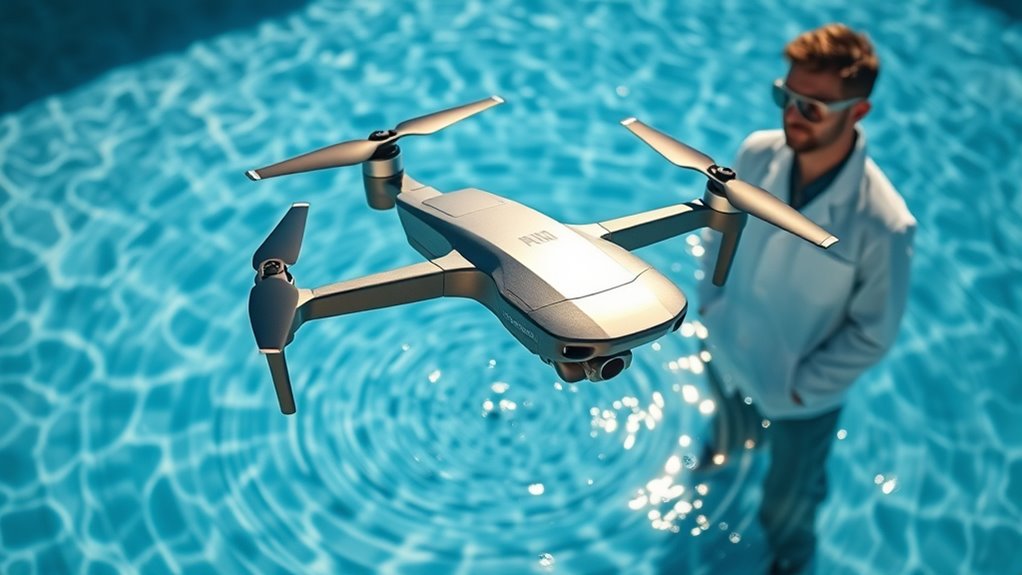
Understanding the limitations of common waterproofing methods leads to the need for careful testing and validation. Effective waterproof drone technology requires real-world assessment, but testing should match the drone’s value, design, and intended use.
Some users test with mist, rain simulation, damp landings, dunking tests, or flying through water fountains. These tests can reveal weak areas, but they are not equal. A light spray test is very different from full submersion. A fountain flight can expose motors, props, sensors, cameras, and air intakes to unpredictable water pressure.
| Waterproofing Method | Performance Observations |
|---|---|
| Conformal Coating | One motor failure after dunk test |
| Corrosion X | Performed well post-rain flight |
| ESC Functionality | 3 out of 4 ESCs functional post-submersion |
| Application Process | Conformal coating is straightforward; Corrosion X requires careful handling |
| Testing Frequency | Continuous testing refines techniques |
While a conformal-coated quad has quick-drying advantages, Corrosion X’s messy application can lead to complications. Continuous testing and validation are essential to improve the chance of landing safely while flying in light rain and to reduce water intrusion into critical components.
For safer testing, remove unnecessary payloads, start with short exposure, check every compartment afterward, and stop immediately if the drone shows unusual vibration, drifting, motor noise, video loss, battery warning, or control delay. Document each test so you can spot patterns and weak points over time.
What to Do After a Drone Gets Wet
If your drone gets wet, act quickly and calmly. The goal is to prevent power-related damage, reduce corrosion, and avoid trapping moisture inside the body.
- Power it down immediately. Land as soon as it is safe, turn off the drone, and remove the battery.
- Do not restart it right away. Turning it back on while moisture remains inside can cause a short.
- Remove visible water. Use a clean, lint-free cloth around the body, arms, landing gear, and battery area.
- Use distilled water when needed. If the drone contacted saltwater, muddy water, or dirty water, a careful distilled-water rinse may help remove conductive residue from affected non-battery areas.
- Dry with airflow. Use a fan and give the drone enough time to dry fully. Avoid high heat that can damage plastic, adhesives, batteries, or sensors.
- Inspect before flying again. Look for corrosion, fogged lenses, gritty motors, weak battery contacts, unusual smells, or residue near boards and connectors.
Rice is not a reliable repair method. It may absorb some moisture from the air, but it does not clean contaminants from electronics or reach trapped water inside tight spaces. Airflow, inspection, and patience are more useful.
Best Practices for Drone Maintenance
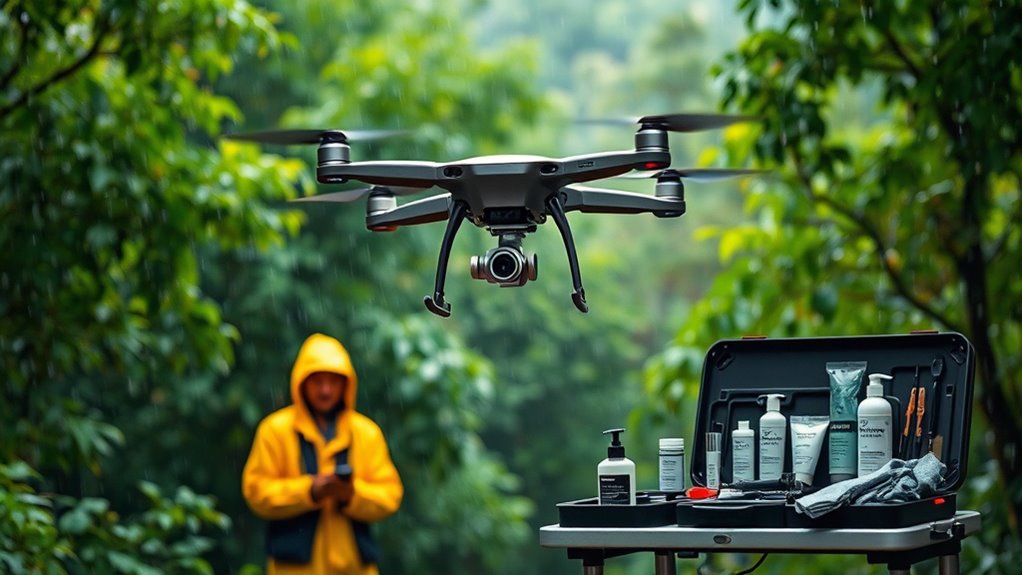
To help your drone operate reliably in different conditions, build a simple maintenance routine. Regular maintenance checks can prevent issues that compromise water resistance, flight stability, and long-term performance.
- Inspect and clean drone components after exposure to water or harsh weather to reduce corrosion.
- Apply silicone conformal coating to suitable circuit boards and connections to improve water resistance.
- Use waterproof grease on bearings where appropriate to reduce rust and maintain smoother operation in wet conditions.
- Ensure proper ventilation during waterproofing work to avoid overheating and potential electronics damage.
- Maintain a routine schedule for thorough checks, focusing on battery terminals and ESC modules because these can be common vulnerabilities.
- Check seals, tapes, and coatings after every wet flight because vibration, heat, and time can weaken protection.
- Keep batteries dry, store them safely, and avoid charging any battery that may have moisture inside or around the contacts.
- Clean motors after exposure to grit, sand, salt spray, or dirty water because debris can damage bearings and reduce efficiency.
Maintenance matters because waterproofing materials can age. Tape edges can lift, grease can move, coatings can crack, and seals can wear down. A drone that handled light rain once may not handle the same condition months later without inspection.
When to Choose a Waterproof Drone Instead
DIY waterproofing makes sense for controlled situations, light moisture protection, and experimental builds. It is not the best choice when your work depends on repeated wet flights, boat launches, emergency response, marine surveys, or flights over open water.
Choose a purpose-built waterproof or water-resistant drone when you need predictable performance in rain, spray, landing-on-water scenarios, or recovery after accidental water contact. A drone designed for wet use should have better sealing, protected electronics, water-tolerant materials, and clearer operating guidance.
You should also consider a dedicated wet-environment drone if you fly near saltwater. Saltwater is far more damaging than clean freshwater because it leaves conductive and corrosive residue behind. Even a short saltwater splash can cause problems if it reaches electronics, motors, or battery contacts.
Frequently Asked Questions
Why aren’t most drones waterproof?
Most drones are not waterproof because they need ventilation, lightweight frames, moving motors, exposed sensors, removable batteries, and open connectors. Full sealing adds cost, weight, heat-management challenges, and design complexity. Even small gaps can let water reach electronics.
Why are DJI drones banned in some U.S. government uses?
Some U.S. government agencies restrict or avoid DJI drones because of data security, supply-chain, and foreign-technology concerns. These restrictions do not mean every private owner is banned from using a DJI drone, but pilots should follow current local, state, federal, and workplace rules.
How do I stop drones from flying over my property?
You can document the flights, speak with the operator if safe, check local drone rules, contact local authorities when privacy or safety concerns exist, and use lawful reporting channels. Do not shoot, jam, hack, or physically interfere with a drone because that can create legal and safety problems.
Can you waterproof a drone?
You can improve a drone’s water resistance by applying silicone conformal coating, sealing vulnerable seams, using waterproof grease where appropriate, and maintaining the drone carefully. Complete waterproofing is difficult, so a purpose-built waterproof model is safer for regular wet-environment use.
Is it safe to fly a drone in rain?
It depends on the drone’s design and rating. Light rain may still damage a drone that lacks water protection. Heavy rain can also reduce visibility, affect sensors, add weight to the aircraft, and increase the chance of motor or battery issues.
Does conformal coating make a drone fully waterproof?
No. Conformal coating can protect circuit boards from moisture, but it does not seal motors, batteries, connectors, cameras, gimbals, or frame seams. It also works only where it is applied evenly and correctly.
Conclusion
In the world of waterproofing drones, separating myth from reality is essential for peak performance. Helpful methods like conformal coating, waterproof grease, VHB tape, careful sealing, and controlled testing can reduce moisture risk, but they cannot guarantee total protection.
The best approach is to match your protection level to your flight environment. Light mist, damp grass, rain, splash zones, and full submersion all create different risks. Even the most resilient drone needs regular inspection and maintenance to stay reliable.
By using best practices, respecting each method’s limits, and avoiding risky assumptions, you can navigate wet flying conditions with more confidence. Your goal is simple: help your drone soar safely instead of sink when moisture becomes part of the flight.

