Last updated: September 22, 2026
On Chrysler, Jeep, Dodge, and Ram applications that define C1073 as an ABS Pump Motor Control Circuit fault, the ABS controller has detected an abnormal pump-motor control or feedback condition. Do not assume C1073 means the same thing on every vehicle: chassis codes can be manufacturer-specific, so confirm the definition for your exact year, make, and model before testing parts.
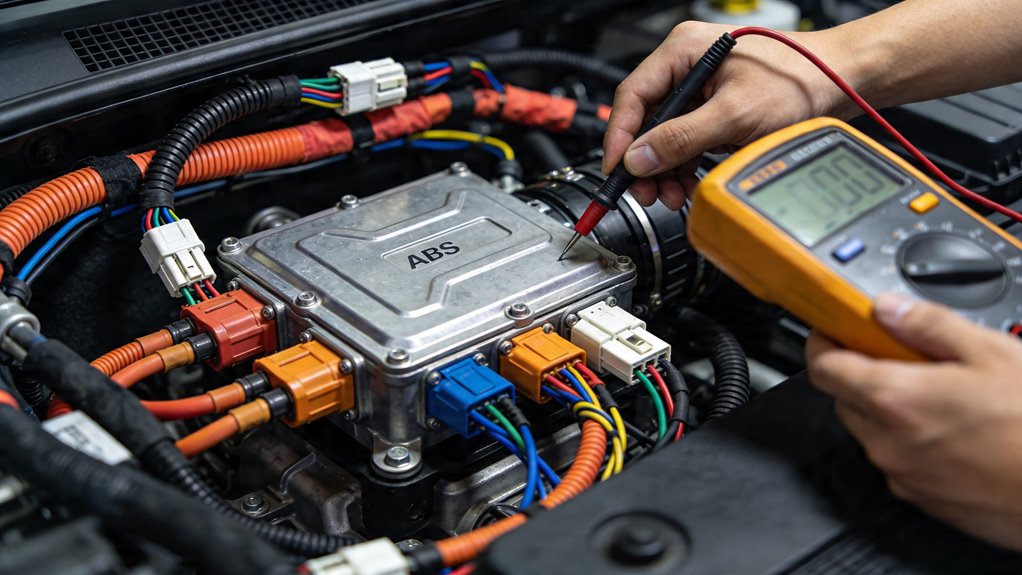
For affected Chrysler-family applications, start by using an ABS-capable scan tool to record C1073 and every related ABS/ESC code. If C2116 or another pump-supply-voltage code is also present, diagnose that power-supply fault first where the factory procedure calls for it. Then check the correct ABS pump fuse, fused B+ circuit, wiring, connectors, and grounds before condemning the ABS module or hydraulic unit.
Safety note: An ABS fault can leave some vehicles with conventional non-ABS braking, but a red BRAKE warning light, abnormal pedal feel, low brake fluid, or noticeably changed braking requires immediate attention. Do not perform a verification road test if normal braking is in doubt.
Key Takeaways
- C1073 is manufacturer-specific. This guide covers Chrysler/Jeep/Dodge/Ram applications that identify it as an ABS pump motor control-circuit fault.
- On applicable Chrysler/Jeep systems, the code can be associated with a pump-feed problem, damaged wiring or connectors, excessive resistance in a power or ground circuit, or an ABS control-unit fault.
- Record all ABS codes before clearing them. If a related pump-supply-voltage code such as C2116 is present, follow the factory test order for your vehicle.
- Fuse positions are vehicle-specific. On a 2013 Jeep Wrangler, for example, J6 is the 40A ABS pump/stability-control fuse and J7 is the 30A ABS valve/stability-control fuse.
- Do not replace the ABS pump or module solely because C1073 is stored. Verify power, ground, wiring, connectors, and the exact factory diagnostic procedure first.
What Does C1073 ABS Pump Motor Control Circuit Mean?

On Chrysler-family applications that use the description C1073 — ABS Pump Motor Control Circuit, the fault is set when the ABS controller detects an unacceptable condition in the circuit used to operate or monitor the hydraulic pump motor. Depending on the specific model and ABS system, the diagnostic path can include the pump’s fused battery feed, wiring, connectors, grounds, and the ABS control unit.
Do not treat C1073 as a universal definition. Other manufacturers can assign the same chassis-code number to a different fault. Confirm the code description with a scan tool that supports your vehicle’s ABS module or with service information for the exact year, make, model, and drivetrain.
C1073 should tell you where to begin testing, not which part to replace.
The ABS pump is used to create or restore hydraulic pressure during anti-lock operation. If the controller cannot operate or correctly monitor that pump circuit, the ABS warning light may remain on and ABS or related stability-control functions can become unavailable.
Why Does the ABS Pump Motor Code Set?
On the Chrysler/Jeep applications covered here, C1073 can set when the ABS controller commands or monitors the pump motor and sees an electrical result outside the expected range. The exact set conditions vary by ABS system, so use the service information for your vehicle rather than borrowing voltage, resistance, or timing thresholds from another model.
- Open or high-resistance pump feed: The pump may not receive adequate current when commanded.
- Damaged harness or connector: Chafed wiring, loose terminals, corrosion, or heat damage can interrupt the circuit.
- Poor ground path: Excessive resistance on the ABS ground side can prevent normal pump operation.
- Related supply-voltage fault: A companion code such as C2116 may need to be diagnosed before C1073 on applicable Chrysler/Jeep systems.
- ABS control-unit or hydraulic-unit fault: If the external power, ground, wiring, and connector checks pass, the control unit can become the next suspect according to the model-specific service procedure.
A weak battery or charging-system problem can also contribute to low-voltage ABS faults on some vehicles, so check system voltage and related codes before replacing expensive brake electronics.
What Should You Check First for C1073?
Start with vehicle identification and scan data. C1073 is a chassis code, and many inexpensive generic OBD2 readers only access engine and emissions data. Use a tool that explicitly supports the ABS system on your exact vehicle. If you are unsure about scanner capability, see our OBD2 scanner vs. code reader guide.
| Check | What it tells you |
|---|---|
| Confirm the vehicle-specific C1073 definition | Prevents using the wrong manufacturer’s diagnostic procedure |
| Record all ABS/ESC codes | Shows whether a supply-voltage or communication fault must be diagnosed first |
| ABS pump fuse | Confirms whether the pump’s fused power path is intact |
| Harness and connectors | Finds corrosion, chafing, loose terminals, heat damage, or an open circuit |
| Power and grounds | Checks whether the ABS unit has a usable B+ supply and low-resistance return path |
| ABS module / integrated control unit | Becomes a stronger suspect only after external circuit checks pass |
J6/J7 example: The official 2013 Jeep Wrangler owner’s manual lists J6 as a 40A Anti-Lock Brake System pump/stability-control fuse and J7 as a 30A ABS valve/stability-control fuse. You can verify that example in the 2013 Jeep Wrangler owner’s manual. Do not assume those cavity numbers apply to another model year or vehicle.
How Do You Diagnose C1073 Step by Step?

- Confirm the vehicle and code definition. Verify that your exact application identifies C1073 as an ABS pump motor control-circuit fault.
- Scan the ABS module and save every code. Record active, stored, and related ABS/ESC codes before erasing anything.
- Address related supply-voltage codes first. On Chrysler/Jeep procedures that pair C1073 with C2116, repair the pump-motor supply-voltage fault before continuing with C1073 diagnosis.
- Inspect the correct ABS fuses. Use the fuse-box label or owner’s manual for your exact vehicle. If a pump fuse is open, find the cause of the overcurrent or short instead of repeatedly installing new fuses.
- Inspect wiring and connectors. Look for pinched or chafed wiring, partially broken conductors, loose terminals, pushed-out pins, water intrusion, corrosion, or heat damage around the ABS unit and its power feed.
- Verify fused B+ and ground integrity. Follow the wiring diagram and service-manual test points for your exact ABS system. Do not substitute another model’s voltage or resistance specification.
- Use the scan-tool pump active test if supported. A bidirectional scanner can help determine whether the controller can command the pump. Follow the vehicle’s service procedure and keep the vehicle safely secured during stationary testing.
- Evaluate the ABS control unit only after the external circuit passes. Some Chrysler/Jeep factory procedures direct module or integrated-control-unit replacement after the relevant power, ground, fuse, and harness tests pass and C1073 remains active.
- Clear the code and run the specified verification procedure. Only road-test the vehicle if normal base braking has been confirmed and no red brake-system warning indicates an unsafe condition.
Some Jeep/Chrysler service procedures use a drive above approximately 25 mph (40 km/h) as part of confirming whether C1073 resets. That is a verification step after the vehicle is safe to drive, not the first diagnostic test.
How Do You Test the ABS Pump Motor Circuit?
Test the circuit from the outside in. First verify that the correct pump fuse is intact and that the ABS controller receives its specified fused battery supply. Then inspect the harness and terminals and verify the ground path using the wiring diagram for your exact vehicle.
If your scan tool supports bidirectional ABS tests, command the pump only according to the service procedure. A pump that does not operate during an active test does not automatically prove the motor itself is bad: an open B+ feed, poor ground, damaged connector, control-unit fault, or another electrical problem can produce the same symptom.
Avoid applying generic resistance specifications or directly powering ABS components unless the factory procedure for your exact ABS assembly instructs you to do so. Different hydraulic-control units integrate the pump motor and electronics differently, and an incorrect test can damage a module or create a misleading result.
When Does C1073 Point to a Bad ABS Module?
An ABS module or integrated control unit becomes a stronger suspect when C1073 remains active after the vehicle-specific diagnostic procedure confirms that the relevant fuse, B+ circuit, grounds, harness, and connectors are good.
- The pump fuse is intact and the specified power feed reaches the ABS unit.
- The required ground circuits pass the manufacturer’s test.
- No damaged, loose, corroded, or pushed-out terminals are found.
- A related supply-voltage code has already been corrected where applicable.
- C1073 returns during the manufacturer’s verification test.
Do not diagnose the module from warning lights alone. ABS, traction-control, and brake-related lights can appear together for several different faults. Follow the code tree for the exact vehicle before purchasing a control module or hydraulic assembly.
If the module is replaced, programming or initialization requirements depend on the model and ABS system. Some Jeep/Chrysler applications require an ABS initialization or vehicle-configuration procedure with a capable scan tool after replacement. Verify that requirement before ordering a module.
How Do You Fix a C1073 ABS Fault?
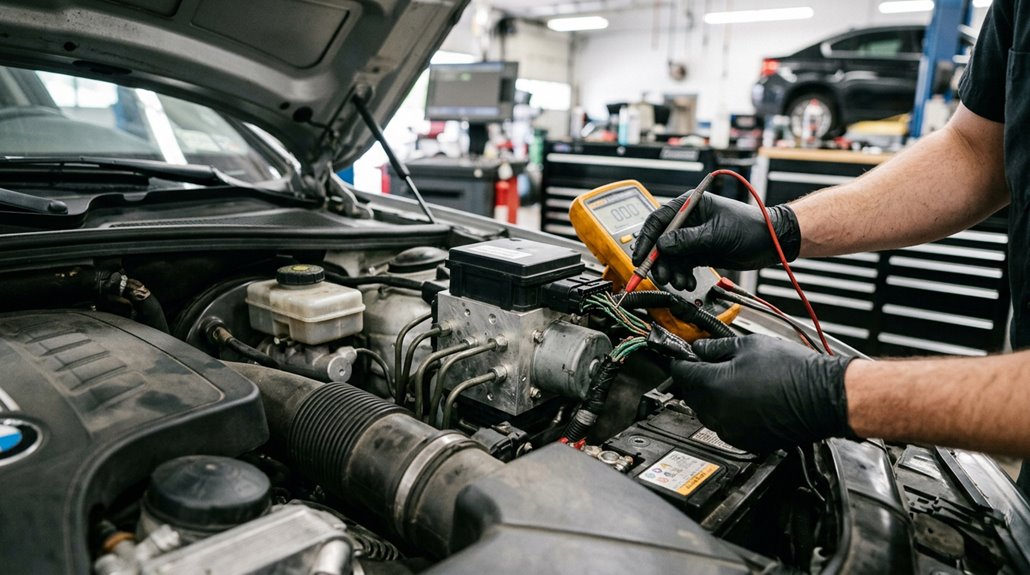
The correct repair depends on which test fails. Do not replace the ABS module just because C1073 is present.
- Blown ABS pump fuse: Repair the short or overcurrent condition before installing the correct replacement fuse.
- Damaged wiring: Repair open, chafed, corroded, or high-resistance wiring using an appropriate automotive wiring repair.
- Connector problem: Repair damaged terminals, poor pin tension, corrosion, or water intrusion.
- Power or ground fault: Restore the circuit to the manufacturer’s specification and then repeat the ABS verification test.
- ABS module or integrated unit failure: Replace or repair the component only after the factory diagnostic sequence identifies it as the remaining fault.
- Replacement-module configuration: Perform any required ABS initialization, vehicle-configuration restore, coding, or programming specified for the exact vehicle.
After the repair, clear the ABS codes and repeat the manufacturer’s verification procedure. If C1073 immediately returns, continue diagnosis rather than repeatedly clearing the warning light.
Frequently Asked Questions
How Can You Tell if the ABS Control Module Is Bad?
A persistent C1073 can point toward the ABS control unit after the correct pump fuse, fused B+ feed, grounds, wiring, connectors, and related supply-voltage faults have been checked and found good. Warning lights alone do not prove the module is bad.
What Does Code C1073 Mean?
C1073 is a manufacturer-specific chassis code. On Chrysler/Jeep/Dodge/Ram applications covered by this guide, it can mean an ABS pump motor control-circuit fault. Confirm the definition for your exact vehicle before applying this diagnostic procedure.
Is C1073 the Same on Every Vehicle?
No. Manufacturer-specific chassis codes can reuse the same number for different faults. Always verify C1073 in service information or with an ABS-capable scan tool that correctly identifies your vehicle.
Can You Drive With a C1073 ABS Code?
If only the ABS system has become inoperative, some Jeep applications revert to standard non-ABS braking, but anti-lock and related stability functions may be unavailable. If the red BRAKE warning light is also on, the brake pedal feels abnormal, brake fluid is low, or braking performance has changed, do not treat the vehicle as safe for a diagnostic road test; have the brake system checked immediately.
Can a Weak Battery Cause C1073?
Low system voltage or a related pump-supply problem can contribute to ABS electrical faults on some applications. Check battery/charging condition and all related ABS codes before replacing the pump or module.
Does a Replacement ABS Module Need to Be Programmed?
It depends on the vehicle and module. Some Jeep/Chrysler applications require ABS initialization, restored vehicle configuration, coding, or another scan-tool procedure after module replacement. Confirm the exact service procedure for your year, make, model, and replacement part before installation.
Conclusion
C1073 should be diagnosed as a circuit problem first, not a parts-replacement instruction. On Chrysler/Jeep/Dodge/Ram applications where it means ABS Pump Motor Control Circuit, confirm all ABS codes, address related supply-voltage faults first when required, verify the correct pump fuse, inspect wiring and connectors, and test the specified power and ground circuits.
Only move toward an ABS module, integrated control unit, or hydraulic-unit replacement after the external circuit checks pass and the model-specific service procedure still identifies an internal fault. Most importantly, confirm the exact C1073 definition for your vehicle before following any repair sequence.

