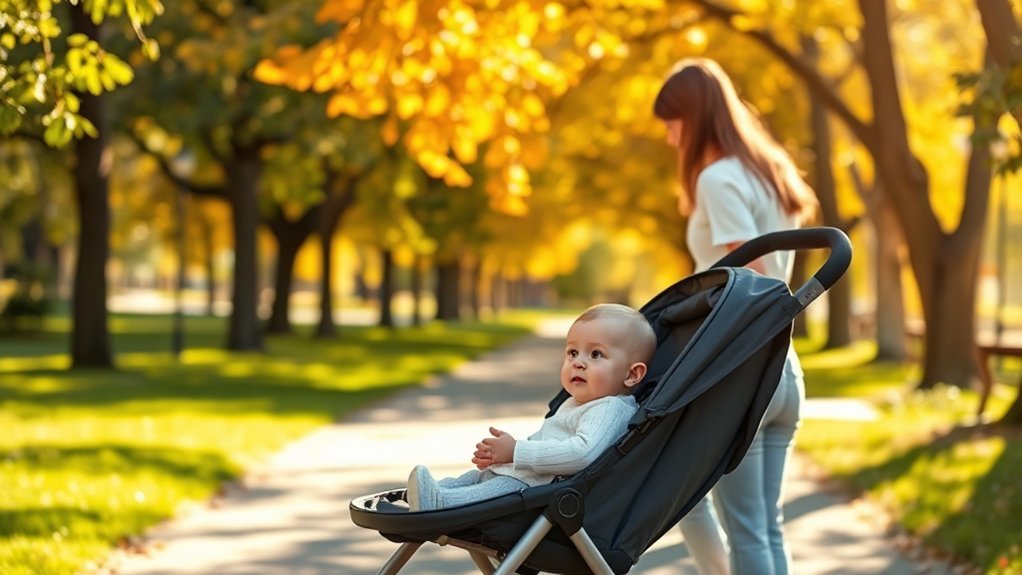
When it comes to using an umbrella stroller, timing matters for your baby’s safety, comfort, and support. Most babies are ready around six months old, but age alone is not enough. Your child should be able to sit upright without help, hold their head steady, and fit securely within the stroller’s harness and weight limits.
Quick Answer
Most babies can use an umbrella stroller around six months old, once they can sit upright unassisted and have strong head and neck control. Some babies may be ready closer to five months, while others need seven or eight months. Always follow the stroller manufacturer’s age, height, and weight limits.
Key Takeaways
- Most babies are ready for an umbrella stroller around six months, but developmental readiness matters more than age.
- Your baby should sit upright unassisted and have steady head and neck control before riding in most umbrella strollers.
- Newborns should not use a basic umbrella stroller unless the model is specifically rated for newborn use with a near-flat recline.
- Check the stroller’s weight limit, harness fit, brakes, locking mechanism, and recline before every outing.
- Most children stop using an umbrella stroller between ages 3 and 5, depending on their size and the manufacturer’s limits.
What Is an Umbrella Stroller?
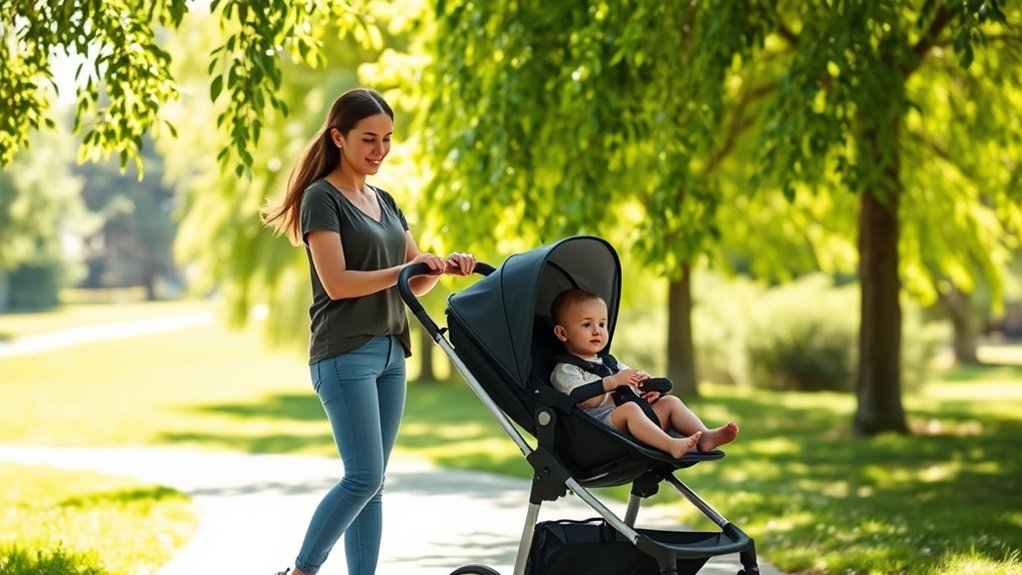
An umbrella stroller is a lightweight and portable option that makes outings with your little one easier. These strollers usually have a simple frame, a fabric seat, and an umbrella-style folding mechanism that lets them fold into a narrow, compact shape. That makes them useful for quick errands, travel, public transportation, amusement parks, and busy sidewalks.
You’ll find different umbrella stroller types, from very basic travel models to upgraded versions with reclining seats, storage baskets, cup holders, sun canopies, and adjustable handles. They all share a slim profile and easy-to-carry design, which is why many parents keep one as a second stroller for short trips.
Most traditional umbrella strollers are designed for children who can sit upright unassisted. Many models support children up to 40 or 50 pounds, while some heavier-duty options may support slightly more. Despite the common belief that umbrella strollers are flimsy, many modern models are surprisingly durable when used within the stated limits.
Note: “Umbrella stroller” usually refers to a lightweight folding stroller. It does not automatically mean the stroller is safe for a newborn. Always check the manual for the approved starting age, recline position, and weight range.
What Age Is Suitable for a Child to Use an Umbrella Stroller?
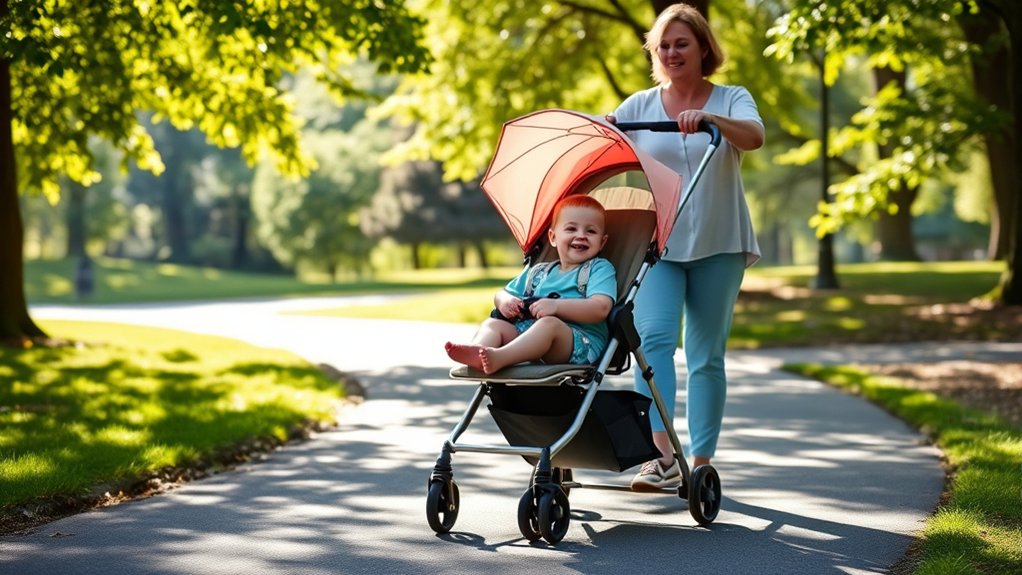
When considering an umbrella stroller for your child, it’s essential to assess their developmental milestones. Generally, babies can start using one around six months, but some may be ready as early as five months or as late as eight months. The safest timing depends on whether your baby can sit upright, control their head and neck, and remain stable in the stroller seat.
Age gives you a helpful starting point, but it should not be your only guide. A baby who is six months old but still slumps to the side, tips forward, or cannot hold their head steady may not be ready for a basic umbrella stroller. On the other hand, a baby who is slightly younger but has strong trunk control may be ready if the manufacturer allows that age and size.
At a Glance
| Typical Starting Age | Around 6 months, depending on development and the stroller manual |
| Main Readiness Sign | Baby can sit upright unassisted with steady head and neck control |
| Typical Weight Limit | Often 40 to 50 pounds, but always check your specific model |
| Best For | Short errands, travel, city walks, and quick trips with a baby or toddler who fits securely |
Developmental Milestones Assessment
While every child develops at their own pace, most babies are ready for an umbrella stroller around six months old. At this stage, many babies can sit upright unassisted and have better head, neck, and trunk control. However, some infants may be ready as early as five months, while others may need until seven or eight months.
Focus on developmental assessments rather than the calendar alone. Your baby should not slump deeply, slide down, lean sharply to one side, or struggle to keep their head upright. Good posture in the stroller seat helps keep the airway open and makes the ride more comfortable.
Manufacturer Guidelines Compliance
Knowing the right age for your child to use an umbrella stroller is important for their safety and comfort. Most basic umbrella strollers are designed for children who can sit upright unassisted, usually around six months. However, every model is different, so the manual should always guide your final decision.
Manufacturer recommendations may include a minimum age, minimum weight, maximum weight, maximum height, approved recline angle, and warnings about newborn use. Many umbrella strollers accommodate kids weighing between 40 and 50 pounds, but some models vary. By following these limits, you reduce the risk of tipping, poor harness fit, and unsafe positioning.
Warning: Do not place a newborn in a basic umbrella stroller that does not recline far enough or provide proper head and body support. Use a newborn-approved stroller, bassinet stroller, or travel system instead.
Signs a Child Is Ready to Use an Umbrella Stroller
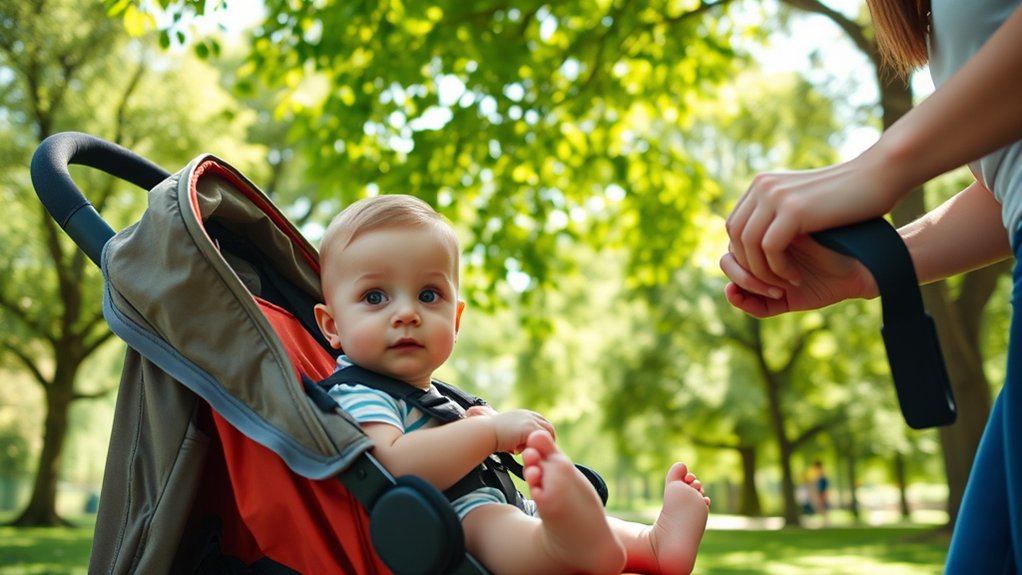
To know if your child is ready for an umbrella stroller, look for clear signs like their ability to sit up independently, maintain good head and neck control, and stay secure in the seat without sliding or slumping. This usually happens around six months, but your child’s individual development is the deciding factor.
Before your first outing, place your baby in the stroller while it is fully opened, locked, and stationary. Buckle the harness, check that the straps sit correctly, and watch how your child sits. If they look unstable or uncomfortable, wait longer or use a stroller with better recline and support.
Independent Sitting Ability
As your baby approaches the six-month mark, watch for signs of independent sitting ability. This milestone is essential for stroller readiness because most umbrella strollers have less structure than full-size strollers. Your little one should be able to sit upright without needing rolled blankets, pillows, or constant support.
Here are four signs to watch for:
- Upright Position: Your baby can maintain a seated position without support.
- Balanced Head Control: They can hold their head steady while sitting.
- Engagement: They show interest in their surroundings and look around while seated.
- Stability: Your child can shift their weight slightly without toppling over.
Once these signs are clear and the stroller manual allows your child’s age and size, you can confidently consider introducing an umbrella stroller for short, supervised outings.
Head and Neck Control
Once your baby can sit up independently, observing their head and neck control becomes vital for determining readiness for an umbrella stroller. You’ll want to see steady head control and enough neck strength to keep their head upright while the stroller moves, turns, or rolls over small bumps.
These skills typically develop around six months. If your child can hold their head steady and upright while seated, they are more likely to ride safely and comfortably. This head and neck stability is especially important because umbrella strollers are often used on the go, where quick turns and uneven sidewalks are common.
Age and Weight Guidelines
Understanding the age and weight guidelines for using an umbrella stroller is essential for protecting your child’s safety and comfort. Keep these key points in mind:
- Age: Babies are typically ready around six months, but some may be ready as early as five months or as late as eight months.
- Sitting Up: Your child should sit upright unassisted and have good head and neck control before using most umbrella strollers.
- Weight Limit: Most umbrella strollers support children weighing up to 40 or 50 pounds; always follow the manufacturer’s stated limit.
- Growth Monitoring: Discontinue use when your child reaches the weight or height limit, usually between ages 3 and 5, to maintain comfort and safety.
Pro Tip: Do a short test walk near home before using an umbrella stroller for a full day out. This helps you check comfort, harness fit, wheel handling, and whether your baby can stay upright during movement.
What to Look for When Shopping for Umbrella Strollers
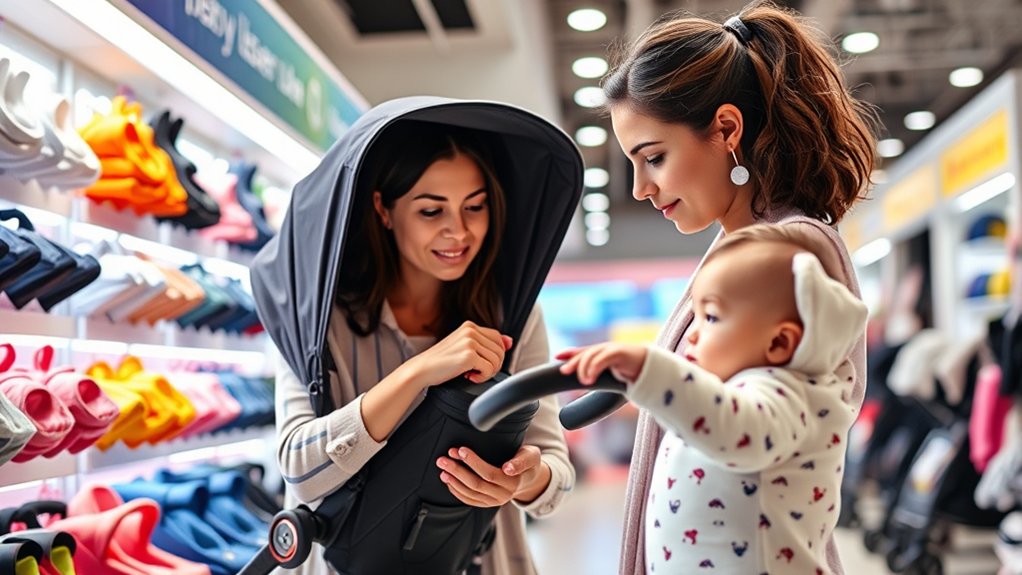
When shopping for an umbrella stroller, you’ll want to keep a few key features in mind to make the best choice for your little one. Start with the basics: the stroller should match your child’s age, height, and weight, and it should have a secure harness, stable frame, working brakes, and clear locking points.
Look for models with adjustable recline positions so your child can rest more comfortably. A deeper recline is especially useful for younger babies who still need extra support, although most basic umbrella strollers are still not suitable for newborns. A quick folding mechanism is also important if you’ll be lifting it into a car, carrying it through airports, or storing it in a small space.
Opt for a compact design that won’t take up too much room in your vehicle. For city living, check the folded size, carry strap, and stroller weight. Don’t overlook ease of cleaning; removable or machine-washable fabrics can help keep crumbs, spills, and everyday mess under control.
Safety is the most important factor. Choose a model with a five-point harness, reliable brakes, a sturdy locking mechanism, and weight limits that fit your child. Also, consider stroller accessories that improve daily use, such as a sun canopy, rain cover, storage basket, cup holder, and adjustable handles. These features make outings more convenient without sacrificing safety.
What Age Should You Stop Using an Umbrella Stroller?
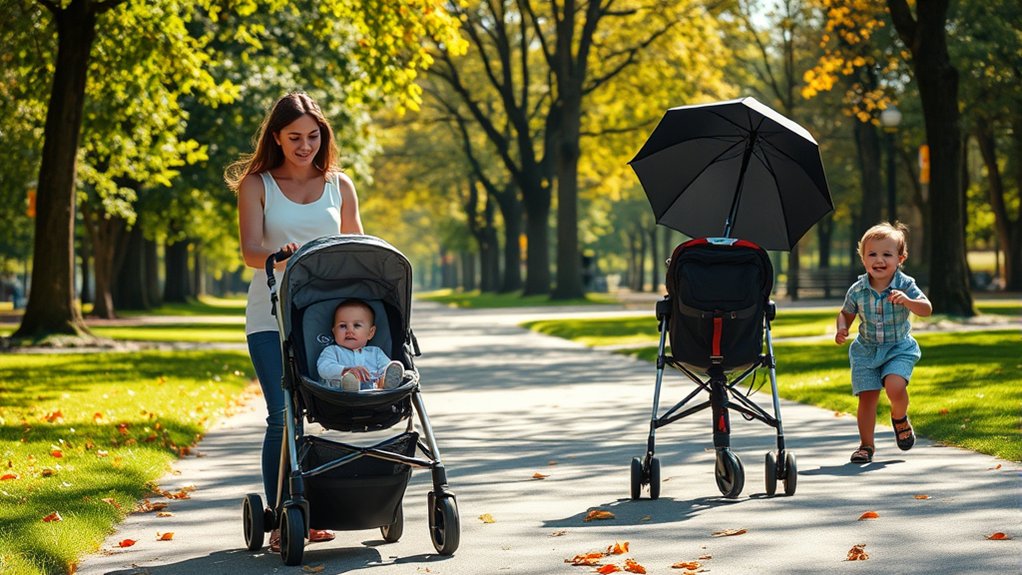
Choosing the right umbrella stroller involves not only selecting the best features but also knowing when it is time to stop using it. Many children outgrow umbrella strollers between ages 3 and 5, but the exact timing depends on their height, weight, comfort, and the stroller’s limits.
The safest stopping point is not a specific birthday. Stop using the umbrella stroller when your child exceeds the stated weight or height limit, no longer fits securely, or makes the stroller difficult to control.
Typically, you should consider discontinuing use when:
- Your child reaches the manufacturer’s weight limit, usually between 40 and 50 pounds.
- Your child reaches the height limit or their head, legs, or shoulders no longer fit comfortably.
- Your child no longer sits securely in the stroller seat.
- The harness cannot be adjusted to fit correctly.
- The stroller feels unstable, hard to steer, or overloaded.
Exploring stroller alternatives like lightweight backpacks, child carriers, wagon strollers, or short walking breaks can offer freedom and flexibility as your child grows. Staying mindful of these factors keeps your little one safe and comfortable while you enjoy outings together.
Safety Guidelines for Umbrella Strollers
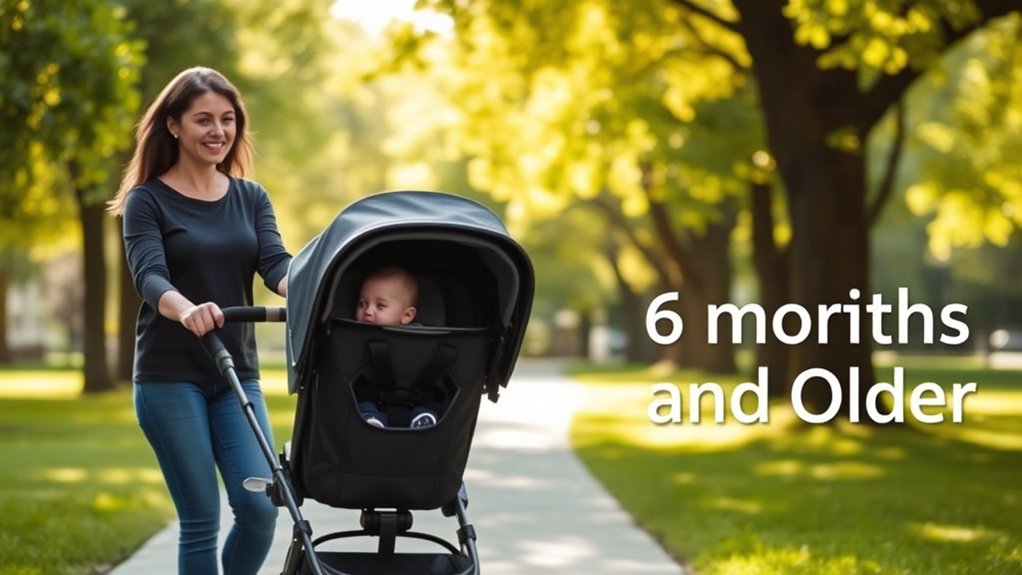
To make sure your little one stays safe while using an umbrella stroller, follow specific safety guidelines every time. First, confirm your child can sit upright unassisted, usually around six months old, and has proper head and neck control. Next, make sure your child fits within the stroller’s weight and height limits.
Always prioritize harness usage. A five-point harness system helps reduce the risk of falls, slipping, and climbing out. Before placing your child in the stroller, open it completely and engage the locking mechanism so the frame does not collapse. Use the brakes whenever you stop, even on flat ground.
Keep bags and heavy items off the handles unless the manual says it is safe. Hanging weight from the handles can make lightweight strollers tip backward. Avoid using the stroller on stairs, escalators, steep slopes, or rough surfaces that the wheels are not designed to handle.
Regular maintenance is also essential. Clean the fabric with mild soap, check that all safety features work, and inspect the frame, wheels, brakes, and harness before use. By following these safety tips, you can enjoy more relaxed outings with your little one while reducing avoidable risks.
Benefits of Using an Umbrella Stroller
Umbrella strollers offer a range of advantages that make them a popular choice for parents on the go. Their lightweight and portable design adds convenience, especially when you need to move through crowded areas, public transport, airports, stores, or narrow sidewalks.
Here are some key benefits:
- Easy to Fold: The simple folding mechanism allows for quick setup and storage, which is helpful for busy families.
- Compact Design: Slim profiles fit easily into tight spaces, such as small car trunks, restaurant corners, and narrow store aisles.
- Support for Growing Kids: Most models accommodate children from about six months to toddlerhood, often holding up to 40 or 50 pounds.
- Basic Comfort Features: Many strollers include useful features like a canopy, reclining seat, footrest, and small storage basket.
- Travel-Friendly Weight: Many umbrella strollers are easier to lift, carry, and gate-check than full-size strollers.
With these benefits, umbrella strollers provide practicality and ease for modern parents. They are not always the best choice for long naps, newborns, or rough terrain, but they work well for quick trips and everyday errands.
Common Features of Umbrella Strollers
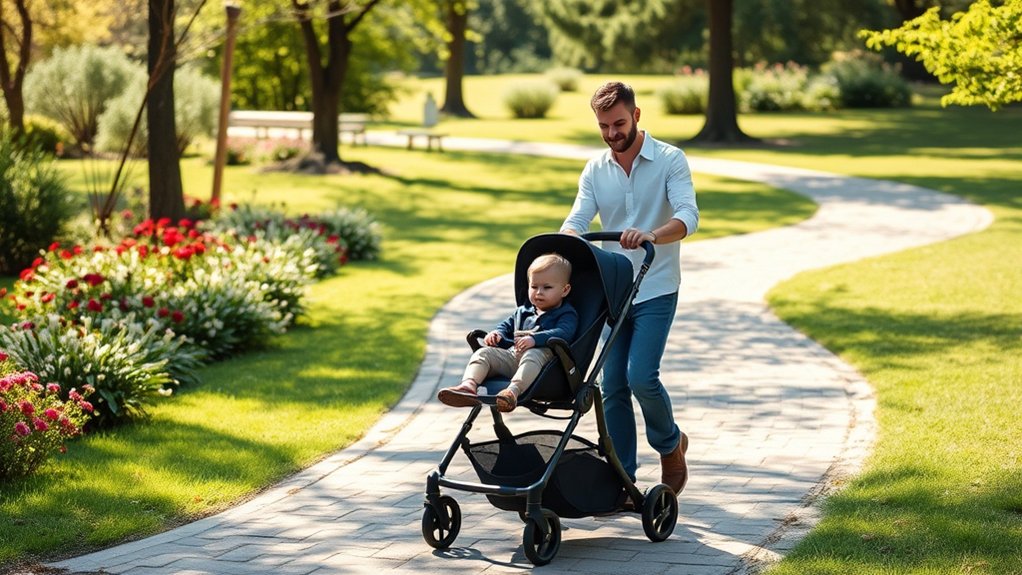
When you are looking for a stroller that blends convenience with functionality, umbrella strollers stand out with their practical features. Most are lightweight and portable, which makes transport and storage easier. The compact folding mechanism is one of their biggest advantages, especially for parents with small cars or limited storage space.
Many models offer adjustable recline positions, allowing your little one to rest more comfortably while you are out. Some basic models recline only slightly, while upgraded versions offer deeper recline settings. With a typical weight capacity of 40 to 55 pounds, many umbrella strollers can grow with your child for several years.
Most umbrella strollers also include a sun canopy for UV protection and a simple buckle or five-point harness to help keep your child secure. You may also find handy storage options, such as an under-seat basket, rear pocket, cup holder, or parent organizer. These features work together to create a practical and user-friendly experience for both you and your child.
Maintenance and Care for Umbrella Strollers
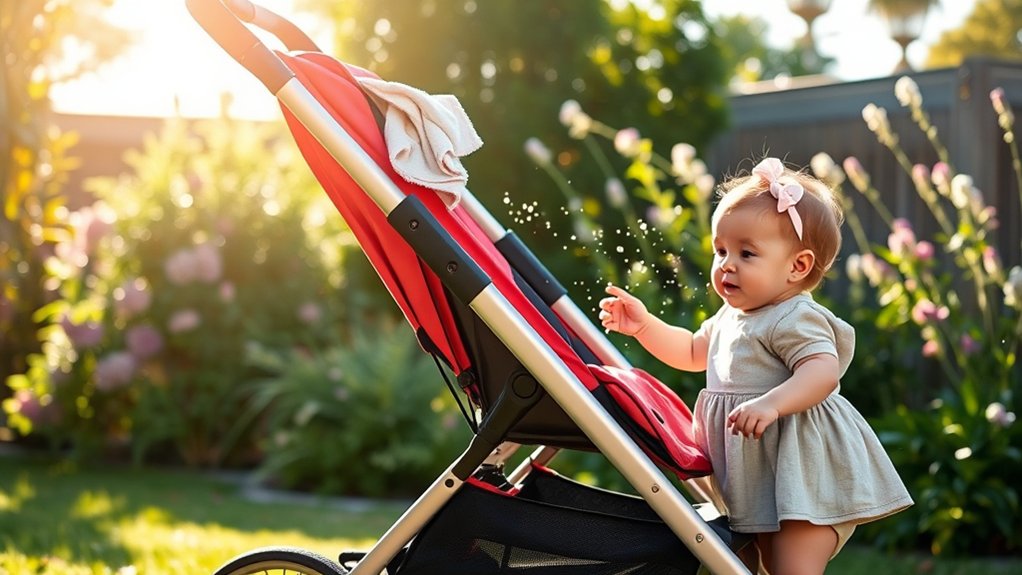
Keeping your umbrella stroller in top shape is essential for maintaining its longevity and safety. Regular maintenance protects your child and improves your stroller experience. Lightweight strollers are easy to carry, but they still need routine care because hinges, brakes, fabric, and wheels can wear down over time.
Here are some effective cleaning techniques and inspection tips:
- Clean Fabric: Use cold water and mild soap to clean the fabric, avoiding bleach and abrasive cleaners unless the manual says otherwise.
- Check Moving Parts: Periodically inspect hinges, wheels, brakes, and folding mechanisms for signs of wear or damage.
- Conduct Safety Inspections: Look for loose screws, bent frame parts, frayed straps, or missing pieces before each major outing.
- Clean the Wheels: Remove dirt, hair, and small debris from the wheels so the stroller rolls smoothly.
- Store It Properly: Store the stroller in a dry place to avoid mold, mildew, rust, or fabric damage, especially after rain or wet conditions.
Following the manufacturer’s guidelines helps your umbrella stroller remain safe and functional for your little one. With these maintenance steps, you can enjoy peace of mind while strolling freely with your baby.
Related Guides
Frequently Asked Questions
Can a newborn use an umbrella stroller?
No, a newborn should not use a basic umbrella stroller. Most newborns need a flat or near-flat surface with full head, neck, and body support. For newborn safety, choose a newborn-approved travel system, bassinet stroller, or stroller that specifically allows newborn use.
Are umbrella strollers suitable for tall children?
Yes, umbrella strollers can suit tall children if the seat height, canopy clearance, footrest, and harness fit properly. Check the stroller’s height and weight limits, not just your child’s age, to make sure they can ride comfortably and securely.
How much do umbrella strollers typically weigh?
Umbrella strollers typically weigh between 10 and 15 pounds, although some ultra-light models weigh less and some feature-rich models weigh more. Choose a stroller that is light enough to carry but still stable and safe for your child’s size.
Can I use an umbrella stroller for twins?
You cannot use a standard single umbrella stroller for twins, but double umbrella strollers are available. These twin stroller options offer a lightweight design and easier maneuverability than many full-size double strollers, while still giving each child their own seat and harness.
Do umbrella strollers recline for sleeping?
Some umbrella strollers recline, but many basic models recline only slightly. If your child often naps during outings, look for an umbrella stroller with a deeper recline, supportive seat, adjustable footrest, and safe harness fit. Always prioritize safe positioning over convenience.
Is an umbrella stroller good for travel?
Yes, an umbrella stroller can be excellent for travel because it is lightweight, compact, and easy to fold. For flights, check the airline’s stroller rules before you go. For road trips, choose a model that fits easily in your trunk with your luggage.
What is the safest way to use an umbrella stroller?
The safest way to use an umbrella stroller is to follow the manual, secure the harness every time, lock the frame open before use, apply the brakes when stopped, avoid hanging heavy bags on the handles, and stop using the stroller once your child exceeds the stated limits.
Conclusion
To summarize, choosing the right moment for your munchkin to maneuver an umbrella stroller can make all the difference. Most babies are ready around six months, but the real signs are independent sitting, steady head and neck control, proper harness fit, and full compliance with the manufacturer’s age and weight guidelines.
With a keen eye for safety and a focus on useful features, you can find a fabulous fit for your family. As your little one grows, adapting to their changing needs helps guarantee smoother strolls and happy outings. Embrace the journey, choose a sturdy stroller, and enjoy the delightful adventures ahead with your darling.
Sources
- American Academy of Pediatrics: Stroller Safety — supports stroller safety basics, harness use, brakes, and supervision.
- U.S. Consumer Product Safety Commission: Strollers — supports stroller safety guidance and product safety awareness.
- CPSC Business Guidance: Strollers — supports stroller safety standards and compliance context.
- Juvenile Products Manufacturers Association: Strollers — supports choosing and using strollers according to manufacturer instructions.

